

Optimize CDI Electrode Lifespan for Cost Efficiency
APR 21, 20269 MIN READ
Generate Your Research Report Instantly with AI Agent
PatSnap Eureka helps you evaluate technical feasibility & market potential.
CDI Electrode Technology Background and Efficiency Goals
Capacitive Deionization (CDI) technology has emerged as a promising electrochemical water treatment method since its initial development in the 1960s. The technology operates on the principle of electrosorption, where ions are removed from water through electrostatic attraction to charged electrode surfaces. Early CDI systems utilized simple carbon electrodes, but the technology has evolved significantly to incorporate advanced materials such as activated carbon, carbon nanotubes, graphene, and various composite materials.
The fundamental mechanism involves applying a low voltage (typically 1-2V) across porous electrodes, creating an electric field that attracts and stores ions within the electrical double layer formed at the electrode-electrolyte interface. This process is inherently reversible, allowing for electrode regeneration and continuous operation cycles. The technology's appeal lies in its energy efficiency, environmental friendliness, and ability to operate at ambient conditions without requiring high pressure or temperature.
Historical development shows three distinct phases: the initial conceptual phase (1960s-1980s), the material innovation phase (1990s-2010s), and the current optimization phase (2010s-present). During the material innovation phase, researchers focused on developing high-surface-area carbon materials and understanding the electrosorption mechanisms. The current phase emphasizes system optimization, cost reduction, and addressing practical challenges such as electrode degradation and operational stability.
The primary efficiency goals for modern CDI electrode technology center on maximizing salt adsorption capacity, extending operational lifespan, and minimizing energy consumption per unit of treated water. Current industry targets include achieving salt adsorption capacities exceeding 20 mg/g, maintaining stable performance over 10,000 charge-discharge cycles, and reducing energy consumption below 1 kWh/m³ for brackish water treatment.
Electrode lifespan optimization has become critical as CDI technology transitions from laboratory research to commercial applications. The main degradation mechanisms include carbon oxidation, structural collapse, and loss of active surface area during repeated cycling. These challenges directly impact the total cost of ownership, making electrode durability a key factor in determining CDI's commercial viability compared to established desalination technologies like reverse osmosis.
Recent technological advances focus on developing stable electrode materials, optimizing operating conditions, and implementing intelligent control systems to minimize degradation. The integration of advanced carbon materials with protective coatings and the development of hybrid electrode architectures represent promising approaches to extend electrode lifespan while maintaining high desalination performance.
The fundamental mechanism involves applying a low voltage (typically 1-2V) across porous electrodes, creating an electric field that attracts and stores ions within the electrical double layer formed at the electrode-electrolyte interface. This process is inherently reversible, allowing for electrode regeneration and continuous operation cycles. The technology's appeal lies in its energy efficiency, environmental friendliness, and ability to operate at ambient conditions without requiring high pressure or temperature.
Historical development shows three distinct phases: the initial conceptual phase (1960s-1980s), the material innovation phase (1990s-2010s), and the current optimization phase (2010s-present). During the material innovation phase, researchers focused on developing high-surface-area carbon materials and understanding the electrosorption mechanisms. The current phase emphasizes system optimization, cost reduction, and addressing practical challenges such as electrode degradation and operational stability.
The primary efficiency goals for modern CDI electrode technology center on maximizing salt adsorption capacity, extending operational lifespan, and minimizing energy consumption per unit of treated water. Current industry targets include achieving salt adsorption capacities exceeding 20 mg/g, maintaining stable performance over 10,000 charge-discharge cycles, and reducing energy consumption below 1 kWh/m³ for brackish water treatment.
Electrode lifespan optimization has become critical as CDI technology transitions from laboratory research to commercial applications. The main degradation mechanisms include carbon oxidation, structural collapse, and loss of active surface area during repeated cycling. These challenges directly impact the total cost of ownership, making electrode durability a key factor in determining CDI's commercial viability compared to established desalination technologies like reverse osmosis.
Recent technological advances focus on developing stable electrode materials, optimizing operating conditions, and implementing intelligent control systems to minimize degradation. The integration of advanced carbon materials with protective coatings and the development of hybrid electrode architectures represent promising approaches to extend electrode lifespan while maintaining high desalination performance.
Market Demand for Cost-Effective Water Desalination Solutions
The global water crisis has intensified demand for efficient and economical desalination technologies, with over two billion people lacking access to safely managed drinking water at home. Traditional desalination methods like reverse osmosis and thermal distillation, while effective, face significant challenges related to high energy consumption and operational costs. This scenario has created substantial market opportunities for alternative technologies that can deliver cost-effective water treatment solutions.
Capacitive deionization technology has emerged as a promising alternative due to its lower energy requirements compared to conventional desalination methods. The technology operates at ambient temperature and pressure, eliminating the need for high-pressure pumps or thermal energy input that characterizes traditional approaches. However, the frequent replacement of CDI electrodes due to degradation issues significantly impacts the overall cost-effectiveness of these systems, creating a critical market need for enhanced electrode durability.
Industrial water treatment represents the largest market segment driving demand for cost-effective CDI solutions. Manufacturing facilities, particularly in water-stressed regions, require reliable and economical water purification systems to maintain operations while managing operational expenses. The semiconductor, pharmaceutical, and food processing industries have shown particular interest in CDI technology due to its ability to produce high-purity water without chemical additives.
Municipal water treatment authorities are increasingly exploring CDI technology as a supplementary solution for brackish water treatment and water recycling programs. The technology's modular nature and relatively simple maintenance requirements make it attractive for smaller communities and distributed water treatment applications where large-scale reverse osmosis plants may not be economically viable.
The agricultural sector presents another significant market opportunity, especially in regions where groundwater salinity affects crop irrigation. Farmers and agricultural cooperatives seek affordable desalination solutions that can operate with minimal technical expertise and maintenance requirements. Extended electrode lifespan directly translates to reduced operational costs and improved system reliability for these applications.
Market research indicates that electrode replacement costs can account for up to thirty percent of total operational expenses in CDI systems. This cost burden has limited widespread adoption despite the technology's inherent advantages. Consequently, there exists strong market demand for CDI electrode innovations that can significantly extend operational lifespan while maintaining or improving desalination performance, thereby reducing the total cost of ownership and making the technology more competitive against established desalination methods.
Capacitive deionization technology has emerged as a promising alternative due to its lower energy requirements compared to conventional desalination methods. The technology operates at ambient temperature and pressure, eliminating the need for high-pressure pumps or thermal energy input that characterizes traditional approaches. However, the frequent replacement of CDI electrodes due to degradation issues significantly impacts the overall cost-effectiveness of these systems, creating a critical market need for enhanced electrode durability.
Industrial water treatment represents the largest market segment driving demand for cost-effective CDI solutions. Manufacturing facilities, particularly in water-stressed regions, require reliable and economical water purification systems to maintain operations while managing operational expenses. The semiconductor, pharmaceutical, and food processing industries have shown particular interest in CDI technology due to its ability to produce high-purity water without chemical additives.
Municipal water treatment authorities are increasingly exploring CDI technology as a supplementary solution for brackish water treatment and water recycling programs. The technology's modular nature and relatively simple maintenance requirements make it attractive for smaller communities and distributed water treatment applications where large-scale reverse osmosis plants may not be economically viable.
The agricultural sector presents another significant market opportunity, especially in regions where groundwater salinity affects crop irrigation. Farmers and agricultural cooperatives seek affordable desalination solutions that can operate with minimal technical expertise and maintenance requirements. Extended electrode lifespan directly translates to reduced operational costs and improved system reliability for these applications.
Market research indicates that electrode replacement costs can account for up to thirty percent of total operational expenses in CDI systems. This cost burden has limited widespread adoption despite the technology's inherent advantages. Consequently, there exists strong market demand for CDI electrode innovations that can significantly extend operational lifespan while maintaining or improving desalination performance, thereby reducing the total cost of ownership and making the technology more competitive against established desalination methods.
Current CDI Electrode Degradation Issues and Challenges
Capacitive deionization electrode degradation represents a multifaceted challenge that significantly impacts system performance and operational economics. The primary degradation mechanisms include electrochemical corrosion, mechanical stress-induced cracking, and chemical deterioration of electrode materials. Carbon-based electrodes, while cost-effective, suffer from oxidation at high potentials, leading to surface area reduction and capacity loss. This oxidation process creates oxygen-containing functional groups that alter the electrode's hydrophobic properties and reduce its electrosorption efficiency.
Physical degradation manifests through electrode swelling and shrinkage during charge-discharge cycles, causing mechanical stress that leads to particle detachment and structural integrity loss. The repeated expansion and contraction of electrode materials create micro-cracks that propagate over time, ultimately resulting in electrode delamination from current collectors. This mechanical failure mode is particularly pronounced in composite electrodes where binder degradation occurs simultaneously.
Chemical challenges encompass electrolyte-induced corrosion and pH fluctuations that accelerate material degradation. The presence of dissolved oxygen and trace metal ions in feed water catalyzes oxidative reactions that compromise electrode stability. Additionally, local pH variations during operation create corrosive environments that attack both active materials and conductive additives, leading to increased electrical resistance and reduced ion accessibility.
Fouling represents another critical degradation pathway, where organic compounds, biological matter, and scaling precipitates accumulate on electrode surfaces. This fouling layer acts as a barrier to ion transport, reducing electrosorption capacity and increasing energy consumption. The irreversible nature of certain fouling compounds makes electrode regeneration challenging and costly.
Current collector corrosion poses significant operational challenges, particularly in systems using aluminum or copper substrates. Electrochemical reactions at the electrode-current collector interface create resistive oxide layers that increase ohmic losses and reduce system efficiency. This interfacial degradation often necessitates complete electrode replacement rather than surface treatment.
Temperature-induced degradation accelerates all aforementioned mechanisms, with elevated operating temperatures promoting faster oxidation rates, increased mechanical stress, and enhanced chemical reactivity. The cumulative effect of these degradation pathways typically results in 20-40% capacity loss within 1000-2000 cycles, making electrode replacement a major operational expense that undermines CDI technology's economic viability for large-scale applications.
Physical degradation manifests through electrode swelling and shrinkage during charge-discharge cycles, causing mechanical stress that leads to particle detachment and structural integrity loss. The repeated expansion and contraction of electrode materials create micro-cracks that propagate over time, ultimately resulting in electrode delamination from current collectors. This mechanical failure mode is particularly pronounced in composite electrodes where binder degradation occurs simultaneously.
Chemical challenges encompass electrolyte-induced corrosion and pH fluctuations that accelerate material degradation. The presence of dissolved oxygen and trace metal ions in feed water catalyzes oxidative reactions that compromise electrode stability. Additionally, local pH variations during operation create corrosive environments that attack both active materials and conductive additives, leading to increased electrical resistance and reduced ion accessibility.
Fouling represents another critical degradation pathway, where organic compounds, biological matter, and scaling precipitates accumulate on electrode surfaces. This fouling layer acts as a barrier to ion transport, reducing electrosorption capacity and increasing energy consumption. The irreversible nature of certain fouling compounds makes electrode regeneration challenging and costly.
Current collector corrosion poses significant operational challenges, particularly in systems using aluminum or copper substrates. Electrochemical reactions at the electrode-current collector interface create resistive oxide layers that increase ohmic losses and reduce system efficiency. This interfacial degradation often necessitates complete electrode replacement rather than surface treatment.
Temperature-induced degradation accelerates all aforementioned mechanisms, with elevated operating temperatures promoting faster oxidation rates, increased mechanical stress, and enhanced chemical reactivity. The cumulative effect of these degradation pathways typically results in 20-40% capacity loss within 1000-2000 cycles, making electrode replacement a major operational expense that undermines CDI technology's economic viability for large-scale applications.
Existing CDI Electrode Optimization Solutions
01 Electrode material composition and coating technologies
The lifespan of CDI electrodes can be significantly enhanced through the use of advanced electrode materials and coating technologies. Carbon-based materials with high surface area, such as activated carbon, graphene, and carbon nanotubes, are commonly employed as electrode substrates. Surface modifications and protective coatings can prevent electrode degradation, reduce fouling, and improve chemical stability. The selection of appropriate binders and conductive additives also plays a crucial role in maintaining electrode integrity over extended operational cycles.- Electrode material composition and coating technology: The lifespan of CDI electrodes can be significantly improved through the selection of appropriate electrode materials and advanced coating technologies. Carbon-based materials with high surface area, such as activated carbon, carbon nanotubes, and graphene, are commonly used as electrode materials. Surface modifications and protective coatings can enhance the chemical stability and mechanical durability of electrodes, preventing degradation during repeated charging and discharging cycles. The use of composite materials and optimized binder systems can also improve the structural integrity and longevity of CDI electrodes.
- Operating voltage and current control: Proper control of operating voltage and current is crucial for extending CDI electrode lifespan. Excessive voltage can cause electrode degradation through electrochemical oxidation or reduction reactions, while inappropriate current density may lead to uneven charge distribution and localized damage. Implementing voltage limitation strategies, optimized charging-discharging protocols, and current density management can minimize electrode stress and prevent premature failure. Pulse operation modes and intermittent operation strategies have also been developed to reduce continuous stress on electrodes.
- Electrode structure and design optimization: The physical structure and design of CDI electrodes play a significant role in determining their operational lifespan. Three-dimensional electrode architectures, porous structures with optimized pore size distribution, and flow-through designs can improve mass transfer efficiency and reduce concentration polarization. Proper electrode spacing, flow channel design, and module configuration can minimize mechanical stress and ensure uniform current distribution. Structural reinforcement techniques and flexible electrode designs can also enhance resistance to physical degradation during long-term operation.
- Water quality and pretreatment methods: The quality of feed water and appropriate pretreatment significantly affect CDI electrode lifespan. Contaminants such as organic matter, scaling ions, and particulates can foul electrode surfaces, reducing performance and accelerating degradation. Implementing effective pretreatment processes including filtration, pH adjustment, and removal of specific contaminants can protect electrodes from fouling and chemical attack. Regular cleaning protocols and regeneration procedures can restore electrode performance and extend operational life. Monitoring water quality parameters and adjusting operating conditions accordingly can prevent electrode damage.
- Monitoring and maintenance strategies: Systematic monitoring and maintenance strategies are essential for maximizing CDI electrode lifespan. Real-time monitoring of electrode performance parameters such as capacitance, resistance, and desalination efficiency can provide early warning of degradation. Predictive maintenance approaches based on performance data analysis can optimize replacement timing and prevent catastrophic failure. Periodic inspection, cleaning, and regeneration procedures can restore electrode functionality. Development of self-diagnostic systems and automated maintenance protocols can reduce downtime and extend overall system lifespan. Implementation of proper storage conditions during idle periods can also preserve electrode integrity.
02 Operating conditions and voltage control
Proper control of operating parameters is essential for extending CDI electrode lifespan. Optimizing the applied voltage, current density, and charge-discharge cycles can minimize electrode stress and prevent irreversible degradation. Implementing voltage limitation strategies and avoiding overcharging or over-discharging helps maintain electrode structural stability. Additionally, controlling the flow rate and concentration of feed water can reduce mechanical stress and chemical attack on the electrode surface.Expand Specific Solutions03 Electrode regeneration and cleaning methods
Regular regeneration and cleaning procedures can restore electrode performance and extend operational life. Chemical cleaning methods using acid or alkaline solutions can remove accumulated scale and organic fouling. Electrochemical regeneration techniques, including polarity reversal and enhanced desorption cycles, help recover electrode capacity. Physical cleaning methods and periodic maintenance protocols can prevent permanent damage and maintain consistent desalination efficiency throughout the electrode lifecycle.Expand Specific Solutions04 Structural design and mechanical stability
The physical structure and mechanical design of CDI electrodes significantly impact their durability and lifespan. Optimized electrode architecture, including thickness, porosity, and spacing configurations, can reduce mechanical stress during operation. Reinforcement structures and support frameworks help maintain electrode integrity under repeated swelling and shrinking cycles. The use of flexible substrates and stress-resistant materials can accommodate volume changes during ion adsorption and desorption processes.Expand Specific Solutions05 Monitoring and predictive maintenance systems
Implementation of real-time monitoring and predictive maintenance systems enables early detection of electrode degradation and optimization of replacement schedules. Sensors and diagnostic tools can track key performance indicators such as capacitance, resistance, and desalination efficiency. Data analysis and machine learning algorithms can predict electrode lifespan based on operational history and environmental conditions. Automated control systems can adjust operating parameters dynamically to minimize electrode wear and maximize service life.Expand Specific Solutions
Key Players in CDI Technology and Electrode Manufacturing
The Capacitive Deionization (CDI) electrode optimization market represents an emerging sector within the broader water treatment industry, currently in its early commercialization phase with significant growth potential driven by increasing water scarcity concerns. The global CDI market, while still nascent compared to traditional desalination technologies, is experiencing rapid expansion as industries seek energy-efficient alternatives to reverse osmosis systems. Technology maturity varies considerably across market participants, with established players like Samsung Electronics and Contemporary Amperex Technology leveraging their advanced materials expertise from battery applications, while specialized companies such as Stockholm Water Technology and Voltea BV focus exclusively on CDI innovations. Research institutions including Tianjin University, Central South University, and Rice University are driving fundamental electrode material breakthroughs, particularly in carbon-based composites and surface modifications. The competitive landscape shows a convergence of battery technology companies, traditional water treatment firms, and academic research centers, indicating the interdisciplinary nature of CDI electrode development and the technology's transition from laboratory research to commercial viability.
Samsung Electronics Co., Ltd.
Technical Solution: Samsung has developed advanced electrode materials for CDI applications using graphene-based composites and carbon nanotube structures. Their research focuses on creating hybrid electrode materials that combine high capacitance with improved mechanical stability. The company's approach includes surface modification techniques using plasma treatment and chemical functionalization to enhance electrode durability. Samsung's technology incorporates smart coating systems that protect electrode surfaces from degradation while maintaining ionic conductivity. Their electrode design features hierarchical porous structures that optimize ion transport while minimizing structural stress during cycling. The company has also developed advanced binder systems and current collector designs that reduce electrode delamination and improve long-term stability under continuous operation conditions.
Strengths: Strong materials science expertise and advanced manufacturing capabilities for scalable production. Weaknesses: Primary focus on electronics rather than water treatment, potentially limiting specialized CDI market understanding.
Contemporary Amperex Technology Co., Ltd.
Technical Solution: CATL has leveraged their extensive battery electrode expertise to develop advanced CDI electrode materials with enhanced durability and performance. Their technology incorporates lithium-ion battery manufacturing techniques adapted for CDI applications, including precision coating processes and advanced current collector designs. The company's electrodes feature optimized particle size distribution and binder formulations that improve mechanical stability during cycling. CATL's approach includes advanced electrode calendering and formation processes that enhance structural integrity and reduce degradation rates. Their technology incorporates real-time electrode health monitoring systems that track capacity fade and predict maintenance requirements. The company has developed cost-effective manufacturing processes that enable large-scale production of high-performance CDI electrodes with consistent quality and extended operational lifespans.
Strengths: World-class electrode manufacturing expertise and massive production scale capabilities. Weaknesses: Primary focus on battery applications may require significant adaptation for CDI-specific requirements.
Core Innovations in Electrode Durability Enhancement
Potential of zero charge-based capacitive deionization
PatentWO2016089432A2
Innovation
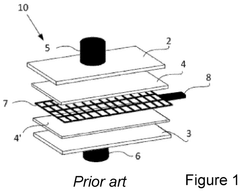
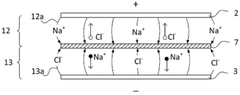
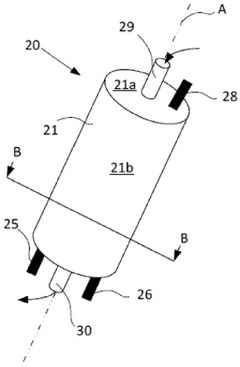
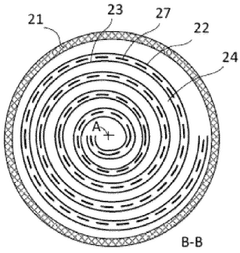
- The development of 'inverted capacitive deionization' (i-CDI) devices, which involve surface modifications to shift the potential of zero charge (Epzc) of electrodes, allowing for restored ion adsorption capabilities after each desorption cycle, thereby extending the separation lifetime and improving charge efficiency.


Capacitive deionization device
PatentWO2025114026A1
Innovation
- The introduction of a third electrode arranged between the first and second electrodes in the CDI device, allowing for a greater distribution of voltage across a larger carbon mass, thereby reducing the voltage on the first electrode by 50% and extending its operational life.
Environmental Impact Assessment of CDI Systems
Capacitive deionization systems present significant environmental advantages compared to traditional desalination technologies, particularly when electrode lifespan optimization is considered within the broader sustainability framework. The environmental footprint of CDI systems is intrinsically linked to electrode durability, as extended electrode lifecycles directly translate to reduced material consumption and waste generation throughout the system's operational period.
The carbon footprint analysis of CDI systems reveals substantial benefits over reverse osmosis and thermal desalination methods. CDI operates at lower energy intensities, typically consuming 1.5-3.0 kWh per cubic meter of treated water, compared to 3-6 kWh for reverse osmosis systems. When electrode lifespan is maximized through advanced materials and operational optimization, the embodied carbon associated with electrode replacement is significantly minimized, further enhancing the overall environmental performance.
Material sustainability considerations are paramount in CDI electrode development. Traditional activated carbon electrodes, while cost-effective, present challenges in terms of resource depletion and end-of-life management. Advanced electrode materials such as carbon nanotubes, graphene-based composites, and biomass-derived carbons offer improved environmental profiles through enhanced durability and renewable feedstock utilization. The lifecycle assessment of these materials demonstrates reduced environmental impact when electrode replacement frequency is minimized.
Waste stream management in CDI systems differs fundamentally from membrane-based technologies. CDI generates concentrated brine streams without chemical additives, eliminating concerns related to antiscalants and biocides commonly found in reverse osmosis reject streams. Extended electrode lifespans reduce the frequency of electrode disposal, minimizing solid waste generation and associated environmental burdens.
Water quality considerations reveal that optimized CDI electrodes maintain consistent performance over extended operational periods, ensuring stable treated water quality without the gradual degradation observed in membrane systems. This consistency reduces the need for post-treatment processes and associated chemical consumption.
The circular economy potential of CDI systems is enhanced through electrode lifespan optimization. Durable electrodes enable longer system operational periods, maximizing the utilization of embodied materials and energy. Furthermore, advanced electrode materials can often be regenerated or repurposed at end-of-life, supporting circular material flows and reducing virgin material demand in subsequent manufacturing cycles.
The carbon footprint analysis of CDI systems reveals substantial benefits over reverse osmosis and thermal desalination methods. CDI operates at lower energy intensities, typically consuming 1.5-3.0 kWh per cubic meter of treated water, compared to 3-6 kWh for reverse osmosis systems. When electrode lifespan is maximized through advanced materials and operational optimization, the embodied carbon associated with electrode replacement is significantly minimized, further enhancing the overall environmental performance.
Material sustainability considerations are paramount in CDI electrode development. Traditional activated carbon electrodes, while cost-effective, present challenges in terms of resource depletion and end-of-life management. Advanced electrode materials such as carbon nanotubes, graphene-based composites, and biomass-derived carbons offer improved environmental profiles through enhanced durability and renewable feedstock utilization. The lifecycle assessment of these materials demonstrates reduced environmental impact when electrode replacement frequency is minimized.
Waste stream management in CDI systems differs fundamentally from membrane-based technologies. CDI generates concentrated brine streams without chemical additives, eliminating concerns related to antiscalants and biocides commonly found in reverse osmosis reject streams. Extended electrode lifespans reduce the frequency of electrode disposal, minimizing solid waste generation and associated environmental burdens.
Water quality considerations reveal that optimized CDI electrodes maintain consistent performance over extended operational periods, ensuring stable treated water quality without the gradual degradation observed in membrane systems. This consistency reduces the need for post-treatment processes and associated chemical consumption.
The circular economy potential of CDI systems is enhanced through electrode lifespan optimization. Durable electrodes enable longer system operational periods, maximizing the utilization of embodied materials and energy. Furthermore, advanced electrode materials can often be regenerated or repurposed at end-of-life, supporting circular material flows and reducing virgin material demand in subsequent manufacturing cycles.
Economic Viability Analysis of CDI Technology
The economic viability of Capacitive Deionization (CDI) technology fundamentally depends on achieving optimal electrode lifespan while maintaining cost-effective operations. Current market analysis indicates that electrode replacement costs constitute approximately 40-60% of total operational expenses in CDI systems, making lifespan optimization a critical economic factor for widespread commercial adoption.
Investment analysis reveals that extending electrode lifespan from the current industry average of 2-3 years to 5-7 years could reduce the levelized cost of water treatment by 25-35%. This improvement would position CDI technology competitively against reverse osmosis and other established desalination methods, particularly in brackish water applications where energy consumption advantages become economically significant.
Cost-benefit modeling demonstrates that optimized electrode materials, despite higher initial capital investment, generate substantial long-term savings. Advanced carbon aerogel electrodes with enhanced durability command 40-50% higher upfront costs but deliver 3-4 times longer operational life, resulting in a net present value improvement of 20-30% over system lifetime.
Return on investment calculations for CDI electrode optimization projects typically show payback periods of 18-24 months in industrial applications. The economic attractiveness increases significantly in scenarios with high water treatment volumes, where electrode replacement frequency directly impacts operational continuity and maintenance costs.
Market penetration analysis suggests that achieving target electrode lifespans of 5+ years would expand CDI's addressable market from current niche applications to mainstream industrial water treatment, representing a potential market expansion from $200 million to over $2 billion globally. This economic transformation depends critically on breakthrough developments in electrode materials science and manufacturing processes that can deliver both enhanced durability and cost-effective production scalability.
Investment analysis reveals that extending electrode lifespan from the current industry average of 2-3 years to 5-7 years could reduce the levelized cost of water treatment by 25-35%. This improvement would position CDI technology competitively against reverse osmosis and other established desalination methods, particularly in brackish water applications where energy consumption advantages become economically significant.
Cost-benefit modeling demonstrates that optimized electrode materials, despite higher initial capital investment, generate substantial long-term savings. Advanced carbon aerogel electrodes with enhanced durability command 40-50% higher upfront costs but deliver 3-4 times longer operational life, resulting in a net present value improvement of 20-30% over system lifetime.
Return on investment calculations for CDI electrode optimization projects typically show payback periods of 18-24 months in industrial applications. The economic attractiveness increases significantly in scenarios with high water treatment volumes, where electrode replacement frequency directly impacts operational continuity and maintenance costs.
Market penetration analysis suggests that achieving target electrode lifespans of 5+ years would expand CDI's addressable market from current niche applications to mainstream industrial water treatment, representing a potential market expansion from $200 million to over $2 billion globally. This economic transformation depends critically on breakthrough developments in electrode materials science and manufacturing processes that can deliver both enhanced durability and cost-effective production scalability.
Unlock deeper insights with PatSnap Eureka Quick Research — get a full tech report to explore trends and direct your research. Try now!
Generate Your Research Report Instantly with AI Agent
Supercharge your innovation with PatSnap Eureka AI Agent Platform!