
Optimize Gas Transfer in Reciprocating Compressor Systems
MAR 20, 20269 MIN READ
Generate Your Research Report Instantly with AI Agent
Patsnap Eureka helps you evaluate technical feasibility & market potential.
Gas Transfer Optimization Background and Objectives
Reciprocating compressor systems have served as the backbone of industrial gas compression for over a century, evolving from simple mechanical devices to sophisticated engineered systems. These positive displacement machines operate through the cyclic motion of pistons within cylinders, creating pressure differentials that facilitate gas movement. The fundamental principle involves intake, compression, and discharge phases, where gas transfer efficiency directly impacts overall system performance and energy consumption.
The historical development of reciprocating compressors traces back to the industrial revolution, with significant technological advances occurring in valve design, cylinder configurations, and control systems. Early systems suffered from substantial energy losses due to inefficient gas transfer mechanisms, prompting continuous innovation in valve timing, port geometry, and flow dynamics. Modern applications span across petrochemical processing, natural gas transmission, refrigeration systems, and manufacturing processes requiring precise pressure control.
Current market demands emphasize enhanced energy efficiency, reduced environmental impact, and improved operational reliability. Industrial facilities face increasing pressure to minimize energy consumption while maintaining production capacity, making gas transfer optimization a critical performance parameter. The global push toward carbon neutrality has intensified focus on compressor efficiency improvements, as these systems typically consume significant portions of industrial energy budgets.
Gas transfer optimization encompasses multiple technical challenges including valve dynamics, pressure pulsations, heat transfer effects, and flow losses through system components. Inefficient gas transfer manifests as reduced volumetric efficiency, increased power consumption, elevated discharge temperatures, and accelerated component wear. These issues directly translate to higher operational costs, reduced equipment lifespan, and increased maintenance requirements.
The primary objective of gas transfer optimization involves maximizing volumetric efficiency while minimizing energy losses throughout the compression cycle. This encompasses optimizing valve response characteristics, reducing pressure drop across system components, minimizing dead volume effects, and improving heat management. Secondary objectives include extending equipment reliability, reducing maintenance frequency, and enhancing system controllability across varying operating conditions.
Achieving these optimization goals requires comprehensive understanding of fluid dynamics, thermodynamics, and mechanical system interactions. The integration of advanced materials, precision manufacturing techniques, and intelligent control systems presents opportunities for significant performance improvements. Success in gas transfer optimization directly correlates with reduced operational expenses, improved environmental compliance, and enhanced competitive positioning in energy-intensive industries.
The historical development of reciprocating compressors traces back to the industrial revolution, with significant technological advances occurring in valve design, cylinder configurations, and control systems. Early systems suffered from substantial energy losses due to inefficient gas transfer mechanisms, prompting continuous innovation in valve timing, port geometry, and flow dynamics. Modern applications span across petrochemical processing, natural gas transmission, refrigeration systems, and manufacturing processes requiring precise pressure control.
Current market demands emphasize enhanced energy efficiency, reduced environmental impact, and improved operational reliability. Industrial facilities face increasing pressure to minimize energy consumption while maintaining production capacity, making gas transfer optimization a critical performance parameter. The global push toward carbon neutrality has intensified focus on compressor efficiency improvements, as these systems typically consume significant portions of industrial energy budgets.
Gas transfer optimization encompasses multiple technical challenges including valve dynamics, pressure pulsations, heat transfer effects, and flow losses through system components. Inefficient gas transfer manifests as reduced volumetric efficiency, increased power consumption, elevated discharge temperatures, and accelerated component wear. These issues directly translate to higher operational costs, reduced equipment lifespan, and increased maintenance requirements.
The primary objective of gas transfer optimization involves maximizing volumetric efficiency while minimizing energy losses throughout the compression cycle. This encompasses optimizing valve response characteristics, reducing pressure drop across system components, minimizing dead volume effects, and improving heat management. Secondary objectives include extending equipment reliability, reducing maintenance frequency, and enhancing system controllability across varying operating conditions.
Achieving these optimization goals requires comprehensive understanding of fluid dynamics, thermodynamics, and mechanical system interactions. The integration of advanced materials, precision manufacturing techniques, and intelligent control systems presents opportunities for significant performance improvements. Success in gas transfer optimization directly correlates with reduced operational expenses, improved environmental compliance, and enhanced competitive positioning in energy-intensive industries.
Market Demand for Efficient Compressor Systems
The global reciprocating compressor market is experiencing robust growth driven by increasing industrialization and energy sector expansion. Industries such as oil and gas, petrochemicals, manufacturing, and power generation rely heavily on efficient gas compression systems for their operations. The demand for optimized gas transfer capabilities has intensified as companies seek to reduce operational costs while maintaining high performance standards.
Energy efficiency has become a critical factor in compressor selection and procurement decisions. Rising energy costs and stringent environmental regulations are pushing industrial operators to prioritize systems that minimize power consumption and reduce carbon footprints. This shift has created substantial market opportunities for advanced reciprocating compressor technologies that offer superior gas transfer optimization.
The oil and gas sector represents the largest market segment for reciprocating compressors, particularly in upstream operations including gas gathering, processing, and transmission. Natural gas production facilities require reliable compression systems to maintain optimal flow rates and pressure levels throughout the distribution network. Enhanced gas transfer efficiency directly translates to improved throughput and reduced operational expenses.
Manufacturing industries are increasingly adopting reciprocating compressors for process applications requiring precise pressure control and consistent gas delivery. The automotive, pharmaceutical, and food processing sectors demand high-performance compression systems that can handle varying load conditions while maintaining efficiency. These applications require sophisticated gas transfer optimization to ensure product quality and process reliability.
Emerging markets in Asia-Pacific and Latin America are driving significant demand growth as industrial infrastructure development accelerates. These regions are investing heavily in energy production facilities, chemical processing plants, and manufacturing capabilities, creating substantial opportunities for advanced compressor technologies.
The market is also responding to the growing emphasis on predictive maintenance and smart monitoring systems. Industrial operators seek compressor solutions that integrate advanced sensors and control systems to optimize gas transfer performance in real-time. This trend reflects the broader industrial digitization movement and the desire for autonomous system optimization.
Environmental compliance requirements are reshaping market preferences toward cleaner, more efficient compression technologies. Regulations targeting emissions reduction and energy efficiency are compelling operators to upgrade existing systems or invest in next-generation reciprocating compressors with optimized gas transfer capabilities.
Energy efficiency has become a critical factor in compressor selection and procurement decisions. Rising energy costs and stringent environmental regulations are pushing industrial operators to prioritize systems that minimize power consumption and reduce carbon footprints. This shift has created substantial market opportunities for advanced reciprocating compressor technologies that offer superior gas transfer optimization.
The oil and gas sector represents the largest market segment for reciprocating compressors, particularly in upstream operations including gas gathering, processing, and transmission. Natural gas production facilities require reliable compression systems to maintain optimal flow rates and pressure levels throughout the distribution network. Enhanced gas transfer efficiency directly translates to improved throughput and reduced operational expenses.
Manufacturing industries are increasingly adopting reciprocating compressors for process applications requiring precise pressure control and consistent gas delivery. The automotive, pharmaceutical, and food processing sectors demand high-performance compression systems that can handle varying load conditions while maintaining efficiency. These applications require sophisticated gas transfer optimization to ensure product quality and process reliability.
Emerging markets in Asia-Pacific and Latin America are driving significant demand growth as industrial infrastructure development accelerates. These regions are investing heavily in energy production facilities, chemical processing plants, and manufacturing capabilities, creating substantial opportunities for advanced compressor technologies.
The market is also responding to the growing emphasis on predictive maintenance and smart monitoring systems. Industrial operators seek compressor solutions that integrate advanced sensors and control systems to optimize gas transfer performance in real-time. This trend reflects the broader industrial digitization movement and the desire for autonomous system optimization.
Environmental compliance requirements are reshaping market preferences toward cleaner, more efficient compression technologies. Regulations targeting emissions reduction and energy efficiency are compelling operators to upgrade existing systems or invest in next-generation reciprocating compressors with optimized gas transfer capabilities.
Current Gas Transfer Limitations in Reciprocating Compressors
Reciprocating compressor systems face several fundamental limitations in gas transfer efficiency that significantly impact their overall performance and operational costs. The primary constraint stems from the inherent dead volume present in the compression chamber, which represents the clearance space between the piston at top dead center and the cylinder head. This dead volume typically accounts for 3-8% of the total cylinder volume and directly reduces volumetric efficiency by retaining compressed gas that must re-expand during the subsequent suction stroke.
Valve dynamics present another critical limitation affecting gas transfer performance. Traditional spring-loaded valves exhibit delayed opening and closing responses due to inertial forces and pressure differentials. The valve opening delay during suction creates pressure drops that reduce the effective gas intake, while delayed closure during discharge allows backflow that diminishes compression efficiency. These timing inefficiencies become more pronounced at higher operating speeds, creating a fundamental trade-off between compressor speed and volumetric efficiency.
Heat transfer effects impose additional constraints on gas transfer optimization. During compression, gas temperatures can rise significantly, leading to thermal expansion that reduces gas density and effective throughput. The cylinder walls, piston, and valve assemblies act as heat sources that warm the incoming gas during suction, further reducing volumetric efficiency. This thermal impact is particularly severe in multi-stage applications where interstage cooling becomes essential but adds system complexity.
Pressure pulsations and flow instabilities create dynamic limitations that affect gas transfer uniformity. The reciprocating motion generates periodic pressure waves in both suction and discharge systems, leading to flow reversals and reduced average flow rates. These pulsations can cause resonance effects in connected piping systems, potentially damaging equipment and creating additional pressure losses that impair gas transfer efficiency.
Mechanical constraints also limit optimization potential. Piston ring leakage allows compressed gas to bypass back to the suction side, directly reducing volumetric efficiency. Cylinder wear and thermal distortion can exacerbate these leakage paths over time. Additionally, the mechanical design must balance competing requirements between minimizing dead volume and maintaining adequate structural integrity for high-pressure applications.
Current reciprocating compressor designs typically achieve volumetric efficiencies ranging from 70-85%, indicating substantial room for improvement in gas transfer optimization through addressing these fundamental limitations.
Valve dynamics present another critical limitation affecting gas transfer performance. Traditional spring-loaded valves exhibit delayed opening and closing responses due to inertial forces and pressure differentials. The valve opening delay during suction creates pressure drops that reduce the effective gas intake, while delayed closure during discharge allows backflow that diminishes compression efficiency. These timing inefficiencies become more pronounced at higher operating speeds, creating a fundamental trade-off between compressor speed and volumetric efficiency.
Heat transfer effects impose additional constraints on gas transfer optimization. During compression, gas temperatures can rise significantly, leading to thermal expansion that reduces gas density and effective throughput. The cylinder walls, piston, and valve assemblies act as heat sources that warm the incoming gas during suction, further reducing volumetric efficiency. This thermal impact is particularly severe in multi-stage applications where interstage cooling becomes essential but adds system complexity.
Pressure pulsations and flow instabilities create dynamic limitations that affect gas transfer uniformity. The reciprocating motion generates periodic pressure waves in both suction and discharge systems, leading to flow reversals and reduced average flow rates. These pulsations can cause resonance effects in connected piping systems, potentially damaging equipment and creating additional pressure losses that impair gas transfer efficiency.
Mechanical constraints also limit optimization potential. Piston ring leakage allows compressed gas to bypass back to the suction side, directly reducing volumetric efficiency. Cylinder wear and thermal distortion can exacerbate these leakage paths over time. Additionally, the mechanical design must balance competing requirements between minimizing dead volume and maintaining adequate structural integrity for high-pressure applications.
Current reciprocating compressor designs typically achieve volumetric efficiencies ranging from 70-85%, indicating substantial room for improvement in gas transfer optimization through addressing these fundamental limitations.
Existing Gas Transfer Enhancement Solutions
01 Valve systems for controlling gas flow in reciprocating compressors
Reciprocating compressor systems utilize specialized valve mechanisms to control the intake and discharge of gas during compression cycles. These valve systems are designed to optimize gas transfer efficiency by minimizing pressure losses and ensuring proper timing of gas flow. Advanced valve designs include spring-loaded valves, plate valves, and poppet valves that respond to pressure differentials to regulate gas movement through the compression chambers.- Valve systems for controlling gas flow in reciprocating compressors: Reciprocating compressor systems utilize specialized valve mechanisms to control the intake and discharge of gas during compression cycles. These valve systems are designed to optimize gas transfer efficiency by minimizing pressure losses and ensuring proper timing of gas flow. Advanced valve designs include spring-loaded configurations, automatic valve actuation systems, and materials that withstand high-pressure differentials and cyclic loading conditions.
- Pulsation dampening and gas flow stabilization: Gas transfer in reciprocating compressor systems generates pressure pulsations that can affect system efficiency and component longevity. Pulsation dampening technologies employ volume bottles, acoustic filters, and resonator chambers to smooth out pressure fluctuations in the gas stream. These systems are strategically positioned in suction and discharge lines to minimize vibration, reduce noise, and improve overall gas transfer stability throughout the compression process.
- Multi-stage compression configurations for enhanced gas transfer: Multi-stage reciprocating compressor systems divide the compression process into sequential stages with intercooling between stages to improve efficiency and manage temperature rise. This configuration allows for higher overall compression ratios while maintaining acceptable discharge temperatures. The staged approach optimizes gas transfer by reducing the work required per stage and enabling better control of gas properties throughout the compression cycle.
- Cylinder and piston design for optimized gas displacement: The geometric design of cylinders and pistons directly impacts gas transfer efficiency in reciprocating compressors. Innovations include optimized clearance volumes, specialized piston ring configurations, and cylinder liner materials that reduce friction and gas leakage. Advanced designs incorporate features such as stepped pistons, variable clearance pockets, and capacity control mechanisms that allow for adjustable gas displacement to match varying operational demands.
- Gas cooling and heat management systems: Effective heat management is critical for maintaining gas transfer efficiency in reciprocating compressor systems. Cooling systems include cylinder jackets, intercoolers, and aftercoolers that remove compression heat from the gas stream. These thermal management solutions prevent excessive temperature rise that could reduce volumetric efficiency, damage components, or cause gas property changes that negatively impact the compression process and overall system performance.
02 Cylinder and piston configurations for enhanced gas transfer
The design of cylinders and pistons in reciprocating compressors significantly impacts gas transfer performance. Various configurations include single-acting and double-acting cylinders, multi-stage compression arrangements, and optimized piston geometries that maximize volumetric efficiency. These designs focus on reducing dead volume, minimizing gas leakage, and improving the overall compression ratio to enhance gas transfer capabilities.Expand Specific Solutions03 Capacity control and unloading mechanisms
Reciprocating compressor systems incorporate capacity control mechanisms to adjust gas transfer rates according to demand. These systems include clearance pocket controls, valve unloaders, and variable speed drives that modulate the amount of gas compressed per cycle. Such mechanisms enable efficient operation across varying load conditions while maintaining optimal energy consumption and preventing system overload.Expand Specific Solutions04 Gas pulsation dampening and flow stabilization
To improve gas transfer efficiency and reduce mechanical stress, reciprocating compressor systems employ pulsation dampening devices and flow stabilization technologies. These include acoustic filters, surge tanks, and specially designed piping configurations that minimize pressure fluctuations caused by the reciprocating motion. Such systems ensure smoother gas flow, reduce vibration, and protect downstream equipment from pressure surges.Expand Specific Solutions05 Lubrication and sealing systems for gas containment
Effective gas transfer in reciprocating compressors requires robust lubrication and sealing systems to prevent gas leakage and maintain compression efficiency. These systems include piston rings, rod packing, and specialized lubricants designed to withstand high pressures and temperatures. Advanced sealing technologies minimize gas slip between compression stages and ensure that the maximum amount of gas is transferred through the system with minimal losses.Expand Specific Solutions
Key Players in Reciprocating Compressor Industry
The reciprocating compressor gas transfer optimization market represents a mature industrial sector experiencing steady technological evolution driven by efficiency and environmental demands. The industry spans multiple application domains including HVAC, industrial refrigeration, and energy processing, with established players demonstrating varying levels of technological sophistication. Major manufacturers like General Electric Company, Kobe Steel Ltd., and Copeland LP lead with comprehensive compressor portfolios and advanced R&D capabilities, while specialized firms such as Aci Services Inc. and Optimum Power Technology focus on niche optimization solutions. Research institutions including Southwest Research Institute and Industrial Technology Research Institute contribute fundamental innovations. The technology maturity varies significantly across segments, with companies like Dresser-Rand Co., Nuovo Pignone Tecnologie Srl, and Pratt & Whitney Canada Corp. advancing high-performance applications, while others like LG Electronics Inc. and Gree Electric Appliances focus on commercial-scale implementations, indicating a fragmented but evolving competitive landscape.
Nuovo Pignone Tecnologie Srl
Technical Solution: Nuovo Pignone, part of Baker Hughes, specializes in high-performance reciprocating compressors for oil and gas applications with advanced gas transfer optimization technologies. Their systems incorporate proprietary valve designs with reduced pressure drop characteristics and enhanced sealing mechanisms to minimize gas leakage during compression cycles. The company has developed innovative piston ring technologies and cylinder liner materials that reduce friction losses while maintaining optimal gas sealing. Their compressor control systems utilize advanced algorithms to optimize suction and discharge valve timing, reducing power consumption by up to 15% while increasing throughput. Additionally, they employ sophisticated intercooling and aftercooling systems to manage gas temperatures and improve volumetric efficiency throughout the compression process.
Strengths: Specialized expertise in high-pressure gas applications and proven track record in oil and gas industry. Weaknesses: Limited presence in smaller-scale applications and higher maintenance complexity.
Copeland LP
Technical Solution: Copeland has developed comprehensive gas transfer optimization solutions for reciprocating compressor systems, focusing on refrigeration and HVAC applications. Their technology includes advanced scroll and reciprocating compressor designs with optimized gas flow paths and reduced internal volume ratios to minimize reexpansion losses. The company's systems feature variable capacity control mechanisms that adjust gas flow rates based on demand, improving overall system efficiency. Copeland's innovations include enhanced suction and discharge port designs, improved valve plate configurations, and advanced motor control algorithms that synchronize compressor operation with system requirements. Their compressors incorporate low-friction components and optimized clearance volumes to maximize gas transfer efficiency while reducing energy consumption and operational costs.
Strengths: Strong market presence in HVAC applications with proven energy efficiency improvements. Weaknesses: Primarily focused on smaller-scale applications with limited high-pressure capabilities.
Core Innovations in Compressor Gas Transfer Optimization
Dynamic variable orifice for compressor pulsation control
PatentActiveUS20180313343A9
Innovation
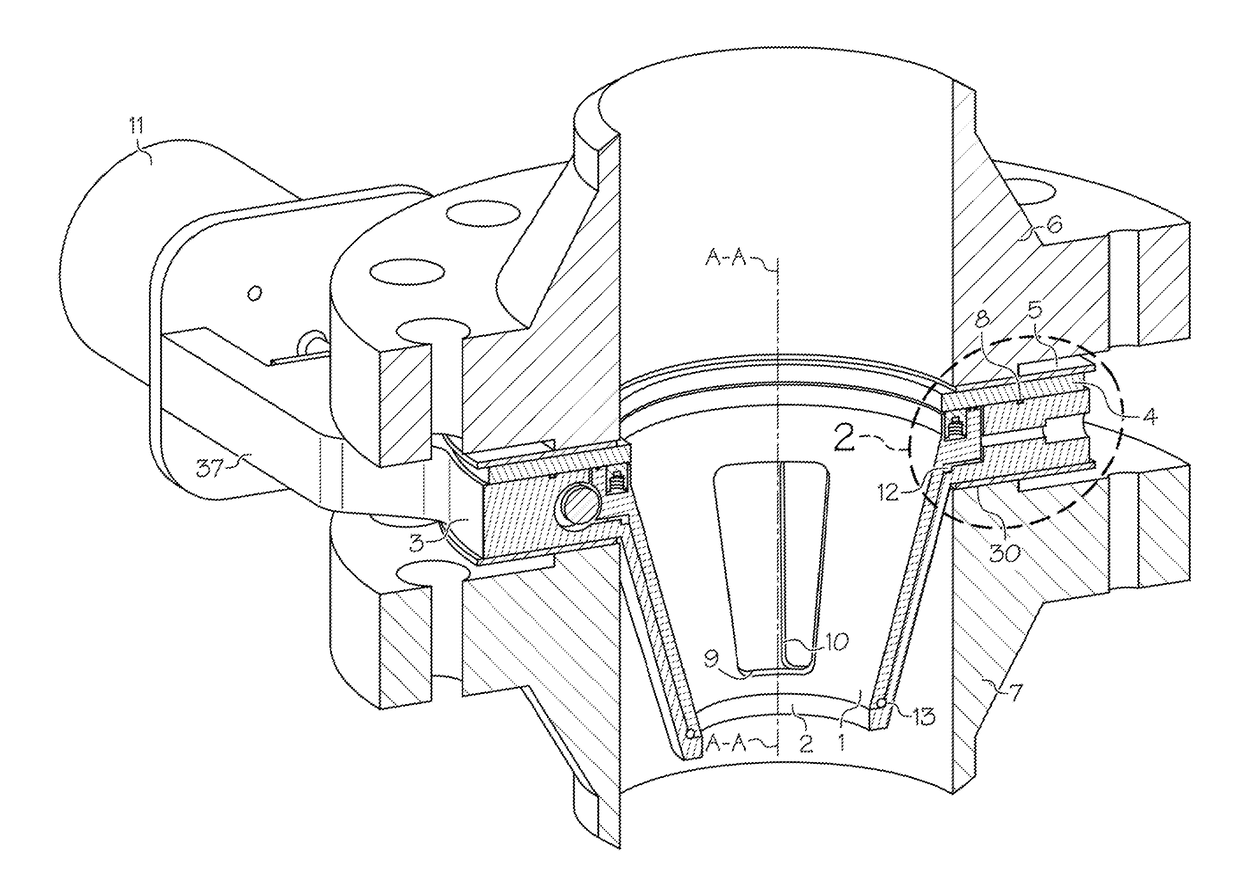
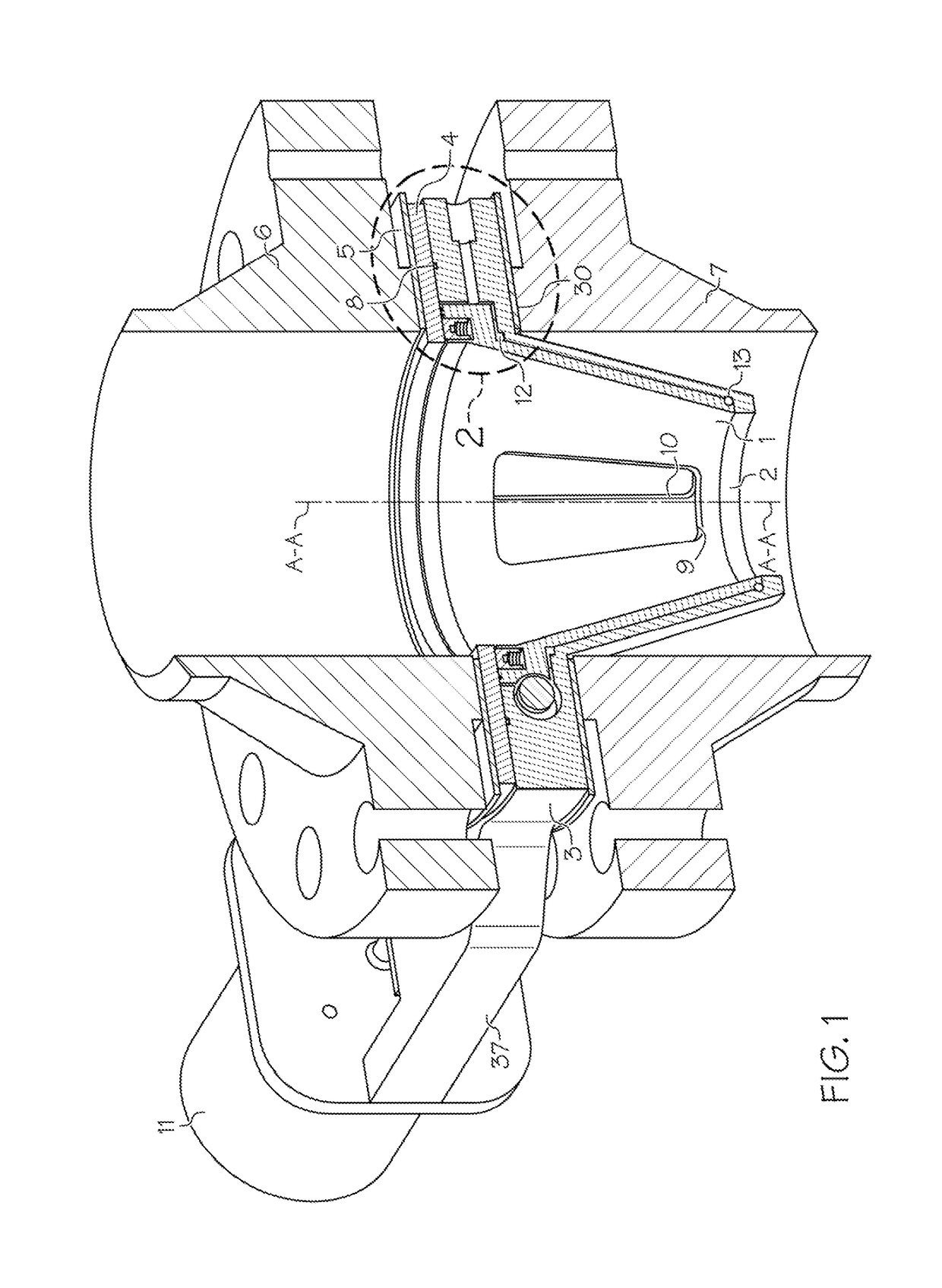
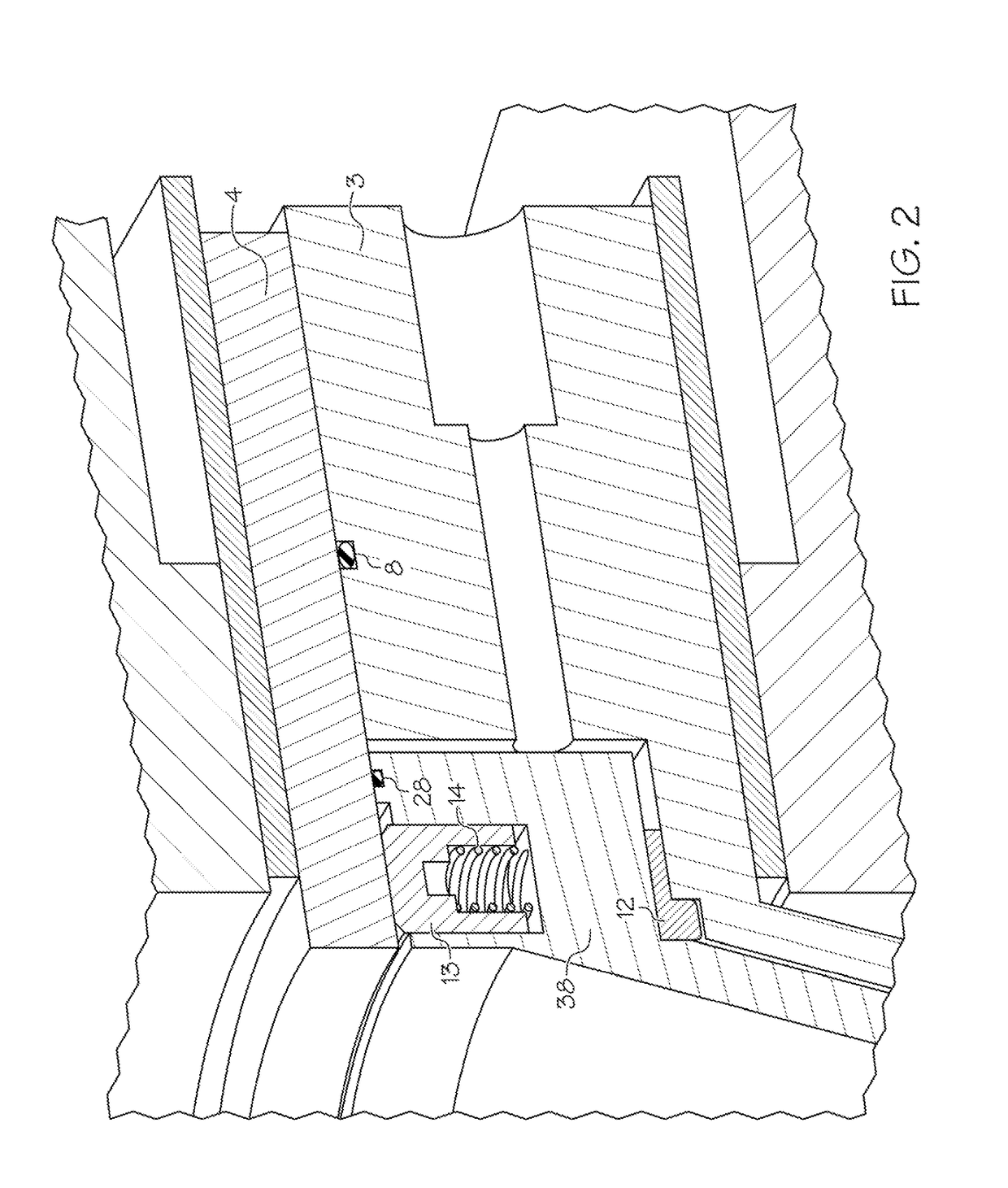
- A dynamic variable orifice (DVO) apparatus that adjusts its effective orifice size in response to changing operating conditions, allowing for optimal pulsation control with minimal pressure drop and power consumption, using a conical or disc-like design with rotatable cages and a bevel gear drive for manual or automated adjustment.

Device for continuous regulation of the gas flow rate processed by a reciprocating compressor
PatentInactiveEP1184571B2
Innovation
- A hydraulic system with directional solenoid valves and an electronic controller adjusts the volume of additional dead spaces within the compressor cylinders, allowing continuous regulation of gas flow rates without recirculation or valve lifters, using a fluid mechanics cylinder driven by a compressed oil system.


Environmental Regulations for Industrial Compressor Systems
Environmental regulations governing industrial compressor systems have become increasingly stringent worldwide, driven by growing concerns over air quality, greenhouse gas emissions, and industrial noise pollution. These regulatory frameworks directly impact the optimization of gas transfer in reciprocating compressor systems, as operators must balance performance efficiency with compliance requirements.
The Clean Air Act in the United States, along with EPA regulations such as the New Source Performance Standards (NSPS) and National Emission Standards for Hazardous Air Pollutants (NESHAP), establishes strict limits on volatile organic compound (VOC) emissions and methane leakage from compressor systems. Similar regulations exist globally, including the European Union's Industrial Emissions Directive and various national standards in Asia-Pacific regions.
Emission control requirements significantly influence compressor design and operation parameters. Reciprocating compressors must incorporate advanced sealing technologies, leak detection systems, and vapor recovery units to minimize fugitive emissions during gas transfer processes. These additions can affect system efficiency and require careful integration to maintain optimal performance while meeting regulatory thresholds.
Noise pollution regulations present additional challenges for reciprocating compressor optimization. Many jurisdictions impose strict decibel limits, particularly in urban or residential areas, necessitating the implementation of sound dampening technologies, vibration isolation systems, and operational scheduling restrictions that may impact continuous gas transfer operations.
Recent regulatory trends indicate a shift toward more comprehensive lifecycle assessments and carbon footprint considerations. Emerging regulations are beginning to address not only direct emissions but also indirect environmental impacts, including energy consumption efficiency standards and requirements for renewable energy integration in compressor operations.
Compliance monitoring and reporting requirements have also intensified, with many regulations mandating real-time emission monitoring systems, periodic performance testing, and detailed documentation of operational parameters. These requirements influence the selection of control systems and instrumentation in reciprocating compressor installations, adding complexity to optimization efforts while ensuring environmental protection standards are maintained throughout the gas transfer process.
The Clean Air Act in the United States, along with EPA regulations such as the New Source Performance Standards (NSPS) and National Emission Standards for Hazardous Air Pollutants (NESHAP), establishes strict limits on volatile organic compound (VOC) emissions and methane leakage from compressor systems. Similar regulations exist globally, including the European Union's Industrial Emissions Directive and various national standards in Asia-Pacific regions.
Emission control requirements significantly influence compressor design and operation parameters. Reciprocating compressors must incorporate advanced sealing technologies, leak detection systems, and vapor recovery units to minimize fugitive emissions during gas transfer processes. These additions can affect system efficiency and require careful integration to maintain optimal performance while meeting regulatory thresholds.
Noise pollution regulations present additional challenges for reciprocating compressor optimization. Many jurisdictions impose strict decibel limits, particularly in urban or residential areas, necessitating the implementation of sound dampening technologies, vibration isolation systems, and operational scheduling restrictions that may impact continuous gas transfer operations.
Recent regulatory trends indicate a shift toward more comprehensive lifecycle assessments and carbon footprint considerations. Emerging regulations are beginning to address not only direct emissions but also indirect environmental impacts, including energy consumption efficiency standards and requirements for renewable energy integration in compressor operations.
Compliance monitoring and reporting requirements have also intensified, with many regulations mandating real-time emission monitoring systems, periodic performance testing, and detailed documentation of operational parameters. These requirements influence the selection of control systems and instrumentation in reciprocating compressor installations, adding complexity to optimization efforts while ensuring environmental protection standards are maintained throughout the gas transfer process.
Energy Efficiency Standards and Sustainability Requirements
The optimization of gas transfer in reciprocating compressor systems operates within an increasingly stringent regulatory landscape focused on energy efficiency and environmental sustainability. Global energy efficiency standards have evolved significantly, with organizations such as the International Energy Agency (IEA) and various national regulatory bodies establishing comprehensive frameworks that directly impact compressor system design and operation.
Current energy efficiency standards mandate minimum performance thresholds for industrial compressor systems, typically measured through metrics such as specific power consumption, volumetric efficiency, and overall system coefficient of performance. The European Union's Ecodesign Directive and similar regulations in North America and Asia-Pacific regions require compressor manufacturers to demonstrate compliance with energy efficiency benchmarks that continue to become more demanding. These standards specifically address gas transfer optimization by setting limits on energy losses during compression cycles and establishing minimum efficiency ratings for different compressor categories.
Sustainability requirements have introduced additional complexity to gas transfer optimization efforts. Carbon footprint reduction mandates require compressor systems to minimize greenhouse gas emissions throughout their operational lifecycle. This includes not only direct emissions from energy consumption but also indirect emissions from refrigerant leakage in certain applications. The Montreal Protocol and its amendments, along with regional regulations like the EU F-Gas Regulation, impose strict controls on high global warming potential gases used in compressor systems.
Emerging sustainability frameworks emphasize circular economy principles, requiring manufacturers to design compressor systems for enhanced durability, repairability, and end-of-life recyclability. These requirements influence gas transfer optimization strategies by promoting the use of sustainable materials, modular designs that facilitate maintenance, and advanced monitoring systems that enable predictive maintenance to extend equipment lifespan.
The integration of renewable energy sources into industrial operations has created new efficiency standards specifically targeting variable-load performance. Compressor systems must now demonstrate optimal gas transfer efficiency across wide operating ranges to accommodate fluctuating renewable energy availability. This has led to the development of adaptive control systems and variable-speed drive technologies that maintain high efficiency during partial-load conditions.
Compliance with these evolving standards requires continuous innovation in gas transfer optimization techniques, driving the adoption of advanced materials, smart control systems, and integrated monitoring technologies that ensure both regulatory compliance and operational excellence.
Current energy efficiency standards mandate minimum performance thresholds for industrial compressor systems, typically measured through metrics such as specific power consumption, volumetric efficiency, and overall system coefficient of performance. The European Union's Ecodesign Directive and similar regulations in North America and Asia-Pacific regions require compressor manufacturers to demonstrate compliance with energy efficiency benchmarks that continue to become more demanding. These standards specifically address gas transfer optimization by setting limits on energy losses during compression cycles and establishing minimum efficiency ratings for different compressor categories.
Sustainability requirements have introduced additional complexity to gas transfer optimization efforts. Carbon footprint reduction mandates require compressor systems to minimize greenhouse gas emissions throughout their operational lifecycle. This includes not only direct emissions from energy consumption but also indirect emissions from refrigerant leakage in certain applications. The Montreal Protocol and its amendments, along with regional regulations like the EU F-Gas Regulation, impose strict controls on high global warming potential gases used in compressor systems.
Emerging sustainability frameworks emphasize circular economy principles, requiring manufacturers to design compressor systems for enhanced durability, repairability, and end-of-life recyclability. These requirements influence gas transfer optimization strategies by promoting the use of sustainable materials, modular designs that facilitate maintenance, and advanced monitoring systems that enable predictive maintenance to extend equipment lifespan.
The integration of renewable energy sources into industrial operations has created new efficiency standards specifically targeting variable-load performance. Compressor systems must now demonstrate optimal gas transfer efficiency across wide operating ranges to accommodate fluctuating renewable energy availability. This has led to the development of adaptive control systems and variable-speed drive technologies that maintain high efficiency during partial-load conditions.
Compliance with these evolving standards requires continuous innovation in gas transfer optimization techniques, driving the adoption of advanced materials, smart control systems, and integrated monitoring technologies that ensure both regulatory compliance and operational excellence.
Unlock deeper insights with Patsnap Eureka Quick Research — get a full tech report to explore trends and direct your research. Try now!
Generate Your Research Report Instantly with AI Agent
Supercharge your innovation with Patsnap Eureka AI Agent Platform!