
Reciprocating Compressor Failure Prediction: Key Metrics
MAR 20, 20269 MIN READ
Generate Your Research Report Instantly with AI Agent
Patsnap Eureka helps you evaluate technical feasibility & market potential.
Reciprocating Compressor Failure Prediction Background and Objectives
Reciprocating compressors have served as critical components in industrial operations for over a century, evolving from simple mechanical devices to sophisticated systems integral to petrochemical, manufacturing, and energy sectors. These machines operate through cyclical piston movements that compress gases, making them essential for processes ranging from natural gas processing to refrigeration systems. The mechanical complexity and high-stress operating conditions inherent in reciprocating compressors create numerous potential failure points, including valve malfunctions, bearing wear, piston ring deterioration, and cylinder head cracking.
The evolution of compressor technology has been marked by significant milestones, beginning with basic steam-driven units in the early 1900s, progressing through electrically-powered systems in the mid-20th century, and advancing to today's computer-controlled, variable-speed drive systems. Modern reciprocating compressors incorporate advanced materials, precision manufacturing, and sophisticated control systems, yet their fundamental operating principles remain unchanged, creating a unique challenge for predictive maintenance strategies.
Current industry trends indicate a shift toward predictive maintenance methodologies driven by the Industrial Internet of Things (IIoT) and artificial intelligence technologies. Traditional reactive maintenance approaches, which address failures after they occur, have proven costly and disruptive to operations. Scheduled preventive maintenance, while reducing unexpected failures, often results in unnecessary component replacements and extended downtime periods.
The primary objective of developing advanced failure prediction capabilities for reciprocating compressors centers on transitioning from reactive and preventive maintenance paradigms to truly predictive maintenance strategies. This transformation aims to minimize unplanned downtime, reduce maintenance costs, extend equipment lifespan, and enhance overall operational efficiency. Key technical goals include achieving failure prediction accuracy rates exceeding 90%, extending prediction horizons to 30-90 days before actual failure events, and reducing false positive rates to below 5%.
Secondary objectives encompass the development of standardized key performance indicators that can be universally applied across different compressor models and operating conditions. These metrics must provide actionable insights for maintenance teams while remaining interpretable by operations personnel without extensive technical backgrounds. The ultimate goal involves creating an integrated predictive maintenance ecosystem that seamlessly combines real-time monitoring, advanced analytics, and automated decision-making processes to optimize compressor reliability and performance across diverse industrial applications.
The evolution of compressor technology has been marked by significant milestones, beginning with basic steam-driven units in the early 1900s, progressing through electrically-powered systems in the mid-20th century, and advancing to today's computer-controlled, variable-speed drive systems. Modern reciprocating compressors incorporate advanced materials, precision manufacturing, and sophisticated control systems, yet their fundamental operating principles remain unchanged, creating a unique challenge for predictive maintenance strategies.
Current industry trends indicate a shift toward predictive maintenance methodologies driven by the Industrial Internet of Things (IIoT) and artificial intelligence technologies. Traditional reactive maintenance approaches, which address failures after they occur, have proven costly and disruptive to operations. Scheduled preventive maintenance, while reducing unexpected failures, often results in unnecessary component replacements and extended downtime periods.
The primary objective of developing advanced failure prediction capabilities for reciprocating compressors centers on transitioning from reactive and preventive maintenance paradigms to truly predictive maintenance strategies. This transformation aims to minimize unplanned downtime, reduce maintenance costs, extend equipment lifespan, and enhance overall operational efficiency. Key technical goals include achieving failure prediction accuracy rates exceeding 90%, extending prediction horizons to 30-90 days before actual failure events, and reducing false positive rates to below 5%.
Secondary objectives encompass the development of standardized key performance indicators that can be universally applied across different compressor models and operating conditions. These metrics must provide actionable insights for maintenance teams while remaining interpretable by operations personnel without extensive technical backgrounds. The ultimate goal involves creating an integrated predictive maintenance ecosystem that seamlessly combines real-time monitoring, advanced analytics, and automated decision-making processes to optimize compressor reliability and performance across diverse industrial applications.
Market Demand for Predictive Maintenance in Compressor Systems
The global predictive maintenance market for industrial compressor systems has experienced substantial growth driven by increasing operational costs and the critical need for unplanned downtime reduction. Manufacturing industries, oil and gas sectors, and power generation facilities represent the primary demand drivers, where reciprocating compressor failures can result in significant production losses and safety hazards. The shift from reactive to predictive maintenance strategies has become a strategic imperative for organizations seeking to optimize asset performance and extend equipment lifecycle.
Industrial facilities are increasingly recognizing the economic benefits of implementing predictive maintenance solutions for reciprocating compressors. Traditional maintenance approaches, including scheduled preventive maintenance, often result in unnecessary component replacements and fail to prevent unexpected failures. The demand for real-time monitoring systems that can predict compressor failures through key performance metrics has intensified as organizations seek to minimize maintenance costs while maximizing equipment availability.
The petrochemical and natural gas processing industries demonstrate particularly strong demand for predictive maintenance solutions due to the critical role of reciprocating compressors in their operations. These sectors require continuous operation with minimal interruptions, making failure prediction capabilities essential for maintaining production schedules and ensuring safety compliance. The complexity of modern compressor systems and their integration into larger process networks has further amplified the need for sophisticated monitoring and prediction technologies.
Emerging markets in Asia-Pacific and Latin America are experiencing rapid industrialization, creating substantial demand for predictive maintenance solutions. These regions are investing heavily in modern manufacturing facilities and energy infrastructure, where predictive maintenance technologies are being integrated from the initial design phase rather than retrofitted. The growing awareness of total cost of ownership concepts has driven demand for comprehensive monitoring systems that can track multiple failure indicators simultaneously.
The increasing adoption of Industry 4.0 principles and digital transformation initiatives across manufacturing sectors has created favorable conditions for predictive maintenance market expansion. Organizations are seeking integrated solutions that can seamlessly connect with existing enterprise systems and provide actionable insights for maintenance decision-making. The demand extends beyond simple monitoring to encompass advanced analytics capabilities that can identify failure patterns and optimize maintenance scheduling based on actual equipment condition rather than predetermined intervals.
Industrial facilities are increasingly recognizing the economic benefits of implementing predictive maintenance solutions for reciprocating compressors. Traditional maintenance approaches, including scheduled preventive maintenance, often result in unnecessary component replacements and fail to prevent unexpected failures. The demand for real-time monitoring systems that can predict compressor failures through key performance metrics has intensified as organizations seek to minimize maintenance costs while maximizing equipment availability.
The petrochemical and natural gas processing industries demonstrate particularly strong demand for predictive maintenance solutions due to the critical role of reciprocating compressors in their operations. These sectors require continuous operation with minimal interruptions, making failure prediction capabilities essential for maintaining production schedules and ensuring safety compliance. The complexity of modern compressor systems and their integration into larger process networks has further amplified the need for sophisticated monitoring and prediction technologies.
Emerging markets in Asia-Pacific and Latin America are experiencing rapid industrialization, creating substantial demand for predictive maintenance solutions. These regions are investing heavily in modern manufacturing facilities and energy infrastructure, where predictive maintenance technologies are being integrated from the initial design phase rather than retrofitted. The growing awareness of total cost of ownership concepts has driven demand for comprehensive monitoring systems that can track multiple failure indicators simultaneously.
The increasing adoption of Industry 4.0 principles and digital transformation initiatives across manufacturing sectors has created favorable conditions for predictive maintenance market expansion. Organizations are seeking integrated solutions that can seamlessly connect with existing enterprise systems and provide actionable insights for maintenance decision-making. The demand extends beyond simple monitoring to encompass advanced analytics capabilities that can identify failure patterns and optimize maintenance scheduling based on actual equipment condition rather than predetermined intervals.
Current State and Challenges in Compressor Condition Monitoring
The current landscape of reciprocating compressor condition monitoring presents a complex array of technological capabilities alongside persistent challenges that limit the effectiveness of failure prediction systems. Modern monitoring approaches have evolved from basic vibration analysis to sophisticated multi-parameter surveillance systems, yet significant gaps remain in achieving reliable predictive maintenance outcomes.
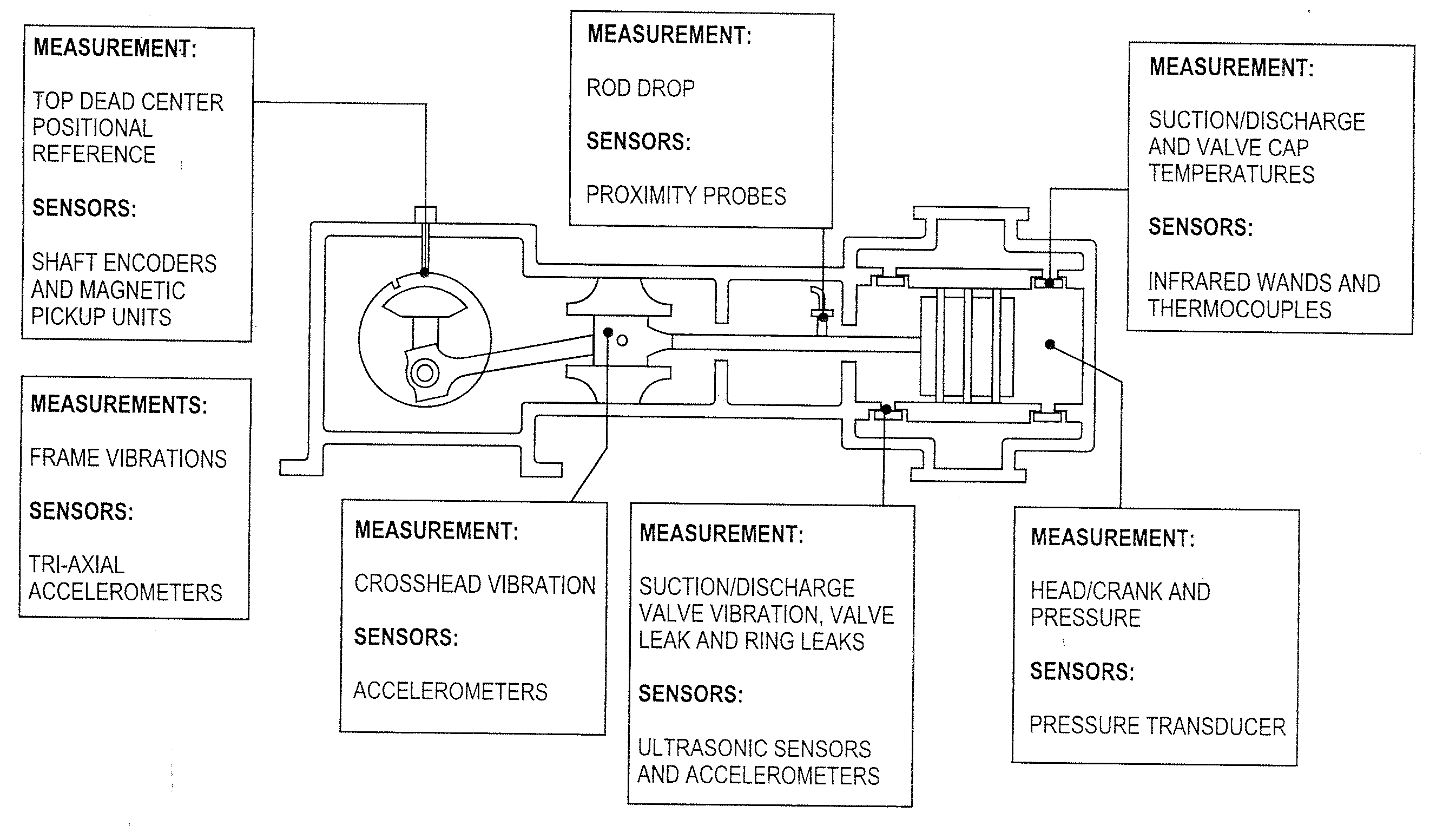
Contemporary monitoring systems typically employ a combination of vibration sensors, temperature probes, pressure transducers, and acoustic emission detectors to capture operational data. Advanced installations integrate real-time data acquisition systems with cloud-based analytics platforms, enabling continuous assessment of compressor health. However, the interpretation of this data remains problematic due to the inherent complexity of reciprocating compressor dynamics and the multitude of failure modes that can manifest simultaneously.
One of the primary technical challenges lies in the signal processing domain, where traditional frequency-domain analysis often fails to capture the transient nature of reciprocating compressor faults. The cyclic loading patterns and varying operational conditions create signal artifacts that can mask early fault indicators or generate false alarms. Current filtering and signal conditioning techniques struggle to differentiate between normal operational variations and genuine degradation patterns, particularly in the early stages of component wear.
Data integration represents another significant obstacle in existing monitoring frameworks. While individual sensors may provide accurate measurements within their specific domains, correlating multi-parameter data to establish comprehensive health indicators remains technically challenging. The lack of standardized data fusion methodologies results in fragmented monitoring approaches that fail to capture the holistic condition of the compressor system.
The geographical distribution of monitoring technology adoption reveals substantial disparities, with advanced predictive maintenance systems predominantly deployed in developed industrial regions. Emerging markets often rely on basic monitoring approaches due to cost constraints and limited technical expertise, creating a global technology gap that affects overall industry advancement.
Machine learning integration, while promising, faces implementation challenges related to training data quality and algorithm validation. Many existing systems lack sufficient historical failure data to develop robust predictive models, and the diversity of compressor configurations across different applications complicates the development of universal monitoring solutions.
Contemporary monitoring systems typically employ a combination of vibration sensors, temperature probes, pressure transducers, and acoustic emission detectors to capture operational data. Advanced installations integrate real-time data acquisition systems with cloud-based analytics platforms, enabling continuous assessment of compressor health. However, the interpretation of this data remains problematic due to the inherent complexity of reciprocating compressor dynamics and the multitude of failure modes that can manifest simultaneously.
One of the primary technical challenges lies in the signal processing domain, where traditional frequency-domain analysis often fails to capture the transient nature of reciprocating compressor faults. The cyclic loading patterns and varying operational conditions create signal artifacts that can mask early fault indicators or generate false alarms. Current filtering and signal conditioning techniques struggle to differentiate between normal operational variations and genuine degradation patterns, particularly in the early stages of component wear.
Data integration represents another significant obstacle in existing monitoring frameworks. While individual sensors may provide accurate measurements within their specific domains, correlating multi-parameter data to establish comprehensive health indicators remains technically challenging. The lack of standardized data fusion methodologies results in fragmented monitoring approaches that fail to capture the holistic condition of the compressor system.
The geographical distribution of monitoring technology adoption reveals substantial disparities, with advanced predictive maintenance systems predominantly deployed in developed industrial regions. Emerging markets often rely on basic monitoring approaches due to cost constraints and limited technical expertise, creating a global technology gap that affects overall industry advancement.
Machine learning integration, while promising, faces implementation challenges related to training data quality and algorithm validation. Many existing systems lack sufficient historical failure data to develop robust predictive models, and the diversity of compressor configurations across different applications complicates the development of universal monitoring solutions.
Existing Failure Prediction Solutions for Reciprocating Compressors
01 Performance monitoring and efficiency metrics
Key metrics for reciprocating compressors include monitoring operational efficiency through parameters such as volumetric efficiency, isentropic efficiency, and mechanical efficiency. These metrics help assess the compressor's ability to convert input power into useful compression work. Real-time monitoring systems track these performance indicators to optimize compressor operation and identify potential issues before they lead to failures. Advanced diagnostic tools analyze efficiency trends over time to support predictive maintenance strategies.- Performance monitoring and efficiency metrics: Key metrics for reciprocating compressors include monitoring operational efficiency through parameters such as volumetric efficiency, compression ratio, and power consumption. These metrics help assess the overall performance of the compressor and identify areas for optimization. Real-time monitoring systems can track these parameters to ensure the compressor operates within optimal ranges and detect performance degradation over time.
- Vibration and mechanical health indicators: Vibration analysis serves as a critical metric for assessing the mechanical condition of reciprocating compressors. Monitoring vibration levels, frequencies, and patterns helps detect issues such as bearing wear, misalignment, and component looseness. These metrics enable predictive maintenance strategies by identifying potential failures before they occur, thereby reducing downtime and maintenance costs.
- Temperature and thermal management metrics: Temperature monitoring at various points in the compressor system provides essential metrics for operational safety and efficiency. Key temperature measurements include discharge temperature, cylinder temperature, and bearing temperature. These thermal metrics help prevent overheating, optimize cooling systems, and ensure the compressor operates within safe temperature ranges to extend component life.
- Pressure and flow rate measurements: Pressure differentials and flow rate measurements constitute fundamental metrics for reciprocating compressor operation. These include suction pressure, discharge pressure, and volumetric flow rate. Monitoring these parameters ensures the compressor meets process requirements and helps identify issues such as valve leakage, capacity loss, or system restrictions that may affect performance.
- Reliability and maintenance metrics: Reliability metrics track the operational availability and maintenance requirements of reciprocating compressors. These include mean time between failures, maintenance intervals, component life cycles, and failure rate analysis. Such metrics support maintenance planning, spare parts management, and overall asset management strategies to maximize compressor uptime and minimize operational costs.
02 Vibration and acoustic monitoring
Vibration analysis and acoustic measurements serve as critical metrics for assessing reciprocating compressor health. These parameters help detect mechanical issues such as bearing wear, misalignment, valve problems, and structural defects. Monitoring systems measure vibration amplitude, frequency, and patterns at various locations on the compressor. Acoustic signatures provide additional diagnostic information about internal component conditions and operational anomalies that may not be visible through other monitoring methods.Expand Specific Solutions03 Pressure and temperature parameters
Critical operational metrics include monitoring suction and discharge pressures, pressure ratios, and temperature measurements at various stages of compression. These parameters directly impact compressor performance, energy consumption, and component longevity. Temperature monitoring helps identify issues such as inadequate cooling, excessive friction, or abnormal compression processes. Pressure differential measurements across valves and stages provide insights into valve performance and overall compression efficiency.Expand Specific Solutions04 Valve performance and timing metrics
Valve operation metrics are essential for reciprocating compressor performance assessment. Key indicators include valve opening and closing timing, valve lift characteristics, flow coefficients, and leakage rates. Monitoring valve performance helps identify wear, damage, or improper operation that can significantly impact compressor efficiency and reliability. Advanced monitoring systems track valve dynamics throughout the compression cycle to detect deviations from optimal performance patterns.Expand Specific Solutions05 Capacity and flow rate measurements
Volumetric flow rate, mass flow rate, and capacity utilization are fundamental metrics for reciprocating compressor operation. These measurements help determine whether the compressor is meeting process requirements and operating within design parameters. Capacity monitoring enables optimization of compressor loading and unloading cycles, supports energy management initiatives, and helps identify performance degradation over time. Flow measurements combined with power consumption data provide comprehensive efficiency assessments.Expand Specific Solutions
Key Players in Compressor Monitoring and Predictive Analytics
The reciprocating compressor failure prediction market represents a mature industrial segment within the broader predictive maintenance ecosystem, driven by critical infrastructure needs across oil & gas, manufacturing, and HVAC sectors. The market demonstrates substantial scale, supported by major industrial conglomerates like General Electric, Baker Hughes, Samsung Electronics, and Mitsubishi Electric, alongside specialized players such as Windrock and Performance Pulsation Control. Technology maturity varies significantly across participants, with established giants like GE and Baker Hughes leveraging decades of industrial IoT experience, while emerging companies like Beijing Bohua Xinzhi Technology and Detechtion USA focus on AI-driven diagnostic solutions. Research institutions including Xi'an Jiaotong University and University of Missouri contribute foundational algorithms, while energy majors like PetroChina and China Petroleum & Chemical Corp. drive demand-side innovation. The competitive landscape reflects a consolidating market where traditional equipment manufacturers are integrating predictive analytics capabilities, creating barriers for pure-play software entrants but opportunities for specialized sensor and algorithm developers.
General Electric Company
Technical Solution: GE has developed comprehensive reciprocating compressor failure prediction systems utilizing advanced vibration analysis, thermodynamic monitoring, and machine learning algorithms. Their Predix platform integrates multiple sensor data streams including pressure pulsations, temperature variations, valve dynamics, and bearing condition monitoring to predict failures up to 30 days in advance. The system employs digital twin technology to simulate compressor behavior under various operating conditions, enabling predictive maintenance scheduling and reducing unplanned downtime by up to 25%. GE's approach combines real-time data analytics with historical performance patterns to identify early warning indicators of component degradation, particularly focusing on valve wear, piston ring deterioration, and bearing failures.
Strengths: Comprehensive industrial IoT platform, extensive field experience, advanced digital twin capabilities. Weaknesses: High implementation costs, complex system integration requirements.
Hitachi Industrial Equipment Systems Co., Ltd.
Technical Solution: Hitachi has developed integrated condition monitoring solutions for reciprocating compressors that combine IoT sensors, edge computing, and cloud-based analytics for failure prediction. Their Lumada platform incorporates machine learning algorithms to analyze multiple data streams including vibration patterns, thermal imaging data, lubricant analysis results, and operational parameters. The system focuses on predicting failures in key components such as valves, pistons, connecting rods, and bearings through continuous monitoring of performance indicators. Hitachi's approach utilizes digital signal processing techniques to identify subtle changes in compressor behavior that precede component failures. Their predictive maintenance solution provides automated alerts and maintenance recommendations based on real-time condition assessment, helping operators optimize maintenance schedules and reduce operational costs while maintaining high reliability standards for critical compression equipment.
Strengths: Advanced IoT integration capabilities, comprehensive data analytics platform, strong automation expertise. Weaknesses: Higher complexity in system deployment, requires significant technical expertise for optimization.
Core Technologies in Compressor Health Monitoring Metrics
Method of Predicting Failure Events for Reciprocating Compressors
PatentActiveUS20210072733A1
Innovation
- A control system with sensors that measure operational parameters, calculate the rate of change of these measurements over time, correlate them with a slope signature library to predict time-to-failure, and automatically adjust operations to prevent failures, using machine learning to refine predictions and reduce false positives.


Computer program and method for detecting and predicting valve failure in a reciprocating compressor
PatentInactiveUS20100106458A1
Innovation
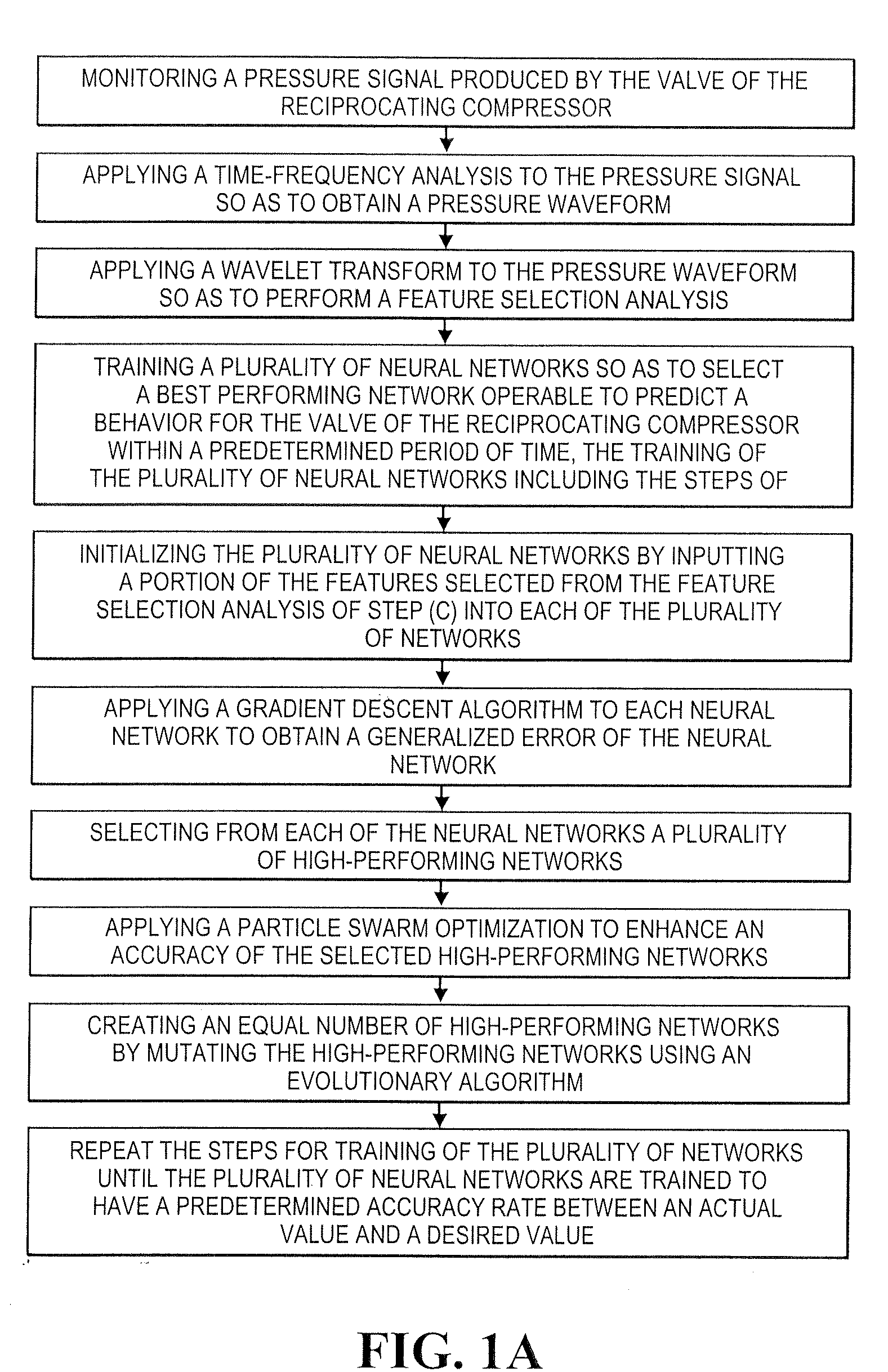
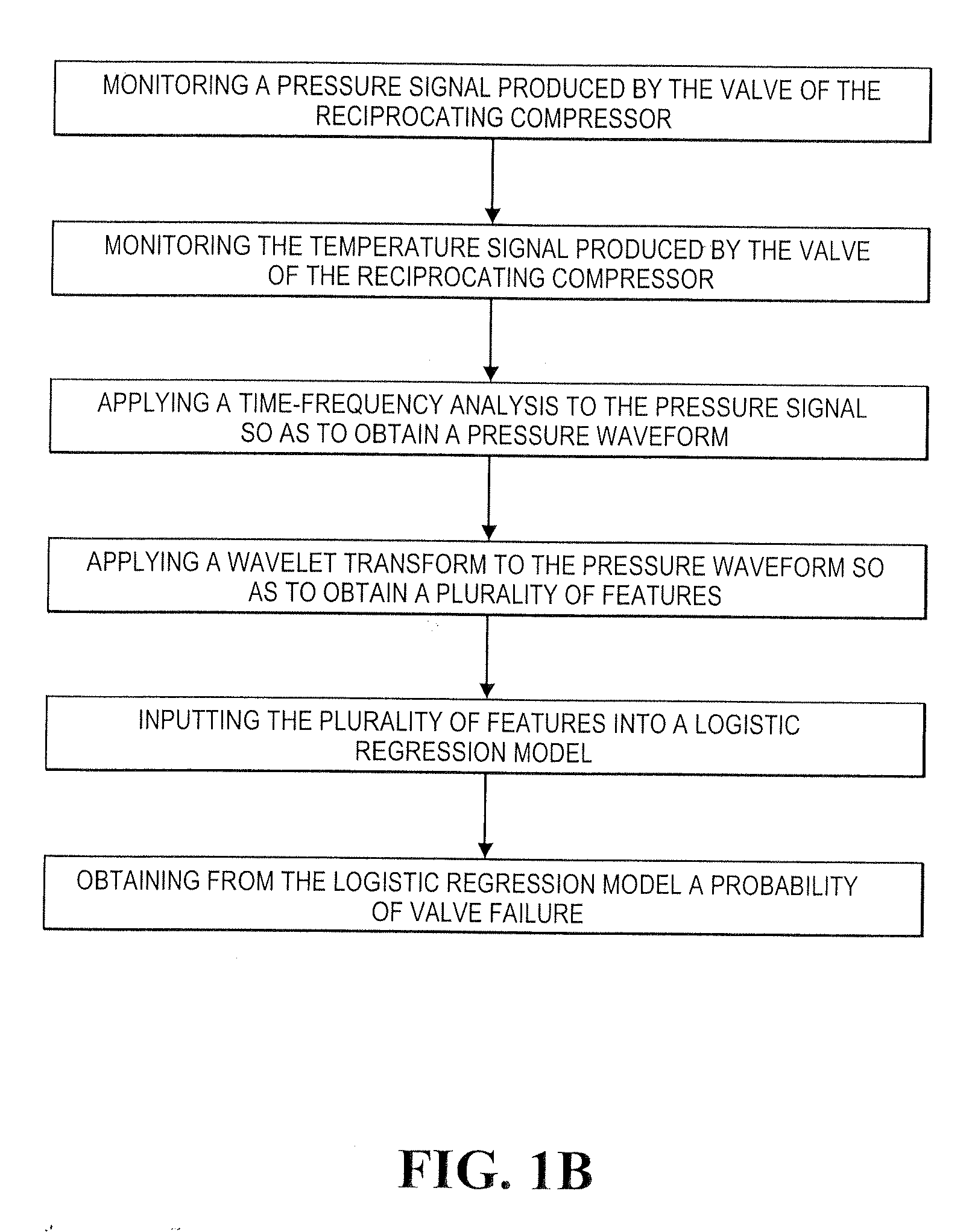
- A computer program utilizing wavelet analysis, logistic regression, and neural networks to predict valve failures in reciprocating compressors by extracting features from pressure signals and temperature data, providing early warnings and root cause detection without the need for expensive sensors.

Industrial Safety Standards for Compressor Operations
Industrial safety standards for reciprocating compressor operations have evolved significantly to address the critical need for failure prevention and operational reliability. These standards establish comprehensive frameworks that govern design, installation, operation, and maintenance practices across various industrial sectors. The development of these standards has been driven by historical incidents, technological advancements, and the increasing complexity of modern compressor systems.
The American Petroleum Institute (API) Standard 618 serves as the primary guideline for reciprocating compressors in petroleum, chemical, and gas industry services. This standard emphasizes rigorous design requirements, material specifications, and testing protocols that directly support failure prediction initiatives. Similarly, the American Society of Mechanical Engineers (ASME) Boiler and Pressure Vessel Code provides fundamental safety requirements for pressure-containing components, establishing baseline safety margins that complement predictive maintenance strategies.
International standards such as ISO 13631 and IEC 61508 address functional safety requirements for process industry applications, including compressor systems. These standards mandate systematic approaches to hazard analysis, risk assessment, and safety integrity levels that align with modern failure prediction methodologies. The integration of these safety frameworks with predictive analytics creates robust operational environments where potential failures can be identified and mitigated before critical incidents occur.
Regulatory compliance requirements vary significantly across different geographical regions and industrial applications. In the United States, OSHA Process Safety Management standards require comprehensive mechanical integrity programs that include predictive maintenance elements. European ATEX directives mandate explosion protection measures that influence compressor design and monitoring requirements, particularly in hazardous environments where failure prediction becomes even more critical.
Modern safety standards increasingly emphasize condition monitoring and predictive maintenance as essential components of comprehensive safety management systems. These requirements create regulatory foundations that support the implementation of advanced failure prediction technologies, ensuring that safety compliance and operational efficiency objectives are simultaneously achieved through systematic monitoring of key performance metrics.
The American Petroleum Institute (API) Standard 618 serves as the primary guideline for reciprocating compressors in petroleum, chemical, and gas industry services. This standard emphasizes rigorous design requirements, material specifications, and testing protocols that directly support failure prediction initiatives. Similarly, the American Society of Mechanical Engineers (ASME) Boiler and Pressure Vessel Code provides fundamental safety requirements for pressure-containing components, establishing baseline safety margins that complement predictive maintenance strategies.
International standards such as ISO 13631 and IEC 61508 address functional safety requirements for process industry applications, including compressor systems. These standards mandate systematic approaches to hazard analysis, risk assessment, and safety integrity levels that align with modern failure prediction methodologies. The integration of these safety frameworks with predictive analytics creates robust operational environments where potential failures can be identified and mitigated before critical incidents occur.
Regulatory compliance requirements vary significantly across different geographical regions and industrial applications. In the United States, OSHA Process Safety Management standards require comprehensive mechanical integrity programs that include predictive maintenance elements. European ATEX directives mandate explosion protection measures that influence compressor design and monitoring requirements, particularly in hazardous environments where failure prediction becomes even more critical.
Modern safety standards increasingly emphasize condition monitoring and predictive maintenance as essential components of comprehensive safety management systems. These requirements create regulatory foundations that support the implementation of advanced failure prediction technologies, ensuring that safety compliance and operational efficiency objectives are simultaneously achieved through systematic monitoring of key performance metrics.
Cost-Benefit Analysis of Predictive Maintenance Implementation
The economic justification for implementing predictive maintenance systems in reciprocating compressor operations requires comprehensive evaluation of both quantifiable and strategic benefits against implementation costs. Initial capital expenditures typically include sensor installation, data acquisition systems, analytics software platforms, and integration infrastructure, with costs ranging from $50,000 to $200,000 per compressor unit depending on system complexity and monitoring scope.
Operational cost savings represent the most significant benefit category, primarily through reduced unplanned downtime. Industry data indicates that predictive maintenance can decrease unexpected failures by 70-90%, translating to substantial cost avoidance. For critical compressor applications, each hour of unplanned downtime can cost between $10,000 to $100,000 in lost production, making the prevention of even a single major failure economically significant.
Maintenance cost optimization provides additional financial benefits through condition-based scheduling rather than time-based intervals. This approach typically reduces maintenance costs by 20-30% while extending equipment lifespan by 15-25%. Predictive systems enable precise timing of maintenance activities, reducing unnecessary part replacements and labor costs while ensuring optimal equipment performance.
The implementation timeline significantly impacts return on investment calculations. Most organizations achieve break-even within 12-18 months, with full ROI realization occurring within 2-3 years. Early detection capabilities can identify developing issues 3-6 months before failure, providing sufficient lead time for planned maintenance scheduling and parts procurement.
Risk mitigation benefits, while challenging to quantify precisely, often justify implementation costs alone. Catastrophic compressor failures can result in safety incidents, environmental releases, and extended production shutdowns costing millions of dollars. Insurance premium reductions and improved regulatory compliance further enhance the economic case.
Long-term strategic advantages include enhanced operational reliability, improved asset utilization rates, and data-driven decision-making capabilities that support broader digital transformation initiatives. These factors contribute to sustained competitive advantages and operational excellence beyond immediate cost savings.
Operational cost savings represent the most significant benefit category, primarily through reduced unplanned downtime. Industry data indicates that predictive maintenance can decrease unexpected failures by 70-90%, translating to substantial cost avoidance. For critical compressor applications, each hour of unplanned downtime can cost between $10,000 to $100,000 in lost production, making the prevention of even a single major failure economically significant.
Maintenance cost optimization provides additional financial benefits through condition-based scheduling rather than time-based intervals. This approach typically reduces maintenance costs by 20-30% while extending equipment lifespan by 15-25%. Predictive systems enable precise timing of maintenance activities, reducing unnecessary part replacements and labor costs while ensuring optimal equipment performance.
The implementation timeline significantly impacts return on investment calculations. Most organizations achieve break-even within 12-18 months, with full ROI realization occurring within 2-3 years. Early detection capabilities can identify developing issues 3-6 months before failure, providing sufficient lead time for planned maintenance scheduling and parts procurement.
Risk mitigation benefits, while challenging to quantify precisely, often justify implementation costs alone. Catastrophic compressor failures can result in safety incidents, environmental releases, and extended production shutdowns costing millions of dollars. Insurance premium reductions and improved regulatory compliance further enhance the economic case.
Long-term strategic advantages include enhanced operational reliability, improved asset utilization rates, and data-driven decision-making capabilities that support broader digital transformation initiatives. These factors contribute to sustained competitive advantages and operational excellence beyond immediate cost savings.
Unlock deeper insights with Patsnap Eureka Quick Research — get a full tech report to explore trends and direct your research. Try now!
Generate Your Research Report Instantly with AI Agent
Supercharge your innovation with Patsnap Eureka AI Agent Platform!