

Optimize Solvent Selection: Ethyl Acetate in Composites
MAR 23, 20269 MIN READ
Generate Your Research Report Instantly with AI Agent
PatSnap Eureka helps you evaluate technical feasibility & market potential.
Ethyl Acetate Composite Applications Background and Objectives
Ethyl acetate has emerged as a critical solvent in composite manufacturing due to its unique combination of chemical properties and environmental advantages. As a low-toxicity, biodegradable organic solvent, ethyl acetate offers superior dissolution capabilities for various polymer matrices while maintaining compatibility with reinforcement materials such as carbon fiber, glass fiber, and natural fibers. The solvent's moderate boiling point of 77°C and excellent evaporation characteristics make it particularly suitable for resin transfer molding, vacuum-assisted resin transfer molding, and hand lay-up processes in composite fabrication.
The historical development of ethyl acetate in composite applications traces back to the aerospace industry's demand for safer alternatives to traditional chlorinated solvents in the 1990s. Initially adopted for cleaning and surface preparation, its role expanded to include resin dilution, viscosity modification, and processing aid functions. The automotive sector subsequently embraced ethyl acetate for lightweight composite components, while the marine industry recognized its potential for corrosion-resistant applications.
Current market drivers for ethyl acetate optimization in composites stem from increasingly stringent environmental regulations and workplace safety requirements. The European Union's REACH regulation and similar global initiatives have accelerated the transition away from hazardous air pollutants, positioning ethyl acetate as a preferred green solvent. Additionally, the growing demand for high-performance composites in renewable energy applications, particularly wind turbine blades and solar panel components, has intensified the need for optimized solvent selection protocols.
The primary technical objectives for ethyl acetate optimization encompass enhancing resin-fiber interfacial bonding, reducing processing cycle times, and minimizing volatile organic compound emissions. Advanced formulation strategies aim to achieve optimal viscosity profiles while maintaining mechanical properties of the final composite structure. Furthermore, the integration of ethyl acetate with bio-based resins and recycled fiber reinforcements represents a key sustainability objective.
Contemporary research focuses on developing predictive models for solvent-resin compatibility, establishing standardized testing protocols for composite performance evaluation, and creating hybrid solvent systems that leverage ethyl acetate's advantages while addressing specific application requirements. These efforts collectively aim to establish ethyl acetate as the benchmark solvent for next-generation composite manufacturing processes.
The historical development of ethyl acetate in composite applications traces back to the aerospace industry's demand for safer alternatives to traditional chlorinated solvents in the 1990s. Initially adopted for cleaning and surface preparation, its role expanded to include resin dilution, viscosity modification, and processing aid functions. The automotive sector subsequently embraced ethyl acetate for lightweight composite components, while the marine industry recognized its potential for corrosion-resistant applications.
Current market drivers for ethyl acetate optimization in composites stem from increasingly stringent environmental regulations and workplace safety requirements. The European Union's REACH regulation and similar global initiatives have accelerated the transition away from hazardous air pollutants, positioning ethyl acetate as a preferred green solvent. Additionally, the growing demand for high-performance composites in renewable energy applications, particularly wind turbine blades and solar panel components, has intensified the need for optimized solvent selection protocols.
The primary technical objectives for ethyl acetate optimization encompass enhancing resin-fiber interfacial bonding, reducing processing cycle times, and minimizing volatile organic compound emissions. Advanced formulation strategies aim to achieve optimal viscosity profiles while maintaining mechanical properties of the final composite structure. Furthermore, the integration of ethyl acetate with bio-based resins and recycled fiber reinforcements represents a key sustainability objective.
Contemporary research focuses on developing predictive models for solvent-resin compatibility, establishing standardized testing protocols for composite performance evaluation, and creating hybrid solvent systems that leverage ethyl acetate's advantages while addressing specific application requirements. These efforts collectively aim to establish ethyl acetate as the benchmark solvent for next-generation composite manufacturing processes.
Market Demand Analysis for Ethyl Acetate Composite Solutions
The global composites market demonstrates robust growth driven by increasing demand across aerospace, automotive, construction, and renewable energy sectors. Ethyl acetate-based composite solutions occupy a strategic position within this expanding landscape, particularly in applications requiring high-performance bonding, surface preparation, and processing aids. The aerospace industry represents a primary demand driver, where stringent weight reduction requirements and performance specifications necessitate advanced composite materials with optimized solvent systems.
Automotive manufacturers increasingly adopt composite materials to meet fuel efficiency standards and emission regulations. Ethyl acetate's favorable environmental profile compared to traditional chlorinated solvents positions it advantageously for automotive composite applications, where regulatory compliance and worker safety considerations drive solvent selection decisions. The growing electric vehicle segment further amplifies demand for lightweight composite components, creating additional market opportunities for ethyl acetate-based solutions.
Construction and infrastructure sectors exhibit substantial growth potential for ethyl acetate composite applications. Modern building codes emphasizing energy efficiency and sustainability favor composite materials with environmentally compliant processing solvents. Wind energy infrastructure development particularly drives demand for large-scale composite structures, where ethyl acetate's processing characteristics support efficient manufacturing of turbine blades and structural components.
Marine and recreational vehicle industries represent emerging market segments for ethyl acetate composite solutions. These applications benefit from ethyl acetate's excellent compatibility with various resin systems and its ability to facilitate uniform composite processing while maintaining environmental compliance standards.
Regional demand patterns show concentrated growth in Asia-Pacific markets, driven by expanding manufacturing capabilities and increasing adoption of composite materials across multiple industries. North American and European markets demonstrate steady demand growth, primarily influenced by aerospace applications and stringent environmental regulations favoring low-toxicity solvents.
Market dynamics indicate a shift toward sustainable solvent solutions, with ethyl acetate positioned favorably due to its biodegradability and lower environmental impact compared to traditional alternatives. This trend creates significant opportunities for ethyl acetate composite solutions as manufacturers prioritize environmental compliance and worker safety considerations in their solvent selection processes.
Automotive manufacturers increasingly adopt composite materials to meet fuel efficiency standards and emission regulations. Ethyl acetate's favorable environmental profile compared to traditional chlorinated solvents positions it advantageously for automotive composite applications, where regulatory compliance and worker safety considerations drive solvent selection decisions. The growing electric vehicle segment further amplifies demand for lightweight composite components, creating additional market opportunities for ethyl acetate-based solutions.
Construction and infrastructure sectors exhibit substantial growth potential for ethyl acetate composite applications. Modern building codes emphasizing energy efficiency and sustainability favor composite materials with environmentally compliant processing solvents. Wind energy infrastructure development particularly drives demand for large-scale composite structures, where ethyl acetate's processing characteristics support efficient manufacturing of turbine blades and structural components.
Marine and recreational vehicle industries represent emerging market segments for ethyl acetate composite solutions. These applications benefit from ethyl acetate's excellent compatibility with various resin systems and its ability to facilitate uniform composite processing while maintaining environmental compliance standards.
Regional demand patterns show concentrated growth in Asia-Pacific markets, driven by expanding manufacturing capabilities and increasing adoption of composite materials across multiple industries. North American and European markets demonstrate steady demand growth, primarily influenced by aerospace applications and stringent environmental regulations favoring low-toxicity solvents.
Market dynamics indicate a shift toward sustainable solvent solutions, with ethyl acetate positioned favorably due to its biodegradability and lower environmental impact compared to traditional alternatives. This trend creates significant opportunities for ethyl acetate composite solutions as manufacturers prioritize environmental compliance and worker safety considerations in their solvent selection processes.
Current Challenges in Ethyl Acetate Composite Processing
Ethyl acetate composite processing faces significant technical barriers that limit its widespread industrial adoption. The primary challenge stems from the solvent's moderate boiling point of 77°C, which creates a narrow processing window between adequate flowability and premature evaporation. This characteristic leads to inconsistent resin viscosity during composite fabrication, resulting in poor fiber wet-out and potential void formation in the final product.
Volatility control represents another critical obstacle in ethyl acetate-based composite systems. The solvent's high vapor pressure causes rapid evaporation during open-mold processes, leading to surface defects, incomplete curing, and dimensional instability. Manufacturing facilities struggle to maintain consistent atmospheric conditions, as temperature fluctuations of just 5-10°C can dramatically alter processing parameters and final product quality.
Compatibility issues with various resin systems pose substantial formulation challenges. Ethyl acetate demonstrates limited solubility with certain epoxy formulations and can cause phase separation in polyurethane-based composites. This incompatibility restricts its application scope and requires extensive reformulation efforts, increasing development costs and time-to-market for new composite products.
Environmental and safety concerns create additional processing complexities. Ethyl acetate's classification as a volatile organic compound necessitates sophisticated ventilation systems and emission control measures. Workers require specialized protective equipment, and facilities must implement stringent vapor monitoring protocols to comply with occupational exposure limits, typically set at 400 ppm for 8-hour time-weighted averages.
Quality control challenges emerge from the solvent's sensitivity to moisture absorption. Ethyl acetate readily absorbs atmospheric water, leading to hydrolysis reactions that compromise composite mechanical properties. This hygroscopic behavior demands controlled storage conditions and rapid processing cycles, limiting production flexibility and increasing operational costs.
Scale-up difficulties persist when transitioning from laboratory to industrial production. Small-scale success often fails to translate to large-volume manufacturing due to heat management issues, solvent recovery inefficiencies, and equipment compatibility problems. The solvent's reactivity with certain metal components in processing equipment can cause contamination and premature degradation of composite materials.
Volatility control represents another critical obstacle in ethyl acetate-based composite systems. The solvent's high vapor pressure causes rapid evaporation during open-mold processes, leading to surface defects, incomplete curing, and dimensional instability. Manufacturing facilities struggle to maintain consistent atmospheric conditions, as temperature fluctuations of just 5-10°C can dramatically alter processing parameters and final product quality.
Compatibility issues with various resin systems pose substantial formulation challenges. Ethyl acetate demonstrates limited solubility with certain epoxy formulations and can cause phase separation in polyurethane-based composites. This incompatibility restricts its application scope and requires extensive reformulation efforts, increasing development costs and time-to-market for new composite products.
Environmental and safety concerns create additional processing complexities. Ethyl acetate's classification as a volatile organic compound necessitates sophisticated ventilation systems and emission control measures. Workers require specialized protective equipment, and facilities must implement stringent vapor monitoring protocols to comply with occupational exposure limits, typically set at 400 ppm for 8-hour time-weighted averages.
Quality control challenges emerge from the solvent's sensitivity to moisture absorption. Ethyl acetate readily absorbs atmospheric water, leading to hydrolysis reactions that compromise composite mechanical properties. This hygroscopic behavior demands controlled storage conditions and rapid processing cycles, limiting production flexibility and increasing operational costs.
Scale-up difficulties persist when transitioning from laboratory to industrial production. Small-scale success often fails to translate to large-volume manufacturing due to heat management issues, solvent recovery inefficiencies, and equipment compatibility problems. The solvent's reactivity with certain metal components in processing equipment can cause contamination and premature degradation of composite materials.
Current Ethyl Acetate Optimization Methods in Composites
01 Ethyl acetate as solvent in coating and paint formulations
Ethyl acetate is widely used as a solvent in coating and paint formulations due to its excellent solvency properties, fast evaporation rate, and low toxicity. It effectively dissolves resins, polymers, and other coating components, providing good film formation and surface finish. The solvent's moderate polarity makes it suitable for various coating applications including industrial coatings, automotive finishes, and decorative paints.- Ethyl acetate as extraction solvent for natural products and pharmaceuticals: Ethyl acetate is widely used as an extraction solvent for isolating active compounds from natural sources, pharmaceutical intermediates, and biological materials. Its moderate polarity makes it suitable for extracting a wide range of organic compounds including alkaloids, flavonoids, and other bioactive substances. The solvent's selectivity and ease of removal through evaporation make it particularly valuable in pharmaceutical and natural product processing.
- Ethyl acetate in coating and resin formulations: Ethyl acetate serves as an effective solvent in coating compositions, paint formulations, and resin systems due to its excellent solvency power and fast evaporation rate. It is commonly selected for dissolving various polymers, resins, and film-forming materials. The solvent's compatibility with multiple coating components and its ability to provide smooth film formation make it a preferred choice in industrial coating applications.
- Ethyl acetate as reaction medium in chemical synthesis: Ethyl acetate is utilized as a reaction solvent in various chemical synthesis processes, including esterification, condensation, and coupling reactions. Its moderate boiling point, chemical stability, and ability to dissolve both polar and non-polar reactants make it suitable for numerous synthetic transformations. The solvent facilitates efficient mixing of reactants and can be easily recovered and recycled in industrial processes.
- Ethyl acetate in separation and purification processes: Ethyl acetate is employed in liquid-liquid extraction and chromatographic separation processes for purifying chemical products and removing impurities. Its selective solubility characteristics enable efficient separation of target compounds from complex mixtures. The solvent is particularly useful in crystallization processes and as a mobile phase component in various separation techniques, offering good resolution and recovery rates.
- Ethyl acetate in cleaning and degreasing applications: Ethyl acetate functions as an effective cleaning solvent for removing oils, greases, and organic residues from surfaces and equipment. Its fast evaporation rate and low toxicity compared to other organic solvents make it suitable for industrial cleaning operations. The solvent's ability to dissolve a wide range of organic contaminants while being relatively environmentally friendly has led to its adoption in various degreasing and surface preparation applications.
02 Ethyl acetate in pharmaceutical and chemical extraction processes
Ethyl acetate serves as an effective extraction solvent in pharmaceutical and chemical processes due to its selective solubility characteristics and biocompatibility. It is particularly useful for extracting organic compounds, active pharmaceutical ingredients, and natural products from various matrices. The solvent's ability to separate target compounds while maintaining their chemical integrity makes it valuable in purification and isolation procedures.Expand Specific Solutions03 Ethyl acetate in adhesive and bonding applications
Ethyl acetate functions as a primary solvent in adhesive formulations, providing optimal viscosity control and application properties. It facilitates the dissolution of adhesive polymers and resins, enabling proper wetting and bonding characteristics. The solvent's volatility allows for appropriate drying times and strong bond formation in various adhesive systems including pressure-sensitive adhesives, contact adhesives, and structural bonding applications.Expand Specific Solutions04 Ethyl acetate in cleaning and degreasing formulations
Ethyl acetate is utilized in industrial cleaning and degreasing formulations due to its strong solvency power for oils, greases, and organic contaminants. It provides effective cleaning action while being less aggressive than many chlorinated solvents. The solvent's properties make it suitable for precision cleaning, surface preparation, and maintenance applications across various industries including electronics, metalworking, and manufacturing.Expand Specific Solutions05 Ethyl acetate in polymer processing and synthesis
Ethyl acetate plays a crucial role in polymer processing and synthesis as a reaction medium and processing solvent. It facilitates polymerization reactions, polymer dissolution, and processing operations due to its compatibility with various monomers and polymers. The solvent enables control of reaction kinetics, molecular weight distribution, and product properties in polymer manufacturing processes including solution polymerization, polymer modification, and film casting operations.Expand Specific Solutions
Major Players in Ethyl Acetate and Composite Industries
The ethyl acetate optimization in composites represents a mature yet evolving market segment within the broader specialty chemicals industry. The sector demonstrates strong growth potential, driven by increasing demand for sustainable and high-performance composite materials across automotive, aerospace, and electronics applications. Market leaders including Celanese International Corp., DuPont de Nemours, and BASF Corp. leverage extensive R&D capabilities and established supply chains to maintain competitive advantages. Japanese companies like JSR Corp., Shin-Etsu Chemical, and Daicel Corp. contribute advanced materials expertise, particularly in electronics applications. The technology maturity varies across applications, with established processes in traditional composites while emerging opportunities exist in specialized sectors like semiconductor manufacturing, evidenced by companies such as Tokyo Ohka Kogyo and Brewer Science focusing on advanced materials development.
Celanese International Corp.
Technical Solution: Celanese has developed comprehensive ethyl acetate solutions for composite manufacturing through their Engineered Materials division. Their technology platform emphasizes solvent optimization for thermoplastic composite processing, where ethyl acetate serves as a primary dissolution medium for high-performance polymers. The company's approach includes specialized grade ethyl acetate with controlled impurity profiles specifically designed for composite applications. Their processing technology incorporates real-time solvent monitoring systems that track ethyl acetate concentration, temperature, and contamination levels throughout the manufacturing cycle. Celanese's solvent recovery infrastructure achieves over 94% ethyl acetate recycling efficiency through advanced separation techniques, while their formulation expertise enables customized solvent blends that optimize processing parameters for specific composite requirements and end-use applications.
Strengths: Extensive polymer processing expertise and integrated supply chain for consistent solvent quality. Weaknesses: Focus primarily on thermoplastic systems may limit applicability to thermoset composite applications requiring different solvent characteristics.
Eastman Chemical Co.
Technical Solution: Eastman Chemical has developed specialized ethyl acetate grades optimized for composite applications, focusing on purity levels exceeding 99.8% to ensure consistent processing performance. Their technology emphasizes solvent-resin compatibility through molecular design, where ethyl acetate acts as a coupling agent between fiber surfaces and polymer matrices. The company's approach includes proprietary additive packages that enhance ethyl acetate's effectiveness in promoting uniform resin distribution and reducing processing viscosity. Their solvent management systems incorporate advanced distillation techniques for ethyl acetate purification and recycling, achieving contamination levels below 50 ppm. Eastman's formulations demonstrate improved composite durability through optimized solvent-assisted fiber surface modification processes that enhance interfacial bonding strength.
Strengths: High-purity solvent production capabilities and deep understanding of solvent-polymer interactions. Weaknesses: Limited vertical integration in composite manufacturing and dependence on downstream customer adoption.
Key Patents in Ethyl Acetate Composite Processing
Separation of ethanol and ethyl acetate from mixtures thereof by extractive distillation
PatentInactiveAU2000030697A1
Innovation
- The use of dimethyl sulfoxide, amines such as N,N'-dimethyl-1,3-propanediamine, alkylated thiophene like ethyl thiophene, and paraffins like dodecane as extractive distillation solvents in the extractive distillation process to increase the relative volatility of the ethanoi/ethyl acetate mixture, allowing for effective separation.
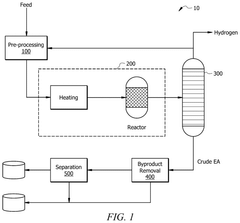
Ethyl acetate production and purification
PatentPendingUS20250179003A1
Innovation
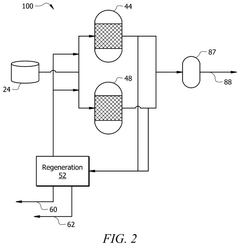
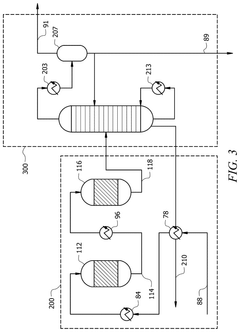
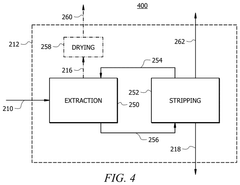
- A method involving the use of a solvent with an extracting agent and a defoamer to purify an ethyl acetate stream. The solvent contacts an inlet stream containing ethyl acetate and impurities, transferring impurities into the solvent to form an extract and a purified product. The extract is then separated from the purified product, and the impurities are removed using a defoamer to prevent foam formation, resulting in a regenerated solvent that is recycled.
Environmental Regulations for Ethyl Acetate Usage
The regulatory landscape governing ethyl acetate usage in composite manufacturing has evolved significantly over the past decade, driven by increasing environmental awareness and stricter emission standards. The European Union's REACH regulation classifies ethyl acetate as a substance requiring registration for industrial use above one tonne per year, mandating comprehensive safety data sheets and exposure assessments. In the United States, the EPA regulates ethyl acetate under the Clean Air Act as a volatile organic compound, with specific emission limits varying by state and industrial sector.
Current emission standards for ethyl acetate in composite manufacturing facilities typically range from 20-50 ppm in workplace environments, as established by OSHA's permissible exposure limits. The EU has implemented even stricter guidelines, with some member states requiring emission levels below 15 ppm in enclosed manufacturing spaces. These regulations directly impact solvent selection strategies, as manufacturers must balance performance requirements with compliance costs and environmental impact assessments.
Waste disposal regulations present additional complexity for ethyl acetate usage optimization. The Resource Conservation and Recovery Act in the US classifies ethyl acetate-containing waste streams as hazardous if concentrations exceed specific thresholds, requiring specialized treatment and disposal protocols. European waste framework directives mandate similar classification systems, with additional requirements for waste minimization and recovery programs that influence solvent selection economics.
Recent regulatory trends indicate a shift toward lifecycle assessment requirements for solvent usage in composite applications. The proposed EU Green Deal legislation includes provisions for mandatory environmental impact reporting, potentially affecting ethyl acetate usage patterns in automotive and aerospace composite manufacturing. These emerging regulations emphasize the need for comprehensive solvent optimization strategies that consider not only immediate performance benefits but also long-term regulatory compliance costs.
Compliance monitoring requirements have intensified, with many jurisdictions now mandating real-time emission monitoring systems for facilities using significant quantities of ethyl acetate. These regulatory developments create both challenges and opportunities for optimizing solvent selection, as manufacturers must invest in advanced monitoring and control systems while potentially benefiting from improved process efficiency and reduced waste generation.
Current emission standards for ethyl acetate in composite manufacturing facilities typically range from 20-50 ppm in workplace environments, as established by OSHA's permissible exposure limits. The EU has implemented even stricter guidelines, with some member states requiring emission levels below 15 ppm in enclosed manufacturing spaces. These regulations directly impact solvent selection strategies, as manufacturers must balance performance requirements with compliance costs and environmental impact assessments.
Waste disposal regulations present additional complexity for ethyl acetate usage optimization. The Resource Conservation and Recovery Act in the US classifies ethyl acetate-containing waste streams as hazardous if concentrations exceed specific thresholds, requiring specialized treatment and disposal protocols. European waste framework directives mandate similar classification systems, with additional requirements for waste minimization and recovery programs that influence solvent selection economics.
Recent regulatory trends indicate a shift toward lifecycle assessment requirements for solvent usage in composite applications. The proposed EU Green Deal legislation includes provisions for mandatory environmental impact reporting, potentially affecting ethyl acetate usage patterns in automotive and aerospace composite manufacturing. These emerging regulations emphasize the need for comprehensive solvent optimization strategies that consider not only immediate performance benefits but also long-term regulatory compliance costs.
Compliance monitoring requirements have intensified, with many jurisdictions now mandating real-time emission monitoring systems for facilities using significant quantities of ethyl acetate. These regulatory developments create both challenges and opportunities for optimizing solvent selection, as manufacturers must invest in advanced monitoring and control systems while potentially benefiting from improved process efficiency and reduced waste generation.
Sustainability Considerations in Solvent-Based Composites
The sustainability profile of ethyl acetate positions it as a preferred solvent choice in composite manufacturing, particularly when compared to traditional halogenated and aromatic solvents. Derived from renewable feedstocks through bio-based production routes, ethyl acetate demonstrates significantly lower environmental impact across multiple lifecycle assessment parameters. Its biodegradability rating exceeds 90% within 28 days under standard OECD testing conditions, ensuring minimal persistence in environmental systems.
Carbon footprint analysis reveals that ethyl acetate-based composite processes generate approximately 40-60% fewer greenhouse gas emissions compared to methylene chloride or toluene-based alternatives. This reduction stems from both the renewable carbon content in bio-derived ethyl acetate and the lower energy requirements for solvent recovery and purification. The solvent's relatively low boiling point facilitates efficient thermal recovery systems, achieving recovery rates above 95% in well-designed distillation units.
Regulatory compliance advantages further enhance ethyl acetate's sustainability credentials. Unlike many traditional composite solvents, ethyl acetate maintains favorable classifications under REACH regulations and avoids inclusion in restricted substance lists. Its low toxicity profile eliminates the need for specialized waste treatment facilities, reducing both operational costs and environmental liability. The absence of halogen content prevents formation of persistent organic pollutants during incineration processes.
Circular economy principles align well with ethyl acetate utilization in composites. Closed-loop solvent recovery systems can achieve near-zero waste discharge while maintaining solvent purity standards required for high-performance composite applications. Integration with bio-refinery concepts enables on-site production from agricultural waste streams, further reducing transportation-related emissions and supply chain vulnerabilities.
Economic sustainability metrics demonstrate favorable long-term cost trajectories for ethyl acetate adoption. While initial capital investments for recovery infrastructure may exceed conventional systems, operational savings from reduced waste disposal fees, lower regulatory compliance costs, and improved worker safety conditions typically achieve payback periods within 2-3 years. Additionally, growing carbon pricing mechanisms and environmental regulations increasingly favor low-impact solvent choices, creating competitive advantages for early adopters of ethyl acetate-based composite processes.
Carbon footprint analysis reveals that ethyl acetate-based composite processes generate approximately 40-60% fewer greenhouse gas emissions compared to methylene chloride or toluene-based alternatives. This reduction stems from both the renewable carbon content in bio-derived ethyl acetate and the lower energy requirements for solvent recovery and purification. The solvent's relatively low boiling point facilitates efficient thermal recovery systems, achieving recovery rates above 95% in well-designed distillation units.
Regulatory compliance advantages further enhance ethyl acetate's sustainability credentials. Unlike many traditional composite solvents, ethyl acetate maintains favorable classifications under REACH regulations and avoids inclusion in restricted substance lists. Its low toxicity profile eliminates the need for specialized waste treatment facilities, reducing both operational costs and environmental liability. The absence of halogen content prevents formation of persistent organic pollutants during incineration processes.
Circular economy principles align well with ethyl acetate utilization in composites. Closed-loop solvent recovery systems can achieve near-zero waste discharge while maintaining solvent purity standards required for high-performance composite applications. Integration with bio-refinery concepts enables on-site production from agricultural waste streams, further reducing transportation-related emissions and supply chain vulnerabilities.
Economic sustainability metrics demonstrate favorable long-term cost trajectories for ethyl acetate adoption. While initial capital investments for recovery infrastructure may exceed conventional systems, operational savings from reduced waste disposal fees, lower regulatory compliance costs, and improved worker safety conditions typically achieve payback periods within 2-3 years. Additionally, growing carbon pricing mechanisms and environmental regulations increasingly favor low-impact solvent choices, creating competitive advantages for early adopters of ethyl acetate-based composite processes.
Unlock deeper insights with PatSnap Eureka Quick Research — get a full tech report to explore trends and direct your research. Try now!
Generate Your Research Report Instantly with AI Agent
Supercharge your innovation with PatSnap Eureka AI Agent Platform!