

Optimizing Beam Divergence For Long-Range Efficiency
AUG 28, 20259 MIN READ
Generate Your Research Report Instantly with AI Agent
PatSnap Eureka helps you evaluate technical feasibility & market potential.
Beam Divergence Technology Background and Objectives
Beam divergence, a fundamental property in optical systems, refers to the angular spread of a light beam as it propagates through space. The historical development of beam divergence control spans several decades, beginning with basic optical principles established in the early 20th century. The field gained significant momentum with the invention of the laser in 1960, which provided a coherent light source with inherently low divergence characteristics compared to conventional light sources.
The evolution of beam divergence technology has been driven by increasing demands for precision in various applications, from telecommunications to defense systems. Early approaches focused primarily on geometric optics solutions, while modern techniques incorporate advanced wavefront manipulation, adaptive optics, and novel material science approaches. The progression from simple lens-based collimation to sophisticated phase-front control systems represents a significant technological leap in this domain.
Current industry trends indicate a growing emphasis on achieving sub-milliradian divergence for long-range applications while maintaining system efficiency and compactness. This push is particularly evident in emerging fields such as free-space optical communications, LiDAR systems for autonomous vehicles, and directed energy applications where beam quality at extended distances directly impacts system performance.
The primary technical objective in optimizing beam divergence for long-range efficiency is to minimize the beam spread while maximizing the energy delivery at the target distance. This involves balancing multiple competing factors including diffraction limits, atmospheric effects, thermal blooming, and practical constraints of optical system design. Secondary objectives include reducing system complexity, improving reliability in variable environmental conditions, and decreasing power requirements.
Quantitatively, industry benchmarks now aim for divergence angles below 0.5 milliradians for many long-range applications, with some specialized systems targeting even lower values. These targets represent a challenging frontier that requires interdisciplinary approaches combining optical engineering, materials science, and computational modeling.
The technological roadmap for beam divergence optimization includes several key milestones: overcoming current material limitations in high-power optics, developing more efficient adaptive correction systems for atmospheric turbulence, and creating novel beam-shaping techniques that can maintain coherence over extended propagation distances. Success in these areas would enable transformative capabilities in fields ranging from satellite communications to remote sensing and beyond.
The evolution of beam divergence technology has been driven by increasing demands for precision in various applications, from telecommunications to defense systems. Early approaches focused primarily on geometric optics solutions, while modern techniques incorporate advanced wavefront manipulation, adaptive optics, and novel material science approaches. The progression from simple lens-based collimation to sophisticated phase-front control systems represents a significant technological leap in this domain.
Current industry trends indicate a growing emphasis on achieving sub-milliradian divergence for long-range applications while maintaining system efficiency and compactness. This push is particularly evident in emerging fields such as free-space optical communications, LiDAR systems for autonomous vehicles, and directed energy applications where beam quality at extended distances directly impacts system performance.
The primary technical objective in optimizing beam divergence for long-range efficiency is to minimize the beam spread while maximizing the energy delivery at the target distance. This involves balancing multiple competing factors including diffraction limits, atmospheric effects, thermal blooming, and practical constraints of optical system design. Secondary objectives include reducing system complexity, improving reliability in variable environmental conditions, and decreasing power requirements.
Quantitatively, industry benchmarks now aim for divergence angles below 0.5 milliradians for many long-range applications, with some specialized systems targeting even lower values. These targets represent a challenging frontier that requires interdisciplinary approaches combining optical engineering, materials science, and computational modeling.
The technological roadmap for beam divergence optimization includes several key milestones: overcoming current material limitations in high-power optics, developing more efficient adaptive correction systems for atmospheric turbulence, and creating novel beam-shaping techniques that can maintain coherence over extended propagation distances. Success in these areas would enable transformative capabilities in fields ranging from satellite communications to remote sensing and beyond.
Market Applications for Long-Range Beam Systems
Long-range beam systems have established significant market presence across diverse sectors, with applications expanding as beam divergence optimization technologies advance. The defense sector represents one of the largest markets, utilizing these systems for target designation, range finding, and directed energy weapons. Military applications demand exceptional range performance with minimal beam spread, driving continuous innovation in divergence control technologies.
Telecommunications constitutes another substantial market, where optimized beam systems enable high-bandwidth, long-distance data transmission. Free-space optical communication networks leverage narrow-beam technology to establish reliable links between ground stations, aircraft, and satellites. The growing demand for rural broadband connectivity has further accelerated adoption, with beam divergence optimization allowing for more efficient point-to-point links across challenging terrains.
The aerospace and aviation industries employ these systems for critical applications including landing assistance, obstacle detection, and atmospheric monitoring. Advanced LiDAR systems with optimized beam divergence provide enhanced resolution for terrain mapping and autonomous navigation systems. Space agencies and private space companies utilize narrow-beam technologies for inter-satellite communications and deep space networking.
Environmental monitoring represents an emerging application area, with optimized beam systems enabling precise atmospheric composition analysis, pollution tracking, and climate research. These systems can detect particulate matter and gas concentrations at distances previously unachievable with conventional sensing technologies.
The autonomous vehicle sector has begun integrating long-range beam systems with minimized divergence for enhanced detection capabilities. This application requires systems that maintain beam coherence across varying environmental conditions while providing the range necessary for highway-speed operation and advanced obstacle recognition.
Industrial applications include structural inspection of large infrastructure, where beam systems can detect minute defects from safe distances. Mining operations utilize these systems for surveying and monitoring dangerous areas without requiring human presence. The energy sector employs them for wind turbine inspection and power line monitoring across vast transmission networks.
Medical applications are developing rapidly, with surgical targeting systems benefiting from precise beam control. Research facilities use optimized beam systems for specialized applications in particle physics and astronomical observation, where beam coherence at extreme distances is essential.
As beam divergence optimization technologies continue to advance, new market applications emerge regularly, with particular growth expected in smart city infrastructure, precision agriculture, and next-generation transportation systems.
Telecommunications constitutes another substantial market, where optimized beam systems enable high-bandwidth, long-distance data transmission. Free-space optical communication networks leverage narrow-beam technology to establish reliable links between ground stations, aircraft, and satellites. The growing demand for rural broadband connectivity has further accelerated adoption, with beam divergence optimization allowing for more efficient point-to-point links across challenging terrains.
The aerospace and aviation industries employ these systems for critical applications including landing assistance, obstacle detection, and atmospheric monitoring. Advanced LiDAR systems with optimized beam divergence provide enhanced resolution for terrain mapping and autonomous navigation systems. Space agencies and private space companies utilize narrow-beam technologies for inter-satellite communications and deep space networking.
Environmental monitoring represents an emerging application area, with optimized beam systems enabling precise atmospheric composition analysis, pollution tracking, and climate research. These systems can detect particulate matter and gas concentrations at distances previously unachievable with conventional sensing technologies.
The autonomous vehicle sector has begun integrating long-range beam systems with minimized divergence for enhanced detection capabilities. This application requires systems that maintain beam coherence across varying environmental conditions while providing the range necessary for highway-speed operation and advanced obstacle recognition.
Industrial applications include structural inspection of large infrastructure, where beam systems can detect minute defects from safe distances. Mining operations utilize these systems for surveying and monitoring dangerous areas without requiring human presence. The energy sector employs them for wind turbine inspection and power line monitoring across vast transmission networks.
Medical applications are developing rapidly, with surgical targeting systems benefiting from precise beam control. Research facilities use optimized beam systems for specialized applications in particle physics and astronomical observation, where beam coherence at extreme distances is essential.
As beam divergence optimization technologies continue to advance, new market applications emerge regularly, with particular growth expected in smart city infrastructure, precision agriculture, and next-generation transportation systems.
Current Limitations and Technical Challenges
Despite significant advancements in beam technology, optimizing beam divergence for long-range efficiency continues to face substantial technical challenges. Current beam systems struggle with fundamental physical limitations that impede performance at extended distances. The inverse square law remains a primary constraint, causing beam intensity to decrease proportionally to the square of the distance traveled, significantly reducing effectiveness at long ranges regardless of initial power.
Atmospheric interference presents another major obstacle, as particles and moisture in the air scatter and absorb beam energy. This effect becomes particularly pronounced in adverse weather conditions such as fog, rain, or dust storms, where transmission losses can increase exponentially with distance. The variability of atmospheric conditions makes it difficult to design systems that maintain consistent performance across diverse environments.
Thermal blooming represents a critical limitation for high-power beam applications. As the beam heats the air along its path, it creates thermal gradients that act as optical lenses, defocusing the beam and increasing divergence beyond theoretical limits. This self-induced thermal distortion becomes more severe with increased power, creating a counterintuitive situation where simply increasing power does not proportionally improve long-range performance.
Current beam-forming technologies face precision limitations in controlling divergence across the entire beam profile. While adaptive optics systems have improved correction capabilities, they remain insufficient for compensating real-time atmospheric turbulence at distances exceeding several kilometers. The speed of atmospheric changes often outpaces the correction mechanisms, resulting in residual wavefront errors that compound over distance.
Power efficiency presents another significant challenge, as generating and maintaining highly collimated beams requires substantial energy input. The conversion efficiency from input power to useful beam energy at the target decreases dramatically with range, making long-range applications increasingly impractical from an energy consumption perspective. This inefficiency becomes particularly problematic for mobile or portable systems with limited power supplies.
Material limitations also constrain beam performance, as optical components capable of handling high-power densities while maintaining beam quality remain limited. Advanced materials show promise but face challenges in manufacturing consistency, durability under operational conditions, and cost-effectiveness for widespread deployment.
The integration of beam systems with targeting and tracking mechanisms introduces additional complexities. Maintaining precise aim at distant, potentially moving targets requires sophisticated control systems that must account for beam propagation time, atmospheric effects, and platform stability. Current technologies struggle to achieve the required precision for effective long-range applications, particularly from moving platforms or in dynamic environments.
Atmospheric interference presents another major obstacle, as particles and moisture in the air scatter and absorb beam energy. This effect becomes particularly pronounced in adverse weather conditions such as fog, rain, or dust storms, where transmission losses can increase exponentially with distance. The variability of atmospheric conditions makes it difficult to design systems that maintain consistent performance across diverse environments.
Thermal blooming represents a critical limitation for high-power beam applications. As the beam heats the air along its path, it creates thermal gradients that act as optical lenses, defocusing the beam and increasing divergence beyond theoretical limits. This self-induced thermal distortion becomes more severe with increased power, creating a counterintuitive situation where simply increasing power does not proportionally improve long-range performance.
Current beam-forming technologies face precision limitations in controlling divergence across the entire beam profile. While adaptive optics systems have improved correction capabilities, they remain insufficient for compensating real-time atmospheric turbulence at distances exceeding several kilometers. The speed of atmospheric changes often outpaces the correction mechanisms, resulting in residual wavefront errors that compound over distance.
Power efficiency presents another significant challenge, as generating and maintaining highly collimated beams requires substantial energy input. The conversion efficiency from input power to useful beam energy at the target decreases dramatically with range, making long-range applications increasingly impractical from an energy consumption perspective. This inefficiency becomes particularly problematic for mobile or portable systems with limited power supplies.
Material limitations also constrain beam performance, as optical components capable of handling high-power densities while maintaining beam quality remain limited. Advanced materials show promise but face challenges in manufacturing consistency, durability under operational conditions, and cost-effectiveness for widespread deployment.
The integration of beam systems with targeting and tracking mechanisms introduces additional complexities. Maintaining precise aim at distant, potentially moving targets requires sophisticated control systems that must account for beam propagation time, atmospheric effects, and platform stability. Current technologies struggle to achieve the required precision for effective long-range applications, particularly from moving platforms or in dynamic environments.
Current Beam Divergence Optimization Methods
01 Optical beam divergence control methods
Various methods are employed to control beam divergence in optical systems. These include the use of specialized lenses, mirrors, and other optical components that can focus, collimate, or otherwise manipulate the beam path to reduce unwanted divergence. These techniques are particularly important in applications requiring precise beam delivery over distances, such as in laser systems, where maintaining beam quality and energy density is critical.- Optical beam divergence control methods: Various methods are employed to control beam divergence in optical systems. These include the use of specialized lenses, mirrors, and other optical components that can focus, collimate, or otherwise manipulate the beam path to reduce unwanted divergence. Advanced optical designs can compensate for natural beam spreading, ensuring that light remains concentrated over longer distances for applications requiring precision.
- Laser beam divergence reduction techniques: Specific techniques for reducing divergence in laser beams involve specialized optical arrangements and beam shaping components. These may include beam expanders, spatial filters, and adaptive optics that can dynamically adjust to maintain beam quality. By controlling factors such as mode structure and wavefront characteristics, these techniques enable high-precision applications in manufacturing, communications, and scientific research.
- Beam divergence in semiconductor and LED applications: In semiconductor devices and LED technologies, beam divergence presents unique challenges due to the emission characteristics of these light sources. Solutions include integrated micro-optics, specialized substrate designs, and novel packaging approaches that can shape the emitted light. These technologies are critical for applications in displays, sensing, and communications where controlled light distribution is essential.
- Measurement and characterization of beam divergence: Accurate measurement and characterization of beam divergence is essential for quality control and system optimization. This involves specialized instrumentation such as beam profilers, wavefront sensors, and interferometric systems that can quantify divergence parameters with high precision. Advanced algorithms and computational methods are used to analyze the measured data and provide meaningful metrics for beam quality assessment.
- Beam divergence compensation in imaging and projection systems: Imaging and projection systems require specific approaches to manage beam divergence for optimal performance. These include dynamic focusing mechanisms, optical path compensation, and specialized projection optics that maintain image quality across the field of view. Advanced systems may incorporate real-time adjustment capabilities to adapt to changing conditions or requirements, ensuring consistent performance in applications ranging from consumer electronics to professional imaging equipment.
02 Laser beam divergence reduction technologies
Specific technologies have been developed to minimize divergence in laser beam applications. These include beam expanders, spatial filters, and adaptive optics systems that can dynamically correct for divergence issues. The reduction of beam divergence is essential for applications requiring high precision, such as laser cutting, welding, and medical procedures, where energy must be concentrated in a specific area without spreading.Expand Specific Solutions03 Beam divergence measurement and analysis systems
Systems and methods for accurately measuring and analyzing beam divergence characteristics are crucial for optimizing beam performance. These include specialized sensors, cameras, and software algorithms that can quantify divergence parameters and provide feedback for system adjustments. Such measurement systems enable engineers to validate beam quality and ensure that optical systems meet design specifications.Expand Specific Solutions04 Semiconductor laser beam divergence management
Semiconductor lasers present unique challenges for beam divergence control due to their inherent properties. Specialized techniques include monolithic integration of beam-shaping elements, custom waveguide designs, and external cavity configurations. These approaches help manage the typically high divergence angles characteristic of semiconductor laser sources, making them more suitable for telecommunications, sensing, and other applications requiring controlled beam properties.Expand Specific Solutions05 Advanced materials and structures for beam divergence optimization
Novel materials and structural designs are being developed specifically to address beam divergence challenges. These include metamaterials with engineered optical properties, gradient-index components, and photonic crystal structures that can manipulate light propagation in ways not possible with conventional optics. These advanced approaches enable more compact optical systems while maintaining or improving beam quality across various applications.Expand Specific Solutions
Leading Companies in Long-Range Optical Systems
The beam divergence optimization market for long-range applications is currently in a growth phase, with increasing demand driven by telecommunications, defense, and LiDAR applications. The global market size is estimated to exceed $3 billion, expanding at approximately 8% CAGR. Technologically, companies like Huawei, Northrop Grumman, and Lockheed Martin lead in advanced beam control systems, while specialized players such as RIEGL and NKT Photonics offer cutting-edge laser measurement solutions. Research institutions including Harbin Institute of Technology and Forschungsverbund Berlin are advancing fundamental optical physics. The technology maturity varies by application, with telecommunications being most mature, while long-range LiDAR and quantum communications remain emerging fields requiring further refinement in beam divergence control techniques.
Northrop Grumman Systems Corp.
Technical Solution: Northrop Grumman has developed sophisticated beam divergence optimization technology primarily for military and aerospace applications. Their approach combines advanced optical systems with computational adaptive optics to achieve near-diffraction-limited beam propagation over extended ranges. The company's beam control technology incorporates high-speed wavefront sensors that measure atmospheric disturbances at rates exceeding 1000 Hz and apply compensating corrections through deformable mirror arrays with hundreds of actuators. Northrop's systems employ predictive atmospheric modeling that anticipates turbulence effects and pre-compensates the beam profile accordingly. Their technology includes multi-conjugate adaptive optics that correct for turbulence at different atmospheric layers simultaneously, significantly reducing beam spreading over long distances. For space-based applications, Northrop has developed ultra-low divergence systems that maintain beam coherence over hundreds of kilometers by employing specialized beam expanders and phase-locking techniques that ensure optimal beam characteristics throughout the propagation path.
Strengths: Exceptional performance in extreme environments including space applications; highly effective in turbulent atmospheric conditions; maintains beam quality over extraordinarily long distances. Weaknesses: Extremely high system complexity and cost; significant power and computational requirements; specialized maintenance needs.
RIEGL Laser Measurement Systems GmbH
Technical Solution: RIEGL has developed advanced beam divergence optimization technology for their LiDAR systems that employs a dual-channel design with different beam divergence settings. Their patented technology uses a combination of narrow beam divergence (typically 0.25 mrad) for long-range measurements and wider beam divergence for closer targets. This approach is implemented in their VZ-series terrestrial laser scanners and VUX airborne systems. RIEGL's beam optimization includes adaptive beam control that dynamically adjusts the beam divergence based on target distance and atmospheric conditions, using sophisticated algorithms to analyze return signals and optimize the beam parameters in real-time. Their systems incorporate beam shaping optics with aspheric lenses and diffractive optical elements to create custom beam profiles that maintain energy density over longer distances while minimizing atmospheric scattering effects.
Strengths: Superior range performance in varied atmospheric conditions; excellent energy efficiency through adaptive control; maintains high measurement accuracy at extreme distances. Weaknesses: Higher system complexity increases manufacturing costs; requires sophisticated calibration procedures; power consumption may be higher than simpler fixed-beam systems.
Key Patents in Beam Propagation Control
Heavy particle beam irradiation device and treatment system
PatentWO2025158755A1
Innovation
- A heavy particle beam irradiation apparatus with variable magnetic field strength and adjustable arc trajectories using electromagnets with superconducting coils and a control unit to manage excitation current based on emission angles, minimizing beam divergence and contact with electromagnet surfaces.


High power diode laser having multiple emitters and method for its production
PatentInactiveUS8213479B2
Innovation
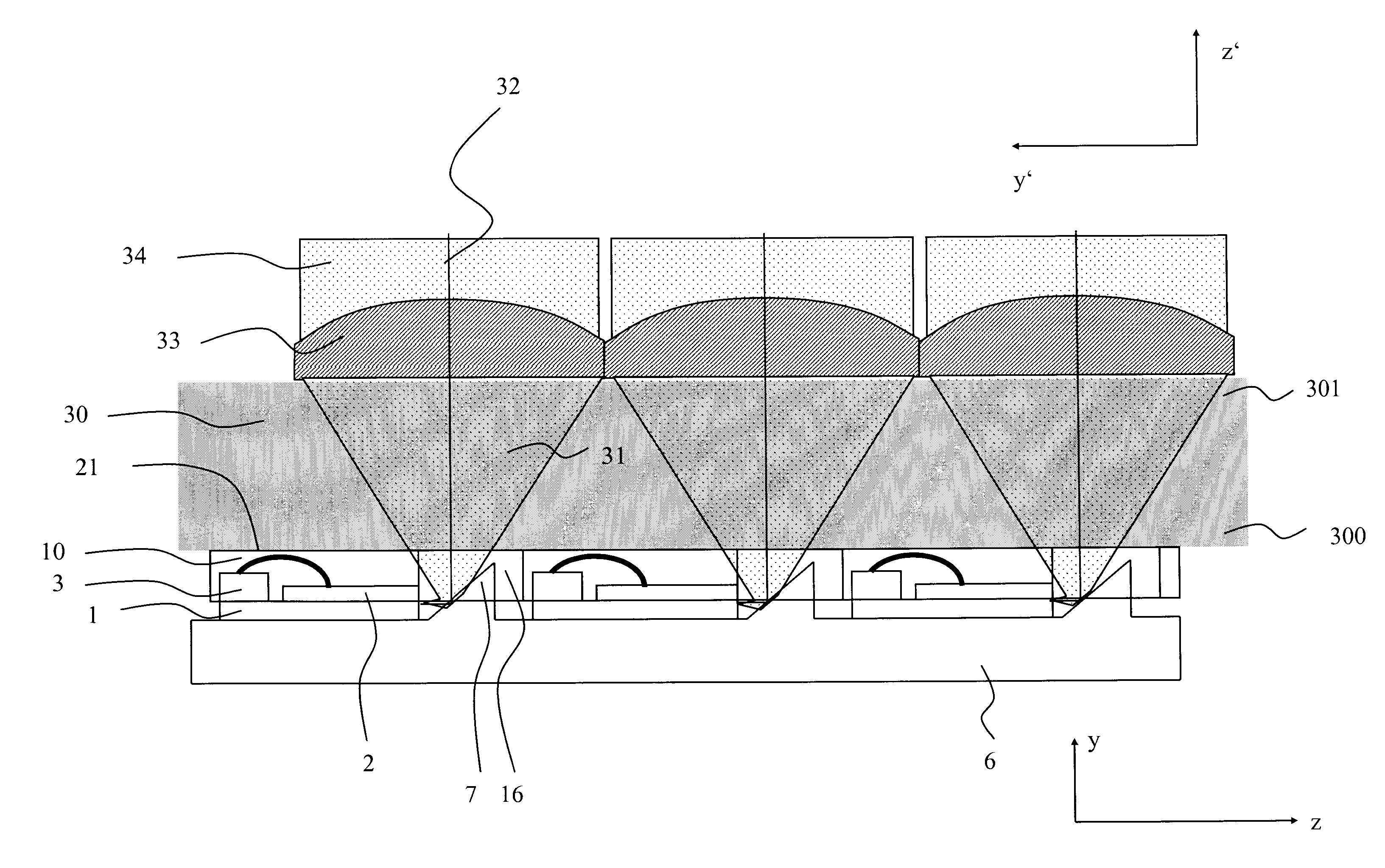
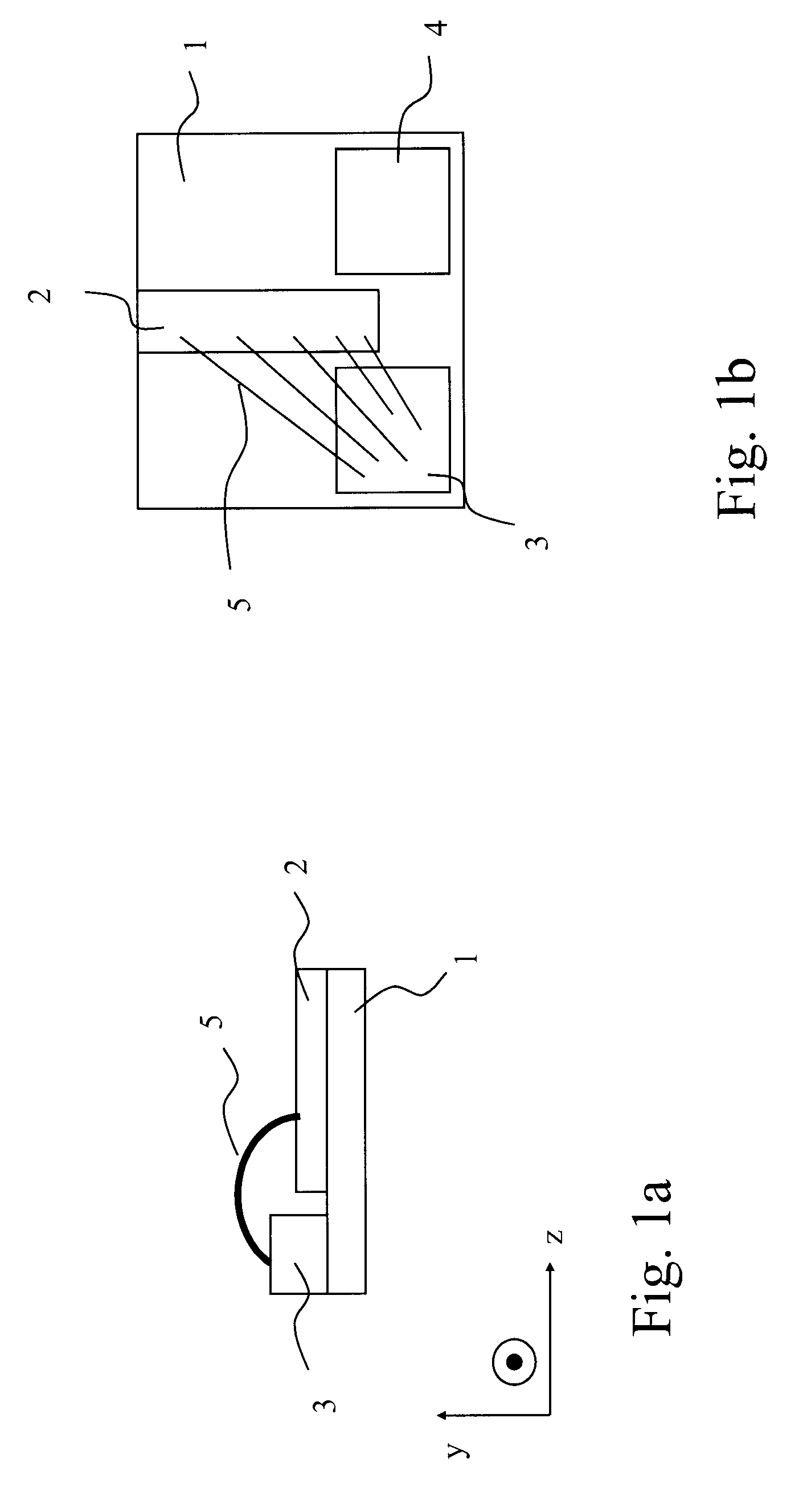
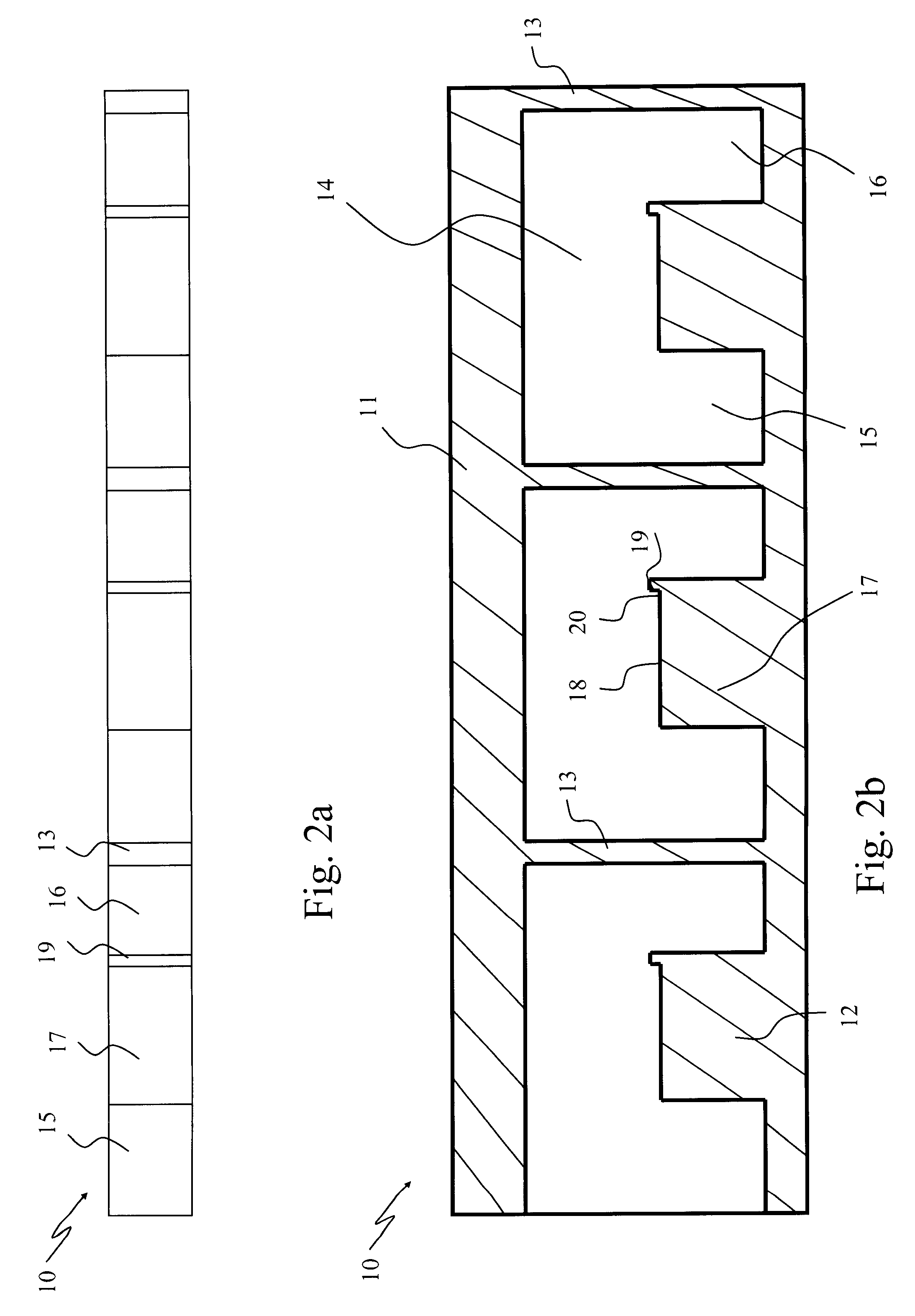
- A high power diode laser configuration featuring a planar substrate that aligns laser emitters with parallel optical axes and defines equidistant spacings, allowing for collimating lenses to be placed at a larger distance from the emitting facet, simplifying alignment and reducing heat dissipation demands, and using a layered structure for easier assembly and heat management.

Environmental Factors Affecting Beam Performance
The performance of optical beams in long-range applications is significantly influenced by the environmental conditions through which they propagate. Atmospheric turbulence represents one of the most critical factors affecting beam divergence and overall efficiency. This phenomenon occurs due to variations in air temperature, pressure, and humidity, creating refractive index fluctuations that distort the beam path and cause wavefront aberrations. Studies indicate that turbulence effects increase proportionally with distance, making them particularly problematic for applications requiring precision over several kilometers.
Precipitation elements such as rain, snow, fog, and dust particles introduce additional challenges through scattering and absorption mechanisms. These particles, varying in size from micrometers to millimeters, interact with the beam according to Mie scattering principles when their dimensions approach the wavelength of the propagating light. Measurements have shown that dense fog can reduce beam transmission by up to 300 dB/km, while moderate rainfall typically causes attenuation of 10-20 dB/km depending on droplet size distribution and intensity.
Temperature gradients across the beam path create thermal blooming effects, particularly relevant for high-power applications. This non-linear optical phenomenon results from the beam heating the transmission medium, creating a lens-like effect that further increases divergence. The severity of thermal blooming correlates with beam power density and atmospheric conditions, with still air presenting worse conditions than environments with moderate crosswinds that help dissipate heat.
Wind conditions affect beam stability through mechanical vibrations in the transmission and receiving equipment, as well as by altering the distribution of atmospheric particles and turbulence patterns. Systems operating in coastal or mountainous regions must account for rapidly changing wind conditions that can introduce unpredictable beam wandering and scintillation effects.
Diurnal and seasonal variations introduce temporal dependencies in beam performance. Solar heating during daytime creates stronger turbulence near ground level, while nighttime conditions often feature temperature inversions that modify the vertical turbulence profile. Seasonal changes in humidity and particulate matter concentration similarly require adaptive approaches to maintain optimal beam characteristics year-round.
Urban environments present unique challenges due to heat islands, pollution, and complex airflow patterns around structures. These conditions create spatially heterogeneous transmission media that can significantly degrade beam quality over distances as short as a few hundred meters, necessitating specialized compensation techniques for applications in developed areas.
Precipitation elements such as rain, snow, fog, and dust particles introduce additional challenges through scattering and absorption mechanisms. These particles, varying in size from micrometers to millimeters, interact with the beam according to Mie scattering principles when their dimensions approach the wavelength of the propagating light. Measurements have shown that dense fog can reduce beam transmission by up to 300 dB/km, while moderate rainfall typically causes attenuation of 10-20 dB/km depending on droplet size distribution and intensity.
Temperature gradients across the beam path create thermal blooming effects, particularly relevant for high-power applications. This non-linear optical phenomenon results from the beam heating the transmission medium, creating a lens-like effect that further increases divergence. The severity of thermal blooming correlates with beam power density and atmospheric conditions, with still air presenting worse conditions than environments with moderate crosswinds that help dissipate heat.
Wind conditions affect beam stability through mechanical vibrations in the transmission and receiving equipment, as well as by altering the distribution of atmospheric particles and turbulence patterns. Systems operating in coastal or mountainous regions must account for rapidly changing wind conditions that can introduce unpredictable beam wandering and scintillation effects.
Diurnal and seasonal variations introduce temporal dependencies in beam performance. Solar heating during daytime creates stronger turbulence near ground level, while nighttime conditions often feature temperature inversions that modify the vertical turbulence profile. Seasonal changes in humidity and particulate matter concentration similarly require adaptive approaches to maintain optimal beam characteristics year-round.
Urban environments present unique challenges due to heat islands, pollution, and complex airflow patterns around structures. These conditions create spatially heterogeneous transmission media that can significantly degrade beam quality over distances as short as a few hundred meters, necessitating specialized compensation techniques for applications in developed areas.
Standardization and Testing Protocols
The standardization of beam divergence testing protocols represents a critical foundation for advancing long-range efficiency optimization. Currently, the industry faces significant challenges due to inconsistent measurement methodologies across different manufacturers and research institutions. These variations make direct performance comparisons nearly impossible and hinder technological progress in the field.
A comprehensive standardization framework must address multiple testing parameters simultaneously. Environmental conditions, particularly atmospheric turbulence and humidity levels, significantly impact beam divergence measurements and must be controlled or compensated for in any standardized protocol. Temperature gradients can create refractive index variations that artificially alter beam characteristics during testing, necessitating thermal stabilization requirements in testing environments.
Distance calibration presents another critical challenge, as beam divergence characteristics change non-linearly with distance. Standard testing should incorporate measurements at multiple predetermined distances to create comparable divergence profiles. The industry would benefit from establishing reference targets with known reflective properties at specific distances to ensure measurement consistency across different testing facilities.
Detection and measurement equipment specifications require strict standardization to eliminate instrumentation-based variations. Sensor sensitivity, spatial resolution, and sampling rates all influence divergence measurements and must be harmonized. The development of calibration standards and reference beams with known divergence characteristics would provide essential benchmarks for equipment validation.
Data processing methodologies represent another area requiring standardization. The mathematical models and algorithms used to calculate beam divergence from raw measurement data can produce significantly different results depending on implementation details. Industry consensus on specific calculation methods, including how to handle beam asymmetry and intensity distribution profiles, would substantially improve cross-platform comparability.
International collaboration between standards organizations such as ISO, IEEE, and SPIE has begun addressing these challenges through working groups focused on optical beam characterization. These efforts aim to develop universally accepted testing protocols that balance scientific rigor with practical implementation requirements. Several draft standards are currently under review, with particular attention to accommodating both laboratory and field testing scenarios.
The establishment of certification programs for testing facilities would further strengthen standardization efforts by ensuring consistent implementation of protocols. These programs could include regular proficiency testing and inter-laboratory comparisons to maintain measurement quality across the industry.
A comprehensive standardization framework must address multiple testing parameters simultaneously. Environmental conditions, particularly atmospheric turbulence and humidity levels, significantly impact beam divergence measurements and must be controlled or compensated for in any standardized protocol. Temperature gradients can create refractive index variations that artificially alter beam characteristics during testing, necessitating thermal stabilization requirements in testing environments.
Distance calibration presents another critical challenge, as beam divergence characteristics change non-linearly with distance. Standard testing should incorporate measurements at multiple predetermined distances to create comparable divergence profiles. The industry would benefit from establishing reference targets with known reflective properties at specific distances to ensure measurement consistency across different testing facilities.
Detection and measurement equipment specifications require strict standardization to eliminate instrumentation-based variations. Sensor sensitivity, spatial resolution, and sampling rates all influence divergence measurements and must be harmonized. The development of calibration standards and reference beams with known divergence characteristics would provide essential benchmarks for equipment validation.
Data processing methodologies represent another area requiring standardization. The mathematical models and algorithms used to calculate beam divergence from raw measurement data can produce significantly different results depending on implementation details. Industry consensus on specific calculation methods, including how to handle beam asymmetry and intensity distribution profiles, would substantially improve cross-platform comparability.
International collaboration between standards organizations such as ISO, IEEE, and SPIE has begun addressing these challenges through working groups focused on optical beam characterization. These efforts aim to develop universally accepted testing protocols that balance scientific rigor with practical implementation requirements. Several draft standards are currently under review, with particular attention to accommodating both laboratory and field testing scenarios.
The establishment of certification programs for testing facilities would further strengthen standardization efforts by ensuring consistent implementation of protocols. These programs could include regular proficiency testing and inter-laboratory comparisons to maintain measurement quality across the industry.
Unlock deeper insights with PatSnap Eureka Quick Research — get a full tech report to explore trends and direct your research. Try now!
Generate Your Research Report Instantly with AI Agent
Supercharge your innovation with PatSnap Eureka AI Agent Platform!