
Optimizing Notch Filter in High-Frequency Circuits
MAR 17, 20269 MIN READ
Generate Your Research Report Instantly with AI Agent
Patsnap Eureka helps you evaluate technical feasibility & market potential.
High-Frequency Notch Filter Background and Objectives
High-frequency notch filters have emerged as critical components in modern electronic systems, driven by the exponential growth of wireless communications, radar systems, and high-speed digital applications. The evolution of these filters traces back to the early developments in microwave engineering during the 1940s and 1950s, when researchers first recognized the need for precise frequency rejection in radio frequency circuits. As communication systems advanced from simple AM/FM broadcasting to complex multi-band cellular networks, the demand for sophisticated filtering solutions intensified dramatically.
The technological progression has been marked by several key milestones, including the transition from lumped element designs to distributed parameter structures, the introduction of ceramic and crystal resonator technologies, and the recent advancement toward integrated circuit implementations. Modern high-frequency applications operating in gigahertz ranges face unprecedented challenges in achieving sharp frequency rejection while maintaining low insertion loss and compact form factors.
Contemporary wireless systems require notch filters capable of suppressing unwanted signals with rejection depths exceeding 40-60 dB while operating across bandwidths spanning from hundreds of megahertz to several gigahertz. The proliferation of 5G networks, satellite communications, and Internet of Things devices has created an urgent need for filters that can handle multiple frequency bands simultaneously while maintaining excellent temperature stability and linearity characteristics.
The primary technical objectives driving current research focus on achieving superior quality factor performance, minimizing parasitic effects that degrade high-frequency response, and developing tunable architectures that can adapt to dynamic spectrum requirements. Additionally, the integration of notch filters into system-on-chip solutions demands innovative approaches to reduce component size while preserving electrical performance.
Environmental considerations have become increasingly important, with objectives extending to enhanced temperature coefficient stability, improved power handling capabilities, and reduced electromagnetic interference susceptibility. The convergence of these technical requirements with commercial pressures for cost-effective manufacturing has established a complex optimization landscape that demands comprehensive research and development efforts to achieve breakthrough solutions in high-frequency notch filter technology.
The technological progression has been marked by several key milestones, including the transition from lumped element designs to distributed parameter structures, the introduction of ceramic and crystal resonator technologies, and the recent advancement toward integrated circuit implementations. Modern high-frequency applications operating in gigahertz ranges face unprecedented challenges in achieving sharp frequency rejection while maintaining low insertion loss and compact form factors.
Contemporary wireless systems require notch filters capable of suppressing unwanted signals with rejection depths exceeding 40-60 dB while operating across bandwidths spanning from hundreds of megahertz to several gigahertz. The proliferation of 5G networks, satellite communications, and Internet of Things devices has created an urgent need for filters that can handle multiple frequency bands simultaneously while maintaining excellent temperature stability and linearity characteristics.
The primary technical objectives driving current research focus on achieving superior quality factor performance, minimizing parasitic effects that degrade high-frequency response, and developing tunable architectures that can adapt to dynamic spectrum requirements. Additionally, the integration of notch filters into system-on-chip solutions demands innovative approaches to reduce component size while preserving electrical performance.
Environmental considerations have become increasingly important, with objectives extending to enhanced temperature coefficient stability, improved power handling capabilities, and reduced electromagnetic interference susceptibility. The convergence of these technical requirements with commercial pressures for cost-effective manufacturing has established a complex optimization landscape that demands comprehensive research and development efforts to achieve breakthrough solutions in high-frequency notch filter technology.
Market Demand for Optimized High-Frequency Filtering
The telecommunications industry represents the largest market segment driving demand for optimized high-frequency filtering solutions. Modern 5G networks operate across multiple frequency bands, including millimeter-wave frequencies above 24 GHz, where precise notch filtering becomes critical for maintaining signal integrity. Base station equipment, small cells, and mobile devices require sophisticated filtering to eliminate unwanted harmonics and spurious emissions while preserving desired signal components.
Aerospace and defense applications constitute another significant market driver, where high-frequency circuits must operate reliably in challenging electromagnetic environments. Radar systems, electronic warfare equipment, and satellite communications demand notch filters capable of rejecting specific interference frequencies while maintaining low insertion loss across operational bands. The stringent performance requirements in these applications justify premium pricing for advanced filtering solutions.
The automotive sector is experiencing rapid growth in high-frequency filtering demand, primarily driven by the proliferation of advanced driver assistance systems and autonomous vehicle technologies. Vehicle radar systems operating at 24 GHz and 77 GHz bands require precise notch filtering to eliminate interference from other automotive electronics and external sources. Additionally, the integration of 5G connectivity in vehicles creates new filtering requirements for maintaining communication reliability.
Consumer electronics markets show increasing demand for miniaturized high-frequency filters in smartphones, tablets, and IoT devices. The trend toward multi-band operation and carrier aggregation in mobile devices necessitates sophisticated filtering architectures to prevent interference between different frequency bands. Manufacturers seek cost-effective solutions that can be integrated into compact form factors without compromising performance.
Industrial applications, including test and measurement equipment, medical devices, and industrial automation systems, represent emerging market opportunities. High-frequency test equipment requires precise filtering for accurate measurements, while medical imaging systems and therapeutic devices operating at microwave frequencies need reliable interference suppression.
The market demand is further intensified by regulatory requirements for electromagnetic compatibility and spurious emission limits. Stricter regulations worldwide are pushing manufacturers to implement more effective filtering solutions, creating sustained demand for optimized notch filter technologies across all application sectors.
Aerospace and defense applications constitute another significant market driver, where high-frequency circuits must operate reliably in challenging electromagnetic environments. Radar systems, electronic warfare equipment, and satellite communications demand notch filters capable of rejecting specific interference frequencies while maintaining low insertion loss across operational bands. The stringent performance requirements in these applications justify premium pricing for advanced filtering solutions.
The automotive sector is experiencing rapid growth in high-frequency filtering demand, primarily driven by the proliferation of advanced driver assistance systems and autonomous vehicle technologies. Vehicle radar systems operating at 24 GHz and 77 GHz bands require precise notch filtering to eliminate interference from other automotive electronics and external sources. Additionally, the integration of 5G connectivity in vehicles creates new filtering requirements for maintaining communication reliability.
Consumer electronics markets show increasing demand for miniaturized high-frequency filters in smartphones, tablets, and IoT devices. The trend toward multi-band operation and carrier aggregation in mobile devices necessitates sophisticated filtering architectures to prevent interference between different frequency bands. Manufacturers seek cost-effective solutions that can be integrated into compact form factors without compromising performance.
Industrial applications, including test and measurement equipment, medical devices, and industrial automation systems, represent emerging market opportunities. High-frequency test equipment requires precise filtering for accurate measurements, while medical imaging systems and therapeutic devices operating at microwave frequencies need reliable interference suppression.
The market demand is further intensified by regulatory requirements for electromagnetic compatibility and spurious emission limits. Stricter regulations worldwide are pushing manufacturers to implement more effective filtering solutions, creating sustained demand for optimized notch filter technologies across all application sectors.
Current State and Challenges in HF Notch Filter Design
High-frequency notch filter design has reached a sophisticated level of development, yet several fundamental challenges continue to impede optimal performance in modern electronic systems. Current implementations primarily rely on traditional LC resonant circuits, active filter topologies using operational amplifiers, and emerging digital signal processing approaches. Each methodology presents distinct advantages and limitations that define the contemporary landscape of HF notch filter applications.
Traditional passive LC notch filters remain prevalent in high-frequency applications due to their inherent stability and low noise characteristics. These designs typically achieve notch depths of 40-60 dB with quality factors ranging from 10 to 100, depending on component tolerances and parasitic effects. However, the physical size constraints of inductors at high frequencies and the limited availability of high-Q components create significant design bottlenecks, particularly in applications requiring precise frequency selectivity above 1 GHz.
Active filter implementations using high-speed operational amplifiers offer enhanced flexibility and tunability compared to passive designs. Modern active notch filters can achieve variable notch frequencies through voltage-controlled elements and provide improved isolation between input and output stages. Nevertheless, these solutions face bandwidth limitations imposed by amplifier gain-bandwidth products, increased power consumption, and susceptibility to electromagnetic interference in high-frequency environments.
The integration of digital signal processing techniques has introduced adaptive notch filtering capabilities, enabling real-time frequency tracking and automatic depth adjustment. These systems excel in applications requiring dynamic interference suppression but encounter latency issues and quantization noise that limit their effectiveness in ultra-high-frequency scenarios. Additionally, the computational complexity increases exponentially with sampling rates required for GHz-range applications.
Parasitic effects represent a critical challenge across all implementation approaches. At high frequencies, component parasitics, PCB trace inductance, and coupling effects significantly degrade filter performance, causing frequency shifts, reduced notch depth, and unwanted resonances. Current design methodologies struggle to accurately predict and compensate for these effects, particularly in multi-layer PCB environments where electromagnetic coupling becomes increasingly complex.
Temperature stability emerges as another significant constraint, with component value variations directly affecting notch frequency accuracy and depth consistency. Existing compensation techniques, including temperature-stable components and active correction circuits, add complexity and cost while providing only partial solutions to thermal drift issues.
Manufacturing tolerances continue to limit the practical implementation of high-performance notch filters, as tight component specifications required for precise frequency response often exceed standard production capabilities. This challenge is particularly acute in applications demanding multiple matched filters or narrow bandwidth requirements where component variations can render entire systems ineffective.
Traditional passive LC notch filters remain prevalent in high-frequency applications due to their inherent stability and low noise characteristics. These designs typically achieve notch depths of 40-60 dB with quality factors ranging from 10 to 100, depending on component tolerances and parasitic effects. However, the physical size constraints of inductors at high frequencies and the limited availability of high-Q components create significant design bottlenecks, particularly in applications requiring precise frequency selectivity above 1 GHz.
Active filter implementations using high-speed operational amplifiers offer enhanced flexibility and tunability compared to passive designs. Modern active notch filters can achieve variable notch frequencies through voltage-controlled elements and provide improved isolation between input and output stages. Nevertheless, these solutions face bandwidth limitations imposed by amplifier gain-bandwidth products, increased power consumption, and susceptibility to electromagnetic interference in high-frequency environments.
The integration of digital signal processing techniques has introduced adaptive notch filtering capabilities, enabling real-time frequency tracking and automatic depth adjustment. These systems excel in applications requiring dynamic interference suppression but encounter latency issues and quantization noise that limit their effectiveness in ultra-high-frequency scenarios. Additionally, the computational complexity increases exponentially with sampling rates required for GHz-range applications.
Parasitic effects represent a critical challenge across all implementation approaches. At high frequencies, component parasitics, PCB trace inductance, and coupling effects significantly degrade filter performance, causing frequency shifts, reduced notch depth, and unwanted resonances. Current design methodologies struggle to accurately predict and compensate for these effects, particularly in multi-layer PCB environments where electromagnetic coupling becomes increasingly complex.
Temperature stability emerges as another significant constraint, with component value variations directly affecting notch frequency accuracy and depth consistency. Existing compensation techniques, including temperature-stable components and active correction circuits, add complexity and cost while providing only partial solutions to thermal drift issues.
Manufacturing tolerances continue to limit the practical implementation of high-performance notch filters, as tight component specifications required for precise frequency response often exceed standard production capabilities. This challenge is particularly acute in applications demanding multiple matched filters or narrow bandwidth requirements where component variations can render entire systems ineffective.
Existing HF Notch Filter Optimization Solutions
01 Active notch filter circuits with operational amplifiers
Active notch filters utilize operational amplifiers and RC networks to achieve precise frequency rejection. These circuits can be designed with adjustable quality factors and center frequencies, making them suitable for eliminating specific interference frequencies in signal processing applications. The active configuration provides high input impedance and low output impedance, enabling better integration with other circuit stages.- Active notch filter circuits with operational amplifiers: Active notch filters utilize operational amplifiers and RC networks to achieve precise frequency rejection. These circuits can be designed with adjustable quality factors and center frequencies, making them suitable for eliminating specific interference frequencies in signal processing applications. The active configuration provides high input impedance and low output impedance, enabling better integration with other circuit stages.
- Digital notch filter implementations: Digital notch filters are implemented using digital signal processing techniques, including IIR and FIR filter structures. These filters offer programmable center frequencies and bandwidths, allowing for adaptive filtering capabilities. Digital implementations provide precise control over filter characteristics and can be easily reconfigured through software, making them ideal for modern communication systems and audio processing applications.
- Tunable and adaptive notch filter designs: Tunable notch filters feature adjustable center frequencies that can be modified electronically or mechanically to track varying interference signals. Adaptive notch filters automatically adjust their parameters based on input signal characteristics, providing dynamic interference suppression. These designs are particularly useful in applications where the interfering frequency changes over time or needs to be selectively targeted.
- Microwave and RF notch filter structures: Notch filters for microwave and radio frequency applications employ transmission line structures, cavity resonators, or surface acoustic wave devices. These filters provide sharp rejection characteristics at specific frequencies while maintaining low insertion loss in the passband. The designs often incorporate coupling mechanisms and resonant elements optimized for high-frequency operation in wireless communication systems and radar applications.
- Integrated notch filter modules and components: Integrated notch filter solutions combine multiple filtering stages and supporting circuitry into compact modules or integrated circuits. These implementations may include impedance matching networks, amplification stages, and control interfaces. The integration approach reduces component count, improves reliability, and simplifies system design for applications in consumer electronics, medical devices, and industrial instrumentation.
02 Digital notch filter implementations
Digital notch filters are implemented using digital signal processing techniques, including IIR and FIR filter structures. These filters offer programmable center frequencies and bandwidths, allowing for adaptive filtering capabilities. Digital implementations provide precise control over filter characteristics and can be easily reconfigured through software, making them ideal for modern communication systems and audio processing applications.Expand Specific Solutions03 Tunable and adaptive notch filter designs
Tunable notch filters feature adjustable center frequencies that can be modified electronically or mechanically to track varying interference signals. Adaptive notch filters automatically adjust their parameters based on input signal characteristics, providing dynamic interference suppression. These designs are particularly useful in applications where the interfering frequency changes over time or needs to be selectively targeted.Expand Specific Solutions04 Microwave and RF notch filter structures
Notch filters for microwave and radio frequency applications employ transmission line structures, cavity resonators, or planar circuit designs. These filters provide sharp rejection at specific frequencies while maintaining low insertion loss in the passband. The designs often incorporate coupling mechanisms and resonant elements optimized for high-frequency operation, making them essential for wireless communication systems and radar applications.Expand Specific Solutions05 Integrated notch filter components and modules
Integrated notch filter solutions combine multiple filtering stages and supporting circuitry into compact modules or integrated circuits. These components offer simplified implementation with reduced board space requirements and improved reliability. The integration approach includes both analog and digital filtering elements, providing complete filtering solutions for various applications including audio equipment, instrumentation, and communication devices.Expand Specific Solutions
Key Players in RF Filter and Circuit Industry
The notch filter optimization in high-frequency circuits represents a mature yet evolving market segment within the broader RF and analog semiconductor industry. The competitive landscape is characterized by established semiconductor giants like Texas Instruments, STMicroelectronics, and NXP Semiconductors leading traditional filter solutions, while specialized component manufacturers such as Murata Manufacturing dominate ceramic-based filtering technologies. The market demonstrates significant scale, driven by expanding 5G infrastructure, IoT devices, and automotive electronics applications. Technology maturity varies across implementation approaches, with companies like MediaTek and Sony Group advancing integrated solutions for consumer electronics, while research institutions including University of Electronic Science & Technology of China and Naval Research Laboratory push next-generation adaptive filtering techniques. The competitive dynamics show consolidation around companies offering comprehensive signal processing portfolios, with emerging players like RF360 Singapore focusing on specialized high-frequency applications, indicating a market transitioning from discrete components toward integrated, software-defined filtering solutions.
Murata Manufacturing Co. Ltd.
Technical Solution: Murata develops advanced notch filter solutions using multilayer ceramic technology and surface acoustic wave (SAW) devices for high-frequency applications. Their approach combines precise frequency control with compact form factors, utilizing proprietary ceramic materials and manufacturing processes to achieve sharp rejection characteristics at specific frequencies. The company's notch filters incorporate temperature compensation techniques and offer excellent insertion loss performance, typically achieving rejection depths of 40-60dB while maintaining low insertion loss in passband regions. Their solutions are particularly optimized for wireless communication systems, where interference suppression is critical for signal integrity.
Strengths: Industry-leading ceramic technology, excellent temperature stability, compact size. Weaknesses: Higher cost compared to discrete solutions, limited customization for specific applications.
Texas Instruments Incorporated
Technical Solution: Texas Instruments implements notch filter optimization through integrated active filter architectures using operational amplifiers and programmable analog components. Their approach focuses on software-configurable notch filters that can be dynamically adjusted for different frequency bands and rejection requirements. The company's solutions utilize switched-capacitor techniques and digital signal processing algorithms to achieve precise notch characteristics with minimal component count. Their integrated circuits feature automatic tuning capabilities and can adapt to changing interference patterns in real-time, making them suitable for software-defined radio applications and adaptive communication systems.
Strengths: Programmable and adaptive capabilities, integrated solutions, strong DSP integration. Weaknesses: Power consumption higher than passive solutions, complexity in implementation.
Core Patents in Advanced Notch Filter Design
Notch filter and apparatus for receiving and transmitting radio-frequency signals incorporating same
PatentActiveUS20070105521A1
Innovation
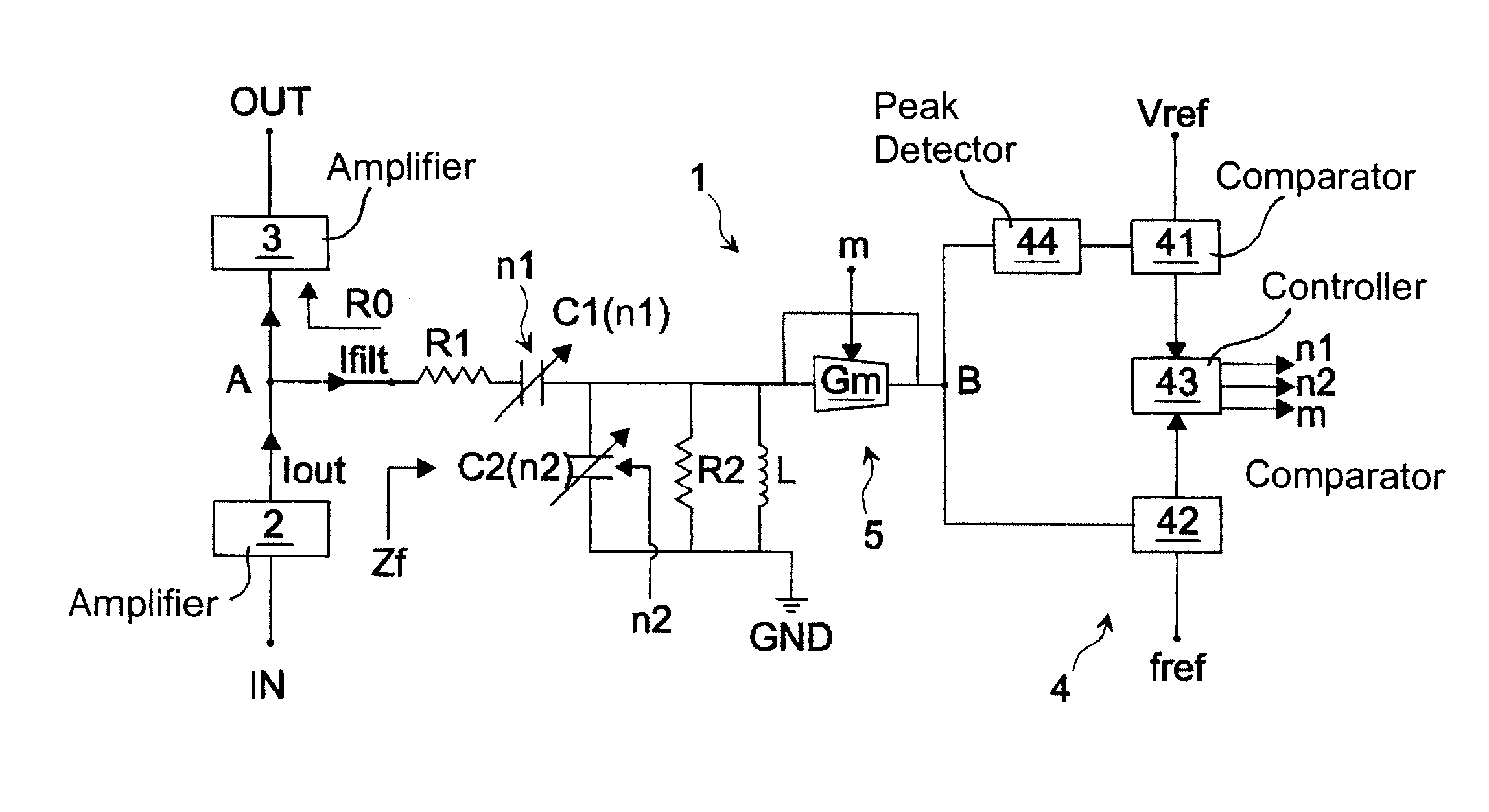
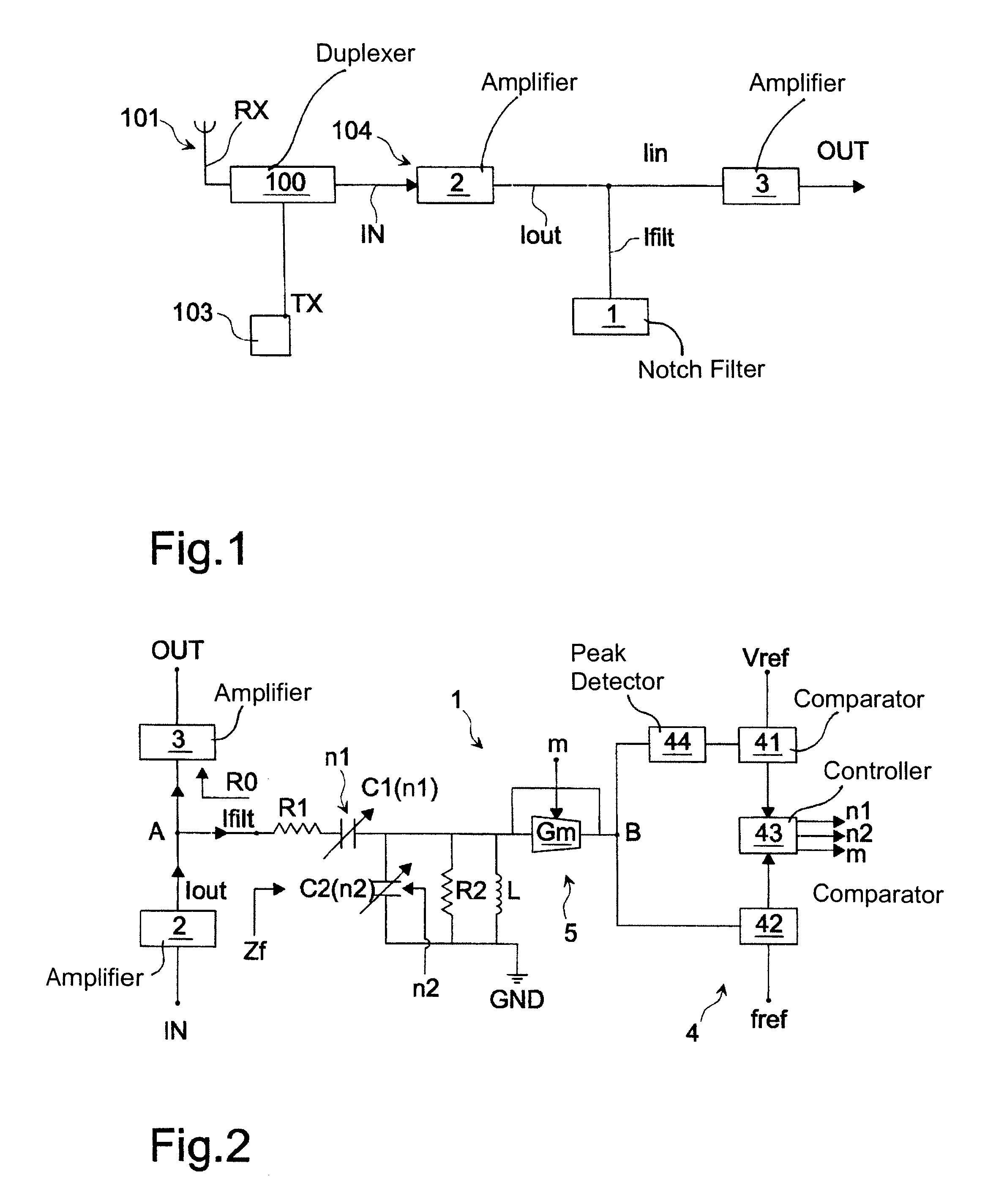
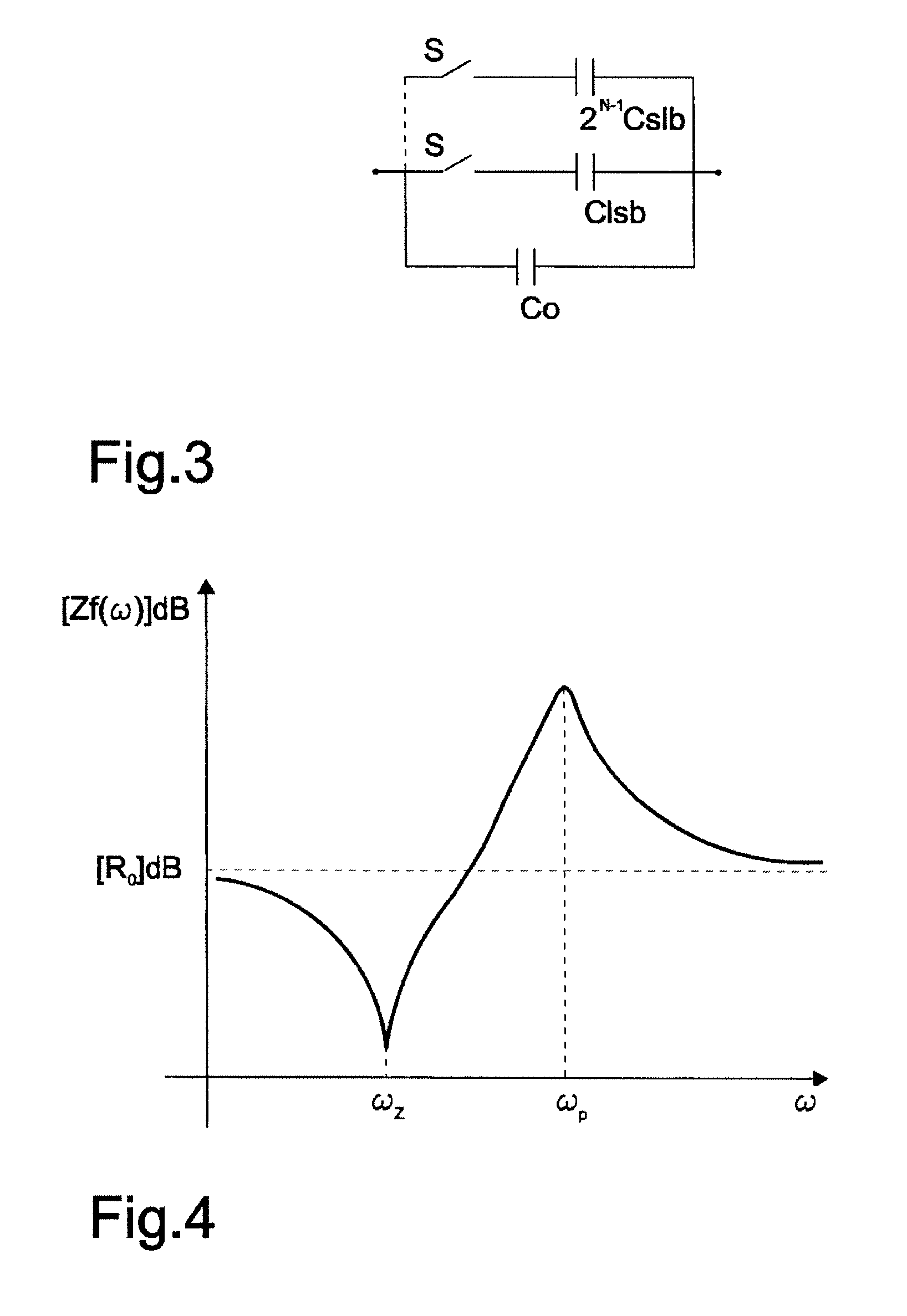
- A programmable notch filter with variable capacitive means and a negative resistance circuit, integrated into a transceiver chip, that includes a control device to adjust capacitive elements and compensate inductive losses, allowing for digital regulation and improved frequency calibration.

Linear, low noise, high q and widely tunable notch filter
PatentActiveUS20190109575A1
Innovation
- A shunt N-path notch filter with tunable center frequency, using a series inductor and capacitor that can be bypassed for band-pass operation, and controlled by clock pulses to achieve linear, high quality factor filtering without the need for bulky off-chip filters.


EMC Standards and RF Regulation Compliance
Electromagnetic compatibility (EMC) standards and radio frequency (RF) regulation compliance represent critical considerations when implementing optimized notch filters in high-frequency circuits. These regulatory frameworks establish mandatory requirements that directly influence filter design parameters, performance specifications, and deployment strategies across various applications.
International EMC standards, including IEC 61000 series and CISPR publications, define specific emission limits and immunity requirements that notch filters must satisfy. These standards establish frequency-dependent thresholds for conducted and radiated emissions, particularly relevant for high-frequency applications where notch filters operate. The stringent limits imposed on spurious emissions and harmonic content necessitate precise filter optimization to ensure compliance while maintaining desired performance characteristics.
Regional regulatory bodies such as the Federal Communications Commission (FCC) in the United States, European Telecommunications Standards Institute (ETSI) in Europe, and similar organizations worldwide enforce specific RF regulations that impact notch filter implementation. These regulations define permissible frequency bands, power limitations, and interference thresholds that directly affect filter design requirements and optimization strategies.
Compliance testing procedures mandate rigorous validation of notch filter performance under standardized conditions. Pre-compliance testing during development phases enables iterative optimization to meet regulatory requirements, while formal certification testing validates final designs against applicable standards. These testing protocols often reveal performance limitations that require design modifications or optimization adjustments.
The regulatory landscape continues evolving with emerging technologies and spectrum allocation changes, creating ongoing compliance challenges for notch filter optimization. New wireless standards, expanded frequency allocations, and stricter emission limits require adaptive design approaches that anticipate future regulatory requirements while maintaining current compliance.
Successful regulatory compliance strategies integrate EMC considerations throughout the filter optimization process, ensuring that performance enhancements do not compromise regulatory adherence. This approach minimizes development risks, reduces time-to-market delays, and ensures sustainable product deployment across global markets with varying regulatory requirements.
International EMC standards, including IEC 61000 series and CISPR publications, define specific emission limits and immunity requirements that notch filters must satisfy. These standards establish frequency-dependent thresholds for conducted and radiated emissions, particularly relevant for high-frequency applications where notch filters operate. The stringent limits imposed on spurious emissions and harmonic content necessitate precise filter optimization to ensure compliance while maintaining desired performance characteristics.
Regional regulatory bodies such as the Federal Communications Commission (FCC) in the United States, European Telecommunications Standards Institute (ETSI) in Europe, and similar organizations worldwide enforce specific RF regulations that impact notch filter implementation. These regulations define permissible frequency bands, power limitations, and interference thresholds that directly affect filter design requirements and optimization strategies.
Compliance testing procedures mandate rigorous validation of notch filter performance under standardized conditions. Pre-compliance testing during development phases enables iterative optimization to meet regulatory requirements, while formal certification testing validates final designs against applicable standards. These testing protocols often reveal performance limitations that require design modifications or optimization adjustments.
The regulatory landscape continues evolving with emerging technologies and spectrum allocation changes, creating ongoing compliance challenges for notch filter optimization. New wireless standards, expanded frequency allocations, and stricter emission limits require adaptive design approaches that anticipate future regulatory requirements while maintaining current compliance.
Successful regulatory compliance strategies integrate EMC considerations throughout the filter optimization process, ensuring that performance enhancements do not compromise regulatory adherence. This approach minimizes development risks, reduces time-to-market delays, and ensures sustainable product deployment across global markets with varying regulatory requirements.
Thermal Management in High-Frequency Filter Circuits
Thermal management represents a critical challenge in high-frequency filter circuits, particularly for notch filters operating at elevated frequencies where power dissipation and heat generation become significant concerns. As operating frequencies increase beyond several gigahertz, the thermal effects can substantially impact filter performance, stability, and reliability. The primary thermal challenges stem from resistive losses in conductors, dielectric losses in substrates, and power dissipation in active components used in tunable notch filter implementations.
High-frequency notch filters experience thermal stress through multiple mechanisms. Conductor losses increase proportionally with frequency due to skin effect and proximity effects, leading to localized heating in transmission lines and resonant structures. Dielectric materials exhibit frequency-dependent loss tangents that contribute to substrate heating, while active tuning elements such as varactors and PIN diodes generate additional heat during operation. These thermal effects create temperature gradients across the circuit, causing dimensional changes in physical structures and shifts in material properties.
Temperature variations directly affect filter performance through several pathways. Thermal expansion of substrates and metallization layers alters the physical dimensions of resonant elements, causing frequency drift in the notch response. Dielectric constant variations with temperature further compound these effects, leading to both center frequency shifts and bandwidth changes. In active implementations, semiconductor junction temperatures affect device characteristics, potentially degrading tuning range and introducing nonlinear distortion.
Effective thermal management strategies for high-frequency notch filters encompass both passive and active cooling approaches. Passive techniques include optimized substrate selection using low-loss, thermally conductive materials such as aluminum nitride or diamond substrates. Thermal via arrays and heat spreading layers help distribute heat more uniformly across the circuit. Active cooling methods involve forced air convection, liquid cooling systems, or thermoelectric coolers for precision temperature control in critical applications.
Advanced thermal design considerations include thermal-aware circuit layout optimization, where heat-generating components are strategically positioned to minimize thermal coupling to sensitive filter elements. Thermal simulation tools enable prediction of temperature distributions and optimization of heat dissipation paths during the design phase, ensuring robust performance across operating temperature ranges while maintaining the precise frequency selectivity required for effective notch filtering applications.
High-frequency notch filters experience thermal stress through multiple mechanisms. Conductor losses increase proportionally with frequency due to skin effect and proximity effects, leading to localized heating in transmission lines and resonant structures. Dielectric materials exhibit frequency-dependent loss tangents that contribute to substrate heating, while active tuning elements such as varactors and PIN diodes generate additional heat during operation. These thermal effects create temperature gradients across the circuit, causing dimensional changes in physical structures and shifts in material properties.
Temperature variations directly affect filter performance through several pathways. Thermal expansion of substrates and metallization layers alters the physical dimensions of resonant elements, causing frequency drift in the notch response. Dielectric constant variations with temperature further compound these effects, leading to both center frequency shifts and bandwidth changes. In active implementations, semiconductor junction temperatures affect device characteristics, potentially degrading tuning range and introducing nonlinear distortion.
Effective thermal management strategies for high-frequency notch filters encompass both passive and active cooling approaches. Passive techniques include optimized substrate selection using low-loss, thermally conductive materials such as aluminum nitride or diamond substrates. Thermal via arrays and heat spreading layers help distribute heat more uniformly across the circuit. Active cooling methods involve forced air convection, liquid cooling systems, or thermoelectric coolers for precision temperature control in critical applications.
Advanced thermal design considerations include thermal-aware circuit layout optimization, where heat-generating components are strategically positioned to minimize thermal coupling to sensitive filter elements. Thermal simulation tools enable prediction of temperature distributions and optimization of heat dissipation paths during the design phase, ensuring robust performance across operating temperature ranges while maintaining the precise frequency selectivity required for effective notch filtering applications.
Unlock deeper insights with Patsnap Eureka Quick Research — get a full tech report to explore trends and direct your research. Try now!
Generate Your Research Report Instantly with AI Agent
Supercharge your innovation with Patsnap Eureka AI Agent Platform!