Optimizing Temperature for Electric Actuators in Cold Climates
APR 3, 202610 MIN READ
Generate Your Research Report Instantly with AI Agent
Patsnap Eureka helps you evaluate technical feasibility & market potential.
Electric Actuator Cold Climate Challenges and Goals
Electric actuators face significant operational challenges when deployed in cold climate environments, where ambient temperatures can drop well below freezing and create adverse conditions that compromise performance, reliability, and longevity. These challenges stem from the fundamental physics of materials and electrical systems operating under extreme thermal stress, necessitating comprehensive engineering solutions to maintain optimal functionality.
The primary challenge lies in the temperature-dependent behavior of critical actuator components. Electric motors experience reduced efficiency as cold temperatures increase electrical resistance in windings and decrease magnetic field strength in permanent magnets. Lubricants within gear systems become viscous, creating higher friction loads and reducing mechanical efficiency. Electronic control circuits suffer from temperature drift in semiconductor components, leading to calibration errors and potential system failures.
Battery-powered electric actuators encounter particularly severe limitations in cold environments. Lithium-ion and other battery chemistries exhibit dramatically reduced capacity and power output at low temperatures, with some systems losing up to 50% of their rated performance below -20°C. This degradation directly impacts actuator response time, positioning accuracy, and operational duration between charging cycles.
Material expansion and contraction present additional complications. Differential thermal expansion between dissimilar materials can create mechanical stress, seal failures, and dimensional changes that affect precision positioning. Moisture infiltration and subsequent ice formation can cause catastrophic damage to internal components and create unpredictable mechanical interference.
The overarching goal for optimizing electric actuators in cold climates centers on developing integrated thermal management strategies that maintain component temperatures within acceptable operating ranges while minimizing energy consumption. This involves implementing active heating systems, advanced insulation materials, and intelligent control algorithms that anticipate and compensate for temperature-related performance variations.
Secondary objectives include enhancing cold-start capabilities through pre-heating protocols, developing cold-resistant materials and lubricants, and implementing predictive maintenance systems that monitor thermal stress indicators. The ultimate aim is achieving consistent actuator performance across the full operational temperature range while extending service life and reducing maintenance requirements in harsh environmental conditions.
The primary challenge lies in the temperature-dependent behavior of critical actuator components. Electric motors experience reduced efficiency as cold temperatures increase electrical resistance in windings and decrease magnetic field strength in permanent magnets. Lubricants within gear systems become viscous, creating higher friction loads and reducing mechanical efficiency. Electronic control circuits suffer from temperature drift in semiconductor components, leading to calibration errors and potential system failures.
Battery-powered electric actuators encounter particularly severe limitations in cold environments. Lithium-ion and other battery chemistries exhibit dramatically reduced capacity and power output at low temperatures, with some systems losing up to 50% of their rated performance below -20°C. This degradation directly impacts actuator response time, positioning accuracy, and operational duration between charging cycles.
Material expansion and contraction present additional complications. Differential thermal expansion between dissimilar materials can create mechanical stress, seal failures, and dimensional changes that affect precision positioning. Moisture infiltration and subsequent ice formation can cause catastrophic damage to internal components and create unpredictable mechanical interference.
The overarching goal for optimizing electric actuators in cold climates centers on developing integrated thermal management strategies that maintain component temperatures within acceptable operating ranges while minimizing energy consumption. This involves implementing active heating systems, advanced insulation materials, and intelligent control algorithms that anticipate and compensate for temperature-related performance variations.
Secondary objectives include enhancing cold-start capabilities through pre-heating protocols, developing cold-resistant materials and lubricants, and implementing predictive maintenance systems that monitor thermal stress indicators. The ultimate aim is achieving consistent actuator performance across the full operational temperature range while extending service life and reducing maintenance requirements in harsh environmental conditions.
Market Demand for Cold-Resistant Electric Actuators
The global market for cold-resistant electric actuators is experiencing significant growth driven by expanding industrial activities in harsh climate regions and increasing automation demands across multiple sectors. Arctic oil and gas exploration, renewable energy installations in northern territories, and infrastructure development in cold regions are primary catalysts for this market expansion.
Industrial automation represents the largest demand segment, particularly in oil and gas operations where electric actuators must function reliably in temperatures ranging from -40°C to -60°C. Offshore drilling platforms, pipeline systems, and processing facilities in regions like Alaska, northern Canada, and Siberia require actuators that maintain precise control under extreme conditions. The shift toward electric actuators from pneumatic and hydraulic alternatives is accelerating due to their superior energy efficiency and reduced maintenance requirements.
The renewable energy sector presents substantial growth opportunities, especially with the proliferation of wind farms in cold climates. Wind turbine pitch control systems, blade heating mechanisms, and tower orientation systems demand actuators capable of operating continuously in sub-zero temperatures. Solar installations in northern regions also require tracking systems with cold-resistant actuators for optimal panel positioning.
Aerospace and defense applications constitute another significant market segment. Military equipment, satellite ground stations, and aircraft systems operating in polar regions require actuators with enhanced cold-weather performance. The increasing focus on Arctic sovereignty and defense capabilities among northern nations is driving procurement of cold-resistant automation systems.
The automotive industry's transition to electric vehicles is creating new demand patterns. Cold-climate regions require specialized actuators for battery thermal management, charging port mechanisms, and HVAC systems that function effectively in extreme cold. This segment is projected to expand rapidly as electric vehicle adoption increases in northern markets.
Regional demand analysis reveals North America and Northern Europe as primary markets, with emerging opportunities in Russia and northern China. The mining industry in these regions requires automated equipment capable of year-round operation, including conveyor systems, valve controls, and material handling equipment with cold-resistant actuators.
Market drivers include stringent environmental regulations favoring electric over hydraulic systems, increasing labor costs in remote cold regions necessitating automation, and growing emphasis on operational reliability in harsh environments. The demand is further amplified by the need for predictive maintenance capabilities and remote monitoring systems that reduce human exposure to extreme conditions.
Industrial automation represents the largest demand segment, particularly in oil and gas operations where electric actuators must function reliably in temperatures ranging from -40°C to -60°C. Offshore drilling platforms, pipeline systems, and processing facilities in regions like Alaska, northern Canada, and Siberia require actuators that maintain precise control under extreme conditions. The shift toward electric actuators from pneumatic and hydraulic alternatives is accelerating due to their superior energy efficiency and reduced maintenance requirements.
The renewable energy sector presents substantial growth opportunities, especially with the proliferation of wind farms in cold climates. Wind turbine pitch control systems, blade heating mechanisms, and tower orientation systems demand actuators capable of operating continuously in sub-zero temperatures. Solar installations in northern regions also require tracking systems with cold-resistant actuators for optimal panel positioning.
Aerospace and defense applications constitute another significant market segment. Military equipment, satellite ground stations, and aircraft systems operating in polar regions require actuators with enhanced cold-weather performance. The increasing focus on Arctic sovereignty and defense capabilities among northern nations is driving procurement of cold-resistant automation systems.
The automotive industry's transition to electric vehicles is creating new demand patterns. Cold-climate regions require specialized actuators for battery thermal management, charging port mechanisms, and HVAC systems that function effectively in extreme cold. This segment is projected to expand rapidly as electric vehicle adoption increases in northern markets.
Regional demand analysis reveals North America and Northern Europe as primary markets, with emerging opportunities in Russia and northern China. The mining industry in these regions requires automated equipment capable of year-round operation, including conveyor systems, valve controls, and material handling equipment with cold-resistant actuators.
Market drivers include stringent environmental regulations favoring electric over hydraulic systems, increasing labor costs in remote cold regions necessitating automation, and growing emphasis on operational reliability in harsh environments. The demand is further amplified by the need for predictive maintenance capabilities and remote monitoring systems that reduce human exposure to extreme conditions.
Current State and Limitations of Electric Actuators in Cold
Electric actuators have become increasingly prevalent across various industrial applications, from aerospace and automotive systems to renewable energy installations and industrial automation. However, their performance in cold climate environments presents significant operational challenges that limit their effectiveness and reliability. Current electric actuator technologies demonstrate substantial performance degradation when exposed to sub-zero temperatures, creating critical limitations for applications in arctic regions, high-altitude installations, and seasonal outdoor operations.
The fundamental challenge stems from the temperature-dependent characteristics of key actuator components. Electric motors, which form the core of most actuator systems, experience reduced efficiency and torque output as temperatures decrease. Permanent magnet motors suffer from temperature coefficient effects where magnetic flux density decreases with falling temperatures, directly impacting motor performance. Similarly, electromagnetic coils exhibit increased resistance at lower temperatures, leading to altered current-torque relationships and reduced operational efficiency.
Battery and power supply systems represent another critical limitation in cold weather operations. Lithium-ion batteries, commonly used in portable and remote actuator applications, can lose up to 50% of their capacity at temperatures below -20°C. This capacity reduction significantly shortens operational time and may cause unexpected system shutdowns during critical operations. Additionally, internal resistance increases in cold conditions, limiting the peak current delivery capability essential for high-torque actuator applications.
Mechanical components face substantial challenges from thermal contraction and material property changes. Seals and gaskets become brittle and lose flexibility, potentially compromising environmental protection and allowing moisture ingress that can lead to ice formation within actuator housings. Lubricants experience viscosity increases that create higher friction loads and slower response times, while some lubricants may solidify completely at extreme temperatures.
Control electronics and sensors exhibit temperature-dependent drift and reduced accuracy in cold environments. Position feedback sensors, particularly potentiometers and encoders, may experience mechanical binding or electrical parameter shifts that compromise precise positioning control. Microprocessors and control circuits may require extended warm-up periods or fail to operate entirely below their specified temperature ranges.
Current mitigation strategies primarily rely on active heating systems, insulation, and cold-weather lubricants. However, these solutions often add significant weight, complexity, and power consumption to actuator systems. Heating elements require substantial energy input, reducing overall system efficiency and operational duration. Insulation adds bulk and may not provide adequate protection during extended cold exposure or rapid temperature cycling conditions.
The limitations become particularly pronounced in applications requiring rapid response times, precise positioning, or extended operational periods without maintenance access. These constraints significantly restrict the deployment of electric actuators in polar research equipment, wind turbine pitch control systems, satellite mechanisms, and military applications in cold regions.
The fundamental challenge stems from the temperature-dependent characteristics of key actuator components. Electric motors, which form the core of most actuator systems, experience reduced efficiency and torque output as temperatures decrease. Permanent magnet motors suffer from temperature coefficient effects where magnetic flux density decreases with falling temperatures, directly impacting motor performance. Similarly, electromagnetic coils exhibit increased resistance at lower temperatures, leading to altered current-torque relationships and reduced operational efficiency.
Battery and power supply systems represent another critical limitation in cold weather operations. Lithium-ion batteries, commonly used in portable and remote actuator applications, can lose up to 50% of their capacity at temperatures below -20°C. This capacity reduction significantly shortens operational time and may cause unexpected system shutdowns during critical operations. Additionally, internal resistance increases in cold conditions, limiting the peak current delivery capability essential for high-torque actuator applications.
Mechanical components face substantial challenges from thermal contraction and material property changes. Seals and gaskets become brittle and lose flexibility, potentially compromising environmental protection and allowing moisture ingress that can lead to ice formation within actuator housings. Lubricants experience viscosity increases that create higher friction loads and slower response times, while some lubricants may solidify completely at extreme temperatures.
Control electronics and sensors exhibit temperature-dependent drift and reduced accuracy in cold environments. Position feedback sensors, particularly potentiometers and encoders, may experience mechanical binding or electrical parameter shifts that compromise precise positioning control. Microprocessors and control circuits may require extended warm-up periods or fail to operate entirely below their specified temperature ranges.
Current mitigation strategies primarily rely on active heating systems, insulation, and cold-weather lubricants. However, these solutions often add significant weight, complexity, and power consumption to actuator systems. Heating elements require substantial energy input, reducing overall system efficiency and operational duration. Insulation adds bulk and may not provide adequate protection during extended cold exposure or rapid temperature cycling conditions.
The limitations become particularly pronounced in applications requiring rapid response times, precise positioning, or extended operational periods without maintenance access. These constraints significantly restrict the deployment of electric actuators in polar research equipment, wind turbine pitch control systems, satellite mechanisms, and military applications in cold regions.
Existing Solutions for Cold Climate Actuator Optimization
01 Temperature monitoring and control systems for electric actuators
Electric actuators can be equipped with temperature monitoring systems that continuously measure the operating temperature of critical components such as motors, gearboxes, and electronic circuits. These systems use temperature sensors to detect overheating conditions and implement control strategies to maintain optimal operating temperatures. The monitoring systems can trigger cooling mechanisms, adjust power output, or provide alerts when temperature thresholds are exceeded, thereby preventing thermal damage and extending actuator lifespan.- Temperature monitoring and control systems for electric actuators: Electric actuators can be equipped with temperature monitoring systems that continuously measure the operating temperature of critical components such as motors, gearboxes, and electronic circuits. These systems use temperature sensors to detect overheating conditions and implement control strategies to maintain optimal operating temperatures. The monitoring systems can trigger cooling mechanisms, adjust power output, or provide alerts when temperature thresholds are exceeded, thereby preventing thermal damage and extending actuator lifespan.
- Thermal protection mechanisms and safety features: Electric actuators incorporate various thermal protection mechanisms to prevent damage from excessive heat. These safety features include thermal cutoff switches, temperature-dependent current limiters, and automatic shutdown systems that activate when predetermined temperature limits are reached. The protection systems are designed to safeguard both the actuator components and the surrounding equipment by interrupting operation before critical temperature levels cause permanent damage or safety hazards.
- Cooling systems and heat dissipation methods: Various cooling technologies are employed in electric actuators to manage heat generation during operation. These include passive cooling methods such as heat sinks, thermal conductive materials, and ventilation designs, as well as active cooling systems like forced air circulation, liquid cooling, and thermoelectric cooling devices. The cooling systems are strategically designed to efficiently remove heat from high-temperature components and maintain stable operating conditions across different load scenarios and environmental conditions.
- Temperature-compensated control algorithms: Advanced control systems for electric actuators incorporate temperature compensation algorithms that adjust operational parameters based on real-time temperature measurements. These algorithms modify control signals, adjust motor current, or alter positioning accuracy to account for thermal expansion, changes in material properties, and temperature-dependent performance characteristics. The compensation methods ensure consistent actuator performance across varying temperature conditions and prevent errors caused by thermal effects.
- High-temperature resistant materials and design: Electric actuators designed for high-temperature applications utilize specialized materials and construction techniques to withstand elevated operating temperatures. These designs incorporate heat-resistant insulation materials, high-temperature lubricants, thermally stable electronic components, and materials with low thermal expansion coefficients. The selection of appropriate materials and design considerations enable actuators to function reliably in harsh thermal environments while maintaining mechanical integrity and electrical performance.
02 Thermal protection mechanisms and safety features
Electric actuators incorporate various thermal protection mechanisms to prevent damage from excessive heat. These safety features include thermal cutoff switches, temperature-dependent current limiters, and automatic shutdown systems that activate when predetermined temperature limits are reached. The protection systems can be integrated into the actuator's control circuitry to provide fail-safe operation and prevent catastrophic failures due to thermal overload conditions.Expand Specific Solutions03 Cooling systems and heat dissipation methods
Various cooling systems and heat dissipation methods are employed in electric actuators to manage thermal loads. These include passive cooling through heat sinks and thermal conductive materials, as well as active cooling systems using fans or liquid cooling circuits. The design of cooling systems considers factors such as ambient temperature conditions, duty cycles, and power consumption to ensure adequate heat removal from critical components during operation.Expand Specific Solutions04 Temperature-compensated control algorithms
Advanced control algorithms for electric actuators incorporate temperature compensation to maintain consistent performance across varying thermal conditions. These algorithms adjust control parameters such as motor current, speed, and torque based on real-time temperature measurements. Temperature-compensated control helps maintain positioning accuracy, reduces wear on components, and optimizes energy efficiency by accounting for temperature-dependent changes in material properties and electrical characteristics.Expand Specific Solutions05 High-temperature resistant materials and components
Electric actuators designed for high-temperature applications utilize specialized materials and components that can withstand elevated operating temperatures. These include high-temperature insulation materials, heat-resistant lubricants, thermally stable electronic components, and materials with appropriate thermal expansion coefficients. The selection of temperature-resistant materials ensures reliable operation in demanding environments such as industrial processes, automotive applications, and aerospace systems where ambient temperatures may be extreme.Expand Specific Solutions
Key Players in Electric Actuator and Thermal Management
The electric actuator optimization for cold climates represents a mature but rapidly evolving market segment within the broader industrial automation industry. The sector is experiencing significant growth driven by increasing demand for reliable performance in harsh environmental conditions across automotive, aerospace, and industrial applications. Market expansion is particularly strong in regions with extreme weather conditions, where traditional hydraulic and pneumatic systems face operational challenges. Technology maturity varies significantly among key players, with established giants like Robert Bosch GmbH, Lockheed Martin Corp., and Caterpillar Inc. leading in advanced thermal management solutions and cold-weather adaptations. Automotive leaders Ford Global Technologies LLC and Porsche AG are driving innovation in vehicle-specific applications, while specialized firms like Hamilton Sundstrand Corp. and Airbus Operations SAS focus on aerospace-grade solutions. Asian manufacturers including TDK Corp., Fujitsu Ltd., and Hitachi Construction Machinery are advancing semiconductor-based temperature control technologies. The competitive landscape shows a clear division between companies offering mature, proven solutions and emerging players developing next-generation smart actuators with integrated heating elements and advanced materials for extreme temperature performance.
Robert Bosch GmbH
Technical Solution: Bosch has developed advanced thermal management systems for electric actuators that incorporate predictive heating algorithms and integrated temperature sensors. Their solution uses phase change materials (PCM) and resistive heating elements that activate automatically when temperatures drop below optimal operating thresholds. The system employs machine learning algorithms to predict temperature variations based on environmental conditions and usage patterns, enabling proactive thermal conditioning. Bosch's actuators feature multi-layer insulation and smart power management that can maintain optimal operating temperatures down to -40°C while minimizing energy consumption through selective heating of critical components.
Strengths: Proven automotive industry experience, advanced predictive algorithms, energy-efficient design. Weaknesses: Higher initial cost, complex integration requirements for legacy systems.
Ford Global Technologies LLC
Technical Solution: Ford has developed cold climate optimization technology for electric actuators used in their electric vehicle platforms, focusing on battery thermal management and motor efficiency. Their approach integrates cabin heating systems with actuator preconditioning, using waste heat recovery and intelligent thermal routing. The system includes specialized lubricants and materials designed for sub-zero operation, combined with software algorithms that adjust actuator response characteristics based on ambient temperature. Ford's solution incorporates real-time temperature monitoring and adaptive control strategies that maintain actuator performance while extending component lifespan in harsh winter conditions.
Strengths: Integrated vehicle-level thermal management, real-world cold climate testing experience. Weaknesses: Limited to automotive applications, dependency on vehicle power systems.
Core Innovations in Actuator Temperature Management
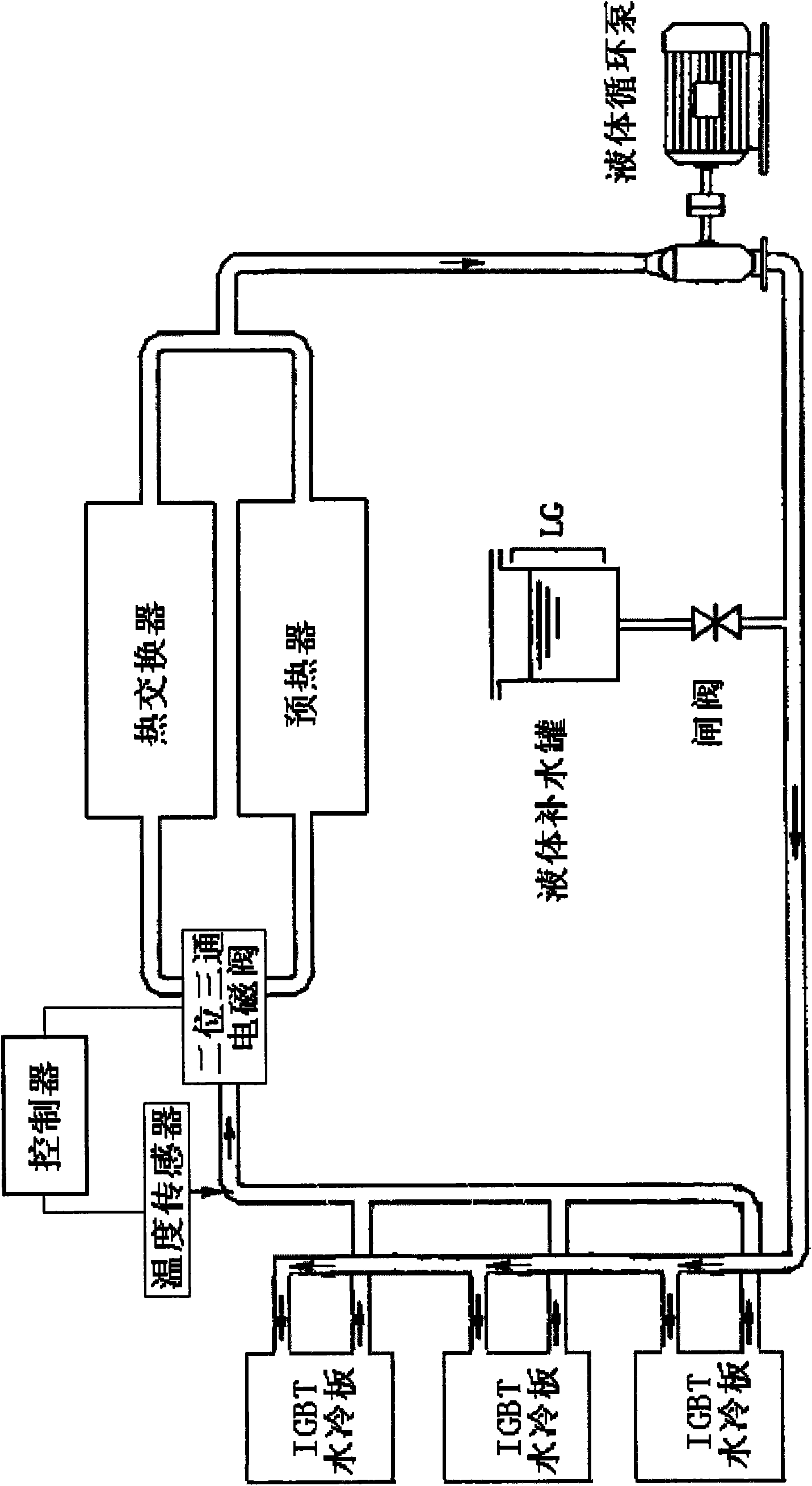
Working temperature control device for high-power power electronic device
PatentInactiveCN101667044A
Innovation
- A circulating water-cooling heat dissipation device is used. By setting a heater and a two-position three-way solenoid valve in the circulation loop, efficient heat transfer by conduction is used to achieve rapid and even preheating of the IGBT module. The heater and heat dissipation are switched according to the detection results of the temperature sensor. to control device temperature.
Actuator and method for determining the temperature of an electrical conductor of an actuator
PatentPendingDE102021209966A1
Innovation
- A method and actuator design that utilizes a temperature sensor and resistance sensor to measure the conductor's resistance value and temperature in its vicinity, employing a calibration process to determine the conductor's temperature using a formula or look-up table, ensuring accurate temperature determination even under dynamic conditions.


Energy Efficiency Standards for Cold Climate Applications
Energy efficiency standards for electric actuators operating in cold climate applications have become increasingly stringent as governments and industries prioritize environmental sustainability and operational cost reduction. The International Electrotechnical Commission (IEC) has established baseline efficiency requirements under IEC 60034-30-1, mandating minimum efficiency levels for motors operating in temperatures as low as -40°C. These standards require actuators to maintain at least 85% efficiency at rated load conditions even under extreme cold exposure.
Regional regulatory frameworks have evolved to address specific cold climate challenges. The European Union's Ecodesign Directive 2009/125/EC includes provisions for cold weather performance, requiring manufacturers to demonstrate sustained efficiency across temperature ranges from -30°C to +40°C. Similarly, North American standards under NEMA MG-1 specify efficiency retention criteria for actuators deployed in arctic and subarctic environments, with particular emphasis on startup energy consumption during cold weather conditions.
Cold climate efficiency standards incorporate unique performance metrics beyond traditional room temperature specifications. These include cold-start energy requirements, thermal cycling endurance, and efficiency degradation curves across temperature ranges. Standards mandate that actuators must achieve operational efficiency within 30 seconds of startup at -25°C, while maintaining torque output within 95% of rated specifications. Additionally, efficiency measurements must account for auxiliary heating systems required for cold weather operation.
Compliance testing protocols have been specifically developed for cold climate applications. Test procedures require actuators to undergo thermal shock testing, where devices cycle between -40°C and +20°C environments while maintaining continuous operation. Efficiency measurements are taken at multiple temperature points, with particular attention to the critical -20°C to -10°C range where most performance degradation occurs. These standards also mandate long-term reliability testing over 10,000 thermal cycles to ensure sustained efficiency performance.
Emerging efficiency standards are beginning to address smart actuator technologies and adaptive control systems. Future regulations will likely incorporate dynamic efficiency requirements that adjust based on ambient temperature conditions, potentially allowing for variable efficiency thresholds that optimize overall system performance rather than maintaining fixed efficiency levels across all operating conditions.
Regional regulatory frameworks have evolved to address specific cold climate challenges. The European Union's Ecodesign Directive 2009/125/EC includes provisions for cold weather performance, requiring manufacturers to demonstrate sustained efficiency across temperature ranges from -30°C to +40°C. Similarly, North American standards under NEMA MG-1 specify efficiency retention criteria for actuators deployed in arctic and subarctic environments, with particular emphasis on startup energy consumption during cold weather conditions.
Cold climate efficiency standards incorporate unique performance metrics beyond traditional room temperature specifications. These include cold-start energy requirements, thermal cycling endurance, and efficiency degradation curves across temperature ranges. Standards mandate that actuators must achieve operational efficiency within 30 seconds of startup at -25°C, while maintaining torque output within 95% of rated specifications. Additionally, efficiency measurements must account for auxiliary heating systems required for cold weather operation.
Compliance testing protocols have been specifically developed for cold climate applications. Test procedures require actuators to undergo thermal shock testing, where devices cycle between -40°C and +20°C environments while maintaining continuous operation. Efficiency measurements are taken at multiple temperature points, with particular attention to the critical -20°C to -10°C range where most performance degradation occurs. These standards also mandate long-term reliability testing over 10,000 thermal cycles to ensure sustained efficiency performance.
Emerging efficiency standards are beginning to address smart actuator technologies and adaptive control systems. Future regulations will likely incorporate dynamic efficiency requirements that adjust based on ambient temperature conditions, potentially allowing for variable efficiency thresholds that optimize overall system performance rather than maintaining fixed efficiency levels across all operating conditions.
Environmental Impact of Actuator Heating Solutions
The environmental implications of actuator heating solutions in cold climate applications present a complex landscape of energy consumption, carbon emissions, and sustainability considerations that require careful evaluation across multiple dimensions.
Energy consumption represents the most immediate environmental concern for electric actuator heating systems. Resistive heating elements, commonly employed in cold climate applications, typically operate at 20-40% efficiency when converting electrical energy to useful heat. This inefficiency translates to substantial energy waste, particularly during extended cold periods where continuous heating may be required. Advanced solutions such as heat pump-based systems and thermal energy storage can improve efficiency to 60-80%, significantly reducing overall energy demand and associated environmental impact.
Carbon footprint analysis reveals significant variations depending on the regional electricity grid composition. In regions powered primarily by fossil fuels, actuator heating systems can generate 0.5-1.2 kg CO2 equivalent per kWh consumed. Conversely, areas with renewable energy infrastructure demonstrate substantially lower emissions, often below 0.1 kg CO2 equivalent per kWh. This disparity emphasizes the importance of considering local energy sources when evaluating environmental impact.
Material lifecycle considerations extend beyond operational energy consumption to encompass manufacturing, transportation, and end-of-life disposal impacts. Heating elements containing rare earth materials or specialized alloys contribute to resource depletion concerns. However, modern designs increasingly incorporate recyclable materials and modular architectures that facilitate component replacement rather than complete system disposal.
Waste heat management presents both challenges and opportunities for environmental optimization. Uncontrolled heat dissipation contributes to localized thermal pollution and energy waste. Innovative approaches include heat recovery systems that capture and redirect waste thermal energy for secondary applications, potentially improving overall system efficiency by 15-25%.
Emerging sustainable alternatives demonstrate promising environmental benefits. Thermoelectric heating systems, while currently limited by cost considerations, offer precise temperature control with reduced energy consumption. Bio-based heating fluids and phase-change materials provide environmentally friendly alternatives to traditional synthetic heating media, reducing toxicity concerns and improving biodegradability.
Regulatory frameworks increasingly emphasize environmental performance metrics for industrial heating applications. Compliance with emerging standards such as the EU's Ecodesign Directive requires comprehensive lifecycle assessments and energy efficiency improvements, driving innovation toward more sustainable actuator heating solutions.
Energy consumption represents the most immediate environmental concern for electric actuator heating systems. Resistive heating elements, commonly employed in cold climate applications, typically operate at 20-40% efficiency when converting electrical energy to useful heat. This inefficiency translates to substantial energy waste, particularly during extended cold periods where continuous heating may be required. Advanced solutions such as heat pump-based systems and thermal energy storage can improve efficiency to 60-80%, significantly reducing overall energy demand and associated environmental impact.
Carbon footprint analysis reveals significant variations depending on the regional electricity grid composition. In regions powered primarily by fossil fuels, actuator heating systems can generate 0.5-1.2 kg CO2 equivalent per kWh consumed. Conversely, areas with renewable energy infrastructure demonstrate substantially lower emissions, often below 0.1 kg CO2 equivalent per kWh. This disparity emphasizes the importance of considering local energy sources when evaluating environmental impact.
Material lifecycle considerations extend beyond operational energy consumption to encompass manufacturing, transportation, and end-of-life disposal impacts. Heating elements containing rare earth materials or specialized alloys contribute to resource depletion concerns. However, modern designs increasingly incorporate recyclable materials and modular architectures that facilitate component replacement rather than complete system disposal.
Waste heat management presents both challenges and opportunities for environmental optimization. Uncontrolled heat dissipation contributes to localized thermal pollution and energy waste. Innovative approaches include heat recovery systems that capture and redirect waste thermal energy for secondary applications, potentially improving overall system efficiency by 15-25%.
Emerging sustainable alternatives demonstrate promising environmental benefits. Thermoelectric heating systems, while currently limited by cost considerations, offer precise temperature control with reduced energy consumption. Bio-based heating fluids and phase-change materials provide environmentally friendly alternatives to traditional synthetic heating media, reducing toxicity concerns and improving biodegradability.
Regulatory frameworks increasingly emphasize environmental performance metrics for industrial heating applications. Compliance with emerging standards such as the EU's Ecodesign Directive requires comprehensive lifecycle assessments and energy efficiency improvements, driving innovation toward more sustainable actuator heating solutions.
Unlock deeper insights with Patsnap Eureka Quick Research — get a full tech report to explore trends and direct your research. Try now!
Generate Your Research Report Instantly with AI Agent
Supercharge your innovation with Patsnap Eureka AI Agent Platform!