Oscillator Drift Compensation: Techniques for Long-Term Accuracy
MAR 13, 20269 MIN READ
Generate Your Research Report Instantly with AI Agent
PatSnap Eureka helps you evaluate technical feasibility & market potential.
Oscillator Technology Background and Drift Compensation Goals
Oscillator technology has evolved significantly since the early 20th century, beginning with simple LC circuits and progressing through vacuum tube oscillators to modern crystal-controlled and atomic frequency standards. The fundamental principle underlying all oscillators involves creating sustained periodic electrical signals through positive feedback mechanisms. However, the inherent challenge of maintaining precise frequency output over extended periods has driven continuous innovation in compensation techniques.
The historical development of oscillator drift compensation can be traced through several key phases. Early mechanical and electrical compensation methods emerged in the 1940s, followed by temperature-controlled crystal oscillators (TCXOs) in the 1960s. The introduction of voltage-controlled crystal oscillators (VCXOs) and oven-controlled crystal oscillators (OCXOs) marked significant milestones in achieving improved stability. More recently, digital compensation algorithms and microprocessor-controlled systems have revolutionized drift correction capabilities.
Modern oscillator applications span critical infrastructure including telecommunications networks, GPS systems, financial trading platforms, scientific instrumentation, and aerospace systems. Each application domain presents unique stability requirements, ranging from parts-per-million accuracy for consumer electronics to parts-per-trillion precision for atomic clocks and frequency metrology standards.
The primary goal of drift compensation is to maintain frequency accuracy within specified tolerances over operational lifetimes spanning years or decades. This involves addressing multiple drift mechanisms including aging effects in crystal lattices, temperature-induced frequency variations, supply voltage fluctuations, and mechanical stress impacts. Compensation systems must achieve these objectives while maintaining cost-effectiveness and power efficiency.
Contemporary drift compensation targets encompass both short-term stability improvements and long-term aging mitigation. Advanced systems aim to achieve frequency stability better than 1×10^-9 over temperature ranges exceeding 100°C, while simultaneously reducing aging rates below 1×10^-10 per year. These ambitious targets drive research into novel materials, advanced control algorithms, and hybrid compensation architectures combining multiple correction techniques.
The integration of machine learning and predictive modeling represents an emerging frontier in oscillator drift compensation, promising adaptive systems capable of anticipating and preemptively correcting drift phenomena before they impact system performance.
The historical development of oscillator drift compensation can be traced through several key phases. Early mechanical and electrical compensation methods emerged in the 1940s, followed by temperature-controlled crystal oscillators (TCXOs) in the 1960s. The introduction of voltage-controlled crystal oscillators (VCXOs) and oven-controlled crystal oscillators (OCXOs) marked significant milestones in achieving improved stability. More recently, digital compensation algorithms and microprocessor-controlled systems have revolutionized drift correction capabilities.
Modern oscillator applications span critical infrastructure including telecommunications networks, GPS systems, financial trading platforms, scientific instrumentation, and aerospace systems. Each application domain presents unique stability requirements, ranging from parts-per-million accuracy for consumer electronics to parts-per-trillion precision for atomic clocks and frequency metrology standards.
The primary goal of drift compensation is to maintain frequency accuracy within specified tolerances over operational lifetimes spanning years or decades. This involves addressing multiple drift mechanisms including aging effects in crystal lattices, temperature-induced frequency variations, supply voltage fluctuations, and mechanical stress impacts. Compensation systems must achieve these objectives while maintaining cost-effectiveness and power efficiency.
Contemporary drift compensation targets encompass both short-term stability improvements and long-term aging mitigation. Advanced systems aim to achieve frequency stability better than 1×10^-9 over temperature ranges exceeding 100°C, while simultaneously reducing aging rates below 1×10^-10 per year. These ambitious targets drive research into novel materials, advanced control algorithms, and hybrid compensation architectures combining multiple correction techniques.
The integration of machine learning and predictive modeling represents an emerging frontier in oscillator drift compensation, promising adaptive systems capable of anticipating and preemptively correcting drift phenomena before they impact system performance.
Market Demand for High-Precision Timing Solutions
The global demand for high-precision timing solutions has experienced unprecedented growth across multiple industries, driven by the increasing complexity of modern electronic systems and the proliferation of time-sensitive applications. Telecommunications infrastructure, particularly 5G networks, requires extremely stable frequency references to maintain synchronization across distributed base stations and ensure seamless data transmission. The stringent timing requirements of these networks have created substantial market pressure for oscillator solutions with minimal drift characteristics.
Financial trading systems represent another critical market segment where microsecond-level timing accuracy directly impacts transaction execution and regulatory compliance. High-frequency trading platforms demand oscillators that maintain consistent performance over extended periods without manual recalibration, making drift compensation technologies essential for market competitiveness. The regulatory environment in financial markets continues to tighten timing requirements, further amplifying demand for precision timing solutions.
Industrial automation and Internet of Things applications have emerged as significant growth drivers for precision timing markets. Manufacturing systems increasingly rely on synchronized operations across multiple devices and sensors, where timing drift can lead to production inefficiencies and quality control issues. Smart grid infrastructure similarly depends on accurate timing for power distribution optimization and fault detection, creating sustained demand for long-term stable oscillators.
The aerospace and defense sectors maintain consistent demand for ruggedized timing solutions capable of operating in extreme environments while preserving accuracy over mission-critical timeframes. Satellite communication systems, navigation equipment, and radar applications require oscillators with sophisticated drift compensation mechanisms to ensure operational reliability throughout extended deployment periods.
Scientific instrumentation markets, including research laboratories and measurement equipment manufacturers, continue to drive demand for ultra-precise timing solutions. These applications often require stability specifications that push the boundaries of current oscillator technology, creating opportunities for advanced drift compensation techniques.
Market growth is further accelerated by the miniaturization trend in electronic devices, where traditional temperature-controlled crystal oscillators become impractical due to size and power constraints. This has intensified the need for innovative drift compensation approaches that can deliver comparable performance in smaller form factors without external stabilization systems.
Financial trading systems represent another critical market segment where microsecond-level timing accuracy directly impacts transaction execution and regulatory compliance. High-frequency trading platforms demand oscillators that maintain consistent performance over extended periods without manual recalibration, making drift compensation technologies essential for market competitiveness. The regulatory environment in financial markets continues to tighten timing requirements, further amplifying demand for precision timing solutions.
Industrial automation and Internet of Things applications have emerged as significant growth drivers for precision timing markets. Manufacturing systems increasingly rely on synchronized operations across multiple devices and sensors, where timing drift can lead to production inefficiencies and quality control issues. Smart grid infrastructure similarly depends on accurate timing for power distribution optimization and fault detection, creating sustained demand for long-term stable oscillators.
The aerospace and defense sectors maintain consistent demand for ruggedized timing solutions capable of operating in extreme environments while preserving accuracy over mission-critical timeframes. Satellite communication systems, navigation equipment, and radar applications require oscillators with sophisticated drift compensation mechanisms to ensure operational reliability throughout extended deployment periods.
Scientific instrumentation markets, including research laboratories and measurement equipment manufacturers, continue to drive demand for ultra-precise timing solutions. These applications often require stability specifications that push the boundaries of current oscillator technology, creating opportunities for advanced drift compensation techniques.
Market growth is further accelerated by the miniaturization trend in electronic devices, where traditional temperature-controlled crystal oscillators become impractical due to size and power constraints. This has intensified the need for innovative drift compensation approaches that can deliver comparable performance in smaller form factors without external stabilization systems.
Current Oscillator Drift Issues and Technical Challenges
Oscillator drift represents one of the most persistent challenges in precision timing systems, manifesting as gradual frequency deviations that accumulate over time and compromise long-term accuracy. This phenomenon affects virtually all oscillator technologies, from traditional quartz crystals to advanced atomic frequency standards, creating significant obstacles for applications requiring sustained precision timing performance.
Temperature variations constitute the primary driver of oscillator drift, with frequency stability degrading as ambient conditions fluctuate. Even temperature-compensated crystal oscillators (TCXOs) exhibit residual drift due to imperfect compensation algorithms and component aging. The temperature coefficient of frequency can vary non-linearly across operating ranges, making accurate prediction and compensation increasingly complex for wide-temperature applications.
Aging effects present another fundamental challenge, as oscillator components undergo irreversible physical and chemical changes over time. Quartz crystals experience mass transfer and contamination that alter resonant frequencies, while atomic oscillators face degradation in laser systems and atomic cell integrity. These aging processes follow unpredictable patterns, making long-term frequency stability difficult to maintain without active compensation mechanisms.
Power supply variations introduce additional drift sources through voltage-dependent frequency shifts. Supply voltage fluctuations directly impact oscillator circuitry, causing frequency deviations that compound with other drift mechanisms. Load variations and power management switching can create transient disturbances that affect both short-term stability and long-term drift characteristics.
Mechanical stress and vibration sensitivity further complicate drift compensation efforts. Physical mounting configurations, thermal expansion mismatches, and environmental vibrations can induce frequency shifts that vary with installation conditions. These mechanical influences often interact with temperature effects, creating complex multi-variable drift patterns that challenge traditional compensation approaches.
Current compensation techniques face significant limitations in addressing these multifaceted drift sources simultaneously. Traditional analog compensation circuits lack the flexibility to adapt to changing drift characteristics over extended periods. Digital compensation systems, while more adaptable, require sophisticated algorithms and continuous calibration references to maintain effectiveness across diverse operating conditions and aging profiles.
The integration of multiple drift compensation methods often introduces new challenges, including increased power consumption, circuit complexity, and potential instability from feedback interactions. Achieving optimal compensation performance while maintaining system reliability and cost-effectiveness remains a critical technical challenge for next-generation precision timing applications.
Temperature variations constitute the primary driver of oscillator drift, with frequency stability degrading as ambient conditions fluctuate. Even temperature-compensated crystal oscillators (TCXOs) exhibit residual drift due to imperfect compensation algorithms and component aging. The temperature coefficient of frequency can vary non-linearly across operating ranges, making accurate prediction and compensation increasingly complex for wide-temperature applications.
Aging effects present another fundamental challenge, as oscillator components undergo irreversible physical and chemical changes over time. Quartz crystals experience mass transfer and contamination that alter resonant frequencies, while atomic oscillators face degradation in laser systems and atomic cell integrity. These aging processes follow unpredictable patterns, making long-term frequency stability difficult to maintain without active compensation mechanisms.
Power supply variations introduce additional drift sources through voltage-dependent frequency shifts. Supply voltage fluctuations directly impact oscillator circuitry, causing frequency deviations that compound with other drift mechanisms. Load variations and power management switching can create transient disturbances that affect both short-term stability and long-term drift characteristics.
Mechanical stress and vibration sensitivity further complicate drift compensation efforts. Physical mounting configurations, thermal expansion mismatches, and environmental vibrations can induce frequency shifts that vary with installation conditions. These mechanical influences often interact with temperature effects, creating complex multi-variable drift patterns that challenge traditional compensation approaches.
Current compensation techniques face significant limitations in addressing these multifaceted drift sources simultaneously. Traditional analog compensation circuits lack the flexibility to adapt to changing drift characteristics over extended periods. Digital compensation systems, while more adaptable, require sophisticated algorithms and continuous calibration references to maintain effectiveness across diverse operating conditions and aging profiles.
The integration of multiple drift compensation methods often introduces new challenges, including increased power consumption, circuit complexity, and potential instability from feedback interactions. Achieving optimal compensation performance while maintaining system reliability and cost-effectiveness remains a critical technical challenge for next-generation precision timing applications.
Existing Drift Compensation Methods and Solutions
01 Temperature compensation techniques for oscillator drift
Oscillator drift caused by temperature variations can be mitigated through temperature compensation circuits and algorithms. These techniques monitor temperature changes and adjust oscillator parameters accordingly to maintain frequency stability. Temperature-compensated crystal oscillators (TCXO) and oven-controlled crystal oscillators (OCXO) are common implementations that use analog or digital compensation methods to counteract thermal effects on oscillator frequency.- Temperature compensation techniques for oscillator drift: Oscillator drift caused by temperature variations can be mitigated through temperature compensation circuits and algorithms. These techniques monitor temperature changes and adjust oscillator parameters accordingly to maintain frequency stability. Temperature-compensated crystal oscillators (TCXO) and oven-controlled crystal oscillators (OCXO) are common implementations that use heating elements or compensation networks to counteract thermal effects on oscillator frequency.
- Digital calibration and correction methods: Digital calibration techniques employ microprocessors or digital signal processing to detect and correct oscillator drift in real-time. These methods typically involve measuring the oscillator output against a reference, calculating drift parameters, and applying digital corrections through frequency synthesis or phase-locked loops. Calibration data can be stored in memory and updated periodically to maintain accuracy over the device lifetime.
- Phase-locked loop stabilization: Phase-locked loop circuits can be utilized to stabilize oscillator frequency and reduce drift effects. These systems compare the oscillator output with a stable reference signal and generate error correction signals to maintain phase coherence. Advanced PLL architectures incorporate adaptive filtering and multi-loop configurations to achieve enhanced drift compensation across varying environmental conditions and aging effects.
- Aging compensation and long-term stability: Long-term oscillator drift due to component aging can be addressed through predictive algorithms and periodic recalibration schemes. These approaches model the aging characteristics of oscillator components and apply preemptive corrections based on usage time and operational history. Some implementations use non-volatile memory to store aging parameters and adjustment factors that evolve throughout the device operational life.
- Multi-oscillator redundancy and selection: Systems employing multiple oscillators with selection and switching mechanisms can minimize drift impact by choosing the most stable oscillator at any given time. These architectures continuously monitor multiple oscillator sources, compare their performance characteristics, and dynamically select or blend outputs to achieve optimal frequency stability. Redundant oscillator configurations also provide fault tolerance and improved reliability in critical applications.
02 Calibration and correction methods for oscillator drift
Calibration techniques involve measuring oscillator frequency against a reference and applying correction factors to compensate for drift. These methods can include initial factory calibration, periodic recalibration during operation, and real-time drift correction using digital signal processing. Calibration data can be stored in memory and used to adjust the oscillator output or correct timing measurements affected by drift.Expand Specific Solutions03 Phase-locked loop (PLL) based drift compensation
Phase-locked loops can be employed to lock an oscillator to a more stable reference frequency, effectively reducing drift effects. PLL circuits continuously compare the oscillator output with a reference signal and adjust the oscillator frequency to maintain phase alignment. This approach is particularly effective for compensating both short-term and long-term drift in various oscillator types including voltage-controlled oscillators and crystal oscillators.Expand Specific Solutions04 Aging compensation and predictive drift correction
Long-term oscillator drift due to aging effects can be addressed through predictive algorithms that model drift behavior over time. These methods track historical drift patterns and extrapolate future drift to apply preemptive corrections. Aging compensation may involve periodic frequency adjustments based on accumulated operating time, environmental history, and statistical models of component aging characteristics.Expand Specific Solutions05 Multi-oscillator and reference switching techniques
Systems can employ multiple oscillators or switchable reference sources to mitigate drift effects. When one oscillator exhibits excessive drift, the system can switch to an alternative oscillator or reference source with better stability. This redundancy approach may include cross-checking between oscillators, selecting the most stable source, or combining outputs from multiple oscillators to achieve improved overall frequency stability and drift performance.Expand Specific Solutions
Key Players in Precision Oscillator and Timing Industry
The oscillator drift compensation market represents a mature yet evolving technological landscape driven by increasing demands for precision timing in 5G, IoT, and autonomous systems. The industry has reached a consolidation phase with established semiconductor giants like Intel Corp., Texas Instruments, QUALCOMM, and MediaTek dominating through integrated solutions, while specialized players such as Seiko Epson Corp. and Murata Manufacturing focus on crystal oscillator technologies. Technology maturity varies significantly across segments, with companies like Huawei and Apple pushing advanced compensation algorithms for mobile applications, while industrial automation leaders including Siemens AG and Honeywell International develop robust solutions for harsh environments. The competitive dynamics show traditional timing component manufacturers collaborating with system integrators to address emerging applications requiring sub-ppm accuracy over extended operational periods.
Intel Corp.
Technical Solution: Intel employs advanced temperature compensation algorithms and digital signal processing techniques for oscillator drift compensation in their processor architectures. Their approach utilizes on-chip temperature sensors combined with real-time calibration algorithms to maintain frequency accuracy within ±20ppm over extended operating periods. The company integrates voltage-controlled crystal oscillators (VCXOs) with adaptive feedback control systems that continuously monitor and adjust for environmental variations. Intel's solutions also incorporate machine learning algorithms to predict drift patterns based on historical data, enabling proactive compensation adjustments that maintain long-term stability in mission-critical applications.
Strengths: Advanced digital compensation algorithms, integrated temperature sensing, machine learning-based predictive capabilities. Weaknesses: Higher power consumption, complex implementation requiring specialized expertise.
Seiko Epson Corp.
Technical Solution: Seiko Epson specializes in temperature-compensated crystal oscillators (TCXOs) and oven-controlled crystal oscillators (OCXOs) for high-precision timing applications. Their proprietary AT-cut crystal technology combined with advanced temperature compensation circuits achieves frequency stability of ±0.1ppm over temperature ranges from -40°C to +85°C. The company's solutions feature multi-point temperature calibration during manufacturing, storing compensation coefficients in non-volatile memory for real-time drift correction. Epson's oscillators incorporate aging compensation algorithms that account for long-term crystal frequency drift, typically maintaining accuracy within ±1ppm over 10-year periods through continuous recalibration processes.
Strengths: Industry-leading crystal technology, excellent long-term stability, comprehensive temperature compensation. Weaknesses: Higher cost compared to standard oscillators, longer warm-up times for OCXO solutions.
Core Patents in Advanced Drift Compensation Techniques
System and method for frequency drift compensation for a dielectric resonator oscillator
PatentActiveUS9413291B2
Innovation
- The approach involves selecting a dielectric resonator with a temperature coefficient that offsets the oscillator system's temperature characteristics, allowing for compensation of frequency drift without adding a thermistor or high-performance components, thereby maintaining frequency stability across a wide temperature range.


Method and system for correcting oscillator frequency drift
PatentInactiveUS20090278616A1
Innovation
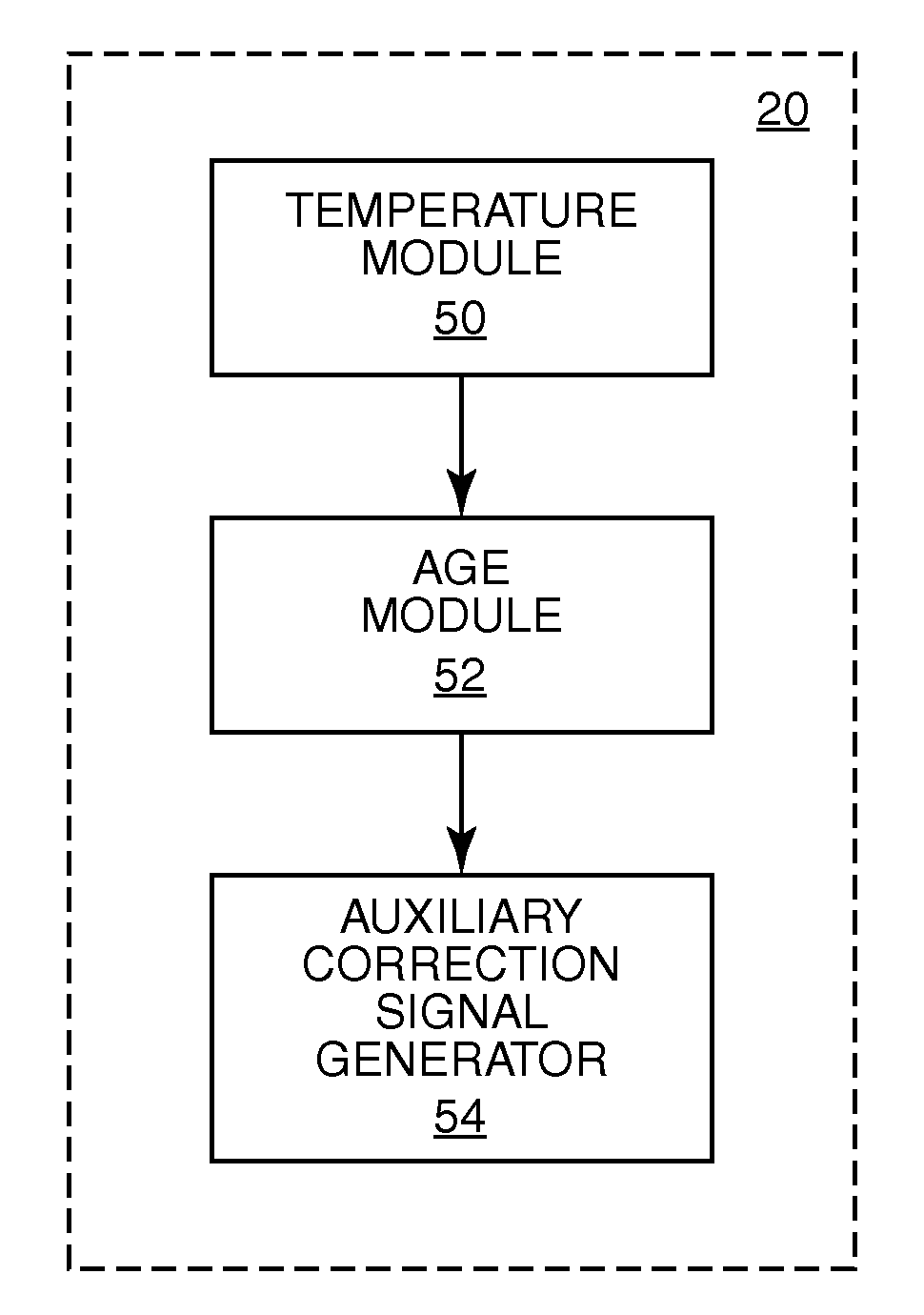
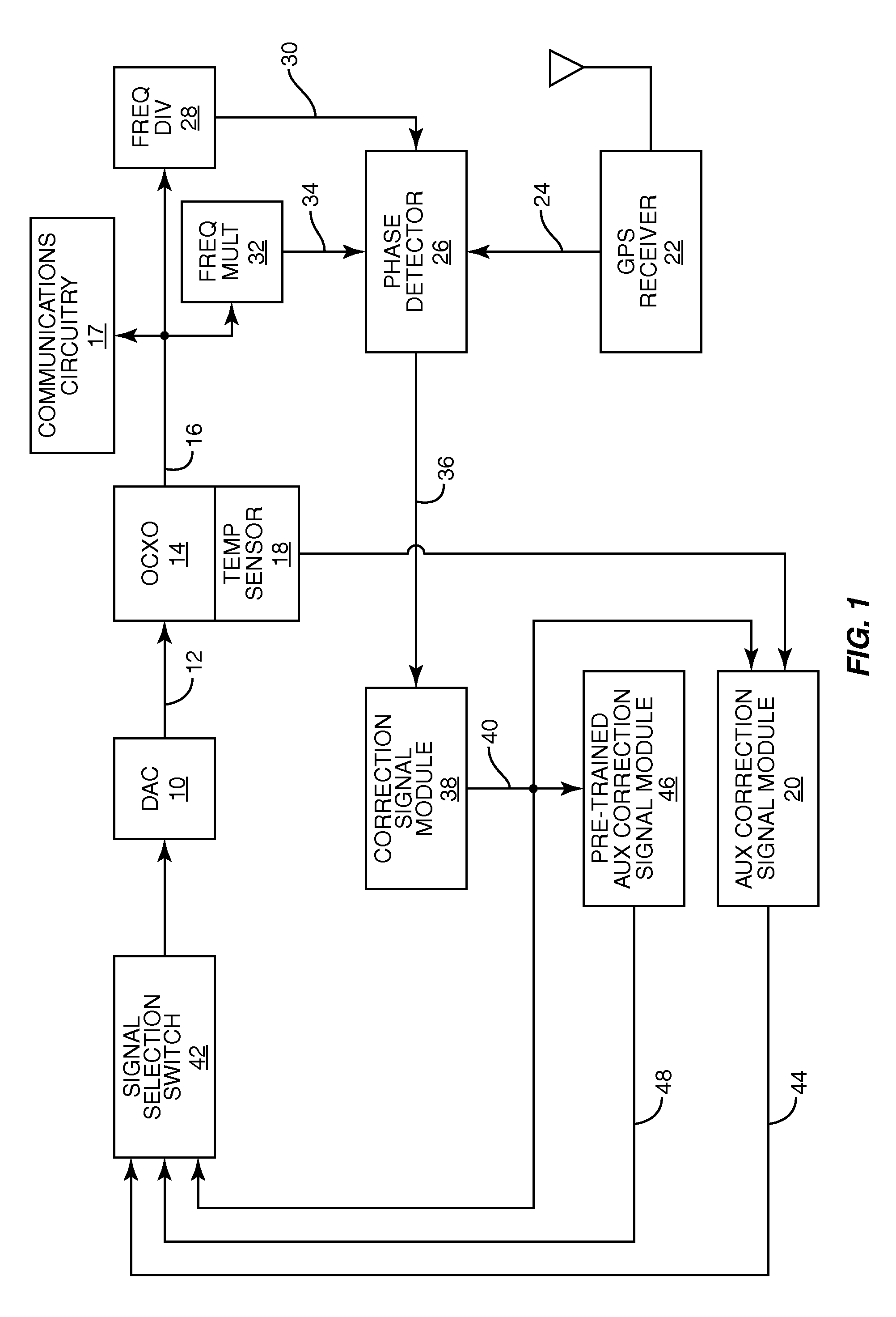
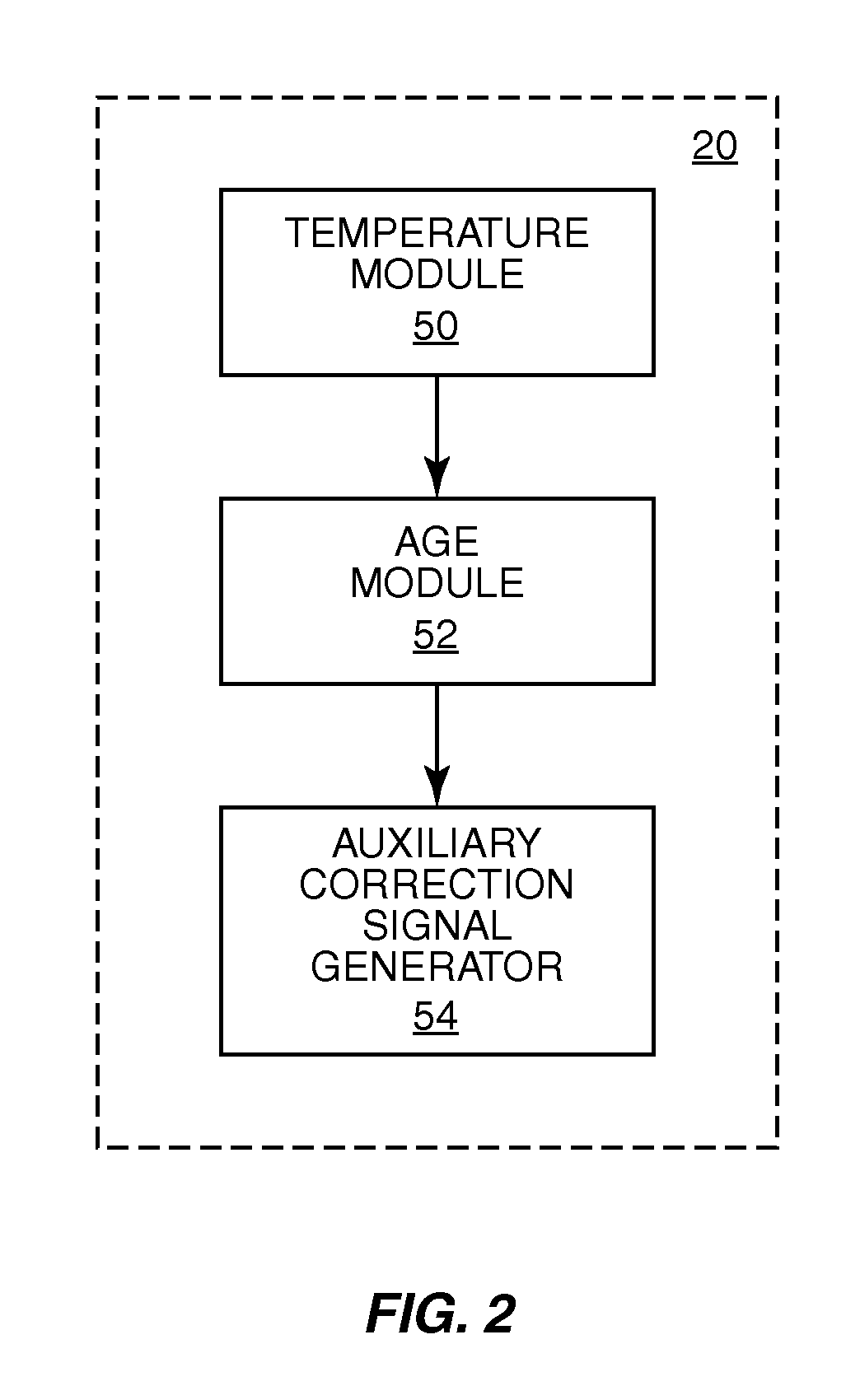
- A method to model the difference between oscillator and reference timing signals, generating correction signals that compensate for temperature variation and crystal aging, allowing for the creation of an auxiliary correction signal to maintain oscillator frequency during holdover periods by integrating residual correction signals to separate noise components and determine aging drift rates.

Standards and Certification Requirements for Timing Devices
The regulatory landscape for timing devices with oscillator drift compensation capabilities is governed by multiple international and regional standards organizations. The International Telecommunication Union (ITU) establishes fundamental timing accuracy requirements through ITU-T G.810 series recommendations, which define performance criteria for synchronization networks. These standards specify maximum allowable frequency drift rates and long-term stability requirements that directly impact oscillator compensation system design.
IEEE standards play a crucial role in defining precision timing protocols, particularly IEEE 1588 Precision Time Protocol (PTP) and IEEE 802.1AS for time-sensitive networking applications. These standards mandate specific drift compensation capabilities and establish testing methodologies for verifying long-term accuracy performance. Compliance requires demonstration of sub-microsecond synchronization accuracy over extended operational periods, necessitating robust drift compensation algorithms.
Military and aerospace applications are governed by stringent MIL-STD specifications, including MIL-STD-188 for communication systems timing and MIL-PRF-55310 for crystal oscillators. These standards impose severe environmental testing requirements and demand exceptional long-term stability performance. Certification processes involve extensive temperature cycling, vibration testing, and aging studies to validate drift compensation effectiveness under extreme conditions.
Telecommunications infrastructure timing devices must comply with ETSI standards, particularly ETSI EN 300 462 series for synchronization equipment. These European standards define specific drift compensation performance metrics and establish conformance testing procedures. Certification requires third-party validation of timing accuracy over operational lifespans exceeding 20 years, with maximum allowable drift rates measured in parts per billion.
Industrial timing applications are subject to IEC 61588 standards for precision clock synchronization protocols. These standards specify drift compensation requirements for distributed control systems and require certification through accredited testing laboratories. The certification process includes long-term stability assessments, environmental stress testing, and electromagnetic compatibility verification to ensure reliable operation in industrial environments.
IEEE standards play a crucial role in defining precision timing protocols, particularly IEEE 1588 Precision Time Protocol (PTP) and IEEE 802.1AS for time-sensitive networking applications. These standards mandate specific drift compensation capabilities and establish testing methodologies for verifying long-term accuracy performance. Compliance requires demonstration of sub-microsecond synchronization accuracy over extended operational periods, necessitating robust drift compensation algorithms.
Military and aerospace applications are governed by stringent MIL-STD specifications, including MIL-STD-188 for communication systems timing and MIL-PRF-55310 for crystal oscillators. These standards impose severe environmental testing requirements and demand exceptional long-term stability performance. Certification processes involve extensive temperature cycling, vibration testing, and aging studies to validate drift compensation effectiveness under extreme conditions.
Telecommunications infrastructure timing devices must comply with ETSI standards, particularly ETSI EN 300 462 series for synchronization equipment. These European standards define specific drift compensation performance metrics and establish conformance testing procedures. Certification requires third-party validation of timing accuracy over operational lifespans exceeding 20 years, with maximum allowable drift rates measured in parts per billion.
Industrial timing applications are subject to IEC 61588 standards for precision clock synchronization protocols. These standards specify drift compensation requirements for distributed control systems and require certification through accredited testing laboratories. The certification process includes long-term stability assessments, environmental stress testing, and electromagnetic compatibility verification to ensure reliable operation in industrial environments.
Environmental Impact Assessment of Compensation Methods
The environmental implications of oscillator drift compensation methods have become increasingly significant as electronic systems proliferate across diverse applications. Traditional compensation techniques often rely on energy-intensive processes, continuous monitoring systems, and frequent calibration cycles that contribute to overall power consumption and carbon footprint of electronic devices.
Temperature compensation methods, particularly those employing active heating or cooling mechanisms, represent the most energy-demanding approaches. These systems require constant power to maintain stable operating conditions, resulting in substantial energy consumption over the device lifetime. The environmental cost becomes particularly pronounced in battery-powered applications where frequent replacements increase electronic waste generation.
Digital compensation algorithms present a more environmentally favorable alternative, as they primarily rely on computational processing rather than physical environmental control. However, the continuous operation of digital signal processors and memory systems still contributes to power consumption, though significantly less than active thermal management systems. The manufacturing impact of additional silicon area required for digital compensation circuits must also be considered in lifecycle assessments.
Crystal aging compensation methods utilizing predictive algorithms demonstrate superior environmental performance by reducing the need for frequent recalibration procedures. These approaches minimize maintenance-related activities that typically require specialized equipment and transportation, thereby reducing the overall carbon footprint associated with system maintenance throughout operational lifecycles.
Hybrid compensation strategies that combine multiple techniques can optimize environmental impact by selectively activating different compensation mechanisms based on operating conditions. This adaptive approach reduces unnecessary power consumption during stable environmental periods while maintaining accuracy during challenging conditions.
The selection of compensation materials also influences environmental impact, with certain temperature-compensated crystal oscillator materials requiring rare earth elements or environmentally hazardous manufacturing processes. Alternative compensation approaches using silicon-based solutions offer more sustainable material sourcing and manufacturing processes.
Manufacturing scalability represents another crucial environmental consideration, as compensation methods requiring precise individual calibration during production consume more resources and energy compared to techniques that can be implemented through standardized processes. The long-term environmental benefits of improved accuracy and reduced maintenance requirements often justify the initial manufacturing investment in sophisticated compensation systems.
Temperature compensation methods, particularly those employing active heating or cooling mechanisms, represent the most energy-demanding approaches. These systems require constant power to maintain stable operating conditions, resulting in substantial energy consumption over the device lifetime. The environmental cost becomes particularly pronounced in battery-powered applications where frequent replacements increase electronic waste generation.
Digital compensation algorithms present a more environmentally favorable alternative, as they primarily rely on computational processing rather than physical environmental control. However, the continuous operation of digital signal processors and memory systems still contributes to power consumption, though significantly less than active thermal management systems. The manufacturing impact of additional silicon area required for digital compensation circuits must also be considered in lifecycle assessments.
Crystal aging compensation methods utilizing predictive algorithms demonstrate superior environmental performance by reducing the need for frequent recalibration procedures. These approaches minimize maintenance-related activities that typically require specialized equipment and transportation, thereby reducing the overall carbon footprint associated with system maintenance throughout operational lifecycles.
Hybrid compensation strategies that combine multiple techniques can optimize environmental impact by selectively activating different compensation mechanisms based on operating conditions. This adaptive approach reduces unnecessary power consumption during stable environmental periods while maintaining accuracy during challenging conditions.
The selection of compensation materials also influences environmental impact, with certain temperature-compensated crystal oscillator materials requiring rare earth elements or environmentally hazardous manufacturing processes. Alternative compensation approaches using silicon-based solutions offer more sustainable material sourcing and manufacturing processes.
Manufacturing scalability represents another crucial environmental consideration, as compensation methods requiring precise individual calibration during production consume more resources and energy compared to techniques that can be implemented through standardized processes. The long-term environmental benefits of improved accuracy and reduced maintenance requirements often justify the initial manufacturing investment in sophisticated compensation systems.
Unlock deeper insights with PatSnap Eureka Quick Research — get a full tech report to explore trends and direct your research. Try now!
Generate Your Research Report Instantly with AI Agent
Supercharge your innovation with PatSnap Eureka AI Agent Platform!