

Oscillator Performance Across Temperature Extremes: A Comparison
MAR 13, 20269 MIN READ
Generate Your Research Report Instantly with AI Agent
PatSnap Eureka helps you evaluate technical feasibility & market potential.
Oscillator Temperature Performance Background and Objectives
Oscillators serve as fundamental timing components in virtually all electronic systems, from simple consumer devices to complex aerospace applications. These critical components generate periodic signals that synchronize digital circuits, enable communication protocols, and maintain system timing accuracy. As electronic systems increasingly operate in harsh environmental conditions, the performance stability of oscillators across extreme temperature ranges has become a paramount concern for system designers and engineers.
The evolution of oscillator technology has been driven by the relentless demand for higher precision, lower power consumption, and enhanced environmental resilience. Traditional quartz crystal oscillators, while offering excellent frequency stability under controlled conditions, face significant challenges when exposed to temperature extremes ranging from -55°C to +125°C or beyond. These temperature variations can cause frequency drift, phase noise degradation, and in extreme cases, complete oscillation failure.
Modern applications spanning automotive electronics, industrial automation, telecommunications infrastructure, and space exploration require oscillators that maintain consistent performance across unprecedented temperature ranges. The automotive industry, for instance, demands oscillators that function reliably from arctic cold starts to engine compartment heat, while aerospace applications require stable operation in the vacuum of space where temperature swings can exceed 200°C.
The primary objective of investigating oscillator temperature performance centers on establishing comprehensive performance benchmarks across different oscillator technologies. This includes evaluating frequency stability, phase noise characteristics, power consumption variations, and startup behavior under extreme temperature conditions. Understanding these performance metrics enables informed decision-making for specific application requirements.
Furthermore, the research aims to identify the underlying physical mechanisms that govern temperature-dependent behavior in various oscillator architectures. Crystal oscillators exhibit different temperature coefficients compared to MEMS-based solutions, while silicon oscillators demonstrate unique thermal characteristics that may offer advantages in certain applications.
The comparative analysis seeks to establish clear guidelines for oscillator selection based on temperature requirements, performance specifications, and cost considerations. This knowledge directly supports the development of more robust electronic systems capable of operating reliably in challenging environmental conditions, ultimately advancing the boundaries of where and how electronic systems can be deployed effectively.
The evolution of oscillator technology has been driven by the relentless demand for higher precision, lower power consumption, and enhanced environmental resilience. Traditional quartz crystal oscillators, while offering excellent frequency stability under controlled conditions, face significant challenges when exposed to temperature extremes ranging from -55°C to +125°C or beyond. These temperature variations can cause frequency drift, phase noise degradation, and in extreme cases, complete oscillation failure.
Modern applications spanning automotive electronics, industrial automation, telecommunications infrastructure, and space exploration require oscillators that maintain consistent performance across unprecedented temperature ranges. The automotive industry, for instance, demands oscillators that function reliably from arctic cold starts to engine compartment heat, while aerospace applications require stable operation in the vacuum of space where temperature swings can exceed 200°C.
The primary objective of investigating oscillator temperature performance centers on establishing comprehensive performance benchmarks across different oscillator technologies. This includes evaluating frequency stability, phase noise characteristics, power consumption variations, and startup behavior under extreme temperature conditions. Understanding these performance metrics enables informed decision-making for specific application requirements.
Furthermore, the research aims to identify the underlying physical mechanisms that govern temperature-dependent behavior in various oscillator architectures. Crystal oscillators exhibit different temperature coefficients compared to MEMS-based solutions, while silicon oscillators demonstrate unique thermal characteristics that may offer advantages in certain applications.
The comparative analysis seeks to establish clear guidelines for oscillator selection based on temperature requirements, performance specifications, and cost considerations. This knowledge directly supports the development of more robust electronic systems capable of operating reliably in challenging environmental conditions, ultimately advancing the boundaries of where and how electronic systems can be deployed effectively.
Market Demand for Temperature-Stable Oscillators
The global electronics industry faces unprecedented challenges in developing oscillators that maintain stable performance across extreme temperature ranges. This demand stems from the proliferation of electronic systems operating in harsh environments, where traditional oscillators fail to deliver consistent frequency stability and timing accuracy.
Automotive electronics represents one of the most significant growth drivers for temperature-stable oscillators. Modern vehicles incorporate numerous electronic control units that must function reliably from arctic conditions to desert heat. Advanced driver assistance systems, engine management units, and infotainment systems all require precise timing references that remain stable across automotive temperature specifications, typically ranging from negative forty to positive one hundred twenty-five degrees Celsius.
The aerospace and defense sectors continue to drive premium demand for ultra-stable oscillators capable of withstanding extreme temperature variations. Satellite communication systems, avionics equipment, and military hardware operate in environments where temperature fluctuations can span hundreds of degrees. These applications demand oscillators with exceptional temperature coefficient specifications and long-term stability, often justifying significantly higher costs for specialized solutions.
Industrial automation and Internet of Things deployments are expanding the addressable market for temperature-compensated oscillators. Manufacturing facilities, oil and gas installations, and outdoor sensor networks require timing devices that maintain accuracy despite exposure to industrial temperature extremes. The growing emphasis on predictive maintenance and real-time monitoring amplifies the need for reliable oscillator performance across varying environmental conditions.
Telecommunications infrastructure modernization, particularly the deployment of fifth-generation networks, creates substantial demand for temperature-stable frequency references. Base stations and network equipment must maintain precise synchronization across diverse climatic conditions, from tropical humidity to sub-zero temperatures. The stringent timing requirements of advanced communication protocols necessitate oscillators with superior temperature stability characteristics.
Consumer electronics manufacturers increasingly seek cost-effective temperature-stable oscillator solutions as devices become more sophisticated and operate in diverse environments. Wearable devices, outdoor recreational equipment, and smart home sensors require reliable timing performance across the full range of consumer usage scenarios, driving demand for affordable yet stable oscillator technologies.
Automotive electronics represents one of the most significant growth drivers for temperature-stable oscillators. Modern vehicles incorporate numerous electronic control units that must function reliably from arctic conditions to desert heat. Advanced driver assistance systems, engine management units, and infotainment systems all require precise timing references that remain stable across automotive temperature specifications, typically ranging from negative forty to positive one hundred twenty-five degrees Celsius.
The aerospace and defense sectors continue to drive premium demand for ultra-stable oscillators capable of withstanding extreme temperature variations. Satellite communication systems, avionics equipment, and military hardware operate in environments where temperature fluctuations can span hundreds of degrees. These applications demand oscillators with exceptional temperature coefficient specifications and long-term stability, often justifying significantly higher costs for specialized solutions.
Industrial automation and Internet of Things deployments are expanding the addressable market for temperature-compensated oscillators. Manufacturing facilities, oil and gas installations, and outdoor sensor networks require timing devices that maintain accuracy despite exposure to industrial temperature extremes. The growing emphasis on predictive maintenance and real-time monitoring amplifies the need for reliable oscillator performance across varying environmental conditions.
Telecommunications infrastructure modernization, particularly the deployment of fifth-generation networks, creates substantial demand for temperature-stable frequency references. Base stations and network equipment must maintain precise synchronization across diverse climatic conditions, from tropical humidity to sub-zero temperatures. The stringent timing requirements of advanced communication protocols necessitate oscillators with superior temperature stability characteristics.
Consumer electronics manufacturers increasingly seek cost-effective temperature-stable oscillator solutions as devices become more sophisticated and operate in diverse environments. Wearable devices, outdoor recreational equipment, and smart home sensors require reliable timing performance across the full range of consumer usage scenarios, driving demand for affordable yet stable oscillator technologies.
Current Oscillator Temperature Challenges and Limitations
Modern oscillator circuits face significant performance degradation when operating across extreme temperature ranges, presenting fundamental challenges that limit their effectiveness in critical applications. Temperature variations directly impact the physical properties of semiconductor materials, causing shifts in carrier mobility, threshold voltages, and parasitic capacitances that collectively degrade oscillator stability and accuracy.
Frequency drift represents the most prominent challenge, with conventional crystal oscillators experiencing deviations of 10-100 parts per million per degree Celsius. This temperature coefficient becomes particularly problematic in aerospace, automotive, and industrial applications where ambient temperatures can range from -55°C to +125°C or beyond. The resulting frequency instability compromises timing accuracy in communication systems, data converters, and precision measurement equipment.
Phase noise degradation emerges as another critical limitation at temperature extremes. Higher temperatures increase thermal noise floor and reduce transistor transconductance, leading to deteriorated phase noise performance that can exceed acceptable thresholds by 10-15 dB in severe cases. This degradation directly impacts the signal-to-noise ratio of downstream circuits and reduces overall system performance.
Power consumption variability poses additional constraints, particularly in battery-powered applications. Temperature-dependent leakage currents and reduced circuit efficiency at elevated temperatures can increase power consumption by 50-200%, significantly impacting battery life and thermal management requirements. Conversely, extremely low temperatures may require higher bias currents to maintain adequate performance, creating power consumption challenges across the entire operating range.
Startup reliability becomes increasingly problematic at temperature extremes, with oscillators potentially failing to initiate or requiring extended startup times. Cold temperatures reduce gain margins and increase parasitic effects, while high temperatures may cause thermal runaway or insufficient loop gain. These startup failures can render entire systems inoperative until favorable temperature conditions return.
Current compensation techniques, including temperature-compensated crystal oscillators and voltage-controlled temperature compensation, provide partial solutions but introduce complexity, cost, and additional failure modes. These approaches often achieve limited improvement ranges and may not address all performance parameters simultaneously, leaving significant gaps in extreme temperature operation capabilities.
Frequency drift represents the most prominent challenge, with conventional crystal oscillators experiencing deviations of 10-100 parts per million per degree Celsius. This temperature coefficient becomes particularly problematic in aerospace, automotive, and industrial applications where ambient temperatures can range from -55°C to +125°C or beyond. The resulting frequency instability compromises timing accuracy in communication systems, data converters, and precision measurement equipment.
Phase noise degradation emerges as another critical limitation at temperature extremes. Higher temperatures increase thermal noise floor and reduce transistor transconductance, leading to deteriorated phase noise performance that can exceed acceptable thresholds by 10-15 dB in severe cases. This degradation directly impacts the signal-to-noise ratio of downstream circuits and reduces overall system performance.
Power consumption variability poses additional constraints, particularly in battery-powered applications. Temperature-dependent leakage currents and reduced circuit efficiency at elevated temperatures can increase power consumption by 50-200%, significantly impacting battery life and thermal management requirements. Conversely, extremely low temperatures may require higher bias currents to maintain adequate performance, creating power consumption challenges across the entire operating range.
Startup reliability becomes increasingly problematic at temperature extremes, with oscillators potentially failing to initiate or requiring extended startup times. Cold temperatures reduce gain margins and increase parasitic effects, while high temperatures may cause thermal runaway or insufficient loop gain. These startup failures can render entire systems inoperative until favorable temperature conditions return.
Current compensation techniques, including temperature-compensated crystal oscillators and voltage-controlled temperature compensation, provide partial solutions but introduce complexity, cost, and additional failure modes. These approaches often achieve limited improvement ranges and may not address all performance parameters simultaneously, leaving significant gaps in extreme temperature operation capabilities.
Existing Temperature Compensation Solutions
01 Oscillator circuit design and configuration
Various circuit designs and configurations can be implemented to optimize oscillator performance. These designs focus on the arrangement of electronic components, feedback mechanisms, and signal processing elements to achieve stable oscillation frequencies. The circuit topology and component selection play crucial roles in determining the overall performance characteristics of the oscillator, including frequency stability, phase noise, and power consumption.- Oscillator circuit design and configuration: Various circuit designs and configurations can be implemented to optimize oscillator performance. These designs focus on the arrangement of electronic components, feedback mechanisms, and signal processing elements to achieve stable oscillation frequencies. The circuit topology and component selection play crucial roles in determining the overall performance characteristics of the oscillator system.
- Frequency stability and control mechanisms: Maintaining stable oscillation frequencies is essential for reliable oscillator performance. Various control mechanisms and stabilization techniques can be employed to minimize frequency drift and improve long-term stability. These approaches may include temperature compensation, voltage regulation, and feedback control systems that continuously monitor and adjust the oscillation parameters.
- Phase noise reduction and signal quality improvement: Reducing phase noise is critical for achieving high-quality oscillator output signals. Various techniques can be implemented to minimize noise sources and improve signal purity. These methods focus on optimizing the resonator quality factor, reducing parasitic effects, and implementing advanced filtering and isolation techniques to enhance the spectral purity of the generated signals.
- Power consumption optimization: Efficient power management is important for oscillator applications, especially in portable and battery-operated devices. Design strategies can be employed to reduce power consumption while maintaining adequate performance levels. These approaches may include adaptive biasing, duty cycling, and the use of low-power circuit topologies that balance performance requirements with energy efficiency.
- Temperature compensation and environmental stability: Oscillator performance can be significantly affected by temperature variations and environmental conditions. Compensation techniques can be implemented to maintain consistent performance across different operating conditions. These methods may include temperature-sensing circuits, adaptive calibration systems, and the use of materials with favorable temperature coefficients to ensure stable operation over wide temperature ranges.
02 Frequency stability and temperature compensation
Maintaining frequency stability across varying environmental conditions is critical for oscillator performance. Temperature compensation techniques and specialized components can be employed to minimize frequency drift caused by temperature variations. These methods ensure consistent oscillator operation across different operating conditions and improve long-term frequency accuracy.Expand Specific Solutions03 Phase noise reduction and signal quality improvement
Reducing phase noise is essential for achieving high-quality oscillator output signals. Various techniques including filtering, shielding, and optimized component placement can be utilized to minimize unwanted noise and improve signal purity. Enhanced signal quality results in better performance in applications requiring precise timing and frequency control.Expand Specific Solutions04 Power efficiency and low power consumption design
Optimizing power consumption while maintaining performance is a key consideration in oscillator design. Low power design techniques, efficient component selection, and power management strategies can be implemented to reduce overall energy consumption. This is particularly important for battery-powered and portable applications where power efficiency directly impacts operational lifetime.Expand Specific Solutions05 Integration and miniaturization technologies
Advanced integration techniques enable the development of compact oscillator designs with improved performance characteristics. Miniaturization approaches, including integrated circuit implementations and advanced packaging technologies, allow for reduced size while maintaining or enhancing functionality. These technologies facilitate the incorporation of oscillators into space-constrained applications and modern electronic systems.Expand Specific Solutions
Key Players in Precision Oscillator and Timing Industry
The oscillator performance across temperature extremes market represents a mature yet evolving industry driven by increasing demands for precision timing solutions in harsh environments. The market demonstrates substantial growth potential, particularly in automotive, aerospace, and industrial IoT applications where temperature stability is critical. Technology maturity varies significantly among key players, with established leaders like Seiko Epson Corp., Murata Manufacturing, and Nihon Dempa Kogyo demonstrating advanced crystal oscillator technologies and temperature compensation capabilities. Semiconductor giants including Samsung Electronics, Qualcomm, and NXP Semiconductors leverage integrated solutions combining oscillators with system-on-chip designs. Emerging players such as TXC Corp. and specialized firms like CTS Corp. focus on niche applications requiring extreme temperature performance. The competitive landscape shows consolidation around companies offering comprehensive frequency control solutions, with innovation centered on MEMS-based oscillators, improved temperature coefficients, and miniaturization for next-generation applications.
Seiko Epson Corp.
Technical Solution: Seiko Epson develops temperature-compensated crystal oscillators (TCXOs) and oven-controlled crystal oscillators (OCXOs) specifically designed for extreme temperature performance. Their TCXO technology utilizes advanced temperature compensation algorithms and high-quality quartz crystals to maintain frequency stability across -40°C to +85°C operating ranges. The company's proprietary crystal cutting techniques and packaging technologies minimize thermal stress effects on oscillator performance. Their OCXOs incorporate precision temperature control systems that maintain crystal temperature within ±0.1°C, achieving frequency stability better than ±0.1ppm across extreme temperature variations. Epson's oscillators feature low phase noise characteristics and fast startup times even in harsh thermal environments.
Strengths: Industry-leading temperature compensation technology, excellent frequency stability, robust packaging for harsh environments. Weaknesses: Higher power consumption for OCXO solutions, premium pricing compared to standard oscillators.
Nihon Dempa Kogyo Co., Ltd.
Technical Solution: NDK specializes in high-performance crystal oscillators with superior temperature characteristics through their advanced SC-cut crystal technology and proprietary temperature compensation methods. Their oscillators employ multi-point temperature sensing and digital compensation algorithms to achieve frequency stability within ±0.5ppm across -55°C to +125°C temperature ranges. The company's unique crystal resonator design minimizes temperature-induced frequency drift through optimized crystal orientation and mounting techniques. NDK's temperature-stable oscillators incorporate low-noise amplifier circuits and advanced filtering to maintain signal integrity under thermal stress. Their products feature rapid thermal recovery and minimal frequency overshoot during temperature transitions, making them suitable for aerospace and automotive applications requiring consistent performance across extreme temperature cycles.
Strengths: Excellent temperature stability, wide operating temperature range, proven reliability in harsh environments. Weaknesses: Limited product portfolio compared to larger competitors, higher cost for specialized temperature-stable variants.
Core Innovations in Temperature-Stable Oscillator Design
Oscillator, temperature compensating circuit, and crystal vibrating element
PatentWO2021157122A1
Innovation
- An oscillator with a temperature compensation circuit and an AT-cut crystal resonator that corrects frequency-temperature characteristics using a temperature detection circuit and variable capacitors to reduce frequency change rates within specific temperature ranges, extending accuracy to -40°C to 125°C.


Temperature correcting current-controlled ring oscillators
PatentActiveUS20120194278A1
Innovation
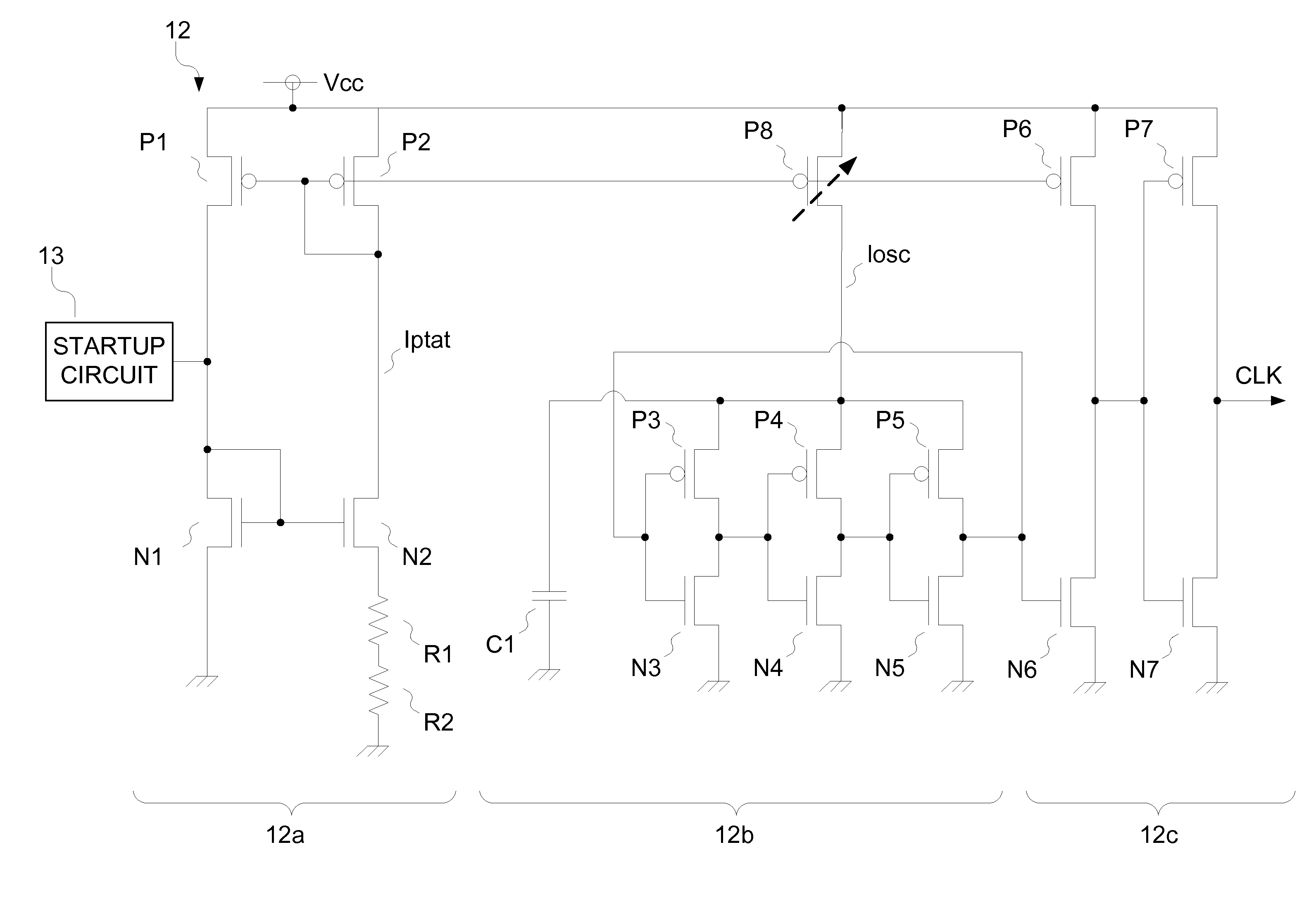
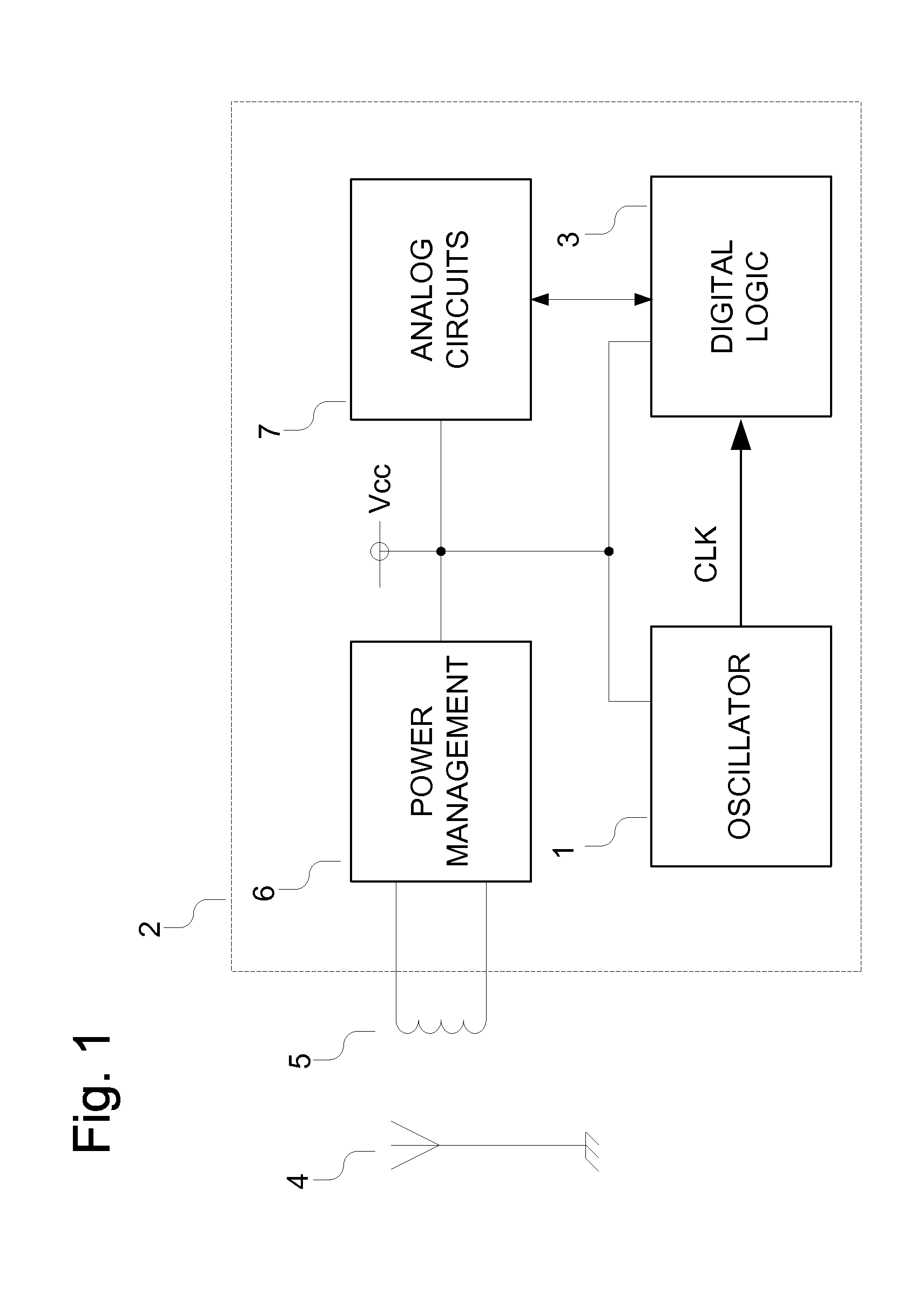
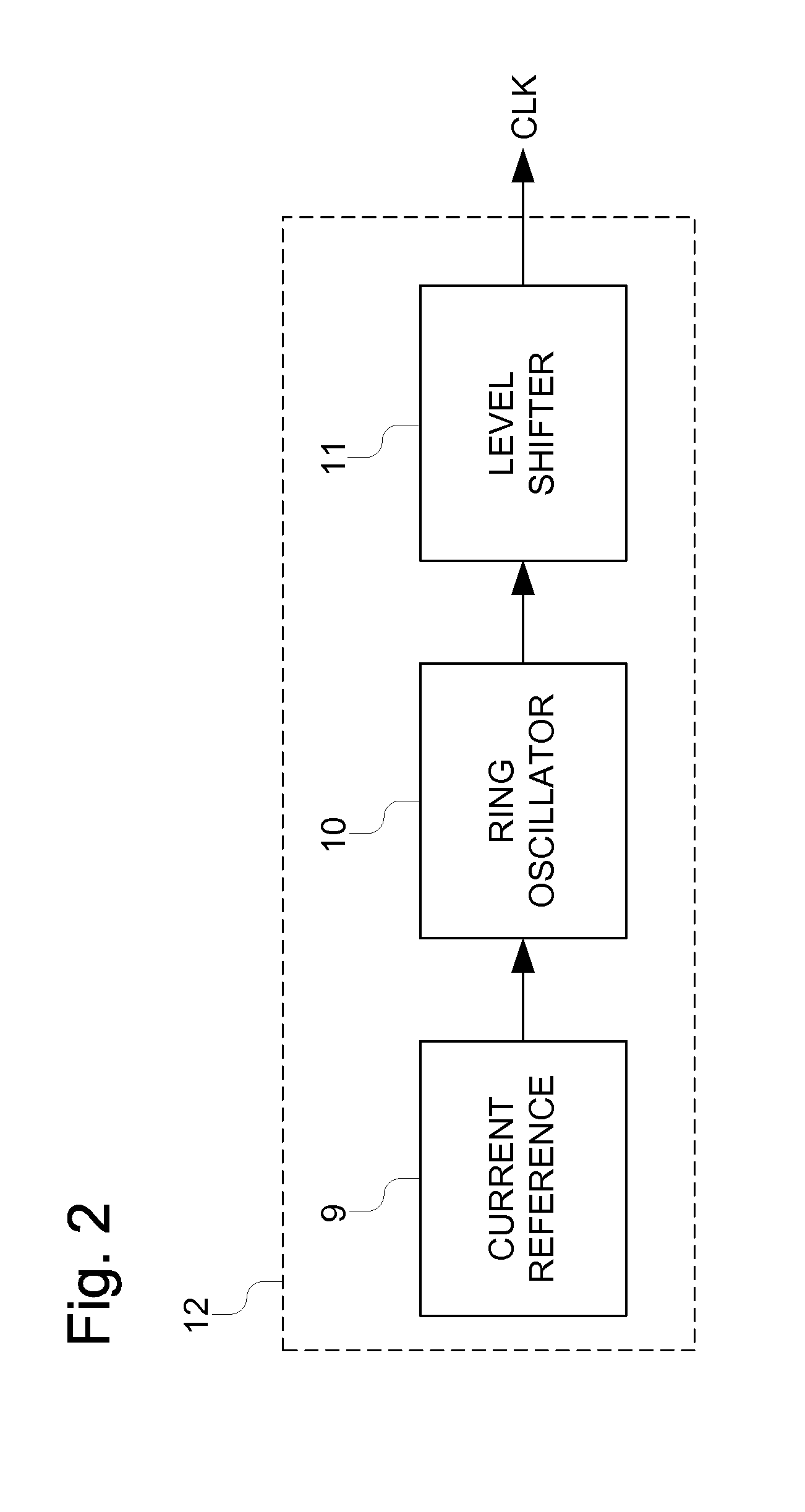
- A thermally-compensated current-controlled ring oscillator with a proportional to absolute temperature (PTAT) current source, using resistors with different temperature coefficients to adjust the temperature dependence, and a level shifter to produce a voltage-regulated clock signal, minimizing silicon area and power consumption.

Reliability Standards for Extreme Environment Electronics
Extreme environment electronics face unprecedented challenges that demand rigorous reliability standards to ensure consistent performance across temperature extremes. The development of comprehensive reliability frameworks has become critical as electronic systems increasingly operate in harsh conditions ranging from arctic installations at -55°C to high-temperature industrial applications exceeding 125°C. These standards must address not only immediate functional requirements but also long-term stability and degradation patterns that affect oscillator performance over extended operational periods.
The foundation of reliability standards for extreme environment electronics rests on established military and aerospace specifications, including MIL-STD-883 and JEDEC standards, which provide baseline testing methodologies for temperature cycling, thermal shock, and extended temperature exposure. However, these traditional standards often prove insufficient for modern applications requiring operation beyond conventional temperature ranges. Enhanced testing protocols now incorporate accelerated aging tests, power cycling under temperature stress, and multi-parameter drift analysis to better predict real-world performance degradation.
Temperature-specific reliability metrics have evolved to address the unique failure mechanisms observed in oscillator circuits operating at extreme temperatures. At low temperatures, crystal oscillators experience frequency pulling due to changes in crystal resonance characteristics, while high-temperature operation introduces aging acceleration and component parameter drift. Reliability standards now mandate specific performance criteria for frequency stability, phase noise degradation, and startup reliability across the entire operational temperature range, with acceptance criteria becoming increasingly stringent for critical applications.
Modern reliability standards emphasize statistical approaches to failure prediction, incorporating Weibull analysis and Arrhenius modeling to extrapolate long-term performance from accelerated test data. These methodologies enable manufacturers to establish confidence intervals for mean time between failures (MTBF) and predict end-of-life performance characteristics. The integration of real-time monitoring capabilities and predictive maintenance algorithms has further enhanced reliability assessment, allowing for dynamic adjustment of operational parameters based on environmental conditions.
Emerging reliability standards are beginning to address the challenges posed by wide bandgap semiconductors and advanced packaging technologies used in extreme environment oscillators. These new approaches incorporate physics-of-failure modeling and multi-physics simulation to better understand degradation mechanisms at the device level. The evolution toward system-level reliability assessment considers not only individual component performance but also the interaction effects between oscillator circuits and their surrounding electronic systems under temperature stress conditions.
The foundation of reliability standards for extreme environment electronics rests on established military and aerospace specifications, including MIL-STD-883 and JEDEC standards, which provide baseline testing methodologies for temperature cycling, thermal shock, and extended temperature exposure. However, these traditional standards often prove insufficient for modern applications requiring operation beyond conventional temperature ranges. Enhanced testing protocols now incorporate accelerated aging tests, power cycling under temperature stress, and multi-parameter drift analysis to better predict real-world performance degradation.
Temperature-specific reliability metrics have evolved to address the unique failure mechanisms observed in oscillator circuits operating at extreme temperatures. At low temperatures, crystal oscillators experience frequency pulling due to changes in crystal resonance characteristics, while high-temperature operation introduces aging acceleration and component parameter drift. Reliability standards now mandate specific performance criteria for frequency stability, phase noise degradation, and startup reliability across the entire operational temperature range, with acceptance criteria becoming increasingly stringent for critical applications.
Modern reliability standards emphasize statistical approaches to failure prediction, incorporating Weibull analysis and Arrhenius modeling to extrapolate long-term performance from accelerated test data. These methodologies enable manufacturers to establish confidence intervals for mean time between failures (MTBF) and predict end-of-life performance characteristics. The integration of real-time monitoring capabilities and predictive maintenance algorithms has further enhanced reliability assessment, allowing for dynamic adjustment of operational parameters based on environmental conditions.
Emerging reliability standards are beginning to address the challenges posed by wide bandgap semiconductors and advanced packaging technologies used in extreme environment oscillators. These new approaches incorporate physics-of-failure modeling and multi-physics simulation to better understand degradation mechanisms at the device level. The evolution toward system-level reliability assessment considers not only individual component performance but also the interaction effects between oscillator circuits and their surrounding electronic systems under temperature stress conditions.
Performance Benchmarking Methodologies for Oscillators
Establishing standardized performance benchmarking methodologies for oscillators operating across temperature extremes requires a comprehensive framework that addresses both measurement protocols and evaluation criteria. The foundation of effective benchmarking lies in defining consistent test conditions, measurement parameters, and data interpretation standards that enable meaningful comparisons between different oscillator technologies and implementations.
Temperature cycling protocols form the cornerstone of oscillator performance benchmarking. Standard methodologies typically employ controlled temperature chambers capable of achieving precise temperature ramps and holds across the specified operating range. The most widely adopted approach involves step-wise temperature transitions with sufficient settling time at each temperature point to ensure thermal equilibrium. Continuous temperature sweeps provide complementary data for understanding dynamic thermal behavior and transient responses.
Frequency stability measurements constitute the primary performance metric, requiring specialized instrumentation capable of sub-ppb resolution. Phase noise characterization across temperature extremes demands sophisticated measurement setups incorporating low-noise reference sources and temperature-compensated measurement chains. The Allan deviation methodology provides standardized statistical analysis for quantifying frequency stability over various averaging times, enabling direct performance comparisons across different oscillator architectures.
Standardized test fixtures and environmental controls ensure measurement repeatability and reproducibility. Proper thermal coupling between the oscillator under test and temperature control systems minimizes thermal gradients that could introduce measurement artifacts. Electromagnetic shielding and vibration isolation prevent external influences from contaminating performance measurements, particularly critical when evaluating ultra-stable oscillators where environmental factors can significantly impact results.
Data acquisition and processing methodologies require careful consideration of sampling rates, measurement duration, and statistical analysis techniques. Automated measurement systems enable comprehensive characterization across multiple temperature cycles while maintaining consistent measurement conditions. Standardized data formats and analysis algorithms facilitate cross-platform comparisons and enable the development of industry-wide performance databases for benchmarking purposes.
Temperature cycling protocols form the cornerstone of oscillator performance benchmarking. Standard methodologies typically employ controlled temperature chambers capable of achieving precise temperature ramps and holds across the specified operating range. The most widely adopted approach involves step-wise temperature transitions with sufficient settling time at each temperature point to ensure thermal equilibrium. Continuous temperature sweeps provide complementary data for understanding dynamic thermal behavior and transient responses.
Frequency stability measurements constitute the primary performance metric, requiring specialized instrumentation capable of sub-ppb resolution. Phase noise characterization across temperature extremes demands sophisticated measurement setups incorporating low-noise reference sources and temperature-compensated measurement chains. The Allan deviation methodology provides standardized statistical analysis for quantifying frequency stability over various averaging times, enabling direct performance comparisons across different oscillator architectures.
Standardized test fixtures and environmental controls ensure measurement repeatability and reproducibility. Proper thermal coupling between the oscillator under test and temperature control systems minimizes thermal gradients that could introduce measurement artifacts. Electromagnetic shielding and vibration isolation prevent external influences from contaminating performance measurements, particularly critical when evaluating ultra-stable oscillators where environmental factors can significantly impact results.
Data acquisition and processing methodologies require careful consideration of sampling rates, measurement duration, and statistical analysis techniques. Automated measurement systems enable comprehensive characterization across multiple temperature cycles while maintaining consistent measurement conditions. Standardized data formats and analysis algorithms facilitate cross-platform comparisons and enable the development of industry-wide performance databases for benchmarking purposes.
Unlock deeper insights with PatSnap Eureka Quick Research — get a full tech report to explore trends and direct your research. Try now!
Generate Your Research Report Instantly with AI Agent
Supercharge your innovation with PatSnap Eureka AI Agent Platform!