
Quantify Attenuation Levels in Notch Filter Designs
MAR 17, 20269 MIN READ
Generate Your Research Report Instantly with AI Agent
Patsnap Eureka helps you evaluate technical feasibility & market potential.
Notch Filter Attenuation Background and Objectives
Notch filters represent a critical class of frequency-selective circuits designed to attenuate specific frequency bands while preserving signal integrity across other frequency ranges. These specialized filters have evolved from simple passive LC circuits in the early 20th century to sophisticated active and digital implementations capable of achieving precise frequency rejection characteristics. The fundamental principle underlying notch filter operation involves creating a transmission zero at the target frequency, resulting in theoretically infinite attenuation at that specific point.
The historical development of notch filter technology traces back to the 1920s when engineers first recognized the need to eliminate unwanted interference signals in radio communications. Early implementations relied on twin-T networks and bridged-T configurations, which provided basic notch characteristics but suffered from limited depth control and frequency stability. The advent of operational amplifiers in the 1960s revolutionized notch filter design, enabling active implementations with enhanced performance metrics and adjustable parameters.
Modern notch filter applications span diverse industries, from audio processing systems requiring 50Hz or 60Hz power line interference rejection to biomedical instrumentation demanding precise removal of cardiac artifacts from neural recordings. Telecommunications infrastructure relies heavily on notch filters to eliminate spurious signals and maintain channel isolation, while radar systems employ adaptive notch filtering to suppress jamming signals and clutter.
The quantification of attenuation levels in notch filter designs has become increasingly critical as system performance requirements continue to escalate. Traditional design approaches often relied on theoretical calculations and basic simulation tools, leading to significant discrepancies between predicted and measured performance. Contemporary applications demand attenuation depths exceeding 40dB with precise frequency selectivity, necessitating advanced characterization methodologies and measurement techniques.
Current technological objectives focus on developing comprehensive frameworks for accurately predicting and measuring notch filter attenuation characteristics across varying environmental conditions and component tolerances. The primary goal involves establishing standardized metrics that enable designers to optimize filter performance while maintaining cost-effectiveness and manufacturability. This includes developing robust modeling techniques that account for parasitic effects, component aging, and temperature variations that significantly impact real-world performance.
The strategic importance of quantifying attenuation levels extends beyond individual filter performance to system-level optimization. Modern communication systems and precision instrumentation require predictable interference rejection capabilities to meet stringent regulatory requirements and performance specifications. Achieving these objectives demands innovative approaches to filter synthesis, advanced measurement methodologies, and comprehensive understanding of the fundamental limitations governing notch filter behavior in practical implementations.
The historical development of notch filter technology traces back to the 1920s when engineers first recognized the need to eliminate unwanted interference signals in radio communications. Early implementations relied on twin-T networks and bridged-T configurations, which provided basic notch characteristics but suffered from limited depth control and frequency stability. The advent of operational amplifiers in the 1960s revolutionized notch filter design, enabling active implementations with enhanced performance metrics and adjustable parameters.
Modern notch filter applications span diverse industries, from audio processing systems requiring 50Hz or 60Hz power line interference rejection to biomedical instrumentation demanding precise removal of cardiac artifacts from neural recordings. Telecommunications infrastructure relies heavily on notch filters to eliminate spurious signals and maintain channel isolation, while radar systems employ adaptive notch filtering to suppress jamming signals and clutter.
The quantification of attenuation levels in notch filter designs has become increasingly critical as system performance requirements continue to escalate. Traditional design approaches often relied on theoretical calculations and basic simulation tools, leading to significant discrepancies between predicted and measured performance. Contemporary applications demand attenuation depths exceeding 40dB with precise frequency selectivity, necessitating advanced characterization methodologies and measurement techniques.
Current technological objectives focus on developing comprehensive frameworks for accurately predicting and measuring notch filter attenuation characteristics across varying environmental conditions and component tolerances. The primary goal involves establishing standardized metrics that enable designers to optimize filter performance while maintaining cost-effectiveness and manufacturability. This includes developing robust modeling techniques that account for parasitic effects, component aging, and temperature variations that significantly impact real-world performance.
The strategic importance of quantifying attenuation levels extends beyond individual filter performance to system-level optimization. Modern communication systems and precision instrumentation require predictable interference rejection capabilities to meet stringent regulatory requirements and performance specifications. Achieving these objectives demands innovative approaches to filter synthesis, advanced measurement methodologies, and comprehensive understanding of the fundamental limitations governing notch filter behavior in practical implementations.
Market Demand for Precise Notch Filter Applications
The telecommunications industry represents the largest market segment for precise notch filter applications, driven by the exponential growth of wireless communication systems and the increasing complexity of spectrum management requirements. Modern cellular networks, including 5G infrastructure, require sophisticated filtering solutions to eliminate specific frequency bands while preserving signal integrity across adjacent channels. The demand for quantifiable attenuation levels has intensified as operators seek to optimize network performance and minimize interference in densely populated frequency spectrums.
Medical device manufacturers constitute another rapidly expanding market segment, particularly in diagnostic imaging and therapeutic equipment. MRI systems, ultrasound devices, and electromagnetic therapy equipment require notch filters with precisely controlled attenuation characteristics to eliminate power line interference and other unwanted signals. The stringent regulatory requirements in medical applications necessitate accurate quantification of filter performance, driving demand for advanced measurement and verification capabilities.
The aerospace and defense sector demonstrates consistent demand for high-precision notch filters, where mission-critical applications require exceptional reliability and performance predictability. Radar systems, electronic warfare equipment, and satellite communication platforms depend on filters with well-characterized attenuation profiles to maintain operational effectiveness in challenging electromagnetic environments. The ability to quantify and predict filter behavior under varying conditions has become essential for system designers in this sector.
Industrial automation and measurement instrumentation markets are experiencing growing demand for precise notch filtering solutions. Power quality analyzers, vibration monitoring systems, and precision measurement equipment require filters with accurately quantified attenuation levels to ensure measurement accuracy and system reliability. The trend toward Industry 4.0 and increased automation has amplified the need for robust filtering solutions with predictable performance characteristics.
Consumer electronics manufacturers increasingly require cost-effective notch filters with quantifiable performance metrics for audio processing, power management, and electromagnetic compatibility applications. The miniaturization trend in portable devices has created demand for compact filtering solutions with well-defined attenuation characteristics that can be accurately modeled and integrated into system designs.
The automotive industry represents an emerging market segment, particularly with the advancement of electric vehicles and autonomous driving technologies. These applications require precise filtering solutions for power electronics, sensor systems, and communication modules, where quantified attenuation levels are crucial for ensuring system reliability and electromagnetic compatibility in the challenging automotive environment.
Medical device manufacturers constitute another rapidly expanding market segment, particularly in diagnostic imaging and therapeutic equipment. MRI systems, ultrasound devices, and electromagnetic therapy equipment require notch filters with precisely controlled attenuation characteristics to eliminate power line interference and other unwanted signals. The stringent regulatory requirements in medical applications necessitate accurate quantification of filter performance, driving demand for advanced measurement and verification capabilities.
The aerospace and defense sector demonstrates consistent demand for high-precision notch filters, where mission-critical applications require exceptional reliability and performance predictability. Radar systems, electronic warfare equipment, and satellite communication platforms depend on filters with well-characterized attenuation profiles to maintain operational effectiveness in challenging electromagnetic environments. The ability to quantify and predict filter behavior under varying conditions has become essential for system designers in this sector.
Industrial automation and measurement instrumentation markets are experiencing growing demand for precise notch filtering solutions. Power quality analyzers, vibration monitoring systems, and precision measurement equipment require filters with accurately quantified attenuation levels to ensure measurement accuracy and system reliability. The trend toward Industry 4.0 and increased automation has amplified the need for robust filtering solutions with predictable performance characteristics.
Consumer electronics manufacturers increasingly require cost-effective notch filters with quantifiable performance metrics for audio processing, power management, and electromagnetic compatibility applications. The miniaturization trend in portable devices has created demand for compact filtering solutions with well-defined attenuation characteristics that can be accurately modeled and integrated into system designs.
The automotive industry represents an emerging market segment, particularly with the advancement of electric vehicles and autonomous driving technologies. These applications require precise filtering solutions for power electronics, sensor systems, and communication modules, where quantified attenuation levels are crucial for ensuring system reliability and electromagnetic compatibility in the challenging automotive environment.
Current Attenuation Quantification Challenges
The quantification of attenuation levels in notch filter designs faces several fundamental measurement challenges that significantly impact design accuracy and performance validation. Traditional measurement approaches often struggle with the inherent limitations of test equipment, particularly when dealing with deep notches that can exceed 60-80 dB of attenuation. Standard network analyzers and spectrum analyzers frequently encounter dynamic range limitations, noise floor constraints, and measurement uncertainty that compromise the precision of attenuation quantification.
Frequency domain characterization presents substantial difficulties when attempting to accurately measure notch depth and bandwidth simultaneously. The steep roll-off characteristics typical of high-Q notch filters create measurement artifacts due to insufficient frequency resolution in conventional test setups. Additionally, the interaction between filter impedance characteristics and measurement system impedance can introduce significant errors, particularly when measuring filters with asymmetric notch profiles or multiple closely-spaced notches.
Temperature and environmental stability represent critical challenges in attenuation quantification, as component tolerances and thermal drift can cause substantial variations in measured performance. The sensitivity of high-Q notch filters to environmental conditions makes it difficult to establish consistent measurement baselines, particularly for applications requiring precise attenuation specifications across varying operational conditions.
Parasitic effects and non-ideal component behaviors further complicate accurate attenuation measurement. Real-world implementations suffer from parasitic capacitances, inductances, and resistances that create measurement discrepancies between theoretical predictions and actual performance. These effects become particularly pronounced at higher frequencies where distributed effects dominate circuit behavior.
The lack of standardized measurement protocols across different application domains creates additional challenges for attenuation quantification. Telecommunications, audio processing, and RF applications each employ different measurement standards and acceptance criteria, making it difficult to establish universal quantification methodologies. This fragmentation leads to inconsistent performance specifications and complicates the comparison of different notch filter implementations across various technology platforms and frequency ranges.
Frequency domain characterization presents substantial difficulties when attempting to accurately measure notch depth and bandwidth simultaneously. The steep roll-off characteristics typical of high-Q notch filters create measurement artifacts due to insufficient frequency resolution in conventional test setups. Additionally, the interaction between filter impedance characteristics and measurement system impedance can introduce significant errors, particularly when measuring filters with asymmetric notch profiles or multiple closely-spaced notches.
Temperature and environmental stability represent critical challenges in attenuation quantification, as component tolerances and thermal drift can cause substantial variations in measured performance. The sensitivity of high-Q notch filters to environmental conditions makes it difficult to establish consistent measurement baselines, particularly for applications requiring precise attenuation specifications across varying operational conditions.
Parasitic effects and non-ideal component behaviors further complicate accurate attenuation measurement. Real-world implementations suffer from parasitic capacitances, inductances, and resistances that create measurement discrepancies between theoretical predictions and actual performance. These effects become particularly pronounced at higher frequencies where distributed effects dominate circuit behavior.
The lack of standardized measurement protocols across different application domains creates additional challenges for attenuation quantification. Telecommunications, audio processing, and RF applications each employ different measurement standards and acceptance criteria, making it difficult to establish universal quantification methodologies. This fragmentation leads to inconsistent performance specifications and complicates the comparison of different notch filter implementations across various technology platforms and frequency ranges.
Existing Attenuation Measurement Solutions
01 Active notch filter circuits with adjustable attenuation
Active notch filter circuits utilize operational amplifiers and adjustable components to achieve variable attenuation levels at specific frequencies. These circuits can be tuned to provide precise notch depths ranging from minimal to deep attenuation, typically exceeding 40dB. The adjustability allows for optimization of filter performance in different applications by controlling component values such as resistors and capacitors to achieve desired attenuation characteristics.- Active notch filter circuits with adjustable attenuation: Active notch filter circuits utilize operational amplifiers and adjustable components to achieve variable attenuation levels at specific frequencies. These circuits can be tuned to provide precise notch depths ranging from minimal to deep attenuation, typically exceeding 40dB. The adjustability allows for optimization of filter performance in various signal processing applications where selective frequency rejection is required.
- Passive notch filter designs with fixed attenuation characteristics: Passive notch filter implementations using resistors, capacitors, and inductors provide predetermined attenuation levels without requiring external power. These designs typically achieve attenuation levels between 20dB to 60dB at the notch frequency, with the specific level determined by component values and quality factors. The passive approach offers stability and reliability in applications requiring consistent frequency rejection.
- Digital notch filters with programmable attenuation depth: Digital signal processing techniques enable notch filters with software-controlled attenuation levels. These implementations allow dynamic adjustment of notch depth through coefficient modification, providing attenuation ranges from shallow notches to complete signal nulling. The digital approach offers flexibility in real-time applications and can achieve very high attenuation levels exceeding 80dB through adaptive algorithms.
- Multi-stage notch filter cascades for enhanced attenuation: Cascading multiple notch filter stages increases overall attenuation depth at target frequencies. This approach combines individual filter sections, each contributing additional attenuation, to achieve cumulative rejection levels that can exceed 100dB. The multi-stage configuration is particularly effective for applications requiring extremely high levels of interference suppression while maintaining signal integrity in adjacent frequency bands.
- Adaptive notch filters with automatic attenuation control: Adaptive notch filter systems automatically adjust attenuation levels based on input signal characteristics and interference detection. These systems employ feedback mechanisms and control algorithms to optimize notch depth dynamically, maintaining sufficient attenuation while minimizing impact on desired signals. The adaptive approach is valuable in environments with varying interference conditions, providing attenuation levels that track and suppress unwanted frequency components.
02 Passive notch filter designs with fixed attenuation characteristics
Passive notch filter implementations use combinations of inductors, capacitors, and resistors to create frequency-selective attenuation without requiring external power. These designs provide predetermined attenuation levels based on component values and quality factors. The attenuation depth is determined by the circuit topology and component tolerances, typically achieving attenuation levels between 20dB to 60dB at the notch frequency.Expand Specific Solutions03 Digital notch filters with programmable attenuation control
Digital signal processing techniques enable notch filters with programmable attenuation levels that can be dynamically adjusted through software control. These implementations use digital coefficients and algorithms to achieve precise attenuation characteristics across specified frequency ranges. The digital approach allows for multiple notch frequencies with independently controllable attenuation depths, providing flexibility in adaptive filtering applications.Expand Specific Solutions04 Cascaded notch filter stages for enhanced attenuation
Multiple notch filter stages connected in series provide increased attenuation depth compared to single-stage designs. This cascading approach allows cumulative attenuation effects, achieving very high rejection levels at target frequencies. The configuration enables designers to balance bandwidth, attenuation depth, and circuit complexity by selecting appropriate numbers of stages and individual stage characteristics.Expand Specific Solutions05 Adaptive notch filters with automatic attenuation adjustment
Adaptive notch filter systems incorporate feedback mechanisms and control circuits that automatically adjust attenuation levels based on input signal characteristics or environmental conditions. These systems monitor signal parameters and dynamically modify filter coefficients or component values to maintain optimal attenuation performance. The adaptive capability ensures consistent notch depth despite variations in operating conditions or interference patterns.Expand Specific Solutions
Key Players in Filter Design Industry
The notch filter design market represents a mature technology sector experiencing steady growth driven by expanding applications in telecommunications, aerospace, and consumer electronics. The industry demonstrates strong technical maturity with established players like Murata Manufacturing and TDK Corp leading in passive component innovations, while Samsung Electronics and Texas Instruments drive semiconductor-based solutions. Research institutions including University of Electronic Science & Technology of China and Naval Research Laboratory contribute fundamental advances in filter theory and implementation. The competitive landscape spans from specialized RF companies like pSemi Corp and Cirrus Logic to diversified technology giants such as Siemens AG and Lockheed Martin Corp, indicating broad market adoption across multiple sectors. Market dynamics show increasing demand for precise attenuation control in 5G infrastructure and IoT devices, with companies like MediaTek and STMicroelectronics developing integrated solutions that combine filtering with signal processing capabilities.
Murata Manufacturing Co. Ltd.
Technical Solution: Murata develops advanced ceramic-based notch filter solutions utilizing multilayer ceramic capacitor (MLCC) technology and surface acoustic wave (SAW) devices. Their notch filters achieve attenuation levels of 40-60dB in the stopband with precise frequency selectivity. The company employs proprietary ceramic materials and thin-film deposition techniques to create compact, high-Q resonators that enable sharp notch characteristics. Their design methodology incorporates electromagnetic simulation tools to optimize filter topology and predict attenuation performance across temperature and frequency variations. Murata's filters are widely used in mobile communications, automotive electronics, and IoT applications where interference suppression is critical.
Strengths: Industry-leading ceramic technology, excellent temperature stability, compact form factor. Weaknesses: Higher cost compared to discrete solutions, limited customization for specialized applications.
TDK Corp.
Technical Solution: TDK specializes in thin-film notch filter technology using ferrite and ceramic materials combined with advanced multilayer construction. Their filters achieve attenuation levels exceeding 50dB with steep roll-off characteristics through optimized inductor-capacitor networks. The company utilizes proprietary magnetic materials and precision manufacturing processes to create high-performance notch filters for RF applications. TDK's design approach incorporates advanced modeling techniques to predict and quantify attenuation performance, enabling precise frequency rejection in wireless communication systems. Their products feature low insertion loss in the passband while maintaining high attenuation in the stopband, making them suitable for demanding applications in 5G infrastructure and automotive radar systems.
Strengths: Superior magnetic materials expertise, excellent high-frequency performance, robust manufacturing capabilities. Weaknesses: Complex design process, higher manufacturing costs for custom solutions.
Core Innovations in Attenuation Quantification
Narrow-band absorptive bandstop filter with multiple signal paths
PatentInactiveUS7323955B2
Innovation
- The development of an absorptive bandstop filter with frequency-dependent networks that provide independent stopband bandwidth and attenuation characteristics, allowing for tunability and reduced reflection, enabling infinite attenuation and low distortion across a broad frequency range without relying on high Qu resonators.
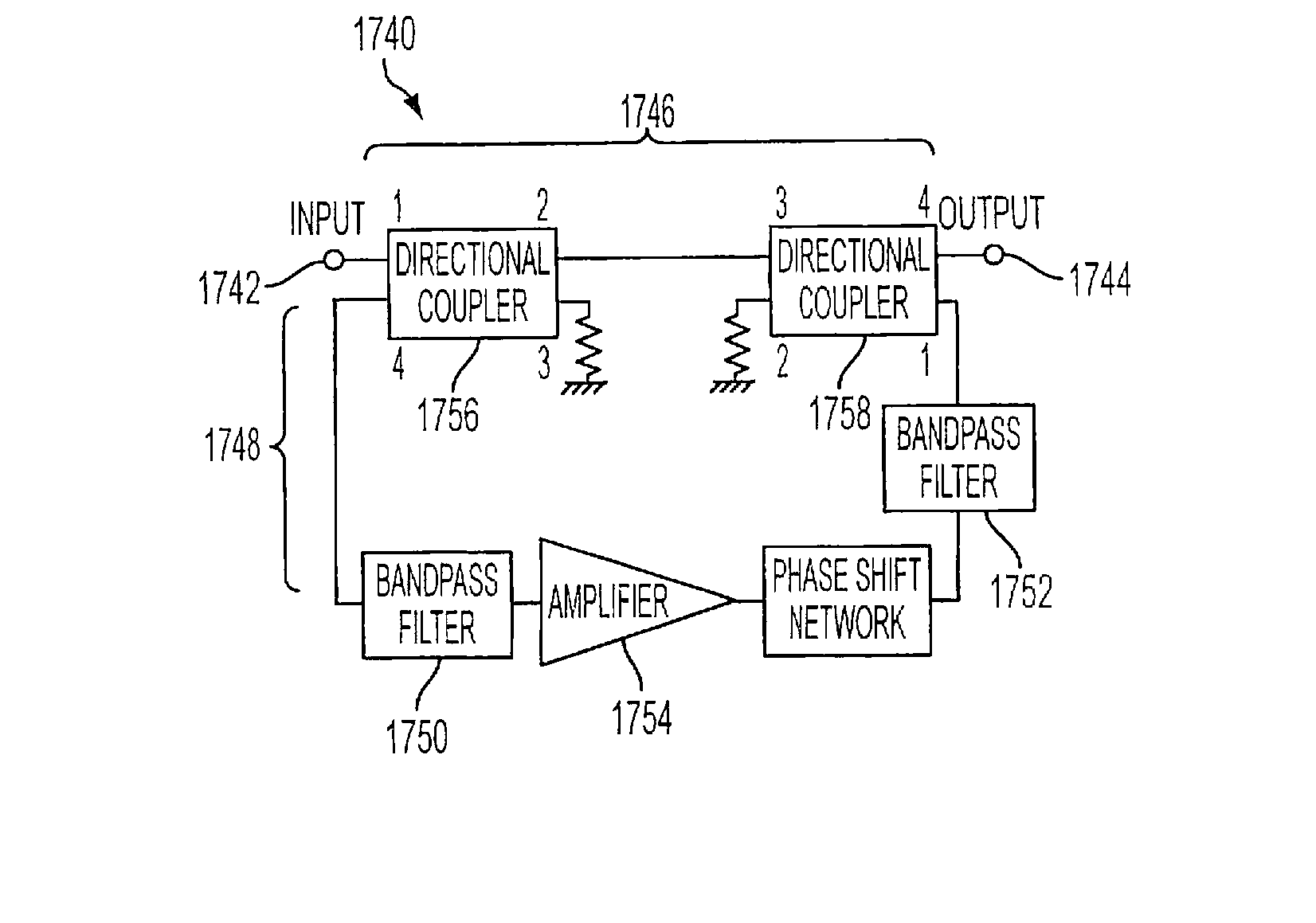
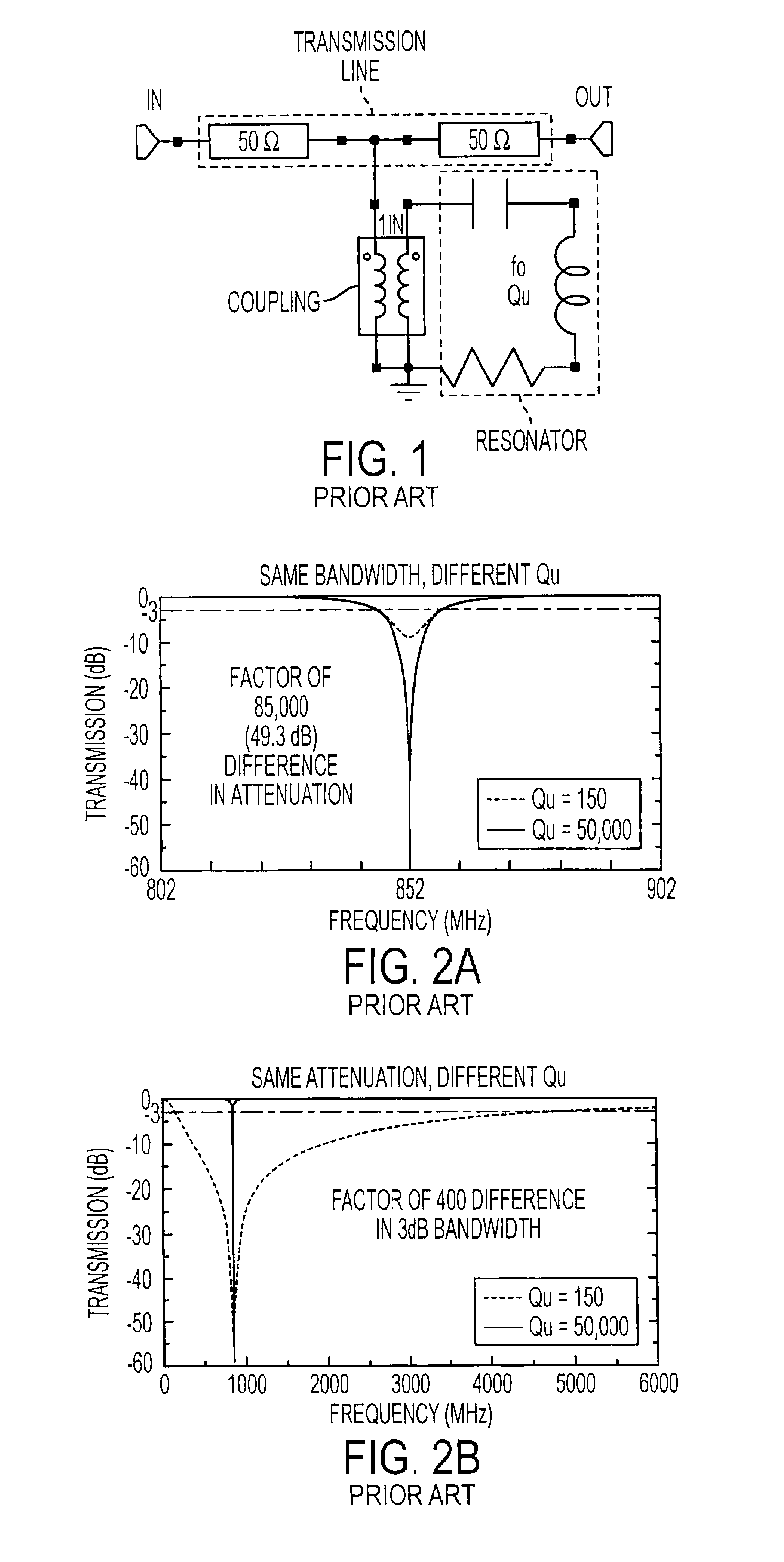
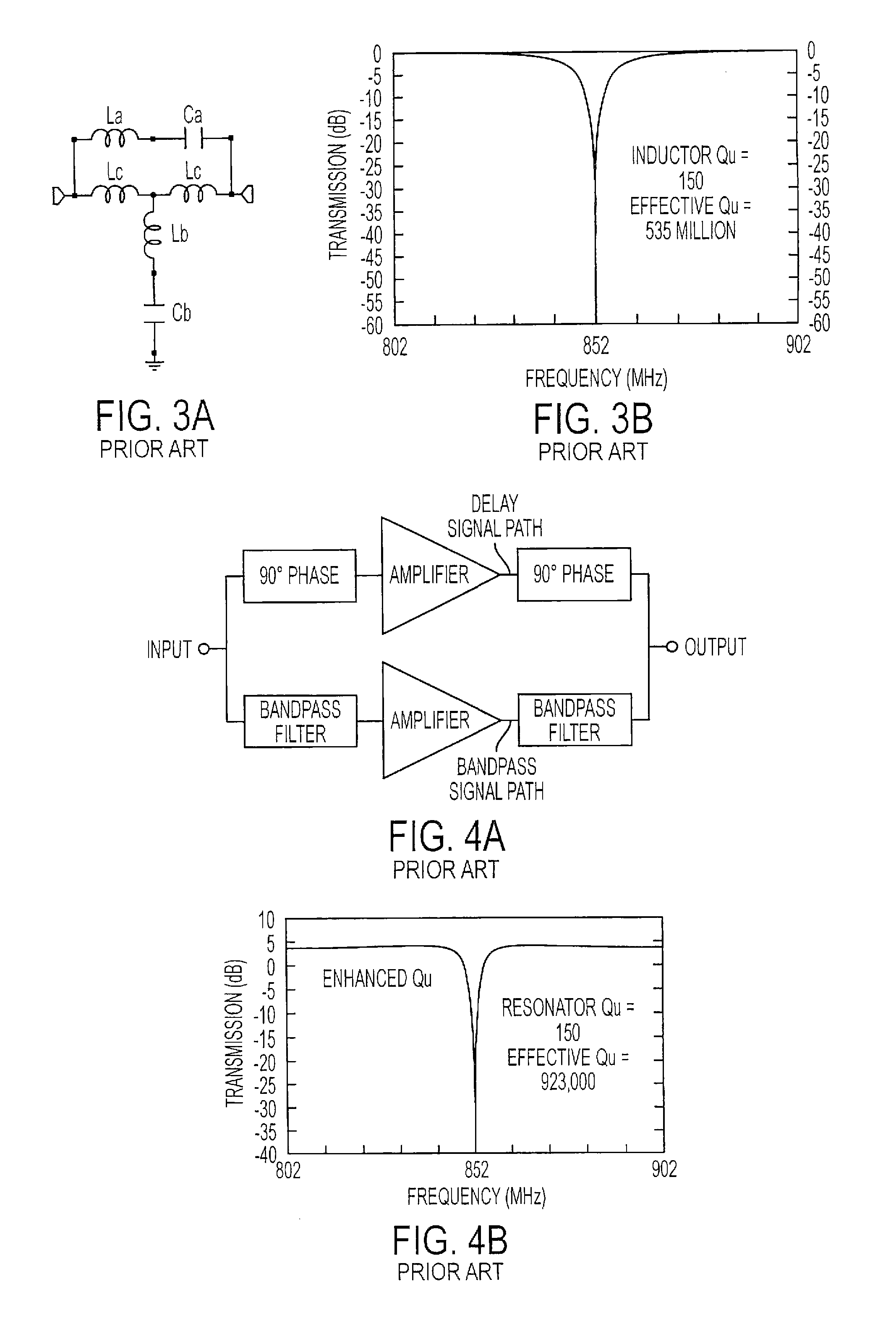

Notch filter with frequnecy dependent resistance and electrical system comprising such notch filter
PatentPendingEP3955461A1
Innovation
- Incorporating an attenuation control resistance in parallel or series with the notch inductance and capacitance allows for adjustable attenuation control above the notch resonance frequency, enabling improved noise filtering.


Standards and Compliance for Filter Testing
The quantification of attenuation levels in notch filter designs must adhere to established international standards to ensure measurement accuracy and industry-wide compatibility. IEEE 315 provides fundamental guidelines for filter characterization, while IEC 60384 series standards specifically address passive filter components and their testing methodologies. These standards define critical parameters including insertion loss measurement procedures, frequency response characterization, and acceptable tolerance ranges for attenuation specifications.
Military and aerospace applications require compliance with MIL-STD-220 for filter testing protocols, which mandates rigorous environmental testing conditions and precise attenuation measurement techniques. The standard specifies temperature coefficients, humidity resistance, and vibration tolerance requirements that directly impact attenuation stability. Commercial telecommunications equipment must conform to ITU-T recommendations, particularly G.671 and G.694 series, which establish attenuation measurement standards for optical and electronic filtering applications.
Regulatory compliance varies significantly across different market segments and geographical regions. FCC Part 15 regulations in North America impose specific attenuation requirements for electromagnetic interference suppression, while CE marking requirements in Europe demand adherence to EN 55022 standards for conducted and radiated emissions control. These regulations directly influence notch filter design specifications and testing protocols.
Testing equipment calibration represents a critical compliance aspect, requiring traceability to national measurement standards through organizations like NIST or NPL. Vector network analyzers used for attenuation measurements must maintain calibration certificates with uncertainty specifications typically within ±0.1 dB for frequencies below 18 GHz. Spectrum analyzers employed for notch depth verification require regular calibration against certified reference sources to ensure measurement reliability.
Quality management systems such as ISO 9001 and AS9100 mandate documented testing procedures and measurement uncertainty analysis for attenuation quantification. These frameworks require statistical process control implementation, measurement system analysis, and continuous improvement protocols that enhance filter testing reliability and repeatability across manufacturing environments.
Military and aerospace applications require compliance with MIL-STD-220 for filter testing protocols, which mandates rigorous environmental testing conditions and precise attenuation measurement techniques. The standard specifies temperature coefficients, humidity resistance, and vibration tolerance requirements that directly impact attenuation stability. Commercial telecommunications equipment must conform to ITU-T recommendations, particularly G.671 and G.694 series, which establish attenuation measurement standards for optical and electronic filtering applications.
Regulatory compliance varies significantly across different market segments and geographical regions. FCC Part 15 regulations in North America impose specific attenuation requirements for electromagnetic interference suppression, while CE marking requirements in Europe demand adherence to EN 55022 standards for conducted and radiated emissions control. These regulations directly influence notch filter design specifications and testing protocols.
Testing equipment calibration represents a critical compliance aspect, requiring traceability to national measurement standards through organizations like NIST or NPL. Vector network analyzers used for attenuation measurements must maintain calibration certificates with uncertainty specifications typically within ±0.1 dB for frequencies below 18 GHz. Spectrum analyzers employed for notch depth verification require regular calibration against certified reference sources to ensure measurement reliability.
Quality management systems such as ISO 9001 and AS9100 mandate documented testing procedures and measurement uncertainty analysis for attenuation quantification. These frameworks require statistical process control implementation, measurement system analysis, and continuous improvement protocols that enhance filter testing reliability and repeatability across manufacturing environments.
Cost-Performance Trade-offs in Notch Design
The cost-performance trade-offs in notch filter design represent a fundamental engineering challenge that directly impacts the practical implementation of attenuation level quantification systems. These trade-offs manifest across multiple dimensions, requiring careful optimization to achieve desired attenuation characteristics while maintaining economic viability.
Component selection constitutes the primary cost driver in notch filter implementations. High-precision resistors and capacitors with tight tolerances can significantly improve attenuation accuracy and stability, but their costs increase exponentially with precision requirements. For instance, achieving attenuation levels with ±0.1dB accuracy may require components costing 5-10 times more than standard tolerance alternatives that provide ±1dB accuracy.
Manufacturing complexity directly correlates with performance specifications. Active notch filters utilizing operational amplifiers offer superior performance characteristics, including adjustable Q-factors and precise frequency control, but require additional power supply circuits and increase overall system complexity. Passive designs, while more cost-effective, may struggle to achieve the steep roll-off characteristics needed for demanding attenuation specifications.
Frequency stability requirements significantly impact design costs. Temperature-compensated designs using specialized components or active temperature control systems can maintain consistent attenuation levels across operating ranges, but add substantial cost overhead. Standard designs may experience 2-5% frequency drift, while precision implementations can maintain stability within 0.1%.
Testing and calibration expenses scale with performance requirements. High-performance notch filters demand sophisticated measurement equipment and extended calibration procedures, potentially doubling production costs. Automated testing systems can reduce long-term costs but require significant upfront investment.
The optimal cost-performance balance depends heavily on application requirements. Consumer electronics applications typically prioritize cost optimization, accepting moderate attenuation accuracy, while precision instrumentation demands maximum performance regardless of cost implications. Understanding these trade-offs enables informed design decisions that align technical specifications with economic constraints.
Component selection constitutes the primary cost driver in notch filter implementations. High-precision resistors and capacitors with tight tolerances can significantly improve attenuation accuracy and stability, but their costs increase exponentially with precision requirements. For instance, achieving attenuation levels with ±0.1dB accuracy may require components costing 5-10 times more than standard tolerance alternatives that provide ±1dB accuracy.
Manufacturing complexity directly correlates with performance specifications. Active notch filters utilizing operational amplifiers offer superior performance characteristics, including adjustable Q-factors and precise frequency control, but require additional power supply circuits and increase overall system complexity. Passive designs, while more cost-effective, may struggle to achieve the steep roll-off characteristics needed for demanding attenuation specifications.
Frequency stability requirements significantly impact design costs. Temperature-compensated designs using specialized components or active temperature control systems can maintain consistent attenuation levels across operating ranges, but add substantial cost overhead. Standard designs may experience 2-5% frequency drift, while precision implementations can maintain stability within 0.1%.
Testing and calibration expenses scale with performance requirements. High-performance notch filters demand sophisticated measurement equipment and extended calibration procedures, potentially doubling production costs. Automated testing systems can reduce long-term costs but require significant upfront investment.
The optimal cost-performance balance depends heavily on application requirements. Consumer electronics applications typically prioritize cost optimization, accepting moderate attenuation accuracy, while precision instrumentation demands maximum performance regardless of cost implications. Understanding these trade-offs enables informed design decisions that align technical specifications with economic constraints.
Unlock deeper insights with Patsnap Eureka Quick Research — get a full tech report to explore trends and direct your research. Try now!
Generate Your Research Report Instantly with AI Agent
Supercharge your innovation with Patsnap Eureka AI Agent Platform!