

Radiating Element Field Integrity in Constrained Geographical Positions
MAR 6, 20269 MIN READ
Generate Your Research Report Instantly with AI Agent
PatSnap Eureka helps you evaluate technical feasibility & market potential.
Radiating Element Field Integrity Background and Objectives
Radiating element field integrity represents a critical challenge in modern wireless communication systems, particularly when deployment occurs within geographically constrained environments. This technical domain encompasses the preservation of electromagnetic field patterns and signal quality for antennas and radiating structures operating in spatially limited or challenging terrain conditions. The significance of this field has grown exponentially with the proliferation of wireless technologies in urban environments, underground installations, maritime platforms, and remote geographical locations where traditional deployment strategies face substantial limitations.
The evolution of radiating element technology has progressed through distinct phases, beginning with basic dipole and monopole configurations in the early 20th century, advancing through phased array systems in the mid-century, and culminating in today's sophisticated adaptive and smart antenna systems. Contemporary developments focus increasingly on maintaining optimal performance despite physical constraints imposed by installation environments, regulatory restrictions, and interference from surrounding structures or natural obstacles.
Current technological objectives center on developing robust methodologies for preserving electromagnetic field integrity across diverse constrained scenarios. Primary goals include minimizing pattern distortion caused by nearby reflective surfaces, ground plane limitations, and structural obstructions. Advanced beamforming techniques, adaptive impedance matching systems, and novel metamaterial applications represent key areas of focus for achieving these objectives.
The technical challenge extends beyond simple antenna design to encompass comprehensive system-level approaches that account for environmental interactions, multipath propagation effects, and dynamic operational conditions. Modern solutions increasingly integrate real-time field monitoring capabilities, predictive modeling algorithms, and adaptive compensation mechanisms to maintain optimal radiating element performance regardless of geographical constraints.
Strategic objectives emphasize developing standardized frameworks for evaluating field integrity metrics, establishing design guidelines for constrained deployment scenarios, and creating innovative solutions that enable reliable wireless communication in previously challenging environments. These efforts aim to support expanding wireless infrastructure requirements while maintaining signal quality and regulatory compliance across diverse geographical and operational contexts.
The evolution of radiating element technology has progressed through distinct phases, beginning with basic dipole and monopole configurations in the early 20th century, advancing through phased array systems in the mid-century, and culminating in today's sophisticated adaptive and smart antenna systems. Contemporary developments focus increasingly on maintaining optimal performance despite physical constraints imposed by installation environments, regulatory restrictions, and interference from surrounding structures or natural obstacles.
Current technological objectives center on developing robust methodologies for preserving electromagnetic field integrity across diverse constrained scenarios. Primary goals include minimizing pattern distortion caused by nearby reflective surfaces, ground plane limitations, and structural obstructions. Advanced beamforming techniques, adaptive impedance matching systems, and novel metamaterial applications represent key areas of focus for achieving these objectives.
The technical challenge extends beyond simple antenna design to encompass comprehensive system-level approaches that account for environmental interactions, multipath propagation effects, and dynamic operational conditions. Modern solutions increasingly integrate real-time field monitoring capabilities, predictive modeling algorithms, and adaptive compensation mechanisms to maintain optimal radiating element performance regardless of geographical constraints.
Strategic objectives emphasize developing standardized frameworks for evaluating field integrity metrics, establishing design guidelines for constrained deployment scenarios, and creating innovative solutions that enable reliable wireless communication in previously challenging environments. These efforts aim to support expanding wireless infrastructure requirements while maintaining signal quality and regulatory compliance across diverse geographical and operational contexts.
Market Demand for Constrained Position Antenna Solutions
The global telecommunications infrastructure expansion has created unprecedented demand for antenna solutions capable of maintaining radiating element field integrity in geographically constrained environments. Urban densification, underground installations, and space-limited deployment scenarios have fundamentally shifted market requirements from traditional open-field antenna designs toward specialized constrained-position solutions.
Metropolitan areas worldwide face increasing pressure to deploy wireless infrastructure within severely limited spatial boundaries. Building rooftops, narrow corridors, underground tunnels, and densely packed urban environments require antenna systems that can preserve electromagnetic field characteristics despite physical constraints. This demand has intensified with the rollout of advanced wireless networks requiring higher frequency operations and more precise field control.
Industrial sectors including mining, transportation, and maritime operations represent substantial market segments requiring robust antenna solutions for confined spaces. Underground mining operations demand reliable communication systems that function effectively within tunnel networks and confined geological formations. Similarly, transportation infrastructure including subway systems, highway tunnels, and maritime vessels requires antenna solutions optimized for constrained installation environments.
The aerospace and defense sectors have emerged as significant drivers of market demand for constrained-position antenna technologies. Aircraft, satellites, and military vehicles operate under strict spatial limitations while requiring exceptional electromagnetic performance. These applications demand antenna solutions that maintain field integrity despite severe size, weight, and mounting constraints.
Emergency response and public safety communications represent rapidly growing market segments requiring reliable antenna performance in challenging deployment scenarios. First responders often operate in confined spaces, underground facilities, and structurally compromised environments where traditional antenna solutions fail to maintain adequate field characteristics.
Smart city initiatives and Internet of Things deployments have created substantial demand for miniaturized antenna solutions capable of maintaining field integrity in dense urban environments. These applications require antenna systems that can function effectively when installed in close proximity to buildings, infrastructure, and other electromagnetic interference sources while preserving signal quality and coverage patterns.
The market demand continues expanding as wireless communication requirements become more sophisticated and deployment environments become increasingly constrained, driving innovation in specialized antenna technologies designed for challenging geographical positions.
Metropolitan areas worldwide face increasing pressure to deploy wireless infrastructure within severely limited spatial boundaries. Building rooftops, narrow corridors, underground tunnels, and densely packed urban environments require antenna systems that can preserve electromagnetic field characteristics despite physical constraints. This demand has intensified with the rollout of advanced wireless networks requiring higher frequency operations and more precise field control.
Industrial sectors including mining, transportation, and maritime operations represent substantial market segments requiring robust antenna solutions for confined spaces. Underground mining operations demand reliable communication systems that function effectively within tunnel networks and confined geological formations. Similarly, transportation infrastructure including subway systems, highway tunnels, and maritime vessels requires antenna solutions optimized for constrained installation environments.
The aerospace and defense sectors have emerged as significant drivers of market demand for constrained-position antenna technologies. Aircraft, satellites, and military vehicles operate under strict spatial limitations while requiring exceptional electromagnetic performance. These applications demand antenna solutions that maintain field integrity despite severe size, weight, and mounting constraints.
Emergency response and public safety communications represent rapidly growing market segments requiring reliable antenna performance in challenging deployment scenarios. First responders often operate in confined spaces, underground facilities, and structurally compromised environments where traditional antenna solutions fail to maintain adequate field characteristics.
Smart city initiatives and Internet of Things deployments have created substantial demand for miniaturized antenna solutions capable of maintaining field integrity in dense urban environments. These applications require antenna systems that can function effectively when installed in close proximity to buildings, infrastructure, and other electromagnetic interference sources while preserving signal quality and coverage patterns.
The market demand continues expanding as wireless communication requirements become more sophisticated and deployment environments become increasingly constrained, driving innovation in specialized antenna technologies designed for challenging geographical positions.
Current Challenges in Field Integrity for Constrained Antennas
Constrained antenna installations face significant electromagnetic interference challenges that compromise field integrity across multiple operational dimensions. Traditional antenna systems designed for optimal free-space conditions encounter substantial performance degradation when deployed in geographically restricted environments such as urban canyons, underground facilities, or densely populated infrastructure zones. The proximity to metallic structures, buildings, and other electromagnetic sources creates complex multipath propagation scenarios that distort radiation patterns and reduce signal clarity.
Ground plane limitations represent a critical technical barrier in constrained deployments. Insufficient ground plane dimensions relative to operating wavelengths result in pattern asymmetry, reduced gain, and increased susceptibility to environmental coupling. This challenge becomes particularly acute in mobile applications or temporary installations where optimal ground plane implementation is physically impossible due to space constraints or structural limitations.
Near-field coupling effects pose another substantial challenge when radiating elements operate in close proximity to conductive surfaces or other antenna systems. These interactions alter impedance characteristics, shift resonant frequencies, and create unwanted current distributions that compromise radiation efficiency. The unpredictable nature of these coupling mechanisms makes it difficult to maintain consistent field integrity across varying deployment scenarios.
Multipath interference in constrained environments creates complex signal distortion patterns that degrade communication quality and system reliability. Reflected signals from nearby structures arrive at receivers with varying phase relationships, causing constructive and destructive interference patterns that fluctuate with environmental changes. This phenomenon is particularly problematic in urban environments where building density and material composition create highly variable propagation conditions.
Bandwidth limitations emerge as a significant constraint when antenna systems must operate within restricted physical dimensions. The fundamental relationship between antenna size and bandwidth becomes critically limiting in applications requiring broadband performance within compact form factors. Achieving adequate bandwidth while maintaining field integrity in constrained positions often requires complex matching networks that introduce additional losses and complexity.
Environmental adaptation challenges further complicate field integrity maintenance in constrained installations. Temperature variations, humidity changes, and mechanical vibrations can alter antenna characteristics and surrounding electromagnetic environments. These dynamic conditions require robust design approaches that maintain performance stability across diverse operational scenarios while accommodating the inherent limitations of constrained geographical positions.
Ground plane limitations represent a critical technical barrier in constrained deployments. Insufficient ground plane dimensions relative to operating wavelengths result in pattern asymmetry, reduced gain, and increased susceptibility to environmental coupling. This challenge becomes particularly acute in mobile applications or temporary installations where optimal ground plane implementation is physically impossible due to space constraints or structural limitations.
Near-field coupling effects pose another substantial challenge when radiating elements operate in close proximity to conductive surfaces or other antenna systems. These interactions alter impedance characteristics, shift resonant frequencies, and create unwanted current distributions that compromise radiation efficiency. The unpredictable nature of these coupling mechanisms makes it difficult to maintain consistent field integrity across varying deployment scenarios.
Multipath interference in constrained environments creates complex signal distortion patterns that degrade communication quality and system reliability. Reflected signals from nearby structures arrive at receivers with varying phase relationships, causing constructive and destructive interference patterns that fluctuate with environmental changes. This phenomenon is particularly problematic in urban environments where building density and material composition create highly variable propagation conditions.
Bandwidth limitations emerge as a significant constraint when antenna systems must operate within restricted physical dimensions. The fundamental relationship between antenna size and bandwidth becomes critically limiting in applications requiring broadband performance within compact form factors. Achieving adequate bandwidth while maintaining field integrity in constrained positions often requires complex matching networks that introduce additional losses and complexity.
Environmental adaptation challenges further complicate field integrity maintenance in constrained installations. Temperature variations, humidity changes, and mechanical vibrations can alter antenna characteristics and surrounding electromagnetic environments. These dynamic conditions require robust design approaches that maintain performance stability across diverse operational scenarios while accommodating the inherent limitations of constrained geographical positions.
Existing Field Integrity Solutions for Limited Spaces
01 Antenna array configuration and element spacing optimization
Maintaining radiating element field integrity through proper spacing and arrangement of antenna elements in array configurations. This involves optimizing the distance between radiating elements to minimize mutual coupling effects and ensure uniform field distribution. Techniques include using specific geometric arrangements and spacing ratios to maintain consistent radiation patterns across the array while preventing field distortion.- Antenna array configuration and element spacing optimization: Maintaining radiating element field integrity through proper spacing and arrangement of antenna elements in array configurations. This involves optimizing the distance between radiating elements to minimize mutual coupling effects and interference patterns. Proper element spacing ensures that each radiating element maintains its intended radiation pattern without significant distortion from neighboring elements. Array configurations can include linear, planar, or three-dimensional arrangements designed to preserve field integrity across the operational bandwidth.
- Electromagnetic shielding and isolation techniques: Implementation of shielding structures and isolation methods to protect radiating element field integrity from external interference and internal coupling. These techniques include the use of conductive barriers, absorbing materials, and ground plane designs that prevent unwanted electromagnetic interactions. Shielding can be applied at various levels including individual element isolation, feed network protection, and overall system enclosure. The goal is to maintain clean radiation patterns and prevent degradation of antenna performance due to electromagnetic interference.
- Feed network design and signal distribution: Optimizing feed network architecture to ensure uniform signal distribution and maintain field integrity across all radiating elements. This includes the design of power dividers, phase shifters, and transmission line networks that minimize amplitude and phase errors. Proper impedance matching throughout the feed network prevents reflections and ensures efficient power transfer to each radiating element. Advanced feed network designs can incorporate compensation techniques to correct for manufacturing tolerances and environmental variations.
- Structural integrity and mechanical stability: Ensuring physical robustness of radiating elements and supporting structures to maintain field integrity under various environmental conditions. This involves the use of materials and construction methods that resist deformation, vibration, and thermal expansion. Mechanical stability is critical for maintaining precise element positioning and alignment, which directly affects radiation pattern consistency. Design considerations include mounting techniques, structural reinforcement, and environmental protection measures that preserve antenna performance over time.
- Calibration and compensation methods: Implementation of calibration procedures and compensation algorithms to correct field integrity degradation and maintain optimal performance. These methods involve measuring and correcting for amplitude and phase errors across radiating elements through digital or analog techniques. Calibration can be performed during manufacturing, installation, or continuously during operation using built-in test capabilities. Compensation techniques may include adaptive beamforming, error correction algorithms, and real-time adjustment of element excitations to maintain desired radiation characteristics.
02 Shielding and isolation structures for field integrity
Implementation of shielding mechanisms and isolation structures to preserve the integrity of radiating element fields. These structures prevent electromagnetic interference between adjacent elements and external sources. Methods include using metallic barriers, absorbing materials, and ground plane configurations to maintain field purity and reduce cross-coupling effects that could compromise radiation performance.Expand Specific Solutions03 Feeding network design for uniform field distribution
Design of feeding networks and power distribution systems to ensure uniform excitation of radiating elements and maintain field integrity. This includes phase and amplitude control mechanisms, impedance matching networks, and balanced feed structures. Proper feeding network design ensures that each radiating element operates with consistent characteristics and contributes appropriately to the overall radiation pattern.Expand Specific Solutions04 Structural support and mechanical stability
Mechanical design considerations for maintaining radiating element field integrity through structural support systems. This involves using materials and mounting techniques that prevent physical deformation or displacement of radiating elements under environmental stress. Proper mechanical stability ensures that the geometric relationships between elements remain constant, preserving the intended field characteristics over time and varying conditions.Expand Specific Solutions05 Calibration and testing methods for field verification
Techniques for measuring, calibrating, and verifying the integrity of radiating element fields during manufacturing and operation. These methods include near-field and far-field measurement systems, diagnostic algorithms, and compensation techniques to detect and correct field distortions. Regular calibration ensures that radiating elements maintain their specified performance characteristics and field patterns throughout their operational lifetime.Expand Specific Solutions
Key Players in Constrained Antenna and RF Industry
The radiating element field integrity technology in constrained geographical positions represents an emerging market at the early development stage, driven by increasing demands for reliable electromagnetic performance in space-limited applications. The market shows significant growth potential across telecommunications, automotive, and industrial sectors, with estimated valuations reaching billions globally. Technology maturity varies considerably among key players: established giants like Siemens AG, Hitachi Ltd., and Sony Group Corp. demonstrate advanced capabilities through decades of R&D investment, while specialized firms such as FlatFrog Laboratories AB and Shenzhen Merrytek Technology focus on niche applications. Research institutions including Fraunhofer-Gesellschaft eV and University of Electronic Science & Technology of China contribute fundamental innovations. The competitive landscape features a mix of mature multinational corporations with comprehensive portfolios and emerging specialists developing targeted solutions, indicating a dynamic market transitioning from research-driven to commercially viable applications with accelerating technological convergence.
Fraunhofer-Gesellschaft eV
Technical Solution: Fraunhofer has developed advanced electromagnetic field simulation and measurement technologies for radiating elements in constrained environments. Their approach combines computational electromagnetics with adaptive antenna design methodologies, focusing on maintaining field integrity through intelligent beamforming and spatial diversity techniques. They utilize multi-physics simulation platforms that account for environmental constraints such as metallic structures, dielectric materials, and geometric limitations. Their solutions include adaptive impedance matching networks and real-time field monitoring systems that can dynamically adjust radiating element parameters to maintain optimal performance even in challenging geographical positions with limited space or interference sources.
Strengths: Comprehensive research infrastructure and multi-disciplinary expertise in electromagnetics. Weaknesses: Solutions may be complex and require significant computational resources for implementation.
Koninklijke Philips NV
Technical Solution: Philips has developed medical imaging and sensing technologies that require precise electromagnetic field control in constrained clinical environments. Their approach focuses on maintaining field uniformity and minimizing interference in medical devices such as MRI systems and RF-based therapeutic equipment. They utilize advanced shielding techniques, gradient coil optimization, and real-time field mapping to ensure consistent performance. Their solutions include sophisticated calibration algorithms that account for patient positioning, metallic implants, and room geometry effects. The technology incorporates multi-channel field monitoring and active compensation systems that can maintain field integrity even when operating in electromagnetically complex hospital environments with multiple interfering sources.
Strengths: Deep expertise in medical electromagnetic applications and precision field control. Weaknesses: Solutions may be specialized for medical applications and require adaptation for other geographical constraints.
Core Innovations in Constrained Radiating Element Design
Low-profile, wideband, high gain spiral radiating element above an artificial magnetic conductor ground plane
PatentActiveUS10714823B2
Innovation
- The use of curvilinear radiating elements, such as spiral or loop shapes, positioned above circularly symmetric high impedance surfaces (HIS) ground planes, which enhance gain and operational bandwidth by optimizing distance and angular periodicity of the HIS design.


Dual-polarized environmentally-hardened low profile radiating element
PatentActiveUS8872713B1
Innovation
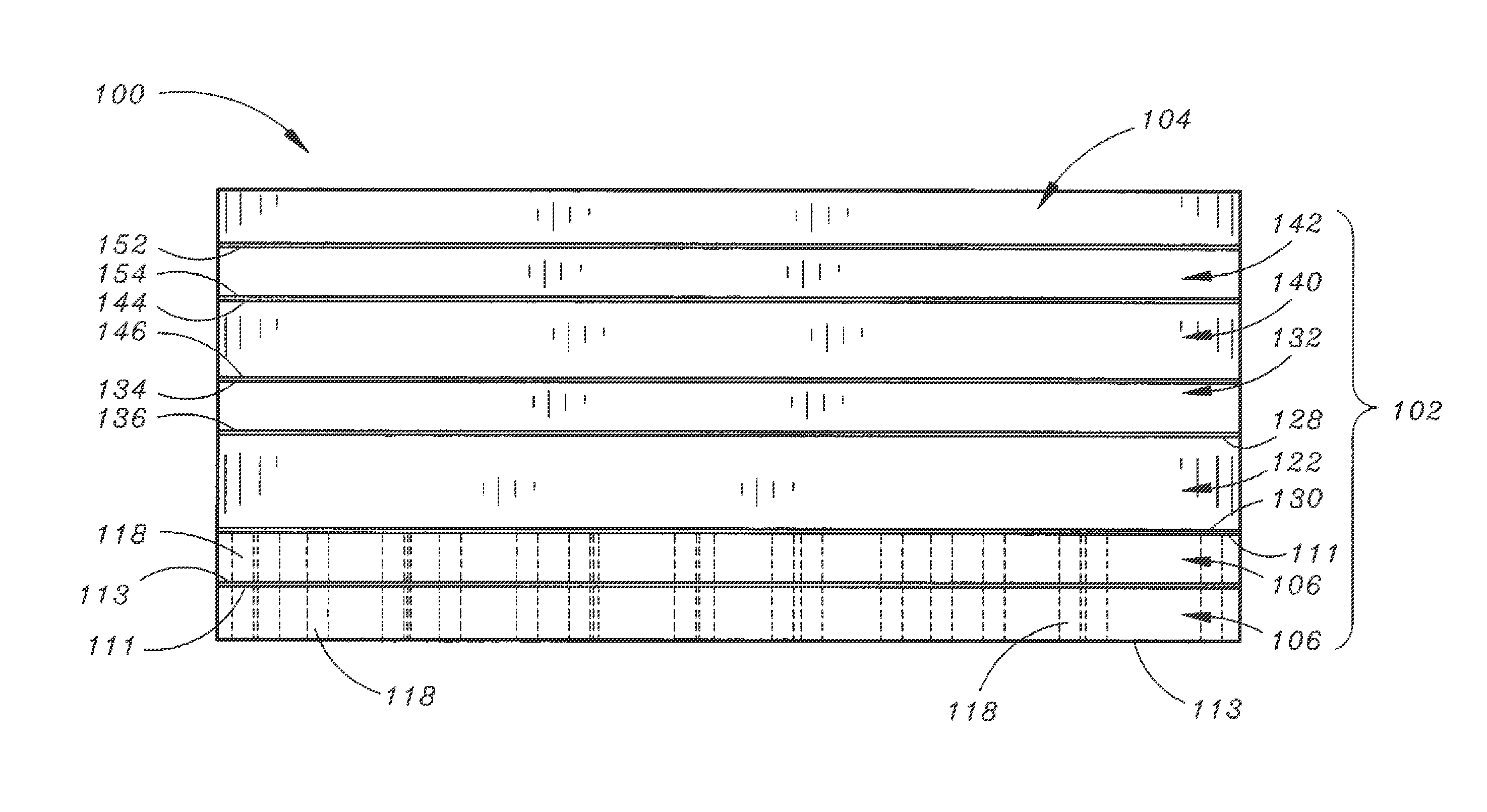
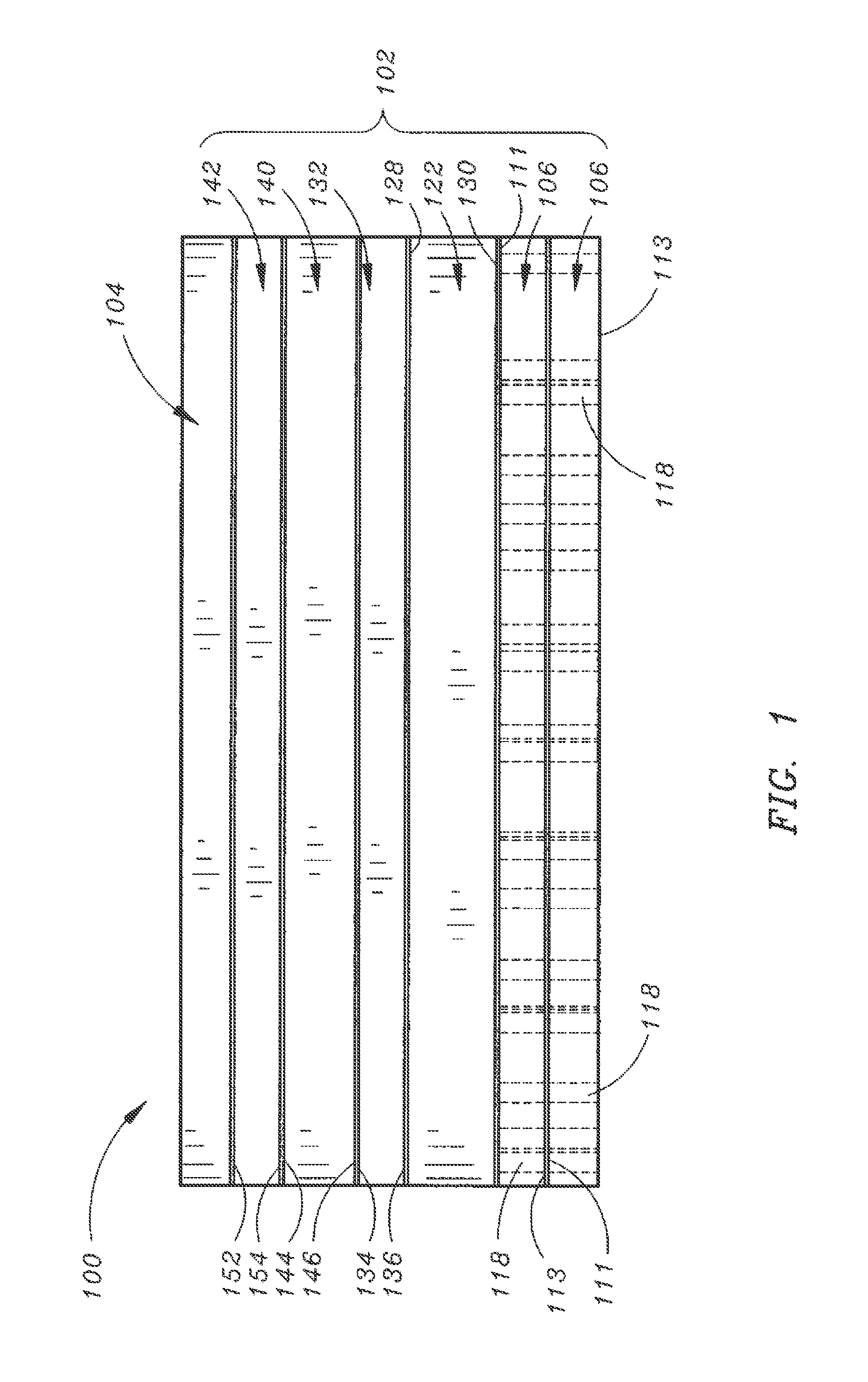
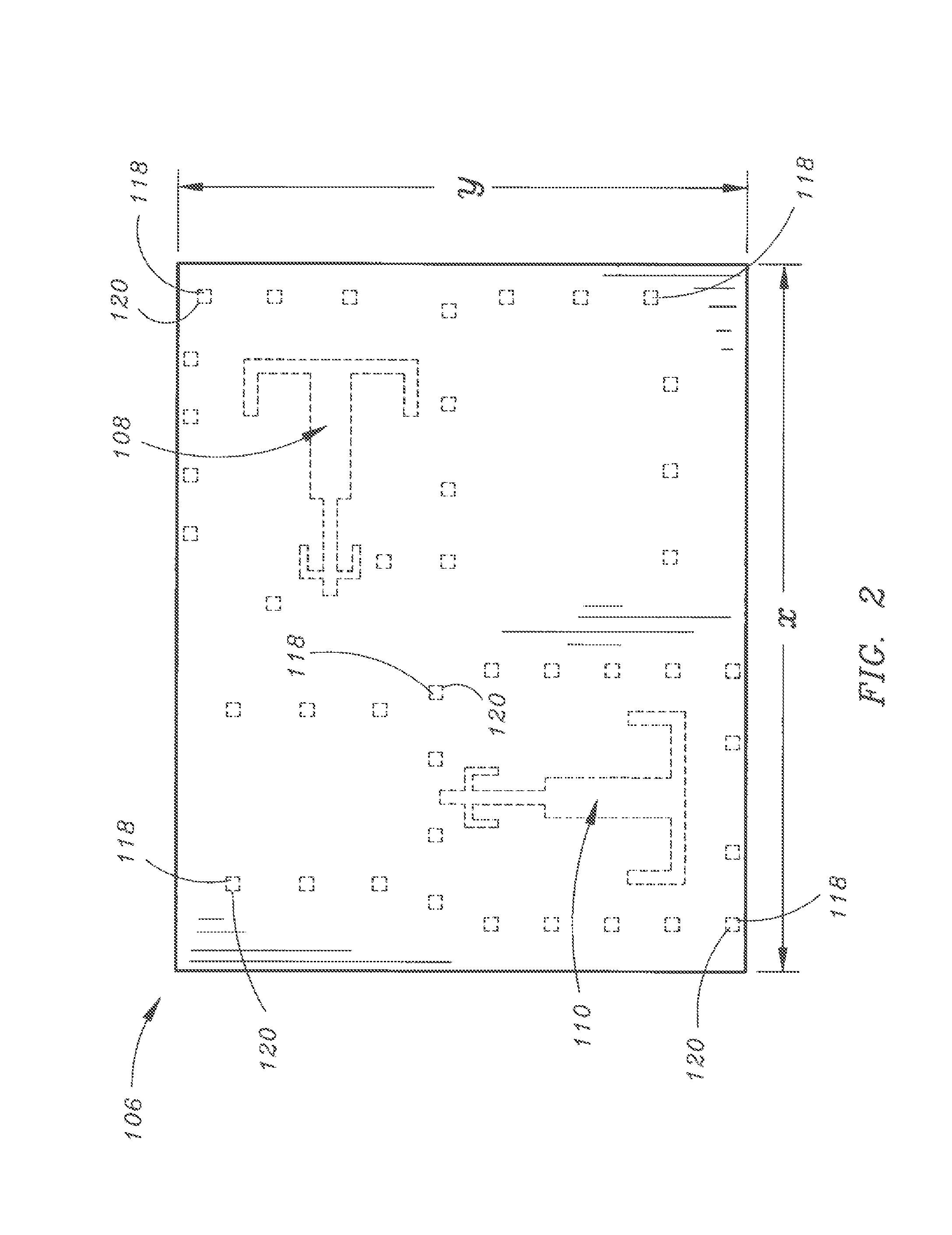
- A dual-polarized radiating element assembly comprising a ground plane layer with slots, a stripline feed layer with vias to eliminate resonances, a metamaterial layer for impedance stability, and dipole layers for reflection matching, which together provide electromagnetic energy through vertically and horizontally polarized slots, ensuring efficient radiation patterns and minimizing cross-talk.

Electromagnetic Compatibility Regulatory Framework
The electromagnetic compatibility regulatory framework governing radiating element field integrity in constrained geographical positions encompasses a complex web of international, national, and regional standards designed to ensure safe and interference-free operation of electromagnetic systems. This framework has evolved significantly over the past decades to address the increasing density of electromagnetic devices operating in limited geographical areas, particularly in urban environments, industrial zones, and critical infrastructure locations.
International regulatory bodies, primarily the International Telecommunication Union (ITU) and the International Electrotechnical Commission (IEC), establish foundational standards that serve as reference points for national implementations. The ITU-R recommendations, particularly those addressing spurious emissions and out-of-band radiation limits, provide crucial guidelines for maintaining field integrity when multiple radiating elements operate within confined spaces. These standards define acceptable interference thresholds and establish coordination procedures for spectrum management in geographically constrained environments.
Regional regulatory frameworks, such as those implemented by the European Telecommunications Standards Institute (ETSI) and the Federal Communications Commission (FCC) in the United States, translate international guidelines into enforceable regulations. The European EMC Directive 2014/30/EU specifically addresses electromagnetic compatibility requirements for equipment operating in shared geographical spaces, while FCC Part 15 and Part 97 regulations establish emission limits and operational procedures for radiating systems in proximity to sensitive installations.
National regulatory authorities have developed specialized frameworks addressing unique geographical constraints within their jurisdictions. These include regulations for radiating elements near airports, hospitals, military installations, and radio astronomy facilities. The coordination zones established around these sensitive locations require enhanced field integrity measures, including reduced power limits, specific antenna patterns, and mandatory interference mitigation techniques.
Compliance verification procedures within this regulatory framework involve standardized measurement methodologies, including near-field and far-field assessment techniques specifically adapted for constrained environments. Regulatory bodies mandate periodic monitoring and reporting requirements to ensure continued compliance as electromagnetic environments evolve. The framework also establishes enforcement mechanisms, including penalties for non-compliance and procedures for resolving interference disputes between operators sharing limited geographical spaces.
International regulatory bodies, primarily the International Telecommunication Union (ITU) and the International Electrotechnical Commission (IEC), establish foundational standards that serve as reference points for national implementations. The ITU-R recommendations, particularly those addressing spurious emissions and out-of-band radiation limits, provide crucial guidelines for maintaining field integrity when multiple radiating elements operate within confined spaces. These standards define acceptable interference thresholds and establish coordination procedures for spectrum management in geographically constrained environments.
Regional regulatory frameworks, such as those implemented by the European Telecommunications Standards Institute (ETSI) and the Federal Communications Commission (FCC) in the United States, translate international guidelines into enforceable regulations. The European EMC Directive 2014/30/EU specifically addresses electromagnetic compatibility requirements for equipment operating in shared geographical spaces, while FCC Part 15 and Part 97 regulations establish emission limits and operational procedures for radiating systems in proximity to sensitive installations.
National regulatory authorities have developed specialized frameworks addressing unique geographical constraints within their jurisdictions. These include regulations for radiating elements near airports, hospitals, military installations, and radio astronomy facilities. The coordination zones established around these sensitive locations require enhanced field integrity measures, including reduced power limits, specific antenna patterns, and mandatory interference mitigation techniques.
Compliance verification procedures within this regulatory framework involve standardized measurement methodologies, including near-field and far-field assessment techniques specifically adapted for constrained environments. Regulatory bodies mandate periodic monitoring and reporting requirements to ensure continued compliance as electromagnetic environments evolve. The framework also establishes enforcement mechanisms, including penalties for non-compliance and procedures for resolving interference disputes between operators sharing limited geographical spaces.
Environmental Impact Assessment for RF Systems
The deployment of RF systems in constrained geographical positions presents unique environmental challenges that require comprehensive assessment and mitigation strategies. These systems, particularly when maintaining radiating element field integrity in confined spaces, can generate electromagnetic emissions that interact with surrounding ecosystems in complex ways. The environmental impact assessment must consider both immediate and long-term effects on flora, fauna, and human populations within the operational vicinity.
Electromagnetic field exposure represents the primary environmental concern for RF systems operating in geographically constrained areas. The confined nature of these installations often results in higher field concentrations within smaller areas, potentially exceeding standard exposure limits for both occupational and general public environments. Assessment protocols must evaluate specific absorption rates, power density distributions, and cumulative exposure effects across different frequency bands and modulation schemes.
Wildlife impact assessment requires particular attention in constrained geographical deployments, as animals may be unable to avoid exposure zones due to territorial boundaries or migration patterns. Studies indicate that certain species, particularly birds and insects, demonstrate behavioral changes when exposed to RF fields above threshold levels. The assessment must include seasonal migration patterns, breeding cycles, and habitat utilization to determine potential disruption to local ecosystems.
Soil and vegetation analysis forms another critical component of environmental impact evaluation. RF energy absorption in plant tissues can affect photosynthesis rates and cellular metabolism, particularly in high-power applications. Ground-coupled RF energy may alter soil conductivity and affect root system development in nearby vegetation. Long-term monitoring protocols should establish baseline measurements and track changes in plant health indicators.
Human health considerations become amplified in constrained geographical positions where population density may be higher and evacuation options limited. The assessment must evaluate residential proximity, occupational exposure scenarios, and vulnerable population groups including children and individuals with medical implants. Cumulative exposure from multiple RF sources requires careful modeling to ensure compliance with international safety standards.
Mitigation strategies should address both active and passive environmental protection measures. Active approaches include adaptive power control, beam steering optimization, and temporal scheduling to minimize exposure during sensitive periods. Passive measures encompass RF shielding, vegetation barriers, and strategic positioning to reduce environmental interaction while maintaining system performance requirements.
Electromagnetic field exposure represents the primary environmental concern for RF systems operating in geographically constrained areas. The confined nature of these installations often results in higher field concentrations within smaller areas, potentially exceeding standard exposure limits for both occupational and general public environments. Assessment protocols must evaluate specific absorption rates, power density distributions, and cumulative exposure effects across different frequency bands and modulation schemes.
Wildlife impact assessment requires particular attention in constrained geographical deployments, as animals may be unable to avoid exposure zones due to territorial boundaries or migration patterns. Studies indicate that certain species, particularly birds and insects, demonstrate behavioral changes when exposed to RF fields above threshold levels. The assessment must include seasonal migration patterns, breeding cycles, and habitat utilization to determine potential disruption to local ecosystems.
Soil and vegetation analysis forms another critical component of environmental impact evaluation. RF energy absorption in plant tissues can affect photosynthesis rates and cellular metabolism, particularly in high-power applications. Ground-coupled RF energy may alter soil conductivity and affect root system development in nearby vegetation. Long-term monitoring protocols should establish baseline measurements and track changes in plant health indicators.
Human health considerations become amplified in constrained geographical positions where population density may be higher and evacuation options limited. The assessment must evaluate residential proximity, occupational exposure scenarios, and vulnerable population groups including children and individuals with medical implants. Cumulative exposure from multiple RF sources requires careful modeling to ensure compliance with international safety standards.
Mitigation strategies should address both active and passive environmental protection measures. Active approaches include adaptive power control, beam steering optimization, and temporal scheduling to minimize exposure during sensitive periods. Passive measures encompass RF shielding, vegetation barriers, and strategic positioning to reduce environmental interaction while maintaining system performance requirements.
Unlock deeper insights with PatSnap Eureka Quick Research — get a full tech report to explore trends and direct your research. Try now!
Generate Your Research Report Instantly with AI Agent
Supercharge your innovation with PatSnap Eureka AI Agent Platform!