
Regulating Bandwidth with Adaptive Network Control Systems
MAR 18, 20269 MIN READ
Generate Your Research Report Instantly with AI Agent
Patsnap Eureka helps you evaluate technical feasibility & market potential.
Adaptive Network Control Background and Objectives
Adaptive network control systems have emerged as a critical technological paradigm in response to the exponential growth of network traffic and the increasing complexity of modern communication infrastructures. The evolution of these systems traces back to the early days of packet-switched networks in the 1970s, where rudimentary flow control mechanisms were first implemented. Over the subsequent decades, the field has witnessed significant advancement from static bandwidth allocation methods to sophisticated dynamic control algorithms capable of real-time adaptation.
The fundamental principle underlying adaptive network control lies in the system's ability to continuously monitor network conditions and automatically adjust bandwidth allocation parameters to optimize performance. This approach represents a paradigm shift from traditional fixed-bandwidth systems that often resulted in either resource underutilization during low-traffic periods or network congestion during peak usage times. The adaptive methodology enables networks to respond intelligently to varying traffic patterns, application requirements, and network topology changes.
Current technological trends indicate a strong movement toward machine learning-enhanced adaptive control systems that can predict traffic patterns and preemptively adjust bandwidth allocation. The integration of artificial intelligence algorithms with traditional control theory has opened new possibilities for achieving unprecedented levels of network optimization. Software-defined networking architectures have further accelerated this evolution by providing centralized control planes that facilitate rapid implementation of adaptive bandwidth management policies.
The primary technical objectives of modern adaptive network control systems encompass several key areas. First, achieving optimal bandwidth utilization across diverse network segments while maintaining quality of service guarantees for critical applications. Second, implementing real-time responsiveness to network condition changes with minimal latency overhead. Third, ensuring scalability across heterogeneous network environments ranging from local area networks to wide-area distributed systems.
Another crucial objective involves developing robust control algorithms that can handle network uncertainties and maintain stability under varying operational conditions. This includes managing the trade-offs between system responsiveness and stability, preventing oscillatory behavior that could degrade overall network performance. The systems must also demonstrate resilience against network failures and security threats while maintaining continuous adaptive functionality.
The strategic goal extends beyond mere bandwidth regulation to encompass comprehensive network resource optimization, including buffer management, routing decisions, and congestion avoidance mechanisms, creating an integrated approach to network performance enhancement.
The fundamental principle underlying adaptive network control lies in the system's ability to continuously monitor network conditions and automatically adjust bandwidth allocation parameters to optimize performance. This approach represents a paradigm shift from traditional fixed-bandwidth systems that often resulted in either resource underutilization during low-traffic periods or network congestion during peak usage times. The adaptive methodology enables networks to respond intelligently to varying traffic patterns, application requirements, and network topology changes.
Current technological trends indicate a strong movement toward machine learning-enhanced adaptive control systems that can predict traffic patterns and preemptively adjust bandwidth allocation. The integration of artificial intelligence algorithms with traditional control theory has opened new possibilities for achieving unprecedented levels of network optimization. Software-defined networking architectures have further accelerated this evolution by providing centralized control planes that facilitate rapid implementation of adaptive bandwidth management policies.
The primary technical objectives of modern adaptive network control systems encompass several key areas. First, achieving optimal bandwidth utilization across diverse network segments while maintaining quality of service guarantees for critical applications. Second, implementing real-time responsiveness to network condition changes with minimal latency overhead. Third, ensuring scalability across heterogeneous network environments ranging from local area networks to wide-area distributed systems.
Another crucial objective involves developing robust control algorithms that can handle network uncertainties and maintain stability under varying operational conditions. This includes managing the trade-offs between system responsiveness and stability, preventing oscillatory behavior that could degrade overall network performance. The systems must also demonstrate resilience against network failures and security threats while maintaining continuous adaptive functionality.
The strategic goal extends beyond mere bandwidth regulation to encompass comprehensive network resource optimization, including buffer management, routing decisions, and congestion avoidance mechanisms, creating an integrated approach to network performance enhancement.
Market Demand for Dynamic Bandwidth Management Solutions
The global telecommunications landscape is experiencing unprecedented demand for dynamic bandwidth management solutions, driven by the exponential growth of data-intensive applications and the proliferation of connected devices. Cloud computing, video streaming, IoT deployments, and remote work paradigms have fundamentally altered network traffic patterns, creating volatile and unpredictable bandwidth requirements that traditional static allocation methods cannot adequately address.
Enterprise networks face mounting pressure to deliver consistent performance while managing costs effectively. Organizations are increasingly adopting hybrid cloud architectures and distributed computing models, necessitating intelligent bandwidth allocation systems that can respond to real-time demand fluctuations. The shift toward software-defined networking and network function virtualization has created fertile ground for adaptive control systems that can dynamically optimize resource allocation based on application priorities and business requirements.
Telecommunications service providers are confronting similar challenges as they strive to maximize infrastructure utilization while maintaining quality of service commitments. The deployment of 5G networks has intensified the need for sophisticated bandwidth management capabilities, as these networks must support diverse use cases ranging from ultra-low latency applications to massive machine-type communications. Network slicing technologies require granular control over bandwidth allocation to ensure service level agreements are met across multiple virtual networks sharing common physical infrastructure.
The emergence of edge computing architectures has further amplified market demand for adaptive bandwidth control solutions. Edge deployments require intelligent traffic management systems that can optimize data flows between edge nodes, core networks, and cloud resources based on real-time conditions and application requirements. This distributed computing paradigm demands sophisticated algorithms capable of making autonomous decisions about bandwidth allocation without centralized oversight.
Financial institutions, healthcare organizations, and manufacturing companies represent key market segments driving adoption of dynamic bandwidth management technologies. These industries require guaranteed network performance for mission-critical applications while seeking to optimize operational expenses through efficient resource utilization. Regulatory compliance requirements in these sectors often mandate specific performance thresholds, creating additional demand for intelligent bandwidth control systems.
The growing complexity of network architectures, combined with increasing performance expectations and cost optimization pressures, has established a robust market foundation for adaptive network control systems that can intelligently regulate bandwidth allocation in response to changing conditions and requirements.
Enterprise networks face mounting pressure to deliver consistent performance while managing costs effectively. Organizations are increasingly adopting hybrid cloud architectures and distributed computing models, necessitating intelligent bandwidth allocation systems that can respond to real-time demand fluctuations. The shift toward software-defined networking and network function virtualization has created fertile ground for adaptive control systems that can dynamically optimize resource allocation based on application priorities and business requirements.
Telecommunications service providers are confronting similar challenges as they strive to maximize infrastructure utilization while maintaining quality of service commitments. The deployment of 5G networks has intensified the need for sophisticated bandwidth management capabilities, as these networks must support diverse use cases ranging from ultra-low latency applications to massive machine-type communications. Network slicing technologies require granular control over bandwidth allocation to ensure service level agreements are met across multiple virtual networks sharing common physical infrastructure.
The emergence of edge computing architectures has further amplified market demand for adaptive bandwidth control solutions. Edge deployments require intelligent traffic management systems that can optimize data flows between edge nodes, core networks, and cloud resources based on real-time conditions and application requirements. This distributed computing paradigm demands sophisticated algorithms capable of making autonomous decisions about bandwidth allocation without centralized oversight.
Financial institutions, healthcare organizations, and manufacturing companies represent key market segments driving adoption of dynamic bandwidth management technologies. These industries require guaranteed network performance for mission-critical applications while seeking to optimize operational expenses through efficient resource utilization. Regulatory compliance requirements in these sectors often mandate specific performance thresholds, creating additional demand for intelligent bandwidth control systems.
The growing complexity of network architectures, combined with increasing performance expectations and cost optimization pressures, has established a robust market foundation for adaptive network control systems that can intelligently regulate bandwidth allocation in response to changing conditions and requirements.
Current State and Challenges of Network Control Systems
Network control systems for bandwidth regulation have evolved significantly over the past decade, yet they continue to face substantial challenges in meeting the demands of modern digital infrastructure. Current implementations primarily rely on traditional Quality of Service (QoS) mechanisms, traffic shaping algorithms, and static bandwidth allocation protocols. These systems typically operate through centralized control architectures that monitor network traffic patterns and apply predetermined rules for bandwidth distribution.
The predominant approaches include token bucket algorithms, weighted fair queuing, and priority-based scheduling mechanisms. Software-Defined Networking (SDN) has emerged as a leading paradigm, enabling more flexible and programmable network control through centralized controllers that maintain global network visibility. OpenFlow protocol implementations have become standard in many enterprise environments, allowing dynamic flow table modifications and real-time traffic engineering.
However, existing systems struggle with several critical limitations that impede optimal performance. Latency in decision-making processes remains a significant bottleneck, particularly in large-scale networks where control messages must traverse multiple network layers before bandwidth adjustments take effect. This delay often results in suboptimal resource allocation during traffic spikes or network congestion events.
Scalability presents another major challenge, as traditional centralized control architectures become overwhelmed when managing thousands of network nodes simultaneously. The computational overhead required for real-time traffic analysis and bandwidth optimization grows exponentially with network size, leading to performance degradation and increased operational costs.
Adaptability limitations further constrain current systems' effectiveness. Most existing solutions rely on static configuration parameters and predefined traffic patterns, making them poorly suited for dynamic environments with unpredictable workloads. Machine learning integration remains nascent, with limited deployment of intelligent algorithms capable of learning from historical traffic patterns and predicting future bandwidth requirements.
Geographic distribution of advanced network control capabilities shows significant disparities. North American and European markets lead in SDN adoption and sophisticated bandwidth management implementations, while emerging markets often rely on legacy systems with limited adaptive capabilities. This technological gap creates interoperability challenges for global network infrastructures.
Security vulnerabilities in current network control systems pose additional concerns, as centralized controllers become attractive targets for cyberattacks. The concentration of control logic in single points of failure increases system vulnerability and complicates the implementation of robust security measures without compromising performance.
The predominant approaches include token bucket algorithms, weighted fair queuing, and priority-based scheduling mechanisms. Software-Defined Networking (SDN) has emerged as a leading paradigm, enabling more flexible and programmable network control through centralized controllers that maintain global network visibility. OpenFlow protocol implementations have become standard in many enterprise environments, allowing dynamic flow table modifications and real-time traffic engineering.
However, existing systems struggle with several critical limitations that impede optimal performance. Latency in decision-making processes remains a significant bottleneck, particularly in large-scale networks where control messages must traverse multiple network layers before bandwidth adjustments take effect. This delay often results in suboptimal resource allocation during traffic spikes or network congestion events.
Scalability presents another major challenge, as traditional centralized control architectures become overwhelmed when managing thousands of network nodes simultaneously. The computational overhead required for real-time traffic analysis and bandwidth optimization grows exponentially with network size, leading to performance degradation and increased operational costs.
Adaptability limitations further constrain current systems' effectiveness. Most existing solutions rely on static configuration parameters and predefined traffic patterns, making them poorly suited for dynamic environments with unpredictable workloads. Machine learning integration remains nascent, with limited deployment of intelligent algorithms capable of learning from historical traffic patterns and predicting future bandwidth requirements.
Geographic distribution of advanced network control capabilities shows significant disparities. North American and European markets lead in SDN adoption and sophisticated bandwidth management implementations, while emerging markets often rely on legacy systems with limited adaptive capabilities. This technological gap creates interoperability challenges for global network infrastructures.
Security vulnerabilities in current network control systems pose additional concerns, as centralized controllers become attractive targets for cyberattacks. The concentration of control logic in single points of failure increases system vulnerability and complicates the implementation of robust security measures without compromising performance.
Existing Adaptive Network Control Implementation Methods
01 Dynamic bandwidth allocation and management
Systems and methods for dynamically allocating and managing bandwidth in adaptive networks based on real-time traffic conditions and network demands. These approaches monitor network utilization and automatically adjust bandwidth distribution among different users, applications, or network segments to optimize overall network performance. The dynamic allocation mechanisms can respond to changing network conditions by reallocating resources to prevent congestion and ensure quality of service.- Dynamic bandwidth allocation and management: Systems and methods for dynamically allocating and managing bandwidth in adaptive networks based on real-time traffic conditions and network demands. These approaches monitor network utilization and automatically adjust bandwidth distribution among different users, applications, or network segments to optimize overall performance. The dynamic allocation can be based on priority levels, quality of service requirements, or predefined policies to ensure efficient resource utilization.
- Bandwidth reservation and quality of service control: Techniques for reserving bandwidth and implementing quality of service controls in adaptive network systems. These methods enable the network to guarantee specific bandwidth levels for critical applications or users by establishing reservation protocols and admission control mechanisms. The systems can prioritize traffic flows, manage congestion, and ensure that reserved bandwidth is available when needed while maintaining overall network efficiency.
- Adaptive rate control and traffic shaping: Methods for implementing adaptive rate control and traffic shaping mechanisms to regulate data transmission rates based on available bandwidth. These systems continuously monitor network conditions and adjust transmission rates accordingly to prevent congestion and maintain optimal throughput. Traffic shaping techniques smooth out burst traffic patterns and ensure fair bandwidth distribution among multiple data streams.
- Bandwidth measurement and monitoring systems: Systems for measuring and monitoring available bandwidth in adaptive networks to support intelligent control decisions. These solutions employ various measurement techniques to assess current bandwidth capacity, detect bottlenecks, and predict future bandwidth requirements. The monitoring data is used to inform adaptive control algorithms and enable proactive network management strategies.
- Multi-path and load balancing for bandwidth optimization: Approaches for utilizing multiple network paths and implementing load balancing strategies to optimize bandwidth utilization in adaptive systems. These methods distribute traffic across multiple available paths based on bandwidth availability, latency, and other performance metrics. Load balancing algorithms dynamically adjust traffic distribution to maximize aggregate bandwidth and improve network resilience.
02 Quality of Service (QoS) based bandwidth control
Implementation of quality of service mechanisms to prioritize and control bandwidth allocation for different types of network traffic. These systems classify traffic based on predefined criteria such as application type, user priority, or service level agreements, and allocate bandwidth accordingly. The QoS-based control ensures that critical applications receive sufficient bandwidth while managing lower-priority traffic to maintain overall network efficiency.Expand Specific Solutions03 Adaptive rate control and traffic shaping
Techniques for controlling data transmission rates and shaping network traffic to optimize bandwidth utilization in adaptive network systems. These methods involve monitoring network conditions and adjusting transmission rates accordingly, implementing traffic shaping algorithms to smooth data flows, and preventing bandwidth saturation. The adaptive rate control mechanisms help maintain stable network performance under varying load conditions.Expand Specific Solutions04 Bandwidth reservation and admission control
Systems for reserving bandwidth resources and controlling admission of new connections or sessions in adaptive networks. These approaches implement reservation protocols that allow applications to request specific bandwidth guarantees before establishing connections. Admission control mechanisms evaluate available resources and determine whether new requests can be accommodated without degrading existing service quality, thereby preventing network oversubscription.Expand Specific Solutions05 Network monitoring and bandwidth measurement
Methods and systems for monitoring network performance and measuring bandwidth utilization in adaptive control systems. These solutions employ various measurement techniques to collect real-time data on bandwidth consumption, traffic patterns, and network congestion. The monitoring capabilities provide essential feedback for adaptive control algorithms, enabling informed decisions about bandwidth allocation and network optimization strategies.Expand Specific Solutions
Key Players in Network Control and Traffic Management
The adaptive network control systems market for bandwidth regulation is experiencing rapid growth, driven by increasing demand for dynamic traffic management and quality of service optimization. The industry is in a mature development stage with established infrastructure providers like Cisco Technology, Huawei Technologies, and Nokia Solutions & Networks leading core networking solutions. Technology maturity varies significantly across segments, with traditional telecom carriers such as China Telecom, Verizon Patent & Licensing, and ZTE Corp. advancing carrier-grade implementations, while technology giants including Microsoft Technology Licensing, IBM, and Intel Corp. focus on software-defined networking and AI-driven control systems. The competitive landscape shows strong participation from both established networking vendors and emerging cloud-native solution providers, with companies like Qualcomm and NEC Corp. driving innovation in mobile and enterprise segments respectively.
NEC Corp.
Technical Solution: NEC's Software-Defined Networking solution provides adaptive bandwidth control through their ProgrammableFlow architecture. The system employs centralized network orchestration with distributed intelligence to enable real-time bandwidth regulation across heterogeneous network environments. Their technology integrates network function virtualization (NFV) with dynamic resource allocation algorithms that automatically adjust bandwidth based on traffic patterns and service requirements. The solution supports multi-layer optimization from physical infrastructure to application services, ensuring efficient bandwidth utilization through predictive analytics and automated policy enforcement.
Strengths: Comprehensive network virtualization capabilities with strong integration across multiple network layers. Weaknesses: Limited global market presence compared to major competitors.
Huawei Technologies Co., Ltd.
Technical Solution: Huawei's CloudFabric solution employs AI-driven network intelligence for adaptive bandwidth regulation. The system features autonomous network optimization through their iMaster NCE platform, which continuously monitors network performance metrics and dynamically adjusts bandwidth allocation using deep learning algorithms. Their solution integrates intent-based networking with real-time traffic analysis, enabling automatic bandwidth provisioning based on service level agreements and application priorities. The technology supports multi-tenant environments with granular bandwidth control and implements predictive scaling to handle traffic surges effectively.
Strengths: Advanced AI integration and comprehensive 5G network optimization capabilities. Weaknesses: Limited market access in certain regions due to geopolitical restrictions.
Core Innovations in Real-time Bandwidth Optimization
Traffic-adaptive network control systems and methods
PatentActiveUS10491501B2
Innovation
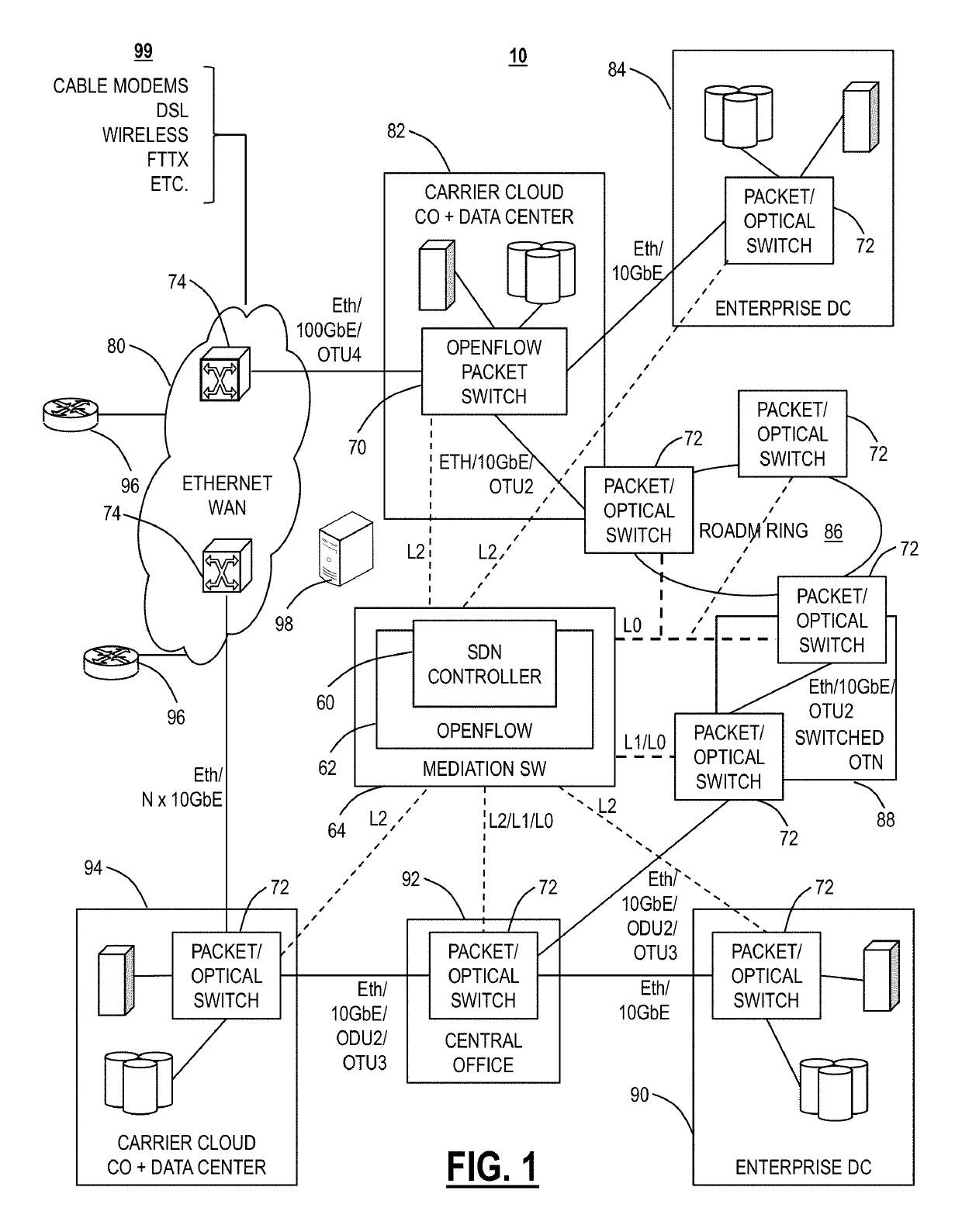
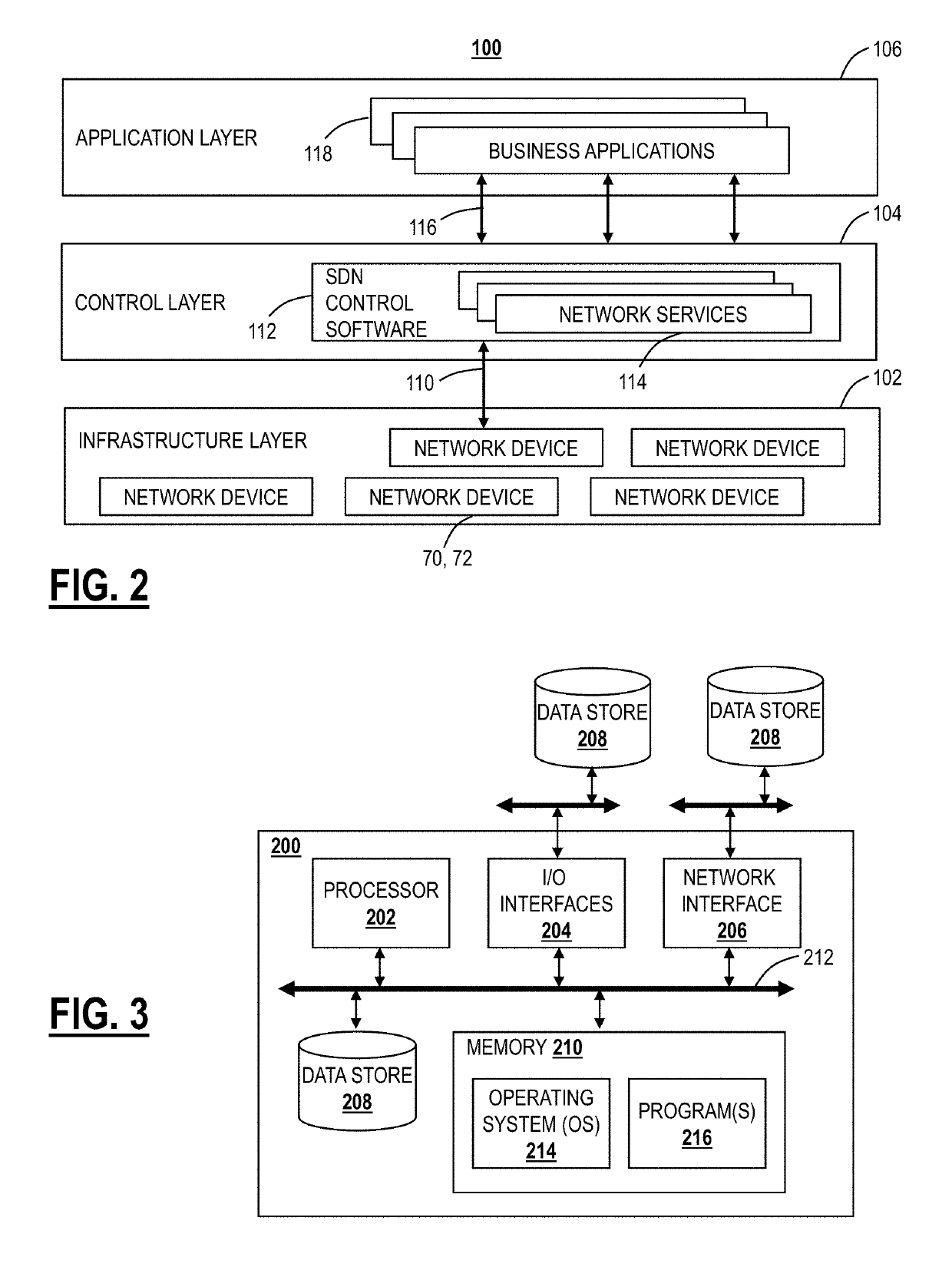
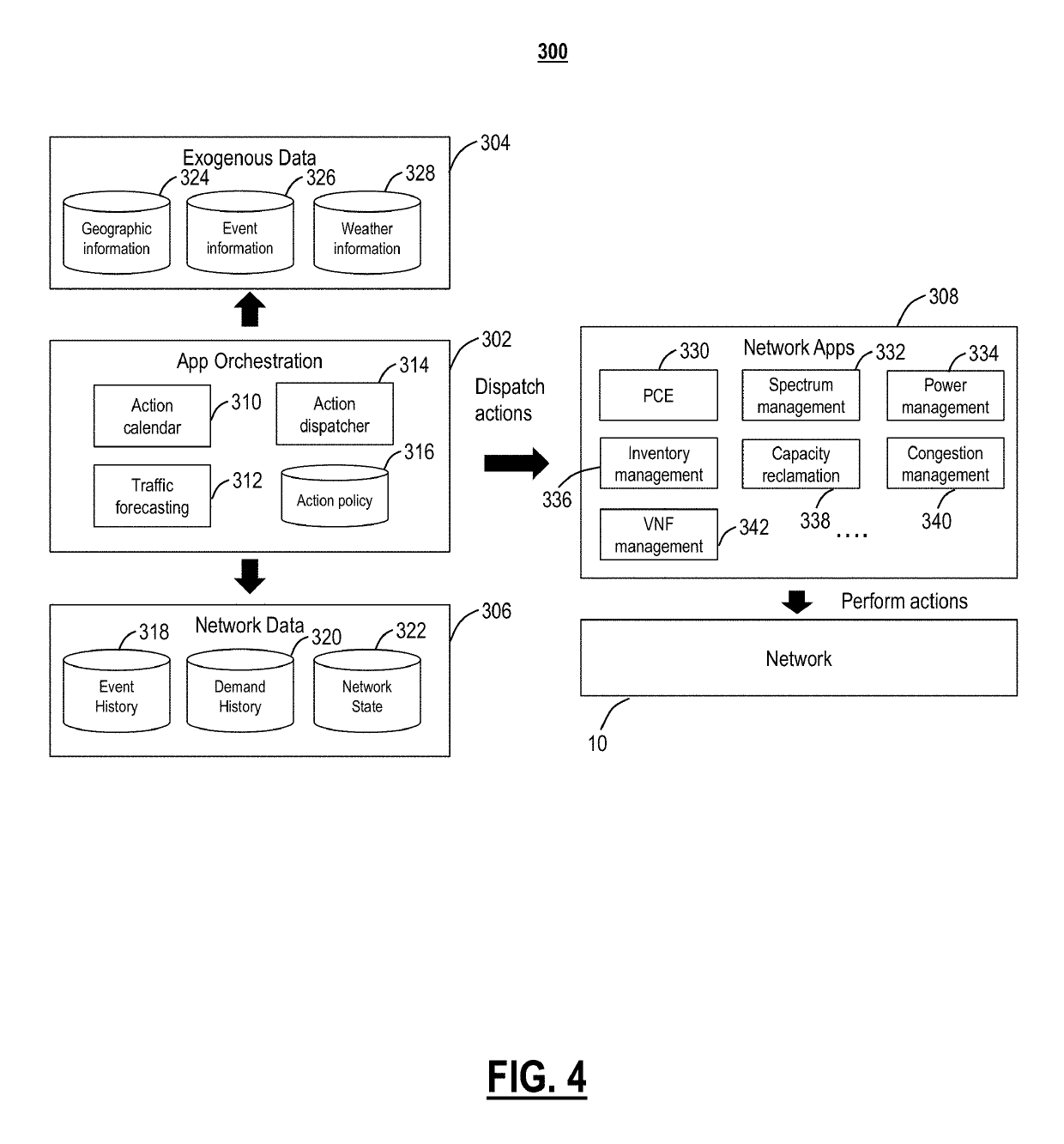
- A traffic-adaptive network control method that monitors network data, generates forecasts based on observed and external events, and orchestrates actions such as capacity recovery, reallocation, and addition using network applications to optimize resource utilization and minimize costs.

Methods and apparatus for controlling bandwidth and service in a communications system
PatentInactiveUS7573819B2
Innovation
- A centralized Service Deployment System (SDS) is implemented to monitor and estimate link bandwidth, allowing for dynamic service request management by tracking and adjusting bandwidth allocation based on available capacity, prioritizing premium services, and offering users the option to terminate existing services to free up resources for new requests.


Network Governance and Quality of Service Standards
Network governance frameworks for adaptive bandwidth control systems establish the foundational policies and protocols that enable effective quality of service management across diverse network infrastructures. These governance structures define the hierarchical decision-making processes, resource allocation authorities, and coordination mechanisms between different network layers and administrative domains. Modern network governance models incorporate distributed control architectures that allow for autonomous decision-making at edge nodes while maintaining centralized oversight for strategic resource management.
Quality of Service standards in adaptive network control systems encompass multiple performance metrics including latency, throughput, packet loss rates, and jitter tolerance levels. Industry-standard frameworks such as ITU-T recommendations, IEEE 802.11e for wireless networks, and IETF's Differentiated Services model provide the technical specifications for implementing consistent QoS policies. These standards define service level agreements, traffic classification schemes, and priority queuing mechanisms that enable networks to differentiate between various application requirements and user classes.
The integration of governance policies with QoS standards requires sophisticated policy engines that can translate high-level business objectives into executable network configurations. These systems utilize policy-based network management approaches where governance rules are encoded as machine-readable policies that automatically configure network devices and control systems. The policy framework must address conflict resolution mechanisms when multiple governance domains overlap or when QoS requirements compete for limited network resources.
Compliance monitoring and enforcement mechanisms form critical components of network governance systems, ensuring that adaptive control decisions align with established QoS standards and regulatory requirements. Real-time monitoring systems track performance metrics against defined thresholds and trigger corrective actions when deviations occur. These enforcement mechanisms include traffic shaping, admission control, and dynamic resource reallocation to maintain service quality commitments while optimizing overall network utilization efficiency.
Quality of Service standards in adaptive network control systems encompass multiple performance metrics including latency, throughput, packet loss rates, and jitter tolerance levels. Industry-standard frameworks such as ITU-T recommendations, IEEE 802.11e for wireless networks, and IETF's Differentiated Services model provide the technical specifications for implementing consistent QoS policies. These standards define service level agreements, traffic classification schemes, and priority queuing mechanisms that enable networks to differentiate between various application requirements and user classes.
The integration of governance policies with QoS standards requires sophisticated policy engines that can translate high-level business objectives into executable network configurations. These systems utilize policy-based network management approaches where governance rules are encoded as machine-readable policies that automatically configure network devices and control systems. The policy framework must address conflict resolution mechanisms when multiple governance domains overlap or when QoS requirements compete for limited network resources.
Compliance monitoring and enforcement mechanisms form critical components of network governance systems, ensuring that adaptive control decisions align with established QoS standards and regulatory requirements. Real-time monitoring systems track performance metrics against defined thresholds and trigger corrective actions when deviations occur. These enforcement mechanisms include traffic shaping, admission control, and dynamic resource reallocation to maintain service quality commitments while optimizing overall network utilization efficiency.
Security Implications of Adaptive Control Systems
Adaptive network control systems for bandwidth regulation introduce significant security vulnerabilities that require comprehensive evaluation and mitigation strategies. These systems, while offering enhanced network performance and resource optimization, create new attack vectors that traditional static network architectures do not face.
The dynamic nature of adaptive control systems presents unique security challenges. Real-time bandwidth allocation decisions rely on continuous monitoring and feedback mechanisms, creating multiple entry points for malicious actors. Attackers can exploit these systems through data poisoning attacks, where false network metrics are injected to manipulate bandwidth allocation decisions. This can lead to denial of service conditions or preferential treatment for unauthorized traffic flows.
Authentication and authorization mechanisms become particularly complex in adaptive environments. Traditional access control models may prove inadequate when dealing with rapidly changing network conditions and dynamic resource allocation. The system must verify not only user identities but also the legitimacy of control commands and network state information in real-time, adding computational overhead that could impact system responsiveness.
Man-in-the-middle attacks pose elevated risks in adaptive control architectures. Intercepted control signals can be modified to redirect bandwidth allocation, potentially causing network congestion or service degradation. The distributed nature of these systems amplifies this risk, as control messages traverse multiple network segments and devices.
Privacy concerns emerge from the extensive data collection required for effective adaptive control. Network traffic patterns, user behavior analytics, and application performance metrics create detailed profiles that could be exploited if compromised. Encryption of control plane communications becomes essential, though it introduces latency that may conflict with real-time adaptation requirements.
System integrity verification presents ongoing challenges as adaptive algorithms continuously modify network configurations. Traditional security monitoring tools may struggle to distinguish between legitimate adaptive responses and malicious alterations. This necessitates the development of specialized security frameworks that can operate effectively within dynamic network environments while maintaining the performance benefits of adaptive control systems.
The dynamic nature of adaptive control systems presents unique security challenges. Real-time bandwidth allocation decisions rely on continuous monitoring and feedback mechanisms, creating multiple entry points for malicious actors. Attackers can exploit these systems through data poisoning attacks, where false network metrics are injected to manipulate bandwidth allocation decisions. This can lead to denial of service conditions or preferential treatment for unauthorized traffic flows.
Authentication and authorization mechanisms become particularly complex in adaptive environments. Traditional access control models may prove inadequate when dealing with rapidly changing network conditions and dynamic resource allocation. The system must verify not only user identities but also the legitimacy of control commands and network state information in real-time, adding computational overhead that could impact system responsiveness.
Man-in-the-middle attacks pose elevated risks in adaptive control architectures. Intercepted control signals can be modified to redirect bandwidth allocation, potentially causing network congestion or service degradation. The distributed nature of these systems amplifies this risk, as control messages traverse multiple network segments and devices.
Privacy concerns emerge from the extensive data collection required for effective adaptive control. Network traffic patterns, user behavior analytics, and application performance metrics create detailed profiles that could be exploited if compromised. Encryption of control plane communications becomes essential, though it introduces latency that may conflict with real-time adaptation requirements.
System integrity verification presents ongoing challenges as adaptive algorithms continuously modify network configurations. Traditional security monitoring tools may struggle to distinguish between legitimate adaptive responses and malicious alterations. This necessitates the development of specialized security frameworks that can operate effectively within dynamic network environments while maintaining the performance benefits of adaptive control systems.
Unlock deeper insights with Patsnap Eureka Quick Research — get a full tech report to explore trends and direct your research. Try now!
Generate Your Research Report Instantly with AI Agent
Supercharge your innovation with Patsnap Eureka AI Agent Platform!