
Dielectric Breakdown vs Material Stability
MAR 26, 20269 MIN READ
Generate Your Research Report Instantly with AI Agent
Patsnap Eureka helps you evaluate technical feasibility & market potential.
Dielectric Breakdown Research Background and Objectives
Dielectric breakdown represents a critical failure mechanism in electrical insulation systems, occurring when an insulating material loses its ability to prevent electrical current flow under high electric field stress. This phenomenon has gained increasing significance as modern electronic devices demand higher power densities, miniaturization, and enhanced reliability across diverse operating conditions.
The fundamental challenge lies in understanding the complex relationship between dielectric breakdown mechanisms and material stability under various environmental and operational stresses. Traditional approaches have focused primarily on immediate breakdown voltage measurements, but emerging applications require comprehensive analysis of how material degradation processes influence long-term dielectric performance and reliability.
Current technological evolution toward high-voltage power electronics, electric vehicles, renewable energy systems, and advanced semiconductor packaging has intensified the need for materials that maintain stable dielectric properties throughout extended operational lifespans. The intersection of breakdown physics and material stability encompasses multiple degradation mechanisms including thermal aging, partial discharge erosion, moisture absorption, and chemical decomposition.
Research objectives center on establishing predictive models that correlate material stability parameters with breakdown probability distributions over time. This involves developing accelerated testing methodologies that accurately simulate real-world aging conditions while maintaining statistical relevance to actual service environments.
Key technical goals include identifying material composition factors that enhance both immediate breakdown strength and long-term stability, understanding the role of microstructural evolution in breakdown initiation, and developing diagnostic techniques for early detection of material degradation before catastrophic failure occurs.
The research aims to bridge the gap between fundamental materials science and practical engineering applications by establishing design guidelines for next-generation dielectric materials. This includes optimizing polymer matrix compositions, filler distributions, and processing conditions to achieve superior breakdown performance while maintaining mechanical and thermal stability.
Advanced characterization techniques integration with machine learning approaches represents a crucial objective for developing predictive capabilities that can forecast material performance degradation patterns and optimize maintenance schedules in critical applications.
The fundamental challenge lies in understanding the complex relationship between dielectric breakdown mechanisms and material stability under various environmental and operational stresses. Traditional approaches have focused primarily on immediate breakdown voltage measurements, but emerging applications require comprehensive analysis of how material degradation processes influence long-term dielectric performance and reliability.
Current technological evolution toward high-voltage power electronics, electric vehicles, renewable energy systems, and advanced semiconductor packaging has intensified the need for materials that maintain stable dielectric properties throughout extended operational lifespans. The intersection of breakdown physics and material stability encompasses multiple degradation mechanisms including thermal aging, partial discharge erosion, moisture absorption, and chemical decomposition.
Research objectives center on establishing predictive models that correlate material stability parameters with breakdown probability distributions over time. This involves developing accelerated testing methodologies that accurately simulate real-world aging conditions while maintaining statistical relevance to actual service environments.
Key technical goals include identifying material composition factors that enhance both immediate breakdown strength and long-term stability, understanding the role of microstructural evolution in breakdown initiation, and developing diagnostic techniques for early detection of material degradation before catastrophic failure occurs.
The research aims to bridge the gap between fundamental materials science and practical engineering applications by establishing design guidelines for next-generation dielectric materials. This includes optimizing polymer matrix compositions, filler distributions, and processing conditions to achieve superior breakdown performance while maintaining mechanical and thermal stability.
Advanced characterization techniques integration with machine learning approaches represents a crucial objective for developing predictive capabilities that can forecast material performance degradation patterns and optimize maintenance schedules in critical applications.
Market Demand for Stable Dielectric Materials
The global electronics industry faces unprecedented challenges in developing materials that can withstand increasing electrical stress while maintaining long-term stability. As electronic devices become more compact and operate at higher voltages, the demand for advanced dielectric materials has intensified across multiple sectors. Power electronics, renewable energy systems, and electric vehicle components require materials that can prevent dielectric breakdown while ensuring consistent performance over extended operational periods.
The semiconductor industry represents the largest market segment driving demand for stable dielectric materials. Modern integrated circuits operate at increasingly smaller geometries, creating intense electric fields that challenge conventional insulating materials. Gate dielectrics, interlayer dielectrics, and packaging materials must demonstrate exceptional breakdown resistance while maintaining their properties under thermal cycling and electrical stress.
Power transmission and distribution networks constitute another critical market segment experiencing rapid growth. High-voltage cables, transformers, and switchgear require dielectric materials capable of withstanding extreme electrical conditions without degradation. The transition toward smart grids and renewable energy integration has amplified requirements for materials that combine high breakdown strength with superior aging characteristics.
The electric vehicle market has emerged as a significant growth driver for advanced dielectric materials. Battery management systems, motor drives, and charging infrastructure demand materials that can operate reliably under high-voltage conditions while resisting environmental factors such as temperature fluctuations and humidity. The automotive industry's shift toward electrification has created substantial opportunities for materials that address both dielectric breakdown and long-term stability concerns.
Aerospace and defense applications represent specialized but high-value market segments requiring materials with exceptional reliability standards. Satellite systems, radar equipment, and military electronics operate in harsh environments where material failure can have catastrophic consequences. These applications drive demand for premium dielectric materials with proven track records of stability under extreme conditions.
The renewable energy sector, particularly wind and solar power systems, requires dielectric materials for power conversion equipment and energy storage systems. These applications demand materials that can maintain their insulating properties over decades of operation while withstanding environmental stresses and electrical transients.
Market growth is further accelerated by regulatory requirements for improved safety and reliability standards across industries. Environmental regulations are also pushing development of materials that combine superior electrical performance with reduced environmental impact throughout their lifecycle.
The semiconductor industry represents the largest market segment driving demand for stable dielectric materials. Modern integrated circuits operate at increasingly smaller geometries, creating intense electric fields that challenge conventional insulating materials. Gate dielectrics, interlayer dielectrics, and packaging materials must demonstrate exceptional breakdown resistance while maintaining their properties under thermal cycling and electrical stress.
Power transmission and distribution networks constitute another critical market segment experiencing rapid growth. High-voltage cables, transformers, and switchgear require dielectric materials capable of withstanding extreme electrical conditions without degradation. The transition toward smart grids and renewable energy integration has amplified requirements for materials that combine high breakdown strength with superior aging characteristics.
The electric vehicle market has emerged as a significant growth driver for advanced dielectric materials. Battery management systems, motor drives, and charging infrastructure demand materials that can operate reliably under high-voltage conditions while resisting environmental factors such as temperature fluctuations and humidity. The automotive industry's shift toward electrification has created substantial opportunities for materials that address both dielectric breakdown and long-term stability concerns.
Aerospace and defense applications represent specialized but high-value market segments requiring materials with exceptional reliability standards. Satellite systems, radar equipment, and military electronics operate in harsh environments where material failure can have catastrophic consequences. These applications drive demand for premium dielectric materials with proven track records of stability under extreme conditions.
The renewable energy sector, particularly wind and solar power systems, requires dielectric materials for power conversion equipment and energy storage systems. These applications demand materials that can maintain their insulating properties over decades of operation while withstanding environmental stresses and electrical transients.
Market growth is further accelerated by regulatory requirements for improved safety and reliability standards across industries. Environmental regulations are also pushing development of materials that combine superior electrical performance with reduced environmental impact throughout their lifecycle.
Current Dielectric Breakdown Challenges and Material Limitations
Dielectric breakdown represents one of the most critical failure mechanisms in modern electronic systems, fundamentally limiting the performance and reliability of insulating materials across diverse applications. This phenomenon occurs when an insulating material loses its dielectric properties under excessive electric field stress, leading to catastrophic failure through the formation of conductive pathways. The challenge intensifies as electronic devices continue to miniaturize while demanding higher power densities and operating voltages.
Contemporary dielectric materials face unprecedented stress conditions in advanced applications such as electric vehicle power electronics, renewable energy systems, and high-frequency communication devices. Traditional polymer-based dielectrics, including polyethylene and polypropylene, exhibit significant limitations in high-temperature environments, typically degrading above 150°C. These materials suffer from thermal aging, which accelerates chain scission and reduces breakdown strength over time.
Ceramic dielectrics, while offering superior thermal stability, present their own set of challenges. Barium titanate and similar ferroelectric materials demonstrate excellent dielectric constants but are susceptible to mechanical stress-induced cracking and exhibit non-linear behavior under high field conditions. The grain boundary effects in polycrystalline ceramics create localized field enhancement zones, leading to premature breakdown initiation.
Emerging nanocomposite dielectrics attempt to combine the advantages of different material classes but introduce new complexities. The interface between nanofillers and polymer matrices often becomes the weakest link, creating charge accumulation sites that trigger breakdown events. Achieving uniform dispersion of nanoparticles remains technically challenging, resulting in inconsistent material properties and unpredictable failure modes.
Space charge accumulation represents another fundamental limitation affecting material stability. Under DC stress conditions, charge carriers migrate and accumulate within the dielectric bulk, creating internal electric field distortions that significantly reduce breakdown strength. This phenomenon is particularly problematic in HVDC cable insulation and energy storage capacitors, where long-term reliability is paramount.
The interaction between environmental factors and material degradation compounds these challenges. Moisture absorption, UV exposure, and chemical contamination accelerate aging processes, leading to gradual deterioration of dielectric properties. Partial discharge activity, occurring at microscopic voids and interfaces, generates reactive species that chemically attack the polymer backbone, creating a cascading failure mechanism.
Current testing methodologies often fail to accurately predict long-term performance under real-world conditions. Accelerated aging tests may not capture the complex interplay between multiple stress factors, leading to overestimation of material capabilities. The lack of standardized protocols for evaluating novel dielectric materials further complicates the development and qualification process for next-generation applications.
Contemporary dielectric materials face unprecedented stress conditions in advanced applications such as electric vehicle power electronics, renewable energy systems, and high-frequency communication devices. Traditional polymer-based dielectrics, including polyethylene and polypropylene, exhibit significant limitations in high-temperature environments, typically degrading above 150°C. These materials suffer from thermal aging, which accelerates chain scission and reduces breakdown strength over time.
Ceramic dielectrics, while offering superior thermal stability, present their own set of challenges. Barium titanate and similar ferroelectric materials demonstrate excellent dielectric constants but are susceptible to mechanical stress-induced cracking and exhibit non-linear behavior under high field conditions. The grain boundary effects in polycrystalline ceramics create localized field enhancement zones, leading to premature breakdown initiation.
Emerging nanocomposite dielectrics attempt to combine the advantages of different material classes but introduce new complexities. The interface between nanofillers and polymer matrices often becomes the weakest link, creating charge accumulation sites that trigger breakdown events. Achieving uniform dispersion of nanoparticles remains technically challenging, resulting in inconsistent material properties and unpredictable failure modes.
Space charge accumulation represents another fundamental limitation affecting material stability. Under DC stress conditions, charge carriers migrate and accumulate within the dielectric bulk, creating internal electric field distortions that significantly reduce breakdown strength. This phenomenon is particularly problematic in HVDC cable insulation and energy storage capacitors, where long-term reliability is paramount.
The interaction between environmental factors and material degradation compounds these challenges. Moisture absorption, UV exposure, and chemical contamination accelerate aging processes, leading to gradual deterioration of dielectric properties. Partial discharge activity, occurring at microscopic voids and interfaces, generates reactive species that chemically attack the polymer backbone, creating a cascading failure mechanism.
Current testing methodologies often fail to accurately predict long-term performance under real-world conditions. Accelerated aging tests may not capture the complex interplay between multiple stress factors, leading to overestimation of material capabilities. The lack of standardized protocols for evaluating novel dielectric materials further complicates the development and qualification process for next-generation applications.
Existing Solutions for Dielectric Breakdown Prevention
01 High dielectric constant materials with improved breakdown strength
Development of dielectric materials with high dielectric constants while maintaining or improving breakdown voltage characteristics. These materials often incorporate ceramic compositions, polymer matrices, or composite structures designed to achieve optimal electrical insulation properties. The formulations focus on balancing high permittivity with resistance to electrical failure under high field conditions.- High dielectric constant materials with improved breakdown strength: Development of dielectric materials with high dielectric constants while maintaining or improving breakdown voltage characteristics. These materials often incorporate ceramic composites, polymer matrices, or hybrid organic-inorganic structures designed to enhance charge storage capacity without compromising electrical insulation properties. The formulations focus on optimizing the balance between permittivity and breakdown field strength through material composition and microstructure control.
- Thermal stability enhancement of dielectric materials: Techniques for improving the thermal stability of dielectric materials to prevent degradation under high temperature operating conditions. This includes the use of thermally stable polymers, ceramic fillers, cross-linking agents, and heat-resistant additives that maintain dielectric properties across wide temperature ranges. The approaches address thermal aging, decomposition resistance, and long-term reliability under thermal stress.
- Nanocomposite dielectric materials for breakdown resistance: Incorporation of nanoparticles and nanofillers into dielectric matrices to improve breakdown resistance and material stability. These nanocomposites utilize nanoscale ceramic particles, carbon-based nanomaterials, or metal oxide nanoparticles dispersed in polymer or ceramic hosts. The nanoscale reinforcement creates interfaces that impede electrical treeing and enhance resistance to partial discharge and dielectric failure.
- Multilayer and gradient dielectric structures: Design of multilayer dielectric systems or gradient composition structures to distribute electric field stress and prevent localized breakdown. These architectures employ alternating layers of different dielectric materials or gradual compositional transitions to optimize field distribution, reduce interfacial stress concentrations, and improve overall breakdown voltage. The structures are particularly effective in high voltage applications.
- Self-healing and defect-tolerant dielectric materials: Development of dielectric materials with self-healing capabilities or defect tolerance to recover from partial breakdown events and maintain long-term stability. These materials incorporate mechanisms such as reversible chemical bonds, encapsulated healing agents, or conductive filler networks that can isolate or repair localized damage. The approaches extend service life and improve reliability in demanding electrical environments.
02 Nanocomposite dielectric materials for enhanced stability
Incorporation of nanoparticles or nanofillers into dielectric matrices to improve both breakdown resistance and long-term material stability. These nanocomposites demonstrate enhanced thermal stability, reduced aging effects, and improved resistance to partial discharge. The nanoscale reinforcement provides better charge distribution and reduces the formation of electrical treeing that leads to breakdown.Expand Specific Solutions03 Surface treatment and interface engineering for breakdown prevention
Methods for treating dielectric material surfaces or engineering interfaces between different dielectric layers to prevent breakdown initiation. These approaches include surface modification techniques, application of barrier layers, and interface optimization to reduce defects and stress concentrations. The treatments enhance the uniformity of electric field distribution and eliminate weak points susceptible to breakdown.Expand Specific Solutions04 Temperature-stable dielectric compositions
Formulation of dielectric materials that maintain stable electrical properties across wide temperature ranges while resisting thermal breakdown. These compositions often include thermally stable polymers, ceramics, or hybrid materials with controlled thermal expansion coefficients. The materials are designed to prevent degradation and maintain breakdown strength under thermal cycling and elevated temperature conditions.Expand Specific Solutions05 Self-healing dielectric materials
Development of dielectric materials with self-healing capabilities that can recover from minor breakdown events or micro-damage. These materials incorporate mechanisms such as reversible chemical bonds, encapsulated healing agents, or conductive particle redistribution that restore insulating properties after localized breakdown. The self-healing feature significantly extends material lifetime and improves reliability in high-stress applications.Expand Specific Solutions
Key Players in Dielectric Materials and Insulation Industry
The dielectric breakdown versus material stability research field represents a mature yet rapidly evolving sector driven by increasing demands for high-performance electronic devices and energy storage systems. The market demonstrates significant growth potential, particularly in semiconductor manufacturing, energy storage, and advanced electronics applications. Technology maturity varies considerably across different material platforms, with established players like Taiwan Semiconductor Manufacturing Co., Texas Instruments, and Infineon Technologies leading in traditional semiconductor dielectrics, while emerging companies such as Capacitor Sciences focus on revolutionary crystalline materials for energy storage. Academic institutions including South China University of Technology and Xi'an Jiaotong University contribute fundamental research, bridging the gap between theoretical understanding and practical applications. The competitive landscape shows consolidation around key technological approaches, with major manufacturers like Murata Manufacturing, LG Display, and GLOBALFOUNDRIES investing heavily in next-generation dielectric materials to address reliability challenges in miniaturized devices and high-voltage applications.
Infineon Technologies AG
Technical Solution: Infineon has developed innovative dielectric solutions focusing on silicon carbide (SiC) and gallium nitride (GaN) based power devices where dielectric breakdown and material stability are critical. Their technology emphasizes optimized gate oxide formation through controlled oxidation processes and interface engineering to achieve breakdown fields exceeding 10 MV/cm while maintaining stability at high temperatures up to 200°C. The company's approach includes advanced characterization techniques to understand degradation mechanisms and develop predictive models for long-term reliability. Their dielectric materials are specifically designed for high-voltage applications with enhanced resistance to hot carrier injection and bias temperature instability.
Strengths: Strong expertise in power semiconductor technology and robust reliability testing capabilities. Weaknesses: Limited to specific application domains and high development costs for new materials.
Toshiba Corp.
Technical Solution: Toshiba has developed comprehensive dielectric breakdown research focusing on flash memory applications where charge retention and endurance are directly related to dielectric integrity. Their approach combines advanced tunnel oxide engineering with innovative blocking dielectric materials to achieve optimal breakdown characteristics while ensuring long-term data retention stability. The company utilizes sophisticated modeling techniques to predict dielectric degradation mechanisms and optimize material compositions for extended operational lifetime. Their technology includes development of charge trap flash (CTF) structures with enhanced dielectric reliability through careful control of interface states and bulk trap density in the dielectric layers.
Strengths: Extensive experience in memory technology and strong fundamental research capabilities. Weaknesses: Focus primarily on memory applications limits broader applicability and faces intense market competition.
Core Innovations in Material Stability Enhancement
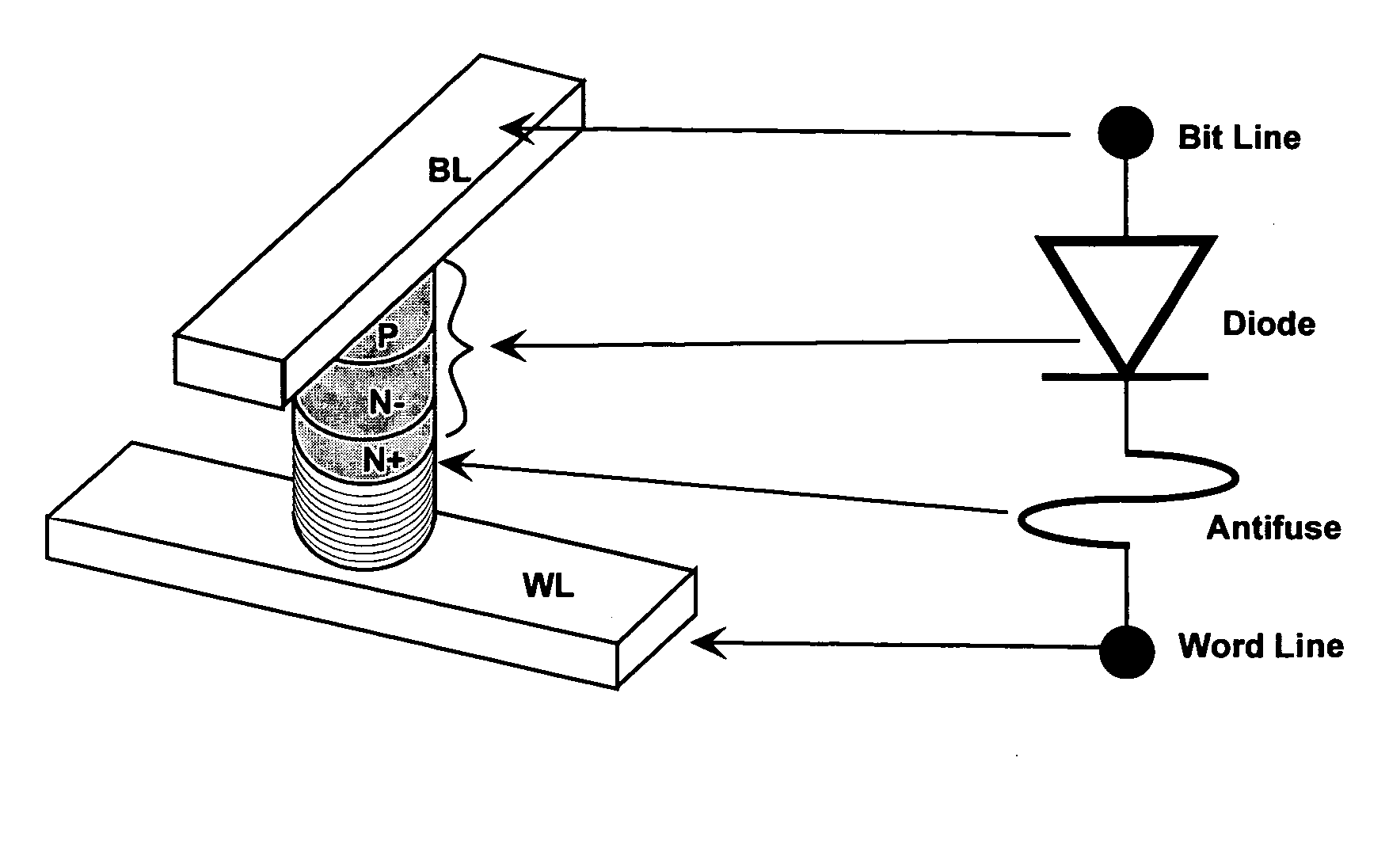
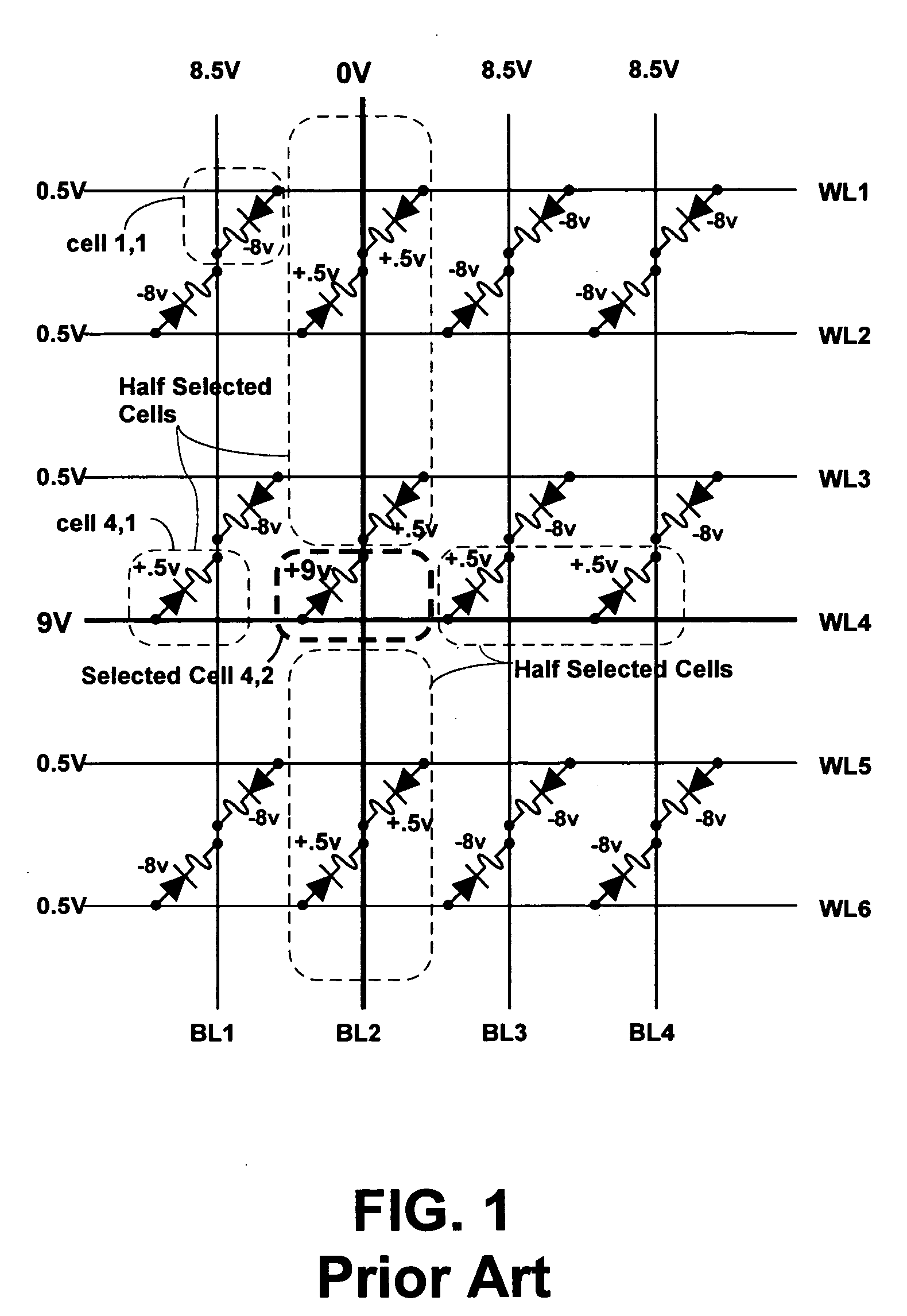
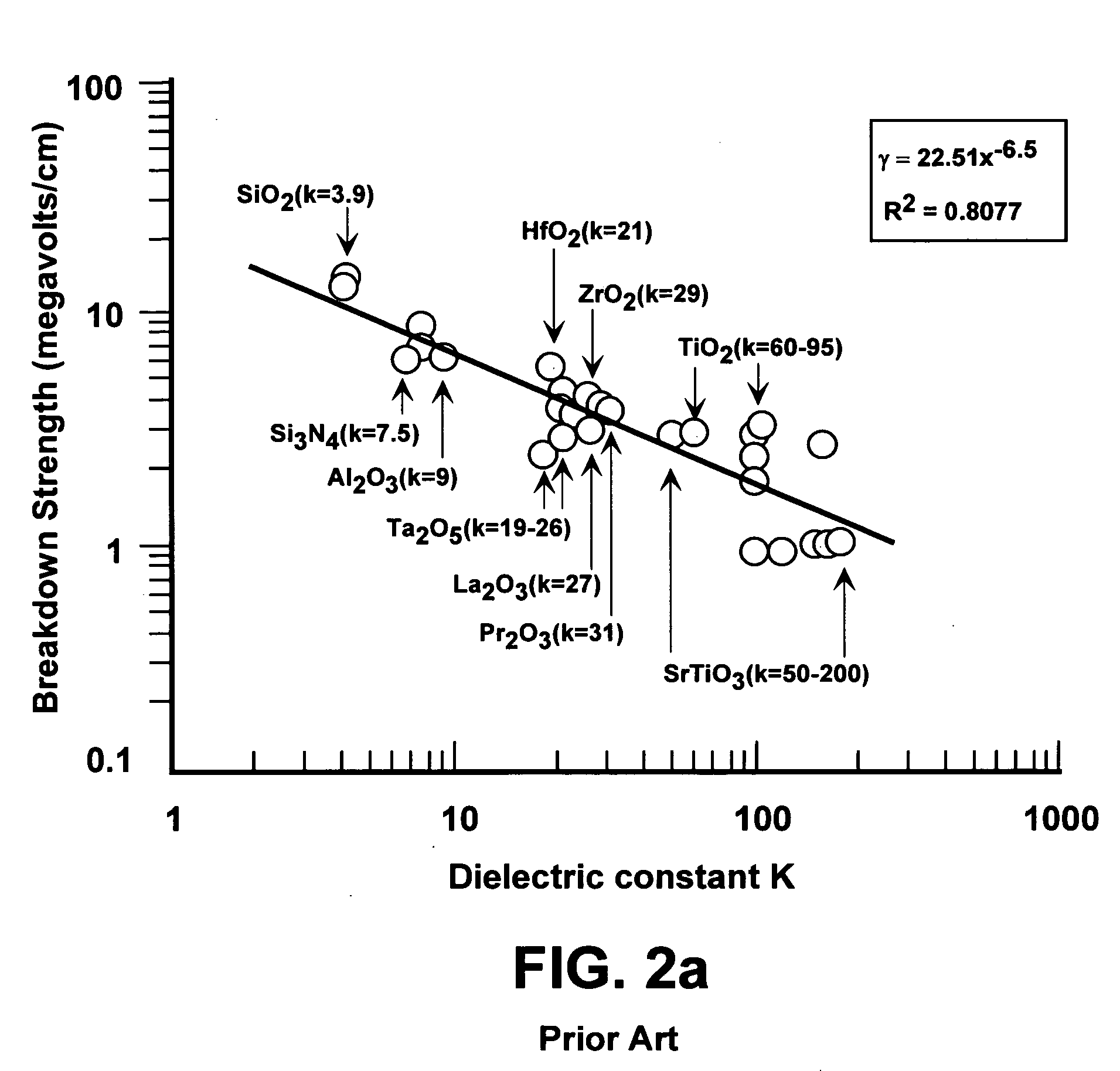
Memory with high dielectric constant antifuses and method for using at low voltage
PatentInactiveUS20070069241A1
Innovation
- The use of antifuses with higher dielectric constants than silicon dioxide and diodes with lower band gaps allows for lower voltage operation, reducing the vertical dimension of memory cells and minimizing power consumption by applying voltages in a direction opposite to natural current flow, thereby minimizing power drain and reducing manufacturing costs.

Monolithic ceramic capacitor for active implantable medical devices
PatentInactiveEP1400993B1
Innovation
- A monolithic ceramic feedthrough capacitor with a dielectric material having a dielectric constant greater than 7000, optimized to have a Curie point at 37°C with minimal Curie peak depressor, allowing for higher capacitance values and broader frequency range attenuation, including lower frequencies, by using dopants like strontium titanate and zirconium dioxide to enhance volumetric efficiency and stability.


Safety Standards for High-Voltage Dielectric Applications
High-voltage dielectric applications require comprehensive safety standards to prevent catastrophic failures and ensure operational reliability. The development of these standards has evolved significantly as understanding of dielectric breakdown mechanisms and material stability has advanced. International organizations such as IEC, IEEE, and ASTM have established rigorous testing protocols and performance criteria that address the complex relationship between material properties and breakdown phenomena.
Current safety standards emphasize multi-faceted testing approaches that evaluate both short-term breakdown strength and long-term material degradation. IEC 60243 series standards define standardized methods for measuring dielectric strength, while IEC 62631 addresses partial discharge testing requirements. These standards recognize that material stability under electrical stress involves multiple degradation mechanisms including thermal aging, chemical decomposition, and mechanical stress accumulation.
The standards framework incorporates safety factors that account for the statistical nature of dielectric breakdown and material variability. Typical safety margins range from 2:1 to 10:1 depending on application criticality, with power transmission equipment requiring the highest safety factors. Standards mandate accelerated aging tests that simulate decades of operation under controlled conditions, enabling prediction of long-term material stability.
Recent updates to safety standards have integrated advanced diagnostic techniques such as partial discharge monitoring and dielectric spectroscopy. These methods enable real-time assessment of material condition and early detection of degradation processes. Standards now require comprehensive documentation of material composition, processing conditions, and quality control measures to ensure reproducible performance.
Emerging safety standards address new challenges posed by advanced materials such as nanocomposites and bio-based dielectrics. These materials exhibit complex breakdown behaviors that traditional testing methods may not adequately characterize. Updated standards incorporate multi-stress testing protocols that simultaneously apply electrical, thermal, and mechanical stresses to better simulate real-world operating conditions.
The harmonization of international safety standards continues to evolve, with increasing emphasis on risk-based approaches that consider application-specific failure consequences. This evolution reflects growing understanding that optimal safety requires balancing material performance, economic considerations, and reliability requirements while maintaining adequate protection against dielectric breakdown failures.
Current safety standards emphasize multi-faceted testing approaches that evaluate both short-term breakdown strength and long-term material degradation. IEC 60243 series standards define standardized methods for measuring dielectric strength, while IEC 62631 addresses partial discharge testing requirements. These standards recognize that material stability under electrical stress involves multiple degradation mechanisms including thermal aging, chemical decomposition, and mechanical stress accumulation.
The standards framework incorporates safety factors that account for the statistical nature of dielectric breakdown and material variability. Typical safety margins range from 2:1 to 10:1 depending on application criticality, with power transmission equipment requiring the highest safety factors. Standards mandate accelerated aging tests that simulate decades of operation under controlled conditions, enabling prediction of long-term material stability.
Recent updates to safety standards have integrated advanced diagnostic techniques such as partial discharge monitoring and dielectric spectroscopy. These methods enable real-time assessment of material condition and early detection of degradation processes. Standards now require comprehensive documentation of material composition, processing conditions, and quality control measures to ensure reproducible performance.
Emerging safety standards address new challenges posed by advanced materials such as nanocomposites and bio-based dielectrics. These materials exhibit complex breakdown behaviors that traditional testing methods may not adequately characterize. Updated standards incorporate multi-stress testing protocols that simultaneously apply electrical, thermal, and mechanical stresses to better simulate real-world operating conditions.
The harmonization of international safety standards continues to evolve, with increasing emphasis on risk-based approaches that consider application-specific failure consequences. This evolution reflects growing understanding that optimal safety requires balancing material performance, economic considerations, and reliability requirements while maintaining adequate protection against dielectric breakdown failures.
Environmental Impact of Dielectric Material Development
The development and deployment of dielectric materials present significant environmental considerations that span the entire product lifecycle, from raw material extraction to end-of-life disposal. Manufacturing processes for advanced dielectric materials often involve energy-intensive procedures and the use of potentially hazardous chemicals, including fluorinated compounds, heavy metals, and organic solvents. These processes can generate greenhouse gas emissions, toxic waste streams, and require substantial water consumption for purification and cooling operations.
Raw material sourcing for dielectric materials frequently relies on mining operations for rare earth elements, ceramics precursors, and specialized polymers. The extraction of materials such as tantalum, barium, and titanium compounds can result in habitat disruption, soil contamination, and water pollution in mining regions. Additionally, the geographic concentration of these resources in specific regions creates supply chain vulnerabilities and environmental justice concerns.
The relationship between dielectric breakdown resistance and material stability directly influences environmental impact through product longevity and replacement frequency. Materials with superior breakdown characteristics and enhanced stability reduce the need for frequent replacements, thereby minimizing cumulative environmental burden. Conversely, materials prone to degradation or premature failure contribute to increased electronic waste generation and resource consumption over time.
End-of-life management of dielectric materials poses particular challenges due to their complex chemical compositions and integration within electronic devices. Many dielectric materials contain non-biodegradable polymers or ceramic compounds that persist in landfill environments. Recovery and recycling processes are often complicated by the intimate mixing of dielectric materials with other electronic components, making separation and purification economically challenging.
Emerging regulatory frameworks, including RoHS directives and REACH regulations, are driving the development of environmentally compliant dielectric materials. These regulations restrict the use of hazardous substances and mandate improved recyclability, pushing manufacturers toward bio-based polymers, lead-free ceramics, and materials designed for circular economy principles. The transition to sustainable dielectric materials requires balancing environmental benefits with maintaining or improving electrical performance characteristics essential for reliable operation.
Raw material sourcing for dielectric materials frequently relies on mining operations for rare earth elements, ceramics precursors, and specialized polymers. The extraction of materials such as tantalum, barium, and titanium compounds can result in habitat disruption, soil contamination, and water pollution in mining regions. Additionally, the geographic concentration of these resources in specific regions creates supply chain vulnerabilities and environmental justice concerns.
The relationship between dielectric breakdown resistance and material stability directly influences environmental impact through product longevity and replacement frequency. Materials with superior breakdown characteristics and enhanced stability reduce the need for frequent replacements, thereby minimizing cumulative environmental burden. Conversely, materials prone to degradation or premature failure contribute to increased electronic waste generation and resource consumption over time.
End-of-life management of dielectric materials poses particular challenges due to their complex chemical compositions and integration within electronic devices. Many dielectric materials contain non-biodegradable polymers or ceramic compounds that persist in landfill environments. Recovery and recycling processes are often complicated by the intimate mixing of dielectric materials with other electronic components, making separation and purification economically challenging.
Emerging regulatory frameworks, including RoHS directives and REACH regulations, are driving the development of environmentally compliant dielectric materials. These regulations restrict the use of hazardous substances and mandate improved recyclability, pushing manufacturers toward bio-based polymers, lead-free ceramics, and materials designed for circular economy principles. The transition to sustainable dielectric materials requires balancing environmental benefits with maintaining or improving electrical performance characteristics essential for reliable operation.
Unlock deeper insights with Patsnap Eureka Quick Research — get a full tech report to explore trends and direct your research. Try now!
Generate Your Research Report Instantly with AI Agent
Supercharge your innovation with Patsnap Eureka AI Agent Platform!