

Solid Oxygen's Role in Enhancing Electrochemical Processes
JAN 30, 20269 MIN READ
Generate Your Research Report Instantly with AI Agent
PatSnap Eureka helps you evaluate technical feasibility & market potential.
Solid Oxygen Technology Background and Objectives
Solid oxygen technology represents a transformative approach in electrochemical systems, where oxygen exists in a condensed phase rather than its conventional gaseous state. This field has evolved from fundamental materials science research into a critical enabler for next-generation energy conversion and storage devices. The historical development traces back to early investigations of oxygen-ion conducting ceramics in the 1960s, progressing through the discovery of mixed ionic-electronic conductors, and culminating in recent breakthroughs involving oxygen-rich solid compounds and oxygen-intercalated materials that demonstrate unprecedented electrochemical activity.
The technological evolution has been driven by persistent challenges in conventional electrochemical systems, particularly the limitations of gas-phase oxygen delivery in fuel cells, metal-air batteries, and electrolysis devices. Traditional three-phase boundary reactions suffer from restricted active sites and sluggish oxygen reduction kinetics. Solid oxygen materials address these constraints by providing high oxygen concentration at electrode interfaces, enabling two-dimensional reaction zones, and facilitating rapid oxygen transport through lattice structures.
Current research trajectories focus on several key material categories: oxygen-overstoichiometric perovskites, oxygen-rich fluorite structures, and layered oxide compounds with reversible oxygen storage capabilities. These materials exhibit tunable oxygen vacancy concentrations and demonstrate enhanced catalytic properties for oxygen evolution and reduction reactions. The integration of solid oxygen sources into electrode architectures has shown remarkable improvements in power density and energy efficiency across multiple electrochemical platforms.
The primary objectives of solid oxygen technology development encompass three strategic dimensions. First, achieving controllable oxygen release and uptake kinetics through precise materials engineering and defect chemistry optimization. Second, establishing stable solid-solid interfaces between oxygen reservoirs and electrocatalytic phases to ensure sustained electrochemical performance. Third, scaling these concepts from laboratory demonstrations to practical device configurations that can operate under industrially relevant conditions. These objectives align with broader goals of developing sustainable energy technologies with improved efficiency, durability, and cost-effectiveness, positioning solid oxygen materials as cornerstone components in the transition toward carbon-neutral energy infrastructure.
The technological evolution has been driven by persistent challenges in conventional electrochemical systems, particularly the limitations of gas-phase oxygen delivery in fuel cells, metal-air batteries, and electrolysis devices. Traditional three-phase boundary reactions suffer from restricted active sites and sluggish oxygen reduction kinetics. Solid oxygen materials address these constraints by providing high oxygen concentration at electrode interfaces, enabling two-dimensional reaction zones, and facilitating rapid oxygen transport through lattice structures.
Current research trajectories focus on several key material categories: oxygen-overstoichiometric perovskites, oxygen-rich fluorite structures, and layered oxide compounds with reversible oxygen storage capabilities. These materials exhibit tunable oxygen vacancy concentrations and demonstrate enhanced catalytic properties for oxygen evolution and reduction reactions. The integration of solid oxygen sources into electrode architectures has shown remarkable improvements in power density and energy efficiency across multiple electrochemical platforms.
The primary objectives of solid oxygen technology development encompass three strategic dimensions. First, achieving controllable oxygen release and uptake kinetics through precise materials engineering and defect chemistry optimization. Second, establishing stable solid-solid interfaces between oxygen reservoirs and electrocatalytic phases to ensure sustained electrochemical performance. Third, scaling these concepts from laboratory demonstrations to practical device configurations that can operate under industrially relevant conditions. These objectives align with broader goals of developing sustainable energy technologies with improved efficiency, durability, and cost-effectiveness, positioning solid oxygen materials as cornerstone components in the transition toward carbon-neutral energy infrastructure.
Market Demand for Enhanced Electrochemical Systems
The global electrochemical industry is experiencing unprecedented growth driven by the urgent need for sustainable energy solutions and advanced manufacturing processes. Enhanced electrochemical systems incorporating solid oxygen technologies are positioned at the intersection of multiple high-value markets, including energy storage, fuel cells, industrial electrolysis, and environmental remediation. The transition toward carbon-neutral economies has intensified demand for efficient electrochemical conversion technologies that can operate at higher current densities, improved energy efficiency, and extended operational lifetimes.
Energy storage systems represent a primary demand driver, particularly in the context of grid-scale applications and electric vehicle batteries. Solid oxygen-enhanced electrochemical systems offer potential solutions to critical performance limitations in lithium-ion and next-generation battery technologies, including dendrite formation, electrolyte degradation, and thermal management challenges. The automotive sector's electrification trajectory has created substantial market pull for technologies that can increase energy density while maintaining safety standards.
Industrial electrolysis applications constitute another significant demand segment, especially for green hydrogen production and metal refining processes. Enhanced electrochemical systems utilizing solid oxygen mechanisms can potentially reduce operational costs through improved faradaic efficiency and lower overpotentials. Chemical manufacturing industries are actively seeking electrochemical alternatives to traditional thermochemical processes, driven by both regulatory pressures and economic incentives for process intensification.
The fuel cell market presents compelling opportunities for solid oxygen-enhanced systems, particularly in solid oxide fuel cell configurations for stationary power generation and heavy-duty transportation. Market demand is accelerating as industries seek reliable, high-efficiency power generation alternatives that can utilize diverse fuel sources including hydrogen, natural gas, and biofuels. The decentralized power generation trend further amplifies demand for robust electrochemical systems capable of continuous operation under variable conditions.
Environmental applications including wastewater treatment, carbon dioxide reduction, and air purification are emerging as growth sectors. Regulatory frameworks worldwide are tightening emission standards, creating market opportunities for advanced electrochemical technologies that can achieve superior pollutant removal efficiency. The convergence of environmental compliance requirements and technological advancement is establishing a favorable market environment for innovative electrochemical solutions incorporating solid oxygen enhancement mechanisms.
Energy storage systems represent a primary demand driver, particularly in the context of grid-scale applications and electric vehicle batteries. Solid oxygen-enhanced electrochemical systems offer potential solutions to critical performance limitations in lithium-ion and next-generation battery technologies, including dendrite formation, electrolyte degradation, and thermal management challenges. The automotive sector's electrification trajectory has created substantial market pull for technologies that can increase energy density while maintaining safety standards.
Industrial electrolysis applications constitute another significant demand segment, especially for green hydrogen production and metal refining processes. Enhanced electrochemical systems utilizing solid oxygen mechanisms can potentially reduce operational costs through improved faradaic efficiency and lower overpotentials. Chemical manufacturing industries are actively seeking electrochemical alternatives to traditional thermochemical processes, driven by both regulatory pressures and economic incentives for process intensification.
The fuel cell market presents compelling opportunities for solid oxygen-enhanced systems, particularly in solid oxide fuel cell configurations for stationary power generation and heavy-duty transportation. Market demand is accelerating as industries seek reliable, high-efficiency power generation alternatives that can utilize diverse fuel sources including hydrogen, natural gas, and biofuels. The decentralized power generation trend further amplifies demand for robust electrochemical systems capable of continuous operation under variable conditions.
Environmental applications including wastewater treatment, carbon dioxide reduction, and air purification are emerging as growth sectors. Regulatory frameworks worldwide are tightening emission standards, creating market opportunities for advanced electrochemical technologies that can achieve superior pollutant removal efficiency. The convergence of environmental compliance requirements and technological advancement is establishing a favorable market environment for innovative electrochemical solutions incorporating solid oxygen enhancement mechanisms.
Current Status and Challenges in Solid Oxygen Applications
Solid oxygen materials, particularly oxygen ion conductors and mixed ionic-electronic conductors, have emerged as critical components in advanced electrochemical systems. Currently, these materials find primary applications in solid oxide fuel cells, oxygen separation membranes, and electrochemical sensors. The global market demonstrates concentrated development in regions with strong industrial bases, notably North America, Europe, and East Asia, where research institutions and manufacturing facilities collaborate to advance material performance and system integration.
The state-of-the-art solid oxygen conductors predominantly feature fluorite-structured materials such as yttria-stabilized zirconia and doped ceria, alongside perovskite-based compositions. These materials exhibit ionic conductivities ranging from 0.01 to 0.1 S/cm at operating temperatures between 600°C and 800°C. Recent developments have focused on reducing operational temperatures while maintaining adequate performance, with intermediate-temperature solid oxide cells showing promising commercial viability. However, significant technical barriers persist in achieving broader market penetration.
Major challenges constraining solid oxygen technology advancement include thermal management complexities and material degradation issues. High operating temperatures necessitate expensive heat-resistant components and extended startup periods, limiting application flexibility. Interface stability between solid oxygen conductors and electrode materials remains problematic, with chemical reactions and thermal expansion mismatches causing performance deterioration over extended operation cycles. The formation of insulating phases at interfaces significantly impedes oxygen ion transport efficiency.
Manufacturing scalability presents another critical obstacle. Current production methods struggle to achieve consistent material quality at industrial scales while controlling costs. The sintering processes required for dense ceramic electrolytes demand precise temperature control and extended processing times, increasing production expenses. Additionally, mechanical brittleness of ceramic oxygen conductors poses reliability concerns, particularly in applications subject to thermal cycling or mechanical stress.
Performance limitations under practical operating conditions further constrain technology deployment. Solid oxygen materials exhibit sensitivity to atmospheric contaminants, with sulfur compounds and carbon dioxide causing irreversible degradation. The kinetics of oxygen reduction and evolution reactions at electrode-electrolyte interfaces require optimization, as current catalytic activities remain insufficient for many demanding applications. Furthermore, achieving uniform current distribution across large-area devices presents engineering challenges that impact overall system efficiency and longevity.
The state-of-the-art solid oxygen conductors predominantly feature fluorite-structured materials such as yttria-stabilized zirconia and doped ceria, alongside perovskite-based compositions. These materials exhibit ionic conductivities ranging from 0.01 to 0.1 S/cm at operating temperatures between 600°C and 800°C. Recent developments have focused on reducing operational temperatures while maintaining adequate performance, with intermediate-temperature solid oxide cells showing promising commercial viability. However, significant technical barriers persist in achieving broader market penetration.
Major challenges constraining solid oxygen technology advancement include thermal management complexities and material degradation issues. High operating temperatures necessitate expensive heat-resistant components and extended startup periods, limiting application flexibility. Interface stability between solid oxygen conductors and electrode materials remains problematic, with chemical reactions and thermal expansion mismatches causing performance deterioration over extended operation cycles. The formation of insulating phases at interfaces significantly impedes oxygen ion transport efficiency.
Manufacturing scalability presents another critical obstacle. Current production methods struggle to achieve consistent material quality at industrial scales while controlling costs. The sintering processes required for dense ceramic electrolytes demand precise temperature control and extended processing times, increasing production expenses. Additionally, mechanical brittleness of ceramic oxygen conductors poses reliability concerns, particularly in applications subject to thermal cycling or mechanical stress.
Performance limitations under practical operating conditions further constrain technology deployment. Solid oxygen materials exhibit sensitivity to atmospheric contaminants, with sulfur compounds and carbon dioxide causing irreversible degradation. The kinetics of oxygen reduction and evolution reactions at electrode-electrolyte interfaces require optimization, as current catalytic activities remain insufficient for many demanding applications. Furthermore, achieving uniform current distribution across large-area devices presents engineering challenges that impact overall system efficiency and longevity.
Current Technical Solutions for Solid Oxygen Integration
01 Solid oxide fuel cells for electrochemical oxygen generation
Solid oxide fuel cells can be operated in reverse mode to electrochemically generate oxygen from oxygen-containing compounds. These systems utilize ceramic electrolytes that conduct oxygen ions at elevated temperatures, enabling efficient oxygen production through electrochemical processes. The technology is particularly useful for oxygen generation in aerospace applications and industrial processes requiring high-purity oxygen.- Solid oxide electrolyte cells for oxygen generation: Solid oxide electrolyte cells can be used to generate oxygen through electrochemical processes. These cells utilize ceramic materials that conduct oxygen ions at elevated temperatures, enabling the separation and production of oxygen from air or other oxygen-containing gases. The technology is particularly useful for oxygen generation in various industrial and medical applications, offering high efficiency and purity levels.
- Oxygen ion conducting membranes and separators: Oxygen ion conducting membranes serve as critical components in electrochemical oxygen separation systems. These membranes selectively transport oxygen ions while blocking other gases, enabling efficient oxygen extraction and purification. The membranes typically operate at high temperatures and can be integrated into various reactor configurations for oxygen production, gas separation, and fuel cell applications.
- Electrochemical oxygen pumping and compression: Electrochemical oxygen pumping utilizes solid electrolyte materials to transport oxygen ions under an applied electrical potential, effectively pumping and compressing oxygen without mechanical moving parts. This technology enables precise oxygen flow control and can achieve high compression ratios with minimal energy consumption. The process is applicable in oxygen delivery systems, gas purification, and pressure swing applications.
- Solid oxide fuel cells with oxygen electrodes: Solid oxide fuel cells incorporate oxygen electrodes that facilitate the electrochemical reduction of oxygen at the cathode. These electrodes are designed with specific materials and microstructures to enhance oxygen ion transport and catalytic activity. The technology enables efficient energy conversion from various fuels while producing minimal emissions, with applications ranging from stationary power generation to portable energy systems.
- Oxygen sensors and monitoring devices using solid electrolytes: Solid electrolyte-based oxygen sensors utilize the electrochemical properties of oxygen ion conducting materials to measure oxygen concentration in various environments. These sensors generate an electrical signal proportional to the oxygen partial pressure difference across the electrolyte, enabling accurate and real-time oxygen monitoring. Applications include automotive exhaust systems, industrial process control, and medical oxygen monitoring.
02 Electrochemical oxygen separation using solid electrolyte membranes
Solid electrolyte membranes can be employed for electrochemical separation of oxygen from gas mixtures. These membranes selectively transport oxygen ions under an applied electrical potential, achieving high separation efficiency. The process operates at elevated temperatures and can be integrated into various industrial applications for oxygen purification and concentration.Expand Specific Solutions03 Solid oxide electrochemical reactors for oxygen pumping
Electrochemical reactors utilizing solid oxide materials can function as oxygen pumps, transferring oxygen across a solid electrolyte barrier through ionic conduction. These devices apply electrical current to drive oxygen transport, enabling precise control of oxygen partial pressure in various environments. Applications include oxygen removal from inert atmospheres and oxygen enrichment processes.Expand Specific Solutions04 Electrochemical oxygen sensors with solid electrolytes
Solid electrolyte-based electrochemical sensors can detect and measure oxygen concentration in various environments. These sensors operate based on the oxygen ion conductivity of solid electrolyte materials, generating an electrical signal proportional to oxygen partial pressure differences. The technology provides accurate, real-time oxygen monitoring for industrial processes, automotive emissions control, and environmental applications.Expand Specific Solutions05 Solid oxide electrolysis cells for oxygen production
Solid oxide electrolysis cells enable high-temperature electrochemical splitting of water or carbon dioxide to produce oxygen and hydrogen or carbon monoxide. These systems utilize solid oxide electrolytes with high ionic conductivity at elevated temperatures, achieving efficient conversion with minimal energy loss. The technology is applicable to renewable energy storage, synthetic fuel production, and industrial oxygen generation.Expand Specific Solutions
Major Players in Solid Oxygen Research
The research on solid oxygen's role in enhancing electrochemical processes represents an emerging field within the broader energy storage and conversion industry, currently in its early-to-mid development stage. The market demonstrates significant growth potential, driven by increasing demands for advanced battery technologies and sustainable energy solutions. The competitive landscape features diverse players spanning automotive manufacturers like Hyundai Motor Co. and Kia Corp., battery technology leaders including Contemporary Amperex Technology Co. and Shenzhen Xinjie Energy Technology Co., industrial gas specialists such as Air Liquide SA and Air Products & Chemicals, and prominent research institutions like Northwestern University, California Institute of Technology, and Chinese Academy of Sciences Institute of Physics. Technology maturity varies considerably across participants, with established corporations like Toshiba Corp. and Corning Inc. leveraging decades of materials science expertise, while specialized entities like Storagenergy Technologies and Infinium Holdings focus on breakthrough innovations in electrochemical systems, indicating a dynamic ecosystem transitioning from fundamental research toward commercial applications.
Toshiba Corp.
Technical Solution: Toshiba has developed advanced solid oxide electrochemical cell (SOEC) technology for high-temperature electrolysis applications. Their system utilizes solid oxygen ion-conducting electrolytes, typically yttria-stabilized zirconia (YSZ), operating at temperatures between 700-900°C. The solid oxygen ions migrate through the ceramic electrolyte under applied voltage, enabling efficient water splitting and CO2 reduction. Toshiba's technology focuses on reversible solid oxide cells that can operate in both fuel cell and electrolysis modes, enhancing system flexibility. Their research emphasizes improving electrode-electrolyte interfaces to reduce polarization resistance and enhance oxygen ion transport kinetics, achieving current densities exceeding 1.5 A/cm² at operational voltages below 1.3V. The company integrates advanced materials including lanthanum strontium manganite cathodes and nickel-YSZ cermet anodes to optimize electrochemical performance and durability over extended operation cycles.
Strengths: High electrical efficiency (>80%), excellent reversibility, mature manufacturing capabilities, strong integration with energy systems. Weaknesses: High operating temperature requirements, thermal cycling degradation issues, relatively slow startup times, material cost considerations for large-scale deployment.
The Regents of the University of California
Technical Solution: The University of California system has conducted pioneering research on solid oxygen's catalytic role in enhancing electrochemical oxygen evolution and reduction reactions. Their approach focuses on engineering oxygen vacancies and solid-state oxygen species in perovskite and layered oxide catalysts to create highly active sites for electrochemical processes. Research demonstrates that lattice oxygen participation mechanisms significantly enhance reaction kinetics compared to conventional adsorbate evolution mechanisms. UC researchers have developed mixed ionic-electronic conductors (MIECs) where bulk lattice oxygen directly participates in electrochemical reactions, achieving overpotentials reduced by 150-200mV compared to traditional catalysts. Their work on oxygen-deficient materials like brownmillerite structures and Ruddlesden-Popper phases shows that controlled oxygen non-stoichiometry creates fast oxygen ion diffusion pathways. Advanced characterization techniques including operando X-ray absorption spectroscopy reveal dynamic oxygen redox chemistry during electrochemical cycling, providing fundamental insights into oxygen's role in charge transfer processes and reaction mechanisms.
Strengths: Fundamental scientific leadership, advanced characterization capabilities, innovative material design strategies, strong publication record driving field advancement. Weaknesses: Primarily research-focused with limited commercial scale-up, technology readiness at early stages, requires industrial partnerships for practical implementation.
Core Patents in Solid Oxygen Electrochemistry
Photo-activation of solid oxide fuel cells and gas separation devices
PatentInactiveUS20100255387A1
Innovation
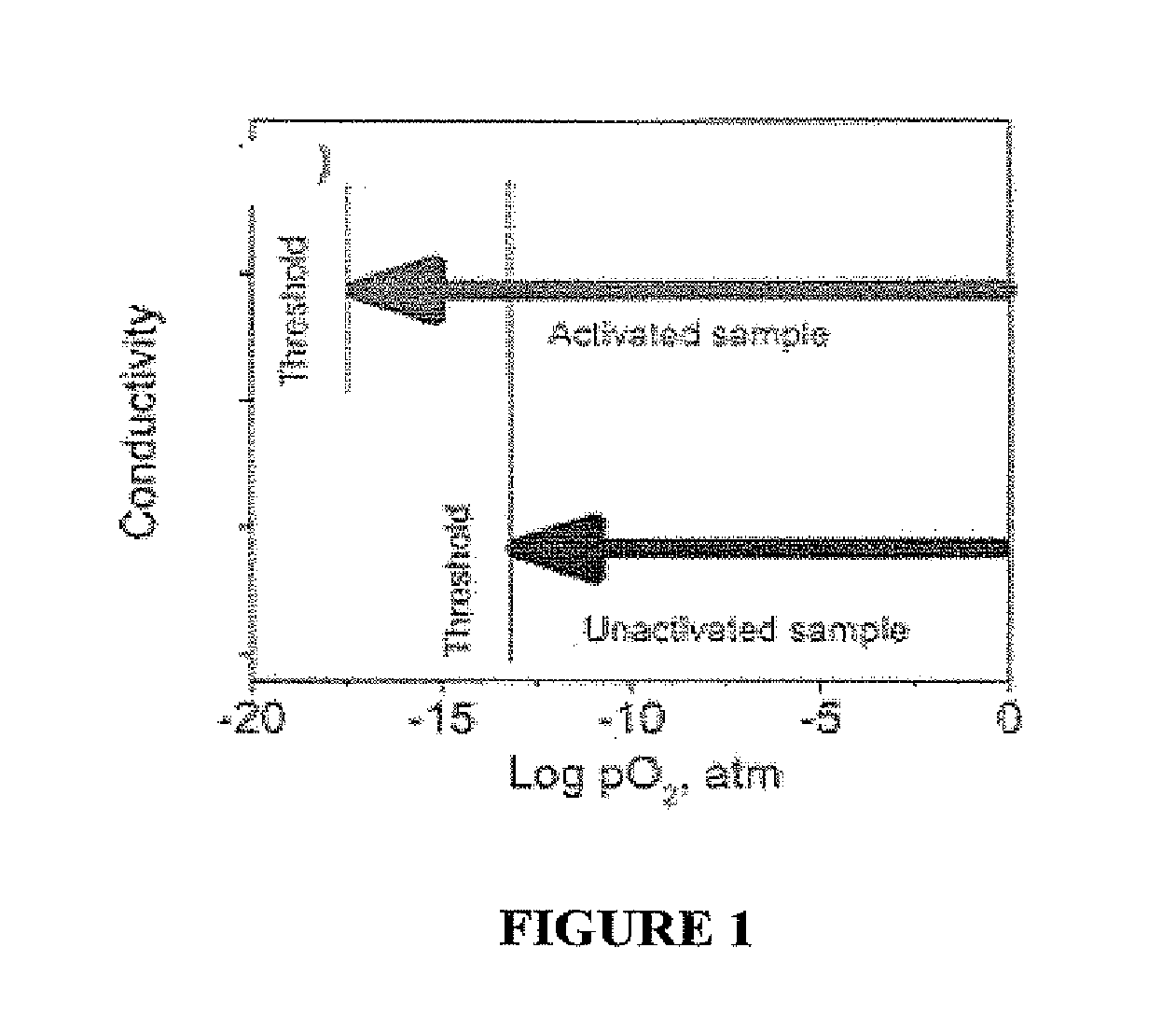
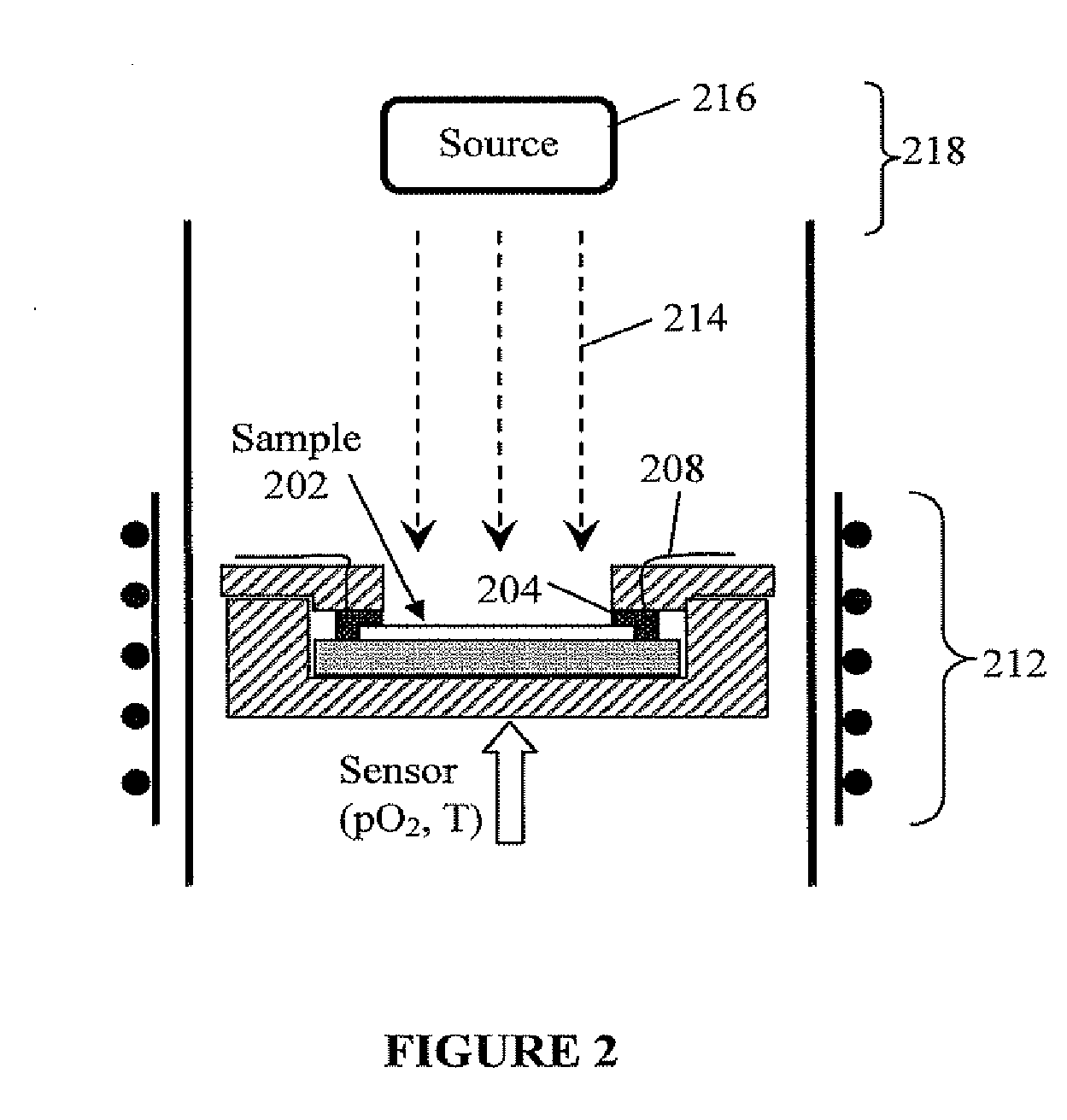
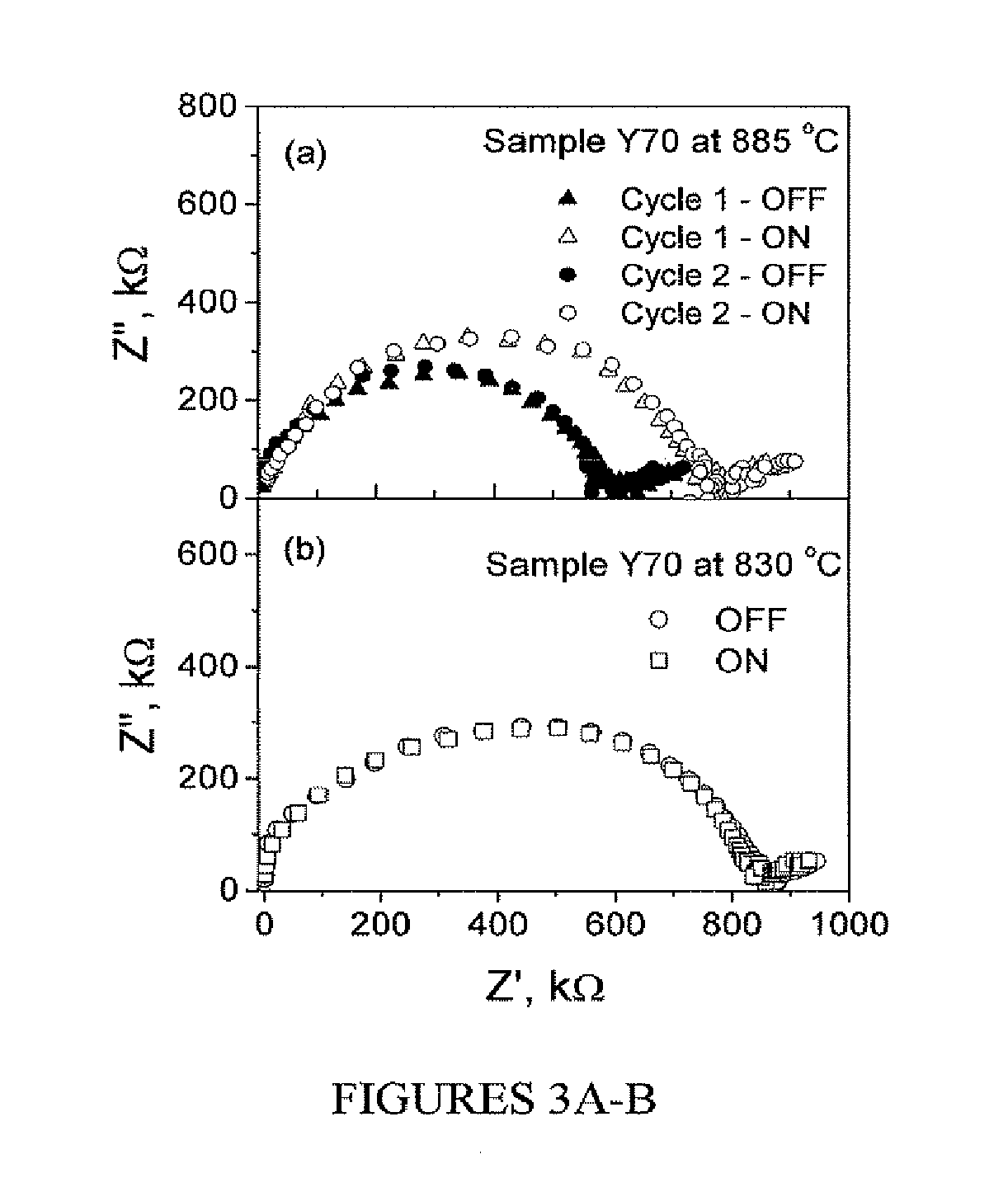
- Exposing oxygen to light within specific wavelengths (100 nm to 365 nm) and contacting the oxide ion conducting layers with activated oxygen to increase oxygen incorporation, decrease conductivity, and modulate electrical conductivity, thereby improving the performance of solid oxide fuel cells and gas separation devices.

Reversible solid oxide electrochemical cells with hybrid oxygen electrode
PatentWO2025054276A1
Innovation
- Development of a hybrid oxygen electrode comprising a solid composite material with a double perovskite phase (PrBaSrCoFeO) and a single perovskite phase (BaSrCoO), fabricated via an in-situ formation process, which enhances both surface oxygen exchange and bulk oxygen-ion diffusion coefficients.


Safety Standards for Solid Oxygen Handling
The handling of solid oxygen in electrochemical applications necessitates rigorous safety protocols due to its highly reactive nature and potential hazards. Solid oxygen exists primarily in three allotropic forms, with the alpha phase being stable below 23.9 K and the beta phase stable between 23.9 K and 43.8 K. These cryogenic temperatures present unique challenges for material compatibility, storage infrastructure, and operational procedures. International standards organizations, including ISO and ASTM, have established preliminary guidelines for cryogenic oxidizer handling, though specific frameworks for solid oxygen in electrochemical contexts remain under development.
Material selection constitutes a critical safety consideration, as many common engineering materials become brittle or react violently with solid oxygen at cryogenic temperatures. Stainless steel alloys, particularly austenitic grades, demonstrate acceptable compatibility, while organic materials and certain metals pose ignition risks. Containment systems must incorporate multiple redundant safety barriers, including vacuum-insulated vessels, pressure relief mechanisms, and oxygen concentration monitoring systems to prevent catastrophic failures.
Personnel safety protocols require specialized training in cryogenic handling procedures, including proper use of protective equipment resistant to extreme cold and oxygen-enriched atmospheres. Emergency response procedures must address potential scenarios such as rapid phase transitions, oxygen enrichment of surrounding atmospheres, and cold burns from direct contact. Facility design should incorporate adequate ventilation systems, oxygen detection sensors with automated shutdown capabilities, and designated safety zones with restricted access during operations.
Regulatory compliance frameworks are evolving as solid oxygen applications in electrochemical systems advance from laboratory to industrial scales. Current best practices recommend adopting existing cryogenic safety standards while implementing additional controls specific to electrochemical environments, including electrical isolation protocols, static discharge prevention measures, and compatibility assessments between solid oxygen and electrode materials. Documentation requirements encompass risk assessments, standard operating procedures, and incident reporting mechanisms to continuously improve safety performance across the emerging field.
Material selection constitutes a critical safety consideration, as many common engineering materials become brittle or react violently with solid oxygen at cryogenic temperatures. Stainless steel alloys, particularly austenitic grades, demonstrate acceptable compatibility, while organic materials and certain metals pose ignition risks. Containment systems must incorporate multiple redundant safety barriers, including vacuum-insulated vessels, pressure relief mechanisms, and oxygen concentration monitoring systems to prevent catastrophic failures.
Personnel safety protocols require specialized training in cryogenic handling procedures, including proper use of protective equipment resistant to extreme cold and oxygen-enriched atmospheres. Emergency response procedures must address potential scenarios such as rapid phase transitions, oxygen enrichment of surrounding atmospheres, and cold burns from direct contact. Facility design should incorporate adequate ventilation systems, oxygen detection sensors with automated shutdown capabilities, and designated safety zones with restricted access during operations.
Regulatory compliance frameworks are evolving as solid oxygen applications in electrochemical systems advance from laboratory to industrial scales. Current best practices recommend adopting existing cryogenic safety standards while implementing additional controls specific to electrochemical environments, including electrical isolation protocols, static discharge prevention measures, and compatibility assessments between solid oxygen and electrode materials. Documentation requirements encompass risk assessments, standard operating procedures, and incident reporting mechanisms to continuously improve safety performance across the emerging field.
Environmental Impact of Solid Oxygen Systems
The environmental implications of solid oxygen systems in electrochemical applications present a multifaceted assessment framework that encompasses both beneficial and challenging aspects. From a sustainability perspective, solid oxygen sources offer significant advantages over conventional gaseous oxygen delivery methods by eliminating the need for continuous gas supply infrastructure and reducing transportation-related carbon emissions. The integration of solid oxygen materials in electrochemical devices potentially decreases the overall system footprint and energy consumption associated with oxygen compression, storage, and distribution networks.
However, the production lifecycle of solid oxygen compounds introduces environmental considerations that warrant careful evaluation. Manufacturing processes for materials such as metal peroxides, superoxides, and oxygen-releasing ceramics often involve energy-intensive synthesis routes and may generate chemical byproducts requiring proper disposal protocols. The extraction and processing of raw materials, particularly rare earth elements used in certain solid oxygen carriers, raise concerns regarding mining impacts, habitat disruption, and resource depletion.
The operational phase of solid oxygen systems demonstrates environmental benefits through enhanced energy efficiency in electrochemical processes. By providing localized oxygen availability at electrode interfaces, these systems can reduce overpotentials and improve reaction kinetics, thereby lowering overall energy requirements. This efficiency gain translates to reduced greenhouse gas emissions when considering the entire energy conversion chain, particularly in applications powered by fossil fuel-based electricity grids.
End-of-life management constitutes another critical environmental dimension. The recyclability of solid oxygen materials varies significantly depending on their chemical composition and structural degradation patterns. While some metal oxide-based systems offer potential for regeneration and reuse, others may require specialized recycling processes or contribute to electronic waste streams. Developing circular economy approaches for solid oxygen systems remains an essential research priority to minimize environmental burden and maximize resource utilization throughout the technology lifecycle.
However, the production lifecycle of solid oxygen compounds introduces environmental considerations that warrant careful evaluation. Manufacturing processes for materials such as metal peroxides, superoxides, and oxygen-releasing ceramics often involve energy-intensive synthesis routes and may generate chemical byproducts requiring proper disposal protocols. The extraction and processing of raw materials, particularly rare earth elements used in certain solid oxygen carriers, raise concerns regarding mining impacts, habitat disruption, and resource depletion.
The operational phase of solid oxygen systems demonstrates environmental benefits through enhanced energy efficiency in electrochemical processes. By providing localized oxygen availability at electrode interfaces, these systems can reduce overpotentials and improve reaction kinetics, thereby lowering overall energy requirements. This efficiency gain translates to reduced greenhouse gas emissions when considering the entire energy conversion chain, particularly in applications powered by fossil fuel-based electricity grids.
End-of-life management constitutes another critical environmental dimension. The recyclability of solid oxygen materials varies significantly depending on their chemical composition and structural degradation patterns. While some metal oxide-based systems offer potential for regeneration and reuse, others may require specialized recycling processes or contribute to electronic waste streams. Developing circular economy approaches for solid oxygen systems remains an essential research priority to minimize environmental burden and maximize resource utilization throughout the technology lifecycle.
Unlock deeper insights with PatSnap Eureka Quick Research — get a full tech report to explore trends and direct your research. Try now!
Generate Your Research Report Instantly with AI Agent
Supercharge your innovation with PatSnap Eureka AI Agent Platform!