Steering Wheel Customization: Tailoring for Personal Use
JUL 18, 20259 MIN READ
Generate Your Research Report Instantly with AI Agent
Patsnap Eureka helps you evaluate technical feasibility & market potential.
Steering Wheel Customization Background and Objectives
Steering wheel customization for personal use has emerged as a significant trend in the automotive industry, reflecting the growing demand for personalized driving experiences. This technological evolution stems from the increasing recognition of individual preferences and ergonomic needs among drivers. The concept of customizable steering wheels has its roots in the early days of automotive design, where steering wheels were primarily functional components with limited variation.
Over the years, the steering wheel has transformed from a simple control device to a complex interface that integrates multiple functions and serves as a crucial touchpoint between the driver and the vehicle. The advent of advanced materials, electronic systems, and manufacturing techniques has opened up new possibilities for steering wheel customization, allowing for unprecedented levels of personalization.
The primary objective of research in steering wheel customization is to enhance driver comfort, safety, and overall driving experience. This involves exploring various aspects such as ergonomics, materials science, human-machine interface design, and advanced manufacturing processes. By tailoring steering wheels to individual preferences, researchers aim to reduce driver fatigue, improve vehicle control, and increase overall satisfaction with the driving experience.
Another key goal is to develop customization technologies that can be efficiently implemented in mass production environments. This presents a significant challenge, as it requires balancing the desire for personalization with the constraints of large-scale manufacturing processes. Researchers are exploring modular design approaches, adaptive materials, and advanced production techniques to achieve this balance.
The evolution of steering wheel customization is closely tied to broader trends in the automotive industry, such as the shift towards electric and autonomous vehicles. As vehicles become more technologically advanced, the steering wheel is increasingly seen as a platform for integrating new features and functionalities. This includes the incorporation of touch-sensitive surfaces, haptic feedback systems, and advanced display technologies.
Looking ahead, the future of steering wheel customization research is likely to focus on several key areas. These include the development of smart materials that can adapt to different users, the integration of biometric sensors for health monitoring and personalized settings, and the exploration of novel interaction paradigms that blur the line between traditional steering wheels and more futuristic control interfaces.
In conclusion, the research on steering wheel customization for personal use represents a convergence of technological innovation, user-centered design, and evolving market demands. As the automotive industry continues to evolve, this field of study is poised to play a crucial role in shaping the future of human-vehicle interaction and driving experiences.
Over the years, the steering wheel has transformed from a simple control device to a complex interface that integrates multiple functions and serves as a crucial touchpoint between the driver and the vehicle. The advent of advanced materials, electronic systems, and manufacturing techniques has opened up new possibilities for steering wheel customization, allowing for unprecedented levels of personalization.
The primary objective of research in steering wheel customization is to enhance driver comfort, safety, and overall driving experience. This involves exploring various aspects such as ergonomics, materials science, human-machine interface design, and advanced manufacturing processes. By tailoring steering wheels to individual preferences, researchers aim to reduce driver fatigue, improve vehicle control, and increase overall satisfaction with the driving experience.
Another key goal is to develop customization technologies that can be efficiently implemented in mass production environments. This presents a significant challenge, as it requires balancing the desire for personalization with the constraints of large-scale manufacturing processes. Researchers are exploring modular design approaches, adaptive materials, and advanced production techniques to achieve this balance.
The evolution of steering wheel customization is closely tied to broader trends in the automotive industry, such as the shift towards electric and autonomous vehicles. As vehicles become more technologically advanced, the steering wheel is increasingly seen as a platform for integrating new features and functionalities. This includes the incorporation of touch-sensitive surfaces, haptic feedback systems, and advanced display technologies.
Looking ahead, the future of steering wheel customization research is likely to focus on several key areas. These include the development of smart materials that can adapt to different users, the integration of biometric sensors for health monitoring and personalized settings, and the exploration of novel interaction paradigms that blur the line between traditional steering wheels and more futuristic control interfaces.
In conclusion, the research on steering wheel customization for personal use represents a convergence of technological innovation, user-centered design, and evolving market demands. As the automotive industry continues to evolve, this field of study is poised to play a crucial role in shaping the future of human-vehicle interaction and driving experiences.
Market Analysis for Personalized Steering Wheels
The market for personalized steering wheels has been experiencing significant growth in recent years, driven by increasing consumer demand for customization and personalization in automotive interiors. This trend is particularly evident in the luxury and high-performance vehicle segments, where drivers are willing to invest in unique and tailored driving experiences.
The global market for personalized steering wheels is estimated to be valued at several hundred million dollars annually, with a compound annual growth rate (CAGR) projected to be in the high single digits over the next five years. This growth is fueled by advancements in manufacturing technologies, such as 3D printing and advanced materials, which have made customization more accessible and cost-effective.
Consumer preferences in this market are diverse, ranging from aesthetic customizations like unique color schemes and material choices to functional modifications such as integrated controls and ergonomic designs. A significant portion of the market demand comes from automotive enthusiasts and luxury car owners who seek to enhance their driving experience and express their personal style.
The aftermarket sector plays a crucial role in the personalized steering wheel market, offering a wide range of options for consumers looking to upgrade their existing vehicles. This sector has seen particularly strong growth, as it allows car owners to personalize their vehicles without the need for a full vehicle replacement.
Geographically, North America and Europe lead the market for personalized steering wheels, owing to their strong automotive cultures and higher disposable incomes. However, emerging markets in Asia-Pacific, particularly China and India, are showing rapid growth potential as their automotive industries expand and consumer preferences evolve.
Key market drivers include the growing trend of vehicle customization, increasing focus on driver comfort and ergonomics, and the rising popularity of motorsports and performance driving. Additionally, the integration of advanced technologies such as haptic feedback and biometric sensors in steering wheels is opening new avenues for personalization and functionality.
Challenges in the market include regulatory compliance, especially concerning safety standards and airbag integration. Manufacturers must balance customization with safety requirements, which can limit certain design options. Additionally, the high cost associated with some personalized steering wheel options may restrict market growth in price-sensitive segments.
Looking ahead, the market for personalized steering wheels is expected to continue its growth trajectory, with innovations in materials, design, and technology driving new opportunities. The increasing adoption of electric and autonomous vehicles may also influence future steering wheel designs, potentially leading to new forms of personalization and functionality.
The global market for personalized steering wheels is estimated to be valued at several hundred million dollars annually, with a compound annual growth rate (CAGR) projected to be in the high single digits over the next five years. This growth is fueled by advancements in manufacturing technologies, such as 3D printing and advanced materials, which have made customization more accessible and cost-effective.
Consumer preferences in this market are diverse, ranging from aesthetic customizations like unique color schemes and material choices to functional modifications such as integrated controls and ergonomic designs. A significant portion of the market demand comes from automotive enthusiasts and luxury car owners who seek to enhance their driving experience and express their personal style.
The aftermarket sector plays a crucial role in the personalized steering wheel market, offering a wide range of options for consumers looking to upgrade their existing vehicles. This sector has seen particularly strong growth, as it allows car owners to personalize their vehicles without the need for a full vehicle replacement.
Geographically, North America and Europe lead the market for personalized steering wheels, owing to their strong automotive cultures and higher disposable incomes. However, emerging markets in Asia-Pacific, particularly China and India, are showing rapid growth potential as their automotive industries expand and consumer preferences evolve.
Key market drivers include the growing trend of vehicle customization, increasing focus on driver comfort and ergonomics, and the rising popularity of motorsports and performance driving. Additionally, the integration of advanced technologies such as haptic feedback and biometric sensors in steering wheels is opening new avenues for personalization and functionality.
Challenges in the market include regulatory compliance, especially concerning safety standards and airbag integration. Manufacturers must balance customization with safety requirements, which can limit certain design options. Additionally, the high cost associated with some personalized steering wheel options may restrict market growth in price-sensitive segments.
Looking ahead, the market for personalized steering wheels is expected to continue its growth trajectory, with innovations in materials, design, and technology driving new opportunities. The increasing adoption of electric and autonomous vehicles may also influence future steering wheel designs, potentially leading to new forms of personalization and functionality.
Current Challenges in Steering Wheel Customization
The customization of steering wheels for personal use faces several significant challenges in the current automotive landscape. One of the primary obstacles is the integration of advanced technologies within the limited space of a steering wheel. As vehicles become increasingly connected and automated, there is a growing demand for steering wheels to incorporate more features, such as touch-sensitive controls, haptic feedback systems, and display screens. However, balancing these technological additions with ergonomic design and safety requirements presents a complex engineering challenge.
Safety regulations pose another major hurdle in steering wheel customization. Steering wheels are critical safety components, and any modifications must adhere to strict safety standards. This includes ensuring that customized steering wheels maintain their structural integrity during collisions and that airbag deployment is not compromised. The need to meet these safety requirements often limits the extent of personalization options available to consumers.
Material selection and durability are also significant concerns in steering wheel customization. The steering wheel is one of the most frequently touched surfaces in a vehicle, subjected to constant use and varying environmental conditions. Customized materials must withstand wear and tear, temperature fluctuations, and exposure to UV light without degrading or losing their aesthetic appeal. Finding materials that meet these durability requirements while also offering the desired tactile and visual characteristics for personalization can be challenging.
Cost-effectiveness in mass production represents another obstacle. While customization is increasingly desired by consumers, implementing personalized steering wheel options on a large scale can significantly increase manufacturing complexity and costs. Balancing the demand for individualization with the need for efficient production processes remains a key challenge for automakers.
Lastly, the challenge of user interface standardization versus personalization creates a dilemma. While customization allows for a more personalized driving experience, it can potentially lead to confusion when different drivers use the same vehicle. Striking a balance between customizable features and maintaining a consistent, intuitive interface across different vehicles and brands is an ongoing challenge in the industry.
Safety regulations pose another major hurdle in steering wheel customization. Steering wheels are critical safety components, and any modifications must adhere to strict safety standards. This includes ensuring that customized steering wheels maintain their structural integrity during collisions and that airbag deployment is not compromised. The need to meet these safety requirements often limits the extent of personalization options available to consumers.
Material selection and durability are also significant concerns in steering wheel customization. The steering wheel is one of the most frequently touched surfaces in a vehicle, subjected to constant use and varying environmental conditions. Customized materials must withstand wear and tear, temperature fluctuations, and exposure to UV light without degrading or losing their aesthetic appeal. Finding materials that meet these durability requirements while also offering the desired tactile and visual characteristics for personalization can be challenging.
Cost-effectiveness in mass production represents another obstacle. While customization is increasingly desired by consumers, implementing personalized steering wheel options on a large scale can significantly increase manufacturing complexity and costs. Balancing the demand for individualization with the need for efficient production processes remains a key challenge for automakers.
Lastly, the challenge of user interface standardization versus personalization creates a dilemma. While customization allows for a more personalized driving experience, it can potentially lead to confusion when different drivers use the same vehicle. Striking a balance between customizable features and maintaining a consistent, intuitive interface across different vehicles and brands is an ongoing challenge in the industry.
Existing Customization Solutions for Steering Wheels
01 Adjustable steering wheel design
Customizable steering wheels that can be adjusted for tilt, telescoping, and rotation to accommodate different driver preferences and ergonomics. These designs improve comfort and control for various body types and driving styles.- Adjustable steering wheel design: Customizable steering wheels that can be adjusted for tilt, reach, and height to accommodate different drivers' preferences and ergonomic needs. These designs improve comfort and driving experience by allowing users to find their optimal steering position.
- Modular steering wheel components: Steering wheels with interchangeable parts or modules that allow for easy customization of appearance, functionality, and features. This approach enables users to personalize their steering wheel without replacing the entire unit.
- Integrated control systems: Steering wheels incorporating advanced control systems, such as touch-sensitive surfaces, buttons, or displays for various vehicle functions. These integrated controls enhance the driving experience and allow for customization of vehicle settings directly from the steering wheel.
- Steering wheel covers and grips: Customizable covers and grips that can be applied to existing steering wheels to change their appearance, texture, or ergonomics. These accessories offer a cost-effective way to personalize the steering wheel without replacing the entire unit.
- Smart steering wheel technology: Advanced steering wheel designs incorporating sensors, biometric readers, or adaptive materials that can customize the steering experience based on driver preferences, driving conditions, or vehicle modes. These technologies aim to enhance safety, comfort, and personalization.
02 Modular steering wheel components
Steering wheels with interchangeable parts allowing for easy customization of grip, controls, and aesthetics. This modular approach enables users to personalize their steering wheel without replacing the entire unit.Expand Specific Solutions03 Integrated control systems
Steering wheels incorporating advanced control systems, such as touch-sensitive surfaces, programmable buttons, and display screens. These features allow for customizable interfaces and improved functionality while driving.Expand Specific Solutions04 Steering wheel covers and wraps
Customizable covers and wraps that can be applied to existing steering wheels to change their appearance, texture, or grip. These accessories offer a cost-effective way to personalize the steering wheel without replacing it entirely.Expand Specific Solutions05 Smart steering wheel technology
Integration of sensors and intelligent systems into steering wheels for enhanced customization and driver assistance. These technologies can adapt to individual driving habits, monitor driver alertness, and provide personalized feedback.Expand Specific Solutions
Key Players in Automotive Customization Industry
The steering wheel customization market for personal use is in a growth phase, driven by increasing consumer demand for personalized vehicle interiors. The market size is expanding, with a projected CAGR of 4-5% over the next five years. Technologically, the field is advancing rapidly, with major players like Ford Global Technologies, GM Global Technology Operations, and Volkswagen AG leading innovation. These companies are integrating advanced materials, smart technologies, and ergonomic designs into their steering wheel offerings. Emerging players such as NIO and BYD are also making significant strides, particularly in electric vehicle steering systems. The competition is fierce, with traditional automakers and tech companies vying for market share through continuous R&D and strategic partnerships.
Ford Global Technologies LLC
Technical Solution: Ford has developed an innovative approach to steering wheel customization, focusing on both ergonomics and personalization. Their system utilizes advanced 3D scanning technology to create a digital model of the driver's hands, which is then used to generate a custom-fit steering wheel grip[1]. This personalized grip is manufactured using 3D printing techniques with high-durability polymers. Additionally, Ford has integrated haptic feedback systems into the steering wheel, allowing for customizable tactile alerts and information delivery[3]. The company has also developed a modular steering wheel design that enables users to swap out different control panels and features based on their preferences or driving conditions[5].
Strengths: Highly personalized fit, improved ergonomics, and adaptable functionality. Weaknesses: Potentially higher production costs and complexity in manufacturing and inventory management.
GM Global Technology Operations LLC
Technical Solution: GM's approach to steering wheel customization focuses on adaptability and user-centric design. They have developed a shape-shifting steering wheel that can adjust its contours to fit different hand sizes and grip preferences[2]. This is achieved through the use of smart materials and micro-actuators embedded within the steering wheel structure. GM has also introduced a customizable display integrated into the steering wheel rim, allowing drivers to personalize the information and controls at their fingertips[4]. Furthermore, their research includes biometric sensors in the steering wheel that can recognize individual drivers and automatically adjust settings based on stored preferences[6].
Strengths: Dynamic adaptability to different users, integration of advanced display technology, and biometric recognition capabilities. Weaknesses: Potential reliability concerns with complex mechanical systems and higher cost of production.
Innovative Materials and Manufacturing Techniques
Automotive steering wheel
PatentInactiveEP1621441A3
Innovation
- A steering wheel design featuring flexible, shape-retaining gripping devices made of materials like kneaded plastic or silicone, integrated into the gripping areas and extending over partial circumferences of the steering wheel rim, allowing drivers to customize the shape for improved grip and comfort.
Steering wheel for a motor vehicle
PatentWO2006105745A2
Innovation
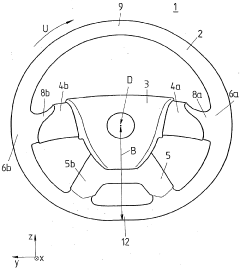
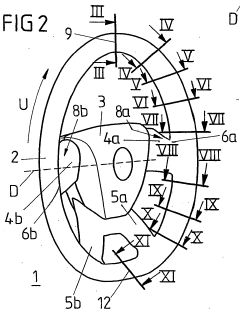
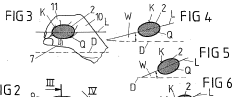
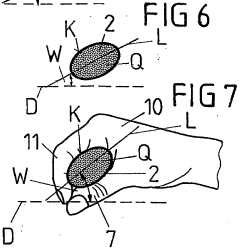
- A steering wheel design where the cross-sectional contour of the rim changes along its circumference, with varying orientations and shapes to accommodate the driver's hands, including adjustable sections that can be manually or automatically adjusted to optimize grip and comfort, featuring elongated contours and angled longitudinal axes to reduce wrist strain and enhance visibility and support.
Safety Regulations and Compliance for Custom Steering Wheels
Safety regulations and compliance play a crucial role in the development and implementation of custom steering wheels for personal use. These regulations are designed to ensure that any modifications or customizations to steering wheels do not compromise the safety of the vehicle or its occupants. The primary focus of these regulations is to maintain the structural integrity, functionality, and ergonomics of the steering wheel while allowing for personalization.
In many countries, regulatory bodies such as the National Highway Traffic Safety Administration (NHTSA) in the United States or the European New Car Assessment Programme (Euro NCAP) in Europe set stringent standards for steering wheel design and performance. These standards typically cover aspects such as impact resistance, airbag compatibility, and overall durability. Custom steering wheels must meet or exceed these standards to be considered road-legal.
One of the key safety considerations for custom steering wheels is their ability to withstand impact forces during a collision. Regulations often specify minimum load-bearing capacities and deformation limits to ensure that the steering wheel can protect the driver in the event of a crash. Additionally, the materials used in custom steering wheels must meet flame-retardant standards to prevent fire hazards in case of an accident.
Airbag compatibility is another critical aspect of safety regulations for custom steering wheels. Many modern vehicles are equipped with driver-side airbags integrated into the steering wheel. Custom designs must accommodate these airbag systems without interfering with their deployment or effectiveness. This often requires careful engineering to ensure that the airbag cover splits open correctly and that the airbag can fully inflate without obstruction.
Ergonomics and driver control are also subject to regulatory scrutiny. Custom steering wheels must maintain a minimum diameter and grip circumference to ensure proper handling and control of the vehicle. The position and functionality of any integrated controls, such as horn buttons or multimedia controls, must also comply with safety standards to prevent driver distraction.
Compliance with these safety regulations often involves rigorous testing and certification processes. Manufacturers of custom steering wheels may need to submit their products for independent laboratory testing to verify compliance with relevant standards. This can include impact testing, durability assessments, and ergonomic evaluations. Documentation of these tests and certifications is typically required for custom steering wheels to be legally sold and installed in vehicles.
It's important to note that safety regulations for custom steering wheels can vary significantly between different countries and regions. Manufacturers and consumers must be aware of the specific requirements in their target markets to ensure compliance. In some jurisdictions, the use of custom steering wheels may be restricted to certain types of vehicles or limited to off-road use only.
In many countries, regulatory bodies such as the National Highway Traffic Safety Administration (NHTSA) in the United States or the European New Car Assessment Programme (Euro NCAP) in Europe set stringent standards for steering wheel design and performance. These standards typically cover aspects such as impact resistance, airbag compatibility, and overall durability. Custom steering wheels must meet or exceed these standards to be considered road-legal.
One of the key safety considerations for custom steering wheels is their ability to withstand impact forces during a collision. Regulations often specify minimum load-bearing capacities and deformation limits to ensure that the steering wheel can protect the driver in the event of a crash. Additionally, the materials used in custom steering wheels must meet flame-retardant standards to prevent fire hazards in case of an accident.
Airbag compatibility is another critical aspect of safety regulations for custom steering wheels. Many modern vehicles are equipped with driver-side airbags integrated into the steering wheel. Custom designs must accommodate these airbag systems without interfering with their deployment or effectiveness. This often requires careful engineering to ensure that the airbag cover splits open correctly and that the airbag can fully inflate without obstruction.
Ergonomics and driver control are also subject to regulatory scrutiny. Custom steering wheels must maintain a minimum diameter and grip circumference to ensure proper handling and control of the vehicle. The position and functionality of any integrated controls, such as horn buttons or multimedia controls, must also comply with safety standards to prevent driver distraction.
Compliance with these safety regulations often involves rigorous testing and certification processes. Manufacturers of custom steering wheels may need to submit their products for independent laboratory testing to verify compliance with relevant standards. This can include impact testing, durability assessments, and ergonomic evaluations. Documentation of these tests and certifications is typically required for custom steering wheels to be legally sold and installed in vehicles.
It's important to note that safety regulations for custom steering wheels can vary significantly between different countries and regions. Manufacturers and consumers must be aware of the specific requirements in their target markets to ensure compliance. In some jurisdictions, the use of custom steering wheels may be restricted to certain types of vehicles or limited to off-road use only.
Ergonomic Considerations in Steering Wheel Personalization
Ergonomic considerations play a crucial role in steering wheel personalization for individual users. The design of a steering wheel significantly impacts driver comfort, safety, and overall driving experience. Customization efforts must prioritize ergonomic principles to ensure optimal interaction between the driver and the vehicle.
One of the primary ergonomic factors in steering wheel personalization is the wheel's diameter. The ideal size varies depending on the driver's physical characteristics, such as hand size and arm length. A wheel that is too large may cause fatigue during long drives, while one that is too small can reduce control precision. Customization options should allow for adjustments within a range that accommodates the 5th to 95th percentile of the population.
The grip circumference is another critical ergonomic aspect. A personalized steering wheel should offer varying thicknesses to suit different hand sizes and preferences. This customization can enhance grip comfort and reduce muscle strain during extended periods of driving. Additionally, the surface material and texture of the wheel can be tailored to individual preferences, balancing factors such as grip, moisture absorption, and tactile feedback.
The shape of the steering wheel rim is also subject to ergonomic customization. While traditional circular designs are common, some drivers may benefit from wheels with contoured grips or flattened bottom sections. These variations can improve hand positioning and reduce wrist strain, especially during complex maneuvers or sport driving scenarios.
Ergonomic steering wheel personalization must also consider the placement and design of integrated controls. As modern vehicles increasingly incorporate various functions into the steering wheel, the layout and accessibility of these controls become crucial. Customization options should allow users to adjust the position, size, and tactile feedback of buttons and switches to suit their reach and preferences.
The angle and position of the steering wheel relative to the driver's body are essential ergonomic factors. Personalization should include the ability to adjust the wheel's tilt and telescopic extension. This ensures that drivers of different heights and body types can maintain proper posture, reducing the risk of musculoskeletal issues and fatigue during long drives.
Advanced ergonomic considerations in steering wheel customization may incorporate biometric sensors to monitor driver fatigue and adjust wheel characteristics accordingly. For instance, the wheel could slightly increase vibration feedback or alter its resistance to maintain driver alertness during extended journeys.
In conclusion, ergonomic considerations in steering wheel personalization encompass a wide range of factors, from physical dimensions to material properties and integrated technologies. By focusing on these aspects, manufacturers can create highly adaptable steering systems that cater to individual needs, enhancing both comfort and safety for drivers.
One of the primary ergonomic factors in steering wheel personalization is the wheel's diameter. The ideal size varies depending on the driver's physical characteristics, such as hand size and arm length. A wheel that is too large may cause fatigue during long drives, while one that is too small can reduce control precision. Customization options should allow for adjustments within a range that accommodates the 5th to 95th percentile of the population.
The grip circumference is another critical ergonomic aspect. A personalized steering wheel should offer varying thicknesses to suit different hand sizes and preferences. This customization can enhance grip comfort and reduce muscle strain during extended periods of driving. Additionally, the surface material and texture of the wheel can be tailored to individual preferences, balancing factors such as grip, moisture absorption, and tactile feedback.
The shape of the steering wheel rim is also subject to ergonomic customization. While traditional circular designs are common, some drivers may benefit from wheels with contoured grips or flattened bottom sections. These variations can improve hand positioning and reduce wrist strain, especially during complex maneuvers or sport driving scenarios.
Ergonomic steering wheel personalization must also consider the placement and design of integrated controls. As modern vehicles increasingly incorporate various functions into the steering wheel, the layout and accessibility of these controls become crucial. Customization options should allow users to adjust the position, size, and tactile feedback of buttons and switches to suit their reach and preferences.
The angle and position of the steering wheel relative to the driver's body are essential ergonomic factors. Personalization should include the ability to adjust the wheel's tilt and telescopic extension. This ensures that drivers of different heights and body types can maintain proper posture, reducing the risk of musculoskeletal issues and fatigue during long drives.
Advanced ergonomic considerations in steering wheel customization may incorporate biometric sensors to monitor driver fatigue and adjust wheel characteristics accordingly. For instance, the wheel could slightly increase vibration feedback or alter its resistance to maintain driver alertness during extended journeys.
In conclusion, ergonomic considerations in steering wheel personalization encompass a wide range of factors, from physical dimensions to material properties and integrated technologies. By focusing on these aspects, manufacturers can create highly adaptable steering systems that cater to individual needs, enhancing both comfort and safety for drivers.
Unlock deeper insights with Patsnap Eureka Quick Research — get a full tech report to explore trends and direct your research. Try now!
Generate Your Research Report Instantly with AI Agent
Supercharge your innovation with Patsnap Eureka AI Agent Platform!