
Research on Synaptic Transistors Under Magnetic Fields
APR 17, 20269 MIN READ
Generate Your Research Report Instantly with AI Agent
Patsnap Eureka helps you evaluate technical feasibility & market potential.
Magnetic Synaptic Transistor Background and Research Goals
Synaptic transistors represent a revolutionary approach to neuromorphic computing, mimicking the fundamental operations of biological synapses through electronic devices. These devices integrate memory and processing functions within a single component, enabling brain-inspired computing architectures that can potentially overcome the limitations of traditional von Neumann computing systems. The field has gained significant momentum as researchers seek to develop energy-efficient artificial intelligence systems capable of learning, adaptation, and parallel processing.
The evolution of synaptic transistors has progressed through several distinct phases, beginning with basic memristive devices in the early 2000s and advancing to sophisticated multi-terminal structures capable of complex synaptic behaviors. Early developments focused primarily on resistance switching mechanisms, while recent innovations have incorporated ionic transport, phase transitions, and quantum effects to achieve more precise synaptic emulation.
The introduction of magnetic fields as a control parameter represents a paradigm shift in synaptic transistor research. Magnetic field modulation offers unique advantages including non-volatile control, remote manipulation capabilities, and the potential for three-dimensional device architectures. This approach leverages magnetoresistive effects, spin-dependent transport phenomena, and magnetic domain dynamics to create tunable synaptic responses.
Current research objectives center on developing magnetic synaptic transistors that can achieve precise weight modulation, demonstrate long-term stability, and exhibit energy-efficient operation. Key technical goals include establishing reliable magnetic field-dependent plasticity mechanisms, achieving sub-picojoule switching energies, and demonstrating scalable fabrication processes compatible with existing semiconductor technologies.
The ultimate vision encompasses creating adaptive neuromorphic systems where magnetic fields serve as global or local control parameters, enabling dynamic reconfiguration of neural networks. This could lead to revolutionary applications in edge computing, autonomous systems, and brain-computer interfaces, where real-time learning and adaptation are crucial for optimal performance.
The evolution of synaptic transistors has progressed through several distinct phases, beginning with basic memristive devices in the early 2000s and advancing to sophisticated multi-terminal structures capable of complex synaptic behaviors. Early developments focused primarily on resistance switching mechanisms, while recent innovations have incorporated ionic transport, phase transitions, and quantum effects to achieve more precise synaptic emulation.
The introduction of magnetic fields as a control parameter represents a paradigm shift in synaptic transistor research. Magnetic field modulation offers unique advantages including non-volatile control, remote manipulation capabilities, and the potential for three-dimensional device architectures. This approach leverages magnetoresistive effects, spin-dependent transport phenomena, and magnetic domain dynamics to create tunable synaptic responses.
Current research objectives center on developing magnetic synaptic transistors that can achieve precise weight modulation, demonstrate long-term stability, and exhibit energy-efficient operation. Key technical goals include establishing reliable magnetic field-dependent plasticity mechanisms, achieving sub-picojoule switching energies, and demonstrating scalable fabrication processes compatible with existing semiconductor technologies.
The ultimate vision encompasses creating adaptive neuromorphic systems where magnetic fields serve as global or local control parameters, enabling dynamic reconfiguration of neural networks. This could lead to revolutionary applications in edge computing, autonomous systems, and brain-computer interfaces, where real-time learning and adaptation are crucial for optimal performance.
Market Demand for Magnetic Field Enhanced Neuromorphic Devices
The neuromorphic computing market is experiencing unprecedented growth driven by the increasing demand for energy-efficient artificial intelligence solutions. Traditional von Neumann architectures face significant limitations in processing the massive parallel computations required for AI applications, creating substantial market opportunities for brain-inspired computing paradigms. Neuromorphic devices that can mimic synaptic behavior offer promising solutions for edge computing, autonomous systems, and real-time pattern recognition applications.
The integration of magnetic field effects into neuromorphic devices represents a rapidly emerging market segment with substantial commercial potential. Industries requiring robust AI processing in electromagnetically challenging environments, such as aerospace, automotive, and industrial automation, are driving demand for magnetic field-enhanced neuromorphic solutions. These applications require devices that maintain consistent performance under varying magnetic conditions while delivering superior computational efficiency.
Healthcare and biomedical device markets present significant opportunities for magnetic field-enhanced synaptic transistors. Medical imaging systems, neural prosthetics, and brain-computer interfaces require neuromorphic processors capable of operating reliably in magnetic field environments typical of MRI systems and other medical equipment. The growing aging population and increasing prevalence of neurological disorders are expanding the addressable market for such specialized neuromorphic solutions.
The automotive sector represents another key demand driver, particularly with the advancement of autonomous vehicle technologies. Modern vehicles operate in complex electromagnetic environments, requiring neuromorphic processors that can maintain optimal performance despite magnetic field variations from electric motors, charging systems, and external sources. The transition toward electric and hybrid vehicles further intensifies the need for magnetically robust neuromorphic computing solutions.
Defense and aerospace applications constitute a premium market segment for magnetic field-enhanced neuromorphic devices. Military systems, satellites, and space exploration equipment must function reliably in extreme magnetic environments while providing real-time AI processing capabilities. The increasing adoption of AI in defense applications and the growing space economy are creating substantial demand for specialized neuromorphic technologies that can withstand and potentially leverage magnetic field effects for enhanced functionality.
The integration of magnetic field effects into neuromorphic devices represents a rapidly emerging market segment with substantial commercial potential. Industries requiring robust AI processing in electromagnetically challenging environments, such as aerospace, automotive, and industrial automation, are driving demand for magnetic field-enhanced neuromorphic solutions. These applications require devices that maintain consistent performance under varying magnetic conditions while delivering superior computational efficiency.
Healthcare and biomedical device markets present significant opportunities for magnetic field-enhanced synaptic transistors. Medical imaging systems, neural prosthetics, and brain-computer interfaces require neuromorphic processors capable of operating reliably in magnetic field environments typical of MRI systems and other medical equipment. The growing aging population and increasing prevalence of neurological disorders are expanding the addressable market for such specialized neuromorphic solutions.
The automotive sector represents another key demand driver, particularly with the advancement of autonomous vehicle technologies. Modern vehicles operate in complex electromagnetic environments, requiring neuromorphic processors that can maintain optimal performance despite magnetic field variations from electric motors, charging systems, and external sources. The transition toward electric and hybrid vehicles further intensifies the need for magnetically robust neuromorphic computing solutions.
Defense and aerospace applications constitute a premium market segment for magnetic field-enhanced neuromorphic devices. Military systems, satellites, and space exploration equipment must function reliably in extreme magnetic environments while providing real-time AI processing capabilities. The increasing adoption of AI in defense applications and the growing space economy are creating substantial demand for specialized neuromorphic technologies that can withstand and potentially leverage magnetic field effects for enhanced functionality.
Current State and Challenges of Synaptic Transistors in Magnetic Fields
Synaptic transistors represent a revolutionary approach to neuromorphic computing, mimicking the functionality of biological synapses through electronic devices. The current state of this technology demonstrates significant progress in emulating synaptic behaviors such as potentiation, depression, and spike-timing-dependent plasticity. Leading research institutions have successfully developed various device architectures including organic electrochemical transistors, ion-gel gated transistors, and ferroelectric field-effect transistors that exhibit synaptic characteristics.
The integration of magnetic fields into synaptic transistor research has emerged as a promising avenue for enhancing device functionality and introducing novel computational paradigms. Current implementations primarily focus on magnetoelectric coupling effects, where magnetic fields modulate the electrical properties of synaptic devices. Research groups have demonstrated proof-of-concept devices using magnetic materials such as cobalt, nickel, and various magnetic oxides integrated with traditional transistor structures.
However, several critical challenges impede the widespread adoption and optimization of magnetic field-enhanced synaptic transistors. Device stability remains a primary concern, as magnetic field interactions can introduce unwanted noise and drift in synaptic weights over extended operation periods. The reproducibility of magnetic effects across device arrays presents another significant hurdle, with variations in magnetic coupling strength leading to non-uniform synaptic responses.
Power consumption optimization represents a fundamental challenge in current magnetic synaptic transistor designs. The energy required to generate and maintain magnetic fields often exceeds the power savings achieved through neuromorphic computing approaches. Additionally, the integration complexity increases substantially when incorporating magnetic field generation and control systems into existing semiconductor fabrication processes.
Scalability issues further complicate the practical implementation of magnetic synaptic transistors. Current prototypes typically operate as isolated devices or small arrays, but scaling to the millions of synapses required for practical neural networks introduces electromagnetic interference and crosstalk problems. The magnetic field uniformity across large device arrays becomes increasingly difficult to maintain, leading to performance degradation.
Temperature sensitivity poses another significant challenge, as magnetic properties of materials used in these devices often exhibit strong temperature dependence. This sensitivity can cause unpredictable changes in synaptic behavior under varying operating conditions, limiting the reliability of magnetic field-enhanced neuromorphic systems in real-world applications.
The integration of magnetic fields into synaptic transistor research has emerged as a promising avenue for enhancing device functionality and introducing novel computational paradigms. Current implementations primarily focus on magnetoelectric coupling effects, where magnetic fields modulate the electrical properties of synaptic devices. Research groups have demonstrated proof-of-concept devices using magnetic materials such as cobalt, nickel, and various magnetic oxides integrated with traditional transistor structures.
However, several critical challenges impede the widespread adoption and optimization of magnetic field-enhanced synaptic transistors. Device stability remains a primary concern, as magnetic field interactions can introduce unwanted noise and drift in synaptic weights over extended operation periods. The reproducibility of magnetic effects across device arrays presents another significant hurdle, with variations in magnetic coupling strength leading to non-uniform synaptic responses.
Power consumption optimization represents a fundamental challenge in current magnetic synaptic transistor designs. The energy required to generate and maintain magnetic fields often exceeds the power savings achieved through neuromorphic computing approaches. Additionally, the integration complexity increases substantially when incorporating magnetic field generation and control systems into existing semiconductor fabrication processes.
Scalability issues further complicate the practical implementation of magnetic synaptic transistors. Current prototypes typically operate as isolated devices or small arrays, but scaling to the millions of synapses required for practical neural networks introduces electromagnetic interference and crosstalk problems. The magnetic field uniformity across large device arrays becomes increasingly difficult to maintain, leading to performance degradation.
Temperature sensitivity poses another significant challenge, as magnetic properties of materials used in these devices often exhibit strong temperature dependence. This sensitivity can cause unpredictable changes in synaptic behavior under varying operating conditions, limiting the reliability of magnetic field-enhanced neuromorphic systems in real-world applications.
Existing Magnetic Field Modulation Solutions for Synaptic Devices
01 Organic semiconductor materials for synaptic transistors
Synaptic transistors can be fabricated using organic semiconductor materials that exhibit neuromorphic behavior. These materials enable the device to mimic biological synaptic functions such as potentiation and depression. The organic materials provide advantages including flexibility, low-cost fabrication, and biocompatibility, making them suitable for neuromorphic computing applications and artificial neural networks.- Organic semiconductor materials for synaptic transistors: Synaptic transistors can be fabricated using organic semiconductor materials that exhibit neuromorphic behavior. These materials enable the device to mimic biological synaptic functions such as potentiation and depression. Organic materials offer advantages including flexibility, low-cost fabrication, and biocompatibility, making them suitable for neuromorphic computing applications and artificial neural networks.
- Ion-gated transistor structures for synaptic behavior: Ion-gated transistor configurations utilize ionic species to modulate channel conductance, enabling synaptic plasticity. The movement of ions in response to electrical stimuli creates dynamic changes in conductivity that replicate synaptic weight modification. This approach allows for low-power operation and multi-level memory states essential for neuromorphic computing systems.
- Two-dimensional materials in synaptic transistor design: Two-dimensional materials such as graphene and transition metal dichalcogenides are employed in synaptic transistor architectures to achieve superior electrical properties and atomic-scale thickness. These materials provide high carrier mobility, excellent gate control, and tunable electronic properties that enhance synaptic functionality. The atomically thin nature enables efficient charge modulation and energy-efficient operation.
- Ferroelectric materials for non-volatile synaptic memory: Ferroelectric materials integrated into transistor structures provide non-volatile memory characteristics essential for synaptic weight storage. The spontaneous polarization of ferroelectric layers can be switched by applied voltage, creating stable memory states that persist without power. This enables energy-efficient neuromorphic systems with long-term synaptic plasticity and reduced refresh requirements.
- Multi-terminal transistor architectures for enhanced synaptic functions: Multi-terminal transistor designs incorporate additional gate electrodes or terminals to enable complex synaptic operations and improved control over device behavior. These architectures allow independent modulation of different device parameters, facilitating implementation of advanced learning rules and multi-factor synaptic plasticity. The additional terminals provide greater flexibility in programming synaptic weights and implementing neuromorphic algorithms.
02 Ion-gated transistor structures for synaptic behavior
Ion-gated transistor configurations utilize ionic conductors or electrolytes as gate dielectrics to achieve synaptic plasticity. The migration of ions in response to gate voltage modulates the channel conductance, emulating synaptic weight changes. This approach enables low-power operation and multi-level conductance states essential for neuromorphic computing systems.Expand Specific Solutions03 Three-terminal synaptic device architectures
Three-terminal synaptic transistor designs provide independent control of pre-synaptic and post-synaptic signals through separate terminals. This architecture allows for more complex synaptic functions including spike-timing-dependent plasticity and enables better integration with conventional semiconductor circuits. The three-terminal configuration offers improved controllability and scalability for large-scale neuromorphic arrays.Expand Specific Solutions04 Ferroelectric materials for non-volatile synaptic memory
Ferroelectric materials integrated into transistor structures provide non-volatile synaptic weight storage through polarization states. The ferroelectric layer enables retention of conductance states without power consumption and allows for multiple programmable resistance levels. This approach combines memory and processing functions in a single device, reducing system complexity for neuromorphic applications.Expand Specific Solutions05 Two-dimensional materials for synaptic channels
Two-dimensional materials such as transition metal dichalcogenides serve as channel materials in synaptic transistors, offering atomic-scale thickness and excellent electrostatic control. These materials exhibit unique electronic properties that facilitate synaptic behavior including short-term and long-term plasticity. The ultra-thin nature enables high-density integration and low-power operation for neuromorphic computing systems.Expand Specific Solutions
Key Players in Magnetic Synaptic Transistor Research
The research on synaptic transistors under magnetic fields represents an emerging interdisciplinary technology at the intersection of neuromorphic computing and spintronics, currently in early development stages with significant growth potential. The market remains nascent but shows promise for applications in brain-inspired computing and memory devices. Technology maturity varies significantly across players, with established semiconductor companies like IBM, Toshiba, and Infineon Technologies Austria providing foundational device expertise, while leading research institutions including MIT, Caltech, Peking University, and Shanghai University drive fundamental breakthroughs in magnetic field effects on synaptic behavior. Academic-industry collaborations between universities and companies like Bosch and Wolfspeed are accelerating practical implementations, though commercial viability remains several years away as the field transitions from proof-of-concept to scalable manufacturing processes.
Peking University
Technical Solution: Peking University has developed novel synaptic transistor structures incorporating magnetic materials that exhibit field-dependent synaptic behavior. Their research focuses on ferromagnetic semiconductor-based synaptic devices where magnetic fields can control both the magnitude and polarity of synaptic weights. The university's approach demonstrates that magnetic field application can switch between potentiation and depression modes in artificial synapses, enabling magnetic field-programmable neural networks with applications in adaptive computing systems and magnetic field detection arrays.
Strengths: Strong theoretical foundation and innovative material synthesis capabilities. Weaknesses: Limited industrial partnerships for technology transfer and commercialization.
International Business Machines Corp.
Technical Solution: IBM has developed advanced synaptic transistor architectures that demonstrate controllable conductance modulation under magnetic field influence. Their research focuses on phase-change memory (PCM) based synaptic devices that exhibit magnetic field-dependent switching characteristics, enabling both neuromorphic computing and magnetic sensing capabilities. The company's approach integrates magnetic tunnel junctions with transistor structures to create devices that can simultaneously process neural signals and respond to magnetic stimuli, achieving synaptic plasticity control through magnetic field strength variations ranging from 0.1T to 1.5T.
Strengths: Strong industrial research capabilities and extensive patent portfolio in neuromorphic computing. Weaknesses: Limited focus on fundamental magnetic field mechanisms in synaptic behavior.
Core Innovations in Magnetoelectric Synaptic Transistor Design
Magnetic field effect transistor, latch and method
PatentInactiveUS20050121700A1
Innovation
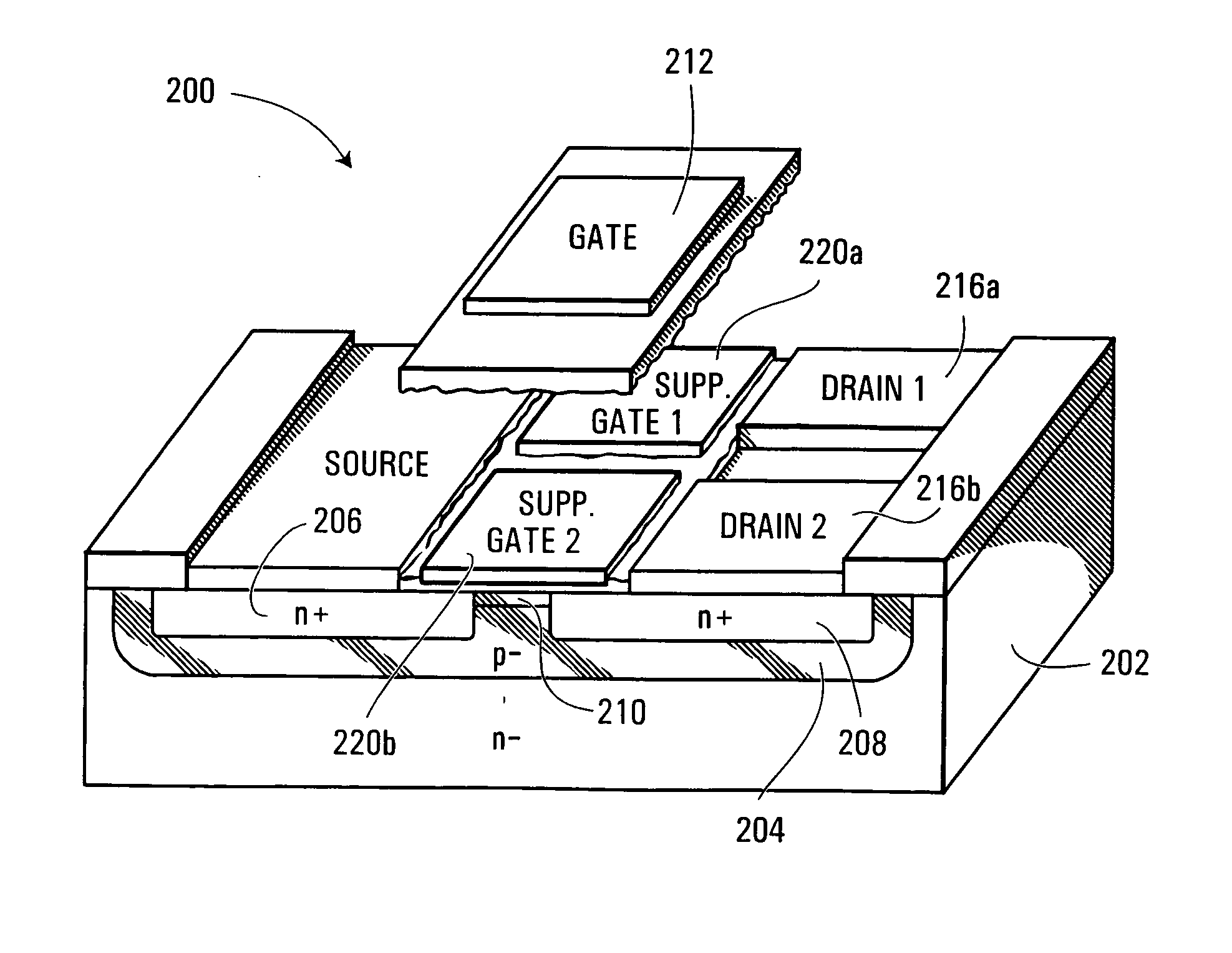
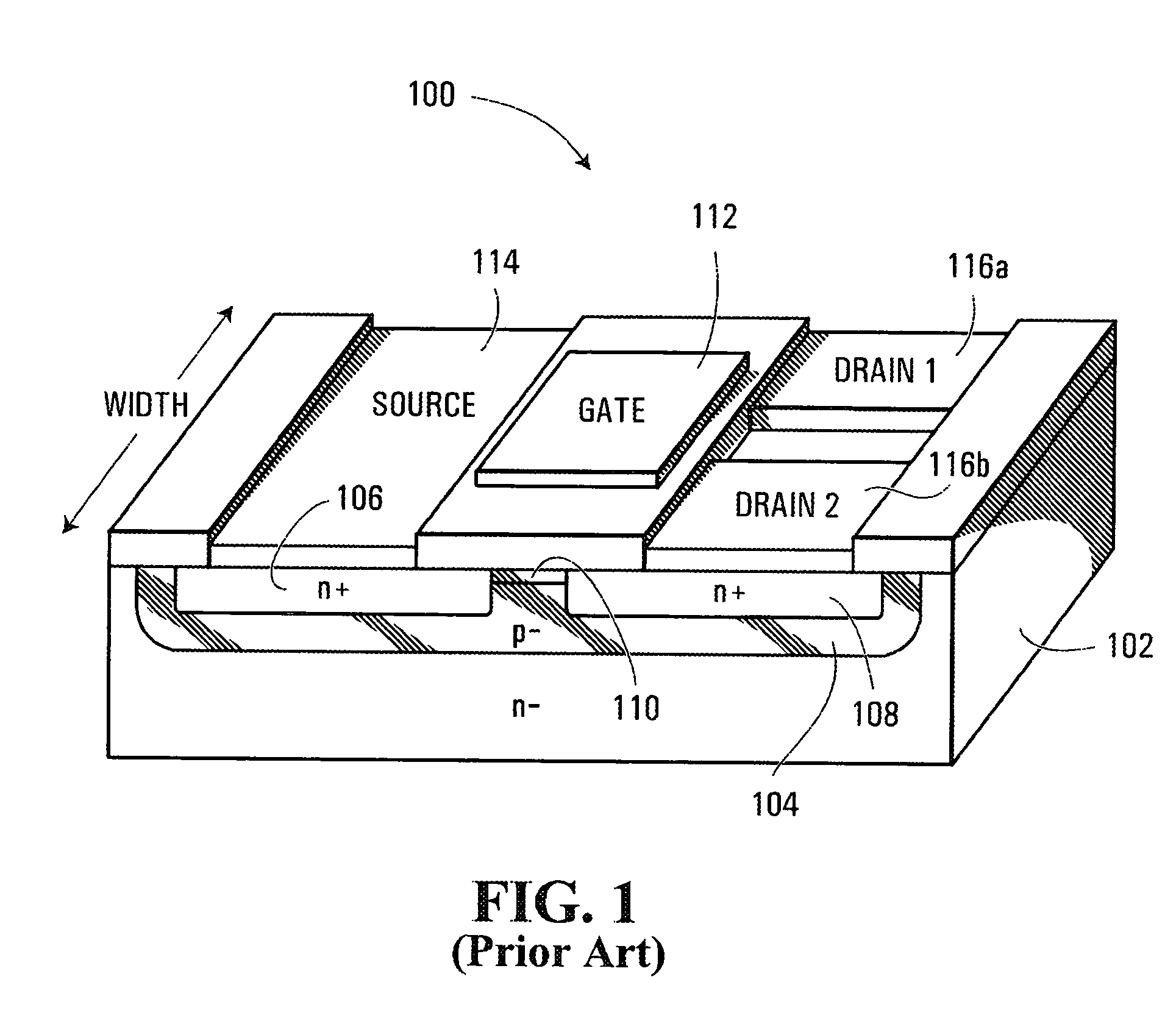
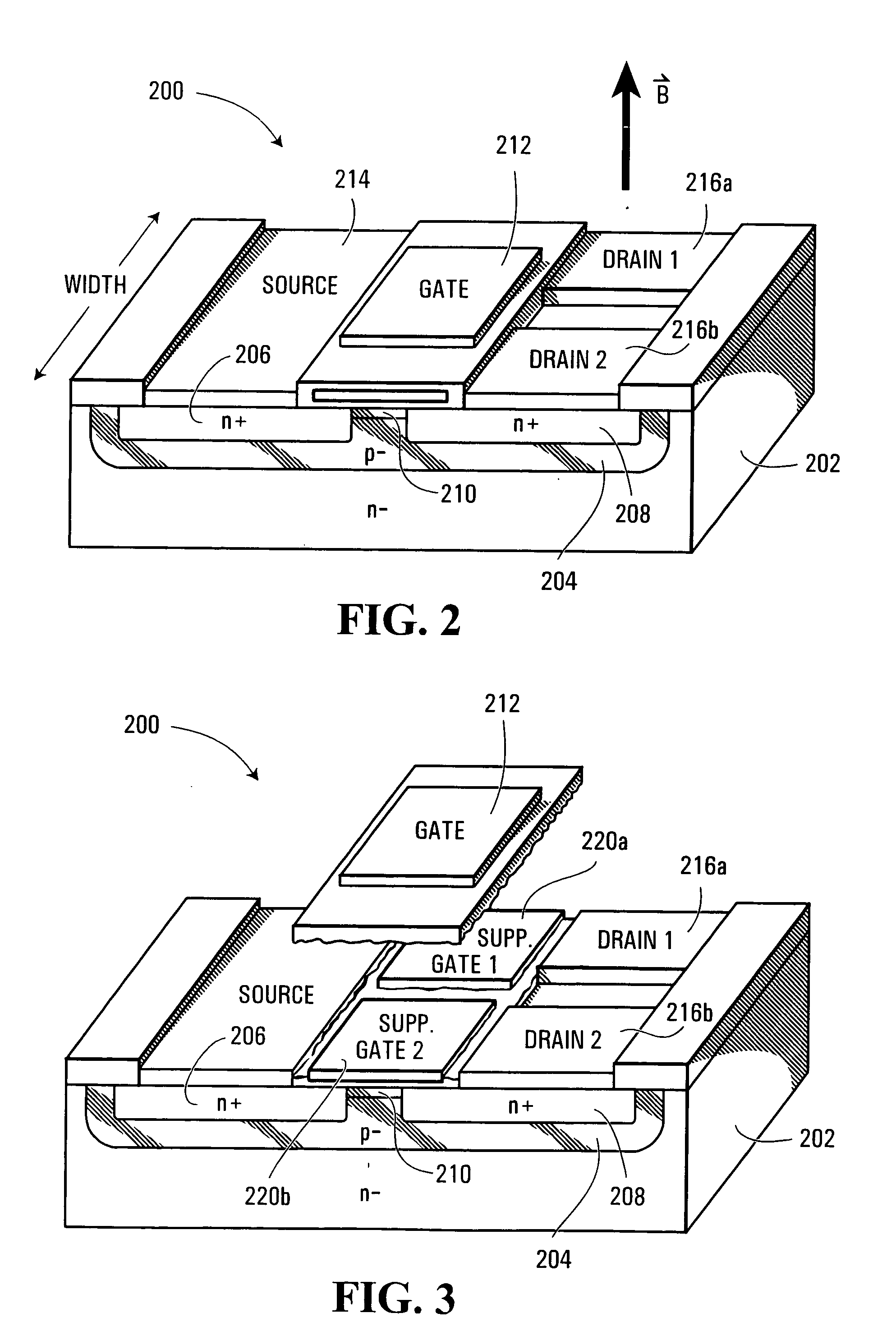
- A split drain MAGFET with supplemental gates that exert a lateral electrical field in the channel, allowing for increased sensitivity and detection of magnetic field orientation by connecting these gates in feedback with drain contacts, enabling the transistor to act as a latch sensitive to external magnetic fields.

Spin tunnel transistor
PatentInactiveUS7084470B2
Innovation
- A spin tunnel transistor is designed with a ferromagnetic metal layer having a variable magnetization under an external magnetic field, a barrier layer between the base and one of the collector or emitter, and a semiconductor crystal layer, along with a transition metal silicide, nitride, or carbide layer between the semiconductor and base, enhancing the magnetoresistance ratio and current transmittance.


Safety Standards for Magnetic Field Exposure in Electronics
The development of synaptic transistors operating under magnetic field conditions necessitates comprehensive safety standards to protect both researchers and end-users from potential electromagnetic exposure risks. Current international guidelines primarily focus on traditional electronic devices, leaving significant gaps in addressing the unique challenges posed by neuromorphic computing systems that intentionally utilize magnetic field interactions.
Existing safety frameworks such as IEEE C95.1 and IEC 62311 establish basic exposure limits for electromagnetic fields in electronic equipment, typically restricting magnetic flux density to 200 μT for occupational exposure and 40 μT for general public exposure at frequencies below 1 Hz. However, these standards were not designed to accommodate the specific operational requirements of synaptic transistors, which may require localized magnetic fields exceeding these thresholds for proper functionality.
The integration of magnetic field-sensitive components in synaptic transistors introduces novel safety considerations that extend beyond conventional electromagnetic compatibility requirements. These devices often operate with precisely controlled magnetic environments that can range from microTesla to several milliTesla, potentially affecting nearby electronic equipment and biological systems. The proximity of such devices to human operators during research and development phases raises particular concerns about cumulative exposure effects.
Recent research initiatives have begun addressing these gaps through proposed amendments to existing standards. The International Commission on Non-Ionizing Radiation Protection has initiated preliminary discussions on establishing specific guidelines for neuromorphic computing devices. These proposed standards emphasize the need for localized shielding requirements, minimum safe distances for prolonged exposure, and mandatory monitoring protocols during device operation.
Implementation challenges include the development of standardized measurement techniques for complex magnetic field patterns generated by synaptic transistor arrays. Unlike uniform field sources, these devices create highly localized and potentially time-varying magnetic environments that require sophisticated assessment methodologies. Additionally, the standards must balance safety requirements with the functional needs of the technology, ensuring that protective measures do not compromise device performance or research objectives.
Future regulatory frameworks will likely incorporate real-time monitoring systems, automated safety shutoffs, and enhanced labeling requirements specifically tailored to magnetic field-enhanced neuromorphic devices, establishing a comprehensive safety ecosystem for this emerging technology sector.
Existing safety frameworks such as IEEE C95.1 and IEC 62311 establish basic exposure limits for electromagnetic fields in electronic equipment, typically restricting magnetic flux density to 200 μT for occupational exposure and 40 μT for general public exposure at frequencies below 1 Hz. However, these standards were not designed to accommodate the specific operational requirements of synaptic transistors, which may require localized magnetic fields exceeding these thresholds for proper functionality.
The integration of magnetic field-sensitive components in synaptic transistors introduces novel safety considerations that extend beyond conventional electromagnetic compatibility requirements. These devices often operate with precisely controlled magnetic environments that can range from microTesla to several milliTesla, potentially affecting nearby electronic equipment and biological systems. The proximity of such devices to human operators during research and development phases raises particular concerns about cumulative exposure effects.
Recent research initiatives have begun addressing these gaps through proposed amendments to existing standards. The International Commission on Non-Ionizing Radiation Protection has initiated preliminary discussions on establishing specific guidelines for neuromorphic computing devices. These proposed standards emphasize the need for localized shielding requirements, minimum safe distances for prolonged exposure, and mandatory monitoring protocols during device operation.
Implementation challenges include the development of standardized measurement techniques for complex magnetic field patterns generated by synaptic transistor arrays. Unlike uniform field sources, these devices create highly localized and potentially time-varying magnetic environments that require sophisticated assessment methodologies. Additionally, the standards must balance safety requirements with the functional needs of the technology, ensuring that protective measures do not compromise device performance or research objectives.
Future regulatory frameworks will likely incorporate real-time monitoring systems, automated safety shutoffs, and enhanced labeling requirements specifically tailored to magnetic field-enhanced neuromorphic devices, establishing a comprehensive safety ecosystem for this emerging technology sector.
Energy Efficiency Considerations in Magnetic Synaptic Systems
Energy efficiency represents a critical design parameter for magnetic synaptic transistor systems, particularly as these devices transition from laboratory demonstrations to practical neuromorphic computing applications. The inherent energy consumption characteristics of synaptic transistors operating under magnetic fields present both opportunities and challenges for developing sustainable artificial neural networks.
The primary energy consumption in magnetic synaptic systems stems from multiple sources, including the magnetic field generation, synaptic weight updates, and signal transmission processes. Magnetic field generation typically requires electromagnetic coils or permanent magnet assemblies, with electromagnetic approaches offering dynamic control at the cost of continuous power consumption. The energy required for maintaining stable magnetic fields can range from microwatts to milliwatts depending on field strength and spatial coverage requirements.
Synaptic weight modulation under magnetic influence demonstrates promising energy efficiency characteristics compared to conventional electronic synapses. The magnetic field can effectively reduce the switching energy required for conductance changes in synaptic transistors by lowering energy barriers for charge carrier movement. This phenomenon enables ultra-low power operation, with some implementations achieving femtojoule-level energy consumption per synaptic event, representing orders of magnitude improvement over traditional CMOS-based artificial synapses.
The temporal dynamics of magnetic synaptic systems also contribute to energy efficiency considerations. Magnetic fields can extend the retention time of synaptic states, reducing the frequency of refresh operations and associated energy overhead. This characteristic proves particularly valuable for implementing long-term memory functions in neuromorphic systems, where extended state retention directly translates to reduced power consumption.
System-level energy optimization strategies for magnetic synaptic networks involve careful consideration of magnetic field distribution and sharing mechanisms. Localized magnetic field generation using micro-coils or magnetic domain structures can minimize energy waste while maintaining precise control over individual synaptic elements. Additionally, implementing magnetic field cycling protocols and standby modes can significantly reduce average power consumption during periods of reduced neural activity.
The scalability of energy-efficient magnetic synaptic systems depends on developing novel architectures that maximize the utilization of applied magnetic fields across multiple synaptic elements. Emerging approaches include magnetic field gradient designs and time-multiplexed field application schemes that distribute energy costs across larger arrays of synaptic transistors, ultimately approaching the energy efficiency targets required for practical neuromorphic computing implementations.
The primary energy consumption in magnetic synaptic systems stems from multiple sources, including the magnetic field generation, synaptic weight updates, and signal transmission processes. Magnetic field generation typically requires electromagnetic coils or permanent magnet assemblies, with electromagnetic approaches offering dynamic control at the cost of continuous power consumption. The energy required for maintaining stable magnetic fields can range from microwatts to milliwatts depending on field strength and spatial coverage requirements.
Synaptic weight modulation under magnetic influence demonstrates promising energy efficiency characteristics compared to conventional electronic synapses. The magnetic field can effectively reduce the switching energy required for conductance changes in synaptic transistors by lowering energy barriers for charge carrier movement. This phenomenon enables ultra-low power operation, with some implementations achieving femtojoule-level energy consumption per synaptic event, representing orders of magnitude improvement over traditional CMOS-based artificial synapses.
The temporal dynamics of magnetic synaptic systems also contribute to energy efficiency considerations. Magnetic fields can extend the retention time of synaptic states, reducing the frequency of refresh operations and associated energy overhead. This characteristic proves particularly valuable for implementing long-term memory functions in neuromorphic systems, where extended state retention directly translates to reduced power consumption.
System-level energy optimization strategies for magnetic synaptic networks involve careful consideration of magnetic field distribution and sharing mechanisms. Localized magnetic field generation using micro-coils or magnetic domain structures can minimize energy waste while maintaining precise control over individual synaptic elements. Additionally, implementing magnetic field cycling protocols and standby modes can significantly reduce average power consumption during periods of reduced neural activity.
The scalability of energy-efficient magnetic synaptic systems depends on developing novel architectures that maximize the utilization of applied magnetic fields across multiple synaptic elements. Emerging approaches include magnetic field gradient designs and time-multiplexed field application schemes that distribute energy costs across larger arrays of synaptic transistors, ultimately approaching the energy efficiency targets required for practical neuromorphic computing implementations.
Unlock deeper insights with Patsnap Eureka Quick Research — get a full tech report to explore trends and direct your research. Try now!
Generate Your Research Report Instantly with AI Agent
Supercharge your innovation with Patsnap Eureka AI Agent Platform!