Steering Wheel Functionality: Integrating with Home Automation
JUL 18, 20259 MIN READ
Generate Your Research Report Instantly with AI Agent
Patsnap Eureka helps you evaluate technical feasibility & market potential.
Smart Steering Evolution
The evolution of smart steering technology has been marked by significant advancements in both automotive and home automation sectors. Initially, steering wheels were purely mechanical devices, designed for vehicle control and navigation. As technology progressed, the integration of electronic systems into vehicles led to the development of power steering and electronic stability control, enhancing driving safety and comfort.
The advent of connected cars and the Internet of Things (IoT) has paved the way for more sophisticated steering wheel functionalities. Modern steering wheels now incorporate various controls for infotainment systems, cruise control, and voice commands. This integration has transformed the steering wheel from a simple control device to a central hub for vehicle interaction.
The concept of integrating steering wheel functionality with home automation represents a new frontier in smart technology convergence. This evolution is driven by the increasing demand for seamless connectivity between various aspects of daily life. As smart homes become more prevalent, the idea of extending this ecosystem to vehicles has gained traction.
Recent developments have seen steering wheels equipped with biometric sensors, capable of monitoring driver health and alertness. This technology not only enhances safety but also opens up possibilities for personalized driving experiences and integration with health-related smart home features.
The integration of steering wheel functionality with home automation is part of a broader trend towards creating a unified ecosystem of smart devices. This includes the ability to control home systems (such as lighting, heating, and security) directly from the steering wheel, as well as synchronizing vehicle data with home automation systems for enhanced energy management and scheduling.
Advancements in voice recognition and AI have further accelerated this evolution. Steering wheels now often feature voice-activated controls that can interact with both vehicle systems and connected home devices. This allows drivers to seamlessly manage their home environment while on the road, enhancing convenience and efficiency.
The future of smart steering evolution points towards even greater integration and functionality. Concepts under development include augmented reality displays integrated into steering wheels, providing real-time navigation and environmental information. Additionally, there are explorations into haptic feedback systems that could provide more intuitive and safer ways to interact with both vehicle and home systems.
As vehicles become increasingly autonomous, the role of the steering wheel is set to evolve further. There are discussions about transformable steering wheels that can retract or change shape in autonomous mode, potentially serving as interfaces for productivity or entertainment systems linked to the home environment.
The advent of connected cars and the Internet of Things (IoT) has paved the way for more sophisticated steering wheel functionalities. Modern steering wheels now incorporate various controls for infotainment systems, cruise control, and voice commands. This integration has transformed the steering wheel from a simple control device to a central hub for vehicle interaction.
The concept of integrating steering wheel functionality with home automation represents a new frontier in smart technology convergence. This evolution is driven by the increasing demand for seamless connectivity between various aspects of daily life. As smart homes become more prevalent, the idea of extending this ecosystem to vehicles has gained traction.
Recent developments have seen steering wheels equipped with biometric sensors, capable of monitoring driver health and alertness. This technology not only enhances safety but also opens up possibilities for personalized driving experiences and integration with health-related smart home features.
The integration of steering wheel functionality with home automation is part of a broader trend towards creating a unified ecosystem of smart devices. This includes the ability to control home systems (such as lighting, heating, and security) directly from the steering wheel, as well as synchronizing vehicle data with home automation systems for enhanced energy management and scheduling.
Advancements in voice recognition and AI have further accelerated this evolution. Steering wheels now often feature voice-activated controls that can interact with both vehicle systems and connected home devices. This allows drivers to seamlessly manage their home environment while on the road, enhancing convenience and efficiency.
The future of smart steering evolution points towards even greater integration and functionality. Concepts under development include augmented reality displays integrated into steering wheels, providing real-time navigation and environmental information. Additionally, there are explorations into haptic feedback systems that could provide more intuitive and safer ways to interact with both vehicle and home systems.
As vehicles become increasingly autonomous, the role of the steering wheel is set to evolve further. There are discussions about transformable steering wheels that can retract or change shape in autonomous mode, potentially serving as interfaces for productivity or entertainment systems linked to the home environment.
Home Auto Market Trends
The home automation market has been experiencing significant growth and transformation in recent years, driven by advancements in technology and changing consumer preferences. This trend is expected to continue, with the global smart home market projected to reach substantial value in the coming years. The integration of steering wheel functionality with home automation systems represents a novel intersection of automotive and smart home technologies, potentially opening up new market opportunities and enhancing user experiences.
Consumer demand for seamless connectivity and control across various aspects of daily life is a key driver in the home automation market. As smart home devices become more prevalent, users are seeking ways to manage their home environments more efficiently and conveniently. The concept of integrating steering wheel controls with home automation taps into this desire for unified control systems, potentially allowing drivers to manage their home settings while on the road.
The market for connected cars and in-vehicle infotainment systems is also expanding rapidly, with automakers increasingly focusing on integrating smart features into their vehicles. This convergence of automotive and smart home technologies creates a fertile ground for innovations like steering wheel-based home automation controls. Such integrations could become a differentiating factor for automakers and potentially influence consumer purchasing decisions in both the automotive and smart home sectors.
Energy management and sustainability concerns are shaping the home automation market as well. Smart home systems that allow for remote control of heating, cooling, and lighting can contribute to energy efficiency. The ability to manage these systems from a vehicle's steering wheel could further enhance energy-saving capabilities, aligning with growing consumer and regulatory focus on sustainability.
Security and safety features are another significant trend in the home automation market. The integration of steering wheel controls with home security systems could offer users added peace of mind, allowing them to check on their home's security status or receive alerts while driving. This convergence of automotive and home security functionalities could create new value propositions for consumers and opportunities for cross-industry collaborations.
The increasing adoption of voice-controlled smart home devices is also noteworthy. Voice assistants are becoming central to many smart home ecosystems, and their integration into vehicles is growing. The combination of voice control and steering wheel-based controls for home automation could provide a more robust and flexible user interface, catering to different user preferences and situations.
Consumer demand for seamless connectivity and control across various aspects of daily life is a key driver in the home automation market. As smart home devices become more prevalent, users are seeking ways to manage their home environments more efficiently and conveniently. The concept of integrating steering wheel controls with home automation taps into this desire for unified control systems, potentially allowing drivers to manage their home settings while on the road.
The market for connected cars and in-vehicle infotainment systems is also expanding rapidly, with automakers increasingly focusing on integrating smart features into their vehicles. This convergence of automotive and smart home technologies creates a fertile ground for innovations like steering wheel-based home automation controls. Such integrations could become a differentiating factor for automakers and potentially influence consumer purchasing decisions in both the automotive and smart home sectors.
Energy management and sustainability concerns are shaping the home automation market as well. Smart home systems that allow for remote control of heating, cooling, and lighting can contribute to energy efficiency. The ability to manage these systems from a vehicle's steering wheel could further enhance energy-saving capabilities, aligning with growing consumer and regulatory focus on sustainability.
Security and safety features are another significant trend in the home automation market. The integration of steering wheel controls with home security systems could offer users added peace of mind, allowing them to check on their home's security status or receive alerts while driving. This convergence of automotive and home security functionalities could create new value propositions for consumers and opportunities for cross-industry collaborations.
The increasing adoption of voice-controlled smart home devices is also noteworthy. Voice assistants are becoming central to many smart home ecosystems, and their integration into vehicles is growing. The combination of voice control and steering wheel-based controls for home automation could provide a more robust and flexible user interface, catering to different user preferences and situations.
Integration Challenges
Integrating steering wheel functionality with home automation systems presents several significant challenges that need to be addressed for successful implementation. One of the primary obstacles is the development of a robust and secure communication protocol between the vehicle and the home automation system. This protocol must ensure real-time data transfer while maintaining the integrity and confidentiality of the information exchanged.
Another major challenge lies in the standardization of interfaces and protocols across different automotive and home automation manufacturers. The lack of universal standards can lead to compatibility issues, making it difficult to create a seamless integration between various brands and models of vehicles and home automation systems. This fragmentation in the market could potentially limit the widespread adoption of this technology.
Power management and energy efficiency pose additional hurdles. The integration of steering wheel controls with home automation features may require constant connectivity, which can drain the vehicle's battery when not in use. Developing energy-efficient solutions that maintain functionality without compromising the vehicle's primary systems is crucial for practical implementation.
User interface design and ergonomics present another set of challenges. The steering wheel, primarily designed for driving control, must now incorporate additional functionalities without compromising safety or ease of use. Designers must carefully consider how to integrate new controls and feedback mechanisms without overwhelming or distracting the driver.
Data privacy and security concerns are paramount in this integration. The system will handle sensitive information about both the vehicle and the home, making it a potential target for cyberattacks. Robust encryption methods and secure authentication protocols must be implemented to protect user data and prevent unauthorized access to either the vehicle or home systems.
Regulatory compliance and legal considerations also pose significant challenges. As this technology bridges the automotive and smart home sectors, it must adhere to regulations from both industries. This includes compliance with automotive safety standards, data protection laws, and home automation regulations, which can vary significantly across different regions and countries.
Lastly, the integration must address the challenge of system reliability and fault tolerance. The interconnected nature of the vehicle and home systems means that a failure in one component could potentially affect the entire ecosystem. Developing fail-safe mechanisms and redundancy systems is essential to ensure that critical functions of both the vehicle and home automation system remain operational in case of partial system failures.
Another major challenge lies in the standardization of interfaces and protocols across different automotive and home automation manufacturers. The lack of universal standards can lead to compatibility issues, making it difficult to create a seamless integration between various brands and models of vehicles and home automation systems. This fragmentation in the market could potentially limit the widespread adoption of this technology.
Power management and energy efficiency pose additional hurdles. The integration of steering wheel controls with home automation features may require constant connectivity, which can drain the vehicle's battery when not in use. Developing energy-efficient solutions that maintain functionality without compromising the vehicle's primary systems is crucial for practical implementation.
User interface design and ergonomics present another set of challenges. The steering wheel, primarily designed for driving control, must now incorporate additional functionalities without compromising safety or ease of use. Designers must carefully consider how to integrate new controls and feedback mechanisms without overwhelming or distracting the driver.
Data privacy and security concerns are paramount in this integration. The system will handle sensitive information about both the vehicle and the home, making it a potential target for cyberattacks. Robust encryption methods and secure authentication protocols must be implemented to protect user data and prevent unauthorized access to either the vehicle or home systems.
Regulatory compliance and legal considerations also pose significant challenges. As this technology bridges the automotive and smart home sectors, it must adhere to regulations from both industries. This includes compliance with automotive safety standards, data protection laws, and home automation regulations, which can vary significantly across different regions and countries.
Lastly, the integration must address the challenge of system reliability and fault tolerance. The interconnected nature of the vehicle and home systems means that a failure in one component could potentially affect the entire ecosystem. Developing fail-safe mechanisms and redundancy systems is essential to ensure that critical functions of both the vehicle and home automation system remain operational in case of partial system failures.
Current Integration Sol
01 Steering wheel control systems
Advanced control systems integrated into steering wheels to enhance vehicle handling and safety. These systems may include electronic stability control, adaptive steering, and driver assistance features to improve overall driving experience and vehicle responsiveness.- Steering wheel control systems: Advanced control systems integrated into steering wheels to enhance vehicle functionality and driver interaction. These systems may include electronic controls, sensors, and interfaces for various vehicle functions such as cruise control, audio systems, and communication devices.
- Adjustable steering wheel mechanisms: Mechanisms that allow for the adjustment of steering wheel position to accommodate different drivers and improve ergonomics. This includes tilt and telescopic adjustments, as well as memory functions for multiple driver preferences.
- Steering wheel safety features: Integration of safety features directly into the steering wheel, such as airbags, impact-absorbing materials, and collapsible steering columns to protect the driver in the event of a collision.
- Steering wheel feedback systems: Technologies that provide tactile or haptic feedback through the steering wheel to enhance driver awareness and vehicle control. This may include vibration alerts for lane departure warnings or road condition information.
- Steering wheel interface for autonomous driving: Innovative steering wheel designs and functionalities to support the transition between manual and autonomous driving modes. This includes retractable steering wheels, multi-modal displays, and intuitive controls for engaging or disengaging autonomous features.
02 Ergonomic steering wheel design
Innovative designs focusing on driver comfort and ease of use. These designs may incorporate adjustable features, ergonomic grips, and materials that enhance grip and reduce fatigue during long drives.Expand Specific Solutions03 Steering wheel-mounted controls and interfaces
Integration of various vehicle controls and interfaces directly onto the steering wheel. This may include buttons for audio systems, cruise control, communication devices, and digital displays for vehicle information, allowing drivers to access key functions without taking their hands off the wheel.Expand Specific Solutions04 Steering wheel safety features
Incorporation of safety mechanisms within the steering wheel structure. This may include airbag systems, impact-absorbing materials, and collapsible steering columns to protect the driver in the event of a collision.Expand Specific Solutions05 Adaptive steering systems
Advanced steering mechanisms that adjust based on driving conditions and vehicle speed. These systems may include variable steering ratios, speed-sensitive steering, and integration with other vehicle systems to optimize handling and stability across different driving scenarios.Expand Specific Solutions
Key Industry Players
The integration of steering wheel functionality with home automation is an emerging technology at the intersection of automotive and smart home industries. This market is in its early growth stage, with significant potential for expansion as connected car technologies and smart home ecosystems continue to evolve. The global market size for automotive steering systems is projected to reach $36 billion by 2025, with smart steering technologies playing an increasingly important role. Major automotive players like Tesla, Toyota, Volkswagen, and BMW are investing heavily in this area, while tech giants and startups are also entering the space. The technology is still maturing, with companies like Continental Automotive and Joyson Safety Systems developing advanced steering systems that can integrate with smart home platforms. As the technology progresses, we can expect to see more seamless integration between vehicles and home automation systems, enhancing user convenience and safety.
Tesla, Inc.
Technical Solution: Tesla has developed an advanced steering wheel functionality that integrates seamlessly with home automation systems. Their approach utilizes a combination of over-the-air software updates and hardware innovations. The steering wheel is equipped with touch-sensitive controls and a high-resolution display that can be customized to show various home automation controls[1]. Tesla's system allows drivers to control smart home devices, adjust thermostats, and even view security camera feeds directly from the steering wheel. The integration is facilitated through Tesla's proprietary app and cloud infrastructure, ensuring secure and real-time communication between the vehicle and home systems[2]. Additionally, Tesla has implemented voice command functionality, enabling hands-free operation of both vehicle and home automation features[3].
Strengths: Seamless integration with Tesla's ecosystem, advanced user interface, and regular software updates. Weaknesses: Limited compatibility with third-party home automation systems, potentially high cost of implementation.
Toyota Motor Corp.
Technical Solution: Toyota has developed a comprehensive steering wheel-based home automation integration system called "Toyota Home Link". This system incorporates physical buttons on the steering wheel that can be programmed to control various home automation devices. Toyota's approach focuses on simplicity and reliability, using a combination of RF and Wi-Fi technologies to ensure consistent connectivity[4]. The system allows for up to three programmable buttons, each capable of controlling multiple home devices. Toyota has also integrated this functionality with their voice recognition system, allowing drivers to use voice commands to control home devices through the steering wheel interface[5]. To enhance safety, Toyota has implemented a geofencing feature that only activates the home automation controls when the vehicle is within a certain distance of the user's home.
Strengths: Simple and intuitive interface, reliable connectivity, and integration with existing Toyota infotainment systems. Weaknesses: Limited number of programmable buttons, potentially less flexible than touchscreen-based solutions.
Core Steering IoT Tech
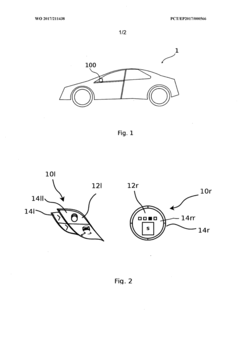
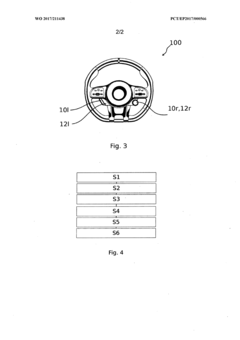
Steering wheel having operator control elements, and method for setting a function for a vehicle
PatentWO2017211438A1
Innovation
- A steering wheel with integrated first and second control elements and displays allows drivers to select and confirm main and sub-function alternatives without taking their hands off the wheel, using actuating devices that transmit user inputs to a computing unit, enabling intuitive operation of vehicle settings like adaptive chassis and entertainment systems.
System and method for haptic calibration
PatentWO2023121977A1
Innovation
- A calibration system for steering wheel assemblies that includes pressure or proximity sensors and a haptic motor, where the controller determines user inputs and adjusts operational parameters based on sensed haptic feedback to optimize haptic playback, using techniques like fast Fourier transforms to identify resonance frequencies and ensure consistent haptic feedback across the switchpack.


Safety & Security Aspect
The integration of steering wheel functionality with home automation systems introduces significant safety and security considerations that must be carefully addressed. One primary concern is the potential for unauthorized access to vehicle controls through the connected home network. Robust encryption and authentication protocols are essential to prevent malicious actors from gaining control over steering functions remotely.
Multi-factor authentication methods, such as biometric verification combined with secure PIN codes, should be implemented to ensure that only authorized users can access and manipulate steering wheel controls via home automation interfaces. Additionally, secure communication channels between the vehicle and home systems must be established using industry-standard encryption algorithms to protect against data interception and tampering.
Another critical aspect is the prevention of accidental activation of steering functions while the vehicle is in motion. Intelligent safety interlocks should be designed to disable remote steering control capabilities when the vehicle's speed exceeds a predetermined threshold or when the engine is running. This safeguard helps mitigate the risk of unintended steering inputs that could lead to accidents or loss of vehicle control.
Furthermore, the system must be resilient against software vulnerabilities and cyber attacks. Regular security audits, penetration testing, and over-the-air updates are crucial to maintaining the integrity of the integrated steering wheel and home automation system. Manufacturers should also implement secure boot processes and code signing to prevent the execution of unauthorized or malicious code.
Privacy concerns must also be addressed, as the integration of steering wheel functionality with home automation systems may involve the collection and transmission of sensitive user data. Clear privacy policies and data protection measures should be established to ensure that user information is handled securely and in compliance with relevant regulations.
Fail-safe mechanisms are essential to maintain steering functionality in case of system failures or connectivity issues. The system should be designed to gracefully degrade to a safe state, prioritizing manual steering control in the event of any malfunction or loss of connection between the vehicle and home automation system.
Lastly, user education and awareness play a crucial role in maintaining the safety and security of integrated steering wheel and home automation systems. Clear guidelines and warnings should be provided to users regarding the proper use of remote steering functions, potential risks, and best practices for securing their connected home and vehicle ecosystems.
Multi-factor authentication methods, such as biometric verification combined with secure PIN codes, should be implemented to ensure that only authorized users can access and manipulate steering wheel controls via home automation interfaces. Additionally, secure communication channels between the vehicle and home systems must be established using industry-standard encryption algorithms to protect against data interception and tampering.
Another critical aspect is the prevention of accidental activation of steering functions while the vehicle is in motion. Intelligent safety interlocks should be designed to disable remote steering control capabilities when the vehicle's speed exceeds a predetermined threshold or when the engine is running. This safeguard helps mitigate the risk of unintended steering inputs that could lead to accidents or loss of vehicle control.
Furthermore, the system must be resilient against software vulnerabilities and cyber attacks. Regular security audits, penetration testing, and over-the-air updates are crucial to maintaining the integrity of the integrated steering wheel and home automation system. Manufacturers should also implement secure boot processes and code signing to prevent the execution of unauthorized or malicious code.
Privacy concerns must also be addressed, as the integration of steering wheel functionality with home automation systems may involve the collection and transmission of sensitive user data. Clear privacy policies and data protection measures should be established to ensure that user information is handled securely and in compliance with relevant regulations.
Fail-safe mechanisms are essential to maintain steering functionality in case of system failures or connectivity issues. The system should be designed to gracefully degrade to a safe state, prioritizing manual steering control in the event of any malfunction or loss of connection between the vehicle and home automation system.
Lastly, user education and awareness play a crucial role in maintaining the safety and security of integrated steering wheel and home automation systems. Clear guidelines and warnings should be provided to users regarding the proper use of remote steering functions, potential risks, and best practices for securing their connected home and vehicle ecosystems.
User Experience Design
The integration of steering wheel functionality with home automation systems represents a significant leap in user experience design for connected vehicles. This convergence aims to create a seamless interface between the driver's primary control point and their smart home ecosystem, enhancing convenience and connectivity.
At the core of this user experience design is the concept of intuitive interaction. The steering wheel, traditionally focused on vehicle control, now becomes a multifunctional hub for managing home automation tasks. This requires a careful balance between maintaining essential driving functions and incorporating new, non-driving related controls.
One key aspect of the user experience design is the implementation of context-aware interfaces. The system must intelligently determine when it is appropriate to present home automation options to the driver, considering factors such as vehicle speed, traffic conditions, and driver attention levels. This contextual awareness ensures that safety remains paramount while offering enhanced functionality.
Visual feedback plays a crucial role in the user experience design. Heads-up displays or small screens integrated into the steering wheel can provide clear, non-distracting visual cues for home automation controls. These displays must be designed with high contrast ratios and appropriate sizing to ensure readability in various lighting conditions without compromising the driver's view of the road.
Haptic feedback is another important element in the user experience design. Subtle vibrations or texture changes in specific areas of the steering wheel can provide tactile confirmation of commands, allowing drivers to interact with home automation features without taking their eyes off the road. This tactile dimension adds an extra layer of user-friendliness and safety to the interface.
Voice control integration is a natural extension of the steering wheel's functionality in this context. By incorporating advanced voice recognition technology, drivers can issue commands to their home automation systems using natural language, further reducing the need for manual interaction. The steering wheel can serve as the primary input point for voice commands, featuring embedded microphones and activation buttons.
Customization options are essential for a personalized user experience. The interface should allow drivers to configure which home automation controls are accessible through the steering wheel, prioritizing the most frequently used functions. This adaptability ensures that the system caters to individual preferences and usage patterns.
Lastly, the user experience design must consider the learning curve associated with these new functionalities. Implementing an intuitive onboarding process and providing easily accessible help features can significantly enhance user adoption and satisfaction. This may include interactive tutorials, voice-guided setup processes, or smart suggestions that help users discover and utilize the full potential of the integrated system.
At the core of this user experience design is the concept of intuitive interaction. The steering wheel, traditionally focused on vehicle control, now becomes a multifunctional hub for managing home automation tasks. This requires a careful balance between maintaining essential driving functions and incorporating new, non-driving related controls.
One key aspect of the user experience design is the implementation of context-aware interfaces. The system must intelligently determine when it is appropriate to present home automation options to the driver, considering factors such as vehicle speed, traffic conditions, and driver attention levels. This contextual awareness ensures that safety remains paramount while offering enhanced functionality.
Visual feedback plays a crucial role in the user experience design. Heads-up displays or small screens integrated into the steering wheel can provide clear, non-distracting visual cues for home automation controls. These displays must be designed with high contrast ratios and appropriate sizing to ensure readability in various lighting conditions without compromising the driver's view of the road.
Haptic feedback is another important element in the user experience design. Subtle vibrations or texture changes in specific areas of the steering wheel can provide tactile confirmation of commands, allowing drivers to interact with home automation features without taking their eyes off the road. This tactile dimension adds an extra layer of user-friendliness and safety to the interface.
Voice control integration is a natural extension of the steering wheel's functionality in this context. By incorporating advanced voice recognition technology, drivers can issue commands to their home automation systems using natural language, further reducing the need for manual interaction. The steering wheel can serve as the primary input point for voice commands, featuring embedded microphones and activation buttons.
Customization options are essential for a personalized user experience. The interface should allow drivers to configure which home automation controls are accessible through the steering wheel, prioritizing the most frequently used functions. This adaptability ensures that the system caters to individual preferences and usage patterns.
Lastly, the user experience design must consider the learning curve associated with these new functionalities. Implementing an intuitive onboarding process and providing easily accessible help features can significantly enhance user adoption and satisfaction. This may include interactive tutorials, voice-guided setup processes, or smart suggestions that help users discover and utilize the full potential of the integrated system.
Unlock deeper insights with Patsnap Eureka Quick Research — get a full tech report to explore trends and direct your research. Try now!
Generate Your Research Report Instantly with AI Agent
Supercharge your innovation with Patsnap Eureka AI Agent Platform!