Steering Wheel Technologies: Innovations in Autonomous Control
JUL 18, 20259 MIN READ
Generate Your Research Report Instantly with AI Agent
PatSnap Eureka helps you evaluate technical feasibility & market potential.
Autonomous Steering Evolution and Objectives
Steering wheel technologies have undergone a remarkable evolution, transitioning from purely mechanical systems to sophisticated electronic and autonomous control mechanisms. This progression has been driven by the automotive industry's pursuit of enhanced safety, improved driving experience, and the ultimate goal of fully autonomous vehicles.
The journey began with the introduction of power steering in the 1950s, which significantly reduced the physical effort required to maneuver vehicles. This innovation paved the way for further advancements in steering technology. The 1980s and 1990s saw the integration of electronic components, giving rise to electric power steering (EPS) systems. These systems offered more precise control and adaptability to various driving conditions.
As we entered the 21st century, the focus shifted towards developing steering technologies that could support advanced driver assistance systems (ADAS) and, eventually, autonomous driving capabilities. This led to the emergence of steer-by-wire systems, which eliminate the mechanical connection between the steering wheel and the wheels, relying instead on electronic controls and actuators.
The primary objectives driving the evolution of steering wheel technologies in autonomous control are multifaceted. First and foremost is the enhancement of safety. By incorporating sensors, cameras, and artificial intelligence, modern steering systems aim to react faster and more accurately than human drivers, potentially reducing accidents caused by human error.
Another key objective is to improve vehicle efficiency and performance. Advanced steering systems can optimize wheel positioning and reduce energy consumption, contributing to better fuel economy or extended range in electric vehicles. Additionally, these technologies seek to enhance the overall driving experience by providing smoother, more precise control and reducing driver fatigue.
As we move closer to fully autonomous vehicles, steering wheel technologies are being developed with the goal of seamless integration with other autonomous systems. This includes the ability to handle complex driving scenarios, navigate urban environments, and adapt to varying road conditions without human intervention.
The evolution of steering technologies also aims to address the challenges of human-machine interaction in semi-autonomous vehicles. This involves developing intuitive interfaces that can smoothly transition control between the driver and the autonomous system, ensuring safety and user comfort.
Looking ahead, the objectives for steering wheel technologies in autonomous control include achieving Level 5 autonomy, where vehicles can operate without any human input under all conditions. This ambitious goal requires continued innovation in sensors, artificial intelligence, and control algorithms to create steering systems capable of mimicking and surpassing human decision-making abilities in complex and unpredictable driving environments.
The journey began with the introduction of power steering in the 1950s, which significantly reduced the physical effort required to maneuver vehicles. This innovation paved the way for further advancements in steering technology. The 1980s and 1990s saw the integration of electronic components, giving rise to electric power steering (EPS) systems. These systems offered more precise control and adaptability to various driving conditions.
As we entered the 21st century, the focus shifted towards developing steering technologies that could support advanced driver assistance systems (ADAS) and, eventually, autonomous driving capabilities. This led to the emergence of steer-by-wire systems, which eliminate the mechanical connection between the steering wheel and the wheels, relying instead on electronic controls and actuators.
The primary objectives driving the evolution of steering wheel technologies in autonomous control are multifaceted. First and foremost is the enhancement of safety. By incorporating sensors, cameras, and artificial intelligence, modern steering systems aim to react faster and more accurately than human drivers, potentially reducing accidents caused by human error.
Another key objective is to improve vehicle efficiency and performance. Advanced steering systems can optimize wheel positioning and reduce energy consumption, contributing to better fuel economy or extended range in electric vehicles. Additionally, these technologies seek to enhance the overall driving experience by providing smoother, more precise control and reducing driver fatigue.
As we move closer to fully autonomous vehicles, steering wheel technologies are being developed with the goal of seamless integration with other autonomous systems. This includes the ability to handle complex driving scenarios, navigate urban environments, and adapt to varying road conditions without human intervention.
The evolution of steering technologies also aims to address the challenges of human-machine interaction in semi-autonomous vehicles. This involves developing intuitive interfaces that can smoothly transition control between the driver and the autonomous system, ensuring safety and user comfort.
Looking ahead, the objectives for steering wheel technologies in autonomous control include achieving Level 5 autonomy, where vehicles can operate without any human input under all conditions. This ambitious goal requires continued innovation in sensors, artificial intelligence, and control algorithms to create steering systems capable of mimicking and surpassing human decision-making abilities in complex and unpredictable driving environments.
Market Demand Analysis for Autonomous Steering
The market demand for autonomous steering technologies has been experiencing significant growth, driven by the increasing focus on vehicle safety, comfort, and the broader trend towards autonomous driving. As vehicles become more connected and intelligent, the steering system plays a crucial role in enabling advanced driver assistance systems (ADAS) and fully autonomous capabilities.
The global autonomous steering market is projected to expand rapidly, with estimates suggesting a compound annual growth rate (CAGR) of over 15% in the coming years. This growth is primarily fueled by the automotive industry's shift towards electric and autonomous vehicles, as well as stringent safety regulations mandating the inclusion of advanced steering technologies in modern vehicles.
Consumer demand for enhanced driving experiences and improved safety features is a key factor driving market growth. Autonomous steering technologies, such as lane-keeping assist, adaptive cruise control, and automated parking systems, are increasingly becoming standard features in mid-range and premium vehicles. This trend is expected to continue as consumers become more aware of and comfortable with these technologies.
The commercial vehicle sector is also showing strong interest in autonomous steering solutions. Fleet operators are recognizing the potential benefits in terms of fuel efficiency, reduced driver fatigue, and improved safety. As a result, there is growing demand for autonomous steering technologies in trucks, buses, and other commercial vehicles.
Geographically, North America and Europe are currently leading the market for autonomous steering technologies, owing to their advanced automotive industries and supportive regulatory environments. However, the Asia-Pacific region is expected to witness the fastest growth, driven by rapid urbanization, increasing disposable incomes, and government initiatives promoting smart transportation solutions.
One of the key market trends is the integration of artificial intelligence and machine learning algorithms into steering systems. This integration enables more sophisticated decision-making capabilities, allowing vehicles to adapt to complex driving scenarios and improve overall performance. As these technologies continue to evolve, the demand for AI-enhanced steering systems is expected to rise significantly.
Another important factor shaping market demand is the push for electrification in the automotive industry. Electric vehicles (EVs) are particularly well-suited for autonomous steering technologies due to their advanced electronic architectures. As EV adoption increases globally, the demand for compatible autonomous steering solutions is expected to grow in tandem.
In conclusion, the market demand for autonomous steering technologies is robust and multifaceted, driven by safety concerns, consumer preferences, regulatory pressures, and technological advancements. As the automotive industry continues its transformation towards autonomous and electric vehicles, the importance of innovative steering technologies will only increase, presenting significant opportunities for manufacturers and suppliers in this space.
The global autonomous steering market is projected to expand rapidly, with estimates suggesting a compound annual growth rate (CAGR) of over 15% in the coming years. This growth is primarily fueled by the automotive industry's shift towards electric and autonomous vehicles, as well as stringent safety regulations mandating the inclusion of advanced steering technologies in modern vehicles.
Consumer demand for enhanced driving experiences and improved safety features is a key factor driving market growth. Autonomous steering technologies, such as lane-keeping assist, adaptive cruise control, and automated parking systems, are increasingly becoming standard features in mid-range and premium vehicles. This trend is expected to continue as consumers become more aware of and comfortable with these technologies.
The commercial vehicle sector is also showing strong interest in autonomous steering solutions. Fleet operators are recognizing the potential benefits in terms of fuel efficiency, reduced driver fatigue, and improved safety. As a result, there is growing demand for autonomous steering technologies in trucks, buses, and other commercial vehicles.
Geographically, North America and Europe are currently leading the market for autonomous steering technologies, owing to their advanced automotive industries and supportive regulatory environments. However, the Asia-Pacific region is expected to witness the fastest growth, driven by rapid urbanization, increasing disposable incomes, and government initiatives promoting smart transportation solutions.
One of the key market trends is the integration of artificial intelligence and machine learning algorithms into steering systems. This integration enables more sophisticated decision-making capabilities, allowing vehicles to adapt to complex driving scenarios and improve overall performance. As these technologies continue to evolve, the demand for AI-enhanced steering systems is expected to rise significantly.
Another important factor shaping market demand is the push for electrification in the automotive industry. Electric vehicles (EVs) are particularly well-suited for autonomous steering technologies due to their advanced electronic architectures. As EV adoption increases globally, the demand for compatible autonomous steering solutions is expected to grow in tandem.
In conclusion, the market demand for autonomous steering technologies is robust and multifaceted, driven by safety concerns, consumer preferences, regulatory pressures, and technological advancements. As the automotive industry continues its transformation towards autonomous and electric vehicles, the importance of innovative steering technologies will only increase, presenting significant opportunities for manufacturers and suppliers in this space.
Current Challenges in Steering Wheel Technologies
The steering wheel, a critical interface between driver and vehicle, faces significant challenges in the era of autonomous driving. One primary issue is the integration of advanced driver assistance systems (ADAS) with traditional steering mechanisms. As vehicles become more autonomous, the steering wheel must evolve to accommodate both manual and automated control seamlessly. This dual functionality presents complex engineering problems, particularly in ensuring smooth transitions between modes and maintaining driver engagement.
Another challenge lies in the development of steer-by-wire systems, which eliminate mechanical linkages between the steering wheel and the wheels. While offering potential benefits in terms of safety and customization, these systems must overcome issues related to feedback and responsiveness. Engineers are grappling with how to provide drivers with accurate haptic feedback that mimics traditional mechanical systems while leveraging the advantages of electronic control.
The integration of advanced sensors and actuators into steering systems poses additional challenges. These components are crucial for enabling features like lane-keeping assistance and automated parking, but their incorporation must not compromise the ergonomics or intuitive use of the steering wheel. Balancing the need for increased functionality with user comfort and familiarity remains a significant hurdle.
Safety considerations present another set of challenges. As steering systems become more complex and reliant on electronic components, ensuring fail-safe operation becomes paramount. Redundancy in critical systems and robust fault detection mechanisms are essential, but implementing these without adding excessive weight or cost is a delicate balance.
Furthermore, the regulatory landscape surrounding autonomous steering technologies is still evolving. Manufacturers must navigate a complex web of standards and regulations that vary across different regions, often struggling to keep pace with rapid technological advancements. This uncertainty can hinder innovation and slow the adoption of new steering technologies.
Lastly, there is the challenge of user acceptance and trust. As steering wheels incorporate more autonomous features, drivers must be educated and gradually acclimated to these new technologies. Overcoming skepticism and building confidence in the reliability and safety of advanced steering systems is crucial for widespread adoption. This requires not only technological solutions but also effective communication and user interface design to ensure drivers feel comfortable and in control, even as the vehicle takes on more driving tasks.
Another challenge lies in the development of steer-by-wire systems, which eliminate mechanical linkages between the steering wheel and the wheels. While offering potential benefits in terms of safety and customization, these systems must overcome issues related to feedback and responsiveness. Engineers are grappling with how to provide drivers with accurate haptic feedback that mimics traditional mechanical systems while leveraging the advantages of electronic control.
The integration of advanced sensors and actuators into steering systems poses additional challenges. These components are crucial for enabling features like lane-keeping assistance and automated parking, but their incorporation must not compromise the ergonomics or intuitive use of the steering wheel. Balancing the need for increased functionality with user comfort and familiarity remains a significant hurdle.
Safety considerations present another set of challenges. As steering systems become more complex and reliant on electronic components, ensuring fail-safe operation becomes paramount. Redundancy in critical systems and robust fault detection mechanisms are essential, but implementing these without adding excessive weight or cost is a delicate balance.
Furthermore, the regulatory landscape surrounding autonomous steering technologies is still evolving. Manufacturers must navigate a complex web of standards and regulations that vary across different regions, often struggling to keep pace with rapid technological advancements. This uncertainty can hinder innovation and slow the adoption of new steering technologies.
Lastly, there is the challenge of user acceptance and trust. As steering wheels incorporate more autonomous features, drivers must be educated and gradually acclimated to these new technologies. Overcoming skepticism and building confidence in the reliability and safety of advanced steering systems is crucial for widespread adoption. This requires not only technological solutions but also effective communication and user interface design to ensure drivers feel comfortable and in control, even as the vehicle takes on more driving tasks.
Existing Autonomous Steering Solutions
01 Autonomous steering control systems
Advanced steering systems that enable autonomous control of vehicles. These systems integrate sensors, cameras, and AI algorithms to analyze road conditions and make steering decisions without human intervention. They can adjust steering angles, apply corrective forces, and maintain lane positioning for safer and more efficient autonomous driving.- Autonomous steering control systems: Advanced steering systems that enable autonomous control of the vehicle. These systems integrate sensors, cameras, and AI algorithms to analyze the environment and make steering decisions without human intervention. They can adjust steering angles, apply corrective forces, and maintain lane positioning for safer and more efficient autonomous driving.
- Steer-by-wire technology: Steer-by-wire systems replace traditional mechanical linkages with electronic controls. This technology allows for more precise steering control, improved vehicle handling, and easier integration with autonomous driving systems. It also enables the implementation of variable steering ratios and customizable steering feel for different driving modes.
- Haptic feedback and adaptive steering wheels: Steering wheels equipped with haptic feedback mechanisms and adaptive features to enhance driver awareness and control during autonomous or semi-autonomous driving. These systems can provide tactile alerts, simulate road conditions, and adjust steering wheel resistance based on driving conditions or autonomous system status.
- Integration of driver monitoring systems: Incorporation of driver monitoring systems into steering wheel technologies for autonomous vehicles. These systems use sensors and cameras to track driver alertness, engagement, and readiness to take control. They can detect drowsiness, distraction, or incapacitation, and initiate appropriate responses in the autonomous system.
- Transition control between autonomous and manual driving: Systems and methods for managing the transition between autonomous and manual driving modes. These technologies focus on ensuring smooth and safe handovers between the vehicle's autonomous system and human driver. They include adaptive steering wheel designs, intuitive user interfaces, and predictive algorithms to anticipate and facilitate mode transitions.
02 Haptic feedback and force-sensing steering wheels
Steering wheels equipped with haptic feedback mechanisms and force sensors to enhance driver awareness and control. These technologies can provide tactile alerts, simulate road conditions, and detect driver input force. They improve the interface between human drivers and autonomous systems, allowing for smoother transitions between manual and autonomous modes.Expand Specific Solutions03 Steer-by-wire systems for autonomous vehicles
Electronic steering systems that replace traditional mechanical linkages with electronic controls. These systems allow for more precise steering control in autonomous modes and can easily switch between manual and autonomous operation. They offer improved flexibility in vehicle design and enhanced responsiveness to both driver inputs and autonomous commands.Expand Specific Solutions04 Adaptive steering for autonomous and semi-autonomous vehicles
Steering systems that can adapt to different driving modes and conditions. These technologies allow for dynamic adjustment of steering ratios, assist levels, and control parameters based on vehicle speed, road conditions, and the level of autonomy engaged. They ensure optimal steering performance across various autonomous and manual driving scenarios.Expand Specific Solutions05 Integration of steering controls with autonomous driving interfaces
Systems that seamlessly integrate steering wheel controls with autonomous driving interfaces. These technologies include multifunctional steering wheels with embedded displays, touch-sensitive surfaces, and reconfigurable controls. They allow drivers to easily monitor and interact with autonomous systems while maintaining the ability to take manual control when needed.Expand Specific Solutions
Key Players in Autonomous Steering Industry
The steering wheel technology market is in a dynamic growth phase, driven by advancements in autonomous driving. Major players like Hyundai, Kia, and BYD are investing heavily in this sector, indicating its strategic importance. The market size is expanding rapidly, with projections suggesting significant growth in the coming years. Technologically, the field is evolving from traditional mechanical systems to sophisticated electronic and AI-driven solutions. Established automotive giants such as Toyota, Honda, and Nissan are competing with newer entrants like HL Mando and ThyssenKrupp Presta, creating a diverse and competitive landscape. The technology's maturity varies, with some companies focusing on incremental improvements while others pursue revolutionary autonomous steering systems.
Hyundai Motor Co., Ltd.
Technical Solution: Hyundai has introduced an innovative steering technology for autonomous vehicles called "Smart Steering." This system combines traditional hydraulic power steering with an advanced electronic control unit for enhanced precision and adaptability[10]. Hyundai's technology features a variable-ratio steering gear that adjusts based on vehicle speed and driving conditions, improving maneuverability at low speeds and stability at high speeds[11]. The system also incorporates a lane-keeping assist function that works in conjunction with the autonomous driving system to maintain the vehicle's position within lane markings. Additionally, Hyundai has developed a unique driver monitoring system that uses sensors in the steering wheel to detect driver attentiveness and fatigue[12].
Strengths: Combination of traditional and advanced technologies, enhanced safety features. Weaknesses: Potential complexity in integrating multiple systems may increase production costs.
BYD Co., Ltd.
Technical Solution: BYD has developed a cutting-edge steering system for autonomous vehicles called "DiPilot Steering." This technology utilizes a fully electric steer-by-wire system, eliminating the need for a traditional steering column[13]. BYD's system incorporates advanced torque sensors and electric motors to provide precise steering control and feedback. The DiPilot Steering technology features a unique "virtual steering axis" that can be adjusted in real-time to optimize vehicle dynamics and stability[14]. BYD has also implemented an AI-driven steering assistance function that learns from driver behavior and road conditions to provide personalized steering characteristics. The system includes a redundant control architecture to ensure safety and reliability in autonomous driving scenarios[15].
Strengths: Fully electric system with high precision, AI-driven personalization, and advanced safety features. Weaknesses: Potential high initial cost and reliance on complex electronic systems.
Core Innovations in Steering Control Systems
Transforming steering wheel and steering apparatus including the same and driving method thereof
PatentActiveKR1020190111233A
Innovation
- A deformable steering wheel design with grip members that can unfold or fold around a coupling shaft member, controlled by an electronic unit, allowing the steering wheel to adapt to different driving modes and providing a wider space in autonomous driving and easier steering in manual modes.
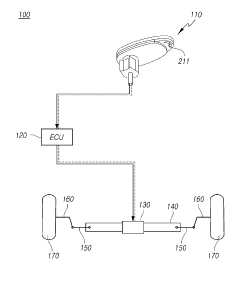
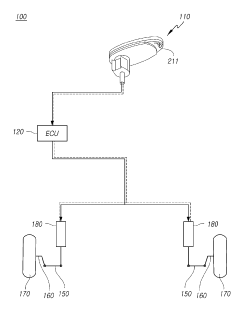
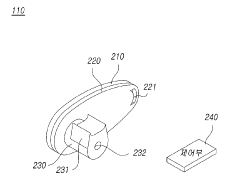
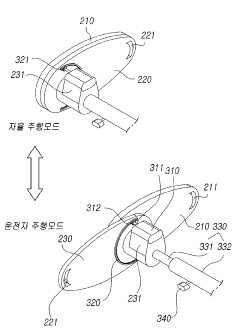
Motor vehicle steering system
PatentInactiveUS6976555B2
Innovation
- A hybrid steering system operable in steer-by-wire, electronic power assist steering (EPAS), and manual modes, utilizing a driver interface system, road wheel actuator system, and a controller to reduce sensor requirements, with a flexible steering member providing mechanical linkage only in failure scenarios, and a clutch mechanism for mode transitions.


Safety Regulations for Autonomous Vehicles
The development of autonomous vehicles has necessitated the creation of comprehensive safety regulations to ensure the protection of both passengers and other road users. These regulations are evolving rapidly to keep pace with technological advancements in steering wheel technologies and autonomous control systems.
At the forefront of safety regulations is the requirement for robust redundancy in critical systems. Autonomous vehicles must have multiple layers of backup systems for steering, braking, and sensor functions to mitigate the risk of catastrophic failures. This includes redundant power supplies, duplicate control units, and failsafe mechanisms that can safely bring the vehicle to a stop in case of system malfunctions.
Regulatory bodies are also focusing on the standardization of testing procedures for autonomous vehicles. These tests evaluate the vehicle's ability to navigate complex traffic scenarios, respond to unexpected obstacles, and make ethical decisions in potential accident situations. Manufacturers must demonstrate that their autonomous control systems can consistently perform safely across a wide range of environmental conditions and traffic patterns.
Cybersecurity has emerged as a critical concern in safety regulations for autonomous vehicles. As these vehicles rely heavily on interconnected systems and external data inputs, they are potentially vulnerable to hacking and malicious interference. Regulations now mandate robust cybersecurity measures, including encrypted communications, secure over-the-air updates, and intrusion detection systems to protect against unauthorized access and control.
Human-machine interface (HMI) design is another key area addressed by safety regulations. Clear and intuitive interfaces are essential for allowing human drivers to take control when necessary and for communicating the vehicle's status and intentions. Regulations specify requirements for visual, auditory, and haptic feedback systems that ensure drivers remain aware of the vehicle's autonomous mode and can quickly intervene if required.
Safety regulations also extend to data privacy and recording. Autonomous vehicles generate vast amounts of data, including location information and driving patterns. Regulations stipulate how this data must be collected, stored, and protected to safeguard user privacy while still allowing access for accident investigations and system improvements.
As autonomous vehicle technology continues to advance, safety regulations are likely to become even more stringent and comprehensive. Future regulations may address issues such as AI decision-making transparency, cross-border operation standards, and the integration of autonomous vehicles with smart city infrastructure. The ongoing collaboration between regulatory bodies, manufacturers, and technology developers will be crucial in shaping a safe and efficient autonomous transportation ecosystem.
At the forefront of safety regulations is the requirement for robust redundancy in critical systems. Autonomous vehicles must have multiple layers of backup systems for steering, braking, and sensor functions to mitigate the risk of catastrophic failures. This includes redundant power supplies, duplicate control units, and failsafe mechanisms that can safely bring the vehicle to a stop in case of system malfunctions.
Regulatory bodies are also focusing on the standardization of testing procedures for autonomous vehicles. These tests evaluate the vehicle's ability to navigate complex traffic scenarios, respond to unexpected obstacles, and make ethical decisions in potential accident situations. Manufacturers must demonstrate that their autonomous control systems can consistently perform safely across a wide range of environmental conditions and traffic patterns.
Cybersecurity has emerged as a critical concern in safety regulations for autonomous vehicles. As these vehicles rely heavily on interconnected systems and external data inputs, they are potentially vulnerable to hacking and malicious interference. Regulations now mandate robust cybersecurity measures, including encrypted communications, secure over-the-air updates, and intrusion detection systems to protect against unauthorized access and control.
Human-machine interface (HMI) design is another key area addressed by safety regulations. Clear and intuitive interfaces are essential for allowing human drivers to take control when necessary and for communicating the vehicle's status and intentions. Regulations specify requirements for visual, auditory, and haptic feedback systems that ensure drivers remain aware of the vehicle's autonomous mode and can quickly intervene if required.
Safety regulations also extend to data privacy and recording. Autonomous vehicles generate vast amounts of data, including location information and driving patterns. Regulations stipulate how this data must be collected, stored, and protected to safeguard user privacy while still allowing access for accident investigations and system improvements.
As autonomous vehicle technology continues to advance, safety regulations are likely to become even more stringent and comprehensive. Future regulations may address issues such as AI decision-making transparency, cross-border operation standards, and the integration of autonomous vehicles with smart city infrastructure. The ongoing collaboration between regulatory bodies, manufacturers, and technology developers will be crucial in shaping a safe and efficient autonomous transportation ecosystem.
Human-Machine Interface in Autonomous Steering
The human-machine interface (HMI) in autonomous steering represents a critical component in the evolution of autonomous vehicle technology. As vehicles transition from traditional manual control to varying levels of autonomy, the steering wheel serves as a crucial point of interaction between the driver and the vehicle's autonomous systems. This interface must seamlessly integrate human input with machine intelligence, ensuring both safety and user comfort.
In fully autonomous vehicles, the steering wheel may transform into a multifunctional control center. Advanced haptic feedback systems can provide drivers with tactile information about road conditions, vehicle status, and potential hazards. This sensory feedback enhances situational awareness, even when the vehicle is operating autonomously. Additionally, gesture recognition technology integrated into the steering wheel allows for intuitive control of various vehicle functions without the need for physical buttons or switches.
Adaptive steering wheels that can retract or change shape based on the level of autonomy are being developed. These systems can transition between a traditional steering wheel for manual driving and a more compact control interface for autonomous operation. This flexibility addresses the varying needs of different driving scenarios and user preferences.
Voice command integration is becoming increasingly sophisticated in steering wheel interfaces. Natural language processing allows drivers to interact with the vehicle's systems through conversational commands, reducing the need for manual inputs and minimizing distractions. This technology can be particularly useful in semi-autonomous modes where the driver may need to quickly take control or provide input to the system.
Biometric sensors embedded in the steering wheel can monitor the driver's physiological state, including heart rate, grip strength, and stress levels. This data can be used to assess driver alertness and readiness to take control in semi-autonomous modes. In fully autonomous vehicles, these sensors can contribute to passenger health monitoring and personalized comfort settings.
Augmented reality (AR) displays integrated into or projected onto the steering wheel area can provide drivers with enhanced visual information. These displays can overlay navigation instructions, highlight potential hazards, or provide real-time data about the vehicle's autonomous decision-making processes. This transparency helps build trust between the driver and the autonomous system.
As autonomous technology advances, the role of the steering wheel in vehicle control continues to evolve. Future developments may include brain-computer interfaces that allow for more direct communication between the driver's intentions and the vehicle's systems. This could potentially reduce reaction times and improve the overall safety and efficiency of autonomous driving systems.
In fully autonomous vehicles, the steering wheel may transform into a multifunctional control center. Advanced haptic feedback systems can provide drivers with tactile information about road conditions, vehicle status, and potential hazards. This sensory feedback enhances situational awareness, even when the vehicle is operating autonomously. Additionally, gesture recognition technology integrated into the steering wheel allows for intuitive control of various vehicle functions without the need for physical buttons or switches.
Adaptive steering wheels that can retract or change shape based on the level of autonomy are being developed. These systems can transition between a traditional steering wheel for manual driving and a more compact control interface for autonomous operation. This flexibility addresses the varying needs of different driving scenarios and user preferences.
Voice command integration is becoming increasingly sophisticated in steering wheel interfaces. Natural language processing allows drivers to interact with the vehicle's systems through conversational commands, reducing the need for manual inputs and minimizing distractions. This technology can be particularly useful in semi-autonomous modes where the driver may need to quickly take control or provide input to the system.
Biometric sensors embedded in the steering wheel can monitor the driver's physiological state, including heart rate, grip strength, and stress levels. This data can be used to assess driver alertness and readiness to take control in semi-autonomous modes. In fully autonomous vehicles, these sensors can contribute to passenger health monitoring and personalized comfort settings.
Augmented reality (AR) displays integrated into or projected onto the steering wheel area can provide drivers with enhanced visual information. These displays can overlay navigation instructions, highlight potential hazards, or provide real-time data about the vehicle's autonomous decision-making processes. This transparency helps build trust between the driver and the autonomous system.
As autonomous technology advances, the role of the steering wheel in vehicle control continues to evolve. Future developments may include brain-computer interfaces that allow for more direct communication between the driver's intentions and the vehicle's systems. This could potentially reduce reaction times and improve the overall safety and efficiency of autonomous driving systems.
Unlock deeper insights with PatSnap Eureka Quick Research — get a full tech report to explore trends and direct your research. Try now!
Generate Your Research Report Instantly with AI Agent
Supercharge your innovation with PatSnap Eureka AI Agent Platform!