

Steering Wheel Technologies: Revolutionizing User Interaction
JUL 18, 20259 MIN READ
Generate Your Research Report Instantly with AI Agent
PatSnap Eureka helps you evaluate technical feasibility & market potential.
Steering Wheel Evolution
The steering wheel has undergone a remarkable evolution since its inception in the automotive industry. Initially designed as a simple control mechanism for vehicle direction, it has transformed into a sophisticated interface for driver interaction and vehicle management.
In the early days of automobiles, steering wheels were basic circular devices, often made of wood or metal, with a single function of turning the wheels. As vehicles became more complex, the steering wheel's role expanded. The 1960s and 1970s saw the integration of horn buttons and basic controls for lights and wipers into the steering wheel design.
The 1980s marked a significant leap forward with the introduction of airbags embedded within steering wheels, enhancing driver safety. This development necessitated a redesign of steering wheel structures to accommodate the new safety feature while maintaining functionality.
The 1990s and early 2000s witnessed the incorporation of audio and cruise control buttons on steering wheels, allowing drivers to manage these functions without taking their hands off the wheel. This trend towards increased functionality continued with the addition of buttons for phone controls and voice command activation as in-car technology advanced.
Recent years have seen a revolution in steering wheel design and capabilities. The integration of touch-sensitive surfaces and haptic feedback has created more intuitive and responsive interfaces. Some manufacturers have introduced steering wheels with LED displays, providing real-time information and customizable interfaces directly in the driver's line of sight.
The advent of semi-autonomous and autonomous driving technologies has further transformed the steering wheel's role. Concepts like retractable steering wheels for self-driving modes and shape-shifting designs that adapt to different driving scenarios are being explored. These innovations aim to balance the need for traditional control during manual driving with the flexibility required for autonomous operation.
Moreover, biometric sensors integrated into steering wheels are now capable of monitoring driver health and alertness, enhancing safety through early detection of fatigue or medical emergencies. This technology represents a shift towards the steering wheel becoming a comprehensive health and safety monitoring device.
As we look to the future, the steering wheel is poised to become an even more central component in the human-machine interface of vehicles. With advancements in augmented reality and gesture control, steering wheels may evolve into multifunctional command centers, capable of projecting information and responding to complex gestures and voice commands.
In the early days of automobiles, steering wheels were basic circular devices, often made of wood or metal, with a single function of turning the wheels. As vehicles became more complex, the steering wheel's role expanded. The 1960s and 1970s saw the integration of horn buttons and basic controls for lights and wipers into the steering wheel design.
The 1980s marked a significant leap forward with the introduction of airbags embedded within steering wheels, enhancing driver safety. This development necessitated a redesign of steering wheel structures to accommodate the new safety feature while maintaining functionality.
The 1990s and early 2000s witnessed the incorporation of audio and cruise control buttons on steering wheels, allowing drivers to manage these functions without taking their hands off the wheel. This trend towards increased functionality continued with the addition of buttons for phone controls and voice command activation as in-car technology advanced.
Recent years have seen a revolution in steering wheel design and capabilities. The integration of touch-sensitive surfaces and haptic feedback has created more intuitive and responsive interfaces. Some manufacturers have introduced steering wheels with LED displays, providing real-time information and customizable interfaces directly in the driver's line of sight.
The advent of semi-autonomous and autonomous driving technologies has further transformed the steering wheel's role. Concepts like retractable steering wheels for self-driving modes and shape-shifting designs that adapt to different driving scenarios are being explored. These innovations aim to balance the need for traditional control during manual driving with the flexibility required for autonomous operation.
Moreover, biometric sensors integrated into steering wheels are now capable of monitoring driver health and alertness, enhancing safety through early detection of fatigue or medical emergencies. This technology represents a shift towards the steering wheel becoming a comprehensive health and safety monitoring device.
As we look to the future, the steering wheel is poised to become an even more central component in the human-machine interface of vehicles. With advancements in augmented reality and gesture control, steering wheels may evolve into multifunctional command centers, capable of projecting information and responding to complex gestures and voice commands.
Market Demand Analysis
The market demand for advanced steering wheel technologies is experiencing significant growth, driven by the increasing focus on enhancing user interaction and safety in vehicles. As automobiles evolve towards more connected and autonomous systems, the steering wheel has become a crucial interface for driver-vehicle communication.
Consumer expectations for intuitive and multifunctional steering wheels are rising, with a growing preference for integrated controls that allow drivers to manage various vehicle functions without taking their hands off the wheel. This trend is particularly evident in the luxury and high-end vehicle segments, where advanced steering wheel technologies are often introduced first before trickling down to mass-market models.
The automotive industry's shift towards electric and autonomous vehicles is also fueling the demand for innovative steering wheel solutions. These new vehicle types require reimagined interior spaces and control interfaces, presenting opportunities for steering wheel technologies that can adapt to different driving modes and levels of autonomy.
Safety considerations continue to be a primary driver of market demand. Technologies that can monitor driver alertness, detect hands-on-wheel presence, and provide haptic feedback for warnings are gaining traction. This is partly in response to regulatory pressures and consumer safety expectations, especially as semi-autonomous driving features become more prevalent.
The integration of digital displays within steering wheels is another area of growing market interest. These displays can provide customizable information, navigation guidance, and vehicle status updates directly in the driver's line of sight, enhancing both convenience and safety.
Sustainability concerns are also influencing market demand, with a growing interest in steering wheels made from eco-friendly materials or designed for improved recyclability. This aligns with broader automotive industry trends towards more sustainable manufacturing and product lifecycles.
The aftermarket sector presents additional opportunities for steering wheel technologies, as consumers seek to upgrade their existing vehicles with more advanced functionalities. This includes retrofit solutions for adding smart features to older car models.
Geographically, mature automotive markets like North America, Europe, and parts of Asia are showing strong demand for these technologies. However, emerging markets are also beginning to adopt advanced steering wheel features, particularly in their premium vehicle segments.
As vehicles become more software-defined, there is an increasing demand for steering wheel technologies that can be updated over-the-air, allowing for continuous improvement and new feature additions throughout the vehicle's lifecycle. This aligns with the broader trend of treating vehicles as dynamic, upgradeable platforms rather than static products.
Consumer expectations for intuitive and multifunctional steering wheels are rising, with a growing preference for integrated controls that allow drivers to manage various vehicle functions without taking their hands off the wheel. This trend is particularly evident in the luxury and high-end vehicle segments, where advanced steering wheel technologies are often introduced first before trickling down to mass-market models.
The automotive industry's shift towards electric and autonomous vehicles is also fueling the demand for innovative steering wheel solutions. These new vehicle types require reimagined interior spaces and control interfaces, presenting opportunities for steering wheel technologies that can adapt to different driving modes and levels of autonomy.
Safety considerations continue to be a primary driver of market demand. Technologies that can monitor driver alertness, detect hands-on-wheel presence, and provide haptic feedback for warnings are gaining traction. This is partly in response to regulatory pressures and consumer safety expectations, especially as semi-autonomous driving features become more prevalent.
The integration of digital displays within steering wheels is another area of growing market interest. These displays can provide customizable information, navigation guidance, and vehicle status updates directly in the driver's line of sight, enhancing both convenience and safety.
Sustainability concerns are also influencing market demand, with a growing interest in steering wheels made from eco-friendly materials or designed for improved recyclability. This aligns with broader automotive industry trends towards more sustainable manufacturing and product lifecycles.
The aftermarket sector presents additional opportunities for steering wheel technologies, as consumers seek to upgrade their existing vehicles with more advanced functionalities. This includes retrofit solutions for adding smart features to older car models.
Geographically, mature automotive markets like North America, Europe, and parts of Asia are showing strong demand for these technologies. However, emerging markets are also beginning to adopt advanced steering wheel features, particularly in their premium vehicle segments.
As vehicles become more software-defined, there is an increasing demand for steering wheel technologies that can be updated over-the-air, allowing for continuous improvement and new feature additions throughout the vehicle's lifecycle. This aligns with the broader trend of treating vehicles as dynamic, upgradeable platforms rather than static products.
Technical Challenges
The development of steering wheel technologies faces several significant challenges as the automotive industry strives to revolutionize user interaction. One of the primary obstacles is the integration of advanced electronics and sensors into the limited space of a steering wheel without compromising its primary function or safety features. Engineers must balance the need for increased functionality with the ergonomic requirements and regulatory standards for steering wheels.
Another major challenge lies in creating intuitive and non-distracting user interfaces. As steering wheels evolve to incorporate more controls and displays, there is a risk of overwhelming drivers with information and options. Designers must carefully consider how to present information and controls in a way that enhances rather than hinders the driving experience. This includes developing haptic feedback systems that can effectively communicate information to the driver without requiring visual attention.
The durability and reliability of advanced steering wheel technologies present another significant hurdle. Steering wheels are subject to constant use and varying environmental conditions, including temperature fluctuations and exposure to sunlight. Ensuring that touch-sensitive surfaces, embedded displays, and other electronic components can withstand these conditions over the lifespan of a vehicle is crucial.
Power management and connectivity pose additional challenges. As steering wheels become more technologically advanced, they require increased power supply and data transmission capabilities. This necessitates the development of efficient power management systems and robust, high-speed data connections that can operate reliably within the rotating mechanism of the steering column.
Safety considerations also present significant technical challenges. Any new technology integrated into the steering wheel must not compromise the vehicle's safety systems, such as airbags. Additionally, these technologies must be designed to minimize driver distraction and maintain the integrity of the steering system in the event of a collision or system failure.
The cost of implementing advanced steering wheel technologies is another obstacle. Manufacturers must find ways to incorporate these features while keeping vehicles affordable for consumers. This requires innovative engineering solutions and efficient production processes to balance advanced functionality with cost-effectiveness.
Lastly, the challenge of standardization and compatibility across different vehicle models and manufacturers cannot be overlooked. As steering wheel technologies become more complex, there is a need for industry-wide standards to ensure interoperability and consistency in user experience across different vehicles. This requires collaboration among automakers, suppliers, and regulatory bodies to establish common protocols and interfaces.
Another major challenge lies in creating intuitive and non-distracting user interfaces. As steering wheels evolve to incorporate more controls and displays, there is a risk of overwhelming drivers with information and options. Designers must carefully consider how to present information and controls in a way that enhances rather than hinders the driving experience. This includes developing haptic feedback systems that can effectively communicate information to the driver without requiring visual attention.
The durability and reliability of advanced steering wheel technologies present another significant hurdle. Steering wheels are subject to constant use and varying environmental conditions, including temperature fluctuations and exposure to sunlight. Ensuring that touch-sensitive surfaces, embedded displays, and other electronic components can withstand these conditions over the lifespan of a vehicle is crucial.
Power management and connectivity pose additional challenges. As steering wheels become more technologically advanced, they require increased power supply and data transmission capabilities. This necessitates the development of efficient power management systems and robust, high-speed data connections that can operate reliably within the rotating mechanism of the steering column.
Safety considerations also present significant technical challenges. Any new technology integrated into the steering wheel must not compromise the vehicle's safety systems, such as airbags. Additionally, these technologies must be designed to minimize driver distraction and maintain the integrity of the steering system in the event of a collision or system failure.
The cost of implementing advanced steering wheel technologies is another obstacle. Manufacturers must find ways to incorporate these features while keeping vehicles affordable for consumers. This requires innovative engineering solutions and efficient production processes to balance advanced functionality with cost-effectiveness.
Lastly, the challenge of standardization and compatibility across different vehicle models and manufacturers cannot be overlooked. As steering wheel technologies become more complex, there is a need for industry-wide standards to ensure interoperability and consistency in user experience across different vehicles. This requires collaboration among automakers, suppliers, and regulatory bodies to establish common protocols and interfaces.
Current Solutions
01 Haptic feedback systems in steering wheels
Integration of haptic feedback mechanisms in steering wheels to provide tactile information to drivers. These systems can alert drivers to potential hazards, provide navigation cues, or enhance the overall driving experience through vibrations or other tactile sensations.- Haptic feedback systems in steering wheels: Integration of haptic feedback mechanisms in steering wheels to provide tactile information to drivers. These systems can alert drivers to potential hazards, provide navigation cues, or enhance the overall driving experience through vibrations or other tactile sensations.
- Touch-sensitive controls on steering wheels: Implementation of touch-sensitive surfaces or buttons on steering wheels, allowing drivers to control various vehicle functions without removing their hands from the wheel. These controls can include multimedia systems, cruise control, or communication features.
- Gesture recognition for steering wheel interactions: Development of gesture recognition technology for steering wheels, enabling drivers to control vehicle functions through hand movements or gestures without physical contact. This can improve safety by reducing the need for drivers to look away from the road.
- Adaptive steering wheel configurations: Creation of steering wheels that can adapt their shape, size, or position based on driver preferences or driving conditions. These systems can improve ergonomics, comfort, and safety for different drivers or driving scenarios.
- Integration of displays in steering wheels: Incorporation of digital displays or heads-up display technologies directly into the steering wheel, providing drivers with essential information such as speed, navigation, or vehicle status without taking their eyes off the road.
02 Touch-sensitive controls on steering wheels
Implementation of touch-sensitive surfaces or buttons on steering wheels, allowing drivers to control various vehicle functions without removing their hands from the wheel. These controls can include multimedia systems, cruise control, or phone operations.Expand Specific Solutions03 Gesture recognition for steering wheel interactions
Development of gesture recognition technology for steering wheels, enabling drivers to perform certain actions or control vehicle functions through hand movements without physical contact with buttons or screens.Expand Specific Solutions04 Adaptive steering wheel configurations
Design of steering wheels that can change shape, size, or position based on driver preferences or driving conditions. This includes retractable steering wheels for autonomous driving modes or adjustable configurations for improved ergonomics.Expand Specific Solutions05 Integrated display systems in steering wheels
Incorporation of display screens or heads-up display projections directly into or around the steering wheel, providing crucial information to the driver without the need to look away from the road.Expand Specific Solutions
Industry Leaders
The steering wheel technology market is in a dynamic growth phase, driven by increasing demand for advanced user interfaces in vehicles. Major players like BMW, Tesla, and Mercedes-Benz are leading innovation, with emerging competitors such as BYD and Geely rapidly gaining ground. The market size is expanding, fueled by the integration of smart technologies and autonomous driving features. Technological maturity varies, with established automakers like Audi and Ford leveraging their extensive R&D capabilities, while newer entrants like Huawei and Xiaomi bring fresh perspectives from the tech sector. Companies like Continental Automotive and Joyson Safety Systems are specializing in component development, contributing to the ecosystem's overall advancement.
Tesla, Inc.
Technical Solution: Tesla has pioneered the development of a yoke-style steering wheel, which replaces the traditional circular design with a rectangular shape. This innovative approach aims to provide a more futuristic and unobstructed view of the instrument cluster. Tesla's steering wheel technology incorporates touch-sensitive buttons and haptic feedback for various vehicle controls, eliminating the need for traditional stalks[1]. The company has also integrated its Autopilot system with the steering wheel, allowing for seamless transitions between manual and autonomous driving modes[2]. Tesla's steering wheel design includes advanced sensor technology to detect driver attention and readiness, enhancing safety during semi-autonomous operation[3].
Strengths: Innovative design, improved visibility, integrated autonomous features. Weaknesses: Steep learning curve for users, potential safety concerns during emergency maneuvers.
GM Global Technology Operations LLC
Technical Solution: GM has developed an advanced steering wheel technology called Super Cruise, which is a hands-free driver assistance system. The steering wheel incorporates a light bar that changes color to indicate the system's status and driver attention requirements[4]. GM's technology uses a driver-facing infrared camera to monitor the driver's head position and eye gaze, ensuring they remain attentive even when not physically holding the wheel[5]. The company has also integrated haptic feedback into the steering wheel to alert drivers when manual intervention is needed. Additionally, GM is exploring steer-by-wire systems that could potentially allow for the removal of the steering column, enabling more flexible interior designs[6].
Strengths: Advanced driver monitoring, seamless integration with autonomous features. Weaknesses: Limited to specific vehicle models and road conditions, potential over-reliance on technology.
Key Technologies
Device and method for controlling a vehicle function of a vehicle
PatentWO2021160400A1
Innovation
- A device with touch sensors on the steering wheel that detect hand positions and gestures, allowing for hands-on detection and enabling control of vehicle functions, such as adjusting camera perspectives or cleaning sensors, through intuitive interactions on the steering wheel rim, enhancing user interface convenience and security.


Steering wheel having operator control elements, and method for setting a function for a vehicle
PatentWO2017211438A1
Innovation
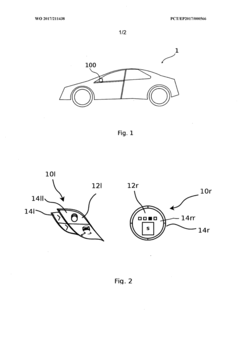
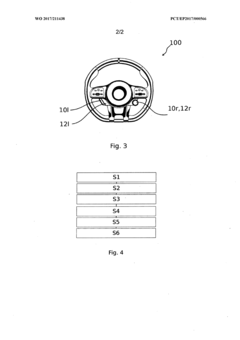
- A steering wheel with integrated first and second control elements and displays allows drivers to select and confirm main and sub-function alternatives without taking their hands off the wheel, using actuating devices that transmit user inputs to a computing unit, enabling intuitive operation of vehicle settings like adaptive chassis and entertainment systems.
Safety Regulations
Safety regulations play a crucial role in the development and implementation of steering wheel technologies, ensuring that innovations in user interaction do not compromise vehicle safety. As steering wheels evolve to incorporate more advanced features and interactive elements, regulatory bodies worldwide are adapting their guidelines to address these new technologies.
The National Highway Traffic Safety Administration (NHTSA) in the United States has been at the forefront of establishing safety standards for steering wheel technologies. Their regulations cover aspects such as airbag deployment, steering column integrity, and the physical characteristics of the steering wheel itself. With the advent of touch-sensitive surfaces and integrated displays on steering wheels, the NHTSA has been working on updating its guidelines to ensure these features do not distract drivers or impede their ability to control the vehicle.
In the European Union, the European New Car Assessment Programme (Euro NCAP) has incorporated evaluations of steering wheel technologies into its safety rating system. They assess how new interactive features impact driver distraction and overall vehicle control. Manufacturers must demonstrate that their innovative steering wheel designs comply with these standards to achieve high safety ratings.
The United Nations Economic Commission for Europe (UNECE) has also been active in developing international regulations for steering wheel technologies. Their efforts focus on creating harmonized standards that can be adopted globally, facilitating the introduction of new technologies across different markets while maintaining consistent safety levels.
One of the key challenges for regulators is balancing innovation with safety. As steering wheels incorporate more advanced features like haptic feedback, gesture recognition, and integrated displays, safety regulations must evolve to address potential risks without stifling technological progress. This has led to the development of performance-based standards rather than prescriptive rules, allowing manufacturers more flexibility in their designs while still meeting safety objectives.
Regulatory bodies are also considering the implications of semi-autonomous and autonomous driving systems on steering wheel design. As vehicles become more automated, the role of the steering wheel may change, potentially leading to new safety considerations. Regulations are being developed to address scenarios where drivers may need to quickly take control from an automated system, ensuring that steering wheel designs facilitate smooth transitions between automated and manual driving modes.
Collaboration between regulatory agencies, automotive manufacturers, and technology companies has become increasingly important in shaping safety regulations for steering wheel technologies. This cooperative approach aims to create standards that are both effective in ensuring safety and flexible enough to accommodate rapid technological advancements in the field of user interaction within vehicles.
The National Highway Traffic Safety Administration (NHTSA) in the United States has been at the forefront of establishing safety standards for steering wheel technologies. Their regulations cover aspects such as airbag deployment, steering column integrity, and the physical characteristics of the steering wheel itself. With the advent of touch-sensitive surfaces and integrated displays on steering wheels, the NHTSA has been working on updating its guidelines to ensure these features do not distract drivers or impede their ability to control the vehicle.
In the European Union, the European New Car Assessment Programme (Euro NCAP) has incorporated evaluations of steering wheel technologies into its safety rating system. They assess how new interactive features impact driver distraction and overall vehicle control. Manufacturers must demonstrate that their innovative steering wheel designs comply with these standards to achieve high safety ratings.
The United Nations Economic Commission for Europe (UNECE) has also been active in developing international regulations for steering wheel technologies. Their efforts focus on creating harmonized standards that can be adopted globally, facilitating the introduction of new technologies across different markets while maintaining consistent safety levels.
One of the key challenges for regulators is balancing innovation with safety. As steering wheels incorporate more advanced features like haptic feedback, gesture recognition, and integrated displays, safety regulations must evolve to address potential risks without stifling technological progress. This has led to the development of performance-based standards rather than prescriptive rules, allowing manufacturers more flexibility in their designs while still meeting safety objectives.
Regulatory bodies are also considering the implications of semi-autonomous and autonomous driving systems on steering wheel design. As vehicles become more automated, the role of the steering wheel may change, potentially leading to new safety considerations. Regulations are being developed to address scenarios where drivers may need to quickly take control from an automated system, ensuring that steering wheel designs facilitate smooth transitions between automated and manual driving modes.
Collaboration between regulatory agencies, automotive manufacturers, and technology companies has become increasingly important in shaping safety regulations for steering wheel technologies. This cooperative approach aims to create standards that are both effective in ensuring safety and flexible enough to accommodate rapid technological advancements in the field of user interaction within vehicles.
User Experience Design
User experience design plays a crucial role in the development of steering wheel technologies that revolutionize user interaction. As vehicles become more technologically advanced, the steering wheel serves as a primary interface between the driver and the vehicle's systems. Designing an intuitive and user-friendly experience is essential for ensuring safety, comfort, and efficiency while driving.
One of the key aspects of user experience design for steering wheel technologies is the integration of touch-sensitive surfaces and haptic feedback. These features allow drivers to control various vehicle functions without taking their hands off the wheel or their eyes off the road. By incorporating capacitive touch sensors and vibration motors, steering wheels can provide tactile responses to user inputs, enhancing the overall driving experience.
Another important consideration in user experience design is the placement and layout of controls on the steering wheel. Ergonomic studies have shown that certain areas of the wheel are more easily accessible while driving, and designers must carefully consider the positioning of buttons, switches, and touch-sensitive zones to maximize usability. This often involves extensive user testing and iterative design processes to optimize the placement of controls for different hand sizes and driving styles.
Visual feedback is also a critical component of steering wheel user experience design. Many modern steering wheels incorporate small displays or LED indicators to provide information about vehicle status, navigation directions, or infotainment system controls. These visual elements must be designed to be easily readable at a glance, without causing distraction or information overload for the driver.
Customization options are becoming increasingly important in steering wheel user experience design. Many manufacturers now offer the ability for drivers to personalize the functions of steering wheel controls, allowing them to assign specific actions to buttons or gestures based on their preferences. This level of customization enhances the user experience by allowing drivers to tailor the interface to their individual needs and habits.
As voice control and artificial intelligence technologies advance, steering wheel designs are also incorporating microphones and voice recognition capabilities. This allows drivers to interact with vehicle systems using natural language commands, further reducing the need for manual input and enhancing safety. User experience designers must consider how to seamlessly integrate voice control with physical controls and visual feedback to create a cohesive and intuitive interface.
In conclusion, user experience design for steering wheel technologies involves a complex interplay of tactile, visual, and auditory elements. By focusing on ergonomics, customization, and intuitive interaction methods, designers can create steering wheel interfaces that not only enhance the driving experience but also improve safety and efficiency on the road.
One of the key aspects of user experience design for steering wheel technologies is the integration of touch-sensitive surfaces and haptic feedback. These features allow drivers to control various vehicle functions without taking their hands off the wheel or their eyes off the road. By incorporating capacitive touch sensors and vibration motors, steering wheels can provide tactile responses to user inputs, enhancing the overall driving experience.
Another important consideration in user experience design is the placement and layout of controls on the steering wheel. Ergonomic studies have shown that certain areas of the wheel are more easily accessible while driving, and designers must carefully consider the positioning of buttons, switches, and touch-sensitive zones to maximize usability. This often involves extensive user testing and iterative design processes to optimize the placement of controls for different hand sizes and driving styles.
Visual feedback is also a critical component of steering wheel user experience design. Many modern steering wheels incorporate small displays or LED indicators to provide information about vehicle status, navigation directions, or infotainment system controls. These visual elements must be designed to be easily readable at a glance, without causing distraction or information overload for the driver.
Customization options are becoming increasingly important in steering wheel user experience design. Many manufacturers now offer the ability for drivers to personalize the functions of steering wheel controls, allowing them to assign specific actions to buttons or gestures based on their preferences. This level of customization enhances the user experience by allowing drivers to tailor the interface to their individual needs and habits.
As voice control and artificial intelligence technologies advance, steering wheel designs are also incorporating microphones and voice recognition capabilities. This allows drivers to interact with vehicle systems using natural language commands, further reducing the need for manual input and enhancing safety. User experience designers must consider how to seamlessly integrate voice control with physical controls and visual feedback to create a cohesive and intuitive interface.
In conclusion, user experience design for steering wheel technologies involves a complex interplay of tactile, visual, and auditory elements. By focusing on ergonomics, customization, and intuitive interaction methods, designers can create steering wheel interfaces that not only enhance the driving experience but also improve safety and efficiency on the road.
Unlock deeper insights with PatSnap Eureka Quick Research — get a full tech report to explore trends and direct your research. Try now!
Generate Your Research Report Instantly with AI Agent
Supercharge your innovation with PatSnap Eureka AI Agent Platform!