
Steering Wheel Trends: Reflecting on Consumer Behavior Changes
JUL 18, 202510 MIN READ
Generate Your Research Report Instantly with AI Agent
Patsnap Eureka helps you evaluate technical feasibility & market potential.
Steering Wheel Evolution and Objectives
The steering wheel has undergone significant evolution since its inception, reflecting changes in automotive technology, safety standards, and consumer preferences. Initially designed as a simple control mechanism, steering wheels have transformed into sophisticated interfaces that integrate multiple functions and enhance the driving experience.
In the early days of automobiles, steering wheels were large, often wooden structures designed purely for directional control. As vehicle designs progressed, steering wheels became smaller and more ergonomic, incorporating materials like plastic and leather for improved grip and comfort. The introduction of power steering in the 1950s allowed for further refinement in steering wheel design, reducing the physical effort required to maneuver vehicles.
The 1970s and 1980s saw the integration of additional controls into steering wheels, such as horn buttons and cruise control switches. This trend accelerated in the 1990s and 2000s with the incorporation of audio controls, allowing drivers to adjust volume and change tracks without taking their hands off the wheel. The advent of airbags also significantly impacted steering wheel design, necessitating a balance between safety features and functionality.
Recent years have witnessed a rapid evolution in steering wheel technology, driven by advancements in vehicle electrification, autonomous driving capabilities, and infotainment systems. Modern steering wheels often feature touch-sensitive controls, haptic feedback, and even display screens. The rise of drive-by-wire systems has enabled the development of steer-by-wire technology, potentially revolutionizing steering wheel design and functionality.
The primary objective of steering wheel evolution has been to enhance driver control, safety, and convenience. As vehicles become more technologically advanced, steering wheels are expected to serve as intuitive interfaces between drivers and increasingly complex automotive systems. Future developments aim to create more responsive, customizable, and intelligent steering wheels that can adapt to individual driving styles and preferences.
Another key goal is to improve safety by integrating advanced driver assistance systems (ADAS) directly into the steering wheel. This includes features like lane departure warnings, collision alerts, and even health monitoring capabilities. The steering wheel of the future may play a crucial role in monitoring driver alertness and facilitating the transition between manual and autonomous driving modes.
As consumer behavior shifts towards more connected and personalized experiences, steering wheel design objectives are expanding to include seamless integration with smartphones and other personal devices. This trend reflects the growing importance of infotainment and connectivity in modern vehicles, with steering wheels becoming central hubs for accessing and controlling a wide range of digital features and services.
In the early days of automobiles, steering wheels were large, often wooden structures designed purely for directional control. As vehicle designs progressed, steering wheels became smaller and more ergonomic, incorporating materials like plastic and leather for improved grip and comfort. The introduction of power steering in the 1950s allowed for further refinement in steering wheel design, reducing the physical effort required to maneuver vehicles.
The 1970s and 1980s saw the integration of additional controls into steering wheels, such as horn buttons and cruise control switches. This trend accelerated in the 1990s and 2000s with the incorporation of audio controls, allowing drivers to adjust volume and change tracks without taking their hands off the wheel. The advent of airbags also significantly impacted steering wheel design, necessitating a balance between safety features and functionality.
Recent years have witnessed a rapid evolution in steering wheel technology, driven by advancements in vehicle electrification, autonomous driving capabilities, and infotainment systems. Modern steering wheels often feature touch-sensitive controls, haptic feedback, and even display screens. The rise of drive-by-wire systems has enabled the development of steer-by-wire technology, potentially revolutionizing steering wheel design and functionality.
The primary objective of steering wheel evolution has been to enhance driver control, safety, and convenience. As vehicles become more technologically advanced, steering wheels are expected to serve as intuitive interfaces between drivers and increasingly complex automotive systems. Future developments aim to create more responsive, customizable, and intelligent steering wheels that can adapt to individual driving styles and preferences.
Another key goal is to improve safety by integrating advanced driver assistance systems (ADAS) directly into the steering wheel. This includes features like lane departure warnings, collision alerts, and even health monitoring capabilities. The steering wheel of the future may play a crucial role in monitoring driver alertness and facilitating the transition between manual and autonomous driving modes.
As consumer behavior shifts towards more connected and personalized experiences, steering wheel design objectives are expanding to include seamless integration with smartphones and other personal devices. This trend reflects the growing importance of infotainment and connectivity in modern vehicles, with steering wheels becoming central hubs for accessing and controlling a wide range of digital features and services.
Consumer Behavior Impact on Steering Wheel Design
Consumer behavior has significantly influenced steering wheel design in recent years, reflecting broader trends in automotive technology and user preferences. The steering wheel, once a purely functional component, has evolved into a sophisticated interface that integrates multiple controls and features to enhance the driving experience. This transformation is largely driven by changing consumer expectations and the increasing demand for connectivity and convenience in vehicles.
One of the most notable impacts of consumer behavior on steering wheel design is the integration of advanced controls. Modern drivers expect to have easy access to a wide range of vehicle functions without taking their hands off the wheel. This has led to the proliferation of multifunction steering wheels equipped with buttons and switches for audio control, cruise control, phone operation, and even voice command activation. The placement and ergonomics of these controls have become crucial design considerations, as manufacturers strive to create intuitive interfaces that minimize driver distraction.
The rise of digital displays and infotainment systems has also influenced steering wheel design. Consumers now expect seamless integration between the steering wheel and the vehicle's digital ecosystem. This has resulted in the development of steering wheels with built-in touchscreens or digital displays, allowing drivers to access information and control various vehicle systems directly from the wheel. Some high-end vehicles even feature customizable digital displays on the steering wheel, enabling drivers to personalize their interface and prioritize the information most relevant to them.
Safety concerns and the increasing focus on driver assistance systems have further shaped steering wheel design. Consumers are increasingly aware of and demanding advanced safety features, leading to the integration of airbag systems within steering wheels and the incorporation of haptic feedback mechanisms to alert drivers of potential hazards. Additionally, as semi-autonomous driving features become more prevalent, steering wheel designs are adapting to accommodate new functionalities, such as light strips that indicate when autonomous mode is engaged or hands-on detection sensors.
The aesthetic aspect of steering wheel design has also evolved in response to consumer preferences. There is a growing demand for premium materials and customizable options, reflecting the steering wheel's role as a tactile focal point of the vehicle interior. Leather wrapping, wood or carbon fiber inserts, and metal accents are now common features, even in mid-range vehicles. Some manufacturers offer heated steering wheels or adjustable grip textures to cater to individual comfort preferences.
Environmental consciousness and sustainability trends are beginning to influence steering wheel design as well. As consumers become more environmentally aware, there is an increasing demand for eco-friendly materials in vehicle interiors. This has led to the exploration of alternative materials for steering wheel construction, such as recycled plastics, sustainable wood, or plant-based leather alternatives. These materials not only appeal to environmentally conscious consumers but also offer opportunities for unique textures and designs.
One of the most notable impacts of consumer behavior on steering wheel design is the integration of advanced controls. Modern drivers expect to have easy access to a wide range of vehicle functions without taking their hands off the wheel. This has led to the proliferation of multifunction steering wheels equipped with buttons and switches for audio control, cruise control, phone operation, and even voice command activation. The placement and ergonomics of these controls have become crucial design considerations, as manufacturers strive to create intuitive interfaces that minimize driver distraction.
The rise of digital displays and infotainment systems has also influenced steering wheel design. Consumers now expect seamless integration between the steering wheel and the vehicle's digital ecosystem. This has resulted in the development of steering wheels with built-in touchscreens or digital displays, allowing drivers to access information and control various vehicle systems directly from the wheel. Some high-end vehicles even feature customizable digital displays on the steering wheel, enabling drivers to personalize their interface and prioritize the information most relevant to them.
Safety concerns and the increasing focus on driver assistance systems have further shaped steering wheel design. Consumers are increasingly aware of and demanding advanced safety features, leading to the integration of airbag systems within steering wheels and the incorporation of haptic feedback mechanisms to alert drivers of potential hazards. Additionally, as semi-autonomous driving features become more prevalent, steering wheel designs are adapting to accommodate new functionalities, such as light strips that indicate when autonomous mode is engaged or hands-on detection sensors.
The aesthetic aspect of steering wheel design has also evolved in response to consumer preferences. There is a growing demand for premium materials and customizable options, reflecting the steering wheel's role as a tactile focal point of the vehicle interior. Leather wrapping, wood or carbon fiber inserts, and metal accents are now common features, even in mid-range vehicles. Some manufacturers offer heated steering wheels or adjustable grip textures to cater to individual comfort preferences.
Environmental consciousness and sustainability trends are beginning to influence steering wheel design as well. As consumers become more environmentally aware, there is an increasing demand for eco-friendly materials in vehicle interiors. This has led to the exploration of alternative materials for steering wheel construction, such as recycled plastics, sustainable wood, or plant-based leather alternatives. These materials not only appeal to environmentally conscious consumers but also offer opportunities for unique textures and designs.
Current Steering Wheel Technologies and Challenges
The steering wheel, a critical interface between driver and vehicle, has undergone significant technological advancements in recent years. Current steering wheel technologies focus on enhancing safety, comfort, and connectivity while addressing the challenges posed by evolving consumer behaviors and expectations.
One of the primary technologies in modern steering wheels is the integration of advanced driver assistance systems (ADAS). These systems incorporate sensors and controls directly into the steering wheel, allowing for features such as lane departure warnings, adaptive cruise control, and collision avoidance. However, the challenge lies in balancing the complexity of these systems with user-friendly interfaces that do not overwhelm or distract drivers.
Haptic feedback technology has also become increasingly prevalent in steering wheels. This feature provides tactile sensations to alert drivers of potential hazards or to confirm inputs without requiring visual attention. While enhancing safety, the implementation of haptic feedback must be carefully calibrated to avoid driver fatigue or desensitization to important alerts.
The rise of electric and autonomous vehicles has introduced new challenges and opportunities for steering wheel design. In electric vehicles, the absence of a traditional drivetrain allows for more flexible steering configurations, including steer-by-wire systems. These systems eliminate the physical connection between the steering wheel and the wheels, potentially improving responsiveness and allowing for variable steering ratios. However, ensuring reliability and maintaining driver confidence in these systems remains a significant challenge.
For autonomous vehicles, the concept of a retractable or stowable steering wheel has gained traction. This design allows for a seamless transition between manual and autonomous driving modes. The technical challenge here lies in creating a robust mechanism that can quickly deploy the steering wheel when needed while ensuring its stability and safety during use.
Customization and personalization have become key consumer demands, leading to the development of configurable steering wheels. These feature adjustable grips, programmable buttons, and even display screens integrated into the wheel itself. The challenge is to create durable, responsive interfaces that can withstand the rigors of daily use while meeting stringent safety standards.
Sustainability concerns have also influenced steering wheel technology, with manufacturers exploring eco-friendly materials and production methods. Biobased materials, recycled plastics, and innovative manufacturing processes are being developed to reduce the environmental impact of steering wheel production. However, these materials must still meet or exceed the performance and durability standards of traditional materials.
As vehicles become more connected, steering wheels are evolving into comprehensive control centers. Voice recognition, gesture control, and touchpads integrated into the steering wheel allow drivers to manage various vehicle functions without taking their hands off the wheel. The challenge here is to create intuitive interfaces that minimize driver distraction while maximizing functionality.
One of the primary technologies in modern steering wheels is the integration of advanced driver assistance systems (ADAS). These systems incorporate sensors and controls directly into the steering wheel, allowing for features such as lane departure warnings, adaptive cruise control, and collision avoidance. However, the challenge lies in balancing the complexity of these systems with user-friendly interfaces that do not overwhelm or distract drivers.
Haptic feedback technology has also become increasingly prevalent in steering wheels. This feature provides tactile sensations to alert drivers of potential hazards or to confirm inputs without requiring visual attention. While enhancing safety, the implementation of haptic feedback must be carefully calibrated to avoid driver fatigue or desensitization to important alerts.
The rise of electric and autonomous vehicles has introduced new challenges and opportunities for steering wheel design. In electric vehicles, the absence of a traditional drivetrain allows for more flexible steering configurations, including steer-by-wire systems. These systems eliminate the physical connection between the steering wheel and the wheels, potentially improving responsiveness and allowing for variable steering ratios. However, ensuring reliability and maintaining driver confidence in these systems remains a significant challenge.
For autonomous vehicles, the concept of a retractable or stowable steering wheel has gained traction. This design allows for a seamless transition between manual and autonomous driving modes. The technical challenge here lies in creating a robust mechanism that can quickly deploy the steering wheel when needed while ensuring its stability and safety during use.
Customization and personalization have become key consumer demands, leading to the development of configurable steering wheels. These feature adjustable grips, programmable buttons, and even display screens integrated into the wheel itself. The challenge is to create durable, responsive interfaces that can withstand the rigors of daily use while meeting stringent safety standards.
Sustainability concerns have also influenced steering wheel technology, with manufacturers exploring eco-friendly materials and production methods. Biobased materials, recycled plastics, and innovative manufacturing processes are being developed to reduce the environmental impact of steering wheel production. However, these materials must still meet or exceed the performance and durability standards of traditional materials.
As vehicles become more connected, steering wheels are evolving into comprehensive control centers. Voice recognition, gesture control, and touchpads integrated into the steering wheel allow drivers to manage various vehicle functions without taking their hands off the wheel. The challenge here is to create intuitive interfaces that minimize driver distraction while maximizing functionality.
Modern Steering Wheel Design Solutions
01 Steering wheel design and ergonomics
Innovations in steering wheel design focus on improving ergonomics and user comfort. This includes adjustable features, ergonomic shapes, and materials that enhance grip and reduce fatigue during long drives. These designs aim to improve the overall driving experience and safety by ensuring better control and reducing driver discomfort.- Ergonomic design and customization of steering wheels: Steering wheel designs focus on ergonomics and customization to enhance driver comfort and control. This includes adjustable features, grip materials, and shapes that cater to different hand sizes and driving preferences. Such designs aim to reduce fatigue and improve overall driving experience, potentially influencing consumer behavior towards specific vehicle models.
- Integration of advanced controls and displays: Modern steering wheels incorporate advanced controls and displays, such as touch-sensitive surfaces, LED indicators, and integrated screens. These features provide easy access to vehicle functions and information, potentially affecting consumer preferences and purchasing decisions by offering enhanced convenience and a high-tech driving experience.
- Safety features and driver assistance systems: Steering wheels are being designed with integrated safety features and driver assistance systems. This includes sensors for detecting driver alertness, haptic feedback for warnings, and integration with advanced driver assistance systems (ADAS). These innovations can significantly influence consumer behavior by addressing safety concerns and offering cutting-edge technology.
- Steering wheel-based user interface for vehicle systems: The steering wheel is increasingly used as a central user interface for various vehicle systems. This includes controls for infotainment, climate, and communication systems. The integration of these functions into the steering wheel can impact consumer preferences by offering a more intuitive and accessible driving experience.
- Adaptive steering systems and consumer preferences: Adaptive steering systems that adjust steering feel and responsiveness based on driving conditions or driver preferences are being developed. These systems can change steering ratios, feedback, and resistance, potentially influencing consumer behavior by offering a personalized driving experience that caters to individual preferences and driving styles.
02 Integration of controls and displays
Modern steering wheels increasingly incorporate various controls and displays directly on the wheel. This integration allows drivers to access vehicle functions, infotainment systems, and driver assistance features without taking their hands off the wheel. Such designs aim to reduce distraction and improve safety while enhancing the user interface of the vehicle.Expand Specific Solutions03 Adaptive steering systems
Adaptive steering systems adjust the steering response based on vehicle speed, driving conditions, and driver preferences. These systems can alter the steering ratio or effort required, providing easier maneuverability at low speeds and increased stability at high speeds. Such technologies aim to enhance both comfort and safety across various driving scenarios.Expand Specific Solutions04 Haptic feedback and driver alerts
Steering wheels equipped with haptic feedback mechanisms provide tactile alerts to drivers. These can include vibrations or subtle movements to warn of potential hazards, lane departures, or other critical information. This technology aims to improve driver awareness and reaction times without relying solely on visual or auditory cues.Expand Specific Solutions05 Consumer behavior analysis and personalization
Advanced systems analyze driver behavior and preferences through interactions with the steering wheel and other vehicle controls. This data is used to personalize the driving experience, adjust vehicle settings, and provide tailored recommendations. Such technologies aim to enhance user satisfaction, comfort, and potentially improve driving habits and safety.Expand Specific Solutions
Key Automotive and HMI Technology Players
The steering wheel market is in a transitional phase, reflecting evolving consumer behaviors and technological advancements. Major players like BMW, Ford, Volvo, and Tesla are competing to innovate in this space, with a focus on integrating advanced features and enhancing user experience. The market size is expanding, driven by the growing automotive industry and increasing demand for smart, connected vehicles. Technological maturity varies, with traditional manufacturers like BMW and Ford leveraging their extensive experience, while newer entrants like Tesla are pushing boundaries with cutting-edge designs. Companies such as Autoliv and Hyundai Mobis are contributing to safety innovations, while tech giants like IBM and Adobe are influencing the integration of digital interfaces and software solutions in steering wheel design.
Bayerische Motoren Werke AG
Technical Solution: BMW has been developing advanced steering wheel technologies that focus on enhancing driver engagement and safety. Their latest steering wheels incorporate haptic feedback systems and gesture control capabilities. The haptic feedback provides subtle vibrations to alert drivers of potential hazards or lane departures without causing distraction. BMW's gesture control allows drivers to perform certain functions, such as adjusting volume or accepting phone calls, with simple hand movements near the steering wheel[3]. Furthermore, BMW has introduced a polygonal steering wheel design in some of their concept cars, which provides a sportier feel and improved grip, reflecting the changing preferences of performance-oriented consumers[4].
Strengths: Enhanced driver engagement, improved safety features, and intuitive controls. Weaknesses: Potential for feature overload and driver distraction if not implemented carefully.
Ford Global Technologies LLC
Technical Solution: Ford has been developing steering wheel technologies that focus on enhancing both safety and user experience. They have introduced a retractable steering wheel concept for future autonomous vehicles, which can be tucked away when not in use, allowing for more flexible interior configurations[9]. Ford has also been working on integrating more advanced driver assistance controls directly into the steering wheel, including lane-keeping assist and adaptive cruise control functions. Their latest steering wheels incorporate capacitive touch sensors to detect the driver's hands, enhancing the effectiveness of their driver assistance systems. Additionally, Ford has been exploring the use of sustainable and recycled materials in steering wheel construction, reflecting growing consumer interest in environmentally friendly vehicle components[10].
Strengths: Adaptability for autonomous driving, integration of advanced driver assistance controls, and focus on sustainability. Weaknesses: Potential increased complexity and cost in manufacturing and maintenance.
Breakthrough Steering Wheel Patents and Research
Steering wheel for a motor vehicle
PatentInactiveEP1807297A2
Innovation
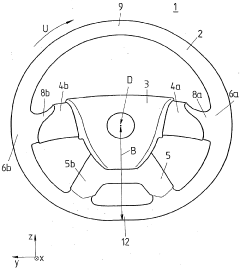
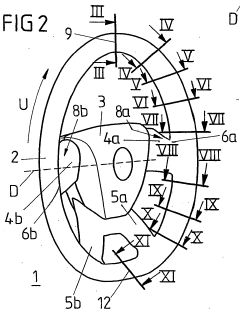
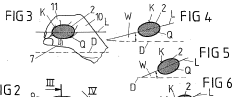
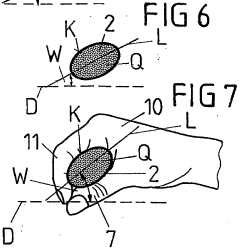
- A steering wheel design where the cross-sectional contour of the rim changes along its circumference, allowing for a spatial orientation adjustment to match the driver's natural hand position, with features like adjustable sections and ergonomic spoke designs to enhance grip and comfort.
Steering wheel for a motor vehicle
PatentWO2006105745A2
Innovation
- A steering wheel design where the cross-sectional contour of the rim changes along its circumference, with varying orientations and shapes to accommodate the driver's hands, including adjustable sections that can be manually or automatically adjusted to optimize grip and comfort, featuring elongated contours and angled longitudinal axes to reduce wrist strain and enhance visibility and support.
Regulatory Framework for Steering Wheel Design
The regulatory framework for steering wheel design is a critical aspect of automotive safety and innovation. Governments and international organizations have established comprehensive guidelines to ensure that steering wheels meet stringent safety standards while allowing for technological advancements.
In the United States, the National Highway Traffic Safety Administration (NHTSA) plays a pivotal role in setting and enforcing safety standards for steering wheels. Federal Motor Vehicle Safety Standard (FMVSS) No. 203 specifically addresses impact protection for drivers from the steering control system. This standard requires steering wheels to absorb energy during a collision, reducing the risk of injury to the driver.
The European Union has similar regulations under the United Nations Economic Commission for Europe (UNECE) guidelines. Regulation No. 12 focuses on the protection of drivers against the steering mechanism in the event of an impact. These regulations ensure that steering wheels across Europe meet uniform safety standards.
In recent years, the regulatory framework has evolved to accommodate new technologies. With the advent of advanced driver assistance systems (ADAS) and the progression towards autonomous vehicles, regulations are being updated to address the integration of electronic controls and sensors into steering wheels.
The incorporation of airbags into steering wheels has also been subject to strict regulations. In the U.S., FMVSS No. 208 outlines the requirements for occupant crash protection, including specifications for steering wheel-mounted airbags. Similar standards exist in other regions, ensuring global consistency in safety measures.
As consumer behavior shifts towards more technologically advanced vehicles, regulators are facing new challenges. The trend towards multifunctional steering wheels, incorporating touch screens and various controls, has prompted discussions on driver distraction and ergonomics. Regulatory bodies are working to strike a balance between innovation and safety, developing guidelines that allow for advanced features while minimizing potential distractions.
The push towards electric and autonomous vehicles is also influencing steering wheel regulations. As the role of the steering wheel evolves, with some concepts even proposing retractable or removable steering wheels, regulatory frameworks are being reassessed to accommodate these futuristic designs while maintaining safety standards.
Globally, there is a move towards harmonization of steering wheel regulations. The World Forum for Harmonization of Vehicle Regulations (WP.29) under the United Nations Economic Commission for Europe is working to develop Global Technical Regulations (GTRs) that can be adopted worldwide, streamlining compliance for manufacturers and ensuring consistent safety standards across markets.
In the United States, the National Highway Traffic Safety Administration (NHTSA) plays a pivotal role in setting and enforcing safety standards for steering wheels. Federal Motor Vehicle Safety Standard (FMVSS) No. 203 specifically addresses impact protection for drivers from the steering control system. This standard requires steering wheels to absorb energy during a collision, reducing the risk of injury to the driver.
The European Union has similar regulations under the United Nations Economic Commission for Europe (UNECE) guidelines. Regulation No. 12 focuses on the protection of drivers against the steering mechanism in the event of an impact. These regulations ensure that steering wheels across Europe meet uniform safety standards.
In recent years, the regulatory framework has evolved to accommodate new technologies. With the advent of advanced driver assistance systems (ADAS) and the progression towards autonomous vehicles, regulations are being updated to address the integration of electronic controls and sensors into steering wheels.
The incorporation of airbags into steering wheels has also been subject to strict regulations. In the U.S., FMVSS No. 208 outlines the requirements for occupant crash protection, including specifications for steering wheel-mounted airbags. Similar standards exist in other regions, ensuring global consistency in safety measures.
As consumer behavior shifts towards more technologically advanced vehicles, regulators are facing new challenges. The trend towards multifunctional steering wheels, incorporating touch screens and various controls, has prompted discussions on driver distraction and ergonomics. Regulatory bodies are working to strike a balance between innovation and safety, developing guidelines that allow for advanced features while minimizing potential distractions.
The push towards electric and autonomous vehicles is also influencing steering wheel regulations. As the role of the steering wheel evolves, with some concepts even proposing retractable or removable steering wheels, regulatory frameworks are being reassessed to accommodate these futuristic designs while maintaining safety standards.
Globally, there is a move towards harmonization of steering wheel regulations. The World Forum for Harmonization of Vehicle Regulations (WP.29) under the United Nations Economic Commission for Europe is working to develop Global Technical Regulations (GTRs) that can be adopted worldwide, streamlining compliance for manufacturers and ensuring consistent safety standards across markets.
Ergonomics and Human Factors in Steering Wheel Development
The ergonomics and human factors in steering wheel development have become increasingly crucial as consumer behavior and expectations evolve. Steering wheel design has progressed significantly from its initial functional purpose to become a central element in the driver-vehicle interface. This evolution reflects changing consumer preferences, technological advancements, and a growing emphasis on driver comfort and safety.
Ergonomic considerations in steering wheel design focus on optimizing the interaction between the driver and the vehicle. Key factors include grip comfort, hand positioning, and the overall shape of the wheel. Modern steering wheels are designed to reduce driver fatigue during long journeys by providing a comfortable and natural hand position. The diameter and thickness of the wheel rim are carefully calibrated to suit a wide range of hand sizes and driving styles.
Human factors research has led to innovations in steering wheel materials and textures. Manufacturers now use a variety of materials, including leather, synthetic fabrics, and soft-touch plastics, to enhance grip and tactile feedback. These materials are selected not only for their functional properties but also to meet consumer expectations for premium feel and aesthetics.
The integration of controls into the steering wheel has been a significant trend, driven by the need to minimize driver distraction. Modern steering wheels often incorporate buttons and switches for audio control, cruise control, and infotainment system navigation. This integration allows drivers to access key functions without removing their hands from the wheel, improving safety and convenience.
Adjustability has become a standard feature in steering wheel design, recognizing the diversity in driver physiology. Tilt and telescopic adjustments allow drivers to customize their steering wheel position for optimal comfort and control. Some high-end vehicles even offer memory functions to store preferred positions for multiple drivers.
The advent of advanced driver assistance systems (ADAS) has introduced new challenges and opportunities in steering wheel design. Haptic feedback systems integrated into the wheel can provide subtle vibrations or resistance to alert drivers of potential hazards or lane departures. This tactile communication enhances the driver's situational awareness without relying solely on visual or auditory cues.
As vehicle interiors become more technologically advanced, steering wheels are evolving to incorporate digital displays and touch-sensitive surfaces. These features allow for customizable interfaces and real-time information display, further blurring the line between the steering wheel and the vehicle's broader infotainment system.
The push towards autonomous vehicles is also influencing steering wheel design. Concepts for retractable or stowable steering wheels are being explored for vehicles that can transition between manual and autonomous modes. This presents new challenges in ensuring that ergonomics and safety are maintained across different driving scenarios.
Ergonomic considerations in steering wheel design focus on optimizing the interaction between the driver and the vehicle. Key factors include grip comfort, hand positioning, and the overall shape of the wheel. Modern steering wheels are designed to reduce driver fatigue during long journeys by providing a comfortable and natural hand position. The diameter and thickness of the wheel rim are carefully calibrated to suit a wide range of hand sizes and driving styles.
Human factors research has led to innovations in steering wheel materials and textures. Manufacturers now use a variety of materials, including leather, synthetic fabrics, and soft-touch plastics, to enhance grip and tactile feedback. These materials are selected not only for their functional properties but also to meet consumer expectations for premium feel and aesthetics.
The integration of controls into the steering wheel has been a significant trend, driven by the need to minimize driver distraction. Modern steering wheels often incorporate buttons and switches for audio control, cruise control, and infotainment system navigation. This integration allows drivers to access key functions without removing their hands from the wheel, improving safety and convenience.
Adjustability has become a standard feature in steering wheel design, recognizing the diversity in driver physiology. Tilt and telescopic adjustments allow drivers to customize their steering wheel position for optimal comfort and control. Some high-end vehicles even offer memory functions to store preferred positions for multiple drivers.
The advent of advanced driver assistance systems (ADAS) has introduced new challenges and opportunities in steering wheel design. Haptic feedback systems integrated into the wheel can provide subtle vibrations or resistance to alert drivers of potential hazards or lane departures. This tactile communication enhances the driver's situational awareness without relying solely on visual or auditory cues.
As vehicle interiors become more technologically advanced, steering wheels are evolving to incorporate digital displays and touch-sensitive surfaces. These features allow for customizable interfaces and real-time information display, further blurring the line between the steering wheel and the vehicle's broader infotainment system.
The push towards autonomous vehicles is also influencing steering wheel design. Concepts for retractable or stowable steering wheels are being explored for vehicles that can transition between manual and autonomous modes. This presents new challenges in ensuring that ergonomics and safety are maintained across different driving scenarios.
Unlock deeper insights with Patsnap Eureka Quick Research — get a full tech report to explore trends and direct your research. Try now!
Generate Your Research Report Instantly with AI Agent
Supercharge your innovation with Patsnap Eureka AI Agent Platform!