

Submersible pump challenges in high-temperature environments.
JUL 15, 20259 MIN READ
Generate Your Research Report Instantly with AI Agent
PatSnap Eureka helps you evaluate technical feasibility & market potential.
High-Temp Pump Tech Evolution
The evolution of high-temperature submersible pump technology has been driven by the increasing demand for efficient and reliable pumping solutions in extreme environments. This progression can be traced through several key stages, each marked by significant technological advancements and innovative approaches to overcome the challenges posed by high-temperature operations.
In the early stages of development, conventional submersible pumps were adapted for use in moderately elevated temperatures. These initial designs primarily focused on improving the heat resistance of materials used in pump construction, such as seals and electrical insulation. However, these adaptations were limited in their effectiveness, often failing to withstand prolonged exposure to temperatures exceeding 150°C.
The next phase saw the introduction of specialized cooling systems integrated into pump designs. This included the development of oil-filled motors and the use of thermal barriers to protect sensitive components from extreme heat. These innovations allowed pumps to operate in environments with temperatures up to 200°C for extended periods, significantly expanding their application range in geothermal wells and certain oil and gas operations.
A major breakthrough came with the advent of advanced materials science. The incorporation of high-performance polymers, ceramics, and metal alloys in pump construction marked a turning point in high-temperature pump technology. These materials offered superior heat resistance and mechanical properties, enabling pumps to function reliably in environments approaching 300°C.
Recent years have witnessed a shift towards more holistic design approaches. Engineers began focusing on the entire pump system, including motor, impeller, and housing designs, to optimize performance in high-temperature conditions. This systemic approach led to the development of pumps with improved efficiency, longer operational lifespans, and enhanced reliability in extreme environments.
The latest frontier in high-temperature pump technology involves the integration of smart sensors and advanced monitoring systems. These innovations allow for real-time performance tracking and predictive maintenance, crucial for managing the increased wear and stress associated with high-temperature operations. Additionally, the use of computational fluid dynamics and advanced simulation tools has revolutionized the design process, allowing for more precise optimization of pump components for specific high-temperature applications.
Looking forward, the evolution of high-temperature submersible pump technology is likely to continue along paths of material innovation, system integration, and intelligent operation. Emerging areas of research include the development of nano-engineered surfaces for improved heat dissipation, the use of advanced composites for lighter yet more durable pump components, and the integration of AI-driven control systems for adaptive performance in varying temperature conditions.
In the early stages of development, conventional submersible pumps were adapted for use in moderately elevated temperatures. These initial designs primarily focused on improving the heat resistance of materials used in pump construction, such as seals and electrical insulation. However, these adaptations were limited in their effectiveness, often failing to withstand prolonged exposure to temperatures exceeding 150°C.
The next phase saw the introduction of specialized cooling systems integrated into pump designs. This included the development of oil-filled motors and the use of thermal barriers to protect sensitive components from extreme heat. These innovations allowed pumps to operate in environments with temperatures up to 200°C for extended periods, significantly expanding their application range in geothermal wells and certain oil and gas operations.
A major breakthrough came with the advent of advanced materials science. The incorporation of high-performance polymers, ceramics, and metal alloys in pump construction marked a turning point in high-temperature pump technology. These materials offered superior heat resistance and mechanical properties, enabling pumps to function reliably in environments approaching 300°C.
Recent years have witnessed a shift towards more holistic design approaches. Engineers began focusing on the entire pump system, including motor, impeller, and housing designs, to optimize performance in high-temperature conditions. This systemic approach led to the development of pumps with improved efficiency, longer operational lifespans, and enhanced reliability in extreme environments.
The latest frontier in high-temperature pump technology involves the integration of smart sensors and advanced monitoring systems. These innovations allow for real-time performance tracking and predictive maintenance, crucial for managing the increased wear and stress associated with high-temperature operations. Additionally, the use of computational fluid dynamics and advanced simulation tools has revolutionized the design process, allowing for more precise optimization of pump components for specific high-temperature applications.
Looking forward, the evolution of high-temperature submersible pump technology is likely to continue along paths of material innovation, system integration, and intelligent operation. Emerging areas of research include the development of nano-engineered surfaces for improved heat dissipation, the use of advanced composites for lighter yet more durable pump components, and the integration of AI-driven control systems for adaptive performance in varying temperature conditions.
Market Demand Analysis
The market demand for submersible pumps capable of operating in high-temperature environments has been steadily increasing across various industries. This growth is primarily driven by the expanding needs of sectors such as geothermal energy production, deep-sea oil and gas extraction, and certain chemical processing applications. These industries require pumps that can withstand extreme temperatures while maintaining operational efficiency and reliability.
In the geothermal energy sector, the global market is projected to grow significantly in the coming years, with a corresponding increase in demand for high-temperature submersible pumps. These pumps are essential for extracting hot water from deep underground reservoirs, a critical process in geothermal power generation. As more countries invest in renewable energy sources, the geothermal market expansion directly translates to a higher demand for specialized submersible pumps.
The oil and gas industry, particularly in deep-sea operations, continues to be a major driver for high-temperature submersible pump technology. As easily accessible oil reserves become depleted, exploration and extraction activities are moving into deeper and hotter environments. This trend necessitates pumps that can operate reliably in temperatures exceeding 200°C, creating a niche market for advanced submersible pump solutions.
Chemical processing industries also contribute to the growing demand for high-temperature submersible pumps. Many chemical reactions and processes require elevated temperatures, and pumps used in these applications must withstand both heat and potentially corrosive substances. The chemical industry's continuous expansion and the increasing complexity of processes further fuel the need for more robust and heat-resistant pumping solutions.
Market analysis indicates that the Asia-Pacific region is expected to witness the highest growth rate in the high-temperature submersible pump market. This is attributed to rapid industrialization, increasing energy demands, and substantial investments in geothermal projects in countries like Indonesia, the Philippines, and Japan. North America and Europe also show strong market potential, driven by ongoing technological advancements and the push for sustainable energy solutions.
The market demand is not only focused on the pumps themselves but also on associated technologies that enhance their performance in high-temperature environments. This includes advanced materials for pump construction, improved sealing technologies, and innovative cooling systems. Manufacturers are increasingly investing in research and development to meet these evolving market needs, leading to a competitive landscape where technological innovation is a key differentiator.
Despite the growing demand, challenges such as high initial costs and complex maintenance requirements for high-temperature submersible pumps may slightly temper market growth. However, the long-term benefits of increased efficiency and reliability in extreme environments continue to drive adoption across industries. As technology advances and production scales up, it is anticipated that these barriers will gradually diminish, further expanding the market potential for high-temperature submersible pumps.
In the geothermal energy sector, the global market is projected to grow significantly in the coming years, with a corresponding increase in demand for high-temperature submersible pumps. These pumps are essential for extracting hot water from deep underground reservoirs, a critical process in geothermal power generation. As more countries invest in renewable energy sources, the geothermal market expansion directly translates to a higher demand for specialized submersible pumps.
The oil and gas industry, particularly in deep-sea operations, continues to be a major driver for high-temperature submersible pump technology. As easily accessible oil reserves become depleted, exploration and extraction activities are moving into deeper and hotter environments. This trend necessitates pumps that can operate reliably in temperatures exceeding 200°C, creating a niche market for advanced submersible pump solutions.
Chemical processing industries also contribute to the growing demand for high-temperature submersible pumps. Many chemical reactions and processes require elevated temperatures, and pumps used in these applications must withstand both heat and potentially corrosive substances. The chemical industry's continuous expansion and the increasing complexity of processes further fuel the need for more robust and heat-resistant pumping solutions.
Market analysis indicates that the Asia-Pacific region is expected to witness the highest growth rate in the high-temperature submersible pump market. This is attributed to rapid industrialization, increasing energy demands, and substantial investments in geothermal projects in countries like Indonesia, the Philippines, and Japan. North America and Europe also show strong market potential, driven by ongoing technological advancements and the push for sustainable energy solutions.
The market demand is not only focused on the pumps themselves but also on associated technologies that enhance their performance in high-temperature environments. This includes advanced materials for pump construction, improved sealing technologies, and innovative cooling systems. Manufacturers are increasingly investing in research and development to meet these evolving market needs, leading to a competitive landscape where technological innovation is a key differentiator.
Despite the growing demand, challenges such as high initial costs and complex maintenance requirements for high-temperature submersible pumps may slightly temper market growth. However, the long-term benefits of increased efficiency and reliability in extreme environments continue to drive adoption across industries. As technology advances and production scales up, it is anticipated that these barriers will gradually diminish, further expanding the market potential for high-temperature submersible pumps.
Current Tech Limitations
Submersible pumps operating in high-temperature environments face significant technical limitations that hinder their performance and reliability. One of the primary challenges is the degradation of materials used in pump construction. Conventional elastomers and polymers used for seals, gaskets, and insulation often break down or lose their properties when exposed to extreme heat, leading to premature failure and reduced pump efficiency.
The electrical components of submersible pumps are particularly vulnerable to high-temperature conditions. Standard motor windings and insulation materials may not withstand prolonged exposure to elevated temperatures, resulting in short circuits, reduced motor efficiency, and ultimately, pump failure. Additionally, the lubricants used in bearings and other moving parts tend to lose their viscosity and lubricating properties at high temperatures, causing increased friction and wear.
Thermal expansion poses another significant challenge for submersible pumps in high-temperature environments. Differential expansion rates between various pump components can lead to misalignment, increased stress on bearings, and potential leakage at seal interfaces. This issue is particularly problematic in applications where temperature fluctuations are common, as repeated thermal cycling can accelerate wear and fatigue.
The cooling of submersible pumps becomes increasingly difficult as ambient temperatures rise. Traditional cooling methods, such as using the pumped fluid as a heat sink, become less effective when the fluid itself is at high temperatures. This can lead to overheating of motor windings and other critical components, reducing the pump's operational lifespan and increasing the risk of catastrophic failure.
Corrosion and scaling are exacerbated in high-temperature environments, particularly when pumping geothermal fluids or other aggressive media. The elevated temperatures accelerate chemical reactions, leading to rapid deterioration of pump materials and the formation of mineral deposits that can impair pump performance and efficiency.
Current sensor and monitoring technologies also face limitations in high-temperature applications. Many conventional sensors and electronic monitoring devices are not designed to operate reliably at extreme temperatures, making it challenging to accurately assess pump performance and predict maintenance needs in real-time.
The combination of these technical limitations often results in reduced pump efficiency, increased maintenance requirements, and shorter operational lifespans for submersible pumps in high-temperature environments. These challenges necessitate the development of advanced materials, improved cooling systems, and innovative design solutions to enhance the reliability and performance of submersible pumps under extreme thermal conditions.
The electrical components of submersible pumps are particularly vulnerable to high-temperature conditions. Standard motor windings and insulation materials may not withstand prolonged exposure to elevated temperatures, resulting in short circuits, reduced motor efficiency, and ultimately, pump failure. Additionally, the lubricants used in bearings and other moving parts tend to lose their viscosity and lubricating properties at high temperatures, causing increased friction and wear.
Thermal expansion poses another significant challenge for submersible pumps in high-temperature environments. Differential expansion rates between various pump components can lead to misalignment, increased stress on bearings, and potential leakage at seal interfaces. This issue is particularly problematic in applications where temperature fluctuations are common, as repeated thermal cycling can accelerate wear and fatigue.
The cooling of submersible pumps becomes increasingly difficult as ambient temperatures rise. Traditional cooling methods, such as using the pumped fluid as a heat sink, become less effective when the fluid itself is at high temperatures. This can lead to overheating of motor windings and other critical components, reducing the pump's operational lifespan and increasing the risk of catastrophic failure.
Corrosion and scaling are exacerbated in high-temperature environments, particularly when pumping geothermal fluids or other aggressive media. The elevated temperatures accelerate chemical reactions, leading to rapid deterioration of pump materials and the formation of mineral deposits that can impair pump performance and efficiency.
Current sensor and monitoring technologies also face limitations in high-temperature applications. Many conventional sensors and electronic monitoring devices are not designed to operate reliably at extreme temperatures, making it challenging to accurately assess pump performance and predict maintenance needs in real-time.
The combination of these technical limitations often results in reduced pump efficiency, increased maintenance requirements, and shorter operational lifespans for submersible pumps in high-temperature environments. These challenges necessitate the development of advanced materials, improved cooling systems, and innovative design solutions to enhance the reliability and performance of submersible pumps under extreme thermal conditions.
Existing Heat Mitigation Solutions
01 High-temperature resistant materials
Submersible pumps can be designed with high-temperature resistant materials to withstand extreme operating conditions. These materials may include special alloys, ceramics, or advanced polymers that maintain their structural integrity and performance at elevated temperatures. The use of such materials enhances the pump's ability to function effectively in hot environments, such as geothermal wells or industrial processes involving heated fluids.- High-temperature resistant materials: Submersible pumps designed for high-temperature environments utilize specialized materials that can withstand extreme heat. These materials may include heat-resistant alloys, ceramics, or advanced polymers that maintain their structural integrity and performance at elevated temperatures. The use of such materials enhances the pump's durability and extends its operational lifespan in hot environments.
- Cooling systems for temperature regulation: To maintain optimal operating temperatures, submersible pumps may incorporate cooling systems. These can include internal circulation of coolant fluids, heat exchangers, or innovative designs that facilitate heat dissipation. Such cooling mechanisms help prevent overheating and ensure consistent performance in high-temperature applications.
- Temperature monitoring and control systems: Advanced submersible pumps often feature integrated temperature monitoring and control systems. These systems use sensors to continuously measure the pump's temperature and can automatically adjust operation or shut down the pump if critical temperature thresholds are exceeded. This helps prevent damage from overheating and ensures safe operation in varying temperature conditions.
- Thermal insulation techniques: Submersible pumps designed for temperature resistance may employ various thermal insulation techniques. These can include the use of insulating materials, air gaps, or specialized coatings that help isolate the pump's critical components from extreme temperatures. Effective thermal insulation contributes to maintaining optimal operating conditions and protecting sensitive parts from heat-related damage.
- Specialized sealing and lubrication systems: Temperature-resistant submersible pumps often feature specialized sealing and lubrication systems designed to withstand high temperatures. These may include heat-resistant seals, gaskets, and lubricants that maintain their properties under extreme conditions. Such systems help prevent leaks, reduce friction, and ensure smooth operation of the pump in high-temperature environments.
02 Cooling systems for submersible pumps
Incorporating cooling systems into submersible pumps can significantly improve their temperature resistance. These systems may include internal circulation of coolant, heat exchangers, or innovative designs that facilitate heat dissipation. Effective cooling mechanisms help maintain optimal operating temperatures for the pump's components, extending its lifespan and ensuring reliable performance in high-temperature environments.Expand Specific Solutions03 Temperature monitoring and control
Advanced temperature monitoring and control systems can be integrated into submersible pumps to enhance their temperature resistance. These systems may include sensors, thermostats, and automated shut-off mechanisms that prevent overheating. By continuously monitoring and adjusting operating conditions, these systems help maintain the pump within safe temperature ranges, protecting it from thermal damage and ensuring optimal performance.Expand Specific Solutions04 Thermal insulation techniques
Implementing effective thermal insulation techniques can improve the temperature resistance of submersible pumps. This may involve using insulating materials or creating thermal barriers around critical components. Proper insulation helps protect sensitive parts from extreme temperatures, reducing heat transfer and maintaining the pump's efficiency in challenging thermal environments.Expand Specific Solutions05 Specialized sealing and lubrication systems
Developing specialized sealing and lubrication systems can enhance the temperature resistance of submersible pumps. These systems may use high-temperature resistant seals, advanced lubricants, or innovative designs that maintain proper sealing and lubrication under extreme thermal conditions. Effective sealing and lubrication help prevent fluid leakage, reduce friction, and ensure smooth operation of the pump in high-temperature environments.Expand Specific Solutions
Key Industry Players
The submersible pump market for high-temperature environments is in a growth phase, driven by increasing demand in sectors like geothermal energy and deep-sea oil extraction. The global market size is expanding, with projections indicating significant growth in the coming years. Technologically, the field is advancing rapidly, with companies like Flowserve, Baker Hughes, and Ebara leading innovation. These firms are developing pumps with enhanced heat-resistant materials and cooling systems to withstand extreme temperatures. Kawasaki Heavy Industries and Grundfos are also making strides in this area, focusing on improving efficiency and durability. The competition is intense, with both established players and emerging companies like Jiangsu Yatai Pump Group contributing to technological advancements.
Baker Hughes Co.
Technical Solution: Baker Hughes has developed advanced submersible pump systems specifically designed for high-temperature environments. Their ESP (Electric Submersible Pump) technology incorporates innovative materials and cooling systems to withstand temperatures up to 218°C (425°F) [1]. The company's high-temperature ESPs feature specialized motor designs with improved insulation and sealing techniques to prevent electrical failures. Additionally, Baker Hughes has implemented advanced power and control systems that optimize pump performance in extreme conditions, enhancing overall system reliability and efficiency [2].
Strengths: Extensive experience in oil and gas industry, cutting-edge materials science, and advanced cooling technologies. Weaknesses: High initial costs and potential limitations in ultra-deep geothermal applications.
Ebara Corp.
Technical Solution: Ebara Corporation has developed a range of submersible pumps designed for high-temperature applications, particularly in geothermal power plants. Their pumps utilize advanced materials such as super duplex stainless steel and specialized coatings to resist corrosion and wear in harsh environments. Ebara's high-temperature submersible pumps incorporate innovative shaft sealing technologies and optimized impeller designs to maintain efficiency at elevated temperatures. The company has also implemented advanced cooling systems, including internal circulation methods, to protect critical components from thermal stress [3].
Strengths: Strong presence in geothermal markets, expertise in materials engineering, and efficient pump designs. Weaknesses: Limited market share in oil and gas sector compared to some competitors.
Core Innovations in Materials
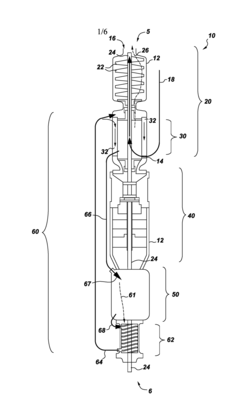
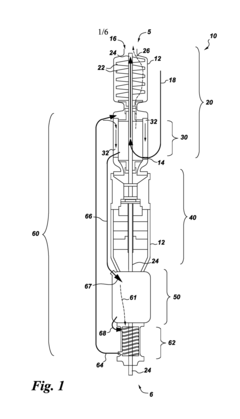
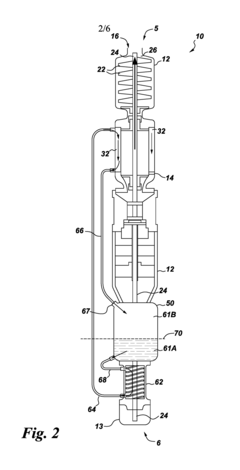
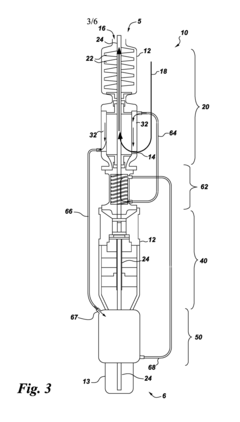
Self-cooling electric submersible pump
PatentActiveUS20170292533A1
Innovation
- A self-cooling electric submersible pump system utilizing a multi-component coolant fluid with a high boiling point first fluid and a low boiling point second fluid, where the second fluid is compressed and expanded within a closed loop to transfer heat to the production fluid, cooling the motor section and enhancing power density.
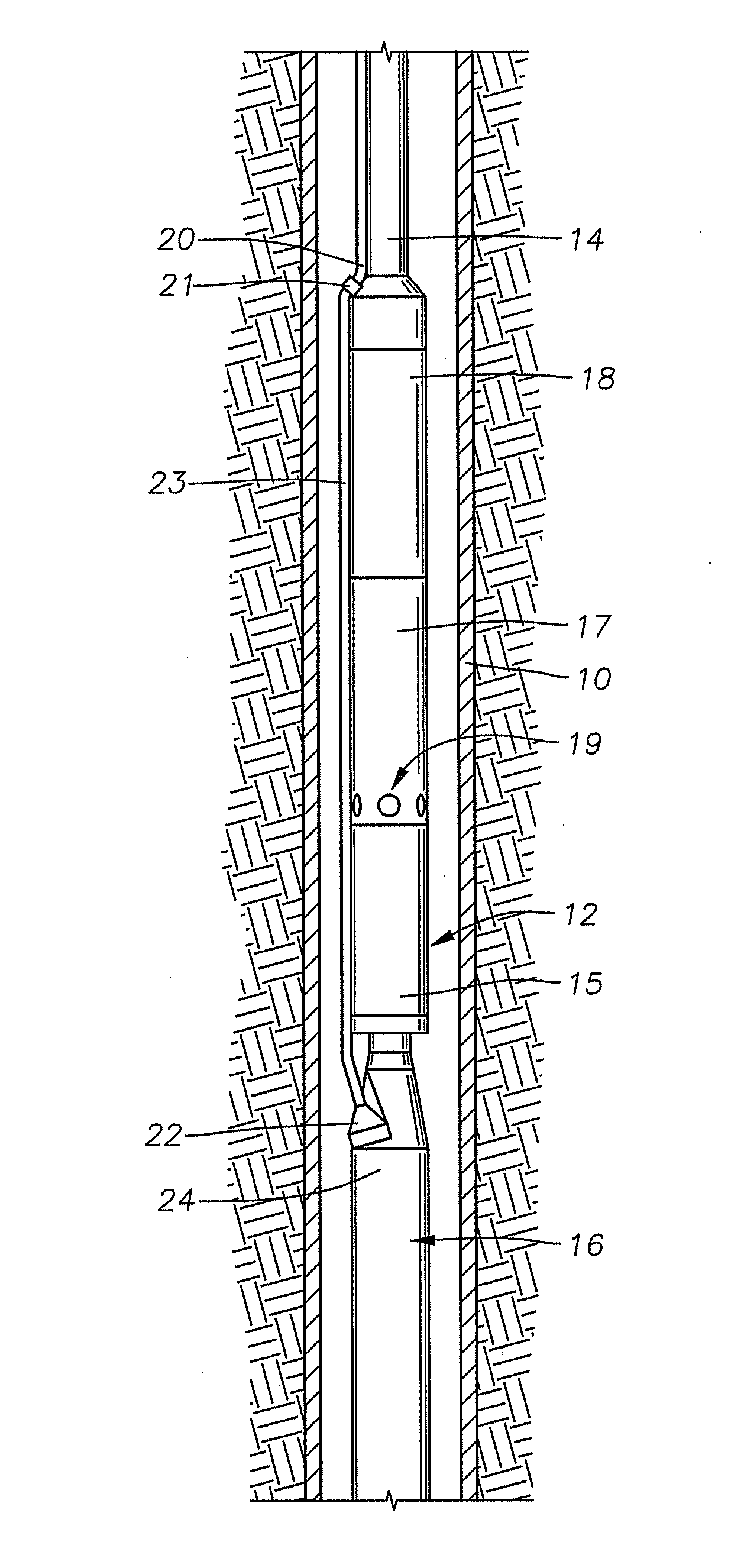
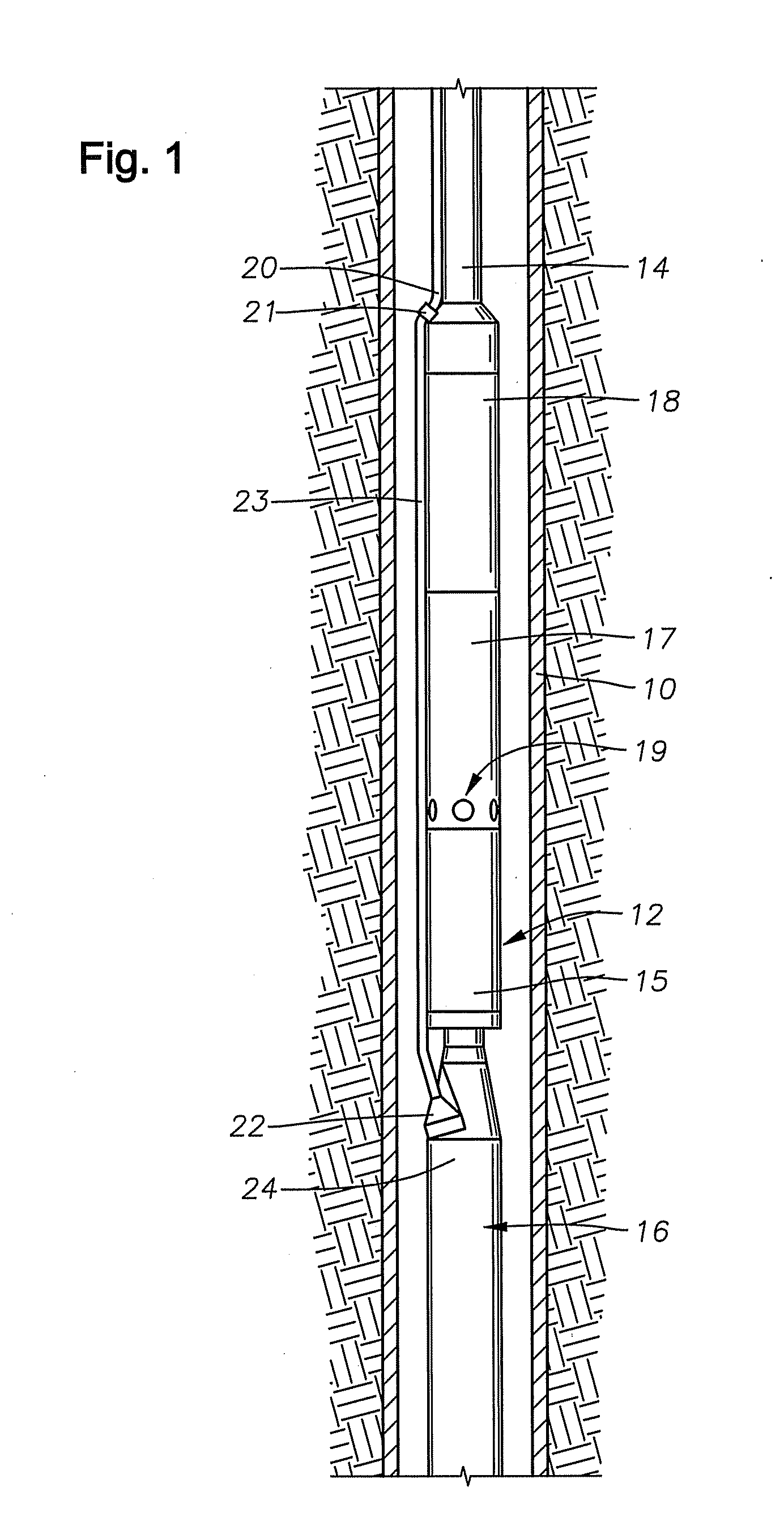
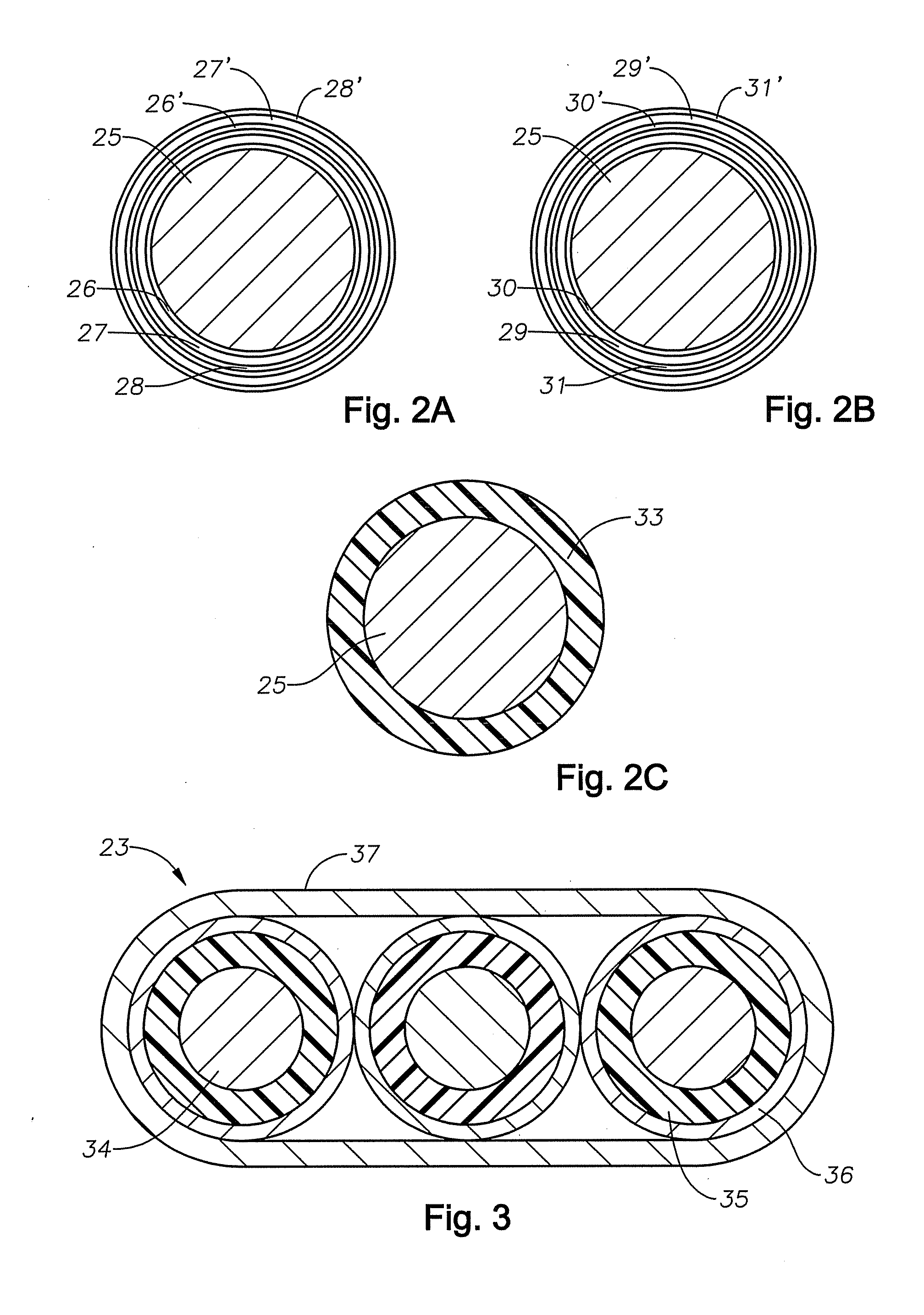
Electrical Submersible Pump System Having High Temperature Slot, End Bell and Phase-to-Phase Insulation
PatentActiveUS20120063934A1
Innovation
- The use of polyimide film insulation with polyether ether ketone (PEEK) and polytetrafluoroethylene (PTFE) layers around magnet wires and end bell areas, along with enhanced motor oil with additives, to improve heat management and durability in high-temperature environments.

Environmental Impact Assessment
The environmental impact of submersible pumps in high-temperature environments is a critical consideration for industries utilizing this technology. These pumps, while essential for various applications, can pose significant challenges to the surrounding ecosystem when operating in extreme heat conditions.
One of the primary environmental concerns is the potential for thermal pollution. Submersible pumps operating in high-temperature environments often discharge heated water back into natural water bodies. This can lead to a rise in water temperature, affecting aquatic life and altering the ecological balance of the affected areas. Fish and other aquatic organisms are particularly sensitive to temperature changes, and even small increases can disrupt their breeding patterns, migration routes, and overall survival rates.
Additionally, the materials used in the construction of submersible pumps for high-temperature applications may pose environmental risks. Specialized alloys and coatings designed to withstand extreme heat can potentially leach harmful substances into the surrounding water. This contamination can have far-reaching effects on both aquatic and terrestrial ecosystems, potentially entering the food chain and affecting a wide range of species.
The energy consumption of these pumps is another environmental factor to consider. High-temperature environments often require more robust and energy-intensive pumping systems to maintain efficiency. This increased energy demand can contribute to higher greenhouse gas emissions if the power source is not renewable, exacerbating climate change concerns.
Noise pollution is an often-overlooked environmental impact of submersible pumps in high-temperature settings. The increased stress on pump components can lead to higher operational noise levels, potentially disturbing marine life and affecting their communication and navigation abilities.
Furthermore, the installation and maintenance of submersible pumps in high-temperature environments may require more frequent interventions, leading to increased human activity in sensitive ecosystems. This can result in habitat disturbance and potential introduction of invasive species through equipment or personnel movement.
To mitigate these environmental impacts, industries employing submersible pumps in high-temperature environments must prioritize sustainable practices. This includes implementing advanced cooling systems to reduce thermal discharge, using environmentally friendly materials in pump construction, and optimizing energy efficiency. Regular environmental monitoring and impact assessments should be conducted to ensure compliance with ecological standards and to identify areas for improvement in pump design and operation.
One of the primary environmental concerns is the potential for thermal pollution. Submersible pumps operating in high-temperature environments often discharge heated water back into natural water bodies. This can lead to a rise in water temperature, affecting aquatic life and altering the ecological balance of the affected areas. Fish and other aquatic organisms are particularly sensitive to temperature changes, and even small increases can disrupt their breeding patterns, migration routes, and overall survival rates.
Additionally, the materials used in the construction of submersible pumps for high-temperature applications may pose environmental risks. Specialized alloys and coatings designed to withstand extreme heat can potentially leach harmful substances into the surrounding water. This contamination can have far-reaching effects on both aquatic and terrestrial ecosystems, potentially entering the food chain and affecting a wide range of species.
The energy consumption of these pumps is another environmental factor to consider. High-temperature environments often require more robust and energy-intensive pumping systems to maintain efficiency. This increased energy demand can contribute to higher greenhouse gas emissions if the power source is not renewable, exacerbating climate change concerns.
Noise pollution is an often-overlooked environmental impact of submersible pumps in high-temperature settings. The increased stress on pump components can lead to higher operational noise levels, potentially disturbing marine life and affecting their communication and navigation abilities.
Furthermore, the installation and maintenance of submersible pumps in high-temperature environments may require more frequent interventions, leading to increased human activity in sensitive ecosystems. This can result in habitat disturbance and potential introduction of invasive species through equipment or personnel movement.
To mitigate these environmental impacts, industries employing submersible pumps in high-temperature environments must prioritize sustainable practices. This includes implementing advanced cooling systems to reduce thermal discharge, using environmentally friendly materials in pump construction, and optimizing energy efficiency. Regular environmental monitoring and impact assessments should be conducted to ensure compliance with ecological standards and to identify areas for improvement in pump design and operation.
Regulatory Compliance Challenges
Regulatory compliance challenges pose significant hurdles for submersible pump operations in high-temperature environments. These challenges stem from the need to adhere to stringent safety standards and environmental regulations while maintaining operational efficiency. One primary concern is the adherence to temperature limits set by regulatory bodies to prevent equipment failure and ensure worker safety. Many jurisdictions impose strict guidelines on the maximum operating temperatures for submersible pumps, which can be particularly challenging in high-temperature environments.
Environmental protection regulations also play a crucial role in shaping compliance challenges. The potential for leaks or spills in high-temperature environments is heightened, necessitating robust containment systems and regular monitoring. Regulatory bodies often require comprehensive environmental impact assessments and mitigation plans, which can be complex and costly to implement in extreme temperature conditions.
Material selection and certification present another compliance hurdle. Pumps operating in high-temperature environments must use materials that can withstand extreme heat while meeting regulatory standards for durability and safety. Obtaining certifications for these specialized materials can be a time-consuming and expensive process, often requiring extensive testing and documentation.
Maintenance and inspection regulations add another layer of complexity. High-temperature environments accelerate wear and tear on equipment, necessitating more frequent inspections and maintenance. Regulatory bodies typically mandate regular safety checks and equipment audits, which can be challenging to perform in extreme heat conditions. Compliance with these requirements often involves developing specialized maintenance protocols and training programs for personnel.
Emissions control is a growing concern in regulatory compliance for submersible pumps in high-temperature environments. As environmental regulations become more stringent, operators must implement advanced technologies to minimize emissions and meet air quality standards. This can be particularly challenging in high-temperature settings where traditional emission control methods may be less effective.
Lastly, documentation and reporting requirements present ongoing compliance challenges. Operators must maintain detailed records of equipment performance, maintenance activities, and environmental monitoring data. In high-temperature environments, this often requires implementing robust data collection systems capable of withstanding extreme conditions. Ensuring the accuracy and completeness of this documentation is crucial for maintaining regulatory compliance and avoiding potential penalties.
Environmental protection regulations also play a crucial role in shaping compliance challenges. The potential for leaks or spills in high-temperature environments is heightened, necessitating robust containment systems and regular monitoring. Regulatory bodies often require comprehensive environmental impact assessments and mitigation plans, which can be complex and costly to implement in extreme temperature conditions.
Material selection and certification present another compliance hurdle. Pumps operating in high-temperature environments must use materials that can withstand extreme heat while meeting regulatory standards for durability and safety. Obtaining certifications for these specialized materials can be a time-consuming and expensive process, often requiring extensive testing and documentation.
Maintenance and inspection regulations add another layer of complexity. High-temperature environments accelerate wear and tear on equipment, necessitating more frequent inspections and maintenance. Regulatory bodies typically mandate regular safety checks and equipment audits, which can be challenging to perform in extreme heat conditions. Compliance with these requirements often involves developing specialized maintenance protocols and training programs for personnel.
Emissions control is a growing concern in regulatory compliance for submersible pumps in high-temperature environments. As environmental regulations become more stringent, operators must implement advanced technologies to minimize emissions and meet air quality standards. This can be particularly challenging in high-temperature settings where traditional emission control methods may be less effective.
Lastly, documentation and reporting requirements present ongoing compliance challenges. Operators must maintain detailed records of equipment performance, maintenance activities, and environmental monitoring data. In high-temperature environments, this often requires implementing robust data collection systems capable of withstanding extreme conditions. Ensuring the accuracy and completeness of this documentation is crucial for maintaining regulatory compliance and avoiding potential penalties.
Unlock deeper insights with PatSnap Eureka Quick Research — get a full tech report to explore trends and direct your research. Try now!
Generate Your Research Report Instantly with AI Agent
Supercharge your innovation with PatSnap Eureka AI Agent Platform!