Submersible pump material innovations for increased durability.
JUL 15, 202510 MIN READ
Generate Your Research Report Instantly with AI Agent
PatSnap Eureka helps you evaluate technical feasibility & market potential.
Submersible Pump Evolution and Objectives
Submersible pumps have undergone significant evolution since their inception in the early 20th century. Initially designed for dewatering applications in mines and construction sites, these pumps have progressively adapted to meet the demands of various industries, including oil and gas, wastewater treatment, and deep-sea exploration. The primary objective driving this evolution has been the need for increased durability and reliability in harsh operating environments.
The development of submersible pumps has been closely tied to advancements in material science and engineering. Early models were predominantly constructed using cast iron and bronze, which offered limited resistance to corrosion and wear. As the pumps were increasingly deployed in more challenging conditions, the need for superior materials became apparent. This led to the introduction of stainless steel components in the mid-20th century, significantly improving corrosion resistance and extending pump lifespan.
In recent decades, the focus has shifted towards enhancing the durability of submersible pumps through innovative material solutions. The integration of high-performance polymers and composites has played a crucial role in this regard. These materials offer excellent resistance to abrasion, chemical attack, and cavitation, addressing some of the most common causes of pump failure. Additionally, the use of advanced ceramics in critical wear components has further improved pump longevity and efficiency.
The current technological landscape for submersible pumps is characterized by a drive towards materials that can withstand extreme conditions while maintaining optimal performance. This includes the development of nano-engineered surfaces that reduce friction and wear, as well as the exploration of novel alloys that combine the strength of metals with the corrosion resistance of ceramics. The objective is to create pumps that can operate reliably in increasingly demanding environments, such as deep-sea oil wells, highly acidic mine drainage, and aggressive chemical processing applications.
Looking ahead, the evolution of submersible pump materials is expected to continue along several key trajectories. One primary goal is the development of self-healing materials that can automatically repair minor damage, potentially extending pump life and reducing maintenance requirements. Another objective is the creation of smart materials that can adapt their properties in response to changing environmental conditions, optimizing performance across a wide range of operating scenarios. Furthermore, there is a growing emphasis on sustainable and environmentally friendly materials that can reduce the ecological footprint of pump manufacturing and operation.
As the demands on submersible pumps continue to increase, the materials used in their construction will play an ever more critical role in meeting performance and durability objectives. The ongoing research and development in this field aim to push the boundaries of what is possible, enabling submersible pumps to operate in previously inaccessible environments and under increasingly extreme conditions. This evolution not only enhances the capabilities of existing applications but also opens up new possibilities for underwater operations across various industries.
The development of submersible pumps has been closely tied to advancements in material science and engineering. Early models were predominantly constructed using cast iron and bronze, which offered limited resistance to corrosion and wear. As the pumps were increasingly deployed in more challenging conditions, the need for superior materials became apparent. This led to the introduction of stainless steel components in the mid-20th century, significantly improving corrosion resistance and extending pump lifespan.
In recent decades, the focus has shifted towards enhancing the durability of submersible pumps through innovative material solutions. The integration of high-performance polymers and composites has played a crucial role in this regard. These materials offer excellent resistance to abrasion, chemical attack, and cavitation, addressing some of the most common causes of pump failure. Additionally, the use of advanced ceramics in critical wear components has further improved pump longevity and efficiency.
The current technological landscape for submersible pumps is characterized by a drive towards materials that can withstand extreme conditions while maintaining optimal performance. This includes the development of nano-engineered surfaces that reduce friction and wear, as well as the exploration of novel alloys that combine the strength of metals with the corrosion resistance of ceramics. The objective is to create pumps that can operate reliably in increasingly demanding environments, such as deep-sea oil wells, highly acidic mine drainage, and aggressive chemical processing applications.
Looking ahead, the evolution of submersible pump materials is expected to continue along several key trajectories. One primary goal is the development of self-healing materials that can automatically repair minor damage, potentially extending pump life and reducing maintenance requirements. Another objective is the creation of smart materials that can adapt their properties in response to changing environmental conditions, optimizing performance across a wide range of operating scenarios. Furthermore, there is a growing emphasis on sustainable and environmentally friendly materials that can reduce the ecological footprint of pump manufacturing and operation.
As the demands on submersible pumps continue to increase, the materials used in their construction will play an ever more critical role in meeting performance and durability objectives. The ongoing research and development in this field aim to push the boundaries of what is possible, enabling submersible pumps to operate in previously inaccessible environments and under increasingly extreme conditions. This evolution not only enhances the capabilities of existing applications but also opens up new possibilities for underwater operations across various industries.
Market Demand Analysis
The market demand for submersible pump material innovations focused on increased durability has been steadily growing across various industries. This demand is primarily driven by the need for more reliable and long-lasting pumping solutions in challenging environments, such as deep-sea oil and gas extraction, wastewater treatment, and mining operations.
In the oil and gas sector, the global offshore drilling market is projected to reach $145 billion by 2026, with a significant portion of this growth attributed to the demand for more durable submersible pumps. These pumps are essential for extracting oil and gas from deep-sea wells, where they are exposed to extreme pressures, temperatures, and corrosive substances. The industry's push towards deeper and more remote offshore locations has intensified the need for pumps that can withstand these harsh conditions for extended periods.
The wastewater treatment industry is another key driver of demand for durable submersible pumps. With increasing urbanization and stricter environmental regulations, the global water and wastewater treatment market is expected to reach $211 billion by 2025. Municipalities and industrial facilities are seeking pumps that can operate continuously in corrosive and abrasive environments, reducing maintenance costs and improving overall system reliability.
In the mining sector, the demand for submersible pumps with enhanced durability is closely tied to the industry's focus on operational efficiency and cost reduction. The global mining pumps market is anticipated to grow at a CAGR of 3.5% from 2021 to 2026. Mine operators are increasingly looking for pumps that can handle abrasive slurries and withstand the harsh conditions found in both underground and open-pit mines.
The agricultural sector also contributes to the market demand for durable submersible pumps, particularly in regions prone to water scarcity. As farmers seek to optimize irrigation systems and reduce water waste, there is a growing need for pumps that can operate efficiently and reliably in challenging soil conditions and with varying water quality.
Geographically, the demand for submersible pump material innovations is particularly strong in regions with significant oil and gas, mining, and industrial activities. North America and the Middle East lead in terms of oil and gas applications, while Asia-Pacific shows robust demand across multiple sectors due to rapid industrialization and urbanization.
The market trend indicates a shift towards preventive maintenance and predictive analytics, driving the need for pumps with integrated sensors and monitoring capabilities. This trend aligns with the broader Industry 4.0 movement, creating opportunities for pump manufacturers to differentiate their products through smart, durable designs that offer both longevity and data-driven insights for optimal performance.
In the oil and gas sector, the global offshore drilling market is projected to reach $145 billion by 2026, with a significant portion of this growth attributed to the demand for more durable submersible pumps. These pumps are essential for extracting oil and gas from deep-sea wells, where they are exposed to extreme pressures, temperatures, and corrosive substances. The industry's push towards deeper and more remote offshore locations has intensified the need for pumps that can withstand these harsh conditions for extended periods.
The wastewater treatment industry is another key driver of demand for durable submersible pumps. With increasing urbanization and stricter environmental regulations, the global water and wastewater treatment market is expected to reach $211 billion by 2025. Municipalities and industrial facilities are seeking pumps that can operate continuously in corrosive and abrasive environments, reducing maintenance costs and improving overall system reliability.
In the mining sector, the demand for submersible pumps with enhanced durability is closely tied to the industry's focus on operational efficiency and cost reduction. The global mining pumps market is anticipated to grow at a CAGR of 3.5% from 2021 to 2026. Mine operators are increasingly looking for pumps that can handle abrasive slurries and withstand the harsh conditions found in both underground and open-pit mines.
The agricultural sector also contributes to the market demand for durable submersible pumps, particularly in regions prone to water scarcity. As farmers seek to optimize irrigation systems and reduce water waste, there is a growing need for pumps that can operate efficiently and reliably in challenging soil conditions and with varying water quality.
Geographically, the demand for submersible pump material innovations is particularly strong in regions with significant oil and gas, mining, and industrial activities. North America and the Middle East lead in terms of oil and gas applications, while Asia-Pacific shows robust demand across multiple sectors due to rapid industrialization and urbanization.
The market trend indicates a shift towards preventive maintenance and predictive analytics, driving the need for pumps with integrated sensors and monitoring capabilities. This trend aligns with the broader Industry 4.0 movement, creating opportunities for pump manufacturers to differentiate their products through smart, durable designs that offer both longevity and data-driven insights for optimal performance.
Current Challenges in Pump Materials
Submersible pumps operate in harsh environments, facing numerous challenges that impact their durability and performance. The materials used in these pumps are critical to their longevity and efficiency, yet they continue to face significant obstacles in withstanding the demanding conditions they encounter.
One of the primary challenges is corrosion resistance. Submersible pumps are often exposed to corrosive fluids, including saltwater, acidic solutions, and chemically aggressive substances. Traditional materials like cast iron and standard stainless steel may not provide adequate protection against these corrosive elements, leading to premature pump failure and increased maintenance costs.
Erosion wear is another significant issue, particularly in pumps handling abrasive fluids or slurries. The impeller, casing, and other internal components can experience rapid wear due to the constant impact of suspended particles. This erosion not only reduces pump efficiency but also shortens the overall lifespan of the equipment.
High temperature resistance poses a challenge in certain applications, such as geothermal wells or deep-sea operations. Many conventional pump materials struggle to maintain their structural integrity and performance characteristics under extreme heat conditions, limiting their applicability in these demanding environments.
Cavitation damage is a persistent problem in submersible pumps, occurring when vapor bubbles form and collapse rapidly, causing localized high-pressure points that can erode pump surfaces. Materials that can withstand this repeated stress without significant degradation are crucial for maintaining pump performance and longevity.
Weight reduction while maintaining strength is an ongoing challenge. Lighter pumps are easier to install and transport, but reducing weight often comes at the cost of durability. Balancing these competing requirements necessitates innovative material solutions that offer high strength-to-weight ratios without compromising on other essential properties.
Biofouling resistance is particularly important in marine and wastewater applications. The accumulation of microorganisms and organic matter on pump surfaces can lead to reduced efficiency and increased maintenance requirements. Developing materials that naturally resist biofouling or incorporate anti-fouling properties is a key area of focus.
Cost-effectiveness remains a significant hurdle in material innovation. While advanced materials like super duplex stainless steels or nickel alloys offer superior performance, their high cost often limits widespread adoption. Finding economically viable materials that still meet the demanding requirements of submersible pump applications is an ongoing challenge for manufacturers and researchers alike.
One of the primary challenges is corrosion resistance. Submersible pumps are often exposed to corrosive fluids, including saltwater, acidic solutions, and chemically aggressive substances. Traditional materials like cast iron and standard stainless steel may not provide adequate protection against these corrosive elements, leading to premature pump failure and increased maintenance costs.
Erosion wear is another significant issue, particularly in pumps handling abrasive fluids or slurries. The impeller, casing, and other internal components can experience rapid wear due to the constant impact of suspended particles. This erosion not only reduces pump efficiency but also shortens the overall lifespan of the equipment.
High temperature resistance poses a challenge in certain applications, such as geothermal wells or deep-sea operations. Many conventional pump materials struggle to maintain their structural integrity and performance characteristics under extreme heat conditions, limiting their applicability in these demanding environments.
Cavitation damage is a persistent problem in submersible pumps, occurring when vapor bubbles form and collapse rapidly, causing localized high-pressure points that can erode pump surfaces. Materials that can withstand this repeated stress without significant degradation are crucial for maintaining pump performance and longevity.
Weight reduction while maintaining strength is an ongoing challenge. Lighter pumps are easier to install and transport, but reducing weight often comes at the cost of durability. Balancing these competing requirements necessitates innovative material solutions that offer high strength-to-weight ratios without compromising on other essential properties.
Biofouling resistance is particularly important in marine and wastewater applications. The accumulation of microorganisms and organic matter on pump surfaces can lead to reduced efficiency and increased maintenance requirements. Developing materials that naturally resist biofouling or incorporate anti-fouling properties is a key area of focus.
Cost-effectiveness remains a significant hurdle in material innovation. While advanced materials like super duplex stainless steels or nickel alloys offer superior performance, their high cost often limits widespread adoption. Finding economically viable materials that still meet the demanding requirements of submersible pump applications is an ongoing challenge for manufacturers and researchers alike.
Existing Durability Solutions
01 Corrosion-resistant materials
Submersible pumps often operate in harsh environments, necessitating the use of corrosion-resistant materials. These materials, such as stainless steel, duplex stainless steel, or specialized alloys, enhance the pump's durability by protecting it from chemical attack and erosion. The selection of appropriate corrosion-resistant materials significantly extends the pump's lifespan and reduces maintenance requirements.- Corrosion-resistant materials: Submersible pumps often operate in harsh environments, necessitating the use of corrosion-resistant materials. These materials, such as stainless steel, duplex stainless steel, or specialized alloys, enhance the pump's durability by protecting it from chemical attack and erosion. The selection of appropriate corrosion-resistant materials significantly extends the pump's lifespan and reduces maintenance requirements.
- Wear-resistant coatings: Applying wear-resistant coatings to critical pump components can greatly improve their durability. These coatings, which may include ceramic, tungsten carbide, or other advanced materials, protect the pump parts from abrasion and erosion caused by particles in the pumped fluid. This technology is particularly beneficial for pumps operating in sandy or silty environments, extending the operational life of the pump.
- Advanced polymer composites: The use of advanced polymer composites in submersible pump construction offers a combination of lightweight properties and high durability. These materials can resist corrosion, reduce wear, and withstand high temperatures. Polymer composites are particularly useful for impellers, diffusers, and other components that are subject to high stress and erosion, improving overall pump performance and longevity.
- Thermal management solutions: Effective thermal management is crucial for the durability of submersible pumps. This includes the use of heat-resistant materials, improved cooling designs, and thermal barriers. By managing heat effectively, these solutions prevent overheating, reduce thermal stress on components, and maintain optimal operating conditions, thereby extending the pump's operational life and reliability.
- Modular design for easy maintenance: Implementing a modular design approach in submersible pumps enhances their durability by facilitating easier maintenance and part replacement. This design philosophy allows for quick disassembly and reassembly, reducing downtime and extending the pump's overall lifespan. Modular components can be individually upgraded or replaced, adapting to wear patterns and improving the pump's long-term performance.
02 Wear-resistant coatings
Applying wear-resistant coatings to critical pump components can greatly improve their durability. These coatings, which may include ceramic, tungsten carbide, or other advanced materials, protect the pump parts from abrasion and erosion caused by particles in the pumped fluid. The use of such coatings can significantly extend the service life of impellers, casings, and other wear-prone components.Expand Specific Solutions03 Composite materials
The use of composite materials in submersible pump construction can offer advantages in terms of weight reduction, corrosion resistance, and overall durability. These materials, which may combine polymers with reinforcing fibers, can provide excellent strength-to-weight ratios and resistance to chemical attack. Composite materials are particularly useful for pump components that do not require high heat resistance.Expand Specific Solutions04 Heat-resistant materials
For submersible pumps operating in high-temperature environments, the use of heat-resistant materials is crucial for maintaining durability. These materials, which may include certain grades of stainless steel, nickel alloys, or specialized ceramics, can withstand elevated temperatures without losing their mechanical properties or succumbing to thermal degradation. The selection of appropriate heat-resistant materials ensures the pump's reliability in challenging thermal conditions.Expand Specific Solutions05 Innovative design for material optimization
Innovative pump designs can optimize the use of materials to enhance durability. This may involve strategic placement of more durable materials in high-wear areas, the use of sacrificial components to protect critical parts, or the implementation of modular designs that allow for easy replacement of wear-prone sections. Such design approaches can significantly improve the overall durability and maintainability of submersible pumps.Expand Specific Solutions
Key Industry Players
The submersible pump material innovation market is in a growth phase, driven by increasing demand for durable and efficient pumping solutions across various industries. The global market size is expanding, with a focus on developing materials that can withstand harsh operating conditions and extend pump lifespan. Technological maturity varies, with established players like Schlumberger and Saudi Aramco leading in oil and gas applications, while companies such as Jiangsu University and China Jiliang University contribute to academic research. Emerging players like Oiles Corp. and CoorsTek are advancing material science for improved pump performance. The competitive landscape is diverse, with both specialized pump manufacturers and large industrial conglomerates investing in material innovations to gain a competitive edge in this growing market.
Schlumberger Technologies, Inc.
Technical Solution: Schlumberger has developed innovative submersible pump materials to enhance durability in harsh downhole environments. Their approach includes using advanced composite materials and ceramic coatings to protect against corrosion and abrasion. The company has implemented nanotechnology-enhanced polymers to improve the pump's resistance to high temperatures and pressures. Additionally, they have developed a novel metal alloy specifically designed for submersible pump components, which exhibits superior strength and corrosion resistance compared to traditional materials[1][3]. Schlumberger's material innovations also focus on reducing the weight of pump components while maintaining structural integrity, leading to improved energy efficiency and easier installation[5].
Strengths: Extensive experience in oilfield technologies, global research capabilities, and strong financial resources for R&D. Weaknesses: High costs associated with advanced materials may limit adoption in some markets.
Robert Bosch GmbH
Technical Solution: Bosch has made significant strides in submersible pump material innovations, focusing on enhancing durability through advanced material science. They have developed a proprietary ceramic-reinforced polymer composite that offers exceptional wear resistance and thermal stability. This material is particularly effective in protecting pump impellers and diffusers from erosion caused by abrasive particles in fluids. Bosch has also introduced a new coating technology that uses plasma-sprayed carbide layers to increase the lifespan of pump shafts and bearings. Furthermore, they have implemented smart material solutions that incorporate self-healing properties, allowing minor surface damages to be automatically repaired, thus extending the overall pump life[2][4].
Strengths: Strong reputation in engineering and innovation, diverse industry applications. Weaknesses: May face challenges in adapting technologies for specific niche markets in the submersible pump sector.
Advanced Material Technologies
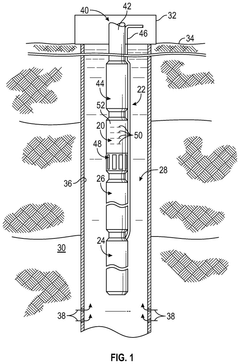
Submersible pump with stage erosion control
PatentPendingUS20250172148A1
Innovation
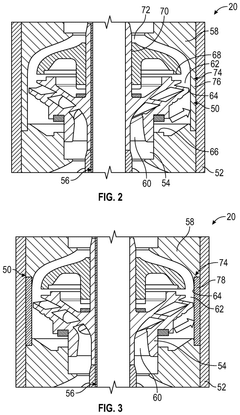
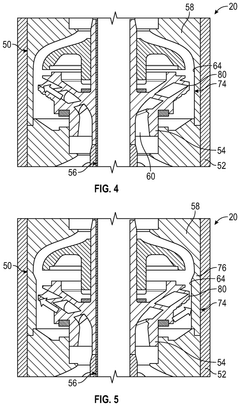
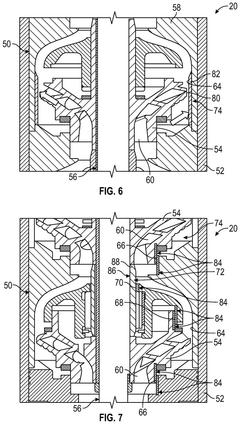
- The submersible pump incorporates an erosion control system between the impeller and diffuser in each stage, featuring thick wall sections, hardened materials, truncated impeller tips, and protective coatings to reduce erosion and extend pump life.
Fracture-resistant self-lubricating wear surfaces
PatentWO2015020916A1
Innovation
- The development of metallic nanostructured surfaces with twinned structures and nanoscale grains, which are deposited or coated onto components like face seals, bushings, and bearings, offering enhanced hardness, lubricity, and thermal conductivity, surpassing the performance of conventional materials by creating ultra-hard, self-lubricating, and fracture-resistant surfaces.


Environmental Impact Assessment
The environmental impact assessment of submersible pump material innovations for increased durability is a crucial aspect of technological advancement in this field. These innovations aim to enhance the longevity and performance of submersible pumps, which are widely used in various industries, including water management, oil and gas, and mining. However, it is essential to evaluate their potential environmental consequences.
One of the primary environmental benefits of durable submersible pump materials is the reduction of waste generation. By extending the operational lifespan of pumps, fewer units need to be manufactured and disposed of over time. This decrease in production and disposal rates can lead to significant reductions in energy consumption, raw material extraction, and landfill usage. Additionally, the reduced frequency of pump replacements minimizes the environmental disturbances associated with installation and maintenance activities in aquatic ecosystems.
The development of corrosion-resistant materials for submersible pumps can also have positive environmental implications. Traditional pumps often require chemical treatments to prevent corrosion, which can lead to the release of harmful substances into water bodies. Innovative materials that inherently resist corrosion can eliminate or reduce the need for such treatments, thereby decreasing the risk of water pollution and protecting aquatic life.
However, the environmental impact assessment must also consider potential drawbacks. The production of advanced materials for submersible pumps may involve energy-intensive processes or the use of rare earth elements. These factors could potentially offset some of the environmental gains achieved through increased durability. It is crucial to conduct comprehensive life cycle assessments to accurately compare the environmental footprint of innovative materials against traditional options.
Furthermore, the improved durability of submersible pumps may inadvertently lead to increased water extraction in some cases. While this is not a direct consequence of the material innovations, it is an indirect effect that should be monitored and managed to prevent overexploitation of water resources. Proper regulations and usage guidelines should be implemented alongside technological advancements to ensure sustainable water management practices.
The disposal and recycling of these innovative materials at the end of their extended lifecycle also warrant careful consideration. While increased durability reduces the frequency of disposal, it is essential to develop appropriate recycling techniques for these advanced materials to minimize their environmental impact when they eventually reach the end of their useful life. This may require the establishment of specialized recycling facilities and processes tailored to handle these materials effectively.
In conclusion, the environmental impact assessment of submersible pump material innovations for increased durability reveals a complex interplay of positive and potentially negative effects. While the overall impact appears to be beneficial due to reduced waste generation and decreased chemical usage, it is crucial to continue monitoring and optimizing these innovations to maximize their environmental benefits while mitigating any potential drawbacks.
One of the primary environmental benefits of durable submersible pump materials is the reduction of waste generation. By extending the operational lifespan of pumps, fewer units need to be manufactured and disposed of over time. This decrease in production and disposal rates can lead to significant reductions in energy consumption, raw material extraction, and landfill usage. Additionally, the reduced frequency of pump replacements minimizes the environmental disturbances associated with installation and maintenance activities in aquatic ecosystems.
The development of corrosion-resistant materials for submersible pumps can also have positive environmental implications. Traditional pumps often require chemical treatments to prevent corrosion, which can lead to the release of harmful substances into water bodies. Innovative materials that inherently resist corrosion can eliminate or reduce the need for such treatments, thereby decreasing the risk of water pollution and protecting aquatic life.
However, the environmental impact assessment must also consider potential drawbacks. The production of advanced materials for submersible pumps may involve energy-intensive processes or the use of rare earth elements. These factors could potentially offset some of the environmental gains achieved through increased durability. It is crucial to conduct comprehensive life cycle assessments to accurately compare the environmental footprint of innovative materials against traditional options.
Furthermore, the improved durability of submersible pumps may inadvertently lead to increased water extraction in some cases. While this is not a direct consequence of the material innovations, it is an indirect effect that should be monitored and managed to prevent overexploitation of water resources. Proper regulations and usage guidelines should be implemented alongside technological advancements to ensure sustainable water management practices.
The disposal and recycling of these innovative materials at the end of their extended lifecycle also warrant careful consideration. While increased durability reduces the frequency of disposal, it is essential to develop appropriate recycling techniques for these advanced materials to minimize their environmental impact when they eventually reach the end of their useful life. This may require the establishment of specialized recycling facilities and processes tailored to handle these materials effectively.
In conclusion, the environmental impact assessment of submersible pump material innovations for increased durability reveals a complex interplay of positive and potentially negative effects. While the overall impact appears to be beneficial due to reduced waste generation and decreased chemical usage, it is crucial to continue monitoring and optimizing these innovations to maximize their environmental benefits while mitigating any potential drawbacks.
Corrosion Resistance Strategies
Corrosion resistance is a critical factor in enhancing the durability of submersible pumps, particularly in harsh underwater environments. The development of innovative materials and coatings has significantly contributed to improving the longevity and performance of these pumps.
One of the primary strategies for corrosion resistance involves the use of advanced alloys. Stainless steel, particularly grades such as 316 and duplex stainless steel, has been widely adopted due to its excellent resistance to various forms of corrosion. These alloys contain higher levels of chromium and molybdenum, which form a protective oxide layer on the surface, effectively shielding the underlying metal from corrosive elements.
Nickel-based alloys, such as Inconel and Hastelloy, have also gained prominence in submersible pump applications. These materials offer superior resistance to pitting, crevice corrosion, and stress corrosion cracking, making them ideal for use in highly aggressive environments, including those with high chloride content or extreme temperatures.
The application of protective coatings has emerged as another effective strategy for corrosion resistance. Ceramic coatings, for instance, provide an inert barrier between the pump components and the corrosive medium. These coatings not only enhance corrosion resistance but also improve wear resistance and thermal insulation properties.
Polymer-based coatings, such as epoxy and polyurethane, have shown promising results in protecting pump components from corrosion. These coatings offer excellent adhesion to metal surfaces and can be formulated to withstand specific chemical environments. Additionally, the development of self-healing coatings represents a significant advancement in corrosion protection, as these materials can autonomously repair minor damage, extending the service life of the pump.
Cathodic protection techniques have also been employed to mitigate corrosion in submersible pumps. This method involves the use of sacrificial anodes or impressed current systems to prevent the electrochemical reactions that lead to corrosion. While traditionally used in larger structures, miniaturized cathodic protection systems have been developed for integration into submersible pump designs.
Recent advancements in nanotechnology have opened new avenues for corrosion resistance. Nanostructured materials and coatings offer enhanced protection by manipulating material properties at the molecular level. For example, nanocomposite coatings incorporating corrosion inhibitors have shown promising results in laboratory tests, demonstrating superior barrier properties and active corrosion inhibition.
The development of bio-inspired materials represents an emerging frontier in corrosion resistance strategies. Researchers are exploring materials that mimic the natural defense mechanisms of marine organisms, such as the slime produced by hagfish or the protective scales of certain fish species. These biomimetic approaches could lead to novel, environmentally friendly solutions for corrosion protection in submersible pumps.
One of the primary strategies for corrosion resistance involves the use of advanced alloys. Stainless steel, particularly grades such as 316 and duplex stainless steel, has been widely adopted due to its excellent resistance to various forms of corrosion. These alloys contain higher levels of chromium and molybdenum, which form a protective oxide layer on the surface, effectively shielding the underlying metal from corrosive elements.
Nickel-based alloys, such as Inconel and Hastelloy, have also gained prominence in submersible pump applications. These materials offer superior resistance to pitting, crevice corrosion, and stress corrosion cracking, making them ideal for use in highly aggressive environments, including those with high chloride content or extreme temperatures.
The application of protective coatings has emerged as another effective strategy for corrosion resistance. Ceramic coatings, for instance, provide an inert barrier between the pump components and the corrosive medium. These coatings not only enhance corrosion resistance but also improve wear resistance and thermal insulation properties.
Polymer-based coatings, such as epoxy and polyurethane, have shown promising results in protecting pump components from corrosion. These coatings offer excellent adhesion to metal surfaces and can be formulated to withstand specific chemical environments. Additionally, the development of self-healing coatings represents a significant advancement in corrosion protection, as these materials can autonomously repair minor damage, extending the service life of the pump.
Cathodic protection techniques have also been employed to mitigate corrosion in submersible pumps. This method involves the use of sacrificial anodes or impressed current systems to prevent the electrochemical reactions that lead to corrosion. While traditionally used in larger structures, miniaturized cathodic protection systems have been developed for integration into submersible pump designs.
Recent advancements in nanotechnology have opened new avenues for corrosion resistance. Nanostructured materials and coatings offer enhanced protection by manipulating material properties at the molecular level. For example, nanocomposite coatings incorporating corrosion inhibitors have shown promising results in laboratory tests, demonstrating superior barrier properties and active corrosion inhibition.
The development of bio-inspired materials represents an emerging frontier in corrosion resistance strategies. Researchers are exploring materials that mimic the natural defense mechanisms of marine organisms, such as the slime produced by hagfish or the protective scales of certain fish species. These biomimetic approaches could lead to novel, environmentally friendly solutions for corrosion protection in submersible pumps.
Unlock deeper insights with PatSnap Eureka Quick Research — get a full tech report to explore trends and direct your research. Try now!
Generate Your Research Report Instantly with AI Agent
Supercharge your innovation with PatSnap Eureka AI Agent Platform!