

Temperature Programmed Reduction vs. AFM for Surface Morphology Studies
MAR 7, 20269 MIN READ
Generate Your Research Report Instantly with AI Agent
PatSnap Eureka helps you evaluate technical feasibility & market potential.
TPR vs AFM Surface Analysis Background and Objectives
Surface characterization has become increasingly critical in materials science, catalysis, and nanotechnology applications, driving the need for comprehensive analytical approaches that can provide complementary insights into material properties. The evolution of surface analysis techniques has progressed from basic microscopy methods to sophisticated multi-modal characterization strategies that combine chemical and physical analysis capabilities.
Temperature Programmed Reduction (TPR) emerged in the 1960s as a powerful technique for studying the reducibility of metal oxides and supported catalysts. This method involves heating a sample in a reducing atmosphere while monitoring hydrogen consumption, providing valuable information about the chemical state and reduction behavior of surface species. TPR has become indispensable in catalyst characterization, offering insights into metal-support interactions, active site distribution, and reduction mechanisms.
Atomic Force Microscopy (AFM), developed in the 1980s, revolutionized surface morphology studies by enabling nanoscale topographical imaging with sub-nanometer resolution. Unlike electron microscopy techniques, AFM operates under ambient conditions and provides three-dimensional surface information without requiring conductive samples or vacuum environments. The technique has evolved to include various operational modes, including contact, non-contact, and tapping modes, each optimized for different sample types and measurement requirements.
The convergence of chemical characterization and morphological analysis has created new opportunities for comprehensive surface studies. While TPR provides chemical information about reduction processes and active site accessibility, AFM delivers detailed topographical data about surface roughness, particle size distribution, and structural features. This complementary approach addresses the growing need for multi-dimensional surface characterization in advanced materials development.
Current research objectives focus on establishing correlations between chemical reactivity measured by TPR and surface morphological features revealed by AFM. Understanding these relationships is crucial for optimizing catalyst performance, predicting material behavior, and designing surfaces with tailored properties. The integration of these techniques aims to bridge the gap between chemical functionality and physical structure in surface science applications.
The primary goal involves developing standardized protocols for combining TPR and AFM measurements to create comprehensive surface characterization workflows. This approach seeks to enhance the predictive capability of surface analysis by correlating reduction behavior with morphological parameters, ultimately advancing the fundamental understanding of structure-activity relationships in catalytic and functional materials.
Temperature Programmed Reduction (TPR) emerged in the 1960s as a powerful technique for studying the reducibility of metal oxides and supported catalysts. This method involves heating a sample in a reducing atmosphere while monitoring hydrogen consumption, providing valuable information about the chemical state and reduction behavior of surface species. TPR has become indispensable in catalyst characterization, offering insights into metal-support interactions, active site distribution, and reduction mechanisms.
Atomic Force Microscopy (AFM), developed in the 1980s, revolutionized surface morphology studies by enabling nanoscale topographical imaging with sub-nanometer resolution. Unlike electron microscopy techniques, AFM operates under ambient conditions and provides three-dimensional surface information without requiring conductive samples or vacuum environments. The technique has evolved to include various operational modes, including contact, non-contact, and tapping modes, each optimized for different sample types and measurement requirements.
The convergence of chemical characterization and morphological analysis has created new opportunities for comprehensive surface studies. While TPR provides chemical information about reduction processes and active site accessibility, AFM delivers detailed topographical data about surface roughness, particle size distribution, and structural features. This complementary approach addresses the growing need for multi-dimensional surface characterization in advanced materials development.
Current research objectives focus on establishing correlations between chemical reactivity measured by TPR and surface morphological features revealed by AFM. Understanding these relationships is crucial for optimizing catalyst performance, predicting material behavior, and designing surfaces with tailored properties. The integration of these techniques aims to bridge the gap between chemical functionality and physical structure in surface science applications.
The primary goal involves developing standardized protocols for combining TPR and AFM measurements to create comprehensive surface characterization workflows. This approach seeks to enhance the predictive capability of surface analysis by correlating reduction behavior with morphological parameters, ultimately advancing the fundamental understanding of structure-activity relationships in catalytic and functional materials.
Market Demand for Advanced Surface Characterization Methods
The global market for advanced surface characterization methods is experiencing robust growth driven by increasing demands across multiple high-technology sectors. Semiconductor manufacturing represents one of the most significant demand drivers, where precise surface analysis is critical for device performance optimization and quality control. The continuous miniaturization of electronic components requires increasingly sophisticated characterization techniques to understand surface morphology at nanoscale dimensions.
Materials science research institutions and industrial R&D facilities constitute another major market segment. These organizations require comprehensive surface analysis capabilities to develop next-generation materials for applications ranging from catalysis to energy storage. The growing emphasis on sustainable technologies and green chemistry has particularly intensified the need for detailed surface characterization in catalyst development and optimization.
The pharmaceutical and biotechnology industries are emerging as substantial consumers of advanced surface characterization services and equipment. Drug delivery systems, biocompatible materials, and medical device surfaces require thorough morphological analysis to ensure safety and efficacy. This sector's growth is accelerated by increasing regulatory requirements for surface quality documentation.
Automotive and aerospace industries are driving demand through their adoption of advanced materials and coatings. Surface characterization is essential for understanding wear resistance, corrosion protection, and adhesion properties of protective coatings. The transition toward electric vehicles has created additional demand for battery material surface analysis.
Regional market dynamics show strong growth in Asia-Pacific regions, particularly in countries with expanding semiconductor and electronics manufacturing capabilities. North American and European markets remain significant due to their concentration of research institutions and advanced manufacturing facilities.
The market trend indicates a shift toward multi-technique approaches, where organizations seek integrated solutions combining multiple characterization methods. This trend reflects the recognition that complex surface phenomena require comprehensive analytical approaches rather than single-technique investigations. Equipment manufacturers are responding by developing hybrid systems and software platforms that enable seamless integration of different characterization techniques.
Cost considerations continue to influence market adoption patterns, with many organizations seeking cost-effective alternatives to expensive high-end equipment while maintaining analytical quality and reliability.
Materials science research institutions and industrial R&D facilities constitute another major market segment. These organizations require comprehensive surface analysis capabilities to develop next-generation materials for applications ranging from catalysis to energy storage. The growing emphasis on sustainable technologies and green chemistry has particularly intensified the need for detailed surface characterization in catalyst development and optimization.
The pharmaceutical and biotechnology industries are emerging as substantial consumers of advanced surface characterization services and equipment. Drug delivery systems, biocompatible materials, and medical device surfaces require thorough morphological analysis to ensure safety and efficacy. This sector's growth is accelerated by increasing regulatory requirements for surface quality documentation.
Automotive and aerospace industries are driving demand through their adoption of advanced materials and coatings. Surface characterization is essential for understanding wear resistance, corrosion protection, and adhesion properties of protective coatings. The transition toward electric vehicles has created additional demand for battery material surface analysis.
Regional market dynamics show strong growth in Asia-Pacific regions, particularly in countries with expanding semiconductor and electronics manufacturing capabilities. North American and European markets remain significant due to their concentration of research institutions and advanced manufacturing facilities.
The market trend indicates a shift toward multi-technique approaches, where organizations seek integrated solutions combining multiple characterization methods. This trend reflects the recognition that complex surface phenomena require comprehensive analytical approaches rather than single-technique investigations. Equipment manufacturers are responding by developing hybrid systems and software platforms that enable seamless integration of different characterization techniques.
Cost considerations continue to influence market adoption patterns, with many organizations seeking cost-effective alternatives to expensive high-end equipment while maintaining analytical quality and reliability.
Current State of TPR and AFM Surface Morphology Techniques
Temperature Programmed Reduction (TPR) has evolved significantly since its introduction in the 1960s as a catalyst characterization technique. Modern TPR systems incorporate advanced mass spectrometry detection, automated temperature control, and sophisticated data analysis software. Current TPR instruments can achieve temperature ramp rates from 0.1 to 50°C/min with precise control, enabling detailed analysis of reduction processes in catalytic materials. The technique has expanded beyond traditional metal oxide catalysts to include complex multi-component systems, supported nanoparticles, and novel materials like metal-organic frameworks.
Atomic Force Microscopy (AFM) for surface morphology studies has undergone remarkable advancement since its invention in 1986. Contemporary AFM systems offer sub-nanometer resolution with various operational modes including contact, non-contact, and tapping modes. Peak Force Tapping and other advanced imaging modes now enable quantitative mechanical property mapping alongside topographical analysis. Modern AFM instruments feature closed-loop scanners, environmental control chambers, and real-time drift correction, allowing for extended high-resolution imaging sessions.
The integration of environmental controls represents a significant advancement in both techniques. Environmental TPR cells now allow in-situ analysis under controlled atmospheres with simultaneous spectroscopic measurements. Similarly, environmental AFM enables surface morphology studies under various gas atmospheres, controlled humidity, and temperature conditions up to several hundred degrees Celsius.
Current TPR methodology emphasizes quantitative analysis through peak deconvolution algorithms and kinetic modeling software. Advanced systems incorporate simultaneous techniques such as TPR-MS, TPR-FTIR, and TPR-XRD, providing comprehensive understanding of reduction mechanisms. The technique now routinely achieves detection limits in the micromole range for hydrogen consumption.
AFM surface morphology analysis has benefited from advanced image processing algorithms and statistical analysis tools. Current software packages offer automated particle analysis, surface roughness quantification, and three-dimensional visualization capabilities. High-speed AFM variants can now capture dynamic surface processes with millisecond temporal resolution.
Both techniques face ongoing challenges in sample preparation and data interpretation. TPR requires careful consideration of mass transfer limitations and baseline stability, while AFM morphology studies must address tip-sample interactions and thermal drift effects. However, recent developments in machine learning-assisted data analysis and automated measurement protocols are addressing these limitations, enhancing the reliability and reproducibility of both techniques.
Atomic Force Microscopy (AFM) for surface morphology studies has undergone remarkable advancement since its invention in 1986. Contemporary AFM systems offer sub-nanometer resolution with various operational modes including contact, non-contact, and tapping modes. Peak Force Tapping and other advanced imaging modes now enable quantitative mechanical property mapping alongside topographical analysis. Modern AFM instruments feature closed-loop scanners, environmental control chambers, and real-time drift correction, allowing for extended high-resolution imaging sessions.
The integration of environmental controls represents a significant advancement in both techniques. Environmental TPR cells now allow in-situ analysis under controlled atmospheres with simultaneous spectroscopic measurements. Similarly, environmental AFM enables surface morphology studies under various gas atmospheres, controlled humidity, and temperature conditions up to several hundred degrees Celsius.
Current TPR methodology emphasizes quantitative analysis through peak deconvolution algorithms and kinetic modeling software. Advanced systems incorporate simultaneous techniques such as TPR-MS, TPR-FTIR, and TPR-XRD, providing comprehensive understanding of reduction mechanisms. The technique now routinely achieves detection limits in the micromole range for hydrogen consumption.
AFM surface morphology analysis has benefited from advanced image processing algorithms and statistical analysis tools. Current software packages offer automated particle analysis, surface roughness quantification, and three-dimensional visualization capabilities. High-speed AFM variants can now capture dynamic surface processes with millisecond temporal resolution.
Both techniques face ongoing challenges in sample preparation and data interpretation. TPR requires careful consideration of mass transfer limitations and baseline stability, while AFM morphology studies must address tip-sample interactions and thermal drift effects. However, recent developments in machine learning-assisted data analysis and automated measurement protocols are addressing these limitations, enhancing the reliability and reproducibility of both techniques.
Existing TPR and AFM Solutions for Surface Studies
01 Temperature programmed reduction characterization of catalysts
Temperature programmed reduction (TPR) is a technique used to characterize the reduction behavior of catalysts and metal oxides. This method involves heating a sample in a reducing atmosphere while monitoring hydrogen consumption or other gas changes. TPR provides information about the reduction temperature, number of reduction steps, and the reducibility of different metal species in the catalyst. This technique is particularly useful for studying the interaction between metal components and support materials, as well as determining the oxidation states of active metal species.- Temperature programmed reduction characterization of catalysts: Temperature programmed reduction (TPR) is a technique used to characterize the reduction behavior of catalysts and metal oxides. This method involves heating a sample in a reducing atmosphere while monitoring hydrogen consumption or other gas changes. TPR provides information about the reduction temperature, number of reduction steps, and the reducibility of different metal species in the catalyst. This technique is particularly useful for studying the interaction between metal components and support materials, as well as determining the oxidation states of active metal species.
- AFM analysis of surface morphology and roughness: Atomic Force Microscopy (AFM) is employed to analyze surface morphology, topography, and roughness at the nanoscale level. This technique provides three-dimensional surface profiles and quantitative measurements of surface features including grain size, particle distribution, and surface roughness parameters. AFM is non-destructive and can be performed under various environmental conditions, making it suitable for characterizing thin films, coatings, and nanostructured materials. The technique enables visualization of surface defects, crystalline structures, and morphological changes resulting from various treatments or processing conditions.
- Combined characterization techniques for material analysis: Multiple analytical techniques are combined to provide comprehensive characterization of materials, including their chemical composition, crystal structure, and surface properties. This integrated approach typically combines temperature programmed methods with surface analysis techniques to correlate bulk properties with surface characteristics. The combination allows for understanding the relationship between preparation conditions, structural features, and functional properties. Such multi-technique analysis is essential for optimizing material performance in catalysis, semiconductor devices, and coating applications.
- Surface modification and thin film deposition processes: Various surface modification and thin film deposition techniques are used to control surface morphology and properties. These processes include chemical vapor deposition, physical vapor deposition, and thermal treatment methods that alter surface characteristics. The resulting surface morphology can be characterized using microscopy techniques to evaluate film uniformity, grain structure, and interface quality. Temperature control during deposition and post-treatment processes significantly influences the final surface morphology and material properties.
- Catalyst preparation and performance evaluation: Catalyst preparation methods and their evaluation involve controlling synthesis parameters to achieve desired surface morphology and reduction characteristics. The preparation process affects the distribution of active sites, metal-support interactions, and overall catalytic performance. Characterization of prepared catalysts includes assessment of reduction behavior through temperature programmed techniques and surface morphology examination through microscopy methods. Understanding these relationships enables optimization of catalyst formulations for specific applications in chemical reactions and environmental processes.
02 AFM analysis of surface morphology and roughness
Atomic Force Microscopy (AFM) is employed to analyze surface morphology, topography, and roughness at the nanoscale level. This technique provides three-dimensional surface profiles and quantitative measurements of surface features including grain size, particle distribution, and surface roughness parameters. AFM is non-destructive and can be performed under various environmental conditions, making it suitable for characterizing thin films, coatings, and nanostructured materials. The technique is valuable for correlating surface properties with material performance.Expand Specific Solutions03 Combined characterization techniques for material analysis
Multiple characterization techniques including temperature programmed reduction and surface morphology analysis are combined to provide comprehensive understanding of material properties. This integrated approach allows researchers to correlate bulk properties with surface characteristics, establishing relationships between reduction behavior and surface structure. The combination of thermal analysis methods with microscopy techniques enables better understanding of structure-property relationships in catalytic materials and thin films.Expand Specific Solutions04 Surface modification and treatment processes
Various surface modification and treatment processes are employed to alter surface morphology and properties of materials. These processes include thermal treatments, chemical treatments, and physical deposition methods that can change surface roughness, composition, and structure. The effectiveness of these treatments can be evaluated through temperature programmed techniques and surface analysis methods. Understanding the relationship between processing conditions and resulting surface characteristics is crucial for optimizing material performance.Expand Specific Solutions05 Catalyst preparation and characterization methods
Catalyst preparation methods significantly influence the final surface morphology and reduction properties of catalytic materials. Various synthesis approaches including impregnation, precipitation, and sol-gel methods result in different surface structures and metal dispersion. Characterization of these materials through temperature programmed reduction reveals information about metal-support interactions and active site distribution, while surface morphology analysis provides insights into particle size, shape, and distribution patterns that affect catalytic performance.Expand Specific Solutions
Key Players in Surface Analysis Instrumentation Industry
The surface morphology analysis field represents a mature market with established competition between Temperature Programmed Reduction (TPR) and Atomic Force Microscopy (AFM) technologies. The industry has reached technological maturity, with AFM dominating surface characterization through specialized instrument manufacturers like Bruker Nano and Oxford Instruments Asylum Research providing advanced scanning probe solutions. Meanwhile, TPR applications remain significant in catalysis research, supported by institutions like Dalian Institute of Chemical Physics and various universities including Tsinghua, Zhejiang, and Nankai. Technology giants such as IBM and Samsung Electronics drive innovation in semiconductor applications, while companies like Veeco Instruments bridge both methodologies for comprehensive materials analysis. The competitive landscape shows clear segmentation between dedicated AFM instrumentation providers and broader analytical solution companies, with academic institutions playing crucial roles in advancing both techniques for emerging nanomaterial characterization needs.
Bruker Nano, Inc.
Technical Solution: Bruker develops advanced AFM systems with integrated environmental control capabilities for comprehensive surface morphology studies. Their MultiMode and Dimension series AFM instruments offer high-resolution imaging with sub-nanometer precision, enabling detailed surface topography analysis. The company's AFM solutions feature specialized probes and scanning modes optimized for various sample types, from soft biological materials to hard inorganic surfaces. Bruker's AFM technology incorporates real-time force measurement and mapping capabilities, allowing researchers to correlate surface morphology with mechanical properties. Their systems support both ambient and controlled atmosphere measurements, making them suitable for comparative studies with temperature programmed reduction techniques.
Strengths: Industry-leading AFM resolution and versatility, comprehensive software suite for data analysis. Weaknesses: High equipment costs and complex operation requiring specialized training.
International Business Machines Corp.
Technical Solution: IBM Research has developed innovative approaches combining temperature programmed reduction with advanced surface characterization techniques including AFM for semiconductor and catalyst research. Their methodology integrates TPR analysis with high-resolution atomic force microscopy to study surface morphological changes during reduction processes. IBM's approach utilizes specialized sample preparation protocols and environmental chambers that allow sequential TPR treatment followed by immediate AFM imaging without atmospheric exposure. This integrated workflow enables correlation of reduction behavior with surface structural modifications at the nanoscale. Their research focuses on understanding how temperature-induced chemical changes affect surface topography and mechanical properties of advanced materials used in electronic devices and catalytic applications.
Strengths: Strong integration of multiple analytical techniques, extensive research infrastructure and expertise. Weaknesses: Limited commercial availability of integrated systems, primarily research-focused applications.
Core Innovations in Combined TPR-AFM Methodologies
Atomic force microscopy true shape measurement method
PatentInactiveUS8296860B2
Innovation
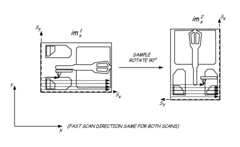
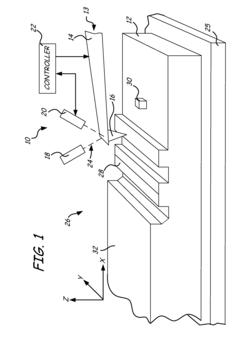
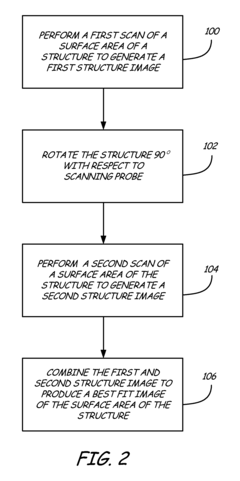
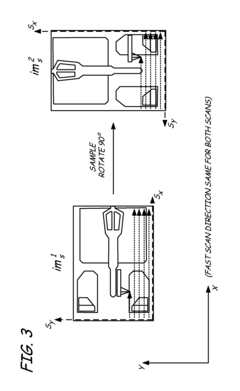
- The method involves scanning a structure and a flat standard surface twice, each time rotated 90°, and combining the images to produce best fit images. These best fit images are then subtracted to eliminate thermal drift and Zrr errors, allowing for the generation of a true topographical image.
Atomic force microscopy scanning methods
PatentInactiveUS6715346B2
Innovation
- A method involving surface survey scans to locate and map deep features, followed by controlled AFM tip movement in geometric patterns to minimize atomic force interactions, allowing precise depth measurement and extended tip life by avoiding sidewall contact and optimizing tip positioning.


Standardization Requirements for Surface Analysis Methods
The standardization of surface analysis methods, particularly when comparing Temperature Programmed Reduction (TPR) and Atomic Force Microscopy (AFM) for surface morphology studies, requires comprehensive regulatory frameworks to ensure reproducibility and reliability across different laboratories and applications. Current standardization efforts focus on establishing unified protocols that address the fundamental differences between these complementary techniques while maintaining their individual analytical strengths.
International standards organizations, including ISO and ASTM, have developed specific guidelines for AFM measurements that encompass calibration procedures, environmental controls, and data acquisition parameters. These standards mandate regular calibration using certified reference materials, specification of tip characteristics, and documentation of scanning parameters such as force setpoints and scan rates. For TPR applications, standardization requirements emphasize temperature ramping protocols, gas flow specifications, and detector calibration procedures to ensure consistent reduction profiles across different instruments.
Measurement uncertainty quantification represents a critical standardization requirement for both techniques. AFM standards require statistical analysis of multiple measurements, assessment of tip-sample interactions, and evaluation of thermal drift effects. TPR standardization mandates baseline correction procedures, peak deconvolution methods, and uncertainty propagation calculations for quantitative analysis of reduction temperatures and hydrogen consumption.
Sample preparation standardization poses unique challenges when comparing TPR and AFM methodologies. While AFM requires atomically clean surfaces and controlled atmospheric conditions, TPR analysis demands specific pretreatment protocols including calcination temperatures and gas purification standards. Harmonized sample handling procedures must accommodate these divergent requirements while maintaining analytical integrity.
Data reporting standards necessitate comprehensive documentation of experimental conditions, instrument specifications, and analytical procedures. Standardized data formats facilitate inter-laboratory comparisons and enable meaningful correlation between TPR reduction behavior and AFM-derived morphological parameters. Quality assurance protocols require regular participation in round-robin testing programs and validation using certified reference materials.
Emerging standardization initiatives focus on developing hybrid analytical protocols that leverage the complementary nature of TPR and AFM techniques. These integrated standards address temporal correlation requirements, sample transfer procedures, and data fusion methodologies to maximize analytical information while maintaining measurement traceability and reproducibility across diverse research environments.
International standards organizations, including ISO and ASTM, have developed specific guidelines for AFM measurements that encompass calibration procedures, environmental controls, and data acquisition parameters. These standards mandate regular calibration using certified reference materials, specification of tip characteristics, and documentation of scanning parameters such as force setpoints and scan rates. For TPR applications, standardization requirements emphasize temperature ramping protocols, gas flow specifications, and detector calibration procedures to ensure consistent reduction profiles across different instruments.
Measurement uncertainty quantification represents a critical standardization requirement for both techniques. AFM standards require statistical analysis of multiple measurements, assessment of tip-sample interactions, and evaluation of thermal drift effects. TPR standardization mandates baseline correction procedures, peak deconvolution methods, and uncertainty propagation calculations for quantitative analysis of reduction temperatures and hydrogen consumption.
Sample preparation standardization poses unique challenges when comparing TPR and AFM methodologies. While AFM requires atomically clean surfaces and controlled atmospheric conditions, TPR analysis demands specific pretreatment protocols including calcination temperatures and gas purification standards. Harmonized sample handling procedures must accommodate these divergent requirements while maintaining analytical integrity.
Data reporting standards necessitate comprehensive documentation of experimental conditions, instrument specifications, and analytical procedures. Standardized data formats facilitate inter-laboratory comparisons and enable meaningful correlation between TPR reduction behavior and AFM-derived morphological parameters. Quality assurance protocols require regular participation in round-robin testing programs and validation using certified reference materials.
Emerging standardization initiatives focus on developing hybrid analytical protocols that leverage the complementary nature of TPR and AFM techniques. These integrated standards address temporal correlation requirements, sample transfer procedures, and data fusion methodologies to maximize analytical information while maintaining measurement traceability and reproducibility across diverse research environments.
Cost-Benefit Analysis of TPR vs AFM Implementation
The implementation of Temperature Programmed Reduction (TPR) versus Atomic Force Microscopy (AFM) for surface morphology studies presents distinct cost-benefit profiles that significantly impact research facility decision-making. Initial capital investment requirements differ substantially between these technologies, with TPR systems typically requiring lower upfront costs ranging from $50,000 to $150,000, while high-resolution AFM instruments command investments between $200,000 to $500,000 depending on configuration and capabilities.
Operational expenditure patterns reveal contrasting resource allocation strategies. TPR systems demonstrate relatively low maintenance costs but require continuous consumables including carrier gases, reducing agents, and specialized sample holders. The technique demands minimal specialized training, enabling rapid deployment across research teams. Conversely, AFM implementation necessitates substantial ongoing maintenance contracts, specialized probe replacements, and extensive operator training programs that can extend implementation timelines by several months.
Throughput efficiency analysis indicates TPR's superior sample processing capabilities, accommodating batch analyses of multiple samples simultaneously within 2-4 hour cycles. This efficiency translates to lower per-sample analysis costs and enhanced productivity metrics. AFM operations typically require 30 minutes to several hours per sample depending on scan area and resolution requirements, resulting in higher operational costs per data point but delivering unparalleled spatial resolution.
Return on investment calculations favor TPR for high-volume characterization programs focused on bulk surface properties and reduction behavior analysis. The technique's ability to provide quantitative data on surface active sites and reduction temperatures offers excellent value proposition for catalyst development and materials screening applications. AFM justifies its higher investment through superior data quality for nanoscale morphological investigations, providing three-dimensional topographical information essential for advanced materials research.
Long-term cost considerations include technology obsolescence risks and upgrade pathways. TPR systems demonstrate excellent longevity with minimal technological disruption, ensuring stable operational costs over extended periods. AFM technology continues evolving rapidly, potentially requiring periodic upgrades to maintain competitive analytical capabilities, though these advances also expand application possibilities and analytical value.
Operational expenditure patterns reveal contrasting resource allocation strategies. TPR systems demonstrate relatively low maintenance costs but require continuous consumables including carrier gases, reducing agents, and specialized sample holders. The technique demands minimal specialized training, enabling rapid deployment across research teams. Conversely, AFM implementation necessitates substantial ongoing maintenance contracts, specialized probe replacements, and extensive operator training programs that can extend implementation timelines by several months.
Throughput efficiency analysis indicates TPR's superior sample processing capabilities, accommodating batch analyses of multiple samples simultaneously within 2-4 hour cycles. This efficiency translates to lower per-sample analysis costs and enhanced productivity metrics. AFM operations typically require 30 minutes to several hours per sample depending on scan area and resolution requirements, resulting in higher operational costs per data point but delivering unparalleled spatial resolution.
Return on investment calculations favor TPR for high-volume characterization programs focused on bulk surface properties and reduction behavior analysis. The technique's ability to provide quantitative data on surface active sites and reduction temperatures offers excellent value proposition for catalyst development and materials screening applications. AFM justifies its higher investment through superior data quality for nanoscale morphological investigations, providing three-dimensional topographical information essential for advanced materials research.
Long-term cost considerations include technology obsolescence risks and upgrade pathways. TPR systems demonstrate excellent longevity with minimal technological disruption, ensuring stable operational costs over extended periods. AFM technology continues evolving rapidly, potentially requiring periodic upgrades to maintain competitive analytical capabilities, though these advances also expand application possibilities and analytical value.
Unlock deeper insights with PatSnap Eureka Quick Research — get a full tech report to explore trends and direct your research. Try now!
Generate Your Research Report Instantly with AI Agent
Supercharge your innovation with PatSnap Eureka AI Agent Platform!