UHMWPE Processing from Micro to Nano Structures
AUG 6, 20259 MIN READ
Generate Your Research Report Instantly with AI Agent
PatSnap Eureka helps you evaluate technical feasibility & market potential.
UHMWPE Evolution and Objectives
Ultra-high molecular weight polyethylene (UHMWPE) has undergone significant evolution since its discovery in the 1950s. Initially developed as a high-performance engineering plastic, UHMWPE has found applications in various industries due to its exceptional properties, including high abrasion resistance, low friction coefficient, and excellent impact strength.
The journey of UHMWPE from micro to nano structures began with the recognition of its potential in enhancing material properties through structural modifications. Early research focused on improving the molecular weight and crystallinity of UHMWPE to enhance its mechanical properties. As technology advanced, researchers began exploring methods to manipulate the material's structure at the microscale.
The development of gel spinning techniques in the 1980s marked a significant milestone in UHMWPE processing. This method allowed for the production of high-strength fibers with improved molecular orientation and crystallinity. The resulting fibers exhibited exceptional tensile strength and modulus, opening up new possibilities in applications such as ballistic protection and high-performance ropes.
As nanotechnology emerged, researchers began investigating ways to further enhance UHMWPE properties by incorporating nanostructures. The transition from micro to nano structures in UHMWPE processing aimed to overcome limitations in traditional manufacturing methods and achieve unprecedented material properties.
The primary objectives of UHMWPE processing from micro to nano structures include:
1. Enhancing mechanical properties: By manipulating the material's structure at the nanoscale, researchers aim to improve tensile strength, modulus, and toughness beyond what is achievable with conventional processing methods.
2. Increasing wear resistance: Nanostructured UHMWPE has the potential to exhibit superior wear resistance, making it ideal for applications in orthopedic implants and industrial components subject to high wear conditions.
3. Improving thermal stability: Nanostructuring techniques seek to enhance the thermal properties of UHMWPE, expanding its range of applications in high-temperature environments.
4. Developing multifunctional materials: By incorporating nanofillers or creating hybrid nanostructures, researchers aim to impart additional functionalities to UHMWPE, such as electrical conductivity or antimicrobial properties.
5. Optimizing processing techniques: The evolution of UHMWPE processing focuses on developing more efficient and scalable methods for producing nanostructured materials, ensuring their commercial viability.
As research in this field progresses, the ultimate goal is to unlock the full potential of UHMWPE through advanced processing techniques, enabling the development of next-generation materials with superior performance characteristics across a wide range of applications.
The journey of UHMWPE from micro to nano structures began with the recognition of its potential in enhancing material properties through structural modifications. Early research focused on improving the molecular weight and crystallinity of UHMWPE to enhance its mechanical properties. As technology advanced, researchers began exploring methods to manipulate the material's structure at the microscale.
The development of gel spinning techniques in the 1980s marked a significant milestone in UHMWPE processing. This method allowed for the production of high-strength fibers with improved molecular orientation and crystallinity. The resulting fibers exhibited exceptional tensile strength and modulus, opening up new possibilities in applications such as ballistic protection and high-performance ropes.
As nanotechnology emerged, researchers began investigating ways to further enhance UHMWPE properties by incorporating nanostructures. The transition from micro to nano structures in UHMWPE processing aimed to overcome limitations in traditional manufacturing methods and achieve unprecedented material properties.
The primary objectives of UHMWPE processing from micro to nano structures include:
1. Enhancing mechanical properties: By manipulating the material's structure at the nanoscale, researchers aim to improve tensile strength, modulus, and toughness beyond what is achievable with conventional processing methods.
2. Increasing wear resistance: Nanostructured UHMWPE has the potential to exhibit superior wear resistance, making it ideal for applications in orthopedic implants and industrial components subject to high wear conditions.
3. Improving thermal stability: Nanostructuring techniques seek to enhance the thermal properties of UHMWPE, expanding its range of applications in high-temperature environments.
4. Developing multifunctional materials: By incorporating nanofillers or creating hybrid nanostructures, researchers aim to impart additional functionalities to UHMWPE, such as electrical conductivity or antimicrobial properties.
5. Optimizing processing techniques: The evolution of UHMWPE processing focuses on developing more efficient and scalable methods for producing nanostructured materials, ensuring their commercial viability.
As research in this field progresses, the ultimate goal is to unlock the full potential of UHMWPE through advanced processing techniques, enabling the development of next-generation materials with superior performance characteristics across a wide range of applications.
Market Demand Analysis for UHMWPE Nanostructures
The market demand for UHMWPE nanostructures has been steadily growing, driven by the material's exceptional properties and expanding applications across various industries. UHMWPE, known for its high strength-to-weight ratio, excellent wear resistance, and chemical inertness, has found increased adoption in sectors such as aerospace, defense, healthcare, and sports equipment.
In the healthcare sector, UHMWPE nanostructures are gaining traction in orthopedic implants and medical devices. The nanostructured form of UHMWPE offers enhanced wear resistance and longevity, crucial for joint replacement surgeries and other medical applications. This segment is expected to witness significant growth due to the aging population and increasing demand for advanced medical solutions.
The aerospace and defense industries are also driving the demand for UHMWPE nanostructures. These materials are being utilized in lightweight armor systems, high-performance composites for aircraft components, and ballistic protection gear. The superior strength-to-weight ratio of nanostructured UHMWPE makes it an attractive option for reducing overall weight while maintaining or improving performance characteristics.
Sports and recreational equipment manufacturers are increasingly incorporating UHMWPE nanostructures into their products. From high-performance skis and snowboards to protective gear and fishing lines, the material's durability and strength are highly valued. This sector's demand is fueled by consumer preferences for advanced, lightweight, and long-lasting sporting goods.
The automotive industry is exploring UHMWPE nanostructures for various applications, including impact-resistant components, lightweight structural parts, and wear-resistant surfaces. As the automotive sector shifts towards electric vehicles and focuses on weight reduction, the demand for innovative materials like nanostructured UHMWPE is expected to rise.
In the industrial sector, UHMWPE nanostructures are finding applications in conveyor systems, mining equipment, and marine ropes. The material's resistance to abrasion, chemicals, and moisture makes it ideal for harsh operating environments, driving its adoption in these areas.
The global market for UHMWPE, including its nanostructured forms, is projected to experience substantial growth in the coming years. Factors such as technological advancements in processing techniques, increasing research and development activities, and the expansion of end-use industries contribute to this positive outlook.
However, challenges such as high production costs and limited awareness about the benefits of UHMWPE nanostructures in certain industries may hinder market growth. Overcoming these barriers through continued innovation and education will be crucial for realizing the full market potential of these advanced materials.
In the healthcare sector, UHMWPE nanostructures are gaining traction in orthopedic implants and medical devices. The nanostructured form of UHMWPE offers enhanced wear resistance and longevity, crucial for joint replacement surgeries and other medical applications. This segment is expected to witness significant growth due to the aging population and increasing demand for advanced medical solutions.
The aerospace and defense industries are also driving the demand for UHMWPE nanostructures. These materials are being utilized in lightweight armor systems, high-performance composites for aircraft components, and ballistic protection gear. The superior strength-to-weight ratio of nanostructured UHMWPE makes it an attractive option for reducing overall weight while maintaining or improving performance characteristics.
Sports and recreational equipment manufacturers are increasingly incorporating UHMWPE nanostructures into their products. From high-performance skis and snowboards to protective gear and fishing lines, the material's durability and strength are highly valued. This sector's demand is fueled by consumer preferences for advanced, lightweight, and long-lasting sporting goods.
The automotive industry is exploring UHMWPE nanostructures for various applications, including impact-resistant components, lightweight structural parts, and wear-resistant surfaces. As the automotive sector shifts towards electric vehicles and focuses on weight reduction, the demand for innovative materials like nanostructured UHMWPE is expected to rise.
In the industrial sector, UHMWPE nanostructures are finding applications in conveyor systems, mining equipment, and marine ropes. The material's resistance to abrasion, chemicals, and moisture makes it ideal for harsh operating environments, driving its adoption in these areas.
The global market for UHMWPE, including its nanostructured forms, is projected to experience substantial growth in the coming years. Factors such as technological advancements in processing techniques, increasing research and development activities, and the expansion of end-use industries contribute to this positive outlook.
However, challenges such as high production costs and limited awareness about the benefits of UHMWPE nanostructures in certain industries may hinder market growth. Overcoming these barriers through continued innovation and education will be crucial for realizing the full market potential of these advanced materials.
Current Challenges in UHMWPE Micro-Nano Processing
The processing of Ultra-High Molecular Weight Polyethylene (UHMWPE) from micro to nano structures presents several significant challenges that researchers and manufacturers are currently grappling with. One of the primary obstacles is the inherent difficulty in manipulating the long polymer chains of UHMWPE, which contribute to its exceptional properties but also make it resistant to conventional processing methods.
The high viscosity and low melt flow index of UHMWPE pose substantial hurdles in achieving uniform dispersion and distribution of nanoparticles or nanostructures within the polymer matrix. This challenge is particularly pronounced when attempting to create nanocomposites or nanostructured surfaces, as the polymer's resistance to flow impedes the even distribution of nanoscale additives or the formation of consistent nanopatterns.
Another critical challenge lies in maintaining the mechanical properties of UHMWPE while processing it at the micro and nano scales. The unique characteristics that make UHMWPE valuable, such as its high impact strength and wear resistance, are closely tied to its molecular structure. Processes that alter this structure at the nanoscale risk compromising these desirable properties, necessitating a delicate balance between nanostructure formation and property preservation.
The thermal sensitivity of UHMWPE further complicates processing efforts. The polymer's relatively low melting point and tendency to degrade at elevated temperatures limit the range of processing conditions that can be employed. This constraint is particularly challenging when attempting to incorporate high-temperature processing steps or when working with nanomaterials that require high-energy inputs for dispersion or bonding.
Surface modification of UHMWPE at the nanoscale presents its own set of challenges. The material's chemical inertness, while beneficial in many applications, makes it difficult to functionalize or bond with other materials. This inertness complicates efforts to create nanostructured surfaces or to incorporate UHMWPE into complex nanocomposite systems.
Scalability remains a significant hurdle in the micro to nano processing of UHMWPE. Many laboratory-scale techniques for creating nanostructures or nanocomposites are difficult to translate to industrial-scale production. The challenge lies in developing processes that can maintain nanoscale precision and uniformity while meeting the volume and cost requirements of commercial applications.
Lastly, characterization and quality control of UHMWPE nanostructures pose unique challenges. The opacity and high molecular weight of the polymer make it difficult to employ many standard analytical techniques. Developing reliable methods for assessing the distribution, orientation, and integrity of nanostructures within UHMWPE matrices is crucial for advancing the field and ensuring the consistency of nano-engineered UHMWPE products.
The high viscosity and low melt flow index of UHMWPE pose substantial hurdles in achieving uniform dispersion and distribution of nanoparticles or nanostructures within the polymer matrix. This challenge is particularly pronounced when attempting to create nanocomposites or nanostructured surfaces, as the polymer's resistance to flow impedes the even distribution of nanoscale additives or the formation of consistent nanopatterns.
Another critical challenge lies in maintaining the mechanical properties of UHMWPE while processing it at the micro and nano scales. The unique characteristics that make UHMWPE valuable, such as its high impact strength and wear resistance, are closely tied to its molecular structure. Processes that alter this structure at the nanoscale risk compromising these desirable properties, necessitating a delicate balance between nanostructure formation and property preservation.
The thermal sensitivity of UHMWPE further complicates processing efforts. The polymer's relatively low melting point and tendency to degrade at elevated temperatures limit the range of processing conditions that can be employed. This constraint is particularly challenging when attempting to incorporate high-temperature processing steps or when working with nanomaterials that require high-energy inputs for dispersion or bonding.
Surface modification of UHMWPE at the nanoscale presents its own set of challenges. The material's chemical inertness, while beneficial in many applications, makes it difficult to functionalize or bond with other materials. This inertness complicates efforts to create nanostructured surfaces or to incorporate UHMWPE into complex nanocomposite systems.
Scalability remains a significant hurdle in the micro to nano processing of UHMWPE. Many laboratory-scale techniques for creating nanostructures or nanocomposites are difficult to translate to industrial-scale production. The challenge lies in developing processes that can maintain nanoscale precision and uniformity while meeting the volume and cost requirements of commercial applications.
Lastly, characterization and quality control of UHMWPE nanostructures pose unique challenges. The opacity and high molecular weight of the polymer make it difficult to employ many standard analytical techniques. Developing reliable methods for assessing the distribution, orientation, and integrity of nanostructures within UHMWPE matrices is crucial for advancing the field and ensuring the consistency of nano-engineered UHMWPE products.
Existing Micro-Nano UHMWPE Processing Methods
01 Molecular structure and properties of UHMWPE
UHMWPE is characterized by its extremely long polymer chains, resulting in a high molecular weight. This unique structure contributes to its exceptional properties, including high impact strength, low friction coefficient, and excellent wear resistance. The long chains also lead to a high degree of entanglement, which enhances the material's mechanical properties.- Molecular structure and properties of UHMWPE: UHMWPE is characterized by its extremely long polymer chains, resulting in a high molecular weight. This unique structure contributes to its exceptional properties, including high strength, low friction, and excellent wear resistance. The molecular arrangement of UHMWPE plays a crucial role in its performance across various applications.
- Processing techniques for UHMWPE: Various processing methods are employed to manufacture UHMWPE products, including compression molding, ram extrusion, and gel spinning. These techniques aim to maintain the material's unique properties while shaping it into desired forms. Advanced processing methods may involve the use of additives or specific temperature and pressure conditions to enhance performance characteristics.
- Modification and enhancement of UHMWPE: Researchers have developed methods to modify UHMWPE to further improve its properties. These modifications may include cross-linking, blending with other polymers, or incorporating nanoparticles. Such enhancements can lead to improved wear resistance, mechanical strength, or specific functionalities tailored for particular applications.
- Applications of UHMWPE in various industries: UHMWPE finds extensive use across multiple industries due to its unique properties. It is commonly used in orthopedic implants, industrial machinery components, protective gear, and high-performance fibers. The material's versatility allows for its application in demanding environments where high strength, low friction, and chemical resistance are required.
- Characterization and testing of UHMWPE: Various analytical techniques and testing methods are employed to characterize the structure and properties of UHMWPE. These may include spectroscopic methods, mechanical testing, and microscopy techniques. Such characterization is crucial for quality control, understanding structure-property relationships, and developing new grades of UHMWPE for specific applications.
02 Processing methods for UHMWPE
Various processing techniques are employed to manufacture UHMWPE products, including compression molding, ram extrusion, and gel spinning. These methods aim to preserve the unique molecular structure of UHMWPE while shaping it into desired forms. Advanced processing techniques may involve the use of catalysts or specific temperature and pressure conditions to optimize the material's properties.Expand Specific Solutions03 Crosslinking and modification of UHMWPE
Crosslinking techniques are often applied to UHMWPE to further enhance its properties, particularly for applications requiring improved wear resistance. This can be achieved through irradiation or chemical methods. Additionally, various modifications, such as the incorporation of additives or surface treatments, can be employed to tailor the material's properties for specific applications.Expand Specific Solutions04 Fiber and film production from UHMWPE
UHMWPE can be processed into high-strength fibers and films, which find applications in various industries. The production of these forms involves specialized techniques to align the polymer chains and maximize the material's strength-to-weight ratio. These processes often require careful control of drawing conditions and heat treatment to achieve optimal properties.Expand Specific Solutions05 Nanocomposites and blends with UHMWPE
Research has focused on developing nanocomposites and blends incorporating UHMWPE to further enhance its properties or introduce new functionalities. This can involve the addition of nanoparticles, carbon nanotubes, or other polymers to create hybrid materials with improved mechanical, thermal, or electrical properties. These advanced materials expand the potential applications of UHMWPE in various fields.Expand Specific Solutions
Key Players in UHMWPE Nanostructure Industry
The UHMWPE processing from micro to nano structures market is in a growth phase, driven by increasing demand for high-performance materials in various industries. The market size is expanding, with a projected CAGR of 9.5% from 2021 to 2026. Technologically, the field is advancing rapidly, with companies like Canon, Inc., Shanghai Research Institute of Chemical Industry Co. Ltd., and Donghua University leading research efforts. China Petroleum & Chemical Corp. and Sinopec Yangzi Petrochemical Co., Ltd. are leveraging their expertise in petrochemicals to develop innovative UHMWPE processing techniques. Academic institutions such as Arizona State University and The Hong Kong University of Science & Technology are contributing to the knowledge base, fostering industry-academia collaborations and accelerating technological maturity in this field.
Donghua University
Technical Solution: Donghua University has made significant strides in UHMWPE processing, particularly in the development of nanocomposite structures. Their research focuses on incorporating nanoparticles such as graphene and carbon nanotubes into UHMWPE matrices[2]. They have developed a novel melt-mixing technique that ensures uniform dispersion of nanofillers, resulting in enhanced mechanical and thermal properties[4]. Additionally, Donghua University has pioneered a surface modification method for UHMWPE fibers, creating hierarchical micro-nano structures that significantly improve interfacial adhesion in composite materials[6].
Strengths: Strong academic research capabilities, collaborations with industry partners, and focus on innovative nanocomposite structures. Weaknesses: Limited large-scale production capabilities and potential challenges in technology transfer to industry.
China Petroleum & Chemical Corp.
Technical Solution: China Petroleum & Chemical Corp. (Sinopec) has developed advanced techniques for UHMWPE processing, focusing on micro to nano structures. Their approach involves a combination of high-pressure crystallization and controlled chain disentanglement[1]. This process allows for the creation of UHMWPE with enhanced mechanical properties and improved wear resistance. Sinopec has also implemented a novel gel-spinning method that enables the production of ultra-high molecular weight polyethylene fibers with nanoscale structures[3]. This method involves precise control of temperature, pressure, and drawing ratios to achieve optimal fiber orientation and crystallinity[5].
Strengths: Large-scale production capabilities, extensive R&D resources, and integration with petrochemical operations. Weaknesses: Potential environmental concerns and dependence on fossil fuel-based raw materials.
Innovative UHMWPE Nanostructure Techniques
Ultra-High Molecular Weight Polyethylene (UHMWPE)Inorganic Nanocomposite Material and High Performance Fiber Manufacturing Method Thereof
PatentInactiveUS20110082262A1
Innovation
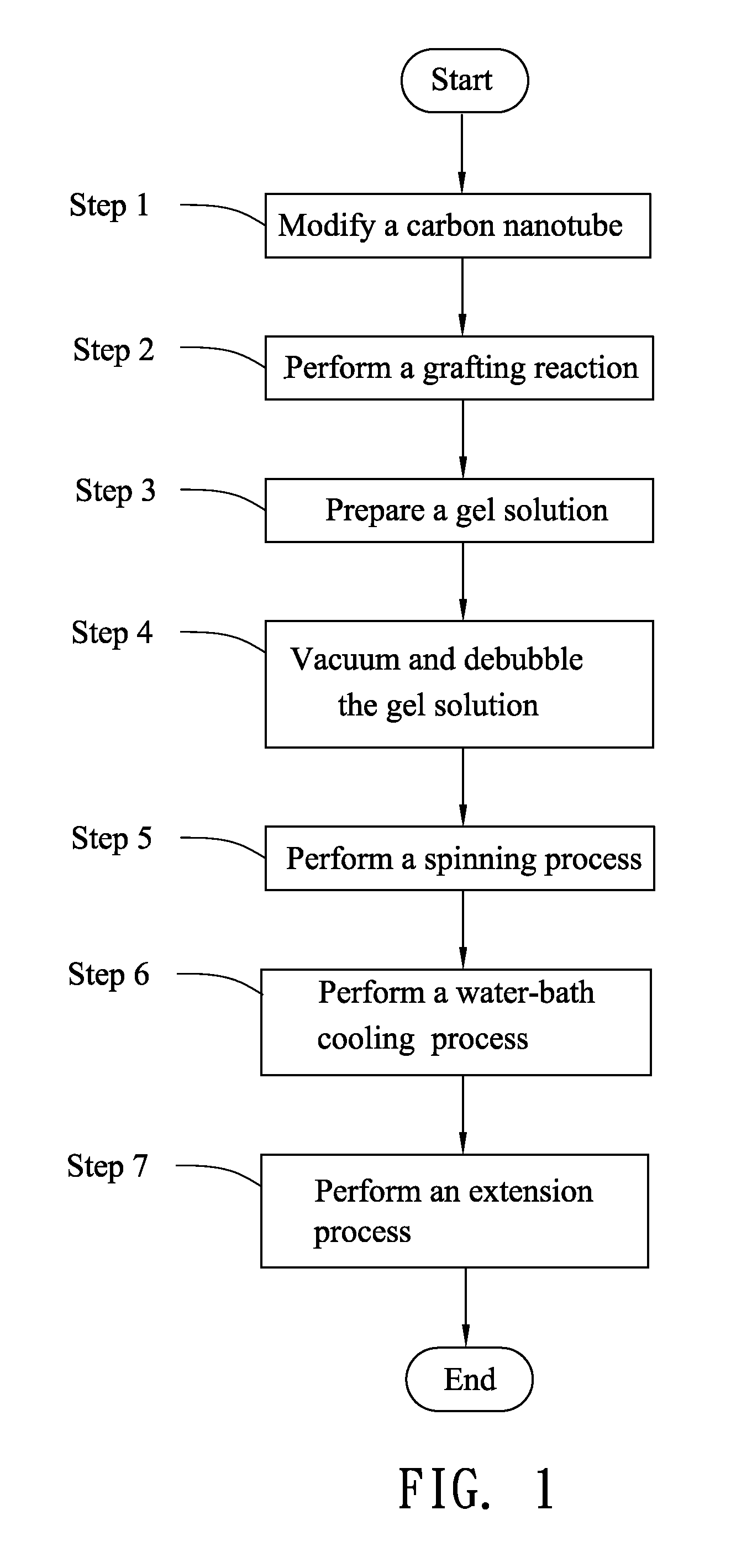
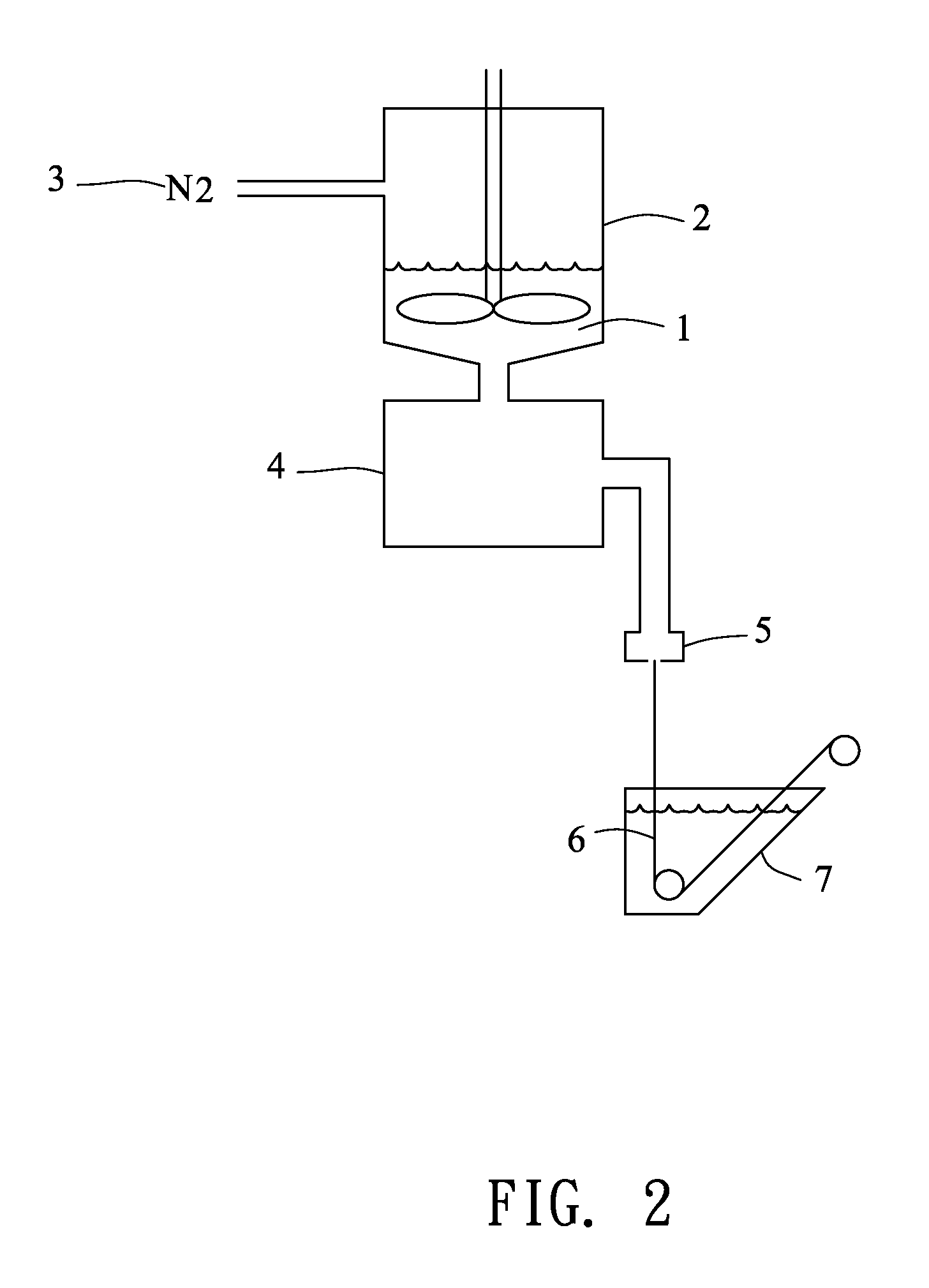
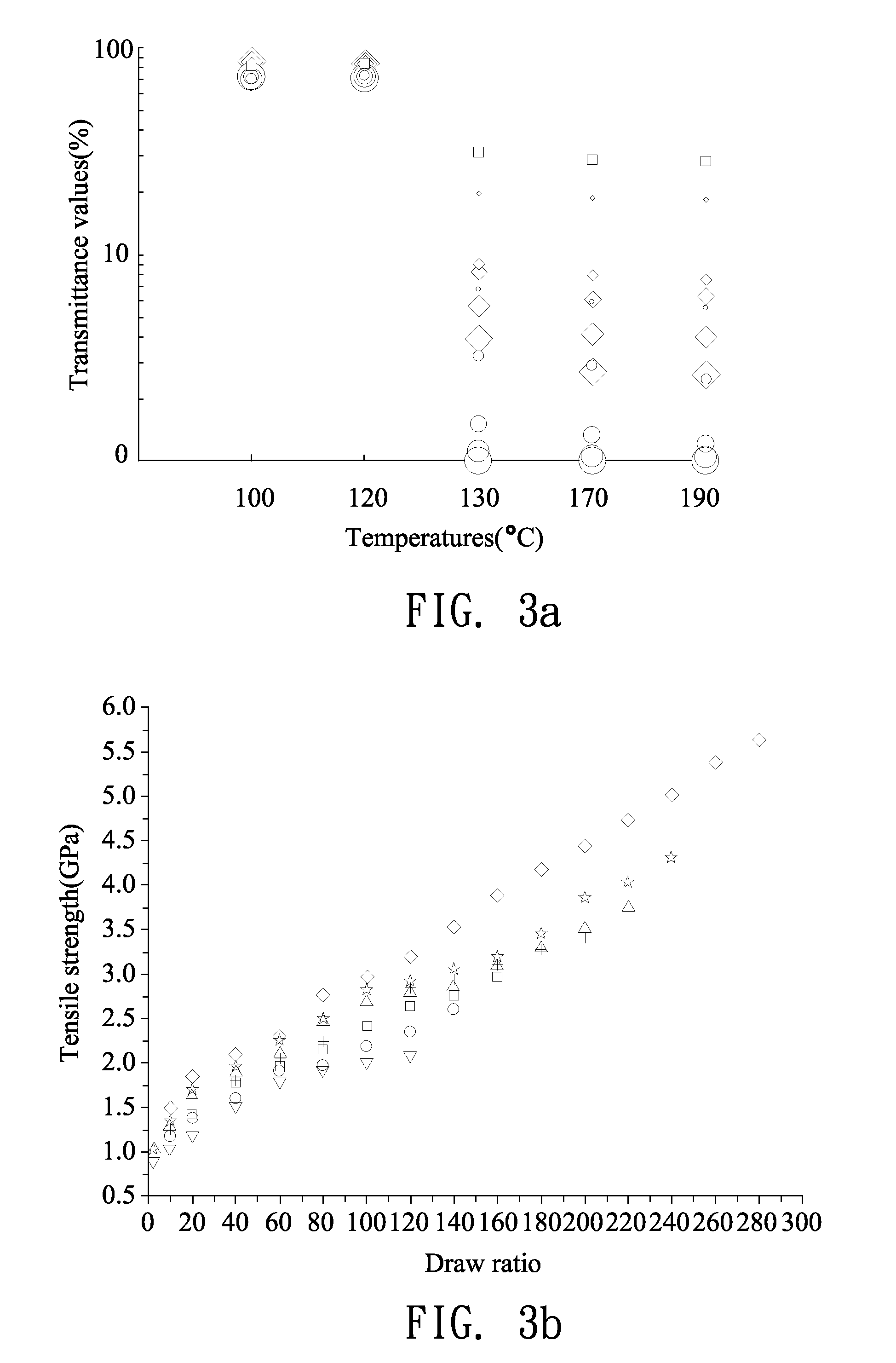
- A novel manufacturing process involving the uniform dispersion of inorganic nano substances like attapulgite, carbon nano-tubes, sepiolite, and wollastonite into UHMWPE gel solutions, followed by specific processing steps including sudden air cooling, water-phase solidification, and multi-stage temperature-changing drawing to produce high-tenacity fibers with reduced crimp, light transmittance, and improved strength.
Method to produce ultra-high molecular weight polyethylene
PatentInactiveUS20150274937A1
Innovation
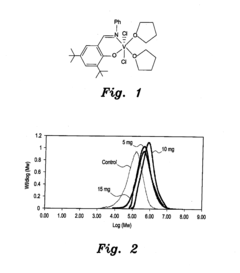
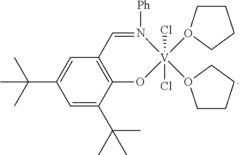
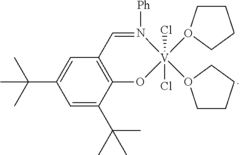
- Incorporating tungsten-doped titania (TiO2/W) nanofillers during the ethylene polymerization process using a vanadium (III) complex catalyst with bidentate salicylaldiminato ligands and a methyl aluminum dichloride co-catalyst, allowing for improved control over molecular weight, crystallinity, and thermal properties of UHMWPE.
Environmental Impact of UHMWPE Nanoprocessing
The environmental impact of UHMWPE nanoprocessing is a critical consideration as the technology advances. The production of ultra-high molecular weight polyethylene (UHMWPE) nanostructures involves various processes that can have significant environmental implications. These processes often require high energy inputs, potentially leading to increased carbon emissions if not managed sustainably.
One of the primary environmental concerns is the use of solvents in certain nanoprocessing techniques. Some methods employ organic solvents that may be harmful to ecosystems if released into the environment. Proper handling, recycling, and disposal of these solvents are essential to minimize their ecological footprint. Additionally, the production of nanoparticles can generate airborne particulates, necessitating robust filtration systems to prevent air pollution.
Water usage is another environmental factor to consider. Some nanoprocessing techniques require substantial amounts of water for cooling or as part of the manufacturing process. Implementing water recycling systems and optimizing water use efficiency can help mitigate this impact. Furthermore, the potential release of nanomaterials into aquatic environments during production or disposal poses risks to aquatic ecosystems, highlighting the need for advanced wastewater treatment technologies.
The lifecycle assessment of UHMWPE nanostructures reveals both positive and negative environmental impacts. On the positive side, the enhanced durability and performance of nanostructured UHMWPE can lead to longer-lasting products, potentially reducing overall material consumption and waste generation. However, the complex nature of these nanostructures may complicate recycling efforts at the end of their life cycle.
Energy consumption during nanoprocessing is a significant concern. The production of UHMWPE nanostructures often requires precise control of temperature and pressure, which can be energy-intensive. Implementing energy-efficient technologies and exploring renewable energy sources for manufacturing facilities can help reduce the carbon footprint associated with nanoprocessing.
As the field of UHMWPE nanoprocessing evolves, there is a growing emphasis on developing more environmentally friendly production methods. Green chemistry principles are being applied to create less toxic and more sustainable processing techniques. Research is also focusing on bio-based alternatives and environmentally benign solvents to reduce the reliance on petrochemical-derived materials.
The potential for nanoparticle release during the use phase of UHMWPE nanostructured products is an area of ongoing study. While UHMWPE is generally considered inert, the long-term environmental fate of nanoparticles that may be shed from these materials is not fully understood. This uncertainty underscores the importance of continued research into the environmental behavior and potential ecological impacts of UHMWPE nanostructures throughout their entire lifecycle.
One of the primary environmental concerns is the use of solvents in certain nanoprocessing techniques. Some methods employ organic solvents that may be harmful to ecosystems if released into the environment. Proper handling, recycling, and disposal of these solvents are essential to minimize their ecological footprint. Additionally, the production of nanoparticles can generate airborne particulates, necessitating robust filtration systems to prevent air pollution.
Water usage is another environmental factor to consider. Some nanoprocessing techniques require substantial amounts of water for cooling or as part of the manufacturing process. Implementing water recycling systems and optimizing water use efficiency can help mitigate this impact. Furthermore, the potential release of nanomaterials into aquatic environments during production or disposal poses risks to aquatic ecosystems, highlighting the need for advanced wastewater treatment technologies.
The lifecycle assessment of UHMWPE nanostructures reveals both positive and negative environmental impacts. On the positive side, the enhanced durability and performance of nanostructured UHMWPE can lead to longer-lasting products, potentially reducing overall material consumption and waste generation. However, the complex nature of these nanostructures may complicate recycling efforts at the end of their life cycle.
Energy consumption during nanoprocessing is a significant concern. The production of UHMWPE nanostructures often requires precise control of temperature and pressure, which can be energy-intensive. Implementing energy-efficient technologies and exploring renewable energy sources for manufacturing facilities can help reduce the carbon footprint associated with nanoprocessing.
As the field of UHMWPE nanoprocessing evolves, there is a growing emphasis on developing more environmentally friendly production methods. Green chemistry principles are being applied to create less toxic and more sustainable processing techniques. Research is also focusing on bio-based alternatives and environmentally benign solvents to reduce the reliance on petrochemical-derived materials.
The potential for nanoparticle release during the use phase of UHMWPE nanostructured products is an area of ongoing study. While UHMWPE is generally considered inert, the long-term environmental fate of nanoparticles that may be shed from these materials is not fully understood. This uncertainty underscores the importance of continued research into the environmental behavior and potential ecological impacts of UHMWPE nanostructures throughout their entire lifecycle.
Standardization of UHMWPE Nanostructure Metrics
The standardization of UHMWPE nanostructure metrics is crucial for ensuring consistency and reliability in the development and application of ultra-high molecular weight polyethylene (UHMWPE) nanostructures. As the field of UHMWPE processing advances from micro to nano scales, establishing standardized measurement and characterization methods becomes increasingly important.
One of the primary challenges in standardizing UHMWPE nanostructure metrics is the wide range of processing techniques and resulting nanostructures. These can include nanofibers, nanoparticles, and nanocomposites, each with unique properties and characteristics. To address this diversity, a comprehensive set of metrics must be developed that can accurately describe and quantify the various nanostructures.
Key metrics for standardization include particle size distribution, aspect ratio, surface area, and crystallinity. For nanofibers, additional metrics such as fiber diameter, length, and orientation are essential. Standardized methods for measuring these properties must be established, incorporating techniques such as scanning electron microscopy (SEM), transmission electron microscopy (TEM), and X-ray diffraction (XRD).
Another critical aspect of standardization is the development of protocols for sample preparation and testing. This includes guidelines for processing conditions, such as temperature, pressure, and shear rates, which can significantly impact the resulting nanostructures. Standardized testing procedures must also be established to ensure reproducibility and comparability of results across different laboratories and research groups.
The mechanical properties of UHMWPE nanostructures are of particular interest, given their potential applications in high-performance materials. Standardized methods for measuring tensile strength, modulus, and impact resistance of nanostructured UHMWPE must be developed, taking into account the unique challenges posed by nanoscale materials.
Thermal and chemical stability are also important considerations in UHMWPE nanostructure characterization. Standardized metrics and testing procedures for evaluating thermal degradation, oxidation resistance, and chemical compatibility should be established to ensure the long-term performance of UHMWPE nanostructures in various applications.
As the field of UHMWPE nanostructures continues to evolve, it is essential that standardization efforts remain flexible and adaptable. Regular review and updating of standardized metrics and methods will be necessary to keep pace with technological advancements and emerging applications. Collaboration between academic institutions, industry partners, and standards organizations will be crucial in developing and maintaining a robust set of standardized metrics for UHMWPE nanostructures.
One of the primary challenges in standardizing UHMWPE nanostructure metrics is the wide range of processing techniques and resulting nanostructures. These can include nanofibers, nanoparticles, and nanocomposites, each with unique properties and characteristics. To address this diversity, a comprehensive set of metrics must be developed that can accurately describe and quantify the various nanostructures.
Key metrics for standardization include particle size distribution, aspect ratio, surface area, and crystallinity. For nanofibers, additional metrics such as fiber diameter, length, and orientation are essential. Standardized methods for measuring these properties must be established, incorporating techniques such as scanning electron microscopy (SEM), transmission electron microscopy (TEM), and X-ray diffraction (XRD).
Another critical aspect of standardization is the development of protocols for sample preparation and testing. This includes guidelines for processing conditions, such as temperature, pressure, and shear rates, which can significantly impact the resulting nanostructures. Standardized testing procedures must also be established to ensure reproducibility and comparability of results across different laboratories and research groups.
The mechanical properties of UHMWPE nanostructures are of particular interest, given their potential applications in high-performance materials. Standardized methods for measuring tensile strength, modulus, and impact resistance of nanostructured UHMWPE must be developed, taking into account the unique challenges posed by nanoscale materials.
Thermal and chemical stability are also important considerations in UHMWPE nanostructure characterization. Standardized metrics and testing procedures for evaluating thermal degradation, oxidation resistance, and chemical compatibility should be established to ensure the long-term performance of UHMWPE nanostructures in various applications.
As the field of UHMWPE nanostructures continues to evolve, it is essential that standardization efforts remain flexible and adaptable. Regular review and updating of standardized metrics and methods will be necessary to keep pace with technological advancements and emerging applications. Collaboration between academic institutions, industry partners, and standards organizations will be crucial in developing and maintaining a robust set of standardized metrics for UHMWPE nanostructures.
Unlock deeper insights with PatSnap Eureka Quick Research — get a full tech report to explore trends and direct your research. Try now!
Generate Your Research Report Instantly with AI Agent
Supercharge your innovation with PatSnap Eureka AI Agent Platform!