

UHMWPE's Integration into Additive Manufacturing Processes
AUG 6, 20259 MIN READ
Generate Your Research Report Instantly with AI Agent
PatSnap Eureka helps you evaluate technical feasibility & market potential.
UHMWPE AM Evolution
The integration of Ultra-High Molecular Weight Polyethylene (UHMWPE) into additive manufacturing processes has undergone significant evolution over the past decade. Initially, UHMWPE was considered challenging to process due to its high molecular weight and viscosity, which made it unsuitable for traditional 3D printing methods.
The journey began with attempts to modify UHMWPE for extrusion-based processes. Researchers experimented with various additives and processing techniques to improve the material's flowability without compromising its unique properties. These early efforts laid the groundwork for future developments but were largely unsuccessful in producing high-quality parts.
A breakthrough came with the adaptation of selective laser sintering (SLS) for UHMWPE. This powder-based technique allowed for the creation of complex geometries without the need for support structures. However, initial results were plagued by issues such as poor layer adhesion and warping, necessitating further refinement of both the material and the process parameters.
As the technology progressed, new hybrid approaches emerged. One notable development was the combination of UHMWPE with other polymers to create composite materials that retained many of UHMWPE's desirable properties while improving printability. This approach opened up new possibilities for applications in areas such as medical implants and high-performance components.
The evolution of UHMWPE in additive manufacturing also saw advancements in post-processing techniques. Researchers developed methods to enhance the mechanical properties and surface finish of printed parts through thermal treatments and surface modifications. These innovations significantly expanded the range of potential applications for 3D-printed UHMWPE components.
Recent years have witnessed the emergence of novel additive manufacturing technologies specifically tailored for UHMWPE. These include variations of fused filament fabrication (FFF) with specialized extruders capable of handling high-viscosity materials, as well as new powder bed fusion techniques optimized for UHMWPE's unique characteristics.
The latest frontier in UHMWPE additive manufacturing involves the development of multi-material printing capabilities. This allows for the creation of parts with gradient properties, combining UHMWPE with other materials to achieve specific performance characteristics in different regions of a single component.
As the field continues to advance, ongoing research focuses on improving print speed, resolution, and the overall quality of UHMWPE parts produced through additive manufacturing. These efforts are driving the technology towards broader industrial adoption and opening up new possibilities for customized, high-performance products across various sectors.
The journey began with attempts to modify UHMWPE for extrusion-based processes. Researchers experimented with various additives and processing techniques to improve the material's flowability without compromising its unique properties. These early efforts laid the groundwork for future developments but were largely unsuccessful in producing high-quality parts.
A breakthrough came with the adaptation of selective laser sintering (SLS) for UHMWPE. This powder-based technique allowed for the creation of complex geometries without the need for support structures. However, initial results were plagued by issues such as poor layer adhesion and warping, necessitating further refinement of both the material and the process parameters.
As the technology progressed, new hybrid approaches emerged. One notable development was the combination of UHMWPE with other polymers to create composite materials that retained many of UHMWPE's desirable properties while improving printability. This approach opened up new possibilities for applications in areas such as medical implants and high-performance components.
The evolution of UHMWPE in additive manufacturing also saw advancements in post-processing techniques. Researchers developed methods to enhance the mechanical properties and surface finish of printed parts through thermal treatments and surface modifications. These innovations significantly expanded the range of potential applications for 3D-printed UHMWPE components.
Recent years have witnessed the emergence of novel additive manufacturing technologies specifically tailored for UHMWPE. These include variations of fused filament fabrication (FFF) with specialized extruders capable of handling high-viscosity materials, as well as new powder bed fusion techniques optimized for UHMWPE's unique characteristics.
The latest frontier in UHMWPE additive manufacturing involves the development of multi-material printing capabilities. This allows for the creation of parts with gradient properties, combining UHMWPE with other materials to achieve specific performance characteristics in different regions of a single component.
As the field continues to advance, ongoing research focuses on improving print speed, resolution, and the overall quality of UHMWPE parts produced through additive manufacturing. These efforts are driving the technology towards broader industrial adoption and opening up new possibilities for customized, high-performance products across various sectors.
Market Demand Analysis
The integration of Ultra-High Molecular Weight Polyethylene (UHMWPE) into additive manufacturing processes has sparked significant interest across various industries, driving a growing market demand. This advanced material's unique properties, including high strength-to-weight ratio, excellent wear resistance, and chemical inertness, make it particularly attractive for applications in aerospace, medical devices, and industrial components.
In the aerospace sector, the demand for lightweight yet durable materials has led to increased exploration of UHMWPE in 3D printing applications. The material's potential to reduce overall aircraft weight while maintaining structural integrity has caught the attention of major manufacturers. This trend is expected to continue as the industry seeks innovative solutions to improve fuel efficiency and reduce environmental impact.
The medical device industry represents another key driver of market demand for UHMWPE in additive manufacturing. The material's biocompatibility and wear resistance make it ideal for orthopedic implants and prosthetics. The ability to create custom, patient-specific devices through 3D printing offers significant advantages in terms of fit, function, and patient outcomes. As the global population ages and the prevalence of joint replacements increases, the demand for UHMWPE-based 3D printed medical devices is projected to grow substantially.
In the industrial sector, UHMWPE's exceptional abrasion resistance and low friction properties have led to increased interest in its use for 3D printed components in machinery and equipment. Industries such as mining, material handling, and food processing are exploring the potential of UHMWPE parts to extend equipment lifespan and reduce maintenance costs.
The sports and recreation market also presents opportunities for UHMWPE in additive manufacturing. The material's impact resistance and lightweight nature make it suitable for protective gear, sports equipment, and high-performance components. As customization becomes increasingly important in the sports industry, the ability to 3D print UHMWPE parts offers new possibilities for product innovation and personalization.
Market analysis indicates that the global demand for UHMWPE in additive manufacturing is on an upward trajectory. Factors contributing to this growth include advancements in 3D printing technologies that can effectively process UHMWPE, increasing awareness of the material's benefits, and the expanding range of applications across industries. The market is also being driven by the broader trend towards sustainable and recyclable materials, as UHMWPE can be recycled and repurposed, aligning with circular economy principles.
However, challenges remain in fully realizing the market potential of UHMWPE in additive manufacturing. These include the need for specialized equipment and processes to handle the material's high melting point and viscosity, as well as the current limitations in achieving complex geometries and fine details compared to other 3D printable polymers. Overcoming these technical hurdles is likely to further accelerate market growth and open up new application areas for UHMWPE in additive manufacturing.
In the aerospace sector, the demand for lightweight yet durable materials has led to increased exploration of UHMWPE in 3D printing applications. The material's potential to reduce overall aircraft weight while maintaining structural integrity has caught the attention of major manufacturers. This trend is expected to continue as the industry seeks innovative solutions to improve fuel efficiency and reduce environmental impact.
The medical device industry represents another key driver of market demand for UHMWPE in additive manufacturing. The material's biocompatibility and wear resistance make it ideal for orthopedic implants and prosthetics. The ability to create custom, patient-specific devices through 3D printing offers significant advantages in terms of fit, function, and patient outcomes. As the global population ages and the prevalence of joint replacements increases, the demand for UHMWPE-based 3D printed medical devices is projected to grow substantially.
In the industrial sector, UHMWPE's exceptional abrasion resistance and low friction properties have led to increased interest in its use for 3D printed components in machinery and equipment. Industries such as mining, material handling, and food processing are exploring the potential of UHMWPE parts to extend equipment lifespan and reduce maintenance costs.
The sports and recreation market also presents opportunities for UHMWPE in additive manufacturing. The material's impact resistance and lightweight nature make it suitable for protective gear, sports equipment, and high-performance components. As customization becomes increasingly important in the sports industry, the ability to 3D print UHMWPE parts offers new possibilities for product innovation and personalization.
Market analysis indicates that the global demand for UHMWPE in additive manufacturing is on an upward trajectory. Factors contributing to this growth include advancements in 3D printing technologies that can effectively process UHMWPE, increasing awareness of the material's benefits, and the expanding range of applications across industries. The market is also being driven by the broader trend towards sustainable and recyclable materials, as UHMWPE can be recycled and repurposed, aligning with circular economy principles.
However, challenges remain in fully realizing the market potential of UHMWPE in additive manufacturing. These include the need for specialized equipment and processes to handle the material's high melting point and viscosity, as well as the current limitations in achieving complex geometries and fine details compared to other 3D printable polymers. Overcoming these technical hurdles is likely to further accelerate market growth and open up new application areas for UHMWPE in additive manufacturing.
Technical Challenges
The integration of Ultra-High Molecular Weight Polyethylene (UHMWPE) into additive manufacturing processes presents several significant technical challenges. One of the primary obstacles is the material's high viscosity and low melt flow index, which makes it difficult to process using conventional 3D printing techniques. This characteristic limits the ability to create fine details and complex geometries, as the material tends to resist flow and precise deposition.
Another major challenge lies in achieving proper layer adhesion and overall part strength. UHMWPE's low surface energy and high crystallinity can lead to poor interlayer bonding, resulting in weak spots and potential delamination in printed parts. This issue is particularly pronounced in processes that rely on thermal fusion between layers, such as Fused Deposition Modeling (FDM).
Temperature control during the printing process poses a significant hurdle. UHMWPE has a high melting point and requires careful thermal management to prevent degradation or incomplete melting. Maintaining consistent temperature throughout the print bed and extruder is crucial for ensuring uniform material properties and preventing warping or distortion of the final product.
The material's tendency to shrink and warp upon cooling presents another technical challenge. UHMWPE exhibits significant thermal expansion and contraction, which can lead to dimensional inaccuracies and internal stresses in printed parts. Mitigating these effects requires precise control of cooling rates and potentially the use of specialized build platforms or environmental chambers.
Furthermore, the development of suitable support structures and removal methods for UHMWPE prints is challenging. The material's toughness and chemical resistance make it difficult to create easily removable supports without compromising the integrity of the main structure. This limitation can restrict the complexity of geometries that can be successfully printed.
Lastly, ensuring consistent material quality and properties throughout the printing process is a significant challenge. UHMWPE's sensitivity to processing conditions means that slight variations in temperature, pressure, or cooling rates can lead to inconsistencies in the final product's mechanical properties. Developing robust process parameters and quality control measures is essential for producing reliable and repeatable results in additive manufacturing with UHMWPE.
Another major challenge lies in achieving proper layer adhesion and overall part strength. UHMWPE's low surface energy and high crystallinity can lead to poor interlayer bonding, resulting in weak spots and potential delamination in printed parts. This issue is particularly pronounced in processes that rely on thermal fusion between layers, such as Fused Deposition Modeling (FDM).
Temperature control during the printing process poses a significant hurdle. UHMWPE has a high melting point and requires careful thermal management to prevent degradation or incomplete melting. Maintaining consistent temperature throughout the print bed and extruder is crucial for ensuring uniform material properties and preventing warping or distortion of the final product.
The material's tendency to shrink and warp upon cooling presents another technical challenge. UHMWPE exhibits significant thermal expansion and contraction, which can lead to dimensional inaccuracies and internal stresses in printed parts. Mitigating these effects requires precise control of cooling rates and potentially the use of specialized build platforms or environmental chambers.
Furthermore, the development of suitable support structures and removal methods for UHMWPE prints is challenging. The material's toughness and chemical resistance make it difficult to create easily removable supports without compromising the integrity of the main structure. This limitation can restrict the complexity of geometries that can be successfully printed.
Lastly, ensuring consistent material quality and properties throughout the printing process is a significant challenge. UHMWPE's sensitivity to processing conditions means that slight variations in temperature, pressure, or cooling rates can lead to inconsistencies in the final product's mechanical properties. Developing robust process parameters and quality control measures is essential for producing reliable and repeatable results in additive manufacturing with UHMWPE.
Current AM Solutions
01 Synthesis and processing of UHMWPE
Various methods for synthesizing and processing Ultra-High Molecular Weight Polyethylene (UHMWPE) are described. These include polymerization techniques, extrusion processes, and molding methods to produce UHMWPE with desired properties such as high molecular weight, improved strength, and enhanced wear resistance.- Synthesis and processing of UHMWPE: Various methods for synthesizing and processing Ultra-High Molecular Weight Polyethylene (UHMWPE) are explored. These include polymerization techniques, extrusion processes, and molding methods to produce UHMWPE with desired properties. The focus is on improving the molecular weight, crystallinity, and overall performance of the material.
- UHMWPE composites and blends: Development of UHMWPE-based composites and blends to enhance specific properties. This includes incorporating additives, reinforcing materials, or blending with other polymers to improve mechanical strength, wear resistance, or other functional characteristics. The aim is to create tailored materials for specific applications.
- Surface modification of UHMWPE: Techniques for modifying the surface properties of UHMWPE are investigated. This includes chemical treatments, plasma processing, or grafting methods to alter surface characteristics such as adhesion, wettability, or biocompatibility. The goal is to expand the range of applications for UHMWPE in various industries.
- UHMWPE in medical applications: Utilization of UHMWPE in medical and biomedical applications is explored. This includes the development of UHMWPE-based implants, prosthetics, and medical devices. Research focuses on improving wear resistance, reducing oxidation, and enhancing biocompatibility for long-term use in the human body.
- UHMWPE fibers and films: Production and application of UHMWPE in fiber and film forms are investigated. This includes spinning techniques, drawing processes, and film formation methods to create high-strength, lightweight materials. Applications range from protective gear to aerospace components, leveraging the material's exceptional strength-to-weight ratio.
02 UHMWPE composites and blends
Development of UHMWPE-based composites and blends with other materials to enhance specific properties. This includes the incorporation of reinforcing agents, fillers, or other polymers to improve mechanical strength, thermal stability, or other functional characteristics of the resulting material.Expand Specific Solutions03 Surface modification of UHMWPE
Techniques for modifying the surface of UHMWPE to enhance its properties or compatibility with other materials. This may include chemical treatments, plasma treatments, or grafting methods to improve adhesion, wettability, or biocompatibility of UHMWPE surfaces.Expand Specific Solutions04 Applications of UHMWPE in medical devices
Use of UHMWPE in various medical applications, particularly in orthopedic implants and prosthetics. This includes the development of UHMWPE-based materials with improved wear resistance, oxidation resistance, and biocompatibility for long-term implantation in the human body.Expand Specific Solutions05 UHMWPE fibers and textiles
Production and application of UHMWPE fibers and textiles with high strength-to-weight ratio. These materials find use in protective gear, high-performance ropes, and impact-resistant fabrics due to their exceptional mechanical properties and low density.Expand Specific Solutions
Key Industry Players
The integration of UHMWPE into additive manufacturing processes is in an early development stage, with significant potential for growth. The market size is expanding as industries recognize the material's unique properties for 3D printing applications. While the technology is still maturing, companies like Howmedica Osteonics Corp., Smith & Nephew Orthopaedics GmbH, and DSM IP Assets BV are at the forefront of research and development. The competitive landscape is diverse, with players from various sectors, including petrochemicals (China Petroleum & Chemical Corp., Saudi Basic Industries Corp.) and research institutions (Sichuan University, Shanghai Research Institute of Chemical Industry Co. Ltd.), contributing to advancements in this field.
DSM IP Assets BV
Technical Solution: DSM has developed a proprietary process for integrating UHMWPE into additive manufacturing, focusing on selective laser sintering (SLS) technology. Their approach involves creating UHMWPE powders with optimized particle size distribution and flow properties, enabling consistent layer deposition in SLS machines[1]. The company has also formulated specialized additives to enhance the sintering process, resulting in printed parts with improved mechanical properties and dimensional accuracy[2]. DSM's UHMWPE-based 3D printing materials offer exceptional wear resistance and low friction, making them suitable for applications in orthopedic implants and industrial components[3].
Strengths: Expertise in material science, established presence in the UHMWPE market, and advanced R&D capabilities. Weaknesses: High material costs and limited compatibility with some 3D printing technologies.
Saudi Basic Industries Corp.
Technical Solution: SABIC has developed a novel approach to incorporate UHMWPE into additive manufacturing processes, focusing on fused deposition modeling (FDM) technology. Their method involves creating UHMWPE filaments with enhanced thermal stability and melt flow properties, allowing for consistent extrusion and layer adhesion in FDM printers[4]. SABIC has also engineered specialized nozzle designs and printing parameters to overcome the challenges associated with UHMWPE's high molecular weight and viscosity[5]. The resulting 3D printed UHMWPE parts exhibit excellent chemical resistance, impact strength, and abrasion resistance, making them suitable for applications in the automotive and aerospace industries[6].
Strengths: Large-scale production capabilities, strong market presence, and extensive polymer expertise. Weaknesses: Limited experience in additive manufacturing technologies and potential challenges in scaling up production of specialized UHMWPE materials for 3D printing.
UHMWPE AM Innovations
Ultra highmolecular weight polyethylene compositions
PatentInactiveUS20180037726A1
Innovation
- Adding ultrahigh molecular weight silicone to UHMWPE during compounding enables processing by traditional injection molding and extrusion methods, enhancing wear resistance and allowing for the creation of various forms such as fibers, films, and sheets.
Method to produce ultra-high molecular weight polyethylene
PatentInactiveUS20150274937A1
Innovation
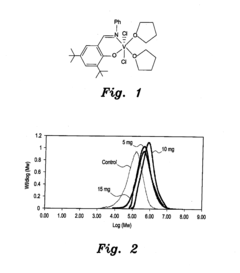
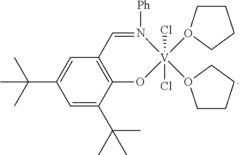
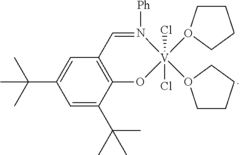
- Incorporating tungsten-doped titania (TiO2/W) nanofillers during the ethylene polymerization process using a vanadium (III) complex catalyst with bidentate salicylaldiminato ligands and a methyl aluminum dichloride co-catalyst, allowing for improved control over molecular weight, crystallinity, and thermal properties of UHMWPE.
Material Properties
Ultra-high-molecular-weight polyethylene (UHMWPE) possesses a unique combination of properties that make it an attractive material for additive manufacturing processes. Its exceptional wear resistance, high impact strength, and low coefficient of friction contribute to its durability and longevity in various applications. The material's chemical inertness and resistance to corrosion further enhance its suitability for use in harsh environments.
UHMWPE's high molecular weight, typically ranging from 3.5 to 7.5 million g/mol, results in long polymer chains that impart superior mechanical properties. This molecular structure leads to excellent abrasion resistance, which is particularly beneficial in applications requiring prolonged wear resistance. The material's self-lubricating properties reduce friction and wear in moving parts, making it ideal for components in machinery and medical implants.
The low density of UHMWPE, approximately 0.93-0.95 g/cm³, combined with its high strength-to-weight ratio, makes it an attractive option for lightweight yet robust structures. This characteristic is particularly advantageous in aerospace and automotive industries where weight reduction is crucial. Additionally, UHMWPE exhibits good fatigue resistance and maintains its properties over a wide temperature range, from -200°C to 80°C.
In terms of thermal properties, UHMWPE has a relatively low melting point of around 130-135°C, which presents both challenges and opportunities in additive manufacturing processes. While this lower melting point can facilitate easier processing, it also requires careful temperature control during manufacturing to maintain dimensional stability and prevent thermal degradation.
UHMWPE's biocompatibility and resistance to bacteria growth make it an excellent choice for medical applications, particularly in orthopedic implants and prosthetics. Its low moisture absorption and high resistance to chemicals contribute to its stability in various environments, expanding its potential use in diverse industrial sectors.
However, the material's high viscosity in the molten state poses challenges for traditional manufacturing methods and requires specialized techniques for effective processing in additive manufacturing. The development of new processing methods and the optimization of existing ones are crucial for fully leveraging UHMWPE's unique properties in 3D printing applications.
UHMWPE's high molecular weight, typically ranging from 3.5 to 7.5 million g/mol, results in long polymer chains that impart superior mechanical properties. This molecular structure leads to excellent abrasion resistance, which is particularly beneficial in applications requiring prolonged wear resistance. The material's self-lubricating properties reduce friction and wear in moving parts, making it ideal for components in machinery and medical implants.
The low density of UHMWPE, approximately 0.93-0.95 g/cm³, combined with its high strength-to-weight ratio, makes it an attractive option for lightweight yet robust structures. This characteristic is particularly advantageous in aerospace and automotive industries where weight reduction is crucial. Additionally, UHMWPE exhibits good fatigue resistance and maintains its properties over a wide temperature range, from -200°C to 80°C.
In terms of thermal properties, UHMWPE has a relatively low melting point of around 130-135°C, which presents both challenges and opportunities in additive manufacturing processes. While this lower melting point can facilitate easier processing, it also requires careful temperature control during manufacturing to maintain dimensional stability and prevent thermal degradation.
UHMWPE's biocompatibility and resistance to bacteria growth make it an excellent choice for medical applications, particularly in orthopedic implants and prosthetics. Its low moisture absorption and high resistance to chemicals contribute to its stability in various environments, expanding its potential use in diverse industrial sectors.
However, the material's high viscosity in the molten state poses challenges for traditional manufacturing methods and requires specialized techniques for effective processing in additive manufacturing. The development of new processing methods and the optimization of existing ones are crucial for fully leveraging UHMWPE's unique properties in 3D printing applications.
Sustainability Aspects
The integration of Ultra-High Molecular Weight Polyethylene (UHMWPE) into additive manufacturing processes presents significant sustainability implications. This advanced material offers unique properties that can contribute to more sustainable manufacturing practices and end-products.
UHMWPE's exceptional durability and wear resistance can lead to longer-lasting products, reducing the need for frequent replacements and minimizing waste generation. This longevity aligns with circular economy principles, promoting resource efficiency and reducing the overall environmental impact of manufactured goods.
The material's lightweight nature also contributes to sustainability in transportation and energy consumption. Products made with UHMWPE through additive manufacturing can be designed with optimized structures, further reducing weight without compromising strength. This can lead to fuel savings and reduced emissions in various applications, particularly in automotive and aerospace industries.
Additive manufacturing processes using UHMWPE can significantly reduce material waste compared to traditional subtractive manufacturing methods. The layer-by-layer approach allows for precise material deposition, minimizing excess material usage and reducing the environmental footprint of production.
UHMWPE's chemical resistance and biocompatibility make it suitable for medical applications, potentially reducing the need for material replacements in implants and prosthetics. This can lead to improved patient outcomes and reduced medical waste over time.
The recyclability of UHMWPE is another crucial sustainability aspect. While challenges exist in recycling complex 3D-printed structures, ongoing research is focused on developing effective recycling methods for UHMWPE-based additive manufactured products. Successful implementation of these recycling processes could significantly enhance the material's lifecycle sustainability.
Energy efficiency in the manufacturing process is an important consideration. Additive manufacturing with UHMWPE may require less energy compared to traditional manufacturing methods for complex geometries. However, the overall energy consumption should be carefully assessed and optimized to ensure a net positive environmental impact.
The potential for localized production using UHMWPE in additive manufacturing can reduce transportation needs and associated emissions. This decentralized manufacturing approach aligns with sustainable supply chain practices and can contribute to reduced carbon footprints.
As the integration of UHMWPE in additive manufacturing advances, it is crucial to conduct comprehensive life cycle assessments to fully understand and quantify the sustainability benefits. This will help guide future developments and ensure that the technology contributes positively to global sustainability goals.
UHMWPE's exceptional durability and wear resistance can lead to longer-lasting products, reducing the need for frequent replacements and minimizing waste generation. This longevity aligns with circular economy principles, promoting resource efficiency and reducing the overall environmental impact of manufactured goods.
The material's lightweight nature also contributes to sustainability in transportation and energy consumption. Products made with UHMWPE through additive manufacturing can be designed with optimized structures, further reducing weight without compromising strength. This can lead to fuel savings and reduced emissions in various applications, particularly in automotive and aerospace industries.
Additive manufacturing processes using UHMWPE can significantly reduce material waste compared to traditional subtractive manufacturing methods. The layer-by-layer approach allows for precise material deposition, minimizing excess material usage and reducing the environmental footprint of production.
UHMWPE's chemical resistance and biocompatibility make it suitable for medical applications, potentially reducing the need for material replacements in implants and prosthetics. This can lead to improved patient outcomes and reduced medical waste over time.
The recyclability of UHMWPE is another crucial sustainability aspect. While challenges exist in recycling complex 3D-printed structures, ongoing research is focused on developing effective recycling methods for UHMWPE-based additive manufactured products. Successful implementation of these recycling processes could significantly enhance the material's lifecycle sustainability.
Energy efficiency in the manufacturing process is an important consideration. Additive manufacturing with UHMWPE may require less energy compared to traditional manufacturing methods for complex geometries. However, the overall energy consumption should be carefully assessed and optimized to ensure a net positive environmental impact.
The potential for localized production using UHMWPE in additive manufacturing can reduce transportation needs and associated emissions. This decentralized manufacturing approach aligns with sustainable supply chain practices and can contribute to reduced carbon footprints.
As the integration of UHMWPE in additive manufacturing advances, it is crucial to conduct comprehensive life cycle assessments to fully understand and quantify the sustainability benefits. This will help guide future developments and ensure that the technology contributes positively to global sustainability goals.
Unlock deeper insights with PatSnap Eureka Quick Research — get a full tech report to explore trends and direct your research. Try now!
Generate Your Research Report Instantly with AI Agent
Supercharge your innovation with PatSnap Eureka AI Agent Platform!