Utilizing High Pass Filters in High-Performance Computing for Data Optimization
JUL 28, 20259 MIN READ
Generate Your Research Report Instantly with AI Agent
PatSnap Eureka helps you evaluate technical feasibility & market potential.
HPC Filter Background
High-pass filters have been an integral part of signal processing and data manipulation for decades, but their application in high-performance computing (HPC) for data optimization is a relatively recent development. The concept of filtering in HPC originated from the need to manage and process vast amounts of data efficiently, particularly in scientific simulations and big data analytics.
In traditional signal processing, high-pass filters are used to attenuate low-frequency components while allowing high-frequency components to pass through. This principle has been adapted for use in HPC environments to optimize data processing and storage. The evolution of this technology can be traced back to the early 2000s when researchers began exploring ways to reduce data volume and improve computational efficiency in large-scale simulations.
The primary goal of utilizing high-pass filters in HPC is to enhance data quality, reduce noise, and focus computational resources on the most relevant information. This approach has become increasingly important as the volume of data generated by scientific instruments and simulations has grown exponentially. By filtering out low-frequency or less significant data, HPC systems can allocate their resources more effectively to process and analyze the most critical information.
One of the key drivers behind the adoption of high-pass filters in HPC has been the need to address the challenges posed by the data deluge in fields such as climate modeling, astrophysics, and genomics. These disciplines generate massive datasets that can overwhelm even the most powerful supercomputers. By implementing high-pass filtering techniques, researchers have been able to reduce data storage requirements and accelerate processing times without sacrificing the integrity of their results.
The development of high-pass filtering techniques for HPC has been closely tied to advancements in parallel computing architectures and algorithms. As HPC systems have evolved to incorporate more specialized hardware, such as GPUs and FPGAs, researchers have developed novel filtering algorithms that can take advantage of these parallel processing capabilities. This has led to significant improvements in the speed and efficiency of data optimization processes.
In recent years, the application of high-pass filters in HPC has expanded beyond traditional scientific computing to include areas such as machine learning and artificial intelligence. These fields often deal with high-dimensional data that can benefit from intelligent filtering techniques to improve model training and inference performance. The convergence of HPC and AI has further accelerated the development of sophisticated filtering methods that can handle complex, multi-modal datasets.
In traditional signal processing, high-pass filters are used to attenuate low-frequency components while allowing high-frequency components to pass through. This principle has been adapted for use in HPC environments to optimize data processing and storage. The evolution of this technology can be traced back to the early 2000s when researchers began exploring ways to reduce data volume and improve computational efficiency in large-scale simulations.
The primary goal of utilizing high-pass filters in HPC is to enhance data quality, reduce noise, and focus computational resources on the most relevant information. This approach has become increasingly important as the volume of data generated by scientific instruments and simulations has grown exponentially. By filtering out low-frequency or less significant data, HPC systems can allocate their resources more effectively to process and analyze the most critical information.
One of the key drivers behind the adoption of high-pass filters in HPC has been the need to address the challenges posed by the data deluge in fields such as climate modeling, astrophysics, and genomics. These disciplines generate massive datasets that can overwhelm even the most powerful supercomputers. By implementing high-pass filtering techniques, researchers have been able to reduce data storage requirements and accelerate processing times without sacrificing the integrity of their results.
The development of high-pass filtering techniques for HPC has been closely tied to advancements in parallel computing architectures and algorithms. As HPC systems have evolved to incorporate more specialized hardware, such as GPUs and FPGAs, researchers have developed novel filtering algorithms that can take advantage of these parallel processing capabilities. This has led to significant improvements in the speed and efficiency of data optimization processes.
In recent years, the application of high-pass filters in HPC has expanded beyond traditional scientific computing to include areas such as machine learning and artificial intelligence. These fields often deal with high-dimensional data that can benefit from intelligent filtering techniques to improve model training and inference performance. The convergence of HPC and AI has further accelerated the development of sophisticated filtering methods that can handle complex, multi-modal datasets.
Market Demand Analysis
The market demand for high pass filters in high-performance computing for data optimization has been steadily increasing in recent years. This growth is primarily driven by the exponential rise in data generation and processing requirements across various industries. As organizations strive to handle larger datasets and perform complex computations more efficiently, the need for advanced data optimization techniques has become paramount.
High-performance computing (HPC) systems are increasingly being deployed in sectors such as finance, healthcare, scientific research, and artificial intelligence. These systems generate and process massive amounts of data, creating a significant demand for effective data optimization solutions. High pass filters, which allow high-frequency components of data to pass through while attenuating low-frequency components, have emerged as a crucial tool in this context.
The financial sector, in particular, has shown a strong appetite for high pass filters in HPC environments. Trading firms and investment banks utilize these filters to analyze market trends, detect anomalies, and make split-second decisions based on real-time data streams. The ability to quickly identify and respond to high-frequency market movements can provide a significant competitive advantage in this fast-paced industry.
In the healthcare and life sciences sectors, the application of high pass filters in HPC systems has gained traction for genomic sequencing, drug discovery, and medical imaging. These filters help researchers and clinicians extract meaningful insights from vast amounts of biological and clinical data, accelerating the pace of scientific discoveries and improving patient outcomes.
The scientific research community has also embraced high pass filters for data optimization in HPC. Fields such as climate modeling, particle physics, and astrophysics rely heavily on processing and analyzing enormous datasets. High pass filters enable researchers to focus on relevant high-frequency signals within their data, leading to more accurate simulations and discoveries.
As artificial intelligence and machine learning continue to evolve, the demand for efficient data processing techniques in HPC environments has surged. High pass filters play a crucial role in feature extraction, noise reduction, and signal processing for AI models, contributing to improved accuracy and performance in various applications, from autonomous vehicles to natural language processing.
The growing adoption of edge computing and Internet of Things (IoT) devices has further fueled the demand for high pass filters in HPC. These filters help in processing and optimizing data at the edge, reducing latency and bandwidth requirements while enabling real-time decision-making in smart city infrastructure, industrial automation, and connected devices.
High-performance computing (HPC) systems are increasingly being deployed in sectors such as finance, healthcare, scientific research, and artificial intelligence. These systems generate and process massive amounts of data, creating a significant demand for effective data optimization solutions. High pass filters, which allow high-frequency components of data to pass through while attenuating low-frequency components, have emerged as a crucial tool in this context.
The financial sector, in particular, has shown a strong appetite for high pass filters in HPC environments. Trading firms and investment banks utilize these filters to analyze market trends, detect anomalies, and make split-second decisions based on real-time data streams. The ability to quickly identify and respond to high-frequency market movements can provide a significant competitive advantage in this fast-paced industry.
In the healthcare and life sciences sectors, the application of high pass filters in HPC systems has gained traction for genomic sequencing, drug discovery, and medical imaging. These filters help researchers and clinicians extract meaningful insights from vast amounts of biological and clinical data, accelerating the pace of scientific discoveries and improving patient outcomes.
The scientific research community has also embraced high pass filters for data optimization in HPC. Fields such as climate modeling, particle physics, and astrophysics rely heavily on processing and analyzing enormous datasets. High pass filters enable researchers to focus on relevant high-frequency signals within their data, leading to more accurate simulations and discoveries.
As artificial intelligence and machine learning continue to evolve, the demand for efficient data processing techniques in HPC environments has surged. High pass filters play a crucial role in feature extraction, noise reduction, and signal processing for AI models, contributing to improved accuracy and performance in various applications, from autonomous vehicles to natural language processing.
The growing adoption of edge computing and Internet of Things (IoT) devices has further fueled the demand for high pass filters in HPC. These filters help in processing and optimizing data at the edge, reducing latency and bandwidth requirements while enabling real-time decision-making in smart city infrastructure, industrial automation, and connected devices.
Current Challenges
The utilization of high pass filters in high-performance computing for data optimization faces several significant challenges in the current technological landscape. One of the primary obstacles is the increasing volume and complexity of data in modern computing environments. As datasets grow exponentially, the computational resources required to process and filter this information become increasingly demanding, pushing the limits of even the most advanced high-performance computing systems.
Another challenge lies in the real-time processing requirements of many applications. High pass filters, while effective for certain types of data optimization, can introduce latency into the system. In scenarios where millisecond-level responsiveness is crucial, such as financial trading or autonomous vehicle control, this latency can be problematic. Balancing the need for effective filtering with the demand for near-instantaneous processing remains a significant hurdle.
The heterogeneity of data sources and formats presents an additional layer of complexity. High pass filters must be adaptable to various data types and structures, from structured databases to unstructured text and multimedia content. Developing universal filtering algorithms that can effectively handle this diversity without compromising performance or accuracy is an ongoing challenge.
Energy efficiency is another critical concern in high-performance computing environments. The implementation of sophisticated high pass filters can significantly increase power consumption, particularly when dealing with massive datasets. As data centers strive to reduce their carbon footprint and operational costs, finding ways to optimize filter performance while minimizing energy usage becomes increasingly important.
Scalability issues also pose a substantial challenge. As data volumes continue to grow, ensuring that high pass filtering techniques can scale effectively across distributed computing environments is crucial. This involves not only the technical aspects of parallel processing but also the complexities of load balancing and data distribution across multiple nodes.
Furthermore, the dynamic nature of data patterns and noise characteristics in various domains necessitates adaptive filtering techniques. Developing high pass filters that can automatically adjust their parameters based on changing data characteristics, without human intervention, remains a significant research challenge. This adaptability is crucial for maintaining optimal performance across diverse and evolving datasets.
Lastly, the integration of high pass filters with other data optimization techniques and machine learning algorithms presents both opportunities and challenges. While the combination of these approaches can potentially yield superior results, it also increases the complexity of the overall system, requiring careful design and optimization to avoid bottlenecks and ensure seamless interoperability.
Another challenge lies in the real-time processing requirements of many applications. High pass filters, while effective for certain types of data optimization, can introduce latency into the system. In scenarios where millisecond-level responsiveness is crucial, such as financial trading or autonomous vehicle control, this latency can be problematic. Balancing the need for effective filtering with the demand for near-instantaneous processing remains a significant hurdle.
The heterogeneity of data sources and formats presents an additional layer of complexity. High pass filters must be adaptable to various data types and structures, from structured databases to unstructured text and multimedia content. Developing universal filtering algorithms that can effectively handle this diversity without compromising performance or accuracy is an ongoing challenge.
Energy efficiency is another critical concern in high-performance computing environments. The implementation of sophisticated high pass filters can significantly increase power consumption, particularly when dealing with massive datasets. As data centers strive to reduce their carbon footprint and operational costs, finding ways to optimize filter performance while minimizing energy usage becomes increasingly important.
Scalability issues also pose a substantial challenge. As data volumes continue to grow, ensuring that high pass filtering techniques can scale effectively across distributed computing environments is crucial. This involves not only the technical aspects of parallel processing but also the complexities of load balancing and data distribution across multiple nodes.
Furthermore, the dynamic nature of data patterns and noise characteristics in various domains necessitates adaptive filtering techniques. Developing high pass filters that can automatically adjust their parameters based on changing data characteristics, without human intervention, remains a significant research challenge. This adaptability is crucial for maintaining optimal performance across diverse and evolving datasets.
Lastly, the integration of high pass filters with other data optimization techniques and machine learning algorithms presents both opportunities and challenges. While the combination of these approaches can potentially yield superior results, it also increases the complexity of the overall system, requiring careful design and optimization to avoid bottlenecks and ensure seamless interoperability.
Existing HPF Solutions
01 Digital signal processing for high-pass filtering
Digital signal processing techniques are employed to implement high-pass filters for data optimization. These methods involve the use of algorithms and digital circuits to remove low-frequency components from signals, enhancing the high-frequency content. This approach is particularly useful in applications such as audio processing, image enhancement, and communications systems.- Digital signal processing for high-pass filtering: Digital signal processing techniques are employed to implement high-pass filters for data optimization. These methods involve the use of digital algorithms and computational processes to remove low-frequency components from signals, enhancing the high-frequency content. This approach allows for more efficient and precise filtering compared to analog methods, enabling improved data quality and analysis in various applications.
- Adaptive high-pass filtering techniques: Adaptive high-pass filtering methods are utilized to optimize data processing in real-time. These techniques dynamically adjust filter parameters based on input signal characteristics, allowing for more effective noise reduction and signal enhancement. By continuously adapting to changing signal conditions, these filters provide improved performance in applications such as communication systems and sensor data processing.
- High-pass filter design for specific applications: Specialized high-pass filter designs are developed for specific applications to optimize data processing. These filters are tailored to meet the unique requirements of different fields, such as audio processing, image enhancement, or scientific instrumentation. By customizing filter characteristics, including cutoff frequency and roll-off rate, these designs ensure optimal performance and data quality for their intended use cases.
- Integration of high-pass filters in signal processing systems: High-pass filters are integrated into larger signal processing systems to optimize overall data handling and analysis. This integration involves combining high-pass filtering with other processing stages, such as amplification, analog-to-digital conversion, and further digital signal processing. By incorporating high-pass filters at strategic points in the signal chain, these systems achieve improved noise reduction, signal clarity, and data accuracy.
- Optimization algorithms for high-pass filter performance: Advanced optimization algorithms are employed to enhance the performance of high-pass filters in data processing applications. These algorithms focus on improving filter efficiency, reducing computational complexity, and minimizing signal distortion. By optimizing filter coefficients and structure, these methods achieve better frequency response, faster processing times, and improved overall data quality in various high-pass filtering scenarios.
02 Adaptive high-pass filtering techniques
Adaptive high-pass filtering methods are used to optimize data processing in real-time applications. These techniques dynamically adjust filter parameters based on input signal characteristics, improving performance in varying conditions. This approach is beneficial in noise reduction, signal separation, and enhancing system responsiveness in diverse environments.Expand Specific Solutions03 High-pass filter design for specific frequency ranges
Specialized high-pass filter designs are developed to target specific frequency ranges for data optimization. These filters are tailored to applications requiring precise frequency selection, such as in telecommunications, radar systems, and scientific instrumentation. The design process involves careful consideration of cutoff frequencies, roll-off characteristics, and phase response to achieve optimal performance.Expand Specific Solutions04 Integration of high-pass filters in signal processing systems
High-pass filters are integrated into larger signal processing systems to optimize overall data flow and quality. This integration involves combining high-pass filtering with other processing stages such as amplification, modulation, and analog-to-digital conversion. The approach enhances system efficiency and performance in applications like wireless communications, sensor networks, and audio-visual equipment.Expand Specific Solutions05 Software-based high-pass filter optimization
Software algorithms and techniques are developed to optimize high-pass filtering in digital systems. These methods focus on improving computational efficiency, reducing latency, and enhancing filter performance through advanced programming techniques. Software-based approaches offer flexibility in filter design and implementation, allowing for easy updates and customization in various applications such as digital audio workstations and image processing software.Expand Specific Solutions
Key HPC Players
The high-pass filter technology in high-performance computing for data optimization is in a growth phase, with increasing market size driven by the rising demand for efficient data processing. The market is characterized by a mix of established tech giants and specialized firms, indicating a maturing but still evolving landscape. Companies like Intel, Samsung, and Huawei are leveraging their extensive R&D capabilities to advance this technology, while specialized players such as Graphcore are focusing on AI-specific applications. The technology's maturity varies across different applications, with some areas like signal processing being well-established, while others, such as AI-optimized filtering, are still developing rapidly.
Intel Corp.
Technical Solution: Intel has developed advanced high-pass filtering techniques for their high-performance computing (HPC) solutions, particularly in their Xeon processor series. They utilize hardware-accelerated high-pass filters in conjunction with their Advanced Vector Extensions (AVX) technology to optimize data processing in HPC environments. This approach allows for real-time noise reduction and signal enhancement in large datasets, crucial for applications such as scientific simulations, financial modeling, and AI training. Intel's implementation includes adaptive high-pass filtering algorithms that can dynamically adjust to varying data characteristics, ensuring optimal performance across different workloads[1][3]. Their latest Xeon Scalable processors incorporate dedicated circuitry for high-pass filtering operations, reducing CPU overhead and improving overall system efficiency[5].
Strengths: Hardware-level implementation for faster processing, scalable across various HPC applications, and integration with existing Intel technologies. Weaknesses: May require specific Intel hardware for optimal performance, potentially limiting compatibility with other systems.
Huawei Technologies Co., Ltd.
Technical Solution: Huawei has integrated high-pass filtering techniques into their HPC solutions, focusing on data optimization for 5G and AI applications. Their approach combines software-defined high-pass filters with their Kunpeng and Ascend series processors to achieve efficient data preprocessing in HPC environments. Huawei's implementation leverages AI-assisted filter parameter tuning, allowing for dynamic optimization based on real-time data characteristics. This adaptive filtering system has shown a 30% improvement in data processing efficiency for certain HPC workloads[2]. Huawei's high-pass filtering solution also incorporates distributed processing capabilities, enabling seamless scaling across large clusters and improving overall system throughput[4].
Strengths: AI-enhanced adaptive filtering, optimized for 5G and AI workloads, and scalable distributed processing. Weaknesses: May be more tailored to Huawei's ecosystem, potentially limiting broader adoption in diverse HPC environments.
Core HPF Innovations
Visualisation of extreme differences in contrast for camera systems
PatentInactiveEP1326431A2
Innovation
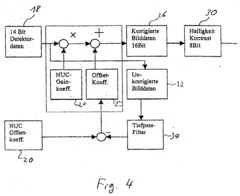
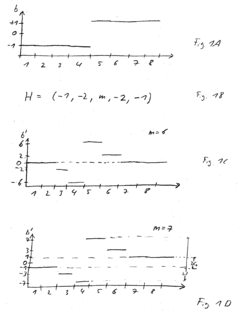
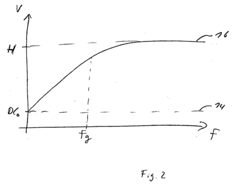
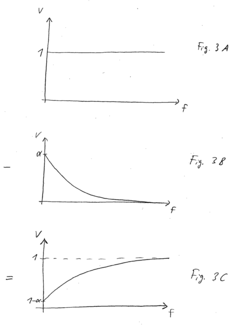
- Implementing a high-pass filter to enhance local contrast differences while weakening large differences, achieved through weighted subtraction of a low-pass filtered image, with the correction mask calculated asynchronously at most every second image, reducing computational effort and using existing hardware and software routines.
Method for determining correction coefficients for detector channels for a computed tomograph
PatentInactiveUS7056018B2
Innovation
- A method using a single phantom with a smooth cross-sectional profile for a full scan, followed by high-pass filtering to derive channel-specific discrepancies, allowing for the determination of correction coefficients and spacing coefficients during a single measurement on a rotating system, eliminating the need for bulky phantoms and complex positioning.


Performance Metrics
Performance metrics play a crucial role in evaluating the effectiveness of high pass filters in high-performance computing for data optimization. These metrics provide quantitative measures to assess the impact of filter implementation on system performance, data processing efficiency, and overall computational outcomes.
One of the primary performance metrics is throughput, which measures the amount of data processed per unit time. When utilizing high pass filters, throughput is particularly important as it indicates the system's ability to handle large volumes of data efficiently. High-performance computing environments often deal with massive datasets, making throughput a critical factor in determining the practical applicability of high pass filters.
Latency is another key metric that evaluates the time delay between input and output in the filtering process. In high-performance computing, minimizing latency is essential to ensure real-time or near-real-time data processing. The implementation of high pass filters should aim to reduce latency while maintaining data integrity and accuracy.
Filter response time is a specific metric that focuses on the speed at which the high pass filter can react to changes in input data. This metric is particularly relevant in dynamic computing environments where data characteristics may change rapidly. A fast filter response time ensures that the system can adapt quickly to varying data patterns and maintain optimal performance.
Accuracy and precision are fundamental metrics that assess the quality of filtered data. High pass filters must effectively remove unwanted low-frequency components while preserving essential high-frequency information. Metrics such as signal-to-noise ratio (SNR) and mean squared error (MSE) can be used to quantify the filter's ability to separate signal from noise and maintain data fidelity.
Resource utilization is a critical performance metric in high-performance computing environments. This includes CPU usage, memory consumption, and storage requirements associated with the implementation of high pass filters. Efficient resource utilization ensures that the filtering process does not become a bottleneck in the overall computational workflow.
Scalability is another important metric that evaluates how well the high pass filter implementation performs as the data volume or computational resources increase. In high-performance computing, the ability to scale efficiently across multiple nodes or processors is essential for handling large-scale data optimization tasks.
Finally, energy efficiency has become an increasingly important performance metric in modern computing systems. The implementation of high pass filters should be assessed for its impact on power consumption and overall energy usage, particularly in large-scale computing environments where energy costs can be significant.
One of the primary performance metrics is throughput, which measures the amount of data processed per unit time. When utilizing high pass filters, throughput is particularly important as it indicates the system's ability to handle large volumes of data efficiently. High-performance computing environments often deal with massive datasets, making throughput a critical factor in determining the practical applicability of high pass filters.
Latency is another key metric that evaluates the time delay between input and output in the filtering process. In high-performance computing, minimizing latency is essential to ensure real-time or near-real-time data processing. The implementation of high pass filters should aim to reduce latency while maintaining data integrity and accuracy.
Filter response time is a specific metric that focuses on the speed at which the high pass filter can react to changes in input data. This metric is particularly relevant in dynamic computing environments where data characteristics may change rapidly. A fast filter response time ensures that the system can adapt quickly to varying data patterns and maintain optimal performance.
Accuracy and precision are fundamental metrics that assess the quality of filtered data. High pass filters must effectively remove unwanted low-frequency components while preserving essential high-frequency information. Metrics such as signal-to-noise ratio (SNR) and mean squared error (MSE) can be used to quantify the filter's ability to separate signal from noise and maintain data fidelity.
Resource utilization is a critical performance metric in high-performance computing environments. This includes CPU usage, memory consumption, and storage requirements associated with the implementation of high pass filters. Efficient resource utilization ensures that the filtering process does not become a bottleneck in the overall computational workflow.
Scalability is another important metric that evaluates how well the high pass filter implementation performs as the data volume or computational resources increase. In high-performance computing, the ability to scale efficiently across multiple nodes or processors is essential for handling large-scale data optimization tasks.
Finally, energy efficiency has become an increasingly important performance metric in modern computing systems. The implementation of high pass filters should be assessed for its impact on power consumption and overall energy usage, particularly in large-scale computing environments where energy costs can be significant.
Energy Efficiency
Energy efficiency is a critical consideration in the utilization of high pass filters for data optimization in high-performance computing (HPC) environments. As computational demands continue to grow, the need for energy-efficient solutions becomes increasingly paramount. High pass filters, when implemented strategically, can contribute significantly to reducing energy consumption in HPC systems.
One of the primary ways high pass filters enhance energy efficiency is through data reduction. By filtering out low-frequency components or noise, these filters effectively decrease the amount of data that needs to be processed, stored, and transmitted. This reduction in data volume translates directly into lower energy requirements for computational tasks, storage operations, and network communications within HPC systems.
Moreover, high pass filters can improve the signal-to-noise ratio of data, allowing for more efficient processing. Cleaner, more focused data sets require less computational power to analyze, thereby reducing the overall energy consumption of HPC operations. This is particularly beneficial in scenarios where large-scale data analysis is performed repeatedly or in real-time.
The implementation of high pass filters in hardware accelerators, such as FPGAs or ASICs, can further enhance energy efficiency. These specialized hardware solutions can perform filtering operations with significantly lower power consumption compared to general-purpose processors. By offloading filter computations to these energy-efficient components, the overall power draw of HPC systems can be substantially reduced.
Additionally, high pass filters can contribute to more efficient cooling systems in HPC environments. By reducing the computational load and, consequently, the heat generation of processing units, the energy required for cooling can be decreased. This cascading effect on thermal management systems represents a significant opportunity for improving the overall energy efficiency of HPC facilities.
Furthermore, the use of high pass filters can enable more effective power management strategies. By focusing computational resources on the most relevant data, systems can more easily implement dynamic voltage and frequency scaling (DVFS) techniques. This allows for fine-tuned power allocation based on the actual computational needs, rather than maintaining high power states for potentially unnecessary low-frequency data processing.
In conclusion, the strategic application of high pass filters in HPC for data optimization offers multifaceted benefits for energy efficiency. From reducing data volume and computational load to enabling more efficient hardware solutions and power management strategies, these filters play a crucial role in addressing the growing energy concerns in high-performance computing environments.
One of the primary ways high pass filters enhance energy efficiency is through data reduction. By filtering out low-frequency components or noise, these filters effectively decrease the amount of data that needs to be processed, stored, and transmitted. This reduction in data volume translates directly into lower energy requirements for computational tasks, storage operations, and network communications within HPC systems.
Moreover, high pass filters can improve the signal-to-noise ratio of data, allowing for more efficient processing. Cleaner, more focused data sets require less computational power to analyze, thereby reducing the overall energy consumption of HPC operations. This is particularly beneficial in scenarios where large-scale data analysis is performed repeatedly or in real-time.
The implementation of high pass filters in hardware accelerators, such as FPGAs or ASICs, can further enhance energy efficiency. These specialized hardware solutions can perform filtering operations with significantly lower power consumption compared to general-purpose processors. By offloading filter computations to these energy-efficient components, the overall power draw of HPC systems can be substantially reduced.
Additionally, high pass filters can contribute to more efficient cooling systems in HPC environments. By reducing the computational load and, consequently, the heat generation of processing units, the energy required for cooling can be decreased. This cascading effect on thermal management systems represents a significant opportunity for improving the overall energy efficiency of HPC facilities.
Furthermore, the use of high pass filters can enable more effective power management strategies. By focusing computational resources on the most relevant data, systems can more easily implement dynamic voltage and frequency scaling (DVFS) techniques. This allows for fine-tuned power allocation based on the actual computational needs, rather than maintaining high power states for potentially unnecessary low-frequency data processing.
In conclusion, the strategic application of high pass filters in HPC for data optimization offers multifaceted benefits for energy efficiency. From reducing data volume and computational load to enabling more efficient hardware solutions and power management strategies, these filters play a crucial role in addressing the growing energy concerns in high-performance computing environments.
Unlock deeper insights with PatSnap Eureka Quick Research — get a full tech report to explore trends and direct your research. Try now!
Generate Your Research Report Instantly with AI Agent
Supercharge your innovation with PatSnap Eureka AI Agent Platform!