
VLSI vs DSP: Which Provides Superior Digital Signal Processing?
MAR 7, 20269 MIN READ
Generate Your Research Report Instantly with AI Agent
Patsnap Eureka helps you evaluate technical feasibility & market potential.
VLSI vs DSP Background and Processing Goals
Digital signal processing has evolved dramatically since its inception in the 1960s, fundamentally transforming how electronic systems handle, manipulate, and analyze digital information. The field emerged from the convergence of mathematical signal processing theory and advancing semiconductor technology, creating two distinct yet complementary approaches: Very Large Scale Integration (VLSI) implementations and Digital Signal Processor (DSP) architectures.
VLSI technology represents the hardware-centric approach to digital signal processing, where complex algorithms are implemented directly in silicon through custom integrated circuits. This methodology gained prominence in the 1980s as semiconductor manufacturing processes advanced, enabling the integration of millions of transistors on a single chip. VLSI solutions offer unparalleled performance optimization for specific signal processing tasks by creating dedicated hardware architectures tailored to particular algorithms or applications.
Digital Signal Processors, conversely, emerged as programmable solutions designed specifically for signal processing computations. These specialized microprocessors incorporate architectural features optimized for common DSP operations, including multiply-accumulate units, specialized addressing modes, and parallel execution capabilities. DSPs provide flexibility through software programmability while maintaining computational efficiency for signal processing workloads.
The fundamental processing goals driving both approaches center on achieving optimal performance across multiple dimensions. Primary objectives include maximizing computational throughput to handle real-time signal processing requirements, minimizing power consumption for portable and embedded applications, and reducing latency for time-critical processing tasks. Additionally, both technologies aim to provide cost-effective solutions while maintaining high precision and accuracy in mathematical computations.
Modern applications demand increasingly sophisticated signal processing capabilities, from high-definition multimedia processing to advanced wireless communications and artificial intelligence acceleration. These evolving requirements have intensified the debate between VLSI and DSP approaches, as system designers seek optimal solutions balancing performance, flexibility, power efficiency, and development complexity.
The technological landscape continues evolving with emerging paradigms such as system-on-chip integration, heterogeneous computing architectures, and application-specific instruction set processors, blurring traditional boundaries between VLSI and DSP methodologies while creating new opportunities for hybrid approaches.
VLSI technology represents the hardware-centric approach to digital signal processing, where complex algorithms are implemented directly in silicon through custom integrated circuits. This methodology gained prominence in the 1980s as semiconductor manufacturing processes advanced, enabling the integration of millions of transistors on a single chip. VLSI solutions offer unparalleled performance optimization for specific signal processing tasks by creating dedicated hardware architectures tailored to particular algorithms or applications.
Digital Signal Processors, conversely, emerged as programmable solutions designed specifically for signal processing computations. These specialized microprocessors incorporate architectural features optimized for common DSP operations, including multiply-accumulate units, specialized addressing modes, and parallel execution capabilities. DSPs provide flexibility through software programmability while maintaining computational efficiency for signal processing workloads.
The fundamental processing goals driving both approaches center on achieving optimal performance across multiple dimensions. Primary objectives include maximizing computational throughput to handle real-time signal processing requirements, minimizing power consumption for portable and embedded applications, and reducing latency for time-critical processing tasks. Additionally, both technologies aim to provide cost-effective solutions while maintaining high precision and accuracy in mathematical computations.
Modern applications demand increasingly sophisticated signal processing capabilities, from high-definition multimedia processing to advanced wireless communications and artificial intelligence acceleration. These evolving requirements have intensified the debate between VLSI and DSP approaches, as system designers seek optimal solutions balancing performance, flexibility, power efficiency, and development complexity.
The technological landscape continues evolving with emerging paradigms such as system-on-chip integration, heterogeneous computing architectures, and application-specific instruction set processors, blurring traditional boundaries between VLSI and DSP methodologies while creating new opportunities for hybrid approaches.
Market Demand for Digital Signal Processing Solutions
The digital signal processing market has experienced unprecedented growth driven by the proliferation of connected devices, artificial intelligence applications, and real-time data processing requirements across multiple industries. Traditional sectors such as telecommunications, automotive, and consumer electronics continue to demand increasingly sophisticated DSP capabilities, while emerging applications in IoT, edge computing, and machine learning create new market segments with distinct processing requirements.
Telecommunications infrastructure represents one of the largest demand drivers, particularly with the global rollout of 5G networks requiring advanced signal processing for beamforming, massive MIMO, and ultra-low latency communications. Network equipment manufacturers seek solutions that can handle complex modulation schemes and real-time protocol processing while maintaining power efficiency and cost-effectiveness.
The automotive industry has emerged as a significant growth sector, with advanced driver assistance systems, autonomous vehicles, and in-vehicle infotainment systems requiring sophisticated signal processing capabilities. Applications range from radar and lidar signal processing for collision avoidance to real-time audio processing for noise cancellation and voice recognition systems.
Consumer electronics continue to drive substantial demand, particularly in smartphones, tablets, and wearable devices where power consumption constraints are critical. Audio processing applications, including noise cancellation, voice assistants, and high-fidelity audio reproduction, require specialized DSP solutions that balance performance with battery life considerations.
Industrial automation and IoT applications represent rapidly expanding market segments, where edge computing requirements demand local signal processing capabilities. Manufacturing systems increasingly rely on real-time sensor data processing for predictive maintenance, quality control, and process optimization, creating demand for embedded DSP solutions that can operate in harsh industrial environments.
Medical device applications constitute a specialized but growing market segment, with requirements for high-precision signal processing in imaging systems, patient monitoring equipment, and diagnostic devices. These applications often demand exceptional reliability and regulatory compliance while maintaining real-time processing capabilities.
The market exhibits distinct preferences for different processing approaches based on application requirements. High-volume consumer applications typically favor cost-optimized solutions, while specialized industrial and medical applications prioritize performance and reliability over cost considerations. This segmentation influences the competitive dynamics between VLSI-based and traditional DSP processor approaches.
Telecommunications infrastructure represents one of the largest demand drivers, particularly with the global rollout of 5G networks requiring advanced signal processing for beamforming, massive MIMO, and ultra-low latency communications. Network equipment manufacturers seek solutions that can handle complex modulation schemes and real-time protocol processing while maintaining power efficiency and cost-effectiveness.
The automotive industry has emerged as a significant growth sector, with advanced driver assistance systems, autonomous vehicles, and in-vehicle infotainment systems requiring sophisticated signal processing capabilities. Applications range from radar and lidar signal processing for collision avoidance to real-time audio processing for noise cancellation and voice recognition systems.
Consumer electronics continue to drive substantial demand, particularly in smartphones, tablets, and wearable devices where power consumption constraints are critical. Audio processing applications, including noise cancellation, voice assistants, and high-fidelity audio reproduction, require specialized DSP solutions that balance performance with battery life considerations.
Industrial automation and IoT applications represent rapidly expanding market segments, where edge computing requirements demand local signal processing capabilities. Manufacturing systems increasingly rely on real-time sensor data processing for predictive maintenance, quality control, and process optimization, creating demand for embedded DSP solutions that can operate in harsh industrial environments.
Medical device applications constitute a specialized but growing market segment, with requirements for high-precision signal processing in imaging systems, patient monitoring equipment, and diagnostic devices. These applications often demand exceptional reliability and regulatory compliance while maintaining real-time processing capabilities.
The market exhibits distinct preferences for different processing approaches based on application requirements. High-volume consumer applications typically favor cost-optimized solutions, while specialized industrial and medical applications prioritize performance and reliability over cost considerations. This segmentation influences the competitive dynamics between VLSI-based and traditional DSP processor approaches.
Current State and Challenges of VLSI and DSP Technologies
VLSI technology has reached remarkable maturity in digital signal processing applications, with current fabrication processes achieving nodes as small as 3nm and 2nm in leading foundries. Modern VLSI implementations demonstrate exceptional performance in specialized DSP tasks, particularly through application-specific integrated circuits (ASICs) and field-programmable gate arrays (FPGAs). These implementations excel in parallel processing architectures, enabling simultaneous execution of multiple signal processing operations with minimal latency.
However, VLSI faces significant challenges in terms of development complexity and cost. The design cycle for custom VLSI solutions typically spans 18-24 months, requiring substantial investment in specialized design tools, verification processes, and manufacturing setup. Power consumption optimization remains a critical concern, especially in mobile and IoT applications where energy efficiency directly impacts battery life and thermal management.
DSP processors have evolved to offer sophisticated architectures optimized for signal processing algorithms, featuring specialized instruction sets, multiple arithmetic logic units, and dedicated memory hierarchies. Current DSP implementations provide excellent flexibility and programmability, allowing rapid prototyping and algorithm modifications without hardware redesign. Leading DSP families achieve processing speeds exceeding 1 GHz with integrated accelerators for common operations like FFT and filtering.
The primary challenge for DSP processors lies in achieving the same level of parallel processing efficiency as dedicated VLSI implementations. Sequential instruction execution inherently limits throughput for highly parallel algorithms, despite advances in superscalar architectures and SIMD capabilities. Additionally, general-purpose DSP architectures often consume more power per operation compared to optimized VLSI solutions.
Geographically, VLSI development concentrates in regions with advanced semiconductor manufacturing capabilities, primarily Taiwan, South Korea, and select facilities in the United States and Europe. DSP processor development shows broader distribution, with significant contributions from companies across North America, Europe, and Asia, reflecting the software-centric nature of DSP algorithm development.
Current market dynamics reveal a convergence trend, where hybrid solutions combining VLSI acceleration units with programmable DSP cores are gaining prominence. This approach addresses the flexibility limitations of pure VLSI while mitigating the performance constraints of traditional DSP processors, representing the current state-of-the-art in digital signal processing implementations.
However, VLSI faces significant challenges in terms of development complexity and cost. The design cycle for custom VLSI solutions typically spans 18-24 months, requiring substantial investment in specialized design tools, verification processes, and manufacturing setup. Power consumption optimization remains a critical concern, especially in mobile and IoT applications where energy efficiency directly impacts battery life and thermal management.
DSP processors have evolved to offer sophisticated architectures optimized for signal processing algorithms, featuring specialized instruction sets, multiple arithmetic logic units, and dedicated memory hierarchies. Current DSP implementations provide excellent flexibility and programmability, allowing rapid prototyping and algorithm modifications without hardware redesign. Leading DSP families achieve processing speeds exceeding 1 GHz with integrated accelerators for common operations like FFT and filtering.
The primary challenge for DSP processors lies in achieving the same level of parallel processing efficiency as dedicated VLSI implementations. Sequential instruction execution inherently limits throughput for highly parallel algorithms, despite advances in superscalar architectures and SIMD capabilities. Additionally, general-purpose DSP architectures often consume more power per operation compared to optimized VLSI solutions.
Geographically, VLSI development concentrates in regions with advanced semiconductor manufacturing capabilities, primarily Taiwan, South Korea, and select facilities in the United States and Europe. DSP processor development shows broader distribution, with significant contributions from companies across North America, Europe, and Asia, reflecting the software-centric nature of DSP algorithm development.
Current market dynamics reveal a convergence trend, where hybrid solutions combining VLSI acceleration units with programmable DSP cores are gaining prominence. This approach addresses the flexibility limitations of pure VLSI while mitigating the performance constraints of traditional DSP processors, representing the current state-of-the-art in digital signal processing implementations.
Existing VLSI and DSP Implementation Solutions
01 Specialized DSP architectures for enhanced processing performance
Digital signal processors can be designed with specialized architectures optimized for specific signal processing tasks. These architectures may include dedicated hardware units, parallel processing capabilities, and optimized instruction sets that enable faster execution of common DSP operations such as filtering, transforms, and convolution. The architectural improvements focus on reducing latency, increasing throughput, and improving overall computational efficiency for real-time signal processing applications.- Specialized DSP architectures for enhanced processing performance: Digital signal processors can be designed with specialized architectures that optimize computational efficiency for signal processing tasks. These architectures may include dedicated hardware units, parallel processing capabilities, and optimized instruction sets specifically tailored for DSP operations. Such designs enable faster execution of complex algorithms including filtering, transforms, and modulation/demodulation operations while reducing power consumption and improving overall system performance.
- VLSI implementation techniques for DSP systems: Very Large Scale Integration technology enables the implementation of complex DSP systems on single chips with improved performance characteristics. Advanced VLSI design methodologies incorporate techniques such as pipelining, parallel processing units, and optimized data paths to maximize throughput. These implementations allow for integration of multiple processing elements, memory structures, and control logic on a single die, resulting in compact, high-performance signal processing solutions with reduced latency and increased computational density.
- Power optimization in DSP and VLSI circuits: Power consumption management is critical in modern DSP and VLSI designs, particularly for mobile and embedded applications. Techniques include dynamic voltage and frequency scaling, clock gating, power domain partitioning, and low-power circuit design methodologies. These approaches enable significant reduction in power consumption while maintaining required performance levels, extending battery life in portable devices and reducing thermal management requirements in high-performance systems.
- Reconfigurable and adaptive DSP architectures: Reconfigurable DSP systems provide flexibility to adapt processing capabilities based on application requirements. These architectures incorporate programmable logic elements, configurable interconnects, and adaptive algorithms that can be modified during operation. Such systems enable efficient resource utilization by allowing the same hardware to perform different signal processing functions, supporting multiple standards and protocols, and adapting to varying computational demands in real-time applications.
- High-speed data processing and memory management: Efficient data handling and memory architecture are essential for achieving high performance in DSP systems. Advanced techniques include multi-level cache hierarchies, specialized memory access patterns, DMA controllers, and optimized data buffering strategies. These approaches minimize memory access latency, maximize data throughput, and ensure efficient utilization of available bandwidth. Proper memory management enables sustained high-speed processing of continuous data streams and supports real-time signal processing requirements.
02 Memory optimization and data path design in VLSI-based DSP systems
Efficient memory architectures and data path designs are critical for improving DSP performance in VLSI implementations. This includes techniques such as multi-level cache hierarchies, specialized memory access patterns, reduced memory bandwidth requirements, and optimized data routing between processing elements. These approaches minimize memory access bottlenecks and enable higher data throughput for signal processing operations.Expand Specific Solutions03 Power-efficient DSP implementations using advanced VLSI techniques
Power consumption is a critical consideration in modern DSP systems, particularly for mobile and embedded applications. Advanced VLSI techniques can be employed to reduce power consumption while maintaining performance, including dynamic voltage and frequency scaling, clock gating, power domain partitioning, and low-power circuit design methodologies. These techniques enable energy-efficient signal processing suitable for battery-operated devices.Expand Specific Solutions04 Reconfigurable and programmable DSP architectures
Reconfigurable DSP architectures provide flexibility to adapt to different signal processing algorithms and applications without requiring hardware redesign. These systems may incorporate field-programmable gate arrays, dynamically reconfigurable logic blocks, or programmable processing elements that can be configured for various DSP tasks. This approach offers a balance between the performance of dedicated hardware and the flexibility of software-based solutions.Expand Specific Solutions05 Parallel processing and multi-core DSP implementations
Parallel processing techniques and multi-core architectures can significantly enhance DSP performance by distributing computational workload across multiple processing units. These implementations may include multiple DSP cores operating simultaneously, vector processing units, or systolic array architectures that enable concurrent execution of signal processing operations. Such approaches are particularly effective for applications requiring high computational throughput and real-time processing of multiple data streams.Expand Specific Solutions
Key Players in VLSI and DSP Industry
The digital signal processing landscape represents a mature, multi-billion dollar market where VLSI and DSP technologies have converged rather than competed directly. Industry leaders like Texas Instruments, Analog Devices, and Qualcomm demonstrate advanced integration of both approaches, with VLSI serving as the implementation platform for sophisticated DSP algorithms. Companies such as Intel, MediaTek, and Huawei leverage hybrid architectures combining dedicated DSP cores with programmable VLSI solutions to optimize performance and power efficiency. The technology has reached high maturity levels, evidenced by widespread adoption across telecommunications, automotive, and consumer electronics sectors. Academic institutions like Xidian University and Zhejiang University continue advancing algorithmic innovations, while semiconductor giants focus on system-on-chip solutions that blur traditional VLSI-DSP boundaries, making the comparison increasingly irrelevant in modern applications.
Analog Devices, Inc.
Technical Solution: Analog Devices specializes in high-performance DSP solutions with their SHARC and Blackfin processor families, offering optimized architectures for real-time signal processing applications. Their DSP chips feature dedicated multiply-accumulate units, specialized instruction sets for filtering and FFT operations, and low-latency processing capabilities. The company's approach emphasizes software programmability and flexibility, allowing developers to implement complex algorithms while maintaining real-time performance. Their DSP solutions are widely used in audio processing, communications, and industrial control systems where algorithm flexibility and time-to-market considerations are critical.
Strengths: High flexibility for algorithm implementation, strong software development tools, excellent real-time performance. Weaknesses: Higher power consumption compared to dedicated VLSI solutions, potentially higher cost per unit for high-volume applications.
Texas Instruments Incorporated
Technical Solution: Texas Instruments offers comprehensive DSP solutions through their C6000 and C5000 processor families, featuring advanced VLIW architectures that enable parallel execution of multiple operations per clock cycle. Their DSP approach provides superior flexibility for implementing adaptive algorithms and supports real-time modifications of signal processing parameters. TI's DSP solutions excel in applications requiring frequent algorithm updates or multi-standard support, such as wireless base stations and software-defined radio systems. The company also provides extensive development tools and libraries that accelerate time-to-market for complex signal processing applications.
Strengths: Excellent parallel processing capabilities, comprehensive development ecosystem, strong support for adaptive algorithms. Weaknesses: Higher complexity in system design, increased power consumption compared to fixed-function VLSI implementations.
Core Innovations in VLSI-DSP Integration Technologies
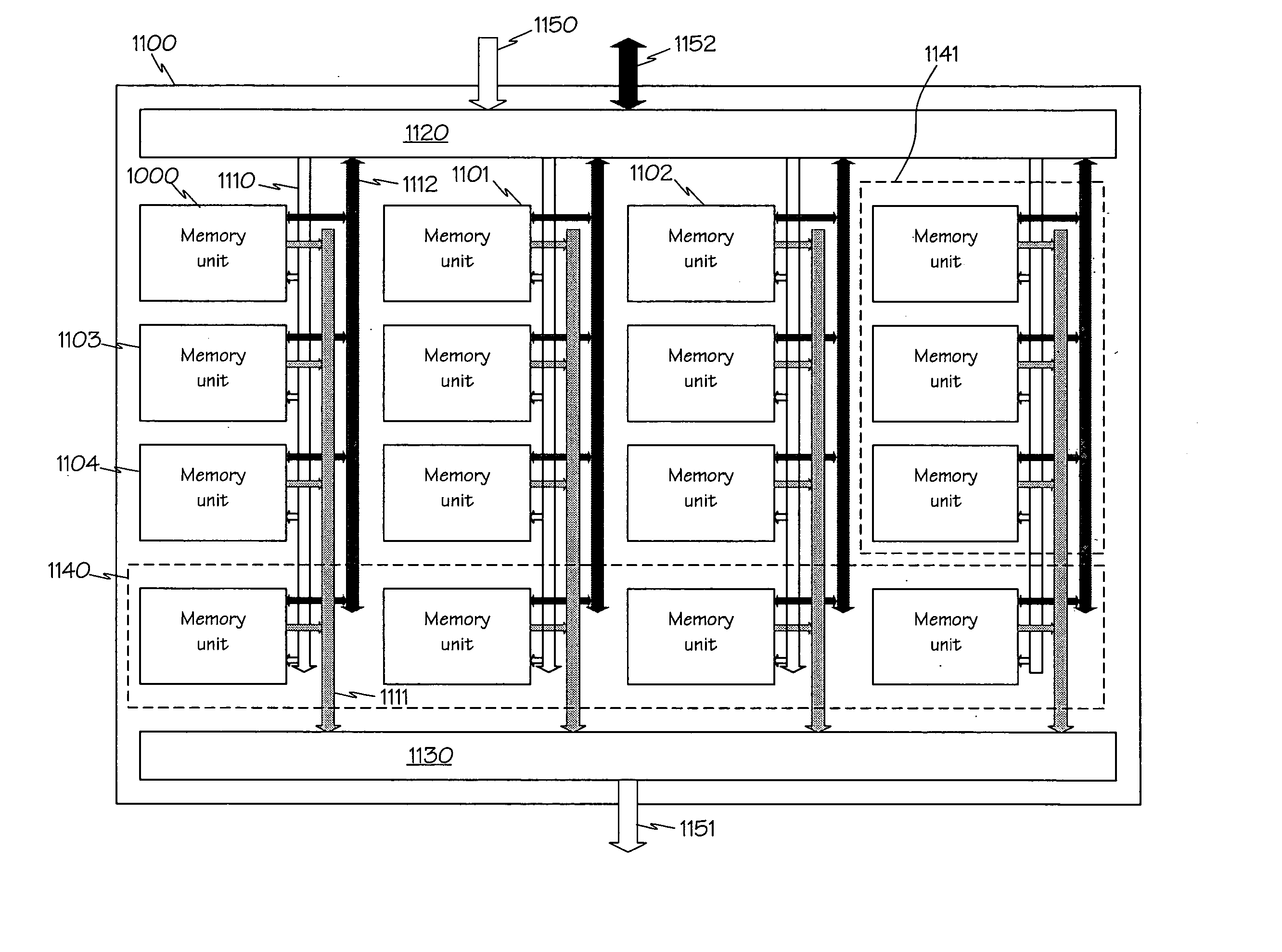
High performance memory and system organization for digital signal processing
PatentInactiveUS20060044316A1
Innovation
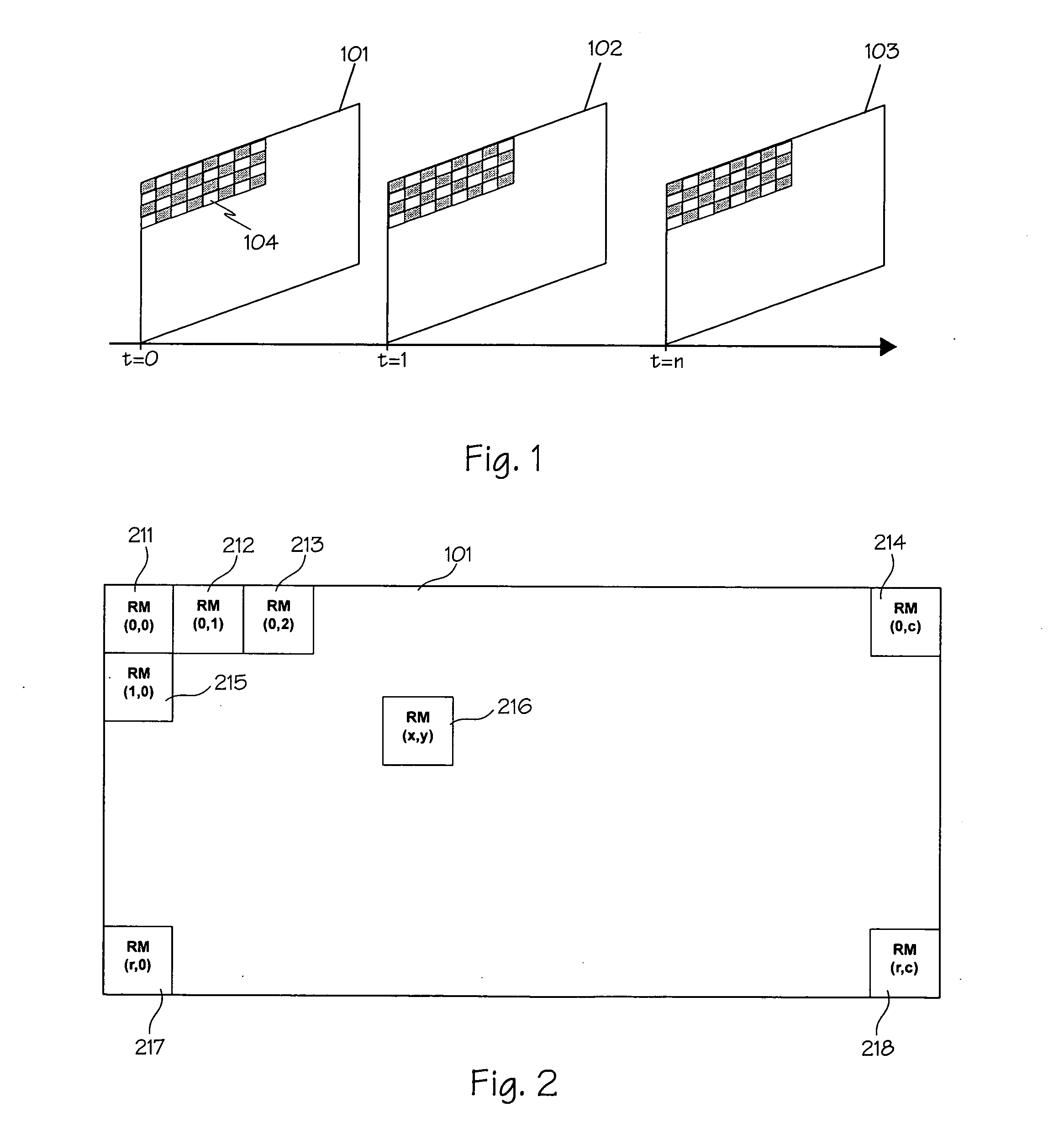
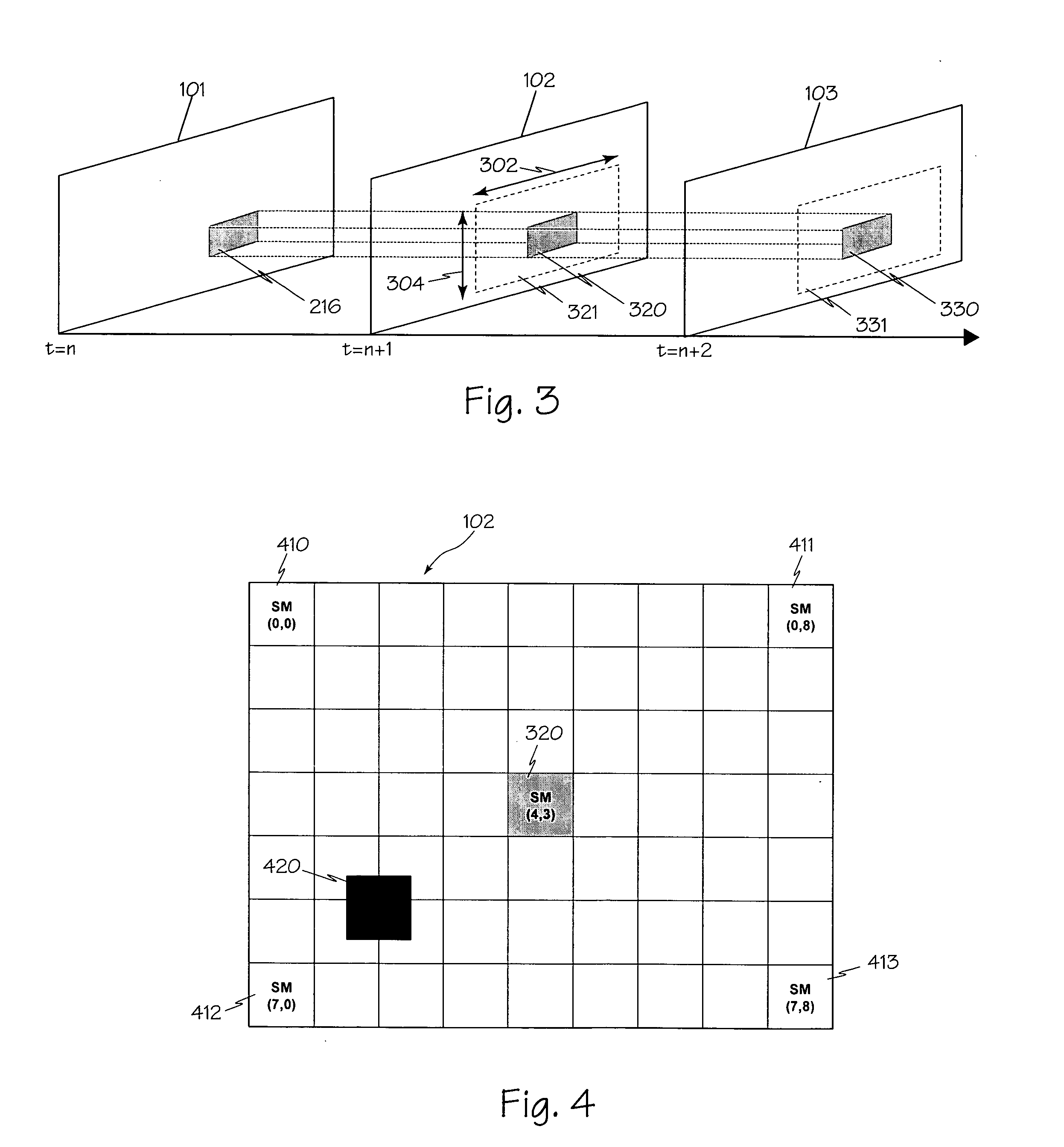
- The implementation of a system organization that maximizes data reuse between successive computational steps through customized data memories and multiple processing elements communicating via a high-performance interconnect, with data pre-fetching and organized processing of data into two-dimensional arrays of macroblocks to optimize data access and processing efficiency.

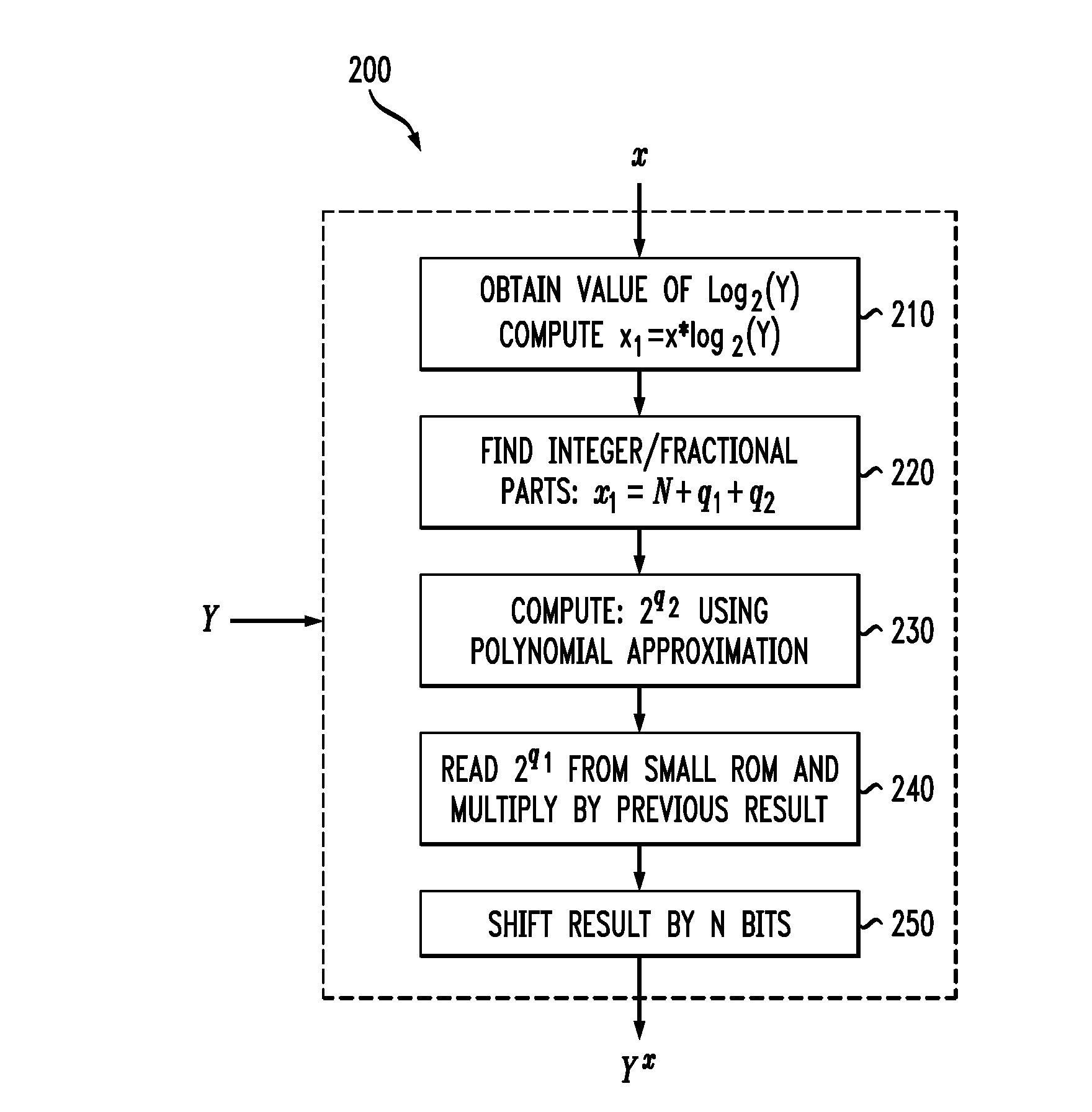
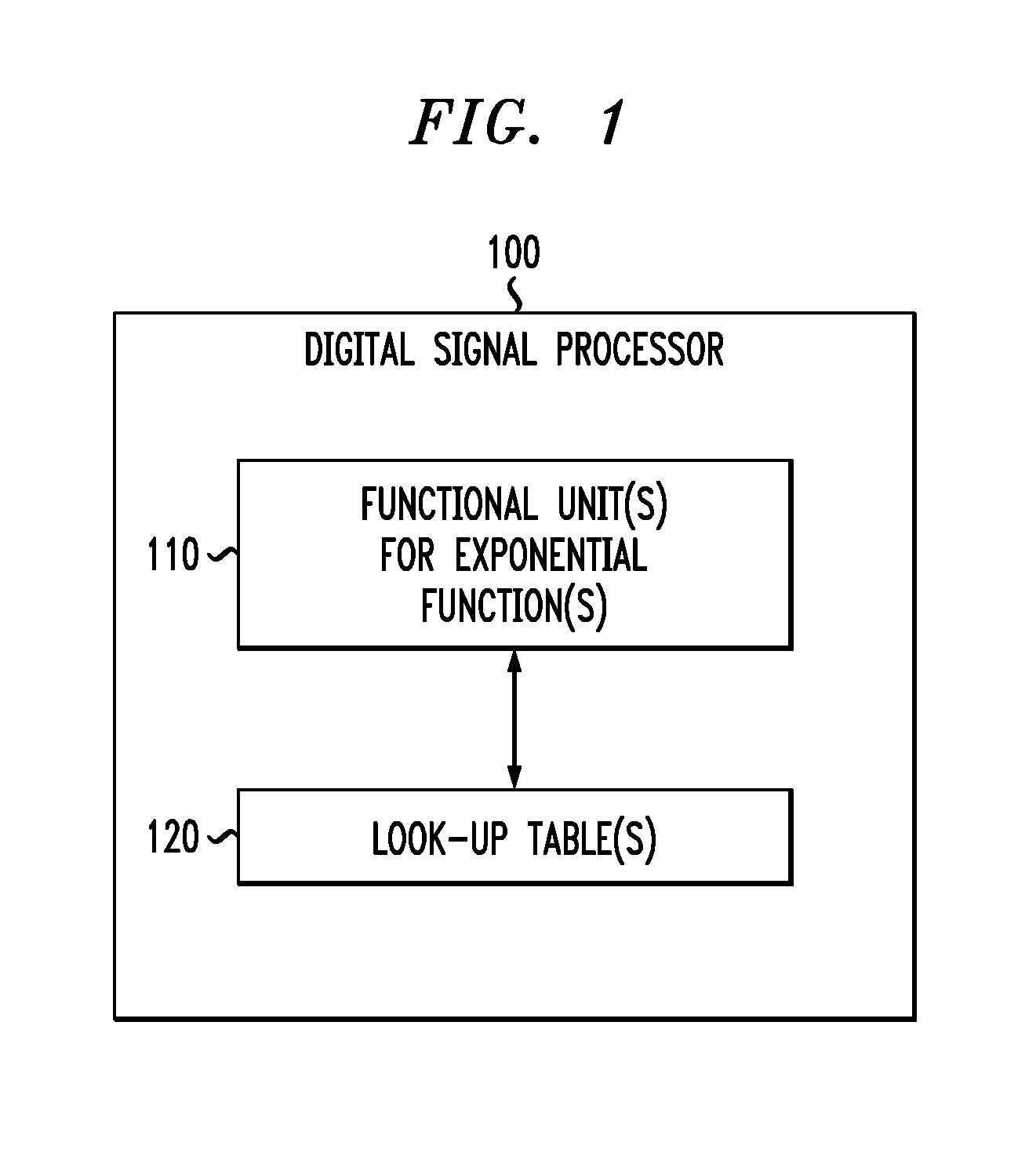
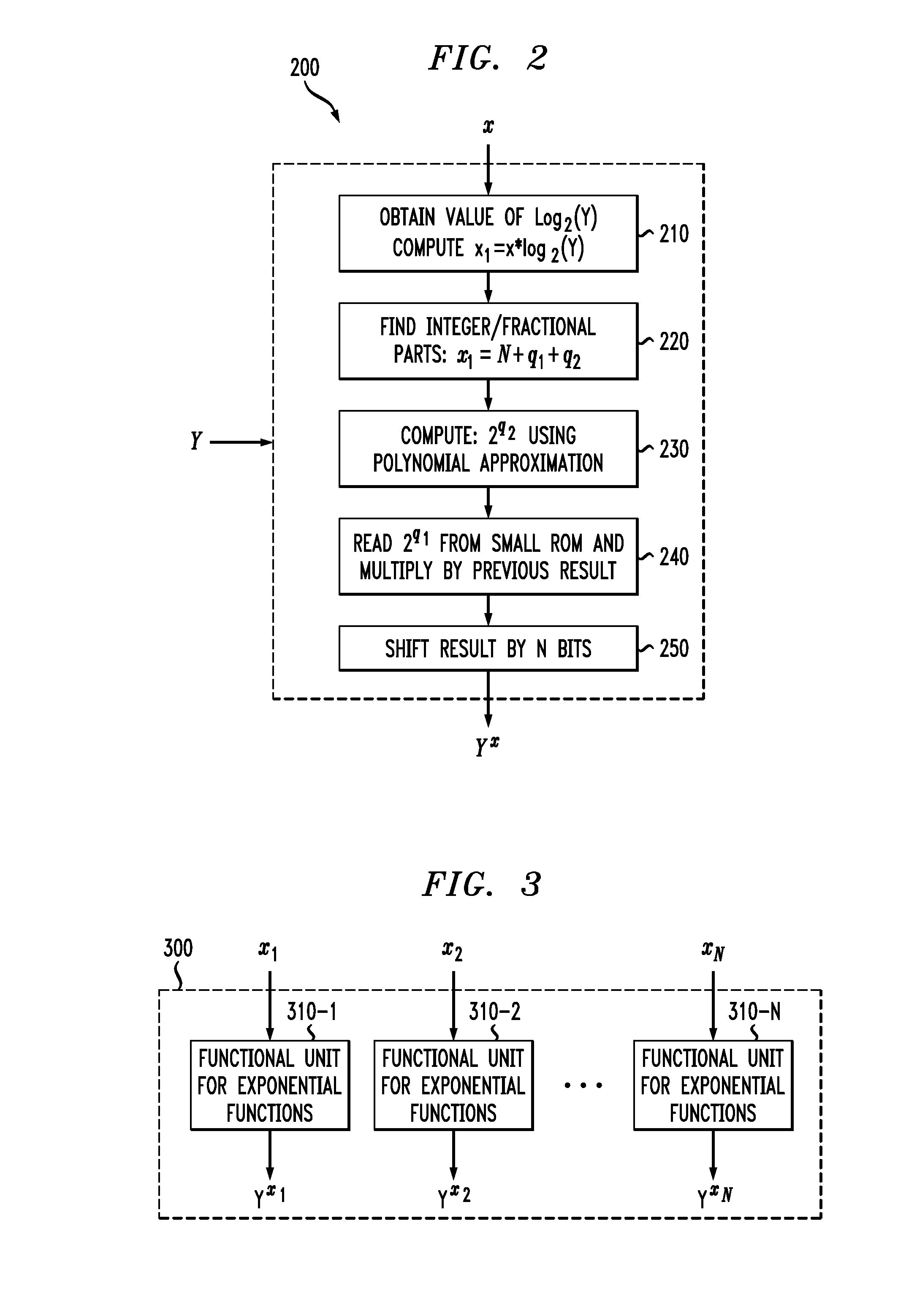
Digital Signal Processor Having Instruction Set With An Exponential Function Using Reduced Look-Up Table
PatentInactiveUS20100198894A1
Innovation
- A digital signal processor is designed with an instruction set that uses a reduced look-up table to evaluate exponential functions by decomposing input values into integer and fractional parts, employing polynomial approximations and sharing hardware components to reduce memory usage and latency.

Performance Benchmarking and Evaluation Metrics
Performance evaluation of VLSI and DSP architectures requires comprehensive benchmarking methodologies that capture the multifaceted nature of digital signal processing applications. The fundamental challenge lies in establishing standardized metrics that fairly assess both hardware-centric VLSI implementations and software-optimized DSP processor solutions across diverse computational scenarios.
Computational throughput serves as the primary performance indicator, typically measured in operations per second or samples processed per unit time. VLSI implementations demonstrate superior raw throughput through parallel processing capabilities, while DSP processors excel in instruction-level optimization and algorithmic flexibility. Benchmarking must account for different workload characteristics, including streaming data processing, batch operations, and real-time constraints.
Power efficiency metrics have become increasingly critical in modern applications. Energy per operation and performance per watt ratios provide essential insights into architectural advantages. VLSI solutions typically achieve better power efficiency for specific algorithms through dedicated hardware optimization, whereas DSP processors offer superior energy management through dynamic scaling and sleep modes during variable workloads.
Latency measurements encompass both processing delay and system response time. VLSI architectures generally provide deterministic, low-latency performance through dedicated signal paths, while DSP processors introduce variable latency due to instruction scheduling and memory access patterns. Real-time applications require careful evaluation of worst-case latency scenarios and jitter characteristics.
Resource utilization efficiency involves analyzing silicon area usage, memory bandwidth requirements, and computational resource allocation. VLSI implementations optimize for specific algorithms but may underutilize resources for diverse workloads, while DSP processors maintain higher resource flexibility at the cost of specialized performance.
Scalability assessment examines performance scaling across different problem sizes and complexity levels. DSP processors typically demonstrate better scalability through software adaptation, while VLSI solutions require architectural modifications for different performance requirements. Cost-effectiveness analysis must integrate development expenses, manufacturing costs, and time-to-market considerations to provide comprehensive evaluation frameworks for architectural selection decisions.
Computational throughput serves as the primary performance indicator, typically measured in operations per second or samples processed per unit time. VLSI implementations demonstrate superior raw throughput through parallel processing capabilities, while DSP processors excel in instruction-level optimization and algorithmic flexibility. Benchmarking must account for different workload characteristics, including streaming data processing, batch operations, and real-time constraints.
Power efficiency metrics have become increasingly critical in modern applications. Energy per operation and performance per watt ratios provide essential insights into architectural advantages. VLSI solutions typically achieve better power efficiency for specific algorithms through dedicated hardware optimization, whereas DSP processors offer superior energy management through dynamic scaling and sleep modes during variable workloads.
Latency measurements encompass both processing delay and system response time. VLSI architectures generally provide deterministic, low-latency performance through dedicated signal paths, while DSP processors introduce variable latency due to instruction scheduling and memory access patterns. Real-time applications require careful evaluation of worst-case latency scenarios and jitter characteristics.
Resource utilization efficiency involves analyzing silicon area usage, memory bandwidth requirements, and computational resource allocation. VLSI implementations optimize for specific algorithms but may underutilize resources for diverse workloads, while DSP processors maintain higher resource flexibility at the cost of specialized performance.
Scalability assessment examines performance scaling across different problem sizes and complexity levels. DSP processors typically demonstrate better scalability through software adaptation, while VLSI solutions require architectural modifications for different performance requirements. Cost-effectiveness analysis must integrate development expenses, manufacturing costs, and time-to-market considerations to provide comprehensive evaluation frameworks for architectural selection decisions.
Cost-Efficiency Analysis of Processing Solutions
The cost-efficiency analysis of VLSI versus DSP solutions reveals significant differences in both initial investment requirements and long-term operational economics. VLSI implementations typically demand substantial upfront capital expenditure, with custom silicon development costs ranging from hundreds of thousands to millions of dollars depending on complexity and fabrication node selection. However, these solutions demonstrate exceptional cost-effectiveness at high production volumes, where per-unit manufacturing costs can drop to mere dollars while delivering superior performance metrics.
DSP processor-based solutions present a contrasting economic profile characterized by lower initial development costs and greater financial flexibility. The primary investment centers on software development and algorithm optimization rather than hardware fabrication, making DSP solutions particularly attractive for applications with moderate volume requirements or rapid prototyping needs. Development teams can leverage existing processor architectures and development tools, significantly reducing time-to-market and associated engineering costs.
Power consumption considerations introduce additional cost dimensions that significantly impact total cost of ownership calculations. VLSI implementations typically achieve superior power efficiency through optimized circuit design and elimination of unnecessary computational overhead. This advantage translates into reduced operational costs, particularly in battery-powered applications or large-scale deployments where energy expenses constitute substantial operational expenditures.
Manufacturing scalability presents another critical cost factor distinguishing these approaches. VLSI solutions benefit from economies of scale, with per-unit costs decreasing dramatically as production volumes increase. Conversely, DSP solutions maintain relatively stable per-unit costs regardless of volume, making them economically viable for niche applications or products with uncertain market demand.
Maintenance and upgrade costs further differentiate these processing paradigms. DSP-based systems offer superior flexibility for post-deployment modifications through software updates, potentially extending product lifecycles and reducing obsolescence risks. VLSI implementations, while offering limited post-fabrication flexibility, typically require minimal maintenance and demonstrate exceptional reliability over extended operational periods, reducing support costs and system downtime expenses.
DSP processor-based solutions present a contrasting economic profile characterized by lower initial development costs and greater financial flexibility. The primary investment centers on software development and algorithm optimization rather than hardware fabrication, making DSP solutions particularly attractive for applications with moderate volume requirements or rapid prototyping needs. Development teams can leverage existing processor architectures and development tools, significantly reducing time-to-market and associated engineering costs.
Power consumption considerations introduce additional cost dimensions that significantly impact total cost of ownership calculations. VLSI implementations typically achieve superior power efficiency through optimized circuit design and elimination of unnecessary computational overhead. This advantage translates into reduced operational costs, particularly in battery-powered applications or large-scale deployments where energy expenses constitute substantial operational expenditures.
Manufacturing scalability presents another critical cost factor distinguishing these approaches. VLSI solutions benefit from economies of scale, with per-unit costs decreasing dramatically as production volumes increase. Conversely, DSP solutions maintain relatively stable per-unit costs regardless of volume, making them economically viable for niche applications or products with uncertain market demand.
Maintenance and upgrade costs further differentiate these processing paradigms. DSP-based systems offer superior flexibility for post-deployment modifications through software updates, potentially extending product lifecycles and reducing obsolescence risks. VLSI implementations, while offering limited post-fabrication flexibility, typically require minimal maintenance and demonstrate exceptional reliability over extended operational periods, reducing support costs and system downtime expenses.
Unlock deeper insights with Patsnap Eureka Quick Research — get a full tech report to explore trends and direct your research. Try now!
Generate Your Research Report Instantly with AI Agent
Supercharge your innovation with Patsnap Eureka AI Agent Platform!