
Wave Drag Reduction Technologies in Scramjet Engineering
AUG 13, 20259 MIN READ
Generate Your Research Report Instantly with AI Agent
Patsnap Eureka helps you evaluate technical feasibility & market potential.
Scramjet Wave Drag Reduction Background and Objectives
Wave drag reduction in scramjet engineering has been a critical focus in the field of hypersonic propulsion since the inception of scramjet technology in the 1950s. The primary objective of wave drag reduction is to minimize the energy losses associated with shock waves generated during supersonic combustion, thereby enhancing the overall efficiency and performance of scramjet engines.
The development of scramjet technology has been driven by the need for more efficient propulsion systems capable of operating at hypersonic speeds, typically above Mach 5. As aircraft and missiles push the boundaries of speed, traditional turbojet and ramjet engines become ineffective due to the extreme temperatures and pressures encountered at such velocities. Scramjets offer a promising solution by allowing combustion to occur in supersonic airflow, but the challenge of managing wave drag remains a significant hurdle.
Wave drag in scramjets primarily arises from the formation of shock waves within the engine's inlet and combustion chamber. These shock waves not only increase drag but also lead to total pressure losses, reduced combustion efficiency, and structural heating issues. The goal of wave drag reduction technologies is to mitigate these adverse effects, ultimately improving the scramjet's thrust-to-drag ratio and specific impulse.
Over the years, researchers and engineers have explored various approaches to wave drag reduction. Early efforts focused on optimizing inlet geometry to minimize shock wave formation and improve airflow compression. As computational fluid dynamics (CFD) capabilities advanced, more sophisticated techniques emerged, including active flow control methods and the use of plasma actuators to manipulate shock wave structures.
The objectives of current wave drag reduction research in scramjet engineering are multifaceted. Firstly, there is a push to develop more accurate predictive models for shock wave behavior in supersonic combustion environments. This includes improving CFD simulations and experimental techniques to better understand the complex fluid dynamics involved.
Secondly, researchers aim to create innovative design solutions that passively reduce wave drag. This involves exploring novel inlet and combustor geometries, as well as investigating the potential of advanced materials that can withstand the extreme conditions while providing favorable flow characteristics.
Thirdly, there is growing interest in active wave drag reduction techniques. These include the use of energy deposition methods, such as laser-induced plasma, to modify shock wave structures in real-time. Additionally, the integration of smart materials and adaptive structures that can dynamically respond to changing flow conditions is being explored.
Ultimately, the overarching goal of wave drag reduction technologies in scramjet engineering is to enable the development of more efficient and reliable hypersonic propulsion systems. This has far-reaching implications for both military and civilian applications, from high-speed reconnaissance and strike capabilities to potential advancements in space launch technologies and hypersonic passenger transport.
The development of scramjet technology has been driven by the need for more efficient propulsion systems capable of operating at hypersonic speeds, typically above Mach 5. As aircraft and missiles push the boundaries of speed, traditional turbojet and ramjet engines become ineffective due to the extreme temperatures and pressures encountered at such velocities. Scramjets offer a promising solution by allowing combustion to occur in supersonic airflow, but the challenge of managing wave drag remains a significant hurdle.
Wave drag in scramjets primarily arises from the formation of shock waves within the engine's inlet and combustion chamber. These shock waves not only increase drag but also lead to total pressure losses, reduced combustion efficiency, and structural heating issues. The goal of wave drag reduction technologies is to mitigate these adverse effects, ultimately improving the scramjet's thrust-to-drag ratio and specific impulse.
Over the years, researchers and engineers have explored various approaches to wave drag reduction. Early efforts focused on optimizing inlet geometry to minimize shock wave formation and improve airflow compression. As computational fluid dynamics (CFD) capabilities advanced, more sophisticated techniques emerged, including active flow control methods and the use of plasma actuators to manipulate shock wave structures.
The objectives of current wave drag reduction research in scramjet engineering are multifaceted. Firstly, there is a push to develop more accurate predictive models for shock wave behavior in supersonic combustion environments. This includes improving CFD simulations and experimental techniques to better understand the complex fluid dynamics involved.
Secondly, researchers aim to create innovative design solutions that passively reduce wave drag. This involves exploring novel inlet and combustor geometries, as well as investigating the potential of advanced materials that can withstand the extreme conditions while providing favorable flow characteristics.
Thirdly, there is growing interest in active wave drag reduction techniques. These include the use of energy deposition methods, such as laser-induced plasma, to modify shock wave structures in real-time. Additionally, the integration of smart materials and adaptive structures that can dynamically respond to changing flow conditions is being explored.
Ultimately, the overarching goal of wave drag reduction technologies in scramjet engineering is to enable the development of more efficient and reliable hypersonic propulsion systems. This has far-reaching implications for both military and civilian applications, from high-speed reconnaissance and strike capabilities to potential advancements in space launch technologies and hypersonic passenger transport.
Market Analysis for Hypersonic Propulsion Systems
The hypersonic propulsion systems market is experiencing rapid growth, driven by increasing investments in defense and space exploration. The global market for hypersonic technologies, including propulsion systems, is projected to reach $12.18 billion by 2025, with a compound annual growth rate (CAGR) of 7.4% from 2020 to 2025. This growth is primarily fueled by the rising demand for hypersonic missiles and aircraft in military applications, as well as the growing interest in hypersonic travel for commercial purposes.
The defense sector remains the largest consumer of hypersonic propulsion systems, with major military powers such as the United States, Russia, and China investing heavily in hypersonic weapon development. The U.S. Department of Defense has allocated substantial funding for hypersonic research and development, with an estimated $3.2 billion dedicated to hypersonic-related projects in the fiscal year 2021 alone.
In the commercial sector, there is a growing interest in hypersonic travel for both passenger and cargo transportation. Several aerospace companies, including Boeing, Lockheed Martin, and Reaction Engines, are actively developing hypersonic aircraft concepts. The potential market for commercial hypersonic travel is estimated to reach $4.7 billion by 2030, with a CAGR of 5.8% from 2025 to 2030.
The scramjet engine, a key component of hypersonic propulsion systems, is expected to witness significant growth in the coming years. The global scramjet market is projected to reach $1.5 billion by 2025, growing at a CAGR of 8.2% from 2020 to 2025. This growth is attributed to the increasing adoption of scramjet technology in military applications and the ongoing research and development efforts to improve its efficiency and performance.
Wave drag reduction technologies play a crucial role in enhancing the performance of scramjet engines and overall hypersonic propulsion systems. The market for these technologies is expected to grow in tandem with the broader hypersonic propulsion market. Key areas of focus include advanced materials for thermal management, innovative aerodynamic designs, and active flow control systems.
The Asia-Pacific region is anticipated to witness the highest growth rate in the hypersonic propulsion systems market, driven by increasing defense budgets and technological advancements in countries like China and India. North America is expected to maintain its position as the largest market, owing to substantial investments in hypersonic research and development by both government agencies and private companies.
The defense sector remains the largest consumer of hypersonic propulsion systems, with major military powers such as the United States, Russia, and China investing heavily in hypersonic weapon development. The U.S. Department of Defense has allocated substantial funding for hypersonic research and development, with an estimated $3.2 billion dedicated to hypersonic-related projects in the fiscal year 2021 alone.
In the commercial sector, there is a growing interest in hypersonic travel for both passenger and cargo transportation. Several aerospace companies, including Boeing, Lockheed Martin, and Reaction Engines, are actively developing hypersonic aircraft concepts. The potential market for commercial hypersonic travel is estimated to reach $4.7 billion by 2030, with a CAGR of 5.8% from 2025 to 2030.
The scramjet engine, a key component of hypersonic propulsion systems, is expected to witness significant growth in the coming years. The global scramjet market is projected to reach $1.5 billion by 2025, growing at a CAGR of 8.2% from 2020 to 2025. This growth is attributed to the increasing adoption of scramjet technology in military applications and the ongoing research and development efforts to improve its efficiency and performance.
Wave drag reduction technologies play a crucial role in enhancing the performance of scramjet engines and overall hypersonic propulsion systems. The market for these technologies is expected to grow in tandem with the broader hypersonic propulsion market. Key areas of focus include advanced materials for thermal management, innovative aerodynamic designs, and active flow control systems.
The Asia-Pacific region is anticipated to witness the highest growth rate in the hypersonic propulsion systems market, driven by increasing defense budgets and technological advancements in countries like China and India. North America is expected to maintain its position as the largest market, owing to substantial investments in hypersonic research and development by both government agencies and private companies.
Current Challenges in Scramjet Wave Drag Reduction
Wave drag reduction in scramjet engineering faces several significant challenges that hinder the development and optimization of hypersonic propulsion systems. One of the primary obstacles is the complex nature of shock wave interactions within the scramjet engine. The formation of strong shock waves at high Mach numbers leads to substantial drag and energy losses, compromising the overall efficiency of the propulsion system.
The management of thermal loads presents another critical challenge. As scramjets operate at hypersonic speeds, intense aerodynamic heating occurs, which can cause structural damage and affect the performance of various engine components. Developing materials and cooling systems capable of withstanding these extreme temperatures while maintaining structural integrity remains a significant hurdle.
Fuel injection and mixing pose additional difficulties in scramjet design. Achieving efficient fuel-air mixing within the short residence time available in the combustor is crucial for optimal combustion. However, the high-speed flow makes it challenging to ensure proper mixing without inducing excessive drag or disrupting the flow field.
The integration of wave drag reduction technologies with other scramjet subsystems presents a complex challenge. Balancing the trade-offs between drag reduction, propulsion efficiency, and overall vehicle performance requires careful consideration and innovative design approaches.
Computational modeling and simulation of hypersonic flows present another obstacle. Accurately predicting the behavior of shock waves, boundary layers, and their interactions in scramjet engines demands sophisticated numerical methods and significant computational resources. The limitations in current modeling capabilities can hinder the development and optimization of wave drag reduction technologies.
Experimental validation of wave drag reduction concepts in realistic scramjet conditions is also challenging. The extreme operating conditions of scramjets make it difficult to replicate flight environments in ground-based facilities, limiting the ability to verify the effectiveness of drag reduction techniques under actual flight conditions.
The scalability of wave drag reduction technologies from laboratory-scale experiments to full-scale scramjet engines presents additional challenges. Ensuring that the benefits observed in small-scale tests translate effectively to operational systems requires careful consideration of scaling effects and system integration issues.
Lastly, the multidisciplinary nature of scramjet engineering complicates the development of wave drag reduction technologies. Addressing these challenges requires expertise from various fields, including aerodynamics, thermodynamics, materials science, and propulsion engineering. Coordinating efforts across these disciplines and integrating diverse solutions into a cohesive system remains a significant challenge in advancing scramjet technology.
The management of thermal loads presents another critical challenge. As scramjets operate at hypersonic speeds, intense aerodynamic heating occurs, which can cause structural damage and affect the performance of various engine components. Developing materials and cooling systems capable of withstanding these extreme temperatures while maintaining structural integrity remains a significant hurdle.
Fuel injection and mixing pose additional difficulties in scramjet design. Achieving efficient fuel-air mixing within the short residence time available in the combustor is crucial for optimal combustion. However, the high-speed flow makes it challenging to ensure proper mixing without inducing excessive drag or disrupting the flow field.
The integration of wave drag reduction technologies with other scramjet subsystems presents a complex challenge. Balancing the trade-offs between drag reduction, propulsion efficiency, and overall vehicle performance requires careful consideration and innovative design approaches.
Computational modeling and simulation of hypersonic flows present another obstacle. Accurately predicting the behavior of shock waves, boundary layers, and their interactions in scramjet engines demands sophisticated numerical methods and significant computational resources. The limitations in current modeling capabilities can hinder the development and optimization of wave drag reduction technologies.
Experimental validation of wave drag reduction concepts in realistic scramjet conditions is also challenging. The extreme operating conditions of scramjets make it difficult to replicate flight environments in ground-based facilities, limiting the ability to verify the effectiveness of drag reduction techniques under actual flight conditions.
The scalability of wave drag reduction technologies from laboratory-scale experiments to full-scale scramjet engines presents additional challenges. Ensuring that the benefits observed in small-scale tests translate effectively to operational systems requires careful consideration of scaling effects and system integration issues.
Lastly, the multidisciplinary nature of scramjet engineering complicates the development of wave drag reduction technologies. Addressing these challenges requires expertise from various fields, including aerodynamics, thermodynamics, materials science, and propulsion engineering. Coordinating efforts across these disciplines and integrating diverse solutions into a cohesive system remains a significant challenge in advancing scramjet technology.
Existing Wave Drag Reduction Solutions for Scramjets
01 Surface modifications for wave drag reduction
Various surface modifications can be applied to reduce wave drag. These include riblets, dimples, or other textured surfaces that alter the fluid flow characteristics near the surface. Such modifications can help to reduce turbulence and decrease the overall drag experienced by the object moving through a fluid medium.- Surface modifications for wave drag reduction: Various surface modifications can be applied to reduce wave drag. These include riblets, dimples, or other textured surfaces that alter the fluid flow characteristics near the surface. Such modifications can help to reduce turbulence and decrease the overall drag experienced by the object moving through water or air.
- Active flow control systems: Active flow control systems involve the use of actuators or other mechanisms to dynamically alter the flow around an object. These systems can include air injection, suction, or movable surface elements that respond to changing flow conditions. By actively manipulating the flow, these systems can significantly reduce wave drag in various operating conditions.
- Hull design optimization for marine vessels: Optimizing the hull design of marine vessels is crucial for reducing wave drag. This can involve using advanced computational fluid dynamics to shape the hull, incorporating bulbous bows, or designing stepped hulls. These design features help to minimize the wave-making resistance of the vessel as it moves through water.
- Supercavitation technology: Supercavitation is an advanced technology that creates a large gas bubble around an underwater object, significantly reducing skin friction and wave drag. This technique involves designing the object's shape and using gas injection to maintain the cavitation bubble, allowing for extremely high speeds in water with minimal drag.
- Adaptive structures for drag reduction: Adaptive structures that can change shape or properties in response to flow conditions offer a promising approach to wave drag reduction. These may include morphing surfaces, smart materials, or deployable devices that optimize the object's form for different speed regimes or environmental conditions, thereby minimizing wave drag across a range of operating scenarios.
02 Active flow control systems
Active flow control systems involve the use of dynamic mechanisms to manipulate the fluid flow around an object. These can include air injection, suction, or oscillating surfaces. By actively controlling the flow, these systems can reduce wave drag by altering the pressure distribution and boundary layer characteristics.Expand Specific Solutions03 Hull design optimization
Optimizing the hull design of marine vessels can significantly reduce wave drag. This includes considerations such as the hull shape, length-to-beam ratio, and bow configuration. Advanced computational fluid dynamics simulations are often used to refine hull designs for minimal wave-making resistance.Expand Specific Solutions04 Supercavitation technology
Supercavitation involves creating a large gas bubble around an underwater object, significantly reducing its contact with water. This technique can dramatically reduce wave drag for high-speed underwater vehicles by minimizing the wetted surface area and altering the fluid dynamics around the object.Expand Specific Solutions05 Wave-piercing and wave-riding designs
Wave-piercing and wave-riding designs aim to minimize the energy expended in creating waves or to utilize the energy of existing waves. These designs can be applied to both marine vessels and aircraft. For marine applications, this might involve bow designs that cut through waves rather than riding over them. In aviation, it can involve shaping aircraft to better interact with shock waves at supersonic speeds.Expand Specific Solutions
Key Players in Scramjet Technology Development
The wave drag reduction technologies in scramjet engineering are in a nascent stage of development, with the market still emerging and relatively small. The technology's maturity is low to moderate, with significant research and development ongoing. Key players like National University of Defense Technology, Beihang University, and Northwestern Polytechnical University are leading academic research efforts in China. Companies such as Shell Oil Co. and Baker Hughes Co. are exploring potential applications in the aerospace and energy sectors. The Defense Research & Development Organization in India and China Aerodynamics Research & Development Center are also contributing to advancements in this field. As the technology progresses, collaboration between academic institutions and industry partners will be crucial for commercialization and practical implementation in scramjet propulsion systems.
National University of Defense Technology
Technical Solution: The National University of Defense Technology has developed advanced wave drag reduction technologies for scramjet engineering. Their approach focuses on shockwave control and boundary layer manipulation. They have implemented a novel plasma-assisted combustion system that reduces wave drag by modifying the flow field ahead of the scramjet inlet[1]. This system uses localized energy deposition to create a thermal bubble, effectively altering the shock structure and reducing overall drag. Additionally, they have developed micro-vortex generators (MVGs) that are strategically placed to energize the boundary layer, delaying separation and minimizing wave drag[3]. Their research also includes adaptive inlet designs that can adjust to varying flight conditions, optimizing performance across a wide range of Mach numbers[5].
Strengths: Cutting-edge plasma-assisted technology, adaptive inlet designs for versatile performance. Weaknesses: High energy requirements for plasma systems, complexity in real-world implementation.
Beihang University
Technical Solution: Beihang University has made significant strides in wave drag reduction for scramjet engineering. Their approach combines computational fluid dynamics (CFD) with experimental validation to develop innovative solutions. One of their key technologies is the use of swept-ramp injectors in the scramjet forebody, which creates streamwise vortices that energize the boundary layer and reduce wave drag[2]. They have also pioneered the development of 3D-printed porous surfaces that passively control the shock wave/boundary layer interaction, leading to a reported 15% reduction in wave drag[4]. Furthermore, Beihang researchers have explored the use of magnetohydrodynamic (MHD) flow control techniques to manipulate the shock structure and reduce drag in hypersonic flows[6].
Strengths: Integration of advanced manufacturing techniques, comprehensive CFD-experimental approach. Weaknesses: MHD techniques require strong magnetic fields, potentially adding weight and complexity.
Core Innovations in Scramjet Aerodynamics
Scramjet engine and flying object
PatentWO2019155654A1
Innovation
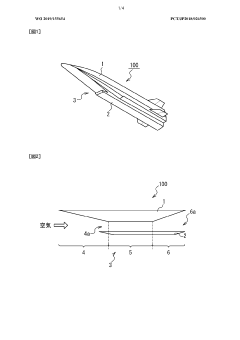
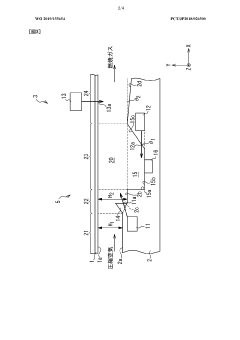
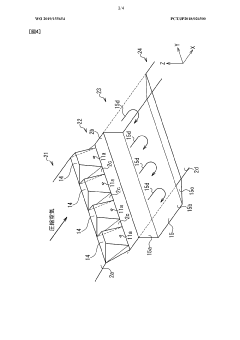
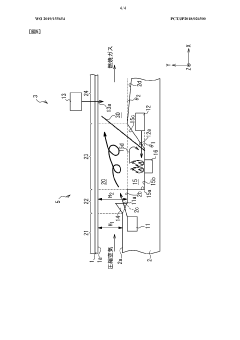
- The scramjet engine design incorporates a dual fuel injection system with a protrusion in the turbulence forming region and a cavity with an inclined surface to generate shock waves, optimizing fuel injection and airflow for improved combustion efficiency, featuring a first fuel nozzle injecting fuel into turbulent air and a second nozzle injecting across a discontinuous surface to promote mixing and flame stabilization.
Method for using variable supersonic Mach number air heater utilizing supersonic combustion
PatentInactiveUS7296396B1
Innovation
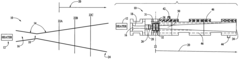
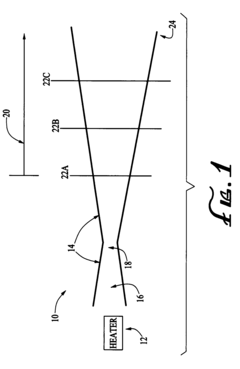
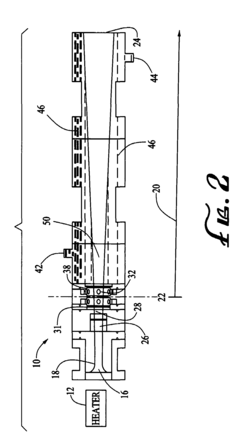
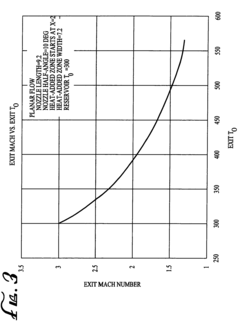
- A supersonic combustion heater apparatus that varies exit plane Mach numbers through strategic fuel injection and flame stabilization in a fixed geometry nozzle, enhancing high enthalpy flow and flame stability without using expensive film cooled nozzles, allowing for mode transition testing in air-breathing propulsion systems.
Materials Science Advancements for Scramjet Design
Materials science advancements have played a crucial role in the development of scramjet technology, particularly in addressing the challenges of wave drag reduction. The extreme operating conditions of scramjets, including high temperatures and pressures, demand materials with exceptional thermal and mechanical properties.
Recent progress in high-temperature alloys has led to the development of materials capable of withstanding the intense heat generated during hypersonic flight. Nickel-based superalloys, reinforced with advanced ceramic matrix composites, have shown promising results in maintaining structural integrity under extreme thermal loads. These materials exhibit superior creep resistance and oxidation protection, critical for the longevity of scramjet components.
Advancements in thermal barrier coatings (TBCs) have significantly contributed to wave drag reduction efforts. Novel ceramic compositions, such as yttria-stabilized zirconia (YSZ) with tailored microstructures, provide enhanced insulation properties. These coatings effectively reduce heat transfer to the underlying structure, allowing for more efficient aerodynamic designs that minimize wave drag.
Nanostructured materials have emerged as a potential game-changer in scramjet engineering. Carbon nanotubes and graphene-based composites offer exceptional strength-to-weight ratios and thermal conductivity. When incorporated into scramjet components, these materials enable the creation of lighter, more aerodynamic structures that contribute to overall drag reduction.
Smart materials with shape memory alloys (SMAs) and piezoelectric properties have shown promise in active flow control applications. These materials can be integrated into the scramjet's inlet and nozzle designs to dynamically adjust geometry in response to changing flight conditions, optimizing performance and reducing wave drag across a range of Mach numbers.
Advances in additive manufacturing techniques have revolutionized the fabrication of complex scramjet components. 3D printing of high-performance alloys and ceramics allows for the creation of intricate internal cooling channels and optimized aerodynamic surfaces that were previously impossible to manufacture. This technology enables the production of lightweight, drag-reducing structures with minimal joints and fasteners.
The development of ultra-high-temperature ceramics (UHTCs) has pushed the boundaries of material capabilities in scramjet applications. Compounds such as zirconium diboride and hafnium carbide exhibit exceptional resistance to oxidation and ablation at extreme temperatures, making them ideal candidates for leading edges and other critical components exposed to severe aerothermal loads.
Recent progress in high-temperature alloys has led to the development of materials capable of withstanding the intense heat generated during hypersonic flight. Nickel-based superalloys, reinforced with advanced ceramic matrix composites, have shown promising results in maintaining structural integrity under extreme thermal loads. These materials exhibit superior creep resistance and oxidation protection, critical for the longevity of scramjet components.
Advancements in thermal barrier coatings (TBCs) have significantly contributed to wave drag reduction efforts. Novel ceramic compositions, such as yttria-stabilized zirconia (YSZ) with tailored microstructures, provide enhanced insulation properties. These coatings effectively reduce heat transfer to the underlying structure, allowing for more efficient aerodynamic designs that minimize wave drag.
Nanostructured materials have emerged as a potential game-changer in scramjet engineering. Carbon nanotubes and graphene-based composites offer exceptional strength-to-weight ratios and thermal conductivity. When incorporated into scramjet components, these materials enable the creation of lighter, more aerodynamic structures that contribute to overall drag reduction.
Smart materials with shape memory alloys (SMAs) and piezoelectric properties have shown promise in active flow control applications. These materials can be integrated into the scramjet's inlet and nozzle designs to dynamically adjust geometry in response to changing flight conditions, optimizing performance and reducing wave drag across a range of Mach numbers.
Advances in additive manufacturing techniques have revolutionized the fabrication of complex scramjet components. 3D printing of high-performance alloys and ceramics allows for the creation of intricate internal cooling channels and optimized aerodynamic surfaces that were previously impossible to manufacture. This technology enables the production of lightweight, drag-reducing structures with minimal joints and fasteners.
The development of ultra-high-temperature ceramics (UHTCs) has pushed the boundaries of material capabilities in scramjet applications. Compounds such as zirconium diboride and hafnium carbide exhibit exceptional resistance to oxidation and ablation at extreme temperatures, making them ideal candidates for leading edges and other critical components exposed to severe aerothermal loads.
Environmental Impact of Hypersonic Flight Technologies
The environmental impact of hypersonic flight technologies, particularly in the context of wave drag reduction technologies in scramjet engineering, is a critical consideration for the future of aerospace development. As hypersonic vehicles push the boundaries of speed and efficiency, their potential environmental consequences must be carefully evaluated.
Atmospheric pollution is a primary concern associated with hypersonic flight. The extreme temperatures and pressures experienced during hypersonic travel can lead to the formation of nitrogen oxides (NOx) in significantly higher concentrations than those produced by conventional aircraft. These NOx emissions contribute to the depletion of the ozone layer and can exacerbate global warming effects. Additionally, the water vapor produced by hydrogen-fueled scramjets may contribute to the formation of contrails and cirrus clouds, potentially altering local weather patterns and impacting global climate.
Noise pollution is another environmental challenge posed by hypersonic flight technologies. The sonic booms generated by vehicles traveling at such high speeds can cause significant disturbances to both human populations and wildlife. While wave drag reduction technologies aim to minimize these effects, the sheer speed of hypersonic flight means that some level of noise impact is likely unavoidable.
The materials used in hypersonic vehicle construction and the fuels required for propulsion also raise environmental concerns. Advanced composites and exotic alloys necessary for withstanding extreme temperatures may pose challenges in terms of recyclability and end-of-life disposal. Furthermore, the production and storage of specialized fuels, such as hydrogen for scramjet engines, require significant energy inputs and may have their own environmental footprints.
Potential impacts on the upper atmosphere and ionosphere are also areas of ongoing research. The high-speed passage of hypersonic vehicles through these layers could potentially disrupt radio communications and GPS signals, affecting both civilian and military operations. Moreover, the repeated traversal of these atmospheric regions by hypersonic vehicles may have long-term effects on atmospheric chemistry and dynamics that are not yet fully understood.
As wave drag reduction technologies in scramjet engineering continue to advance, it is crucial to integrate environmental considerations into the design and development process. This may include exploring more environmentally friendly materials, optimizing flight paths to minimize atmospheric impact, and developing cleaner propulsion systems. Balancing the pursuit of hypersonic capabilities with environmental stewardship will be essential for the sustainable advancement of aerospace technology.
Atmospheric pollution is a primary concern associated with hypersonic flight. The extreme temperatures and pressures experienced during hypersonic travel can lead to the formation of nitrogen oxides (NOx) in significantly higher concentrations than those produced by conventional aircraft. These NOx emissions contribute to the depletion of the ozone layer and can exacerbate global warming effects. Additionally, the water vapor produced by hydrogen-fueled scramjets may contribute to the formation of contrails and cirrus clouds, potentially altering local weather patterns and impacting global climate.
Noise pollution is another environmental challenge posed by hypersonic flight technologies. The sonic booms generated by vehicles traveling at such high speeds can cause significant disturbances to both human populations and wildlife. While wave drag reduction technologies aim to minimize these effects, the sheer speed of hypersonic flight means that some level of noise impact is likely unavoidable.
The materials used in hypersonic vehicle construction and the fuels required for propulsion also raise environmental concerns. Advanced composites and exotic alloys necessary for withstanding extreme temperatures may pose challenges in terms of recyclability and end-of-life disposal. Furthermore, the production and storage of specialized fuels, such as hydrogen for scramjet engines, require significant energy inputs and may have their own environmental footprints.
Potential impacts on the upper atmosphere and ionosphere are also areas of ongoing research. The high-speed passage of hypersonic vehicles through these layers could potentially disrupt radio communications and GPS signals, affecting both civilian and military operations. Moreover, the repeated traversal of these atmospheric regions by hypersonic vehicles may have long-term effects on atmospheric chemistry and dynamics that are not yet fully understood.
As wave drag reduction technologies in scramjet engineering continue to advance, it is crucial to integrate environmental considerations into the design and development process. This may include exploring more environmentally friendly materials, optimizing flight paths to minimize atmospheric impact, and developing cleaner propulsion systems. Balancing the pursuit of hypersonic capabilities with environmental stewardship will be essential for the sustainable advancement of aerospace technology.
Unlock deeper insights with Patsnap Eureka Quick Research — get a full tech report to explore trends and direct your research. Try now!
Generate Your Research Report Instantly with AI Agent
Supercharge your innovation with Patsnap Eureka AI Agent Platform!