
Tear-resistant non-woven woven fabric
A tear-resistant fabric technology, which is applied in the field of woven fabrics and tear-resistant non-woven fabrics, can solve the problems of flame retardancy, poor waterproof ability, poor tear resistance ability, and low service life, so as to improve waterproof ability, reduce wear and tear, increase the effect of wear resistance
Patent Information
- Authority / Receiving Office
- CN · China
- Patent Type
- Applications(China)
- Current Assignee / Owner
- Publication Date
- 2019-11-08
Smart Images
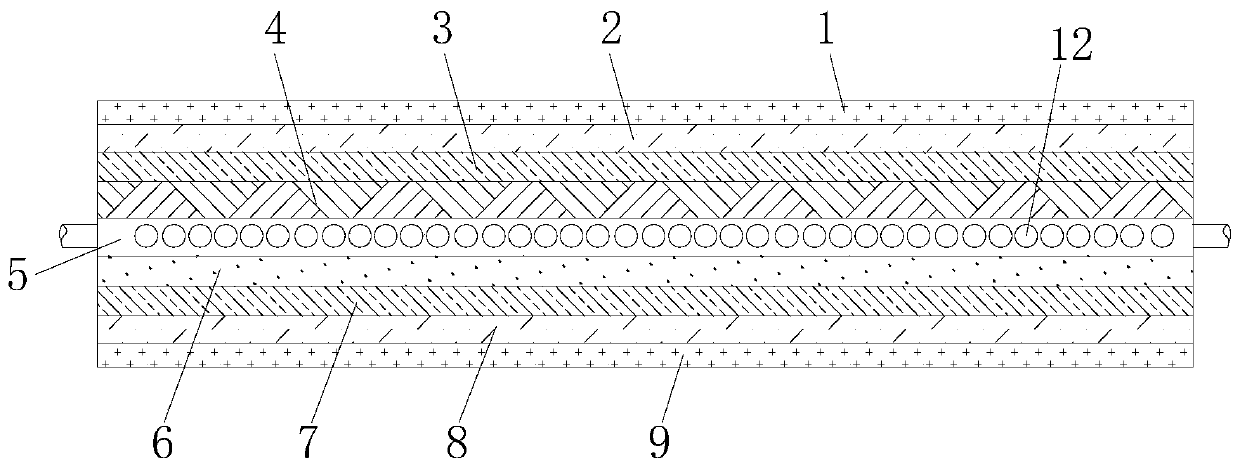
Figure 1 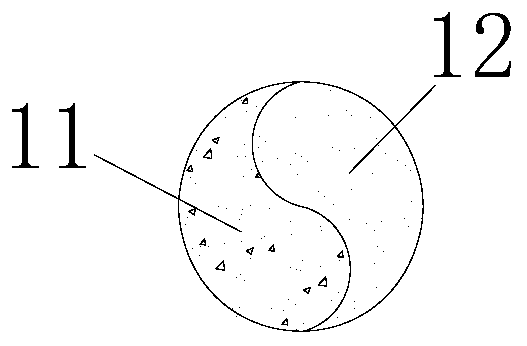
Figure 2
Abstract
Description
technical field
[0001] The invention relates to a woven fabric, in particular to a tear-resistant non-woven woven fabric, which belongs to the technical field of fabric application. Background technique
[0002] Woven fabrics are formed by interlacing yarns in the warp and weft directions on a loom in the form of shuttles. Generally, there are three types of weaves: plain weave, twill weave and satin weave and their changes. This kind of fabric is strong, crisp, and not easy to deform due to the interlaced warp and weft of the weave. It is classified from the composition including cotton fabric, silk fabric, wool fabric, hemp fabric, chemical fiber fabric and their blended and interwoven fabrics, etc. The use in clothing is in the leading position in the world no matter in terms of variety or production quantity. Most of the curtains in our life are made of woven fabrics.
[0003] However, most of the existing woven fabrics for making curtains are of single-layer structure,...
Examples
Embodiment Construction
[0018] In order to make the purpose, features and advantages of the present invention more obvious and understandable, the technical solutions in the embodiments of the present invention will be clearly and completely described below in conjunction with the accompanying drawings in the embodiments of the present invention. Obviously, the following The described embodiments are only some, not all, embodiments of the present invention. Based on the embodiments of the present invention, all other embodiments obtained by persons of ordinary skill in the art without making creative efforts belong to the protection scope of the present invention.
[0019] The technical solutions of the present invention will be further described below in conjunction with the accompanying drawings and through specific implementation methods.
[0020] In the description of the present invention, it should be understood that the orientations or positional relationships indicated by the terms "upper", "...