
Foundation void former unit
a former unit and foundation technology, applied in the direction of load-supporting elements, structural elements, building components, etc., can solve the problems of cumbersome and time-consuming exercise, and achieve the effect of enhancing the strength and support function of the uni
- Summary
- Abstract
- Description
- Claims
- Application Information
AI Technical Summary
Benefits of technology
Problems solved by technology
Method used
Image

Examples
Embodiment Construction
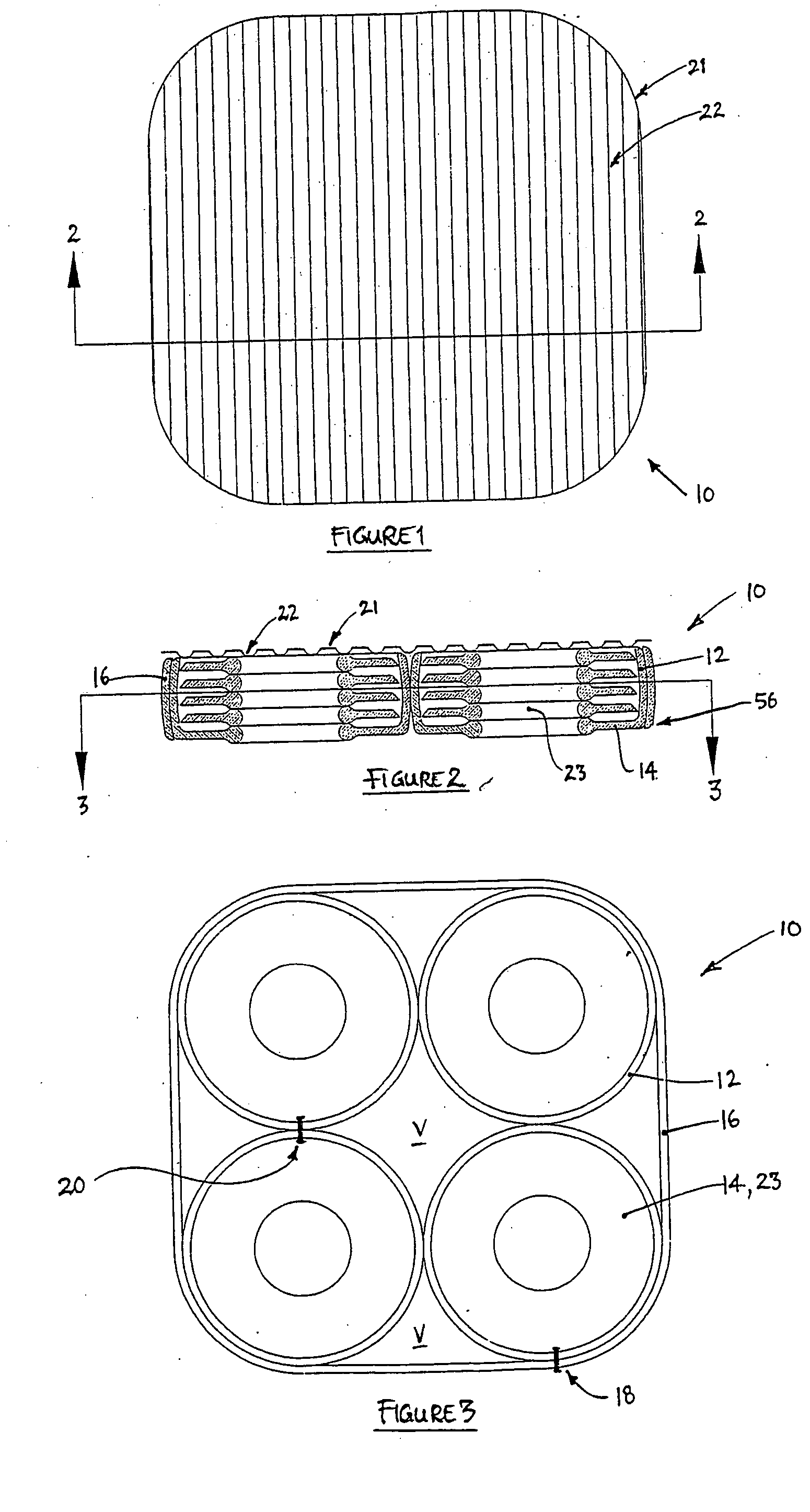
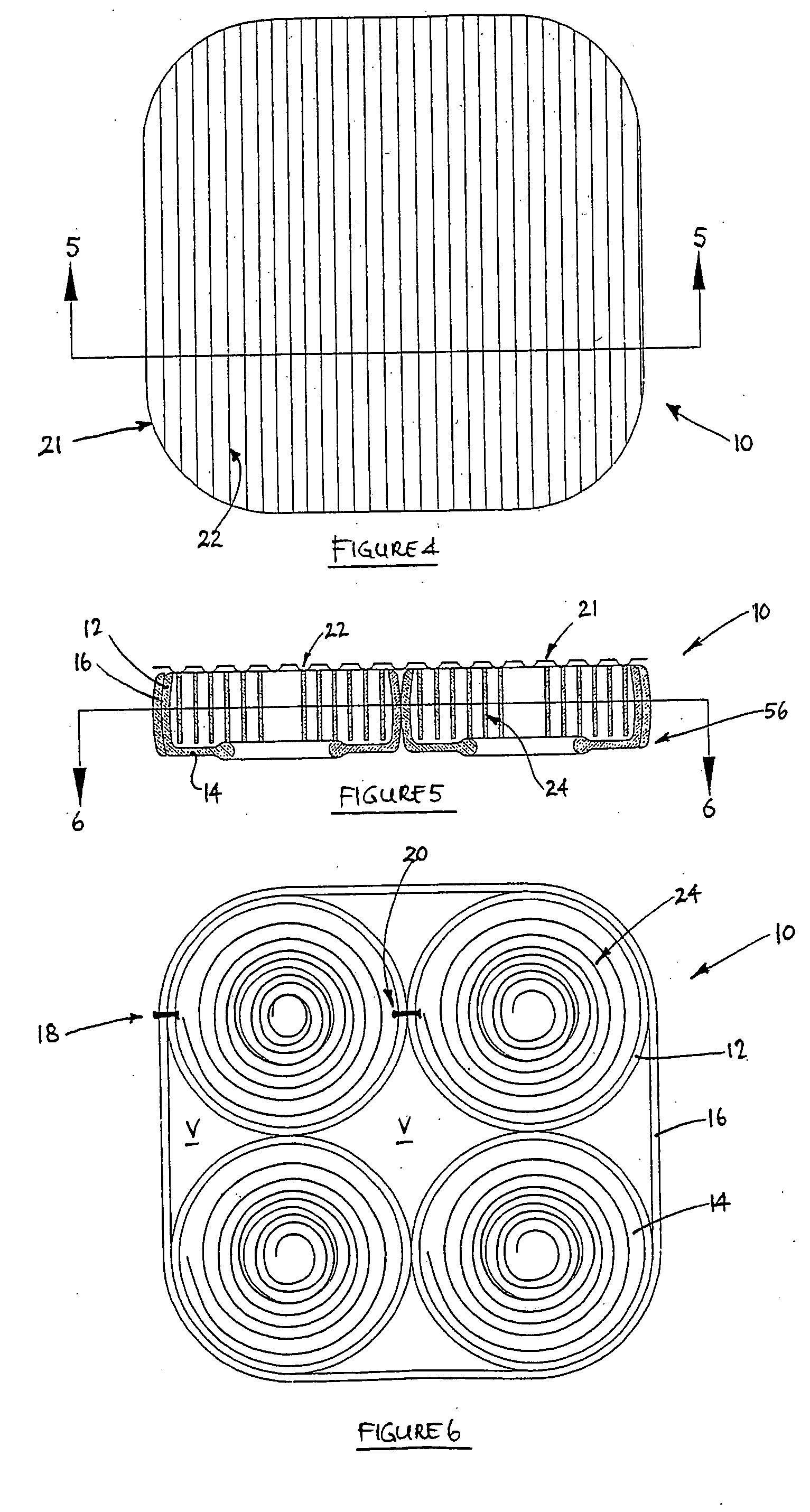
[0061] Referring firstly to FIGS. 1 to 6, a void former lo in accordance with the present invention includes a plurality of, in this case four, tyres 12. Each tyre preferably has an in-use upper tyre side wall removed therefrom (as best seen in FIGS. 2 and 5) and has an in-use lower side wall 14 remaining intact. A retention element in the form of one or more lengths of tyre tread 16 or conveyor belt 16 extends around the perimeter of the four tyres as shown, and is attached thereto via a plurality of fastening elements in the form of screws (e.g. Tec Screws), bolts or pins 18 (one such screw / bolt / pin being shown in FIGS. 3 and 5). Alternatively or additionally industrial strength adhesive may be used. In addition, each tyre is attached to each adjacent tyre, at adjacent treads, by screws, bolts or pins 20 (one such screw / bolt / pin being shown in FIGS. 3 and 5).
[0062] A continuous but discrete capping in the form of lid or cap 21 is shown positioned on the void former 10, and is typ...
PUM
 Login to View More
 Abstract
Description
Claims
Application Information
 Login to View More