
X-ray diagnostic device
a diagnostic device and x-ray technology, applied in the field of x-ray diagnostic devices, can solve the problems of large space occupation, inability to provide a good display of soft tissue, and relatively expensive ct devices
- Summary
- Abstract
- Description
- Claims
- Application Information
AI Technical Summary
Benefits of technology
Problems solved by technology
Method used
Image

Examples
Embodiment Construction
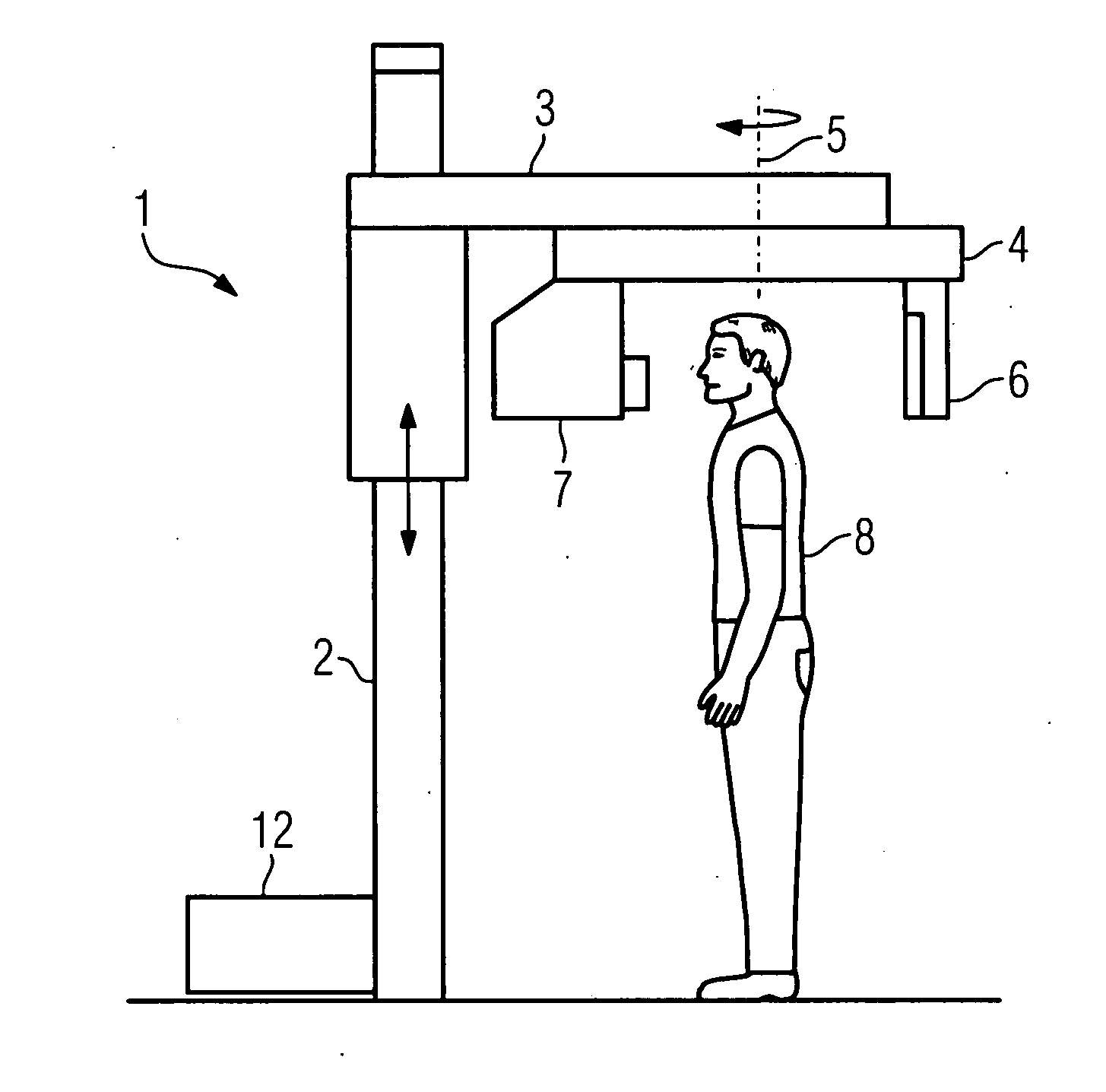
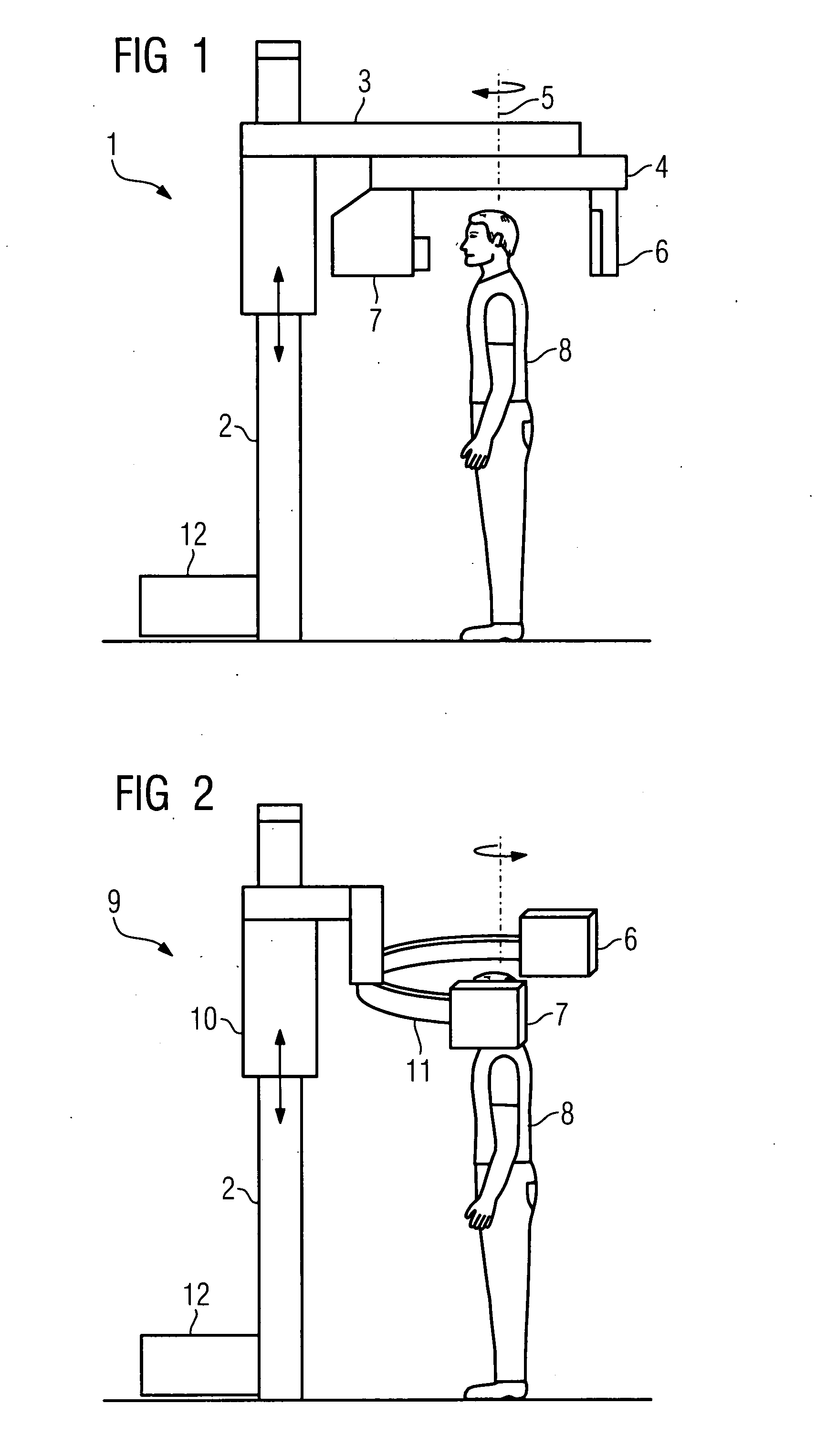
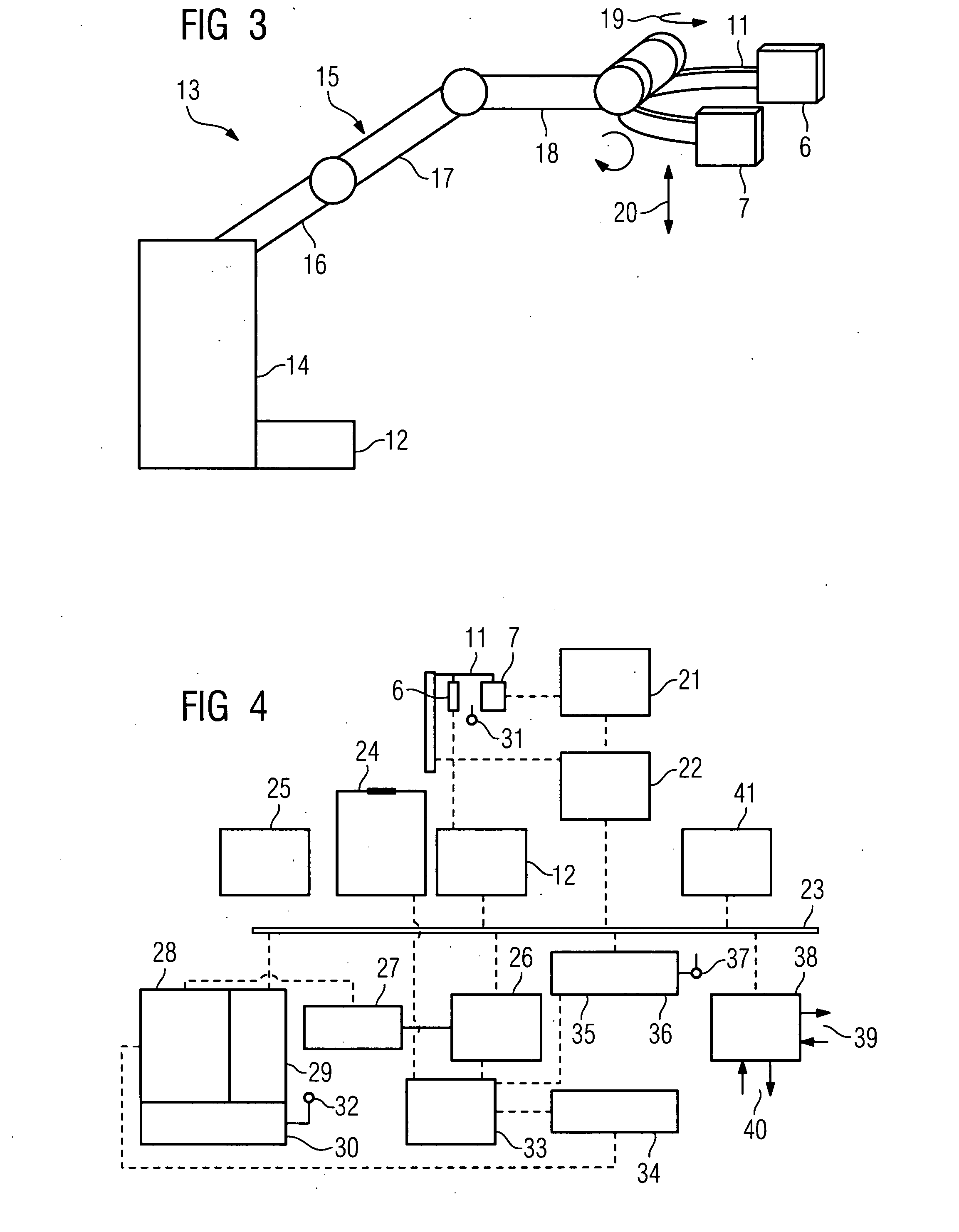
[0029]The X-ray diagnostic device 1 shown in FIG. 1 includes a stand 2 that is embodied as a floor stand and to which is attached a height-adjustable support arm 3. The support arm 3 is embodied as a boom; a second support arm 4 is attached thereto. The second support arm 4 is rotatable around a vertical axis 5. Attached to one end of the support arm 4 is an image detector embodied as a flat-panel detector 6. Attached to the other end of the support arm 4 is an X-ray emitter 7. The X-ray emitter 7 or, as the case may be, emitter unit includes an X-ray tube, a diaphragm, and a filter. As is shown in FIG. 1, the cranium of a patient 8 can be examined by means of the X-ray diagnostic device 1; dental or orthopedic examinations can also be performed on a patient who is in a seated or lying position. The support arm 4 and hence the flat-panel detector 6 and X-ray emitter 7 rotate during the examination so that projection images are recorded in rapid succession from different projections....
PUM
 Login to View More
 Abstract
Description
Claims
Application Information
 Login to View More