

Method and apparatus for partioning an organ within the body
a technology for organs and body cavities, applied in medical science, surgical staples, surgery, etc., can solve the problems of inability to place staples, sutures and pledgets, and the pullout of fastening devices over time, and the need for impractically complex tissue manipulation mechanisms in the stomach
Patent Information
- Authority / Receiving Office
- US · United States
- Patent Type
- Applications(United States)
- Current Assignee / Owner
- Publication Date
- 2010-05-06
- Estimated Expiration
- Not applicable · inactive patent
Smart Images
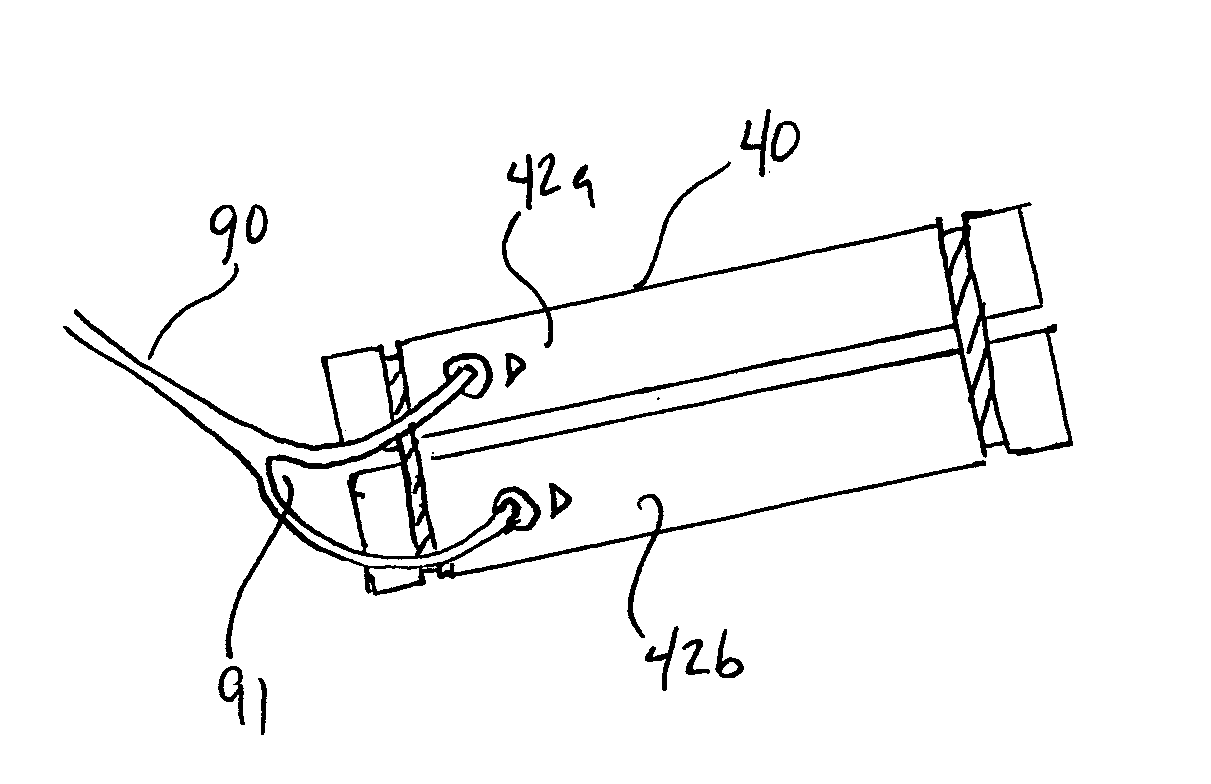
Figure 1 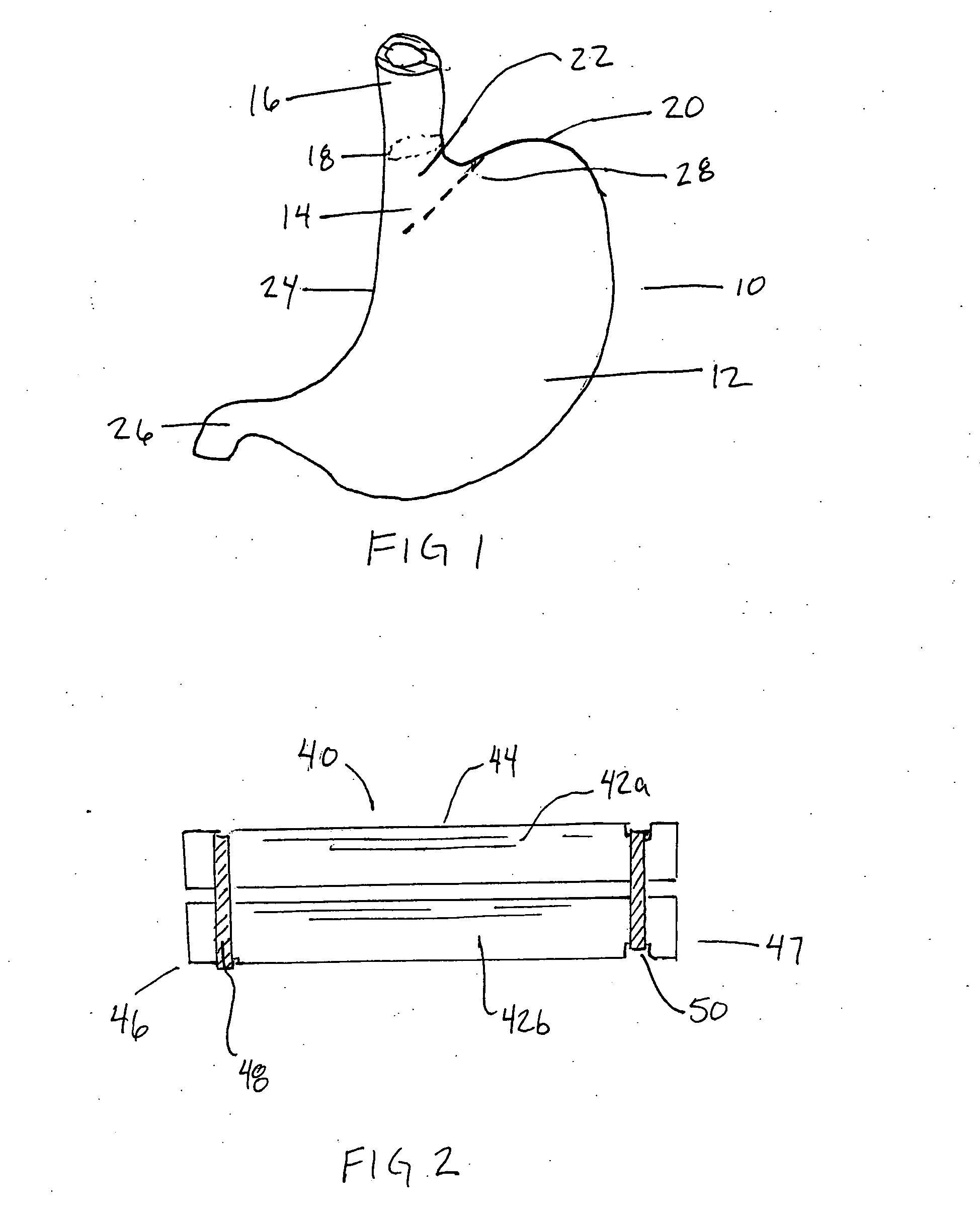
Figure 2 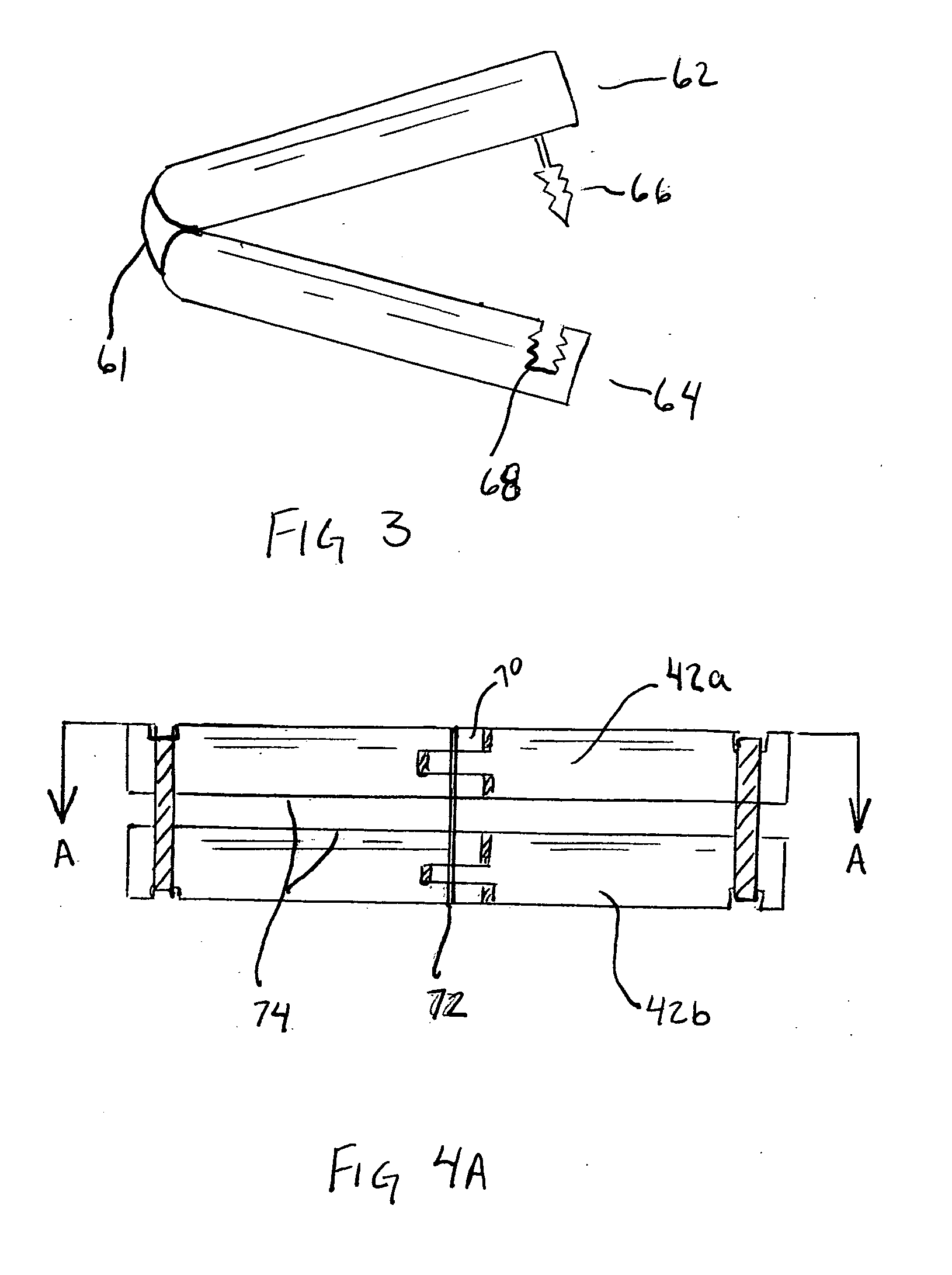
Figure 3
Abstract
Description
CLAIM OF PRIORITY
[0001] This application claims priority under 35 U.S.C. §119(e) to U.S. Provisional Application No. 60 / 705,087, filed Aug. 3, 2005, the entire contents of which are hereby expressly incorporated by reference.BACKGROUND
[0002] 1. Field of the Invention
[0003] The present invention relates to devices and methods for joining segments of soft tissue together. More particularly this invention relates to partitioning a body cavity or organ by joining together portions of the organ interior walls.
[0004] 2. Description of the Related Art
[0005] Often segments of soft tissue are brought together for the purpose of reseeting tissue, providing anchors for other devices and for creating walls or partitions within a body cavity or an organ having a lumen. Sometimes a single wall of tissue is folded and brought together and other times two portions of soft tissue are grasped separately and then the two portions are brought into close proximity to each other and then joined together eithe...
Examples
Embodiment Construction
[0056]The devices and methods described may provide a better way to partition the interior of an organ or body cavity. The resultant remodeled interior space will be formed by one or a series of wall-to-wall tissue unions that may be formed using graspers and securement devices. As shown in FIG. 1, one preferred goal is to partition the stomach 10 having an interior space 12 such that a separate region 14 is formed. At the entrance to the stomach 10 is located the distal end 16 of the esophagus. The distal end 16 of the esophagus terminates at the lower esophageal sphincter 18 before entering the stomach 10. The upper portions of the stomach are defined by the fundus 20, cardia 22 and the lesser curvature of the stomach 24, which is the shortest wall between the lower esophageal sphincter 18 and the distal opening of the stomach, the pylorus 26. The approximate position of a partition wall 28 is shown. The present invention is designed to be able to form partition wall 28 by drawing...