
System and method for reducing hearing aid squeal
a technology of hearing aids and amplifiers, applied in the field of hearing aid amplifiers, can solve the problems of battery voltage momentarily dropping, amplifiers losing gain control, loud squeal or gunshot noise, etc., and achieve the effect of reducing squeal
Patent Information
- Authority / Receiving Office
- US · United States
- Patent Type
- Patents(United States)
- Current Assignee / Owner
- Publication Date
- 2005-06-07
- Estimated Expiration
- Not applicable · inactive patent
Smart Images
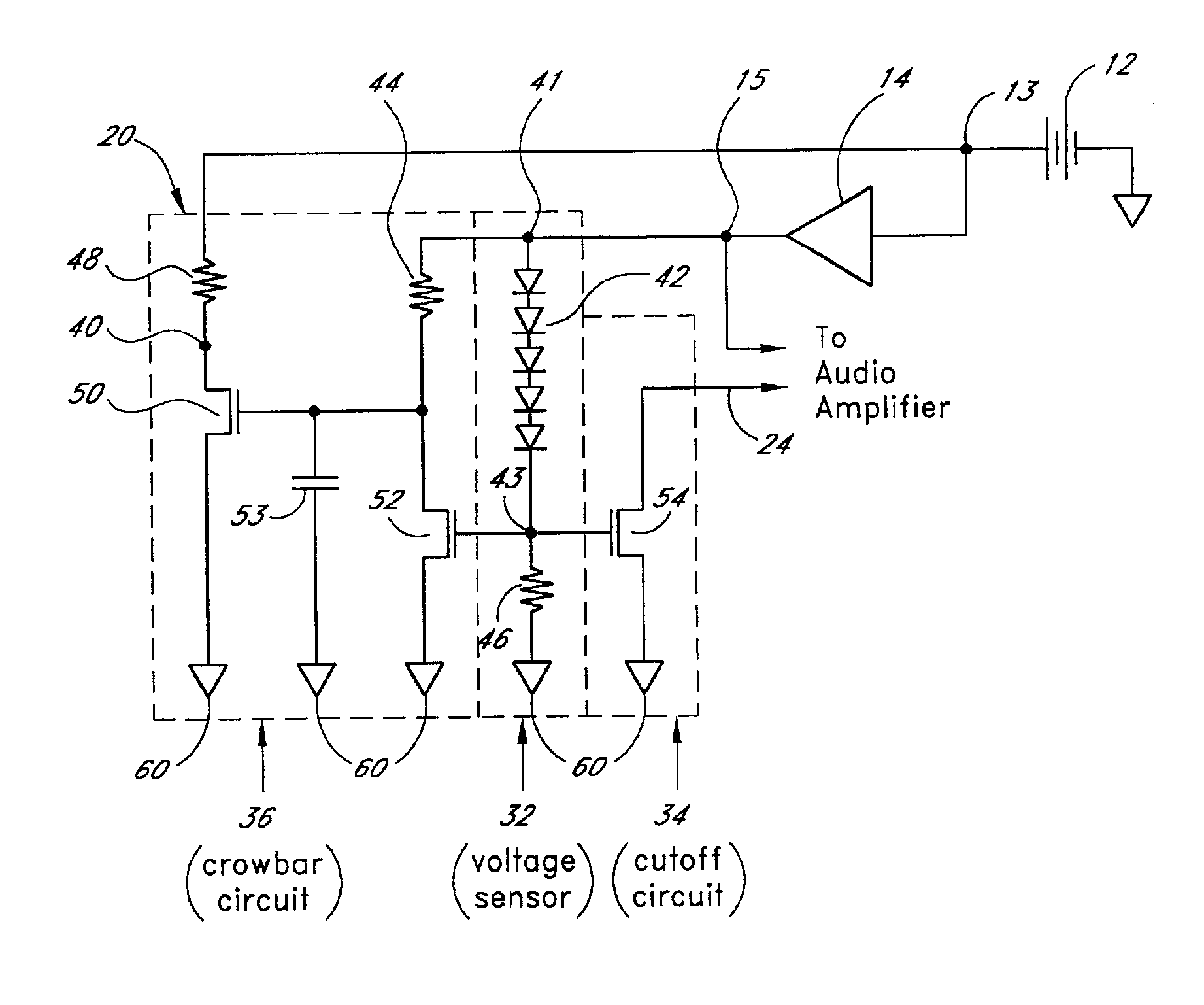
Figure 1 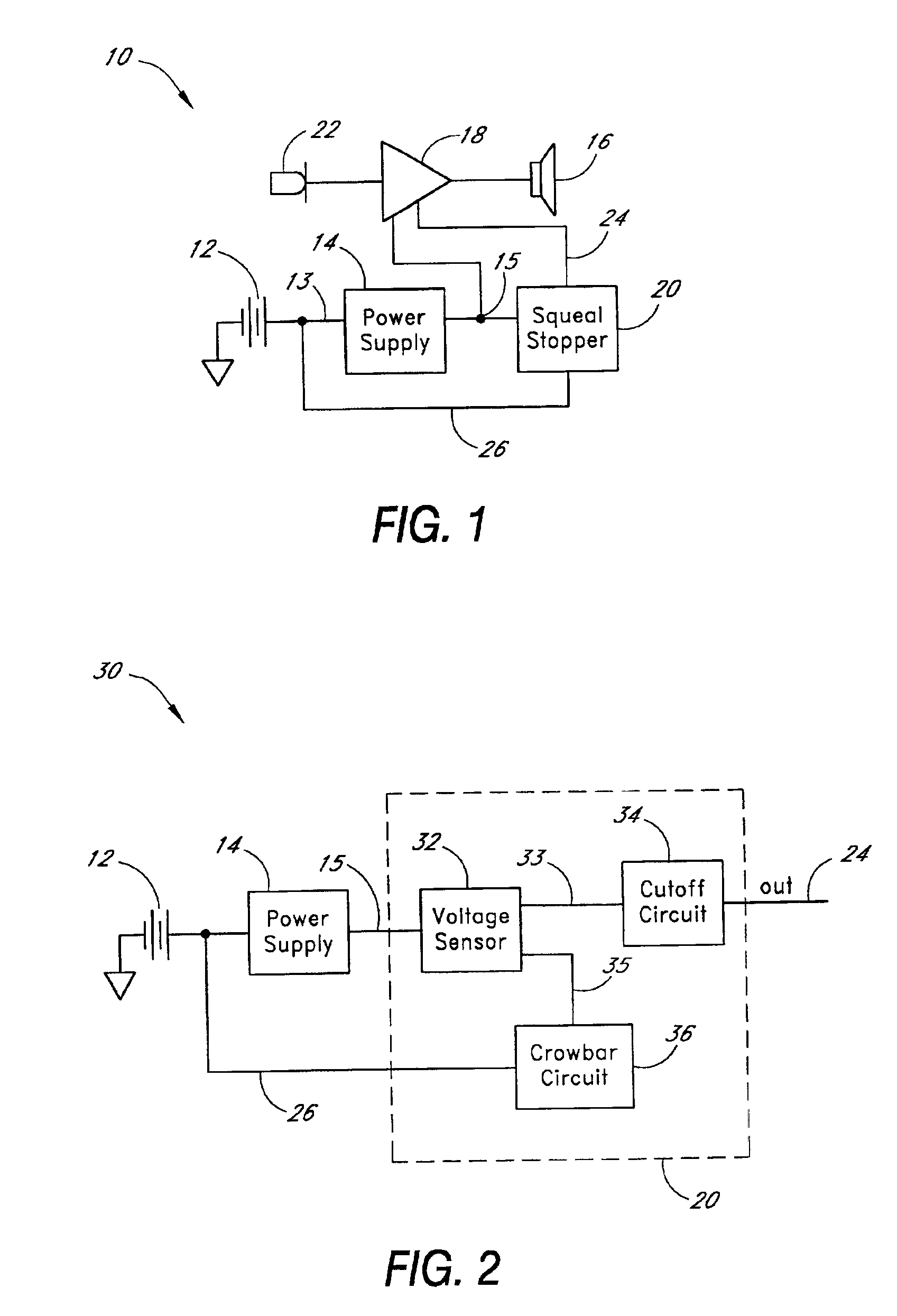
Figure 2 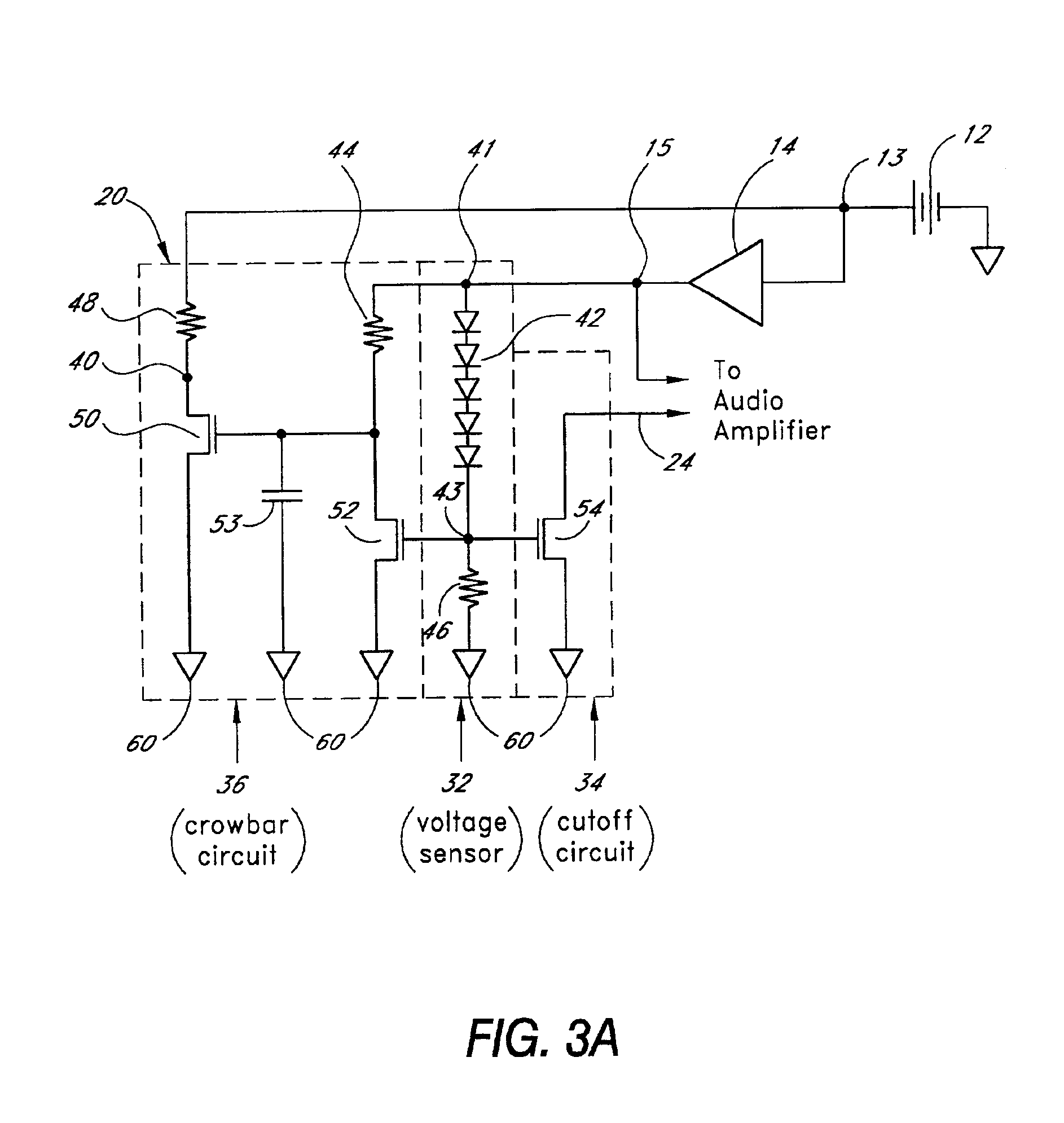
Figure 3
Abstract
Description
BACKGROUND OF THE INVENTION
[0001] 1. Field of the Invention
[0002] The present invention relates to hearing aid amplifiers.
[0003] 2. Description of Related Art
[0004] A hearing aid is typically comprised of a microphone which receives an acoustic input signal and converts it into an electrical signal, a filter which processes the signal, an amplifier which produces an amplified output signal, and a speaker which delivers the output signal.
[0005] With many hearing aid designs, especially those including Class D amplifiers, the amplifier will lose gain control under low battery conditions which may produce a loud squeal or gun shot noise. This may occur as the battery charge depletes with use, and also when a loud tone enters the hearing aid at a low frequency, causing the battery voltage to momentarily drop. Some hearing aids have been equipped with a latch which disables the hearing aid output when the amplifier oscillator frequency reaches a certain level. These prior art latches have not...
Examples
Embodiment Construction
[0015]Embodiments of the invention will now be described with reference to the accompanying Figures, wherein like numerals refer to like elements throughout. The terminology used in the description presented herein is not intended to be interpreted in any limited or restrictive manner, simply because it is being utilized in conjunction with a detailed description of certain specific embodiments of the invention. Furthermore, embodiments of the invention may include several novel features, no single one of which is solely responsible for its desirable attributes or which is essential to practicing the inventions herein described.
[0016]FIG. 1 is a block diagram of the components within a hearing aid, including a squeal stopper circuit 20. Microphone 22 receives audible sounds and converts the sounds to electrical signals which are transmitted to audio amplifier 18. Audio amplifier 18 increases the strength of the electrical signals received from microphone 22 and sends the amplified s...