
Synchronous information interface realizing method based on JAVA information service
A technology of synchronous message and message service, applied in the direction of digital transmission system, data exchange network, electrical components, etc., can solve the problem that the application program cannot realize synchronous communication concisely and reliably, and achieve the effect of reliable synchronous communication
Patent Information
- Authority / Receiving Office
- CN · China
- Patent Type
- Patents(China)
- Current Assignee / Owner
- Publication Date
- 2009-01-07
- Estimated Expiration
- Not applicable · inactive patent
Smart Images
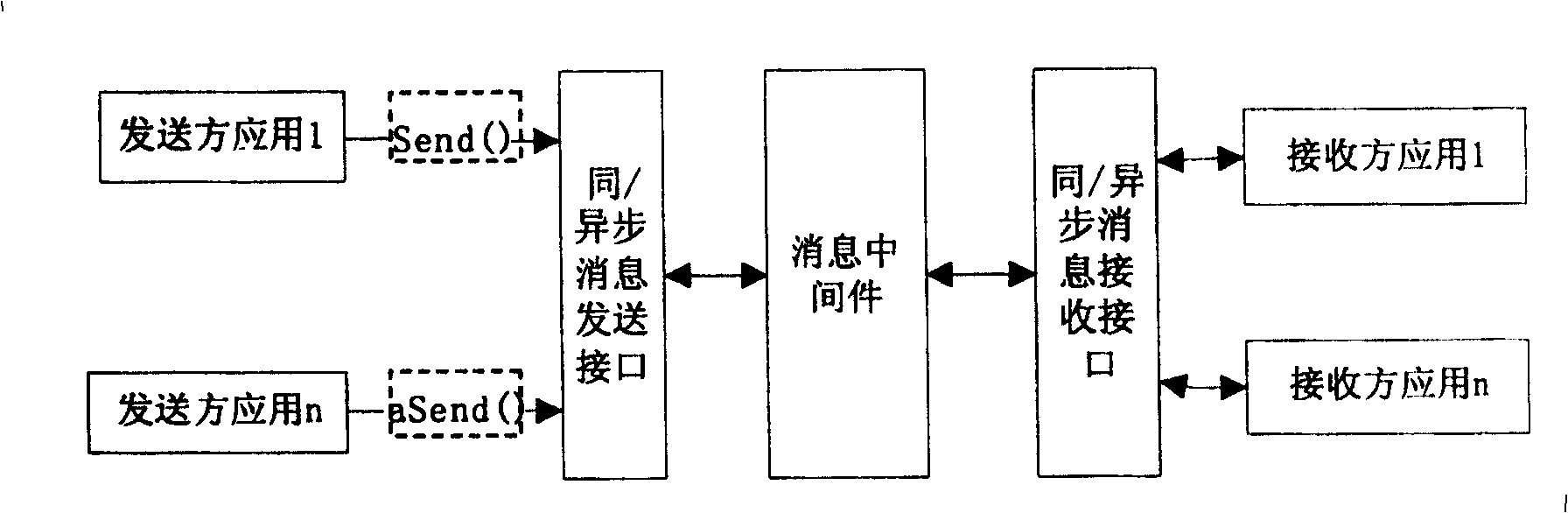
Figure 1 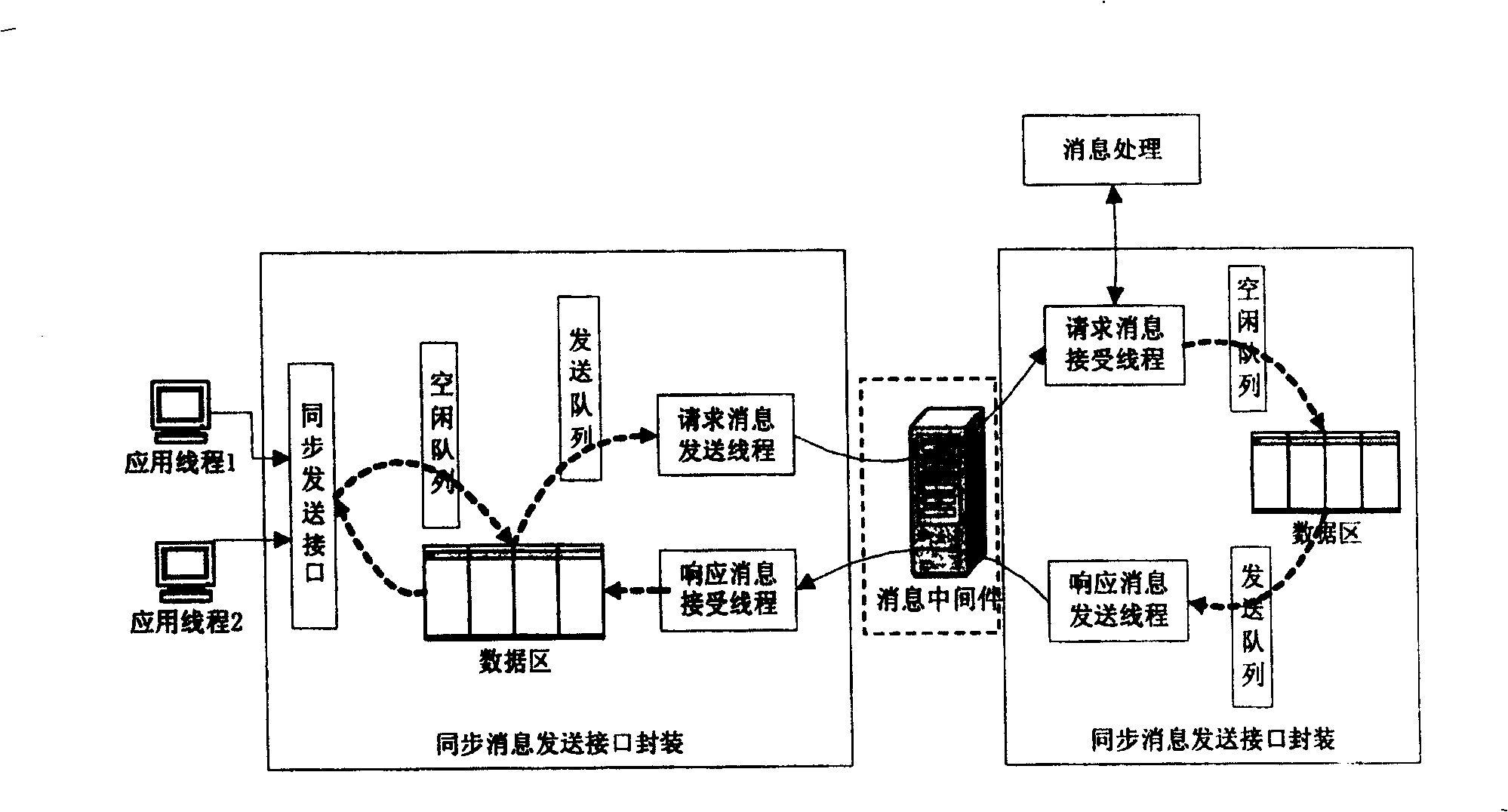
Figure 2 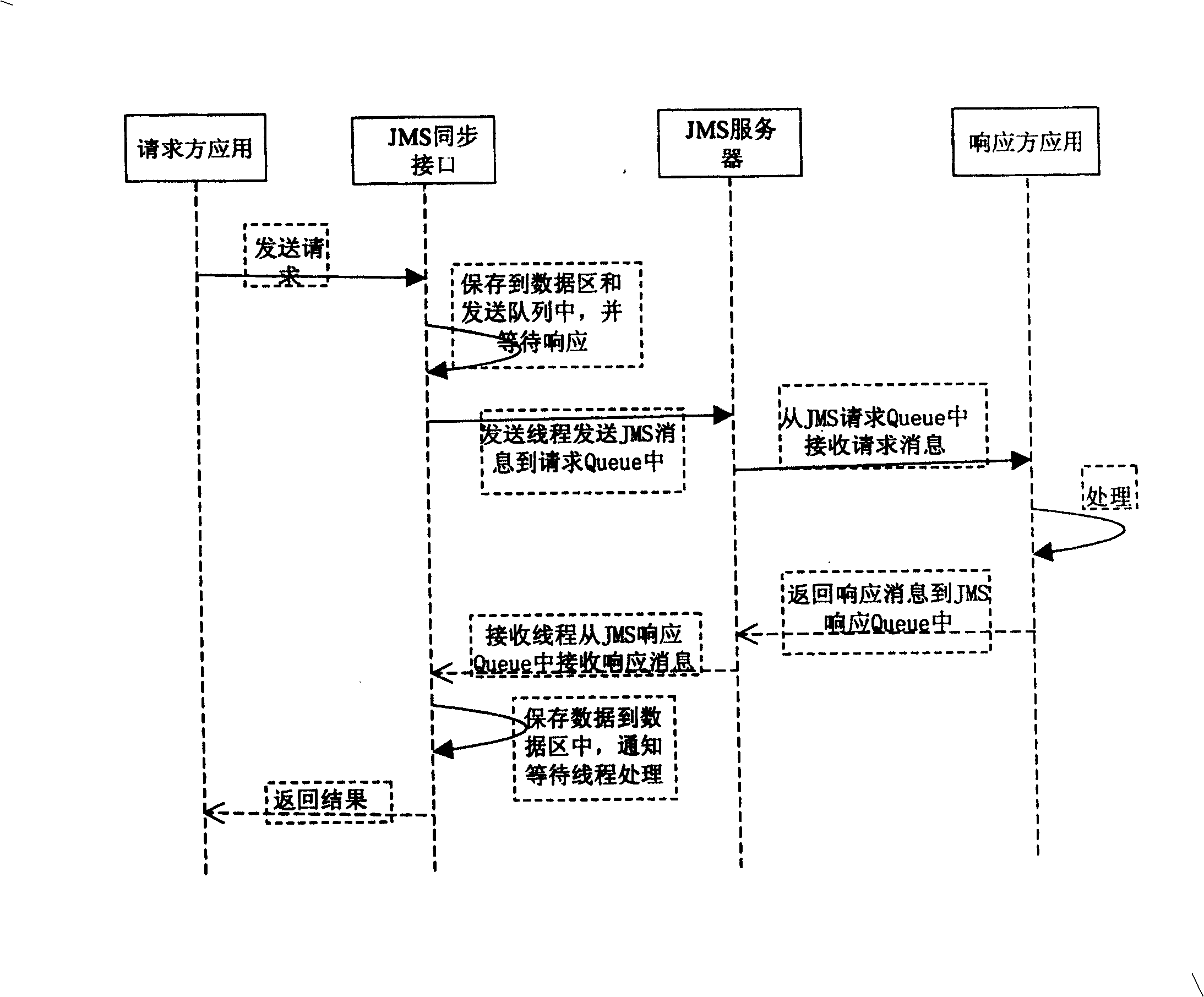
Figure 3
Abstract
Description
technical field
[0001] The invention relates to a method for implementing a JAVA application synchronous communication mechanism, in particular to a method for synchronous communication within a distributed JAVA application system or between systems. Background technique
[0002] Java Message Service (JMS) can help us reduce the coupling between applications, while allowing applications to communicate and use each other's resources.
[0003] JMS generally includes at least three components: two JMS clients and a JMS server. Two clients communicate with each other through a JMS server. A JMS client is a conventional application program that uses the JMS API (Application Programming Interface, API, application programming interface) to send and receive messages.
[0004] A JMS server can be any application that implements the JMS specification. Some JMS servers are part of a larger application; others are applications dedicated to JMS tasks. There are many third-party comm...
Examples
Embodiment Construction
[0035] The present invention provides a JMS-based synchronous message interface implementation method, which provides a series of synchronous message call interfaces by synchronously encapsulating and converting the asynchronous messages provided by JMS, so as to meet the requirements of simple and reliable synchronous communication for application programs.
[0036] The realization method based on the synchronous message interface of JMS that the present invention provides, comprises the following steps:
[0037] Step 1, build a JMS application server, and configure two message queues on it, where the request queue is used to transfer synchronization request messages, and the response queue is used to transfer response messages.
[0038] Step 2, at the sender of the synchronization message, construct a message data area (using a fixed-length array structure), establish a thread-safe idle queue and a sending queue. Initially, the length of the idle queue is the length of the a...