
A preparation method of titanium dioxide/13X molecular sieves compound materials used for treating dyestuff waste water
A technology for composite materials and dye wastewater, applied in the field of preparation of TiO2/13X molecular sieve composite materials, can solve the problems of secondary pollution adsorbent and coagulant regeneration can not be reasonably solved, the utilization rate of sunlight is not high, light-generated space The problem of easy recombination of holes and other problems, to achieve the effect of rich micropores, improved degradation efficiency, and large specific surface area
Patent Information
- Authority / Receiving Office
- CN · China
- Patent Type
- Patents(China)
- Current Assignee / Owner
- Publication Date
- 2009-03-04
- Estimated Expiration
- Not applicable · inactive patent
Smart Images
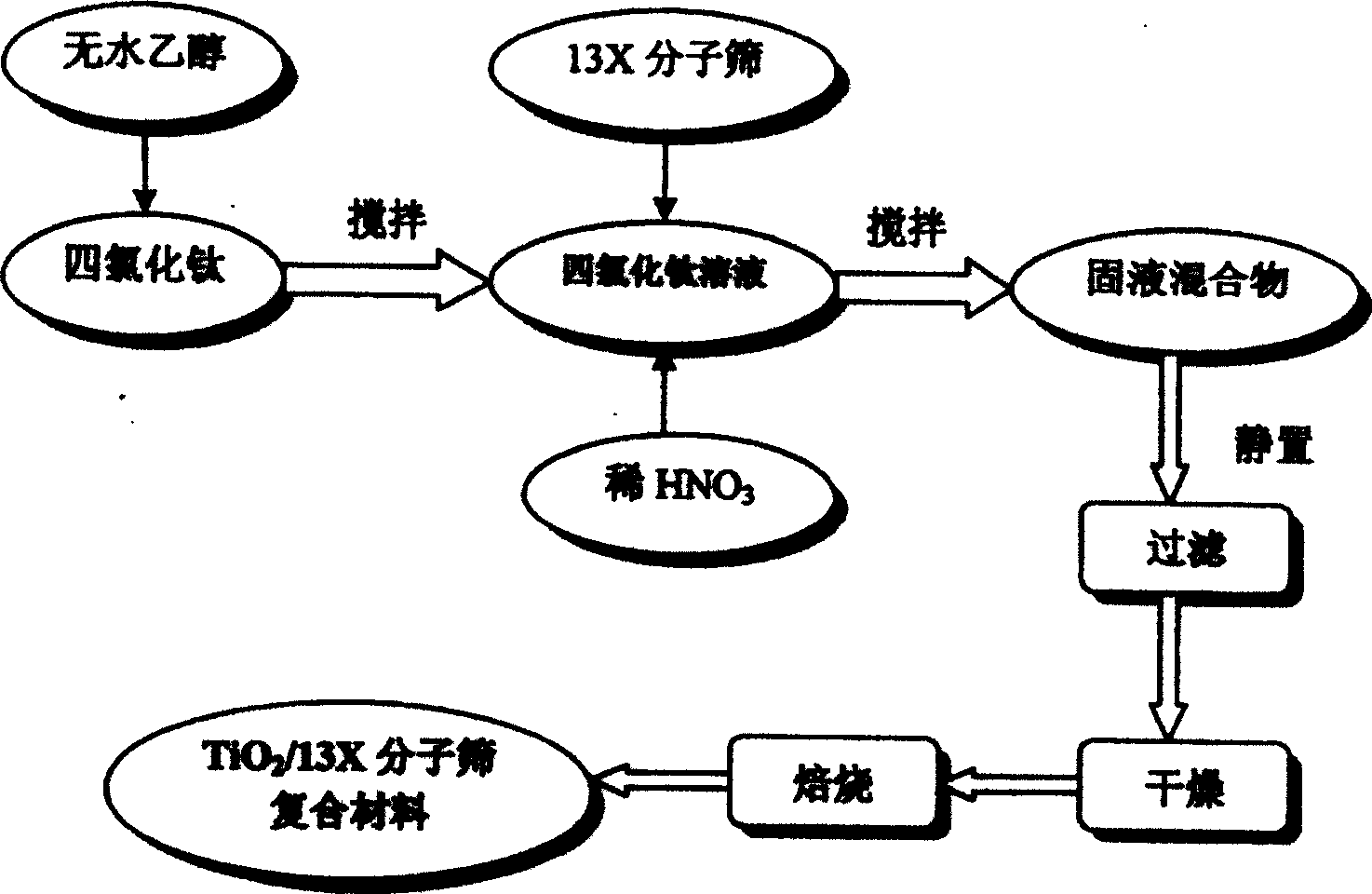
Figure 1
Abstract
Description
technical field
[0001] The present invention relates to a kind of preparation method of molecular sieve composite material, more specifically relate to a kind of TiO used for dye wastewater treatment 2 / 13X molecular sieve composite material preparation method. Background technique
[0002] The world's annual output of dyes is about 700,000 tons, of which about 10-15% is discharged into the environment in the form of wastewater. Dye wastewater is characterized by high chroma, high toxicity, COD Cr (chemical oxygen demand) high, low biodegradability (BOD 5 / COD<0.1), most dyes are resistant to photolysis, oxidation, and biodegradation, and are persistent organic pollutants. These dye wastewater often cause serious water pollution and become a difficult point in environmental restoration. At present, the treatment of dye wastewater commonly used at home and abroad is generally non-destructive technology, such as physical adsorption method, coagulation method, air flotat...
Examples
Embodiment 1
[0023] 1. Measure 8ml of titanium tetrachloride solution in a beaker filled with 40ml of absolute ethanol to make a titanium tetrachloride / absolute ethanol solution, and stir vigorously at a constant speed.
[0024] 2. Weigh 10g of 13X molecular sieve with a particle size of 100 mesh, add it into a beaker filled with titanium tetrachloride solution, and stir vigorously at a constant speed for 3 hours.
[0025] 3. Then add dilute HNO dropwise into the beaker 3 Solution 10ml, stir for 2-3min, slowly add about 3ml of deionized water, stop stirring.
[0026] 4. After airtight aging at room temperature for 48 hours, the vacuum pump is used for suction filtration, and the filtrate is washed several times with absolute ethanol and deionized water.
[0027] 5. Put the filtered sample into a constant temperature blast drying oven, adjust the temperature to 110°C, and dry for 3 hours.
[0028] 6. Put the dried sample into a muffle furnace and bake it at 200°C for 4h.
[0029] 7. Get Ti...
Embodiment 2
[0031] 1. Measure 6ml of titanium tetrachloride solution in a beaker filled with 35ml of absolute ethanol to make a titanium tetrachloride / absolute ethanol solution, and stir vigorously at a constant speed.
[0032] 2. Weigh 10g of 13X molecular sieve with a particle size of about 100 mesh, add it into a beaker filled with titanium tetrachloride solution, and stir vigorously at a constant speed for 2 hours.
[0033] 3. Then add dilute HNO dropwise into the beaker 3 Solution 5ml, stir for 2-3min, slowly add about 2ml of deionized water, stop stirring.
[0034] 4. After airtight aging at room temperature for 40 hours, the vacuum pump is used for suction filtration, and the filtrate is washed several times with absolute ethanol and deionized water.
[0035] 5. Put the filtered sample into a constant temperature blast drying oven, adjust the temperature to 110°C, and dry for 2 hours.
[0036] 6. Put the dried sample into a muffle furnace and bake it at 200°C for 4h.
[0037] 7....
Embodiment 3
[0039] 1. Measure 10ml of titanium tetrachloride solution in a beaker filled with 45ml of absolute ethanol to make a titanium tetrachloride / absolute ethanol solution, and stir vigorously at a constant speed.
[0040] 2. Weigh 10 g of 13X molecular sieve with a particle size of 80 mesh, add it to a beaker containing a titanium tetrachloride solution, and stir vigorously at a constant speed for 3 hours.
[0041] 3. Then add dilute HNO dropwise into the beaker 3 Solution 10ml, stir for 2-3min, slowly add about 5ml of deionized water, stop stirring.
[0042] 4. After airtight aging at room temperature for 48 hours, the vacuum pump is used for suction filtration, and the filtrate is washed several times with absolute ethanol and deionized water.
[0043] 5. Put the filtered sample into a constant temperature blast drying oven, adjust the temperature to 110°C, and dry for 3 hours.
[0044] 6. Put the dried sample into a muffle furnace and bake it at 200°C for 4h.
[0045] 7. Get ...