
Preparation process of prodan by sodium sulfate method
The technology of sodium fluorosilicate and sodium sulfate is applied in the technical field of producing sodium fluorosilicate by the sodium sulfate method, which can solve the problems of difficulty in controlling the feeding speed, clogging of equipment, increase of silica gel, etc. rate increase effect
Patent Information
- Authority / Receiving Office
- CN · China
- Patent Type
- Patents(China)
- Current Assignee / Owner
- Publication Date
- 2010-09-08
- Estimated Expiration
- Not applicable · inactive patent
Smart Images
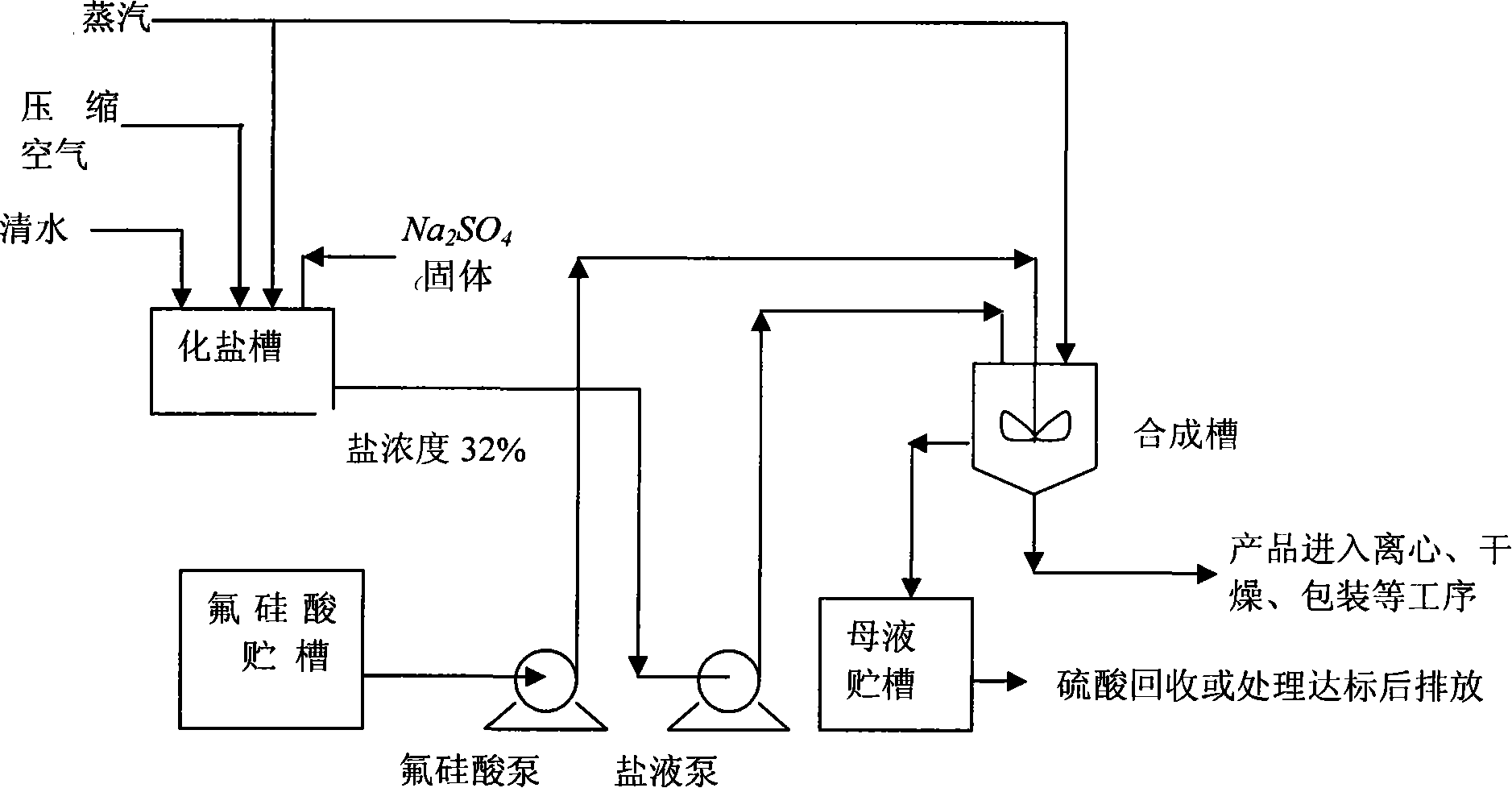
Figure 1 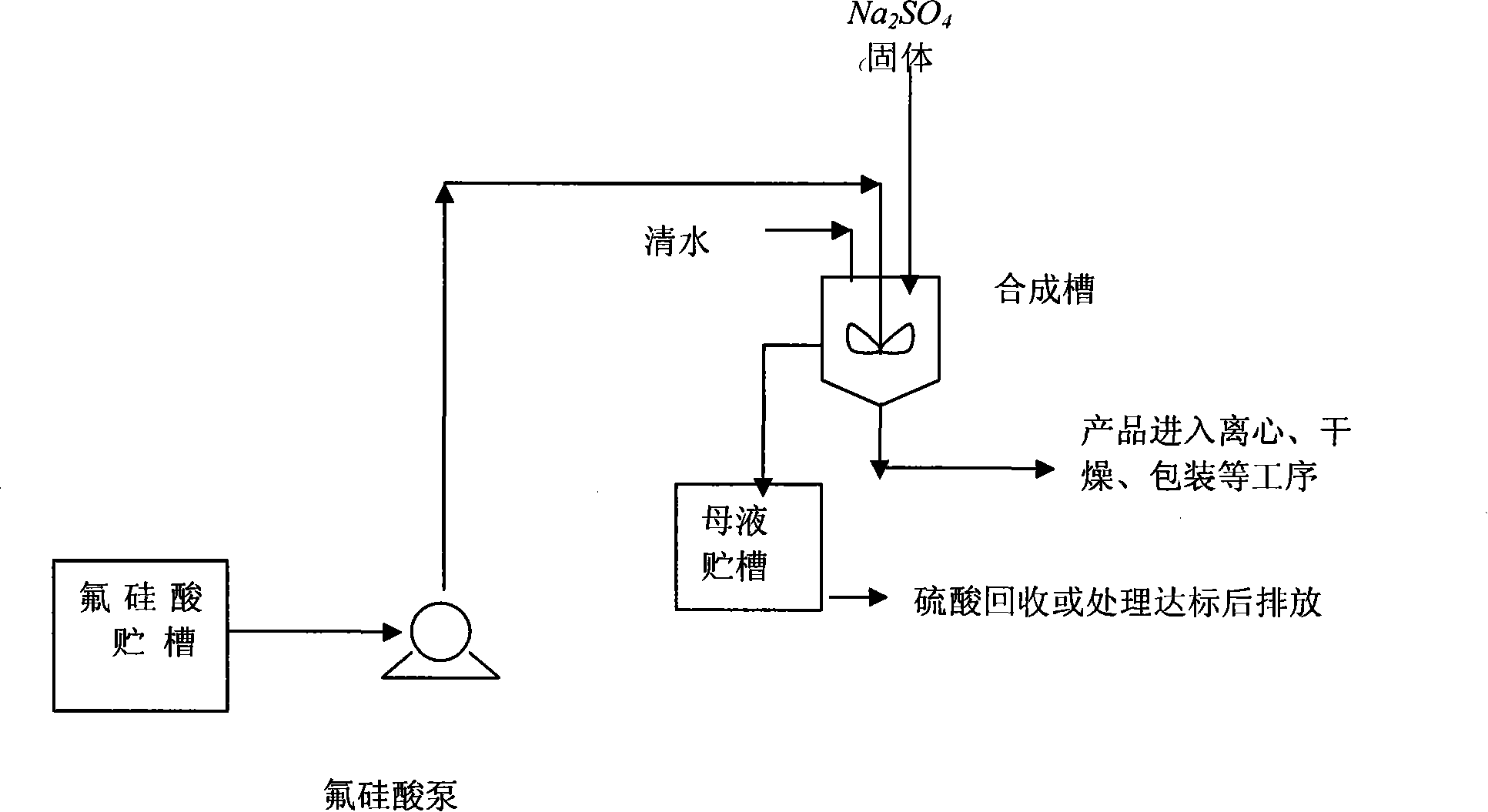
Figure 2 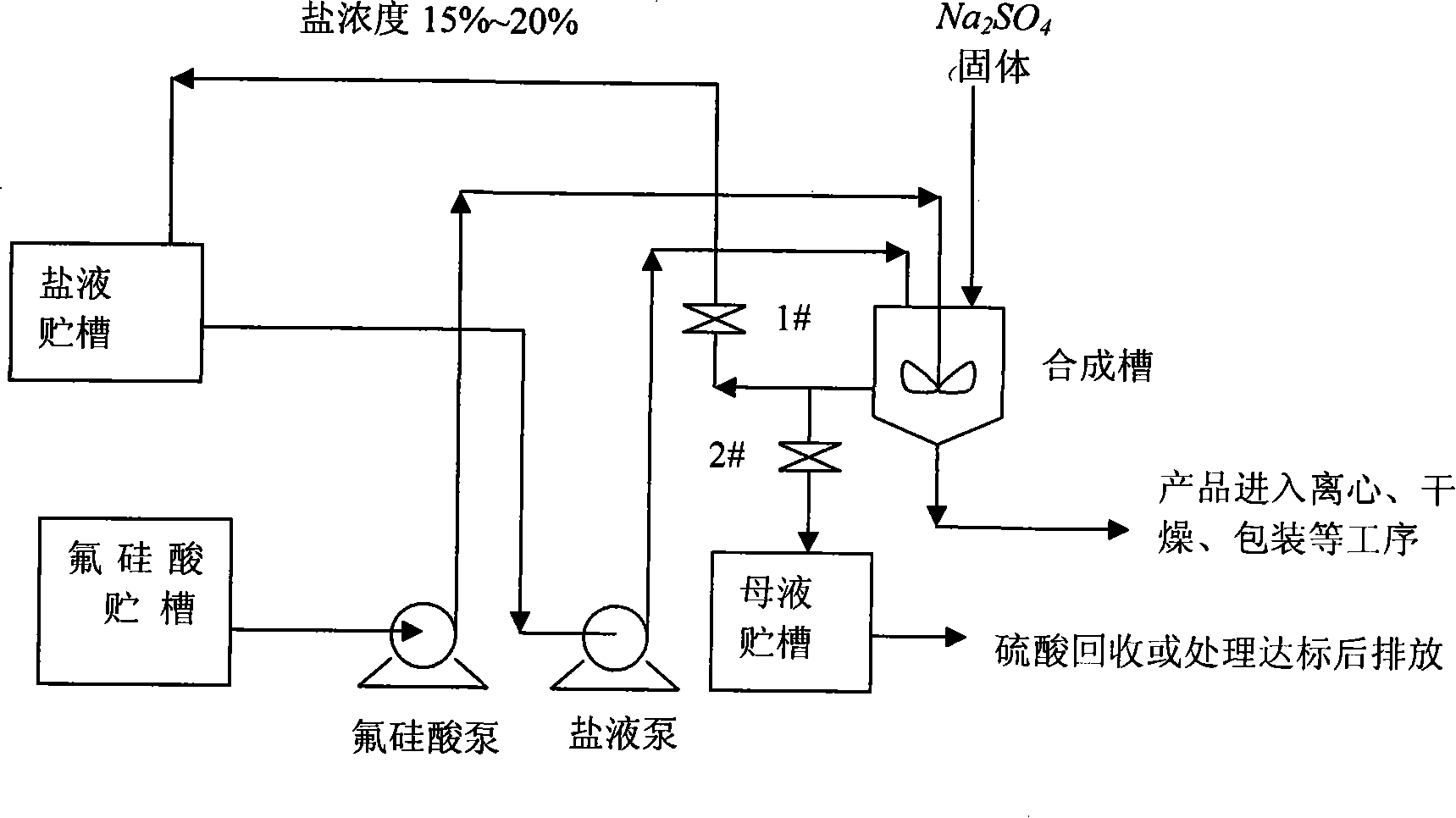
Figure 3
Abstract
Description
technical field
[0001] The invention relates to a process for recovering fluorine in a phosphate compound fertilizer plant and producing sodium fluorosilicate with sodium sulfate as a raw material, and belongs to the process improvement of inorganic chemical product sodium fluorosilicate. technical background
[0002] Since phosphate rock generally contains about 3% fluorine, in order to protect the environment, comprehensively select resources and improve the economic benefits of the enterprise in the production process of ordinary calcium, heavy calcium and wet-process phosphoric acid, it is necessary to treat the fluorine-containing tail gas and convert the fluorine-containing waste gas It is absorbed and transformed into fluosilicic acid, which is used to produce fluorine salt products with market benefits. Among the currently produced fluoride salt products, sodium fluorosilicate is more common. (Fertilizer Engineering Series "Phosphoric Acid, Phosphate Fertilizer and ...
Examples
Embodiment 1
[0040] Embodiment 1, be 21m with the brine storage tank volume 3 , the salt concentration is 15% (density 1.135g / ml), the fluosilicic acid concentration is 10% (density 1.082g / ml), and the acid storage capacity is 47m 3 , the synthesis tank volume is 7m 3 as an example.
[0041] If the ratio of fluosilicic acid to sodium sulfate is 1:1.2, add 4.33m of fluosilicic acid each time 3 , add salt 2.67m 3 , batch synthesis, a total of 9 reactions are required. First in the synthetic tank salt 2.7m 3 , and then discharged into the chemical salt storage tank, take the acid to adjust the salt, and enter 4.33m of fluosilicic acid into the synthesis tank 3 , add salt solution 2.67m 3 After the reaction, continue to add solid sodium sulfate, so that the sodium sulfate content of the mother liquor is 15%. After settling, the mother liquor enters the chemical salt storage tank, and is washed by sodium fluorosilicate and then centrifugally dried. React salt three times like this, wait ...
Embodiment 2
[0042] Embodiment 2, be 34m with the saline solution storage tank volume 3 , salt concentration 16% (density 1.148g / ml), fluosilicic acid concentration 8% (density 1.065g / ml), acid storage capacity 61m 3 , the synthesis tank volume is 10m 3 as an example.
[0043] If the ratio of fluosilicic acid to sodium sulfate is still 1:1.2, add 6.47m of fluosilicic acid each time 3 , add salt 3.53m 3 , Batch synthesis, a total of about 10 reactions are required. First in synthetic tank salt 3.53m 3 , and then discharged into the salt storage tank. Adjust the acid and adjust the salt, and enter 6.47m of fluosilicic acid into the synthesis tank 3 , add salt solution 3.53m 3 After the reaction, continue to add solid sodium sulfate, so that the sodium sulfate content of the mother liquor is 16%. After settling, the mother liquor enters the chemical salt storage tank, and is washed by sodium fluorosilicate and then centrifugally dried. React salt three times like this, wait for the sa...
Embodiment 3
[0044] Embodiment 3, be 44m with the saline solution storage tank volume 3 , the salt concentration is 16%, the fluosilicic acid concentration is 9%, and the acid storage capacity is 78m 3 , the synthesis tank volume is 12m 3 as an example.
[0045] If the ratio of fluosilicic acid to sodium sulfate is 1:1.1, add 7.65m of fluosilicic acid each time 3 , add salt 4.35m 3 , intermittent synthesis, a total of 10 reactions are required. First in the synthetic tank salt 4.35m 3 , and then discharged into the salt storage tank. Take fixed acid and adjust salt, and enter 7.65m of fluosilicic acid into the synthesis tank 3 , add salt solution 4.35m 3 After the reaction, continue to add solid sodium sulfate, so that the sodium sulfate content of the mother liquor is 16%. After settling, the mother liquor enters the chemical salt storage tank, and is washed by sodium fluorosilicate and then centrifugally dried. React salt four times like this, wait for the salt solution tank to b...