
Electric pressure cooker using angular displacement sensing device
A technology of angular displacement sensing and angular displacement sensor, which is applied in the field of household kitchen and daily life electrical appliances, and can solve the problems of small up and down displacement of the ejector rod and data error
Patent Information
- Authority / Receiving Office
- CN · China
- Patent Type
- Patents(China)
- Current Assignee / Owner
- Publication Date
- 2011-05-18
Smart Images
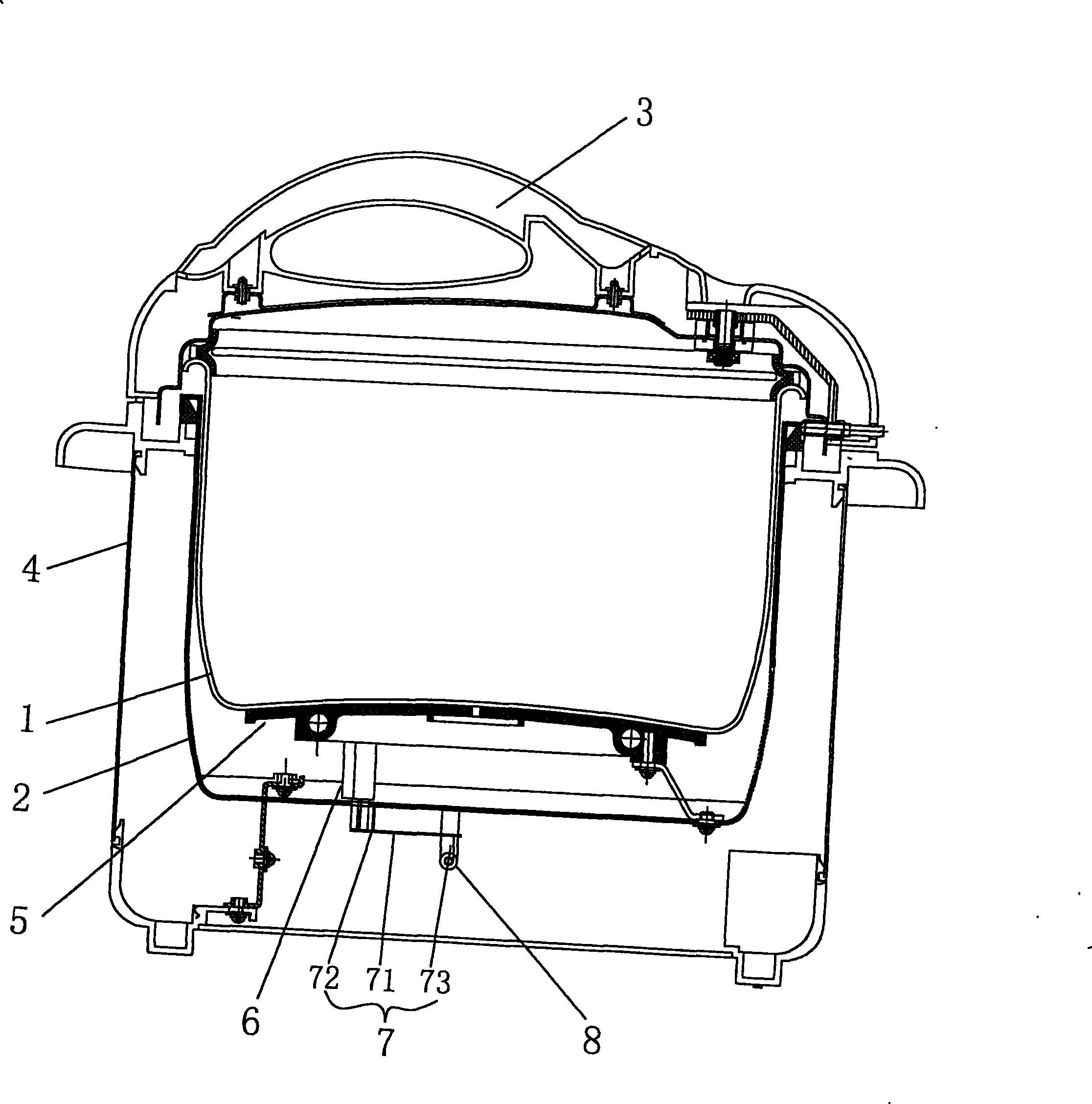
Figure 1 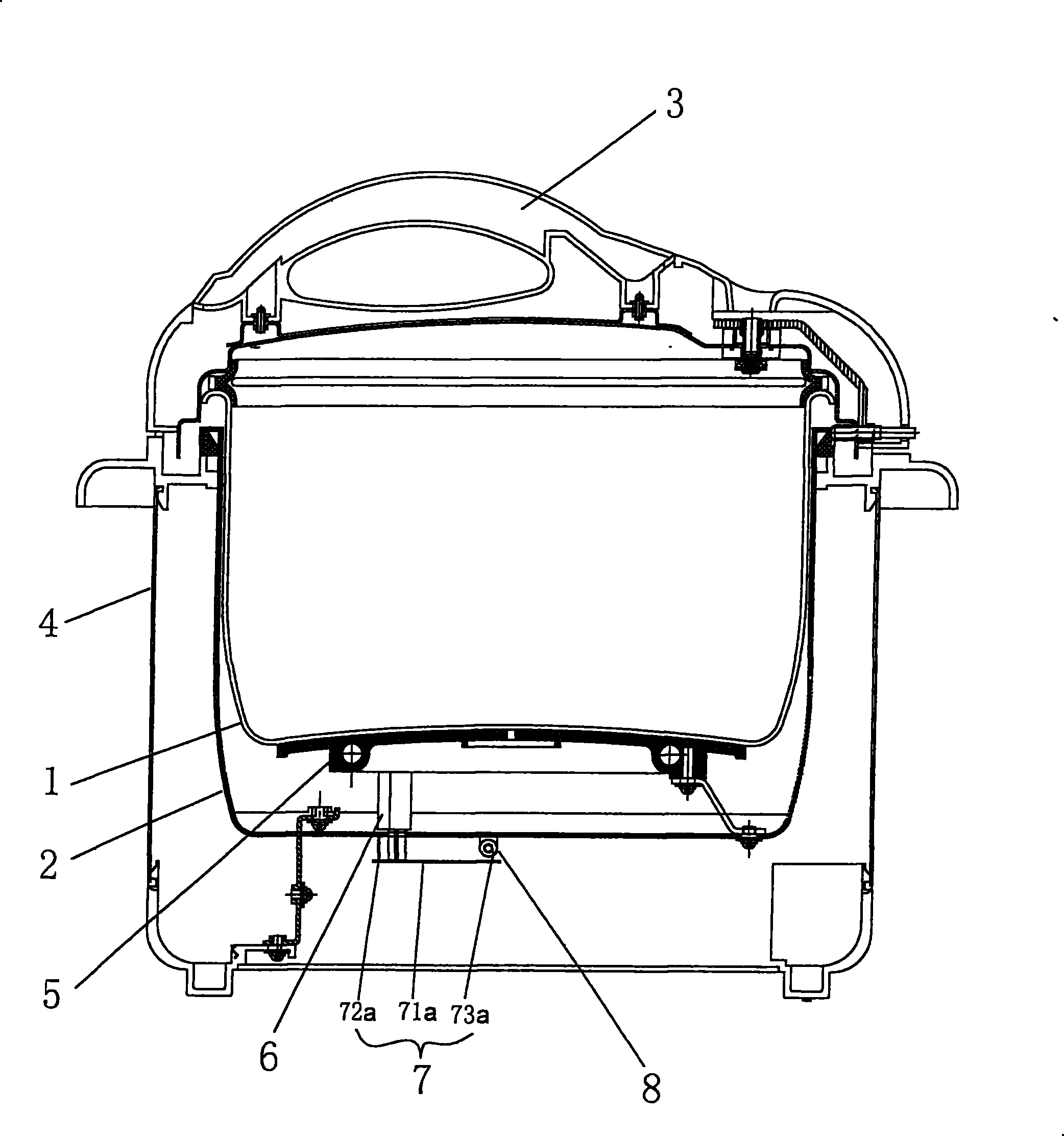
Figure 2 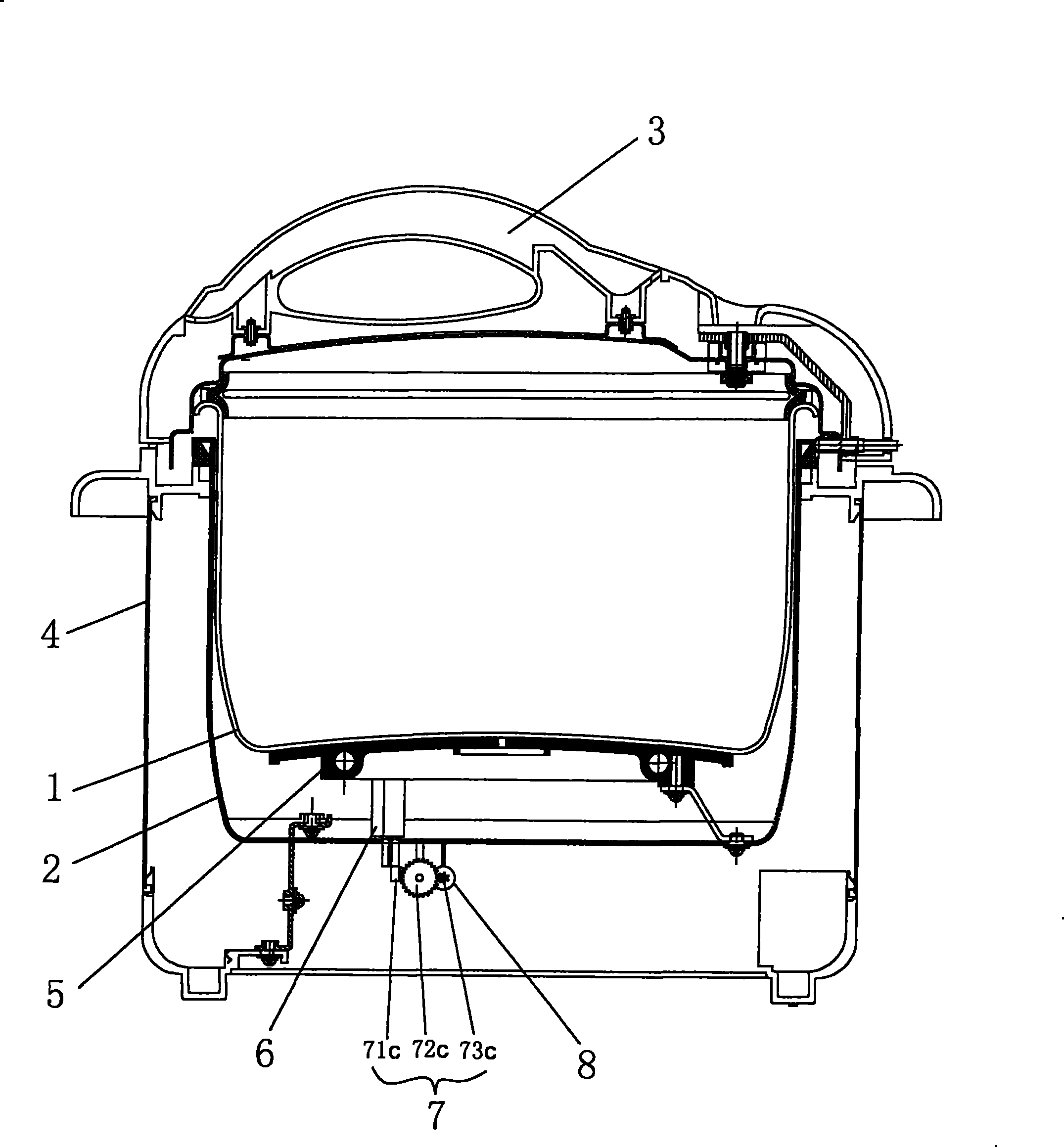
Figure 3
Abstract
Description
technical field
[0001] The invention relates to the technical field of household kitchen appliances for daily life, in particular to an electric pressure cooker using an angular displacement sensing device. Background technique
[0002] With the improvement of people's living standards, more and more household appliances have entered thousands of households. Nowadays, electric pressure cookers are widely used by people because of their convenience and speed. In electric pressure cookers, how to accurately measure the inner pot Pressure to better control the pressure has become the key technology of this product. The usual electric pressure cooker fixes the ejector rod on the heating plate at the bottom of the inner pot, and directly measures the vertical displacement of the ejector rod through sensors such as capacitance and voltage to determine the pressure of the inner pot. However, because the vertical displacement of the ejector rod is very small, the data obtained by di...
Examples
Embodiment Construction
[0013] Such as Figure 1-3 As shown, the present invention includes an inner pot 1, an outer pot 2, a pot cover 3 and an outer shell 4. A heating plate 5 is installed at the bottom of the inner pot 1, and a top for transmitting the pressure displacement of the inner pot 1 is fixed on the bottom of the heating plate 5. Rod 6, the ejector rod 6 is connected to the angular displacement sensor 8 provided on the bottom of the outer pot 2 or the shell 4 through the transmission device 7, and has the function of converting the vertical displacement of the ejector rod 6 into a rotation angle and transmitting it to the angular displacement sensor 8 The transmission device 7 is arranged on the bottom of the outer pot 2 or on the shell 4. The angular displacement sensor 8 outputs different electrical signals according to the received angular displacement signal and transmits them to the control circuit. The control circuit controls the connection with the different electrical signals sent...