
Soybean GmFTL1 protein and soybean GmFTL2 protein as well as applications thereof
A soybean and protein technology, applied in the field of genetic engineering, can solve the problems of changing plant sensitivity and flowering time, and achieve the effect of shortening flowering time, strong effect and shortening growth period
Patent Information
- Authority / Receiving Office
- CN · China
- Patent Type
- Patents(China)
- Current Assignee / Owner
- Publication Date
- 2013-07-10
Smart Images
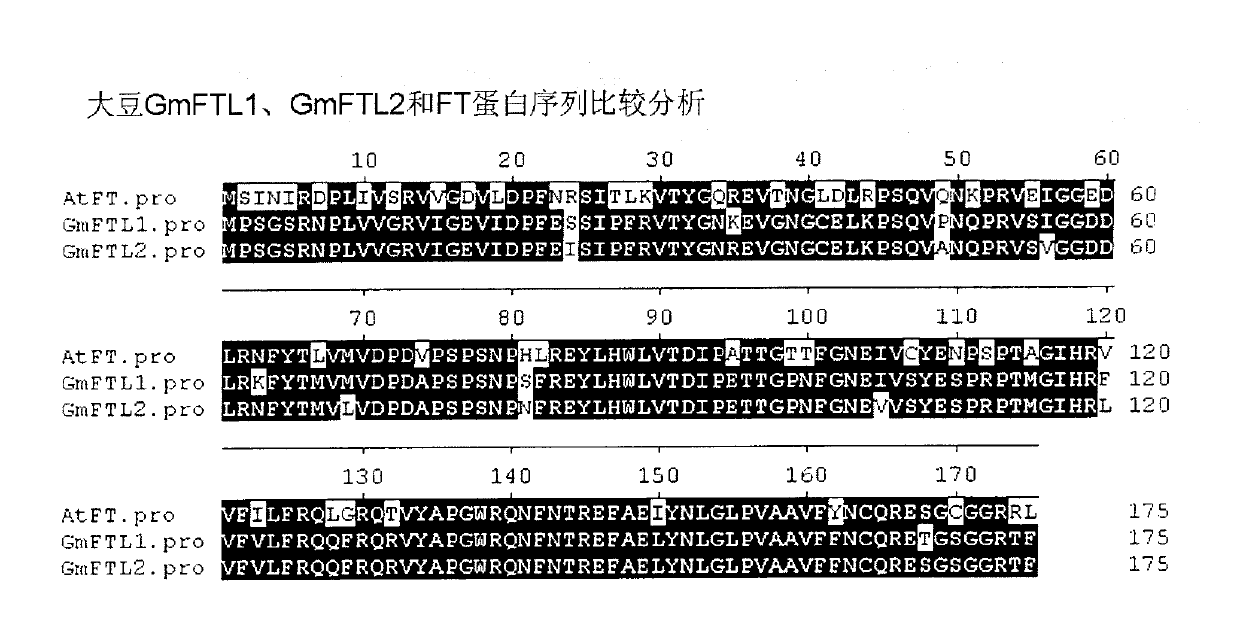
Figure 1 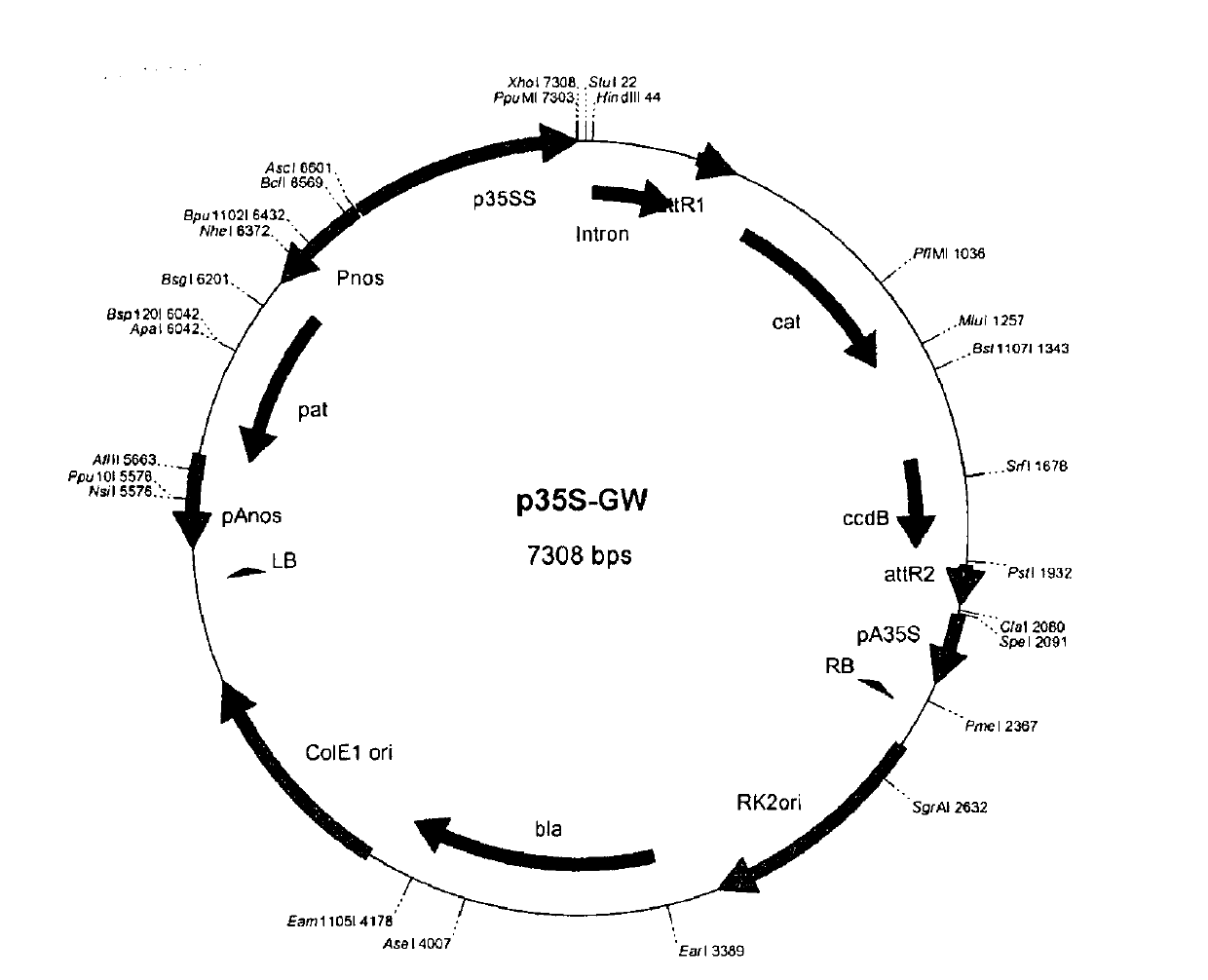
Figure 2 
Figure 3
Abstract
Description
technical field
[0001] The invention relates to the field of genetic engineering, in particular to two soybean flowering genes and their application in the regulation of plant photoperiod and flowering time. Background technique
[0002] Soybean is one of the important crops, and it is an important source of plant protein, edible oil, biodiesel, and secondary metabolites such as isoflavones and lecithin. Because soybean is a short-day plant, flowering is strictly controlled by photoperiod, so excellent varieties in different regions cannot be introduced to each other, and the growth period is also restricted by environmental photoperiod (Zhang et al., 2008). If the sensitivity of soybean to photoperiod can be reduced, and the limitation of soybean flowering to photoperiod can be broken, the problem of soybean introduction can be solved, so as to realize the mutual exchange of high-quality varieties in various regions, enrich excellent germplasm resources in various regions, ...
Examples
Embodiment 1
[0026] Example 1: Cloning of soybean flowering genes GmFTL1 and GmFTL2
[0027] GmFTL1 and GmFTL2, its gene sequence is shown in SEQ ID NO.3 and SEQ ID NO.4; the amino acid sequence of the protein encoded by it is shown in SEQ ID NO.1 and SEQ ID NO.2.
Embodiment 2
[0028] Embodiment 2: Structural analysis of soybean flowering gene GmFTL1 and GmFTL2 encoded protein (see figure 1 )
[0029] The homology between GmFTL1 and GmFTL2 protein sequences of soybean flowering gene is greater than 94.3%, and the C-terminal functional domain is highly homologous to Arabidopsis, but there are important differences. For example, the 128th amino acid residue of soybean GmFTL1 and GmFTL2 protein is glutamine (Q), the 129th is phenylalanine (F), the 132nd is arginine (R), and the 150th amino acid residue is It is leucine (L), and the corresponding parts of Arabidopsis are leucine (L), glycine (G), threonine (T) and isoleucine (I). These differences lead to higher activity of GmFTL1 and GmFTL2 than Arabidopsis FT.
Embodiment 3
[0030] Embodiment 3: Soybean flowering gene GmFTL1 and GmFTL2 plant expression vector
[0031] Soybean flowering genes GmFTL1 and GmFTL2 were constructed in figure 2 The indicated plant expression vector p35S-GW is used to overexpress soybean flowering genes GmFTL1 and GmFTL2 in plants to study their functions. The transformation method of plants is carried out by Agrobacterium-mediated method. Screening in plants is marked Bar.