
Iterative optimization distance categorization-based space weak and small target detection method
A technology of weak and small targets and detection methods, which can be used in instruments, character and pattern recognition, computer parts and other directions, and can solve problems such as low detection efficiency
Patent Information
- Authority / Receiving Office
- CN · China
- Patent Type
- Applications(China)
- Current Assignee / Owner
- Publication Date
- 2011-06-15
- Estimated Expiration
- Not applicable · inactive patent
Smart Images

Figure 1 
Figure 2 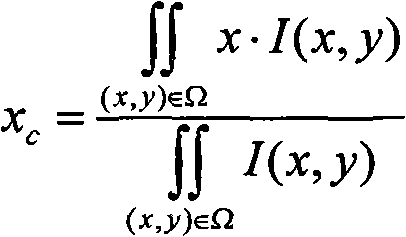
Figure 3
Abstract
Description
technical field
[0001] The invention relates to a space target detection method, in particular to a space weak and small target detection method based on iterative optimization distance classification. Background technique
[0002] The document "Weak and small target detection based on multi-level classification and reverse spatio-temporal fusion, Systems Engineering and Electronic Technology, 2009, Vol31(8), p1864-1869" discloses a weak and small target detection method based on multi-level classification and reverse spatio-temporal fusion. On the basis of image background suppression, the method uses adaptive multi-level classification method to extract candidate targets, which strengthens the detection ability of various weak and small candidate targets. At the same time, a dynamic space-time pipeline is constructed according to the position change information of the target between adjacent frames. When the authenticity of the candidate target points in the current frame ...
Examples
Embodiment Construction
[0033] 1. Background suppression and segmentation.
[0034] Use the median filter to calculate the mean value of all pixels in the 3×3 neighborhood centered on the current pixel point (x, y), and use the mean value as the new pixel value of the current pixel to remove random noise. Count the gray mean μ and variance σ of the entire image 2 , using μ+λ·σ as the threshold for binary segmentation, the segmented point is the star point, where λ is the set segmentation coefficient, the value in the present invention is 1.604, the mean value μ and the variance σ 2 for:
[0035] μ = 1 m · n Σ x = 1 m Σ y = 1 n I ( x , y ) - - - ...