
Method and device for preparing acetonebutanol by utilizing adsorption carrier fermentation
An acetone-butanol and acetone-butanol fermentation technology, which is applied in the field of fermentation engineering, can solve the problems of affecting the permeability of polymer substrates, complex immobilization methods, and increasing the probability of bacterial infection, so as to improve the composition ratio and increase the contact ratio. Surface, the effect of improving production capacity
Patent Information
- Authority / Receiving Office
- CN · China
- Patent Type
- Patents(China)
- Current Assignee / Owner
- Publication Date
- 2014-04-30
- Estimated Expiration
- Not applicable · inactive patent
Smart Images
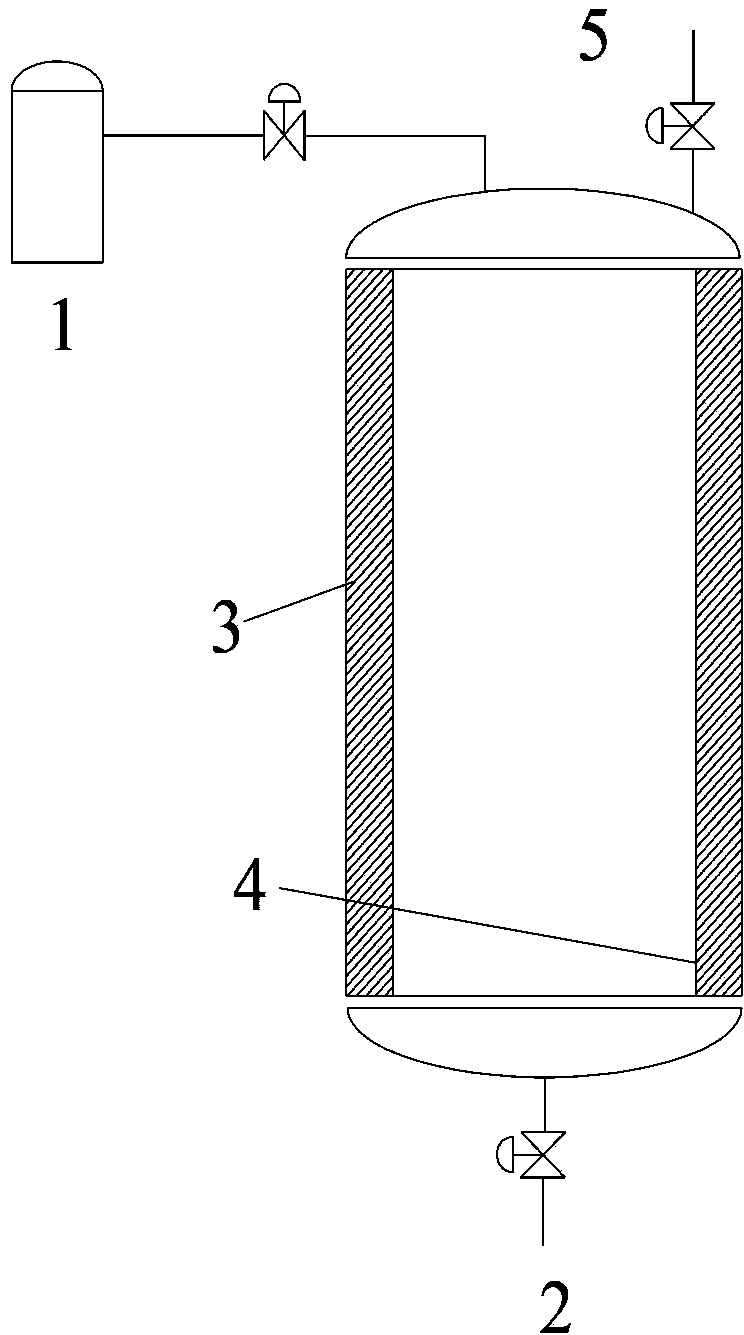
Figure 1 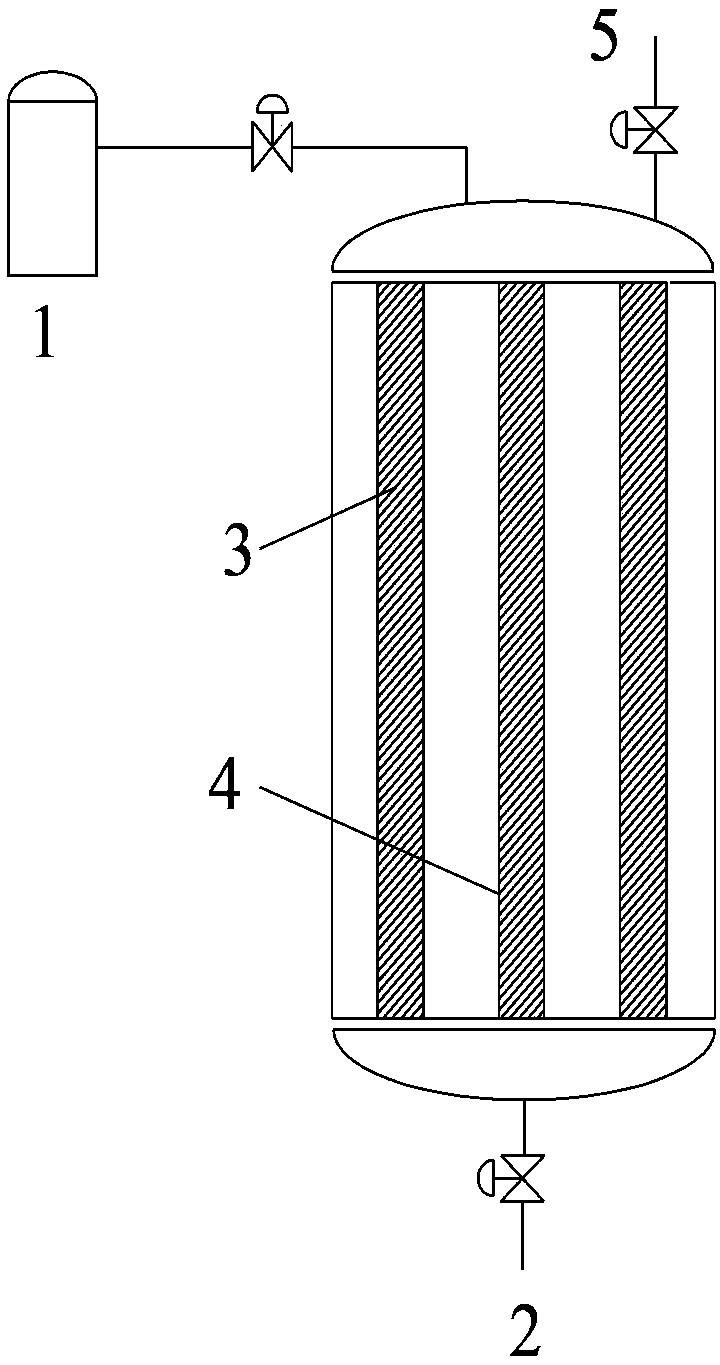
Figure 2
Abstract
Description
technical field
[0001] The invention belongs to the technical field of fermentation engineering, and in particular relates to a method and a device for applying an adsorption carrier to acetone-butanol fermentation. Background technique
[0002] Butanol is an important organic chemical raw material, which can be used as a solvent for paints and surface coatings, and as a new type of biofuel with great potential. Compared with methanol and ethanol, butanol has good water insolubility and low vapor High pressure, high calorific value, etc., can achieve a higher mixing ratio with gasoline, and is more suitable for use in existing fuel supply and distribution systems.
[0003] Since the production of butanol by fermentation has the characteristics of renewable raw materials and no dependence on petroleum, the production of butanol by fermentation has gradually become one of the research hotspots of bioenergy. In recent years, bio-butanol production facilities have increased yea...
Examples
Embodiment 1
[0024] Using 80g / L glucose as the substrate and steam explosion-delignification pretreated corn stalks as the carrier, the culture medium was sterilized, inoculated with Clostridium acetobutylicum ATCC 824, and fermented for 72 hours to fully utilize the glucose. After fermentation, the discharge port is opened to obtain a fermentation liquid. Compared with the control liquid fermentation experiment, the total solvent production was increased by 57% in the adsorption carrier fermentation.
Embodiment 2
[0026] With 54g / L xylose as the substrate and non-woven fabric as the carrier, after the medium was sterilized, Clostridium acetobutylicum ATCC 824 was inoculated and fermented for 72 hours to fully utilize xylose. After fermentation, the discharge port is opened to separate the fermentation broth and the adsorption carrier. Compared with the control liquid fermentation experiment, the total solvent production was increased by 27% in the adsorption carrier fermentation.
Embodiment 3
[0028] With 60g / L glucose as the substrate and polyurethane foam as the carrier, Clostridium acetobutylicum ATCC 824 was inoculated after sterilization and fermented for 72 hours to fully utilize glucose. After fermentation, the discharge port is opened to obtain a fermentation liquid. Compared with the control liquid fermentation experiment, the total solvent production was increased by 39% in the adsorption carrier fermentation.