
Adaptive adjustment method of steel production
An adaptive adjustment and steel technology, applied in data processing applications, instruments, manufacturing computing systems, etc., can solve the problems of not being able to achieve a good match between the production rhythm and the demand rhythm, and achieve the effect of full utilization
Patent Information
- Authority / Receiving Office
- CN · China
- Patent Type
- Applications(China)
- Current Assignee / Owner
- Publication Date
- 2013-06-05
- Estimated Expiration
- Not applicable · inactive patent
Smart Images
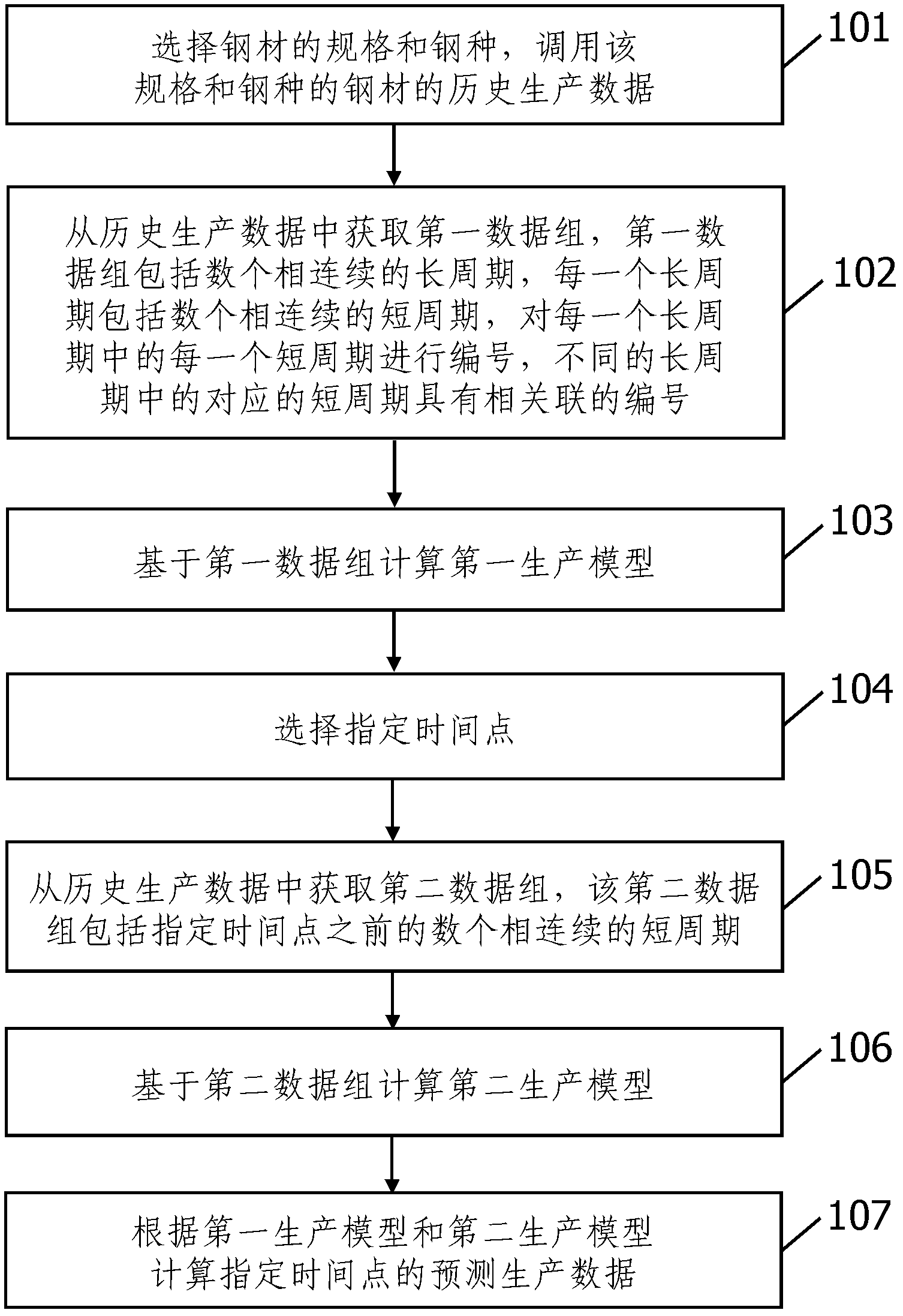
Figure 1 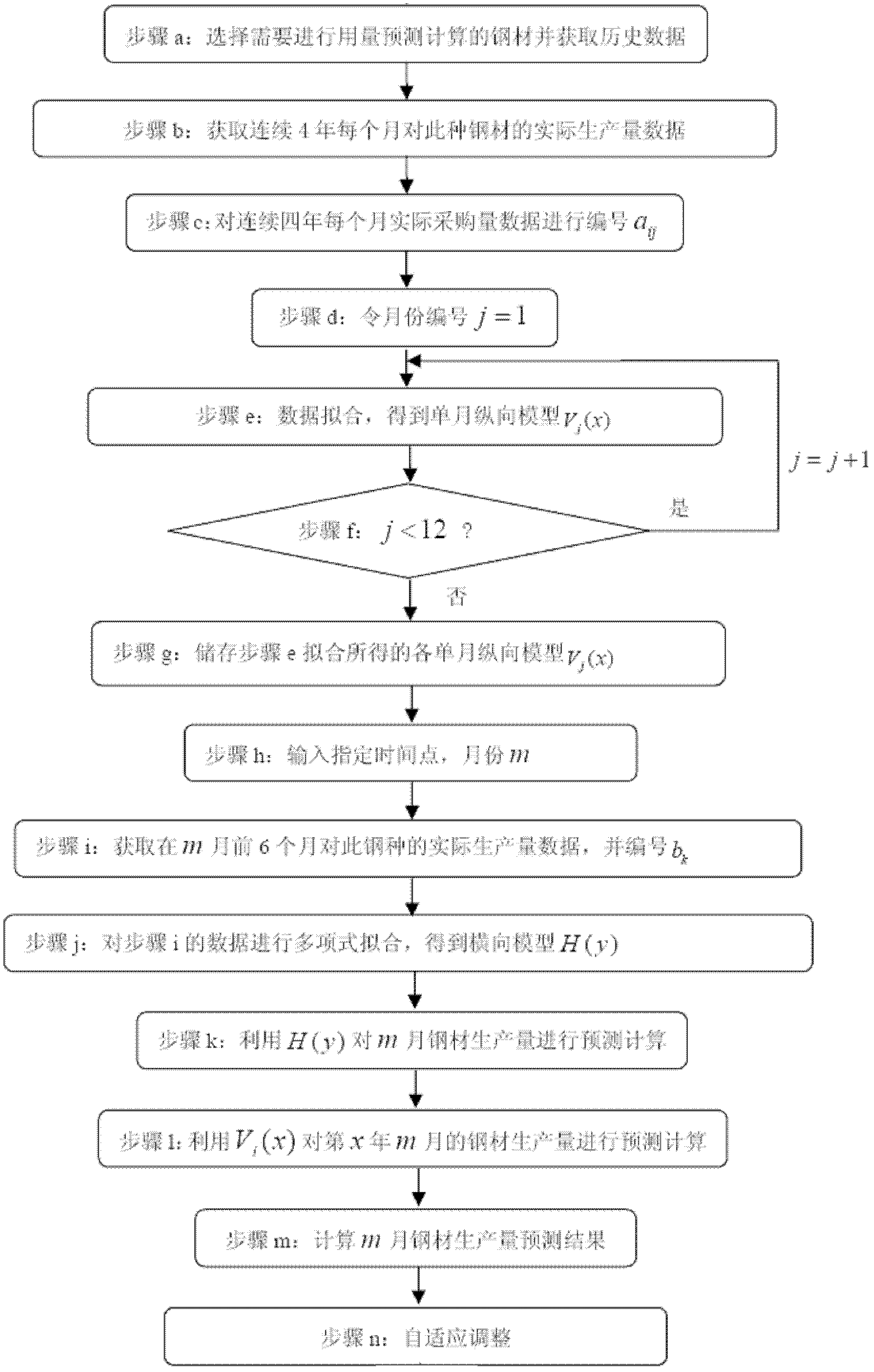
Figure 2
Abstract
Description
technical field
[0001] The invention relates to the technical field of automatic steel production, in particular to an adaptive adjustment method for steel production. Background technique
[0002] The automatic continuous production of steel is an important factor to improve the production efficiency of steel enterprises. The production speed of steel is inseparable from the downstream demand of iron and steel enterprises. When the demand of downstream enterprises is strong, they need to increase production to meet the demand, and when the demand is insufficient, they need to reduce production in time to reduce inventory pressure.
[0003] Taking steel for automobiles as an example, with the rapid development of the automobile consumer market, the demand for steel by automobile manufacturers continues to increase. The competition for the market share of automobile sheets among various iron and steel production enterprises is also more intense. While continuously improving ...
Examples
no. 1 example
[0083] In step a), the hot-dip galvanized sheet with a specification of 0.70mm×1170mm that needs to be predicted is selected, and the historical production data of the hot-dip galvanized sheet with a specification of 0.70mm×1170mm is obtained.
[0084] In step b), the actual production data of this steel product for each month in 4 consecutive years (2008-2011) including 2011 is obtained.
[0085] In step c), number the actual purchase volume data for each month of the 4 years a ij , where a 11 = 1460, a 12 = 1580, a 13 = 1980, ...; a 21 =1550,a 22 = 1610, a 23 = 1970, ...; a 31 =1430,a 32 = 1520, a 33 = 1830, ...; a 41 = 1410, a 42 = 1670, a 43=1870, . . . Among them, i=1, 2, 3, 4, representing the first year (2008) and the second year (2009); j=1, 2, ..., 12, representing 1 to 12 months in each year respectively) .
[0086] In step d), let j=1.
[0087] In step e), using a 11 、a 21 、a 31 、a 41 These 4 data are subjected to polynomial fitting to obtain the ...
no. 2 example
[0098] In step a), the hot-dip galvanized sheet with a specification of 0.70mm×1580mm that needs to be forecasted is selected, and the historical production data of the hot-dip galvanized sheet with a specification of 0.70mm×1580mm is obtained.
[0099] In step b), the actual production data of this steel product for each month in 4 consecutive years (2008-2011) including 2011 is obtained.
[0100] In step c), number the actual purchase volume data for each month of the 4 years a ij , where a 11 =817,a 12 =845,a 13 =885,...;a 21 =822,a 22 =850,a 23 = 896, ...; a 31 =840,a 32 =864,a 33 = 904, ...; a 41 =853,a 42 =869,a 43 =912, . . . Among them, i=1, 2, 3, 4, representing the first year (2008) and the second year (2009); j=1, 2, ..., 12, representing 1 to 12 months in each year respectively) .
[0101] In step d), let j=1.
[0102] In step e), using a 11 、a 21 、a 31 、a 41 These 4 data are subjected to polynomial fitting to obtain the single-month longitudinal...
no. 3 example
[0113] In step a), the hot-dip galvanized sheet with a specification of 0.70 mm × 1600 mm is selected, and the historical production data of the hot-dip galvanized sheet with a specification of 0.70 mm × 1600 mm is obtained.
[0114] In step b), the actual production data of this steel product for each month in 4 consecutive years (2008-2011) including 2011 is obtained.
[0115] In step c), number the actual purchase volume data for each month of the 4 years a ij , where a 11 =225,a 12 =232,a 13 = 263, ...; a 21 =228,a 22 =235,a 23 = 259, ...; a 31 =232,a 32 =245,a 33 = 271, ...; a 41 =231,a 42 =238,a 43 =269, . . . Among them, i=1, 2, 3, 4, representing the first year (2008) and the second year (2009); j=1, 2, ..., 12, representing 1 to 12 months in each year respectively) .
[0116] In step d), let j=1.
[0117] In step e), using a 11 、a 21 、a 31 、a 41 These 4 data are subjected to polynomial fitting to obtain the single-month longitudinal model V 1 (x)=-...