
Solar cell module EL testing device and method under visible light
A solar cell and visible light technology, applied in photovoltaic power generation, electrical components, photovoltaic system monitoring and other directions, can solve the problems of inability to carry out outdoor testing, inconvenience to carry, complex equipment, etc., to achieve low cost, convenient outdoor use, and reduce equipment costs Effect
Patent Information
- Authority / Receiving Office
- CN · China
- Patent Type
- Applications(China)
- Current Assignee / Owner
- Publication Date
- 2014-11-05
- Estimated Expiration
- Not applicable · inactive patent
Smart Images
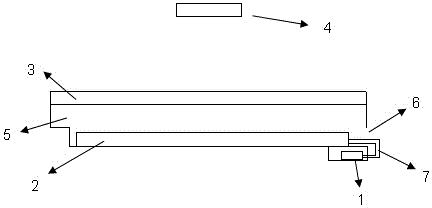
Figure 1 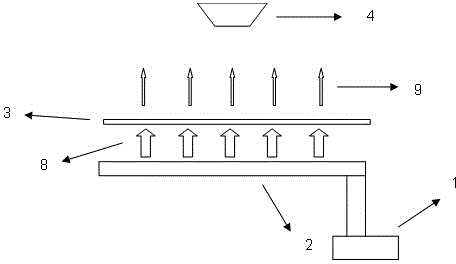
Figure 2
Abstract
Description
technical field
[0001] The invention relates to an EL test device and a test method for solar cell components under visible light, and belongs to the field of solar cell component detection. Background technique
[0002] During the production and use of solar cell modules, defects such as splits, low-efficiency sheets, and local defects in cells often occur. At present, the detection of this kind of defect is mainly based on the electroluminescence principle (EL phenomenon) of solar cells, and the defect type is detected according to the difference in luminous brightness of the cells in the solar cell module after being energized. However, since the wavelength range of electroluminescence of solar cell modules is 800nm to 1300nm, it needs to be equipped with a professional CCD infrared camera for shooting and a special box to form a darkroom. The overall structure is complex, the manufacturing cost is high, and it is not convenient to carry it outdoors. use. The inventio...
Examples
Embodiment
[0029] At one end of the cavity 5 for placing the solar cell module 2, there is a cavity inlet 6 for entering and exiting the solar cell module 2; the transparent material 3 containing the up-conversion material is fixed above the cavity by means of a mounting groove, and the power supply 1 It is fixed under the cavity and connected to the solar cell module through the wire 7. When the power supply 1 applies the corresponding voltage according to the specific model of the solar cell module 2, the solar cell module 2 electroluminescently generates infrared light of 800nm─1300nm. The transparent material 3 converts the emitted infrared light 8 into visible light 9, and uses the camera 4 to take pictures for detection, and detects the defect type according to the difference in luminance.
[0030] The up-conversion material is a light-wave conversion material that can absorb 800nm-1300nm infrared light and emit visible light, preferably an up-conversion luminescent material doped w...