
Fast Selection Method of HEVC Prediction Mode Based on Spatial Correlation
A prediction mode and fast selection technology, applied in the field of video processing, can solve problems such as time needs to be improved, encoding speed needs to be improved, and methods are complicated, and achieve the effect of accurate mode selection results, reducing the number of candidates, and reducing encoding time.
Patent Information
- Authority / Receiving Office
- CN · China
- Patent Type
- Patents(China)
- Current Assignee / Owner
- Publication Date
- 2017-09-26
Smart Images
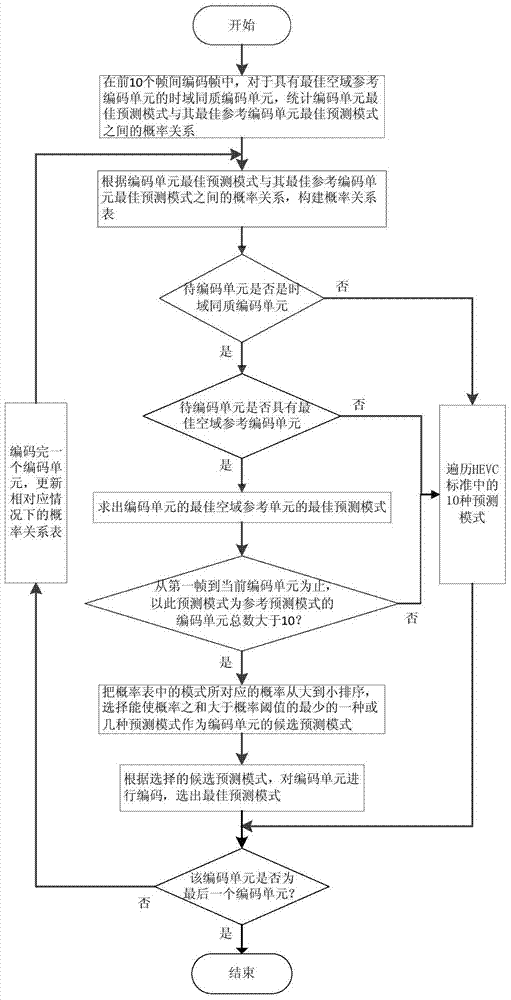
Figure 1 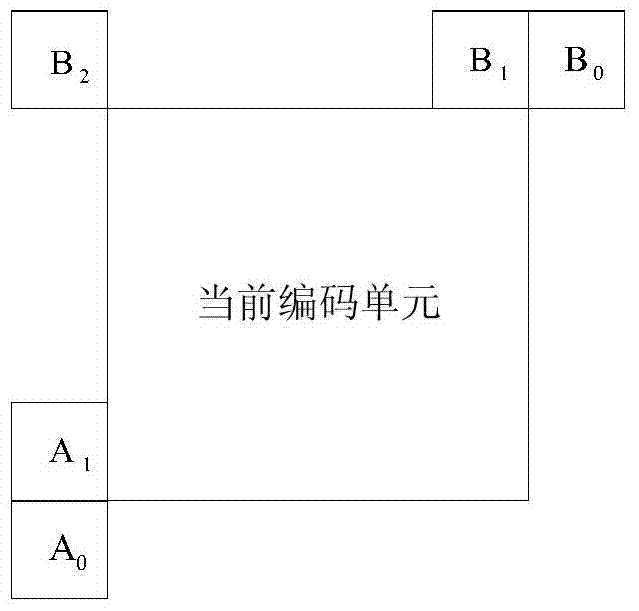
Figure 2 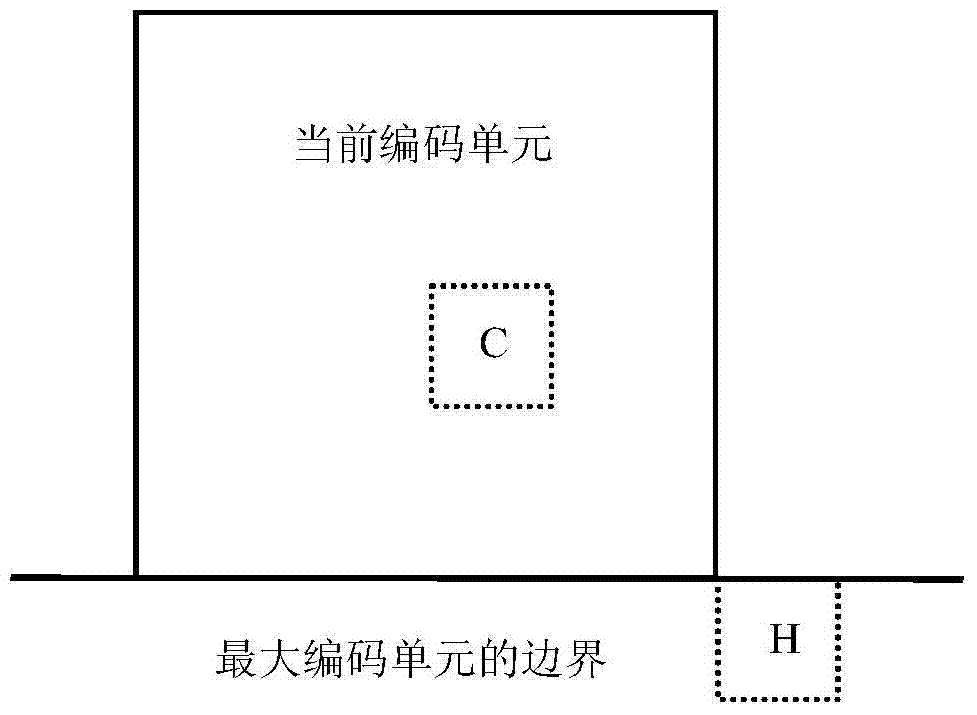
Figure 3
Abstract
Description
technical field
[0001] The invention belongs to the field of video processing, and in particular relates to a method for quickly selecting a prediction mode, which can be used in the process of selecting a prediction mode for an inter-frame coding unit in the high-efficiency video coding HEVC standard. Background technique
[0002] With the development and maturity of high-definition video technology, a large number of high-definition videos have emerged in people's daily life. However, the large amount of data brought by high resolution makes high-definition video more demanding on the compression performance of video codec algorithms. The previous video codec standards can no longer meet the compression performance requirements of high-definition video, and the next generation of video compression coding standards has emerged. At the first meeting of the joint video coding group JCT-VC held in Dresden, Germany in April 2010, the name of the new generation video coding sta...
Examples
Embodiment Construction
[0040] The present invention will be further described in detail with reference to the accompanying drawings and embodiments. This embodiment is carried out on the premise of the technical solution of the present invention, and detailed implementation and specific operation process are given, but the protection scope of the present invention is not limited to the following embodiments.
[0041] refer to figure 1 , the specific implementation steps of the present invention are as follows:
[0042] Step 1: Input a video sequence, and calculate the probability relationship between the best prediction mode of the CU in the first 10 inter-coded frames and the best prediction mode of the best spatial reference CU.
[0043] 1a) Judging whether the coding unit is a homogeneous coding unit in the time domain:
[0044] There are five resolutions of encoded video sequences: 416×240, 832×480, 1280×720, 1920×1080, and 2560×1600. The value range of the quantization parameter QP is [20,41]...