
A kind of preparation method of tin-doped indium phosphide quantum dot sensitized solar cell
A quantum dot sensitization and solar cell technology, which is applied in the field of preparation of tin-doped indium phosphide quantum dot sensitized solar cells, can solve the problem of low short-circuit current, achieve enhanced short-circuit current, broad application prospects, and low cost Effect
Patent Information
- Authority / Receiving Office
- CN · China
- Patent Type
- Patents(China)
- Current Assignee / Owner
- Publication Date
- 2017-04-19
- Estimated Expiration
- Not applicable · inactive patent
Smart Images
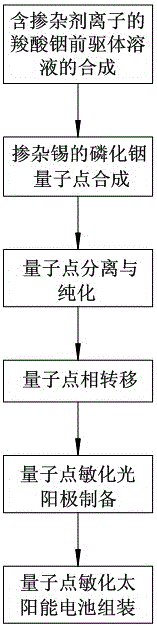
Figure 1 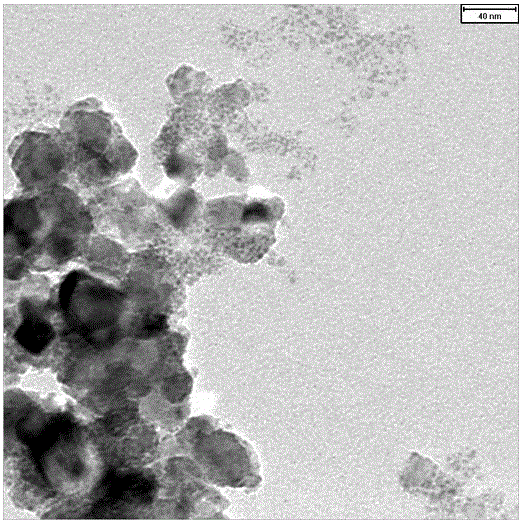
Figure 2 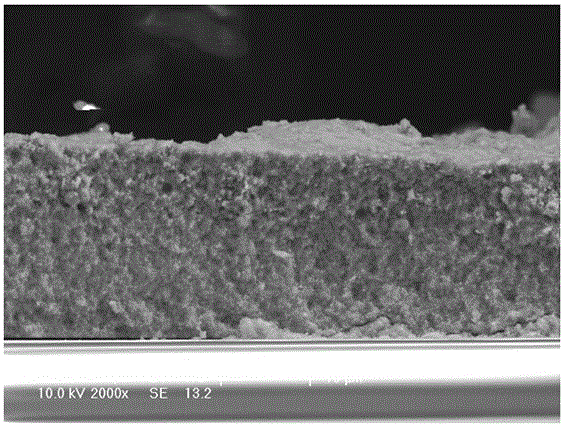
Figure 3
Abstract
Description
technical field
[0001] The invention relates to a quantum dot sensitized solar cell, in particular to a preparation method of a tin-doped indium phosphide quantum dot sensitized solar cell. Background technique
[0002] With the decrease of earth's fossil energy, the increasing severity of the greenhouse effect and the increasing demand of human beings for energy, the research of new materials, new technologies and new methods for "green" new energy is becoming more and more important. Efficient use of solar power generation is one of the goals pursued by human beings, especially solar photovoltaic power generation. At present, the laboratory efficiency of solar cells based on monocrystalline silicon and polycrystalline silicon is close to its theoretical upper limit. The market is mainly based on crystalline silicon solar cells. Thin-film batteries are also being promoted and used. The highest laboratory efficiency of these thin-film batteries has reached more than 20%, bu...
Examples
Embodiment
[0044]The invention provides a method for preparing a tin-doped indium phosphide quantum dot sensitized solar cell. The method is to dope tin (Sn) ions into indium phosphide (InP) quantum dots to form Sn:InP quantum dots As a sensitizer, it is then assembled into quantum dot-sensitized solar cells. like figure 1 As shown, the present invention mainly consists of the synthesis of indium carboxylate precursor solution of dopant ions, the synthesis of indium phosphide quantum dots doped with tin, the separation and purification of quantum dots, the phase transfer of quantum dots, and the preparation of quantum dot sensitized photoanodes , Quantum dot sensitized solar cell assembly consists of several major processes.
[0045] 1. Synthesis of indium carboxylate precursor solution of dopant ions
[0046] Will Sn 2+ 、In 3+ Mix with long-chain alkyl acid (one of dodecanoic acid to octadecanoic acid in this embodiment) according to the molar ratio of 1:10:30, and add it to 5-10ml ...