

A kind of high energy density supercapacitor and preparation method thereof
A supercapacitor, high energy density technology, applied in the manufacture of hybrid/electric double layer capacitors, hybrid capacitor electrodes, etc., can solve the problem of insufficient utilization of the electrolyte voltage window and high specific capacity of the electrode material, and greater impact on the cycle life of the device. problems, to achieve the effects of increased energy density, ultra-long cycle life, and simplified operating procedures
Patent Information
- Authority / Receiving Office
- CN · China
- Patent Type
- Patents(China)
- Current Assignee / Owner
- Publication Date
- 2018-06-26
Smart Images
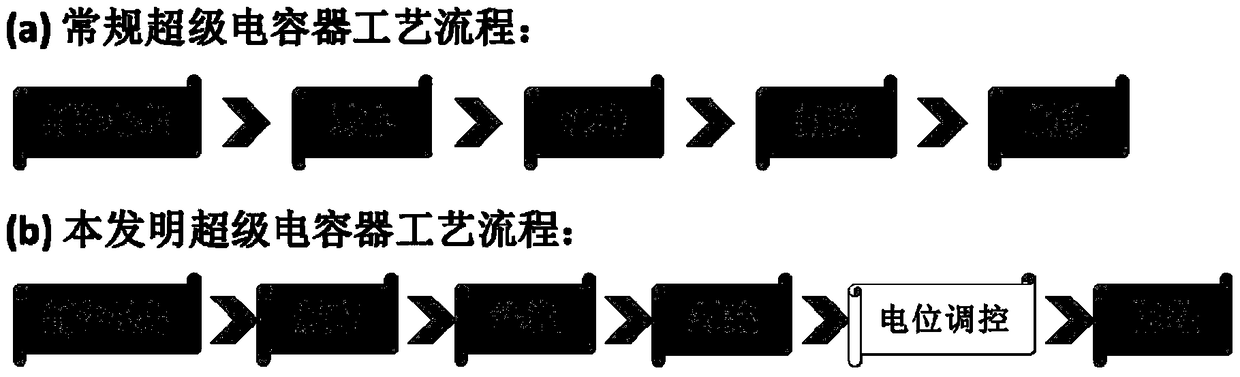
Figure 1 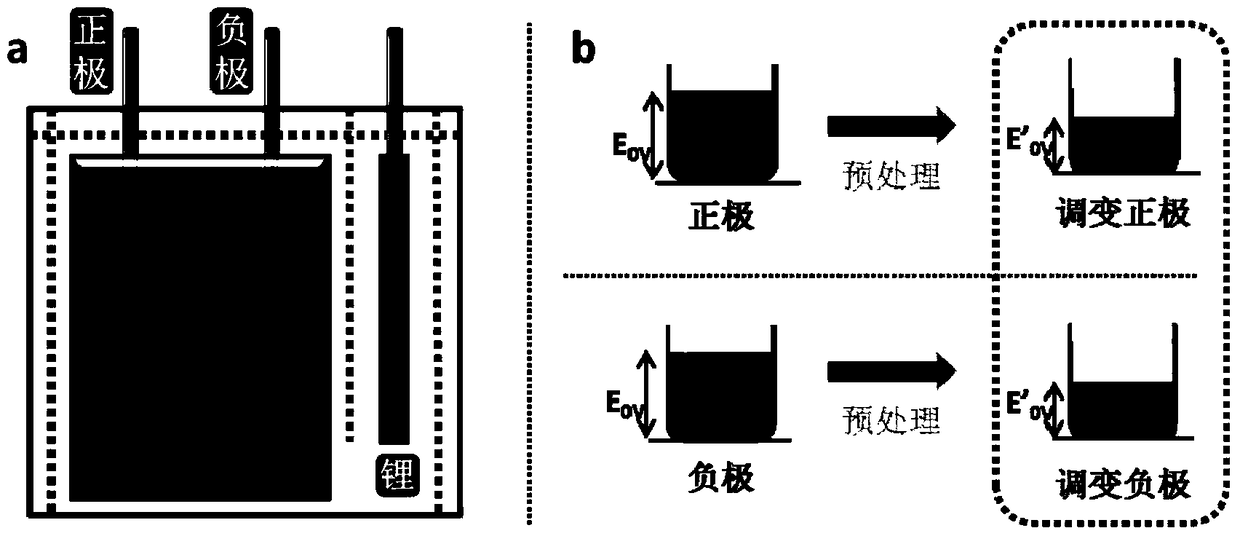
Figure 2 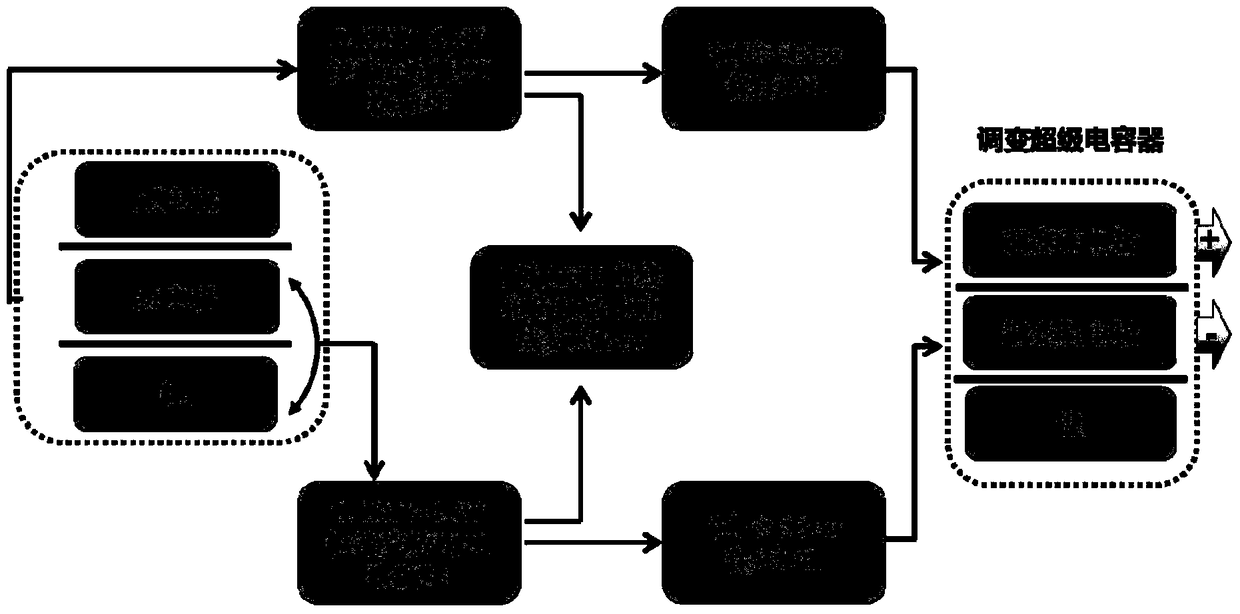
Figure 3
Abstract
Description
technical field
[0001] The invention relates to the technical field of supercapacitors for electrochemical energy storage, in particular to a high energy density supercapacitor and a preparation method thereof. Background technique
[0002] Supercapacitors, also known as electrochemical capacitors, rely on the adsorption of double-layer ions on the electrode surface or redox reactions to store charges, and their performance is between that of physical capacitors and secondary batteries. Supercapacitors not only have an energy density much higher than that of physical capacitors, they can charge and discharge within seconds, can charge and discharge with high power / current, have a cycle life of tens of thousands of times, and have a charge and discharge efficiency close to 100%. It can be used in the environment (-40 ~ 70 ℃) and has high safety and long-term maintenance-free characteristics, which are incomparable to secondary batteries. These superior properties make superc...
Examples
Embodiment 1
[0038] Regulate graphene as electrode material (oxygen content 6.5at%, specific surface area 412m 2 / g) and with LiPF 6 The ethylene carbonate / dimethyl carbonate solution is the process of the supercapacitor system of the electrolyte as follows:
[0039] Graphene materials are used to make electrode sheets, and LiPF 6 Ethylene carbonate / dimethyl carbonate solution as electrolyte (where LiPF 6 The concentration is 1mol / L, the volume ratio of ethylene carbonate to dimethyl carbonate is 1:1), and it is used as positive and negative electrodes and lithium foil electrodes to assemble supercapacitor devices. The upper limit of the available potential window of the electrolyte is between 4.3V and 0.001V vs. Li, so that the positive and negative electrodes are charged and discharged at a constant current of 175mA / g with respect to the lithium electrode for 20 cycles respectively. Obtain the intersection point E'ov of the positive electrode discharge curve and the negative electrode...
Embodiment 2
[0044] Multi-walled carbon nanotubes (diameter2 / g, oxygen content 4.5at%) made into electrode sheet, with LiPF 6 Ethylene carbonate / dimethyl carbonate solution as electrolyte (where LiPF 6 The concentration is 1mol / L, the volume ratio of ethylene carbonate to dimethyl carbonate is 1:1), and it is used as positive and negative electrodes and lithium foil electrodes to assemble supercapacitor devices. The upper limit of the available potential window of the electrolyte is between 4.3V and 0.001V vs. Li, so that the positive and negative electrodes are charged and discharged at a constant current of 175mA / g with respect to the lithium electrode for 20 cycles respectively. Obtain the intersection point E'ov of the positive electrode discharge curve and the negative electrode charge curve. Then charge (discharge) the positive and negative electrodes to E’ov constant voltage for 12 hours at the same time. A modulated supercapacitor device is obtained.
[0045] Such as Image 6 ...
Embodiment 3
[0048] Single-walled carbon nanotubes (diameter2 / g, oxygen content 6.5at%) made into electrode sheet, with LiPF 6 Ethylene carbonate / dimethyl carbonate solution as electrolyte (where LiPF 6 The concentration is 1mol / L, the volume ratio of ethylene carbonate to dimethyl carbonate is 1:1), and it is used as positive and negative electrodes and lithium foil electrodes to assemble supercapacitor devices. The upper limit of the available potential window of the electrolyte is between 4.3V and 0.001V vs. Li, so that the positive and negative electrodes are charged and discharged at a constant current of 175mA / g with respect to the lithium electrode for 20 cycles respectively. Obtain the intersection point E'ov of the positive electrode discharge curve and the negative electrode charge curve. Then charge (discharge) the positive and negative electrodes to E’ov constant voltage for 12 hours at the same time. A modulated supercapacitor device is obtained.
[0049] Such as Figure ...