
Washing machine
A washing machine and machine body technology, applied in the field of washing machines, can solve the problems of space waste, cost increase, and manufacturing process complexity, etc., and achieve the effect of improving the dissolution rate and cleaning
Patent Information
- Authority / Receiving Office
- CN · China
- Current Assignee / Owner
- Publication Date
- 2016-10-26
Smart Images
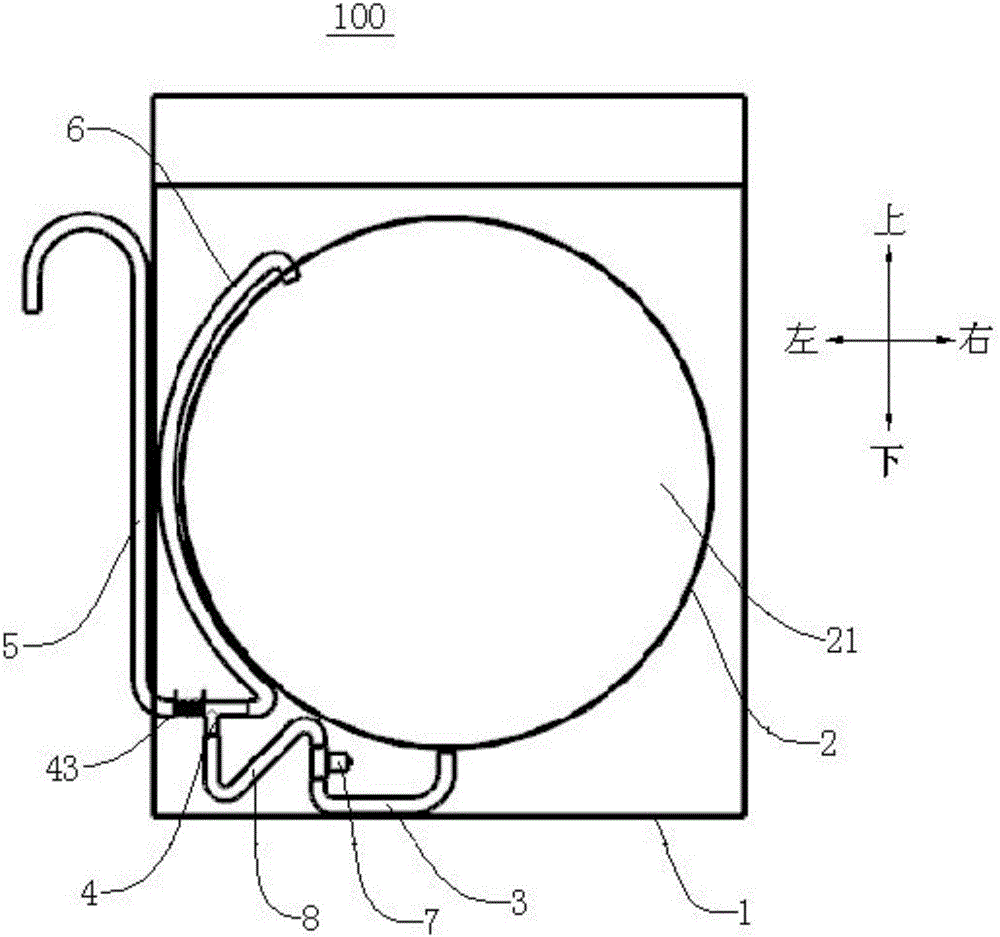
Figure 1 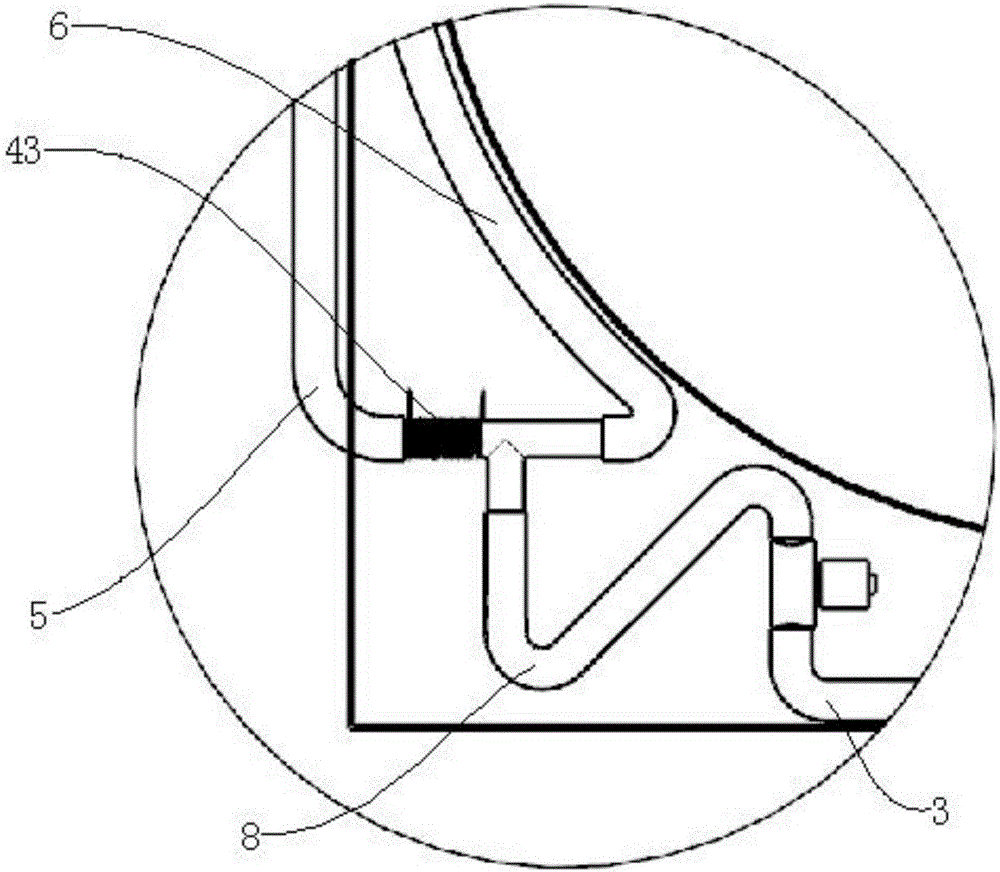
Figure 2 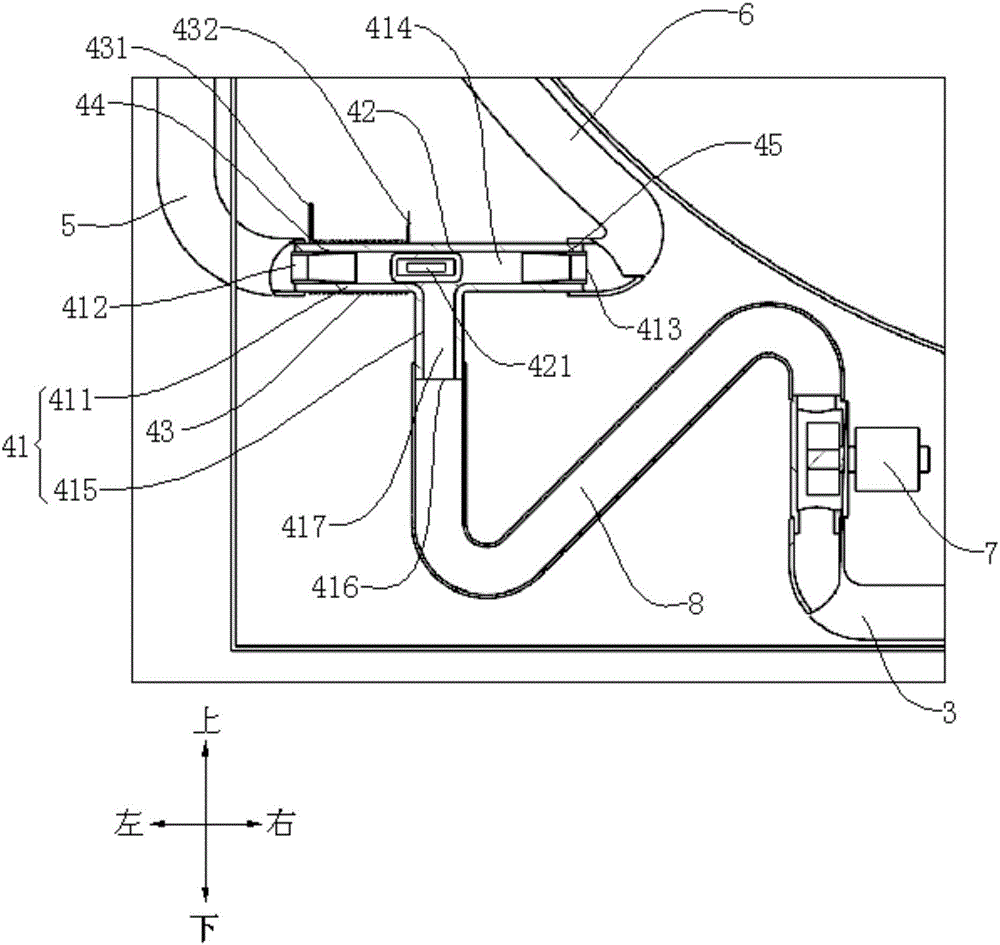
Figure 3
Abstract
Description
technical field
[0001] The invention relates to the field of household appliances, in particular to a washing machine. Background technique
[0002] With the development of washing machine technology, people have higher and higher requirements for washing machines, and the washing performance of clothes is also becoming more and more demanding. And the water between the inner and outer barrels of the washing machine often cannot be effectively utilized. The washing machine in the related art adds a separate pump, which is specially used to pump the water between the inner and outer tubs to the top of the tub, and then sprays it back into the inner tub. Through the circulation of water, on the one hand, the dissolution rate of the detergent is increased. On the other hand, the utilization rate of the water in the barrel is increased, so as to save water and improve the cleaning performance. However, adding a pump body means an increase in cost, a waste of space and a compli...
Examples
Embodiment Construction
[0032] Embodiments of the present invention are described in detail below, examples of which are shown in the drawings, wherein the same or similar reference numerals designate the same or similar elements or elements having the same or similar functions throughout. The embodiments described below by referring to the figures are exemplary only for explaining the present invention and should not be construed as limiting the present invention.
[0033] In describing the present invention, it should be understood that the terms "center", "longitudinal", "transverse", "length", "width", "thickness", "upper", "lower", "front", " Back", "Left", "Right", "Vertical", "Horizontal", "Top", "Bottom", "Inner", "Outer", "Clockwise", "Counterclockwise", "Axial" , "radial", "circumferential" and other indicated orientations or positional relationships are based on the orientations or positional relationships shown in the drawings, which are only for the convenience of describing the present ...