
Friction-mild steel composite damper
A composite, damper technology, applied in the field of dampers, can solve problems such as difficulty in determining the sliding friction force, and achieve the effect of protecting the safety of the structure, reducing the dynamic response and the accumulation of damage
Patent Information
- Authority / Receiving Office
- CN · China
- Patent Type
- Applications(China)
- Current Assignee / Owner
- Publication Date
- 2016-11-09
Smart Images
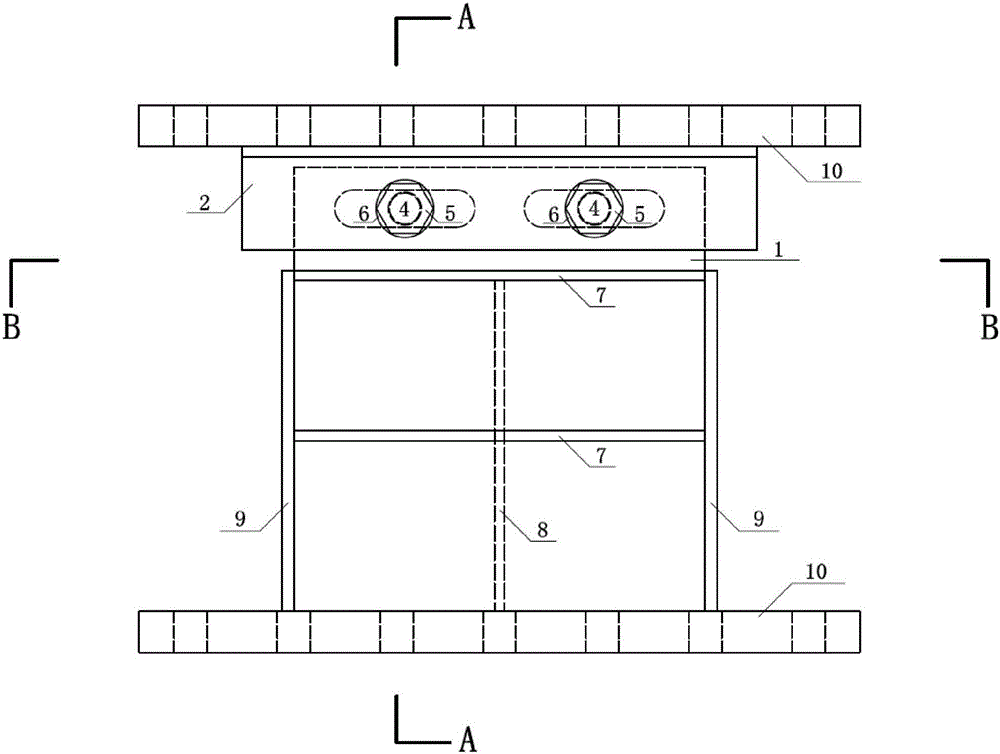
Figure 1 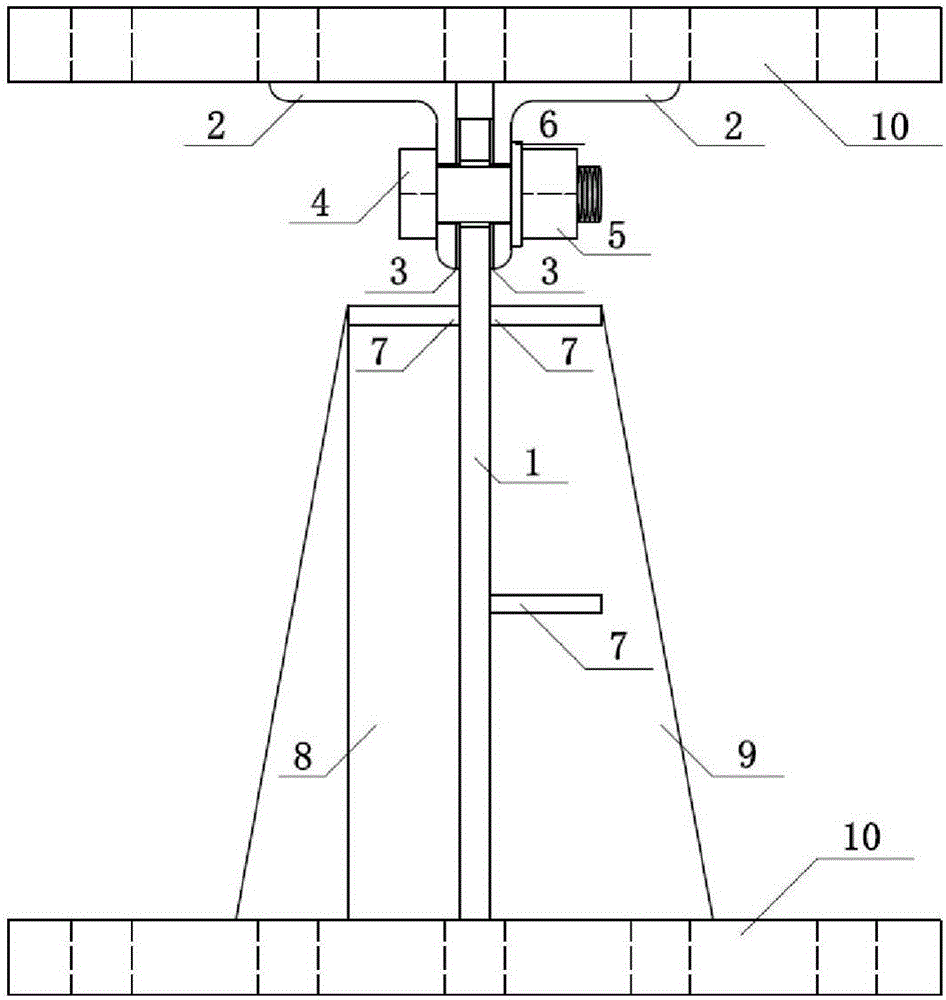
Figure 2 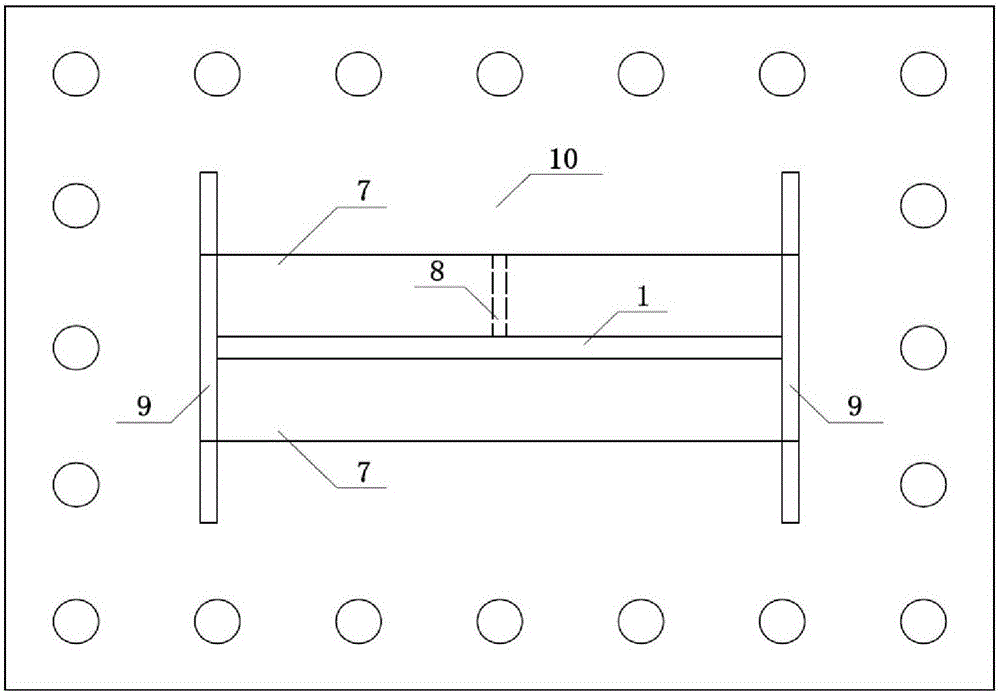
Figure 3
Abstract
Description
technical field
[0001] The invention relates to a damper, more specifically, to a friction-mild steel composite damper. Background technique
[0002] The traditional seismic design method is based on ensuring that the engineering structure has a certain strength, stiffness and ductility to resist the earthquake. However, due to the strong randomness of the time, location and intensity of earthquakes, the response state of engineering structures may fluctuate greatly, making it difficult to avoid entering a complex nonlinear stress state. Under the action of uncertain earthquake, the structure designed according to the traditional method, because its anti-seismic performance does not have the ability of self-regulation and control, may cause serious damage or even collapse due to failure to meet the safety requirements, resulting in casualties and economic losses.
[0003] In order to further improve structural performance on the basis of traditional seismic design methods, ...
Examples
Embodiment 1
[0038] Such as figure 1 , figure 2 , image 3 As shown, the present invention includes a shearing energy-dissipating steel plate 1, an angle steel 2, and a friction plate 3. An angle steel 2 is installed on both sides of one end of the shearing energy-dissipating steel plate 1, and one side of the vertical direction of the angle steel 2 is connected to the shearing energy-dissipating steel plate 1. A friction plate 3 is installed between them, and the shearing energy-dissipating steel plate 1, the angle steel 2 and the friction plate 3 are connected and pre-tightened by the connection adjustment mechanism, thereby changing the sliding friction between the friction plate 3 and the shearing energy-dissipating steel plate 1 force.
[0039] In this embodiment, the connection adjustment mechanism includes a bolt 4, a nut 5, and a washer 6. For example, a high-strength bolt connection pair is formed by using a large hexagon head bolt 4, a large hexagon nut 5, and a washer 6, and ...
Embodiment 2
[0055] Such as Figure 10 As shown, in this embodiment, two groove-shaped holes are added on the shear energy-dissipating steel plate 1, and at the same time, a row of mounting holes is added on the angle steel 2 and the friction plate 3. Correspondingly, the gap between the three It is connected together by four sets of high-strength bolts.
[0056] Other parts are identical with embodiment 1.
[0057] The working principle of embodiment 2 is basically the same as that of embodiment 1. The difference is that the number of friction parts in embodiment 2 is increased compared with that of embodiment 1. Under the same loading conditions, the sliding friction force provided by embodiment 2 is theoretically higher than that of the actual embodiment. Example 1 is doubled. Therefore, Example 2 has stronger friction energy dissipation capacity than Example 1.