
Shock prevention architecture bridge
A technology for earthquake-proof buildings and bridges, which can be used in bridges, buildings, bridge parts, etc., and can solve problems such as insufficient safety and poor stability.
Patent Information
- Authority / Receiving Office
- CN · China
- Patent Type
- Applications(China)
- Current Assignee / Owner
- Publication Date
- 2019-07-26
- Estimated Expiration
- Not applicable · inactive patent
Smart Images
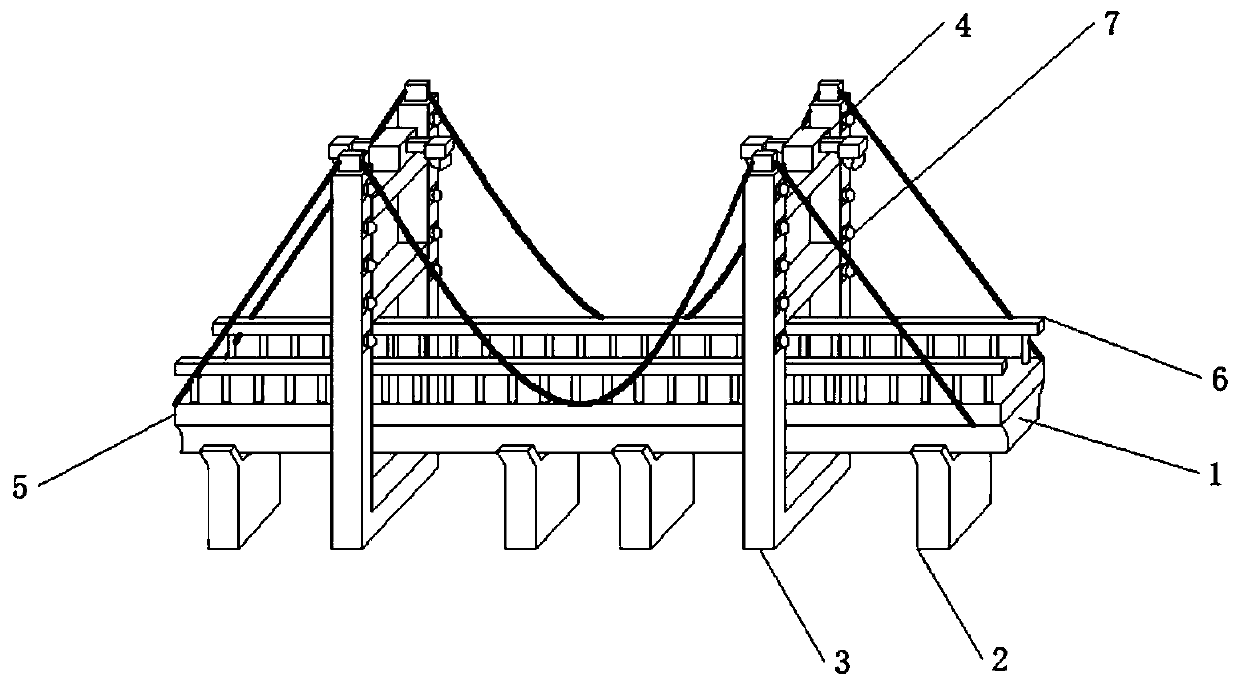
Figure 1 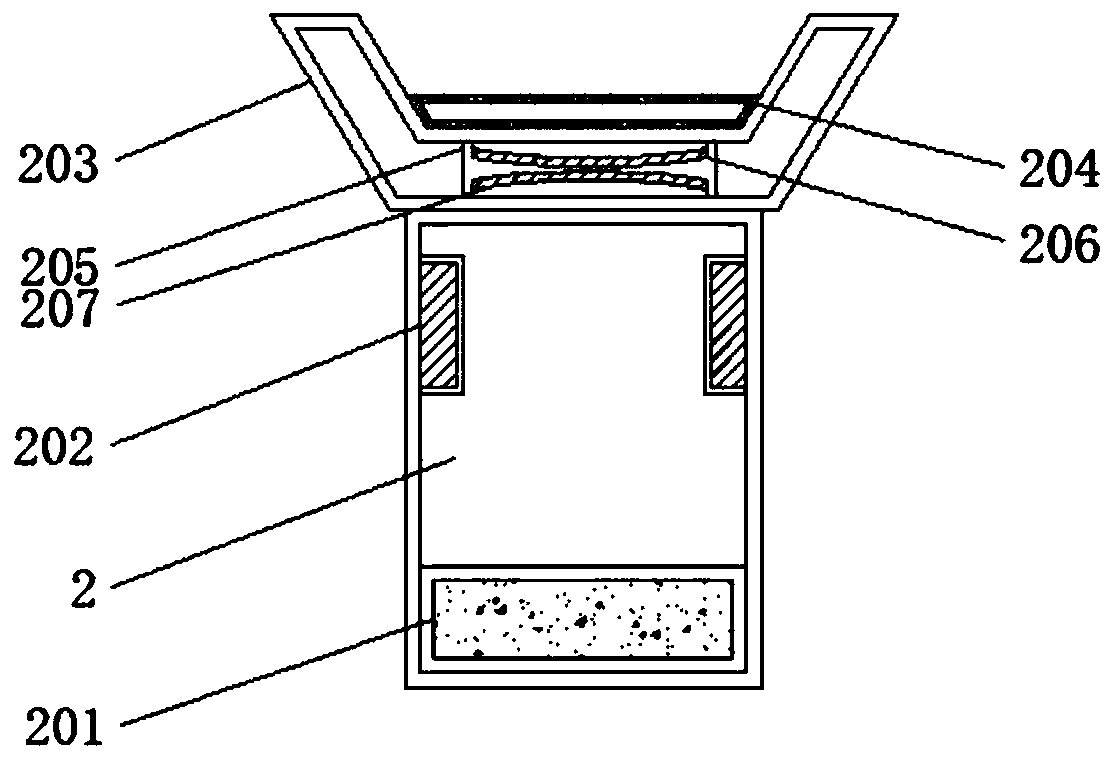
Figure 2 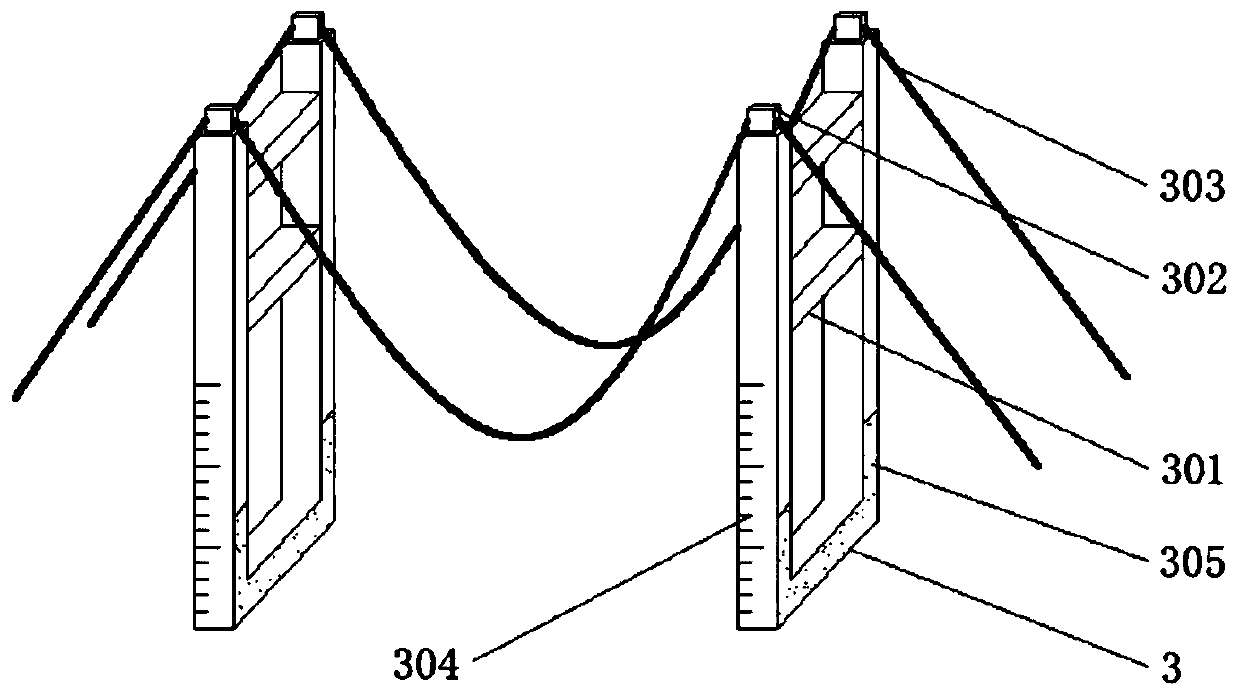
Figure 3
Abstract
Description
technical field
[0001] The invention belongs to the technical field of bridges, in particular to an earthquake-proof building bridge. Background technique
[0002] A bridge refers to a building erected on rivers, lakes and seas to enable the smooth passage of vehicles and pedestrians. It is called a bridge. A bridge is generally composed of a superstructure, a substructure, a support and ancillary structures. The superstructure, also known as the span structure, is the main structure for crossing obstacles.
[0003] The existing bridge piers only play a supporting role, and the safety is insufficient. In case of natural disasters, the bridge body is extremely easy to be damaged, or even collapsed to cause a major safety accident. Most of the existing bridges are provided at night by setting street lights on the bridge deck. To provide lighting for driving, a large number of construction street lights waste a lot of manpower and financial resources. The existing bridges are ...
Examples
Embodiment Construction
[0034] In order to make the object, technical solution and advantages of the present invention clearer, the present invention will be further described in detail below in conjunction with the accompanying drawings and embodiments. It should be understood that the specific embodiments described here are only used to explain the present invention, not to limit the present invention.
[0035]In the description of the present invention, it should be noted that the terms "center", "upper", "lower", "left", "right", "vertical", "horizontal", "inner", "outer" etc. The indicated orientation or positional relationship is based on the orientation or positional relationship shown in the drawings, and is only for the convenience of describing the present invention and simplifying the description, rather than indicating or implying that the referred device or element must have a specific orientation, or in a specific orientation. construction and operation, and therefore cannot be construe...