
Deformation control method in laser cladding of bimetal guide rail
A laser cladding and deformation control technology, applied in metal material coating process, coating and other directions, can solve problems such as warping deformation, achieve the effect of small deformation, reduce residual stress, and improve service life
Patent Information
- Authority / Receiving Office
- CN · China
- Patent Type
- Patents(China)
- Current Assignee / Owner
- Publication Date
- 2022-03-11
Smart Images
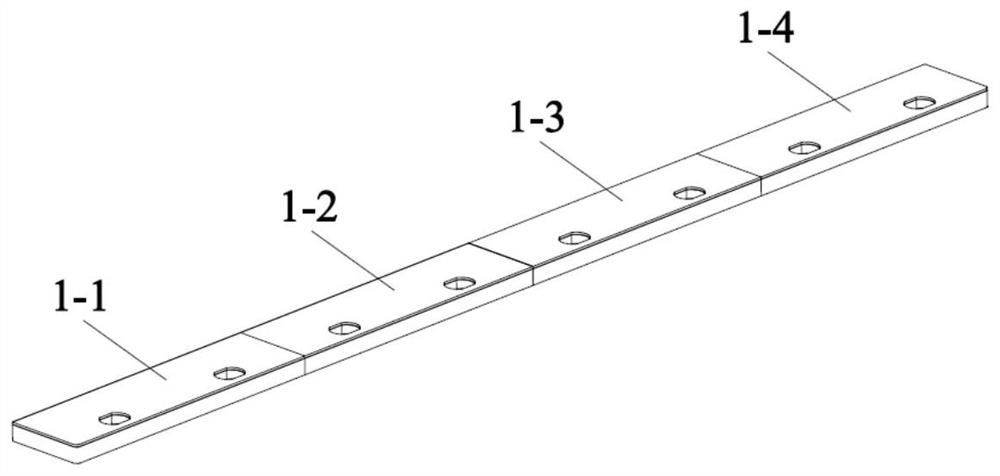
Figure 1 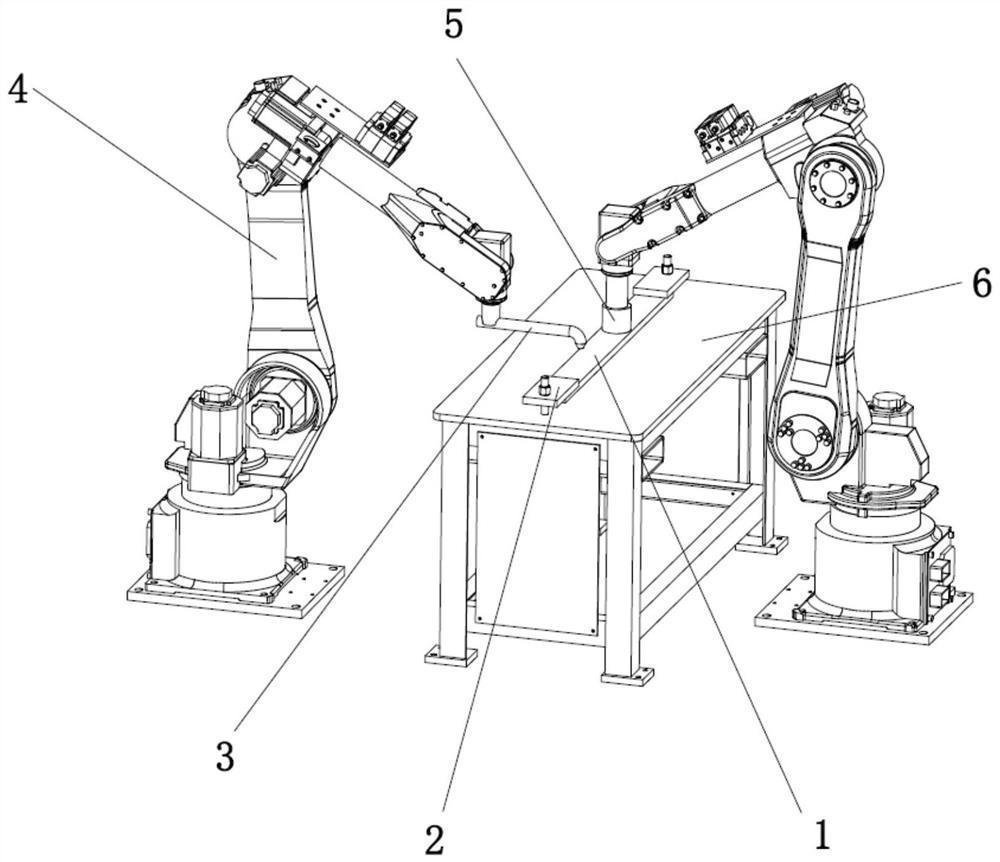
Figure 2 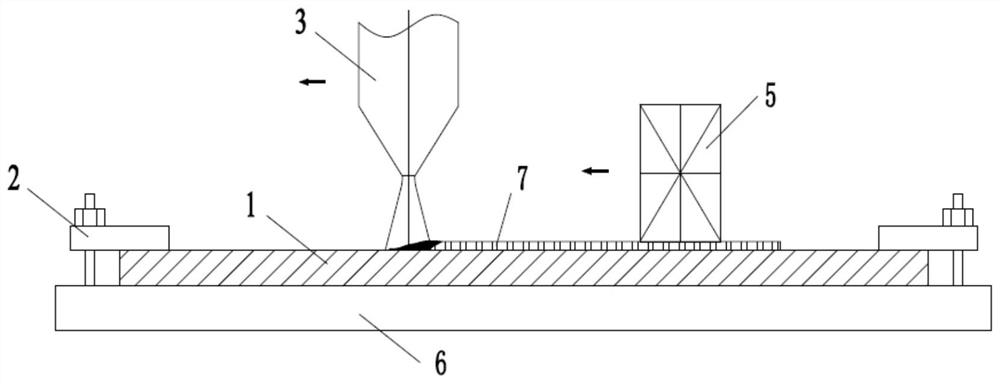
Figure 3
Abstract
Description
technical field
[0001] The invention relates to the technical field of ultra-high-speed laser cladding of drilling machinery, in particular to a method for controlling deformation in laser cladding of bimetal guide rails. Background technique
[0002] As one of the main components of the drilling rig, the guide rail is the benchmark and support point for the movement of the power head, and is a key component that affects the safe operation of the drilling rig. At present, the length of the wear-resistant guide rail manufactured by ultra-high-speed laser cladding technology is generally 600mm to 2000mm. Laser cladding metal wear-resistant layer directly on the 45# steel guide rail will cause slight warping deformation of the guide rail base. Reduce the thickness of the wear-resistant layer at the warped end. In the later use process, the guide rail will be scratched in the thin wear-resistant layer area, which will affect its normal use.
[0003] In view of the above problem...
Examples
Embodiment Construction
[0026] see Figure 1 to Figure 4 , shows the method for controlling deformation in laser cladding of bimetallic rails of the present invention.
[0027] The deformation control method in the laser cladding of the bimetal guide rail includes the following steps:
[0028] Step 1: Divide the long guide rail into multiple guide rail segments (the figure shows four guide rail segments of equal length, including the first guide rail segment 1-1, the second guide rail segment 1-2, the third guide rail segment 1-3 and The fourth guide rail section 1-4), in the specific setting, the shorter the length, the smaller the stress deformation during the cladding process, but the too short guide rail section will lead to complicated follow-up procedures and difficult to control during cladding, therefore, the appropriate The length limit is the guarantee for the smooth progress of the cladding process. In the present invention, the preferred length is 200mm-300mm;
[0029] Step 2: Fix the g...