
Air conditioner
A technology for air conditioners and indoor heat exchangers, which is applied in air conditioning systems, space heating and ventilation, compressors with reversible cycles, etc. , does not affect the cooling effect
Patent Information
- Authority / Receiving Office
- CN · China
- Patent Type
- Applications(China)
- Current Assignee / Owner
- Publication Date
- 2021-02-09
- Estimated Expiration
- Not applicable · inactive patent
Smart Images
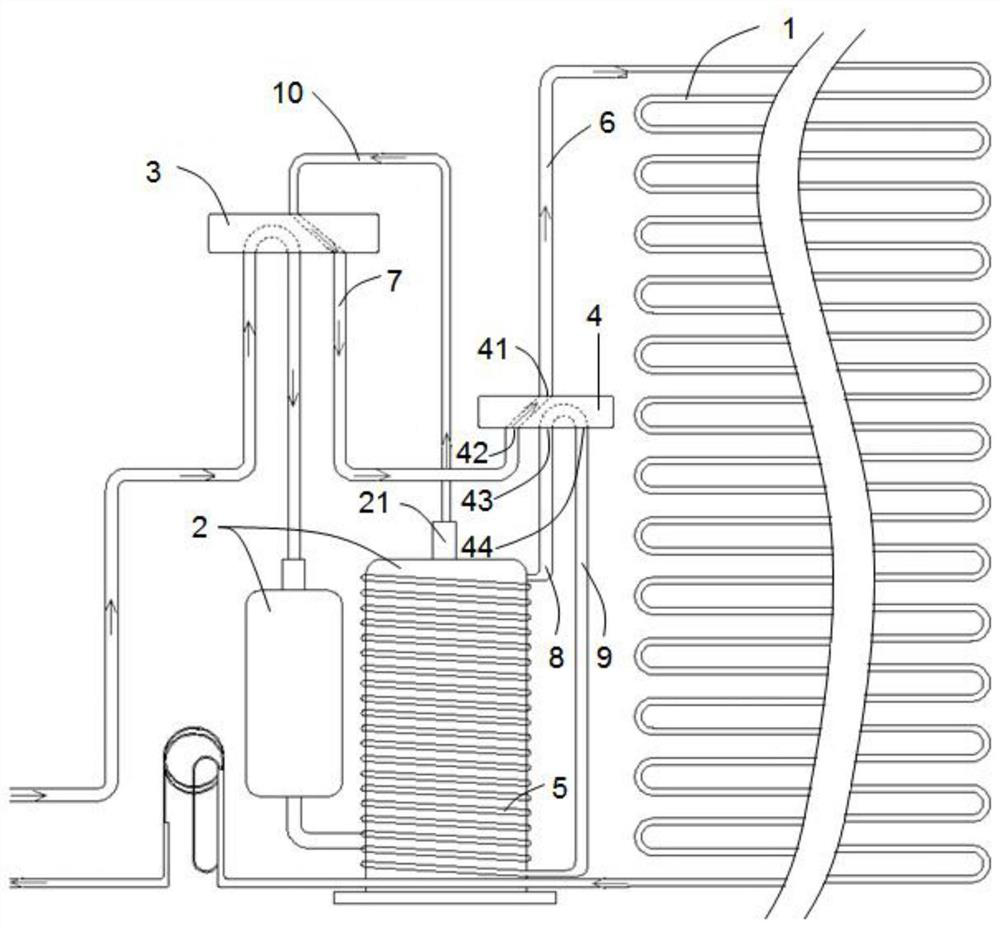
Figure 1 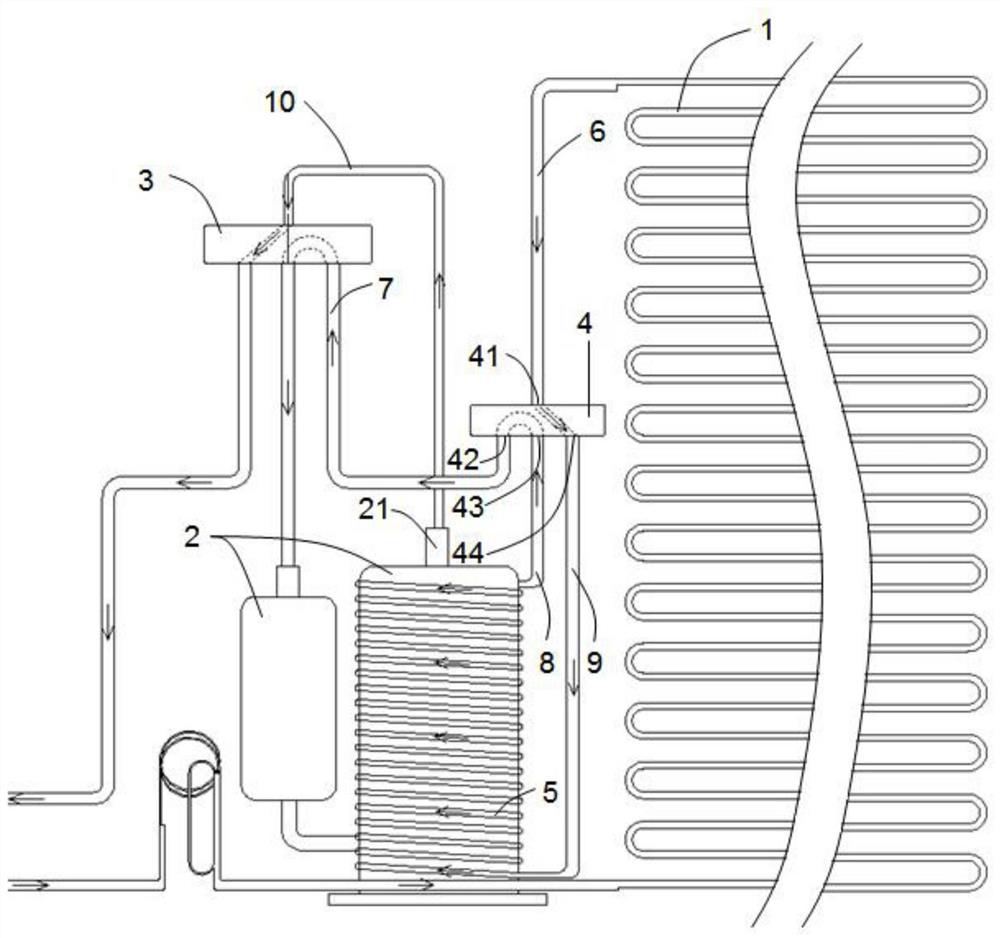
Figure 2 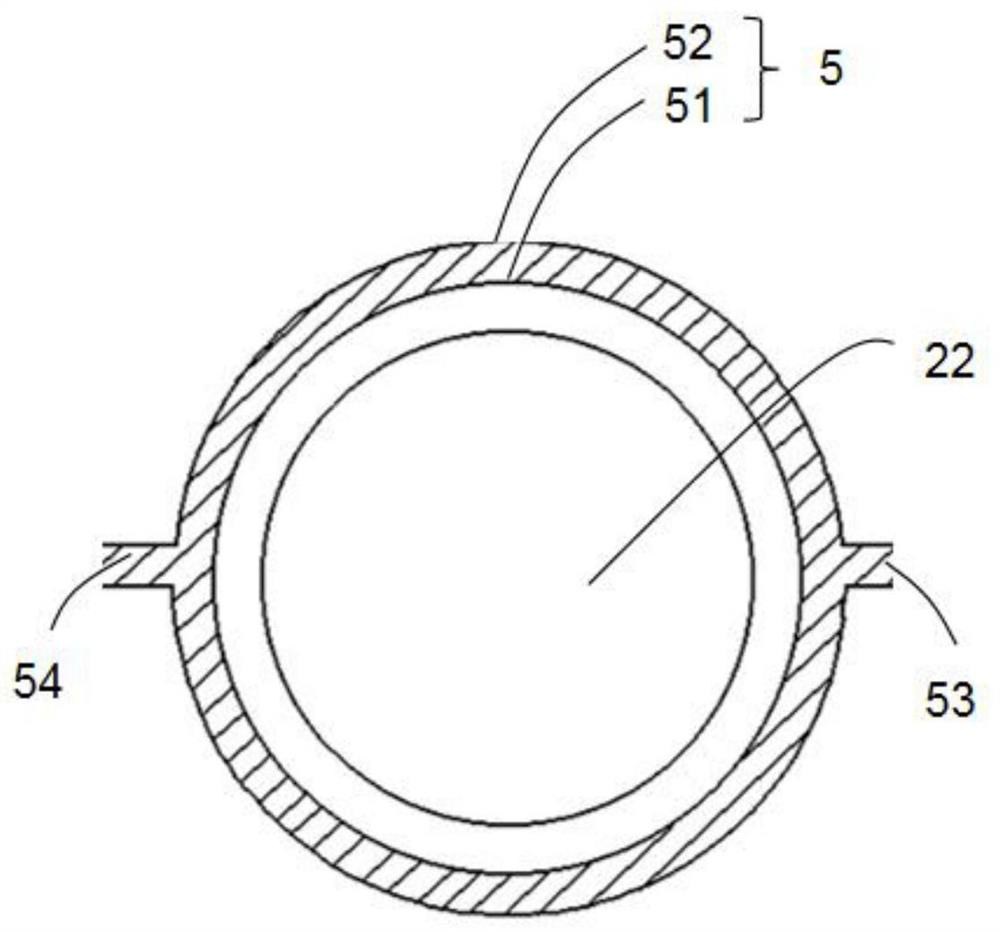
Figure 3
Abstract
Description
technical field
[0001] The invention belongs to the technical field of air conditioners, and specifically provides an air conditioner. Background technique
[0002] Air conditioners are currently commonly used indoor environment temperature adjustment equipment, including commercial air conditioners and household air conditioners. Commercial air conditioners are mostly used in commercial buildings such as office buildings and shopping malls. Heating can be used to increase the indoor ambient temperature, and cooling can also be used to reduce the indoor ambient temperature. When the air conditioner is in heating mode, the outdoor temperature is generally below 10°C, while the temperature in the middle of the outdoor heat exchanger is about 0-1°C. The temperature difference between the outdoor heat exchanger and the outdoor is small, which makes it difficult for the outdoor heat exchanger to Obtaining heat makes the heating effect poor, especially when the outdoor temperatur...
Examples
Embodiment Construction
[0028] Preferred embodiments of the present invention are described below with reference to the accompanying drawings. Those skilled in the art should understand that these embodiments are only used to explain the technical principles of the present invention, and are not intended to limit the protection scope of the present invention.
[0029] It should be noted that, in the description of the present invention, terms such as "upper", "inner", and "middle" indicate directions or positional relationships are based on the directions or positional relationships shown in the drawings, which are only for convenience Describes, but does not indicate or imply that the device or element must have a particular orientation, be constructed in a particular orientation, and operate in a particular orientation, and thus should not be construed as limiting the invention. Furthermore, the terms "first", "second", "third", "fourth", and "fifth" are used for descriptive purposes only and shoul...